
News
Duke of Edinburgh Visits Nigeria to Host Series of Events, Meets Tinubu


Duke of Edinburgh Visits Nigeria to Host Series of Events, Meets Tinubu
By: Michael Mike
His Royal Highness The Duke of Edinburgh is expected in the country to host a series of events in Lagos, Nigeria from 17 – 23 November 2025 to champion the expansion of the Duke of Edinburgh’s International Award across the world.
He is also expected to meet President Bola Tinubu in Abuja, and get involved in some other activities at the nation’s capital.
According to a statement on Sunday, Prince Edward, as Chairman of the Duke of Edinburgh’s International Award Foundation, will convene almost 200 young people from more than 50 countries over the week, alongside hundreds of leaders delivering the Duke of Edinburgh’s International Award globally, policymakers, and representatives from global youth movements.
Young people will take part in an intensive three-day youth leadership programme, before taking part in the International Award’s triennial Forum focused on expanding access to the Award globally.
Last year almost 1.2 million young people in more than 130 countries took part in the Award. While young people in the UK make up around half of all participants, Kenya has the second-highest number of young people involved in the Award. In Nigeria – where this week’s events are taking place – participation has surged by 37% in the past year, reflecting increasing interest across West Africa.

On the eve of the Duke of Edinburgh’s Award turning 70 next year, new analysis about the global impact of the Award shows that the social value generated by young people completing the Award in the last year has exceeded £1 billion for the first time. The social value is calculated through a robust methodology developed by PWC quantifying the impact of volunteering, improved mental and physical health, and social cohesion.
The Award has gained increasing momentum in recent years, as the likes of the World Bank, World Economic Forum and International Labor Organisation have placed strong emphasis on skills developed beyond the classroom, such as teamwork, communication skills, resilience and problem-solving.
Over the course of the week the Duke of Edinburgh will meet the President of Nigeria in Abuja, convene senior ministers and international development agencies in Lagos to foster deeper collaboration on non-formal education and take part in major events hosted by the Governor of Lagos and the British Deputy High Commissioner in Lagos.
Secretary General of the Duke of Edinburgh’s International Award worldwide, Mr. Martin Houghton-Brown, commented that: “More and more young people across the world are taking on the challenge of the Award, and embracing learning outside the classroom. Through smartphones and AI, young people can access the world’s knowledge in seconds fingertips, but the Award is providing a fresh challenge and helping young people develop the skills that give them the ‘human edge’. From team work to creativity, determination to flexibility, the Award is helping young people across the world become World Ready. Our gathering here in Lagos is focused on significantly increasing opportunities for young people in every country to take on the Award’s challenge and opportunity.”
British Deputy High Commissioner in Lagos, Mr. Jonny Baxter said: “The Duke of Edinburgh’s International Award exemplifies the potential of Nigeria’s young people, and that is important because Nigeria’s success matters deeply to the UK. As partners, we share a commitment to empower the next generation, create jobs, and unlock economic potential. We applaud Nigeria’s bold reforms and are optimistic that these plans will remove constraints on Nigeria’s entrepreneurial spirit and help move Nigeria forward. The UK stands ready to work together to drive growth, stability, and prosperity for the benefit of both our countries.”
The Duke of Edinburgh’s International Award is a global framework for non-formal education, empowering young people to develop skills, resilience, and a spirit of service. It is delivered through schools, youth organisations, and community groups worldwide.
Founded in 1956 by HRH The Duke of Edinburgh, Prince Philip, the Award has grown from a UK-based initiative into the world’s most widely recognised youth achievement framework delivered in more than 130 countries and territories, with 1.2 million participants annually. The Award equips young people aged 14 to 24 with essential skills for life and work, including confidence, empathy, teamwork, resilience and leadership, through experiential learning beyond the classroom.
As the Duke of Edinburgh’s International Award approaches its 70th anniversary, more than 1,500 young people begin their Award journey every day, engaging in activities from environmental restoration and volunteering to skills development and adventurous journeys.
Duke of Edinburgh Visits Nigeria to Host Series of Events, Meets Tinubu



Troops gun down kidnapper, recover locally fabricated rifle made in Plateau
By: Zagazola Makama
Troops of Sector 6, Operation ENDURING PEACE (OPEP), have neutralised a suspected kidnapper during a gun battle with a group of kidnappers at Angwan Boka in Riyom Local Government Area of Plateau State.
The troops, who were deployed in the area, engaged the suspected kidnappers at about 4:30 p.m. on Wednesday, Sept. 9, 2026, following a report of their activities in the area.
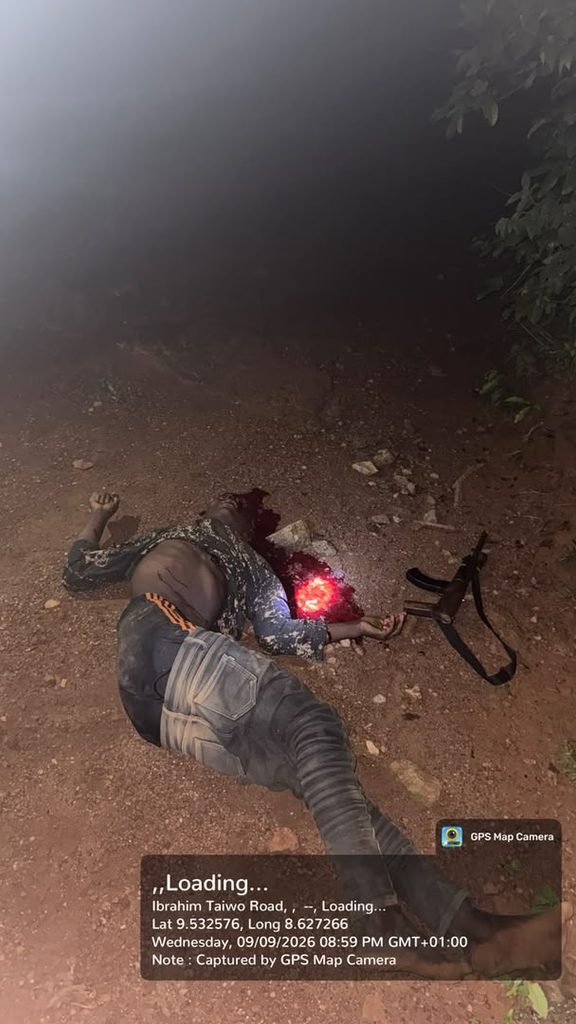
During the encounter, the troops brought their superior firepower to bear, neutralising one of the kidnappers, while others fled into the surrounding area.
The troops subsequently exploited the area and recovered one locally fabricated AK-47 rifle loaded with six rounds of 7.62mm special ammunition.
Security sources told Zagazola Makama that troops are currently conducting clearance operations in the area to track down and neutralise other fleeing members of the kidnapping gang.
The operation is part of ongoing efforts by troops of Operation ENDURING PEACE to disrupt criminal activities and improve security across Plateau State.
Troops gun down kidnapper, recover locally fabricated rifle made in Plateau

Mailantarki table tennis camp opens in Abuja
The highly anticipated high-performance table tennis training camp has officially commenced in Abuja, featuring six carefully selected young talents. The intensive program is being spearheaded by certified International Table Tennis Federation (ITTF) High-Performance Coach, Nasiru Bello, who has taken charge of preparing these rising stars for upcoming international championships.
This is contained in a press statement issued to journalists by Mr Adamu Usman Ahmed, Mailantarki’s media aide.
The highly organized camp, fully sponsored by the NTTF Vice President, Honourable Khamisu Ahmed Mailantarki, further underscores his unwavering commitment, passion, and continuous philanthropic gestures toward sports development in Northern Nigeria and the country at large.
Speaking on the opening day of the camp on Tuesday, Hon. Mailantarki expressed absolute confidence that the veteran coach will equip the players with the elite skills required to compete successfully on the global stage.
“I am deeply delighted to get this camping exercise underway in order to prepare our young talents to attain the highest level of the game,” Hon. Mailantarki stated.
“The choice of Coach Nasiru Bello, who happens to be the former NTTF Technical Director, will massively benefit these players. He has exactly what it takes to ensure they are fully prepared for international championships when the opportunity arises.”
The NTTF Vice President also hinted at massive plans for the future, adding; “We are just starting, we still have other developmental programs in the pipeline across various zones in the country.”
The high-performance camp which is well attended by young upcoming global stars Mathew Fabunmi, Mustapha mukhtar, Joseph Marvelous, Dominion Joseph, Joseph victor and Harison Jacob, is scheduled to run for one week, concluding with a grand closing and award ceremony on Monday, 14th September 2026.
Mailantarki table tennis camp opens in Abuja

Nigeria Condemns Fresh Houthi Attacks on Saudi Arabia
By: Michael Mike
The Federal Government has condemned the latest attacks by Houthi forces in Yemen on Saudi Arabia, warning that the renewed hostilities pose a grave threat to regional stability and could further endanger civilians and disrupt global energy supplies.
The Ministry of Foreign Affairs, in a statement signed by its spokesperson, Oluwafemi Adeniyi, said the attacks, which occurred on Monday, September 7, 2026, injured scores of civilians and damaged civil infrastructure in the Kingdom.
Nigeria described the development as a serious threat to the security and sovereignty of Saudi Arabia, as well as a potential source of wider instability across the Middle East.
The government urged all parties involved in the conflict to respect international law and exercise maximum restraint, stressing that further military actions could worsen the situation and place more civilian lives at risk.
Nigeria also warned against actions capable of disrupting the flow of global energy supplies, highlighting the wider economic consequences that prolonged instability in the Middle East could have on countries dependent on the region for energy.
The latest attacks come against the backdrop of the protracted conflict in Yemen involving the Iran-aligned Houthi movement and forces supporting Yemen’s internationally recognised government.
The Houthis, formally known as Ansar Allah, seized control of Yemen’s capital, Sanaa, in 2014, triggering a wider conflict that drew in Saudi Arabia and a coalition of Arab states. Saudi Arabia subsequently led a military intervention in Yemen in 2015 in support of the Yemeni government.
The conflict has since developed into one of the Middle East’s most complex security crises, with repeated missile and drone attacks by the Houthis targeting Saudi territory at various points during the conflict.
Although Saudi Arabia and the Houthis have pursued dialogue and de-escalation efforts in recent years, tensions in and around Yemen have remained closely linked to broader regional conflicts and security developments.
The Houthis have also emerged as a significant actor in regional maritime security, particularly following attacks launched against commercial shipping in the Red Sea amid the wider Middle East crisis. The developments have raised concerns over international trade, shipping routes and energy supplies.
Against this background, Nigeria urged all sides to avoid steps that could trigger further escalation.
The Federal Government said renewed violence could undermine ongoing efforts to promote peace and stability in the region while exposing more civilians and critical infrastructure to danger.
Nigeria expressed solidarity with the government and people of Saudi Arabia and wished those injured in the attacks a speedy recovery.
The government also reiterated its commitment to supporting peace processes and conciliatory frameworks capable of promoting regional peace, international security and stability.
It stressed that diplomatic efforts remain essential to preventing further escalation and creating conditions for lasting peace, shared prosperity and development in the Middle East.
Nigeria Condemns Fresh Houthi Attacks on Saudi Arabia

Troops gun down kidnapper, recover locally fabricated rifle made in Plateau

Mailantarki table tennis camp opens in Abuja

Nigeria Condemns Fresh Houthi Attacks on Saudi Arabia

Roger Federer’s Shock as DNA Results Reveal Myla and Charlene Are Not His Biological Children

THE PLIGHT OF FARIDA

FAILED COUP IN BURKINA FASO: HOW TRAORÉ NARROWLY ESCAPED ASSASSINATION PLOT AMID FOREIGN INTERFERENCE CLAIMS
-
 News2 years ago
Roger Federer’s Shock as DNA Results Reveal Myla and Charlene Are Not His Biological Children
-
Opinions5 years ago
THE PLIGHT OF FARIDA
-
 News1 year ago
FAILED COUP IN BURKINA FASO: HOW TRAORÉ NARROWLY ESCAPED ASSASSINATION PLOT AMID FOREIGN INTERFERENCE CLAIMS
-

 News2 years ago
EYN: Rev. Billi, Distortion of History, and The Living Tamarind Tree
-
 Opinions5 years ago
POLICE CHARGE ROOMS, A MINTING PRESS
-

 ACADEMICS3 years ago
A History of Biu” (2015) and The Lingering Bura-Pabir Question (1)
-

 Columns3 years ago
Army University Biu: There is certain interest, but certainly not from Borno.
-

 Politics1 year ago
2027: Why Hon. Midala Balami Must Go, as Youths in Hawul and Asikira/Uba Federal Constituency Reject ₦500,000 as Sallah Gift
