
News
EXCLUSIVE: expanding JAS/ANSARU–JNIM violence signals growing jihadist threat in Niger–Kwara corridor

EXCLUSIVE: expanding JAS/ANSARU–JNIM violence signals growing jihadist threat in Niger–Kwara corridor
By: Zagazola Makama
Recent attacks by terrorists linked to Jama’atu Ahlis Sunna Lidda’awati wal-Jihad (JAS), Ansaru splinter factions and the Jama’at Nusrat al-Islam wal-Muslimin (JNIM) have brought into sharp focus a troubling expansion of jihadist violence into Nigeria’s North-Central zone, with Borgu Local Government Area of Niger State emerging as a new flashpoint.
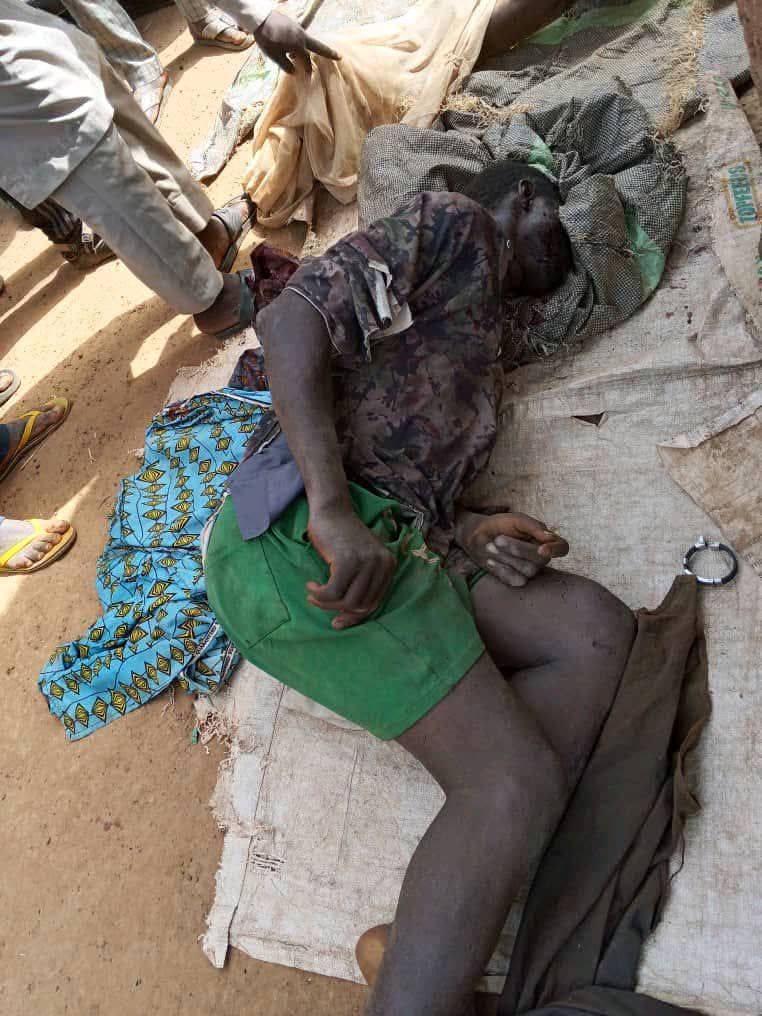
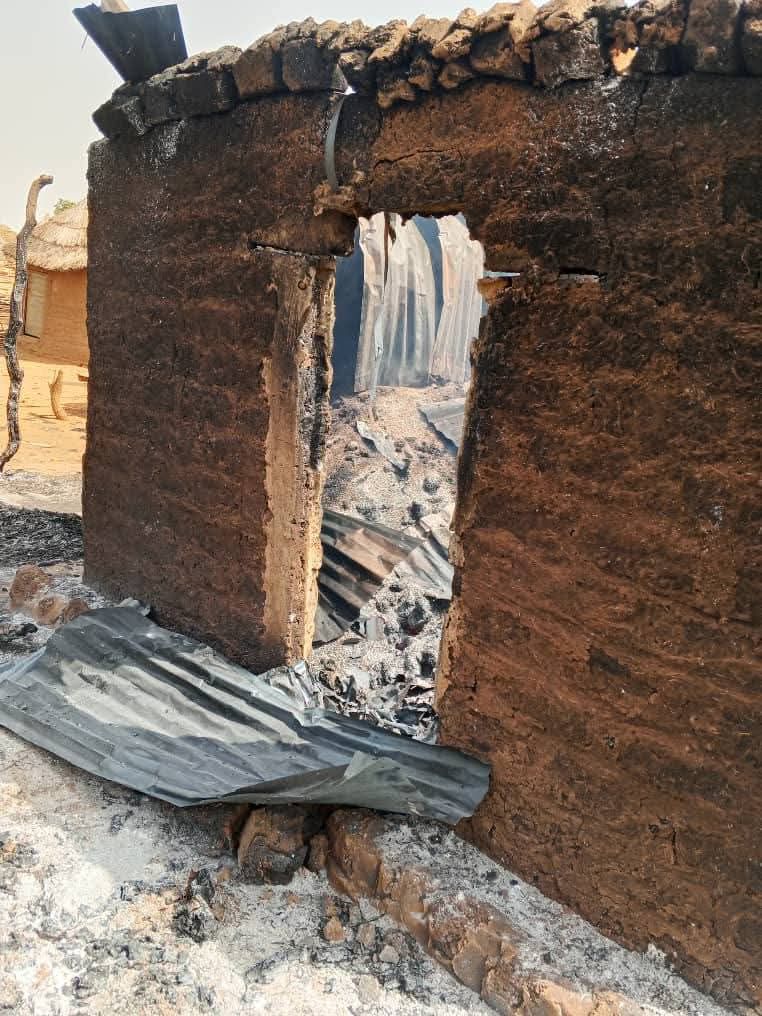
On Jan. 9, 2026, terrorists operating along the Borgu axis attacked Damala village, a Kambari farming settlement in Borgu LGA. The assailants killed four residents, looted foodstuffs and livestock, and subsequently withdrew towards the Kainji National Park.
Zagazola Makama report that the attack followed a similar modus operandi to the Jan. 3, 2026 massacre at Kasuwan Daji, where villagers were killed and abducted in a coordinated night raid.
Deep findings indicated that Borgu and neighbouring Agwara LGAs have increasingly become areas of operation for a Saddiku-led Boko Haram Terrorist (BHT) faction working in collaboration with JNIM fighters infiltrating from the Sahel.
The terrorists are believed to be exploiting the Liptako–Gourma tri-border forest corridor, which stretches across parts of Mali, Niger Republic and Burkina Faso, before filtering through Benin Republic into the Kainji National Park ecosystem.
Zagazola noted that the vast forested terrain of the park, combined with weak surveillance, has made it an attractive rear base for terrorist regrouping, logistics and cross-border movement. Borgu has been under sustained pressure, with attacks occurring at regular intervals.
On Nov. 21, 2025, gunmen abducted students of St. Mary Catholic School, Papiri, in Borgu LGA. The students were later released in batches on Dec. 8 and Dec. 22, 2025. It was revealed whether ransom was paid or not. However, Intelligence linked the abduction to JAS handlers operating from Ali Ngulde camp in the North-East.
This was followed by the Jan. 3, 2026 Kasuwan Daji attack and an earlier Jan. 5, 2026 assault on a Mobile Police (MOPOL) checkpoint at New Kali village, also in Borgu LGA. This point to a high probability of continued and potentially more daring attacks within Borgu LGA and adjoining areas over the next two weeks.
There are also growing concerns that the violence could spill into Kwara State, particularly Kaiama and Baruten LGAs, which border Kainji National Park. The terrorist groups have had sufficient time to regroup and reposition following recent security operations in parts of Niger State, increasing the likelihood of an operational surge.
“The pattern suggests deliberate expansion rather than isolated criminality,” a counterterrorism expert said. “This is ideological jihadist violence, fused with banditry and cross-border logistics. The Damala attack has further reinforced assessments that JAS/Ansaru factions and JNIM elements now maintain established bases within the Kainji National Park.
The systematic raiding of livestock and foodstuffs, analysts say, reflects the groups’ dependence on local communities for sustenance and their reliance on the park’s ecosystem for concealment, mobility and survival.
Military strategists describe the park as the terrorists’ operational centre of gravity, and, paradoxically, their main vulnerability.
Zagazola suggested that a sustained , intelligence-driven air campaign targeting known hideouts, logistics routes and assembly areas within the park could significantly degrade their combat power.
Such an approach, would fix terrorist elements in place, disrupt their supply chains and create favourable conditions for coordinated ground operations to restore security and prevent further expansion into Kwara State and deeper into the North-Central zone.
The unfolding situation in Borgu is widely seen as a warning sign of the evolving nature of Nigeria’s security threats, where jihadist groups displaced from the North-East and North-West are probing new theatres with weak state presence.
If left unchecked, the Borgu–Kainji axis could become a permanent jihadist sanctuary, linking Sahel-based terrorist networks directly to Nigeria’s heartland.
EXCLUSIVE: expanding JAS/ANSARU–JNIM violence signals growing jihadist threat in Niger–Kwara corridor


That Curious Attack On Mustapha Gubio.
By: Inuwa Bwala.
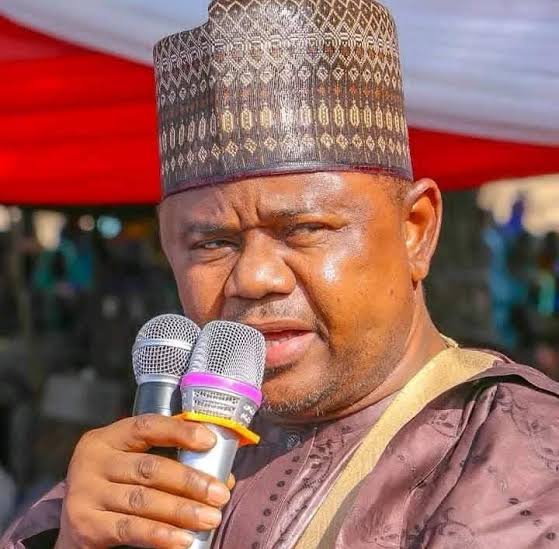
It was both chilling and curious, leaving many people still asking, the obvious question about what could be the motive behind last weeks attack on the convoy of Engineer Mustapha Gubio, governorship candidate of the All Progressives Congress, APC, for Borno state.
It is a truism that Boko Haram/ISWAP have been operating in Borno since 2009, especially in the Lake Chad axis, and the Gubio-Kareto-Damasak highway in northern Borno has been volatile.
It is a known fact that, the attackers often target soft spots and unguarded personnel.
But targetting Gubio and his entourage which was returning to Maiduguri after a thank-you tour to APC members in Damasak, headquarters of Mobbar Local Government Area, following his emergence as the party’s consensus candidate, is curious and worrisome.
It is not enough to say, that, the route has been plied by the state governor, Professor Babagana Umara Zulum, who has survived many such attacks.
Gubio’s convoy may not be less fortified, but against the background of our experiences and the fact that we have not experienced such in a long time, makes it more curious to ask, if Gubio is a particular target.
According to the Police, the convoy was targeted with Improvised Explosive Devices and Rocket Propelled Grenades, which again makes it obvious that the attack was premeditated.
A police armoured vehicle leading the convoy detonated a landmine and was badly damaged, which adds another angle to the possibility of a well planned ambush, that was not meant to give the candidate any chance of escape.
The attackers were said to have laid ambush with planted IEDs targeting the convoy and also fired several RPGs, implying a more organized act, different from the hitherto rag tag approach of Boko Haram or ISWAP.
Thanks to the combined team of soldiers, police, NSCDC, DSS, Civilian JTF and vigilante groups, who counter-engaged the attackers and forced them to retreat into the surrounding bush. A scan of the surrounding by Police tactical operatives who cleared the route to neutralise secondary explosive threats, points to the sophistication of Gubio’s security network.
AAlthough, no casualty was recorded among Gubio’s, government officials, or other political stakeholders in the entourage, it remains a terrifying moment, and one may be tempted to ask, who wants Gubio, dead?
One may say, that, the attack highlights the persistent security threat along the 156km Gubio-Kareto-Damasak corridor, a route long regarded as a flashpoint due to insurgent activity, but given our experiences with the targetting of political leaders in the past, a curious mind may not dismiss this as one of such cases of random incidents.
This is not the first time a high-profile Borno politician has been targeted. It may be recalled that, in the build up to the 2011 elections, the governorship candidate of the same ruling party, the APC, was ambushed and killed.
Several other politicians and businessmen had been targeted and killed in very curious circumstances.
As recent as 2020, the convoy of Governor Babagana Zulum was attacked near Baga, and the real circumstances surrounding the incident have remained cloudy.
To sweep this one under the carpet, as a mere Boko Haram ISWAP attack: to me may leave a window open for further mischief.
I have known Engineer Mustapha Gubio, as a consumate gentleman, who cannot hurt a fly.
His emergence as APC’s flagbearer has a lot of prospects, given his pledge to consolidate on Governor Zulum’s achievements in security, resettlement, education and agriculture.
I am aware that investigators may not have not named any individual or political actor behind the attack for now, but citizens are eager.
While accusing fingers point in the direction of Boko Haram/ISWAP terrorists, who may be seeking to destabilize the 2027 political process, a deeper linning could prop up another dangerous design.
As Borno counts its blessings that Gubio survived, the poser remains: Who wants Gubio dead? Until this is resolved and the terrorist, who may be mere canonfodders are fully uprooted, candidates, voters, and convoys will continue to move under the shadow of that question.
That Curious Attack On Mustapha Gubio.
Borno Christian Youth Leader Names Son After Zulum, Cites Governor’s Leadership
By: Michael Mike
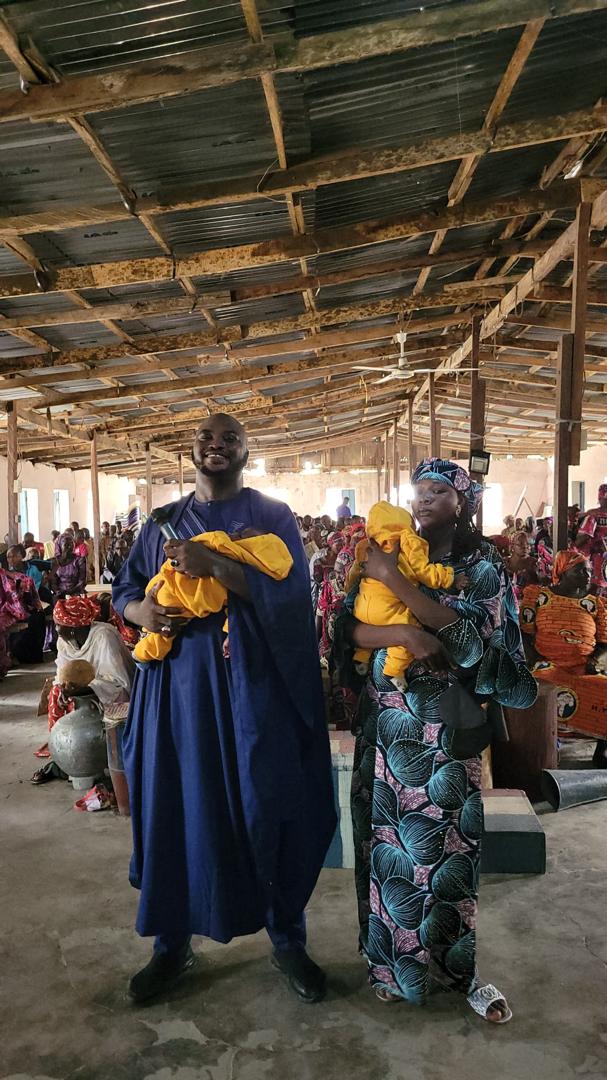
A prominent Christian youth leader in Borno State, Mr Emmanuel Bulama, has named his newborn son Zulum in honour of Governor Babagana Zulum, citing the governor’s leadership, humanitarian interventions and commitment to rebuilding the state.
Bulama, who leads the Jere Christian Youth Forum, gave the name to his son during a naming ceremony held on Sunday, saying the decision was informed by what he described as the governor’s remarkable contributions to the development and welfare of the people of Borno.
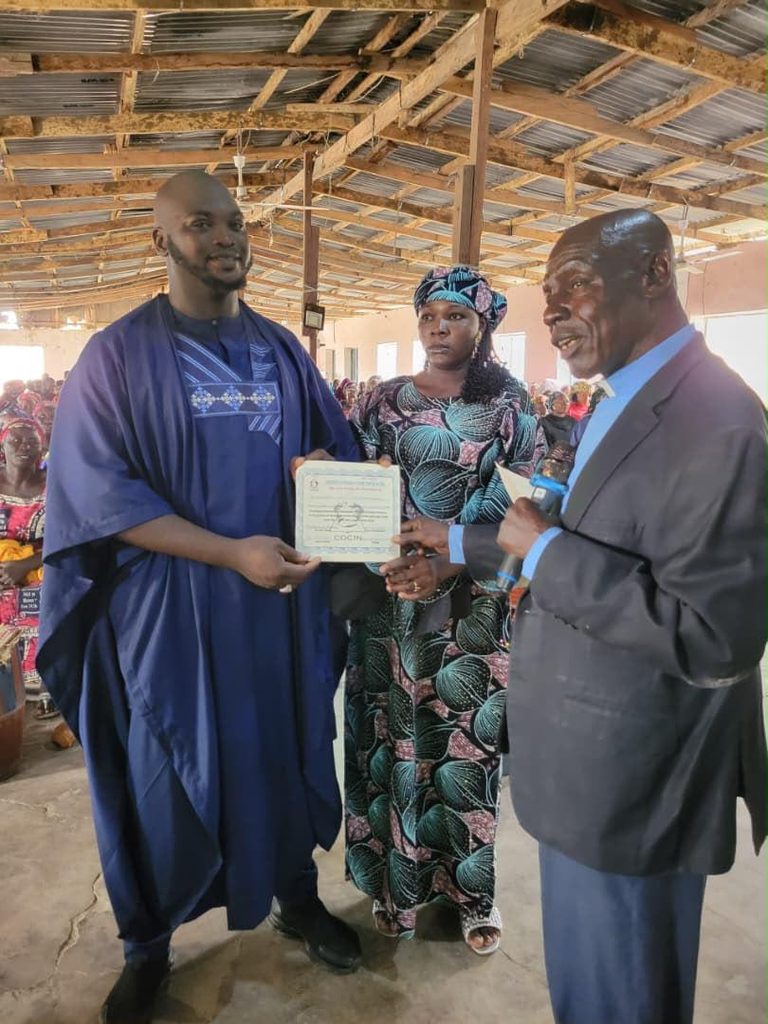
The ceremony was officiated by Rev. Anthony Inuwa of the Church of Christ in Nations (COCIN), Old Maiduguri, who led the proceedings and offered prayers and blessings for the newborn and his family.
Explaining the significance of the name, Bulama said naming his son after the governor went beyond a personal tribute. According to him, it was also a prayer and an expression of hope that the child would grow into a man whose life would reflect the qualities he associates with Governor Zulum.
He specifically cited leadership, compassion, service to humanity and commitment to the people as qualities he hoped his son would emulate.
“This name is not just an honour to Governor Zulum; it is also a prayer for my son,” Bulama said, stressing that he desired the child to grow up with a strong sense of responsibility and dedication to the service of others.
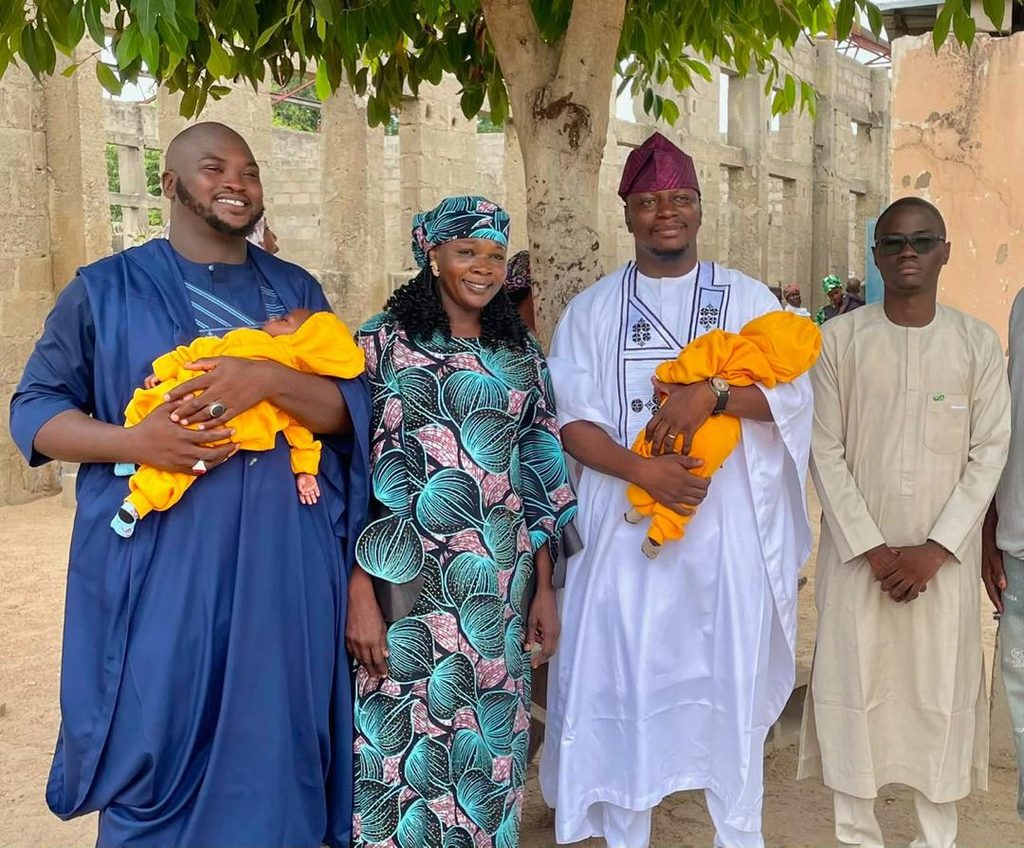
The Christian youth leader said he hoped his son would become a responsible citizen who would make meaningful contributions to society and demonstrate concern for the welfare of others.
The gesture is particularly significant in a state where Governor Zulum’s administration has continued to place emphasis on rebuilding communities, strengthening social services and addressing the humanitarian consequences of years of insecurity.
The naming ceremony attracted prayers and goodwill messages for the newborn, his parents and the entire family, with prayers offered for the child to grow in wisdom, responsibility and service to humanity.
The event ended on a note of thanksgiving and celebration, with the family expressing gratitude for the safe arrival of the newborn and hope that the child would live up to the ideals symbolised by his name.
Borno Christian Youth Leader Names Son After Zulum, Cites Governor’s Leadership

OF DATTI BABA AHMED, COMPETENCE AND SHETTIMA’S CAP
By: Inuwa Bwala
I think Nigeria is tending towards a dangerous trend by making leaders become demigods, that should be hero worshipped.
How orherwise can one describe Datti Baba-Ahmed’s interview clip, about President Bola Ahmed Tinubu’s Aso-ebi signature “cap”, and the need for his Vice, Kashim Shettima, and indeed everybody in APC to wear it.
I used to count Dr. Datti, the 2023 Vice Presidential candidate of the Labour Party, as one of Nigeria’s finest intellectuals in politics, who should differ from others, but
Seeing trying to mock the VP, and talk about caps as a symbol of unity or lack of it, makes his credentials before me fall flat.
I expected him to speak on Kashim Shettima’s capacity, competence and suitability or lack of them.
Failing to do so, has however forced me: like many others to think otherwise of him.
As Vice President, Senator Kashim Shettima is the virtual face of the administration, who stands in for his principal effectively at national and international meets.
He chairs the National Economic Council and stirs governance on food security, MSMEs and getting Nigerians out of poverty.
If leadership is about caps, perhaps Tinubu would have gone for a tailor, but it is beyond such myopic assertions
The cap the VP wears is the Nigerian flag. The cap he bears is the responsibility of over 200 million Nigerians. That is heavier than any signature cap.
I think we should judge leaders by results on security, economy, and not dresscode.
Perhaps, Dr. Datti need to know that, , Vice President Kashim Shettima doesn’t wear a signature cap, because he wears that of a country, its burdens of insurgency and reconstruction on his head every day.
Like I said earlier, if the job was about matching caps, Nigeria would have hired a tailor, but the job is about matching competence with crisis. And in that, Nigerians will be the better judges.
Leadership is not fashion. While others are checking caps, VP Shettima is checking food prices, security briefings, and NEC decisions. Nigeria needs problem solvers, not fashion displays.
OF DATTI BABA AHMED, COMPETENCE AND SHETTIMA’S CAP

That Curious Attack On Mustapha Gubio.

Borno Christian Youth Leader Names Son After Zulum, Cites Governor’s Leadership

OF DATTI BABA AHMED, COMPETENCE AND SHETTIMA’S CAP

Roger Federer’s Shock as DNA Results Reveal Myla and Charlene Are Not His Biological Children

THE PLIGHT OF FARIDA

FAILED COUP IN BURKINA FASO: HOW TRAORÉ NARROWLY ESCAPED ASSASSINATION PLOT AMID FOREIGN INTERFERENCE CLAIMS
-
 News2 years ago
Roger Federer’s Shock as DNA Results Reveal Myla and Charlene Are Not His Biological Children
-
Opinions5 years ago
THE PLIGHT OF FARIDA
-
 News1 year ago
FAILED COUP IN BURKINA FASO: HOW TRAORÉ NARROWLY ESCAPED ASSASSINATION PLOT AMID FOREIGN INTERFERENCE CLAIMS
-

 News2 years ago
EYN: Rev. Billi, Distortion of History, and The Living Tamarind Tree
-
 Opinions5 years ago
POLICE CHARGE ROOMS, A MINTING PRESS
-

 ACADEMICS3 years ago
A History of Biu” (2015) and The Lingering Bura-Pabir Question (1)
-

 Columns3 years ago
Army University Biu: There is certain interest, but certainly not from Borno.
-

 Politics1 year ago
2027: Why Hon. Midala Balami Must Go, as Youths in Hawul and Asikira/Uba Federal Constituency Reject ₦500,000 as Sallah Gift
