
News
Experts Sound Alarm Over Unregulated AI in Nigeria’s Healthcare System


Experts Sound Alarm Over Unregulated AI in Nigeria’s Healthcare System
By: Michael Mike
Growing adoption of artificial intelligence in Nigeria’s healthcare sector is outpacing regulatory safeguards, raising concerns among experts who warned that without urgent oversight, the technology could deepen inequality and expose patients to new risks.
This warning took centre stage at a policy dialogue titled “AI in Healthcare: Risk or Asset?”, held Thursday at the French Institute in Abuja, where stakeholders from government, medicine, and development circles examined the expanding role of AI in health service delivery.
Speakers at the forum acknowledged that AI is already transforming diagnostics, laboratory systems, and patient management. However, they cautioned that Nigeria’s regulatory environment has yet to catch up with the speed of innovation.
Director of the French Institute, Thierry Vapentin, set the tone for the discussions, describing the platform as a space to confront emerging global issues through open debate. He stressed the importance of interrogating both the opportunities and ethical dilemmas posed by AI in critical sectors like healthcare.
Delivering a policy perspective, Dr. Anthony Ayeke of the European Union Delegation noted that while AI could significantly improve access and efficiency in healthcare delivery across Africa, blind reliance on automated systems could undermine professional judgment and patient safety. He emphasized that human oversight must remain central in all AI-driven processes.
In his intervention, the CEO of Premier Health Systems Consults, Dr. Niyi Osamiluyi argued that Nigeria urgently needs a clearly defined ethical and regulatory framework to guide AI deployment. He outlined key principles including transparency, inclusiveness, accountability, data protection, and auditability, warning that failure to assign responsibility for AI outcomes could create dangerous accountability gaps.
The issue of data integrity also featured prominently. Joshua Kojalo highlighted ongoing government-backed digital health initiatives, particularly mobile applications designed to expand access to health insurance. However, he warned that overdependence on foreign datasets could embed bias into local systems, potentially excluding vulnerable populations. He called for deliberate investment in locally generated data to ensure fairness and accuracy.
From an operational standpoint, Dr. Temitope Agbana, Co-founder of AIDX Medical, shared field experiences demonstrating AI’s impact on laboratory efficiency, noting that automated systems have significantly increased processing capacity. Despite these gains, he maintained that technology must remain a support tool rather than a substitute for human expertise, stressing that no AI system is entirely error-proof.
Equity concerns dominated the latter part of the discussion, with Dr. Chimezie Anyakora, CEO of Bloom Public Health, warning that weak regulation could leave already disadvantaged communities exposed to the harshest consequences of technological failure. He cautioned that without deliberate safeguards, AI could reinforce existing healthcare disparities rather than bridge them.
Participants agreed that Nigeria risks creating a two-tier healthcare system where advanced AI-driven services are accessible only to the wealthy, while rural and low-income populations are left behind.
The forum concluded with a strong consensus that Nigeria must act swiftly to establish robust regulatory frameworks, invest in capacity building, and ensure inclusive access. Experts stressed that while AI holds immense potential to transform healthcare delivery, its benefits will only be realized if innovation is matched with responsibility.
Without decisive action, they warned, the same technology that promises progress could ultimately widen the gap it seeks to close.
Experts Sound Alarm Over Unregulated AI in Nigeria’s Healthcare System


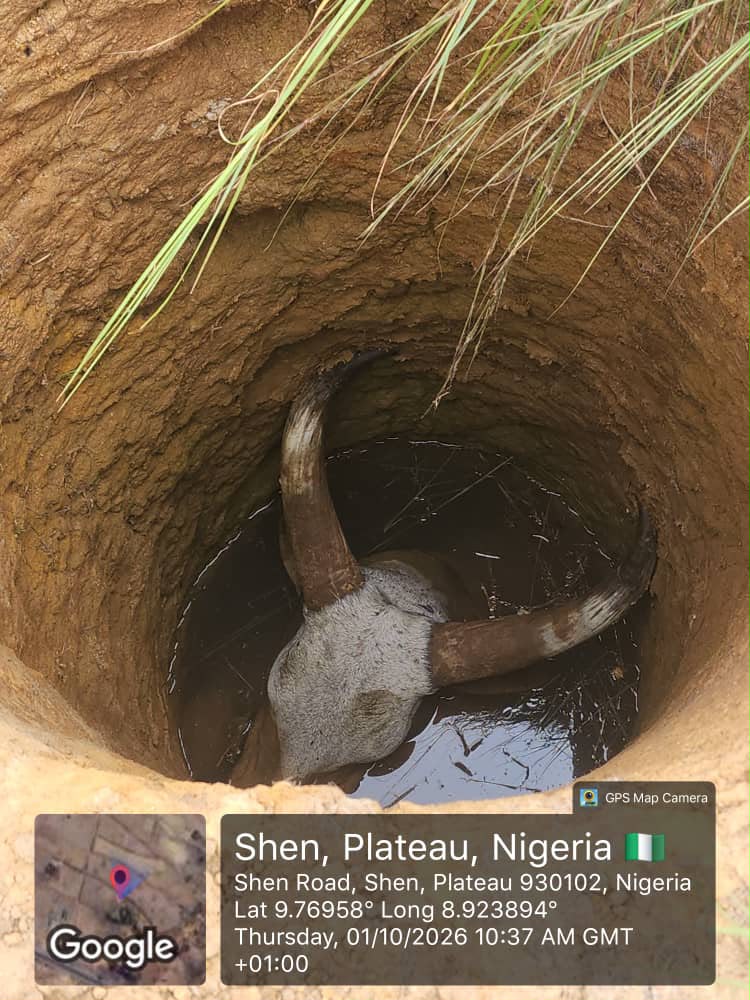
Troops recovered Four cows rustled by berom militia along Shen Road in Jos South
By: Zagazola Makama
Troops of Operation Enduring Peace have recovered four cows suspected to have been rustled by Berom Militiamen along Shen Road in Jos South Local Government Area of Plateau State.
Zagazola News gathered from a security update that the cows were recovered at about 10:30 a.m. on Thursday, Oct. 1, 2026.
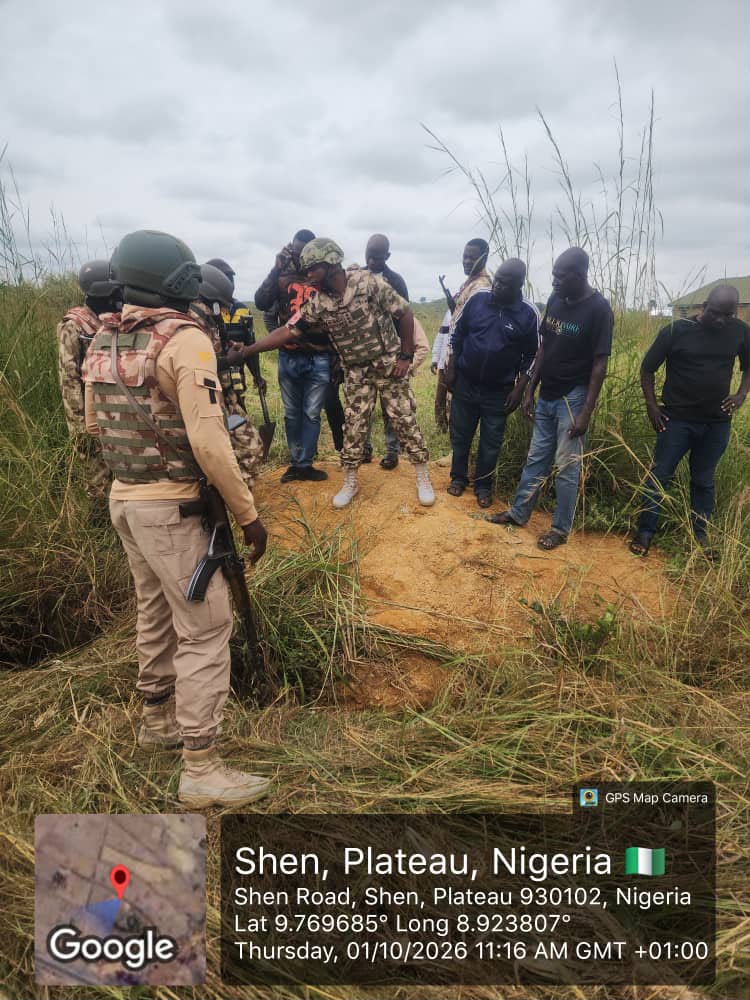
Sources said one of the four cows was confirmed dead, while efforts has been intensified to traced the remaining stolen animals from the criminals.
The search operation is being led by the Commander, Sub-Sector 12, Lamingo, with troops continuing to comb the area.

Further details will be provided as the operation progresses.
Troops recovered Four cows rustled by berom militia along Shen Road in Jos South
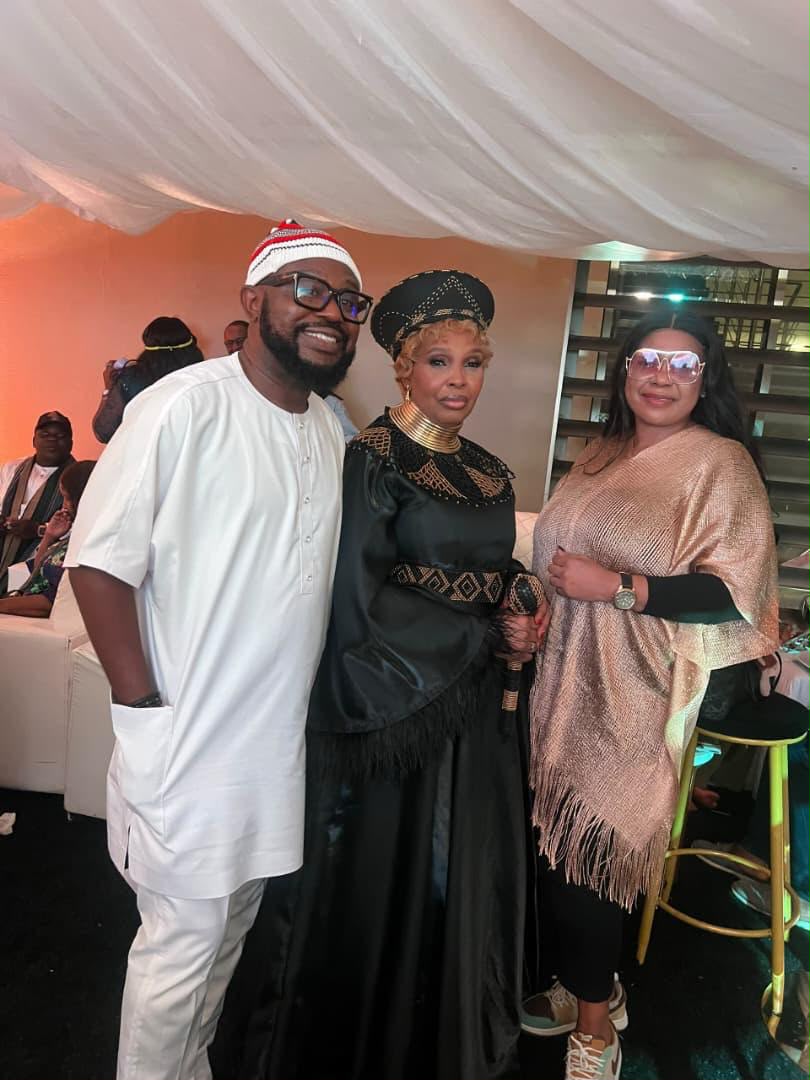
South Africa Reaffirms Nigeria Ties, Says ‘We Choose Ubuntu’
…Envoy recalls Nigeria’s role in ending apartheid, birthing democratic South Africa
…As Tourism, Nollywood, Music, Film remain bridges between two African powers
By: Michael Mike
South Africa has reaffirmed its enduring ties with Nigeria, declaring that the two countries must continue to draw strength from their shared history, culture and African identity despite challenges that have occasionally strained relations between their peoples.
The Deputy High Commissioner of South Africa to Nigeria, Ambassador Lindy Mminele, stated this in Abuja at the 2026 Heritage Day celebration hosted by the South African High Commission, where she said her country had chosen unity and Ubuntu as guiding principles for its relationship with Nigeria and the wider African continent.
Mminele told diplomats, government officials, tourism stakeholders and South Africans resident in Nigeria that the philosophy of Ubuntu — broadly expressed in the belief that “I am because you are” — remained central to South Africa’s national identity and its relations with other African countries.
“Therefore, we choose unity. We choose Ubuntu. We choose the ties that bind us together,” she said.
The celebration, held under the theme “Celebrating Our Living Heritage: Strengthening the Ties That Bind Us,” provided the envoy an opportunity to highlight the historical, cultural and people-to-people connections between Nigeria and South Africa.
Mminele recalled that Nigeria’s support for the struggle against apartheid predated the emergence of democratic South Africa, describing the relationship between the two countries as one rooted in a shared history of the continent.
“South Africa’s bilateral relations with Nigeria predate our democracy,” she said, adding that the contribution of Nigeria, other African countries and international friends of South Africa ultimately helped in the emergence of the democratic South Africa of today.
Her comments underscored the longstanding role played by Nigeria in opposing apartheid and supporting the liberation struggle in Southern Africa through diplomatic, political and material assistance.
Mminele said the relationship had since evolved beyond political solidarity to encompass culture, entertainment, tourism and extensive people-to-people exchanges.
She particularly identified Nollywood, Afrobeats, Amapiano, music and film as powerful contemporary bridges between Nigerians and South Africans.
According to her, Nigerian films are widely appreciated in South Africa, while cultural institutions in both countries continue to collaborate under a Memorandum of Understanding on cultural cooperation.
She said South Africa participates in Nigeria’s Zuma International Film Festival, while Nigerian filmmakers participate in South African festivals, including those held in Durban.
Describing the relationship between the cultural institutions as “tight and ongoing,” the envoy said the creative industries had become an important channel for strengthening relations between the two countries.
She also described Nigeria’s cultural heritage as a vibrant mosaic comprising more than 250 ethnic groups, noting that Nollywood and Afrobeats had helped project Nigerian stories and cultural expressions to audiences across the world.
The cultural exchange, she noted, was particularly visible among young people, with Nigerian Afrobeats enjoying popularity in South Africa while South Africa’s Amapiano has gained a substantial following in Nigeria.
Artists from both countries have also increasingly collaborated, creating a shared entertainment space that cuts across national boundaries.
On tourism, Mminele urged Nigerians to explore South Africa’s diverse attractions, including Table Mountain, the Garden Route and Kruger National Park, as well as the country’s beaches, cultural sites, cities and wine regions.
She said South Africa also offered adventure activities ranging from hiking and surfing to safaris and shark cage diving.
“So our offerings of Mpumalanga or any other province of South Africa for tourism are open for business,” she said.
The envoy encouraged diplomats and their families serving in Nigeria to visit South Africa before completing their tours of duty, saying South African Tourism was ready to welcome them.
She commended South African Tourism for supporting the annual Heritage Day celebration and acknowledged its representative, Thekiso Rakolojoane, and his team.
She also recognised Nigerian tourism and cultural partners, including the Department of Culture and Tourism, the National Association of Nigerian Travel Agencies (NANTA), Nigeria Association of Tour Operators (NATOP) and the Federation of Tourism Associations of Nigeria (FTAN), describing them as important enablers of people-to-people cooperation.
Welcoming guests to “Ekhaya”, meaning home, Mminele described the High Commission as South Africa’s “home away from home” and thanked the Nigerian government for hosting her country.
She said the celebration was also an opportunity to reflect on South Africa’s long and difficult journey towards democracy and the importance of preserving the country’s diverse heritage.
Recalling former President Nelson Mandela’s 2002 Heritage Day address, she said the occasion remained important to nation-building and the consolidation of a national identity founded on “unity within diversity.”
She also cited President Cyril Ramaphosa’s recent Heritage Day message, which celebrated South Africa’s languages, music, food, clothing, stories and customs as expressions of the country’s living heritage.
South Africa Reaffirms Nigeria Ties, Says ‘We Choose Ubuntu’
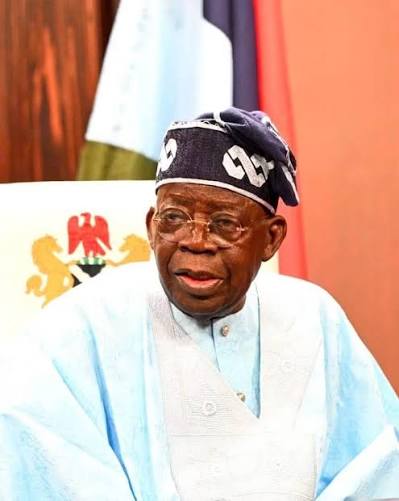
Tinubu: Economic outlook has improved, reforms have laid foundation for prosperity
By: Zagazola Makama
President Bola Ahmed Tinubu has said Nigeria’s economic outlook has improved significantly, citing stronger growth, rebuilt foreign reserves, lower oil theft and increased non-oil exports as evidence that the country’s economic reforms are beginning to yield results.
Tinubu stated this in his Independence Day address to Nigerians, where he reviewed the country’s economic challenges and outlined his administration’s plans for the next phase of development.
The President said Nigeria’s economic situation had deteriorated significantly before his administration took office in 2023, leaving the government with difficult choices.
He said the reforms introduced by his administration were designed to address structural weaknesses rather than merely manage their symptoms.
“Our reforms did not create the weaknesses in our economy. They confronted them,” Tinubu said.
According to him, Nigeria’s economy has grown by more than four per cent in the year, with contributions from both the oil and non-oil sectors.
He said oil theft had declined, inflation had fallen substantially from its peak, foreign reserves had been rebuilt and the foreign exchange market had stabilised.
Tinubu also highlighted Nigeria’s non-oil export performance, saying the country recorded more than six billion dollars in non-oil export revenue in 2025.
“These are not idle claims. International observers, journalists, NGOs and multilateral institutions can see the change,” he said.
The President said the private sector had also responded positively, while foreign direct investment continued to rise.
He, however, acknowledged that economic indicators alone would not be sufficient if ordinary Nigerians did not experience improvements in their daily lives.
Tinubu said prosperity should mean safer and more productive farming, reliable electricity for factories, access to credit for businesses, productive employment for young people and more affordable food, transportation and education.
He said the government would therefore focus on increasing productivity across agriculture and industry while improving infrastructure connecting producers to consumers.
Tinubu also acknowledged the continued hardship faced by millions of Nigerians, particularly those struggling to meet the costs of food, education, healthcare and transportation.
He said the government would continue strengthening social protection and essential public services while pursuing long-term economic growth.
The President said Nigeria could not eliminate in four years the economic difficulties accumulated over generations, but insisted that the country could change its direction.
“For the first time in decades, we embark on this task from a position of strength; with an economy whose fundamental direction has been corrected,” he said.
Tinubu described the period ahead as an “age of prosperity,” following what he called the “age of reform.”
He urged Nigerians to maintain faith in the country and work collectively towards building an economy where prosperity is broadly shared.
“Our destination is in sight. Our foundations are strong. Our direction is clear. So let us go forward. No looking back,” he said.
Tinubu: Economic outlook has improved, reforms have laid foundation for prosperity

Troops recovered Four cows rustled by berom militia along Shen Road in Jos South

South Africa Reaffirms Nigeria Ties, Says ‘We Choose Ubuntu’

Tinubu: Economic outlook has improved, reforms have laid foundation for prosperity

Roger Federer’s Shock as DNA Results Reveal Myla and Charlene Are Not His Biological Children

THE PLIGHT OF FARIDA

FAILED COUP IN BURKINA FASO: HOW TRAORÉ NARROWLY ESCAPED ASSASSINATION PLOT AMID FOREIGN INTERFERENCE CLAIMS
-
 News3 years ago
Roger Federer’s Shock as DNA Results Reveal Myla and Charlene Are Not His Biological Children
-
Opinions5 years ago
THE PLIGHT OF FARIDA
-
 News1 year ago
FAILED COUP IN BURKINA FASO: HOW TRAORÉ NARROWLY ESCAPED ASSASSINATION PLOT AMID FOREIGN INTERFERENCE CLAIMS
-

 News3 years ago
EYN: Rev. Billi, Distortion of History, and The Living Tamarind Tree
-
 Opinions5 years ago
POLICE CHARGE ROOMS, A MINTING PRESS
-

 ACADEMICS3 years ago
A History of Biu” (2015) and The Lingering Bura-Pabir Question (1)
-

 Columns3 years ago
Army University Biu: There is certain interest, but certainly not from Borno.
-

 Politics1 year ago
2027: Why Hon. Midala Balami Must Go, as Youths in Hawul and Asikira/Uba Federal Constituency Reject ₦500,000 as Sallah Gift
