
News
Experts Warn that Climate Crisis is Paramount to Explosion of Insecurity in West Africa

Experts Warn that Climate Crisis is Paramount to Explosion of Insecurity in West Africa
By: Michael Mike
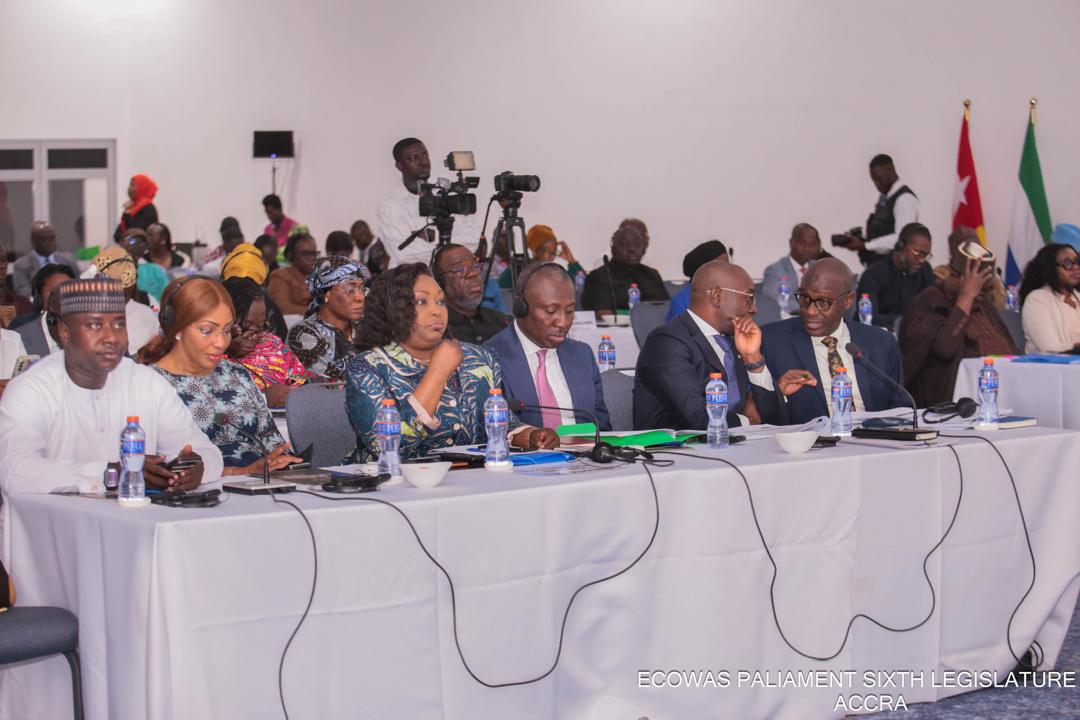
Climate change is fueling population displacement and threatening regional stability across West Africa, experts warned Monday as the Second Extraordinary Session of the ECOWAS Parliament opened in Accra.
The warning was issued at the Second Extraordinary Session and Second Parliamentary Seminar with the theme: “Climate Change as a Driver of Environmental Degradation, Population Displacement and Rising Insecurity in the ECOWAS Region.” The session will run from 21st to 28th September 2026 in Accra, Republic of Ghana.
Experts told lawmakers that rising temperatures, extreme weather, drought, unpredictable rainfall, flooding, rising sea levels and land degradation are putting direct pressure on livelihoods, critical infrastructure and security.
Opening proceedings, Speaker of the ECOWAS Parliament, Hadja Memounatou Ibrahima, said the session was convened at a critical time for the region. She drew attention to Ghana’s Founder’s Day, marking the birth of Ghana’s first President Dr. Kwame Nkrumah, and called on participants to honour his vision of a free and united Africa. A minute of silence was observed in his honour.
Dr. Derek Sarfo-Yiadom, Senior Programme Officer, Climate Change and Ozone Directorate of Ghana’s Environmental Protection Authority, said climate hazards were no longer distant threats.
He noted that: “Climate hazards are with us,” listing extreme heat, drought, heavy and unpredictable rainfall and rising sea levels as growing concerns.
Sarfo-Yiadom said seasonal temperatures have risen by between one and three degrees Celsius since 1970, driving hotter heatwaves and unpredictable weather.
He lamented that changing rainfall patterns are increasing flood risks while drought and heat are crippling farming, while identifying farmers, low-income communities, coastal settlements and displaced populations as the most vulnerable.
He decried that homes, irrigation, electricity, transport networks, ports, markets and public services are at risk.
He however warned that the impact becomes a disaster when exposed communities lack capacity to cope, and that climate pressure is already contributing to displacement and conflict in agriculture-dependent communities.
He called for increased investment in adaptation, flood-proof zoning, expansion of climate-risk mapping, early-warning systems that reach vulnerable communities, and accountability for climate-related spending.
On his part, the Principal Officer, Climate Change and Climate Services at the ECOWAS Commission, Mr. Raoul Kouame, said ECOWAS must harmonise regional climate policies and support member states to implement their commitments under the Paris Agreement.
“The challenge is no longer just to define climate commitments,” Kouame said.
He identified institutional fragmentation, differences in national capacities and difficulties accessing climate finance as the main obstacles to action.
Kouame advocated stronger coordination between regional and national institutions and mechanisms to help countries align national frameworks with regional structures. He said cooperation must cover climate services, early warning systems, forest and ecosystem protection, carbon markets and access to finance.
The gap is huge. The ECOWAS Regional Strategy for Access to and Mobilization of Climate Finance, adopted in 2022, had estimated the region’s climate financing needs at $294 billion, based on conditional requirements contained in the NDCs 2.0. ECOWAS officials have warned that 32m West Africans risk displacement, with $294bn needed to tackle the crisis.
In 2024 the Commission began a new regional process, in line with ECOWAS Vision 2050 and the African Union’s Agenda 2063, to develop a harmonized framework for a regional carbon market platform.
Dr. Abdou Ali, climate, water and meteorology expert with the Permanent Inter-State Committee for Drought Control in the Sahel (CILSS), told lawmakers that West Africa has been here before.
He noted that CILSS itself was created in 1973 during the first great drought in the region, in the wake of the devastating droughts of 1968-1970, stating that its mandate remains food security and combating drought and desertification.
Ali said regional cooperation is essential because climate risks do not stop at national borders. He listed agriculture, coastal areas, biodiversity, disaster risk and human displacement as areas requiring coordinated adaptation, and said climate action must be integrated into agriculture, forestry, energy, transport, industrialisation and waste management policies.
He stressed that regional strategies need adequate financing, stronger institutions and effective implementation mechanisms.
The presentations converged on one point: adaptation measures must account for the needs and livelihoods of affected communities to avoid creating new vulnerabilities.
Parliamentarians are now in closed deliberations on the expert presentations.
Experts Warn that Climate Crisis is Paramount to Explosion of Insecurity in West Africa


ECOWAS Inspection Team Assesses Readiness of Nigerian Standby Force in Ondo
By: Zagazola Makama
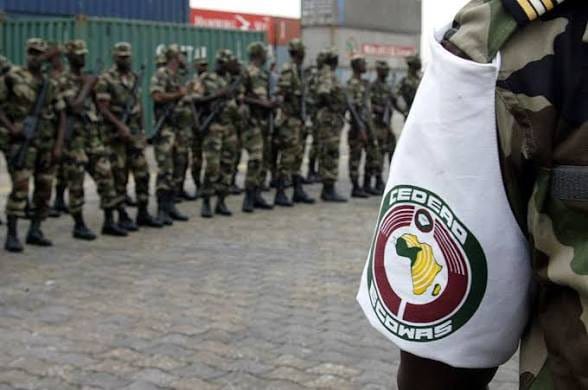
An inspection team from the ECOWAS Force Headquarters and Army Headquarters has assessed the operational readiness of Nigeria’s ECOWAS standby force at Naquora Barracks in Okitipupa Local Government Area of Ondo State.
Security sources told Zagazola Makama that the team, led by Brig.-Gen. Sheikh Sulaiman Massaquoi, visited the barracks on Nov. 7, 2026, to evaluate the troops’ preparedness for possible deployment.
The team received briefings on troop readiness, training and administrative matters, and witnessed demonstrations on roadblock operations and crowd dispersal.
Massaquoi commended the troops for their performance and urged them to sustain high standards of professionalism, discipline and physical fitness.
The inspection visit ended without any incident.
ECOWAS Inspection Team Assesses Readiness of Nigerian Standby Force in Ondo
Troops Foil Kidnap Attempt, Rescue Gunshot-Wounded Victim in Plateau
By: Zagazola Makama
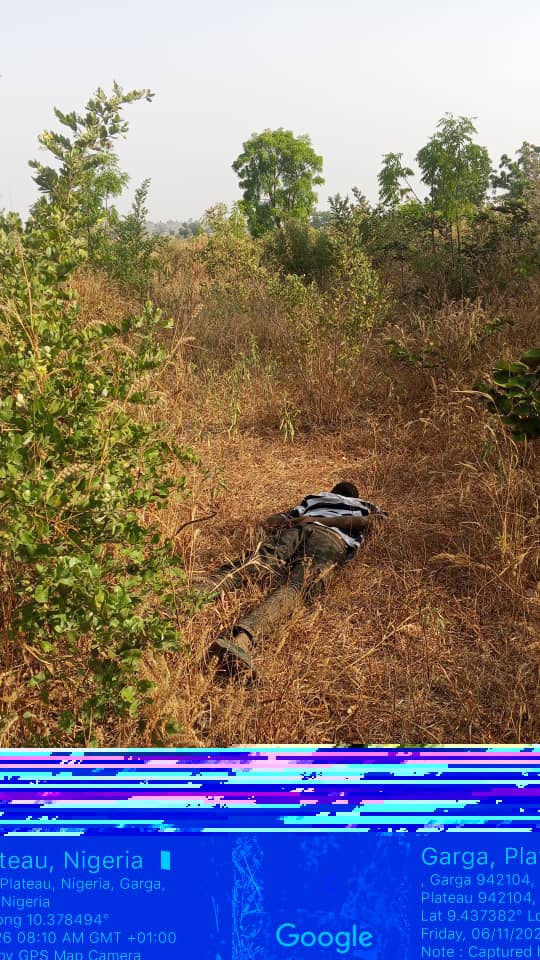
Troops of Operation Enduring Peace (OPEP) have foiled a suspected kidnapping attempt and rescued a gunshot-wounded victim along the Rafin Sanyi axis in Riyom Local Government Area of Plateau State.
Security sources told Zagazola Makama that troops of Sector 6 OPEP, deployed at Sopp, responded to a distress report at about 9:40 p.m. on Nov. 6, 2026, after suspected kidnappers blocked the road in the area.
The swift intervention of the troops reportedly forced the criminals to flee before they could carry out their operation.
The troops subsequently combed the area and rescued one occupant of a Sharon vehicle who had sustained a gunshot wound.
The victim was evacuated to the Nigerian Army Medical Outpost at Tigi, where he received first aid treatment.
Troops have continued to dominate the general area through fighting patrols to prevent the criminals from regrouping and forestall further attacks.
Troops Foil Kidnap Attempt, Rescue Gunshot-Wounded Victim in Plateau
Troops Raid Jos Hotel, Arrest Five Suspects Over Phone Snatching, Recover 26 Phones
By: Zagazola Makama
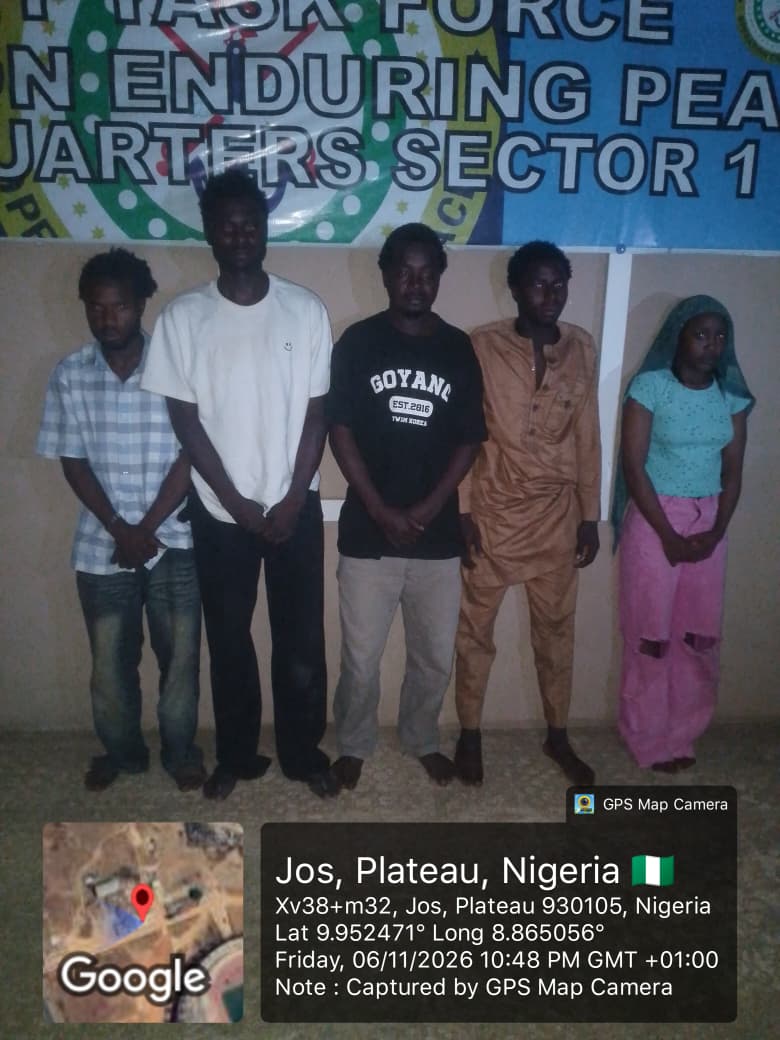
Troops of Operation Enduring Peace (OPEP) have raided a hotel along Baring Road in Jos North Local Government Area of Plateau State, arresting five suspected criminals and recovering 26 mobile phones and other items.
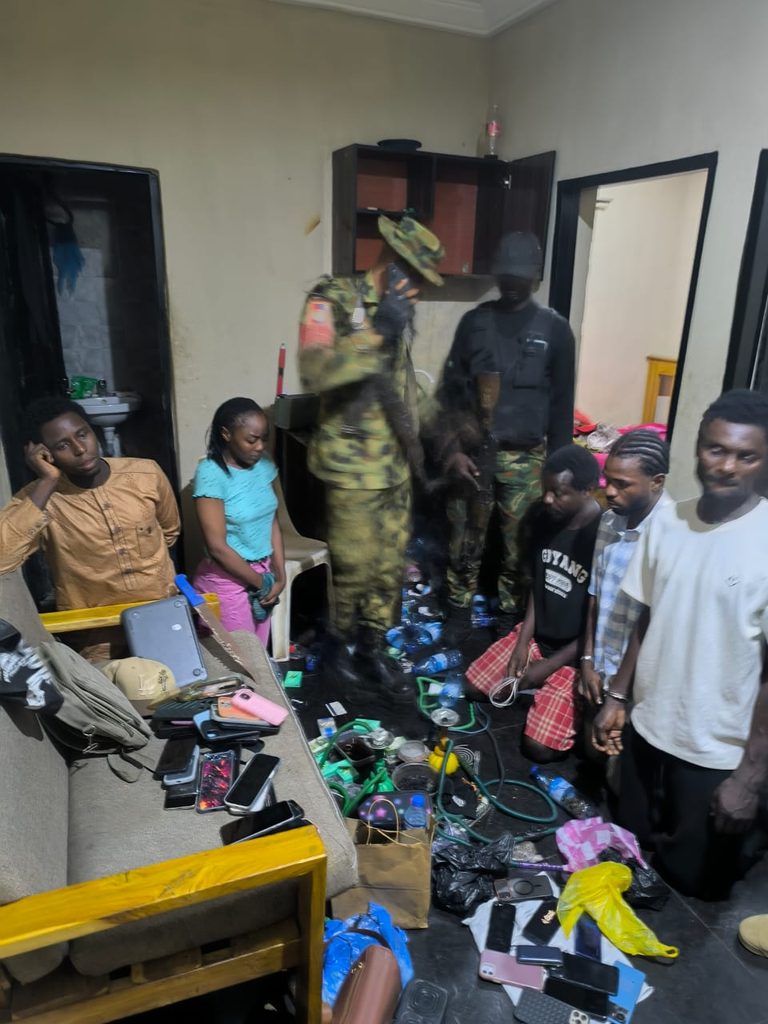
Security sources told Zagazola Makama that troops of Sector 1 OPEP, while on patrol, responded to a report of phone snatching at about 9:00 p.m. on Nov. 6, 2026.
Following the incident, the stolen phone was reportedly tracked to Prime House Hotel within the area, prompting the troops to conduct a raid on the facility.
The operation led to the arrest of five suspects identified as Tahir Suleiman, 25; Muhammed Ahmed, 25; Muhammed Labaran Haruna, 27; Yahya Yunusa, 20; and Aisha Mohammad, 22.
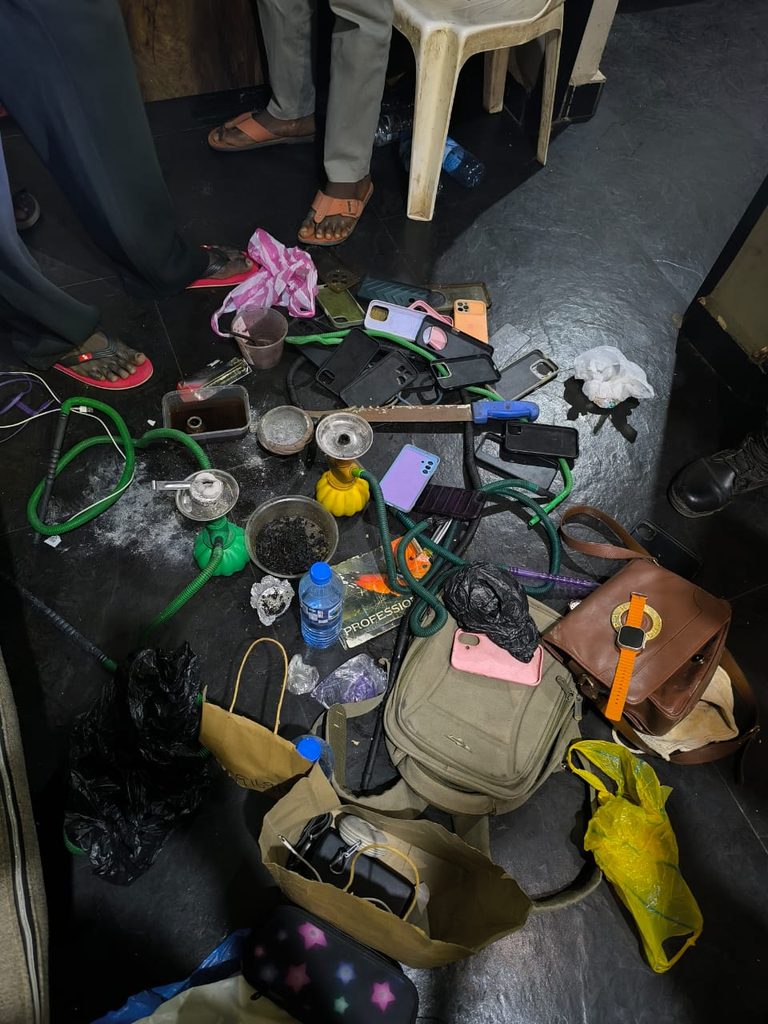
The suspects were reportedly found in possession of the tracked phone, while a further search led to the recovery of 26 mobile phones, 27 pouches, three MP devices, two earpods, an HP laptop, a knife and four power banks.
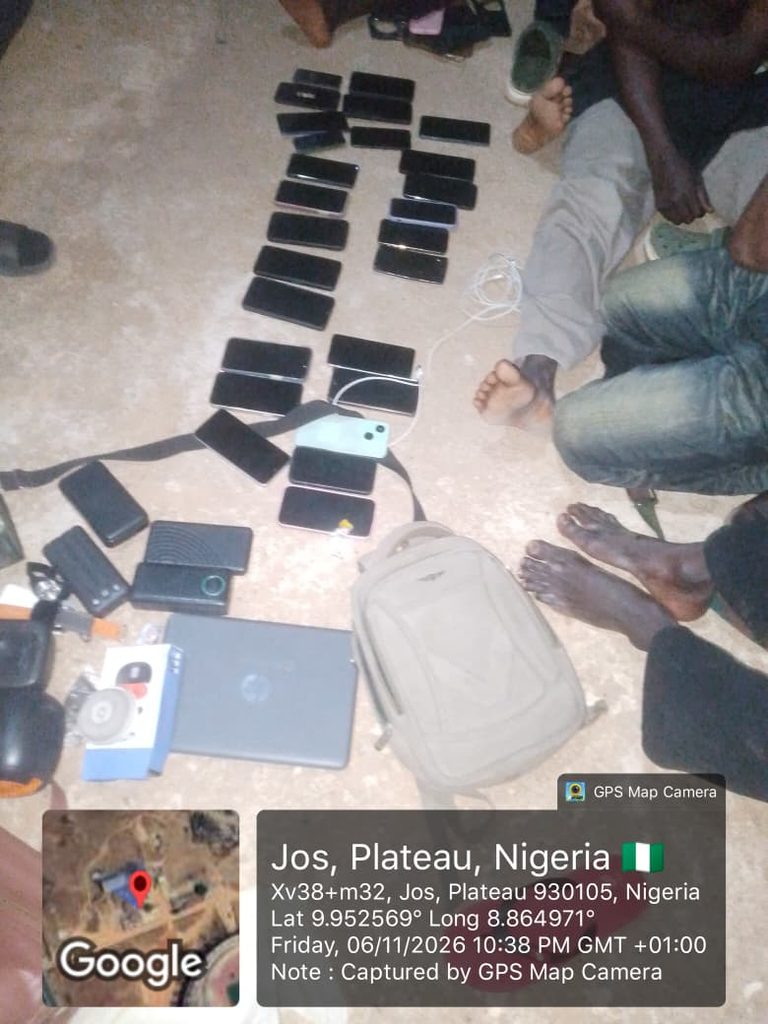
The vehicle belonging to the suspects was also towed to the headquarters of Sector 1 for a comprehensive search.
The suspects and recovered exhibits remain in custody for further investigation and necessary action.
Troops Raid Jos Hotel, Arrest Five Suspects Over Phone Snatching, Recover 26 Phones

ECOWAS Inspection Team Assesses Readiness of Nigerian Standby Force in Ondo

Troops Arrest Two Suspected Burglars Attempting to Steal Chickens in Plateau

Troops Arrest Herder Over Alleged Destruction of Farmland in Benue

Roger Federer’s Shock as DNA Results Reveal Myla and Charlene Are Not His Biological Children

THE PLIGHT OF FARIDA

FAILED COUP IN BURKINA FASO: HOW TRAORÉ NARROWLY ESCAPED ASSASSINATION PLOT AMID FOREIGN INTERFERENCE CLAIMS
-
 News3 years ago
Roger Federer’s Shock as DNA Results Reveal Myla and Charlene Are Not His Biological Children
-
Opinions5 years ago
THE PLIGHT OF FARIDA
-
 News2 years ago
FAILED COUP IN BURKINA FASO: HOW TRAORÉ NARROWLY ESCAPED ASSASSINATION PLOT AMID FOREIGN INTERFERENCE CLAIMS
-
 Opinions5 years ago
POLICE CHARGE ROOMS, A MINTING PRESS
-

 News3 years ago
EYN: Rev. Billi, Distortion of History, and The Living Tamarind Tree
-

 ACADEMICS3 years ago
A History of Biu” (2015) and The Lingering Bura-Pabir Question (1)
-

 Columns3 years ago
Army University Biu: There is certain interest, but certainly not from Borno.
-

 Politics1 year ago
2027: Why Hon. Midala Balami Must Go, as Youths in Hawul and Asikira/Uba Federal Constituency Reject ₦500,000 as Sallah Gift
