
News
FACT-CHECK: How a man killed in 2023 is now being recycled as a “terror kingpin” in Plateau


FACT-CHECK: How a man killed in 2023 is now being recycled as a “terror kingpin” in Plateau
By: Zagazola Makama
There is something deeply disturbing about the latest circulation of a photograph purportedly showing a suspected “terror kingpin” arrested in Riyom, Plateau State.
The more disturbing issue is that the man Alhaji Adamu Idris Gabdo, the Ardo of Panyam in Mangu Local Government Area, whose photograph appears to have been recycled was himself victim of targeted killing in Plateau. His disappearance, death and recovery of his remains were publicly documented by the Nigerian military in 2023.
Three years after his death, his image is now being dragged back into the security narrative this time apparently as though he were a perpetrator. That is not a harmless mistake.
In a conflict as sensitive as Plateau, turning the photograph of a dead victim into the face of an alleged terrorist can distort the historical record, dishonour the dead and potentially inflame the living.
On September 24, 2023, Adamu Idris Gabdo was reported missing after travelling to Panyam.
His disappearance generated considerable tension because of the already fragile security situation in Mangu. Operation Safe Haven subsequently launched a search operation.
On October 5, 2023, the military announced that its troops had recovered Gabdo’s remains around Boi, along the Pankshin–Bauchi Road in Tafawa Balewa Local Government Area of Bauchi State. The remains were handed over to his family for burial.
It referred to him as the late community leader and said the recovery of his remains would enable investigations to identify those responsible for what it described as a heinous crime.
In other words: Gabdo was not identified by the military as an attacker. He was identified as the victim of a killing. The chronology becomes even more important.
On November 8, 2023, the Nigerian Army announced that troops of Operation Safe Haven had arrested Philip Gokas, also known as Jaykimo, in Lagos. The Army described Gokas as the alleged mastermind behind the murder of the late Adamu Idris Gabdo. The Army said the suspect had admitted involvement and was providing information that could assist investigators in apprehending other suspects.
This means that the historical record already contains a very important distinction: Adamu Idris Gabdo = the murdered Ardo of Panyam.
Philip Gokas/Jaykimo = the person the Army announced in 2023 as an alleged mastermind in Gabdo’s murder.
That distinction cannot now be erased by attaching Gabdo’s photograph to an entirely different security narrative three years later.
The September 24, 2026 report that triggered the latest circulation says security sources reported the arrest of a suspected key figure in Riyom. But there is a crucial detail that appears to have been lost in the social-media amplification.
There have been genuine arrests in connection with violence in Plateau.
For example, in August 2026, Plateau police confirmed the arrest of a suspect believed to be linked to the Bi Mper attack in Mangu that killed 25 people. Channels Television reported the police confirmation and noted that investigations were continuing.
Therefore, fact-checking this latest Riyom report does not mean denying that security agencies are conducting operations or making arrests.
Nor does it mean defending anyone suspected of committing violence. The question is much narrower and much more important:
FACT-CHECK: How a man killed in 2023 is now being recycled as a “terror kingpin” in Plateau



Army expansion: COAS tasks new officers to turn manpower into combat power
By: Zagazola Makama
The Chief of Army Staff (COAS), Lt. Gen. Waidi Shaibu, has charged newly commissioned officers of Direct Short Service Course (DSSC) 29/2026 to transform the Nigerian Army’s expanding manpower and force structure into tangible combat power through competent, disciplined and purposeful leadership.
Shaibu gave the charge on Friday, September 25, 2026, while addressing the newly commissioned officers at the Nigerian Army School of Infantry Parade Ground, Jaji, Kaduna State.
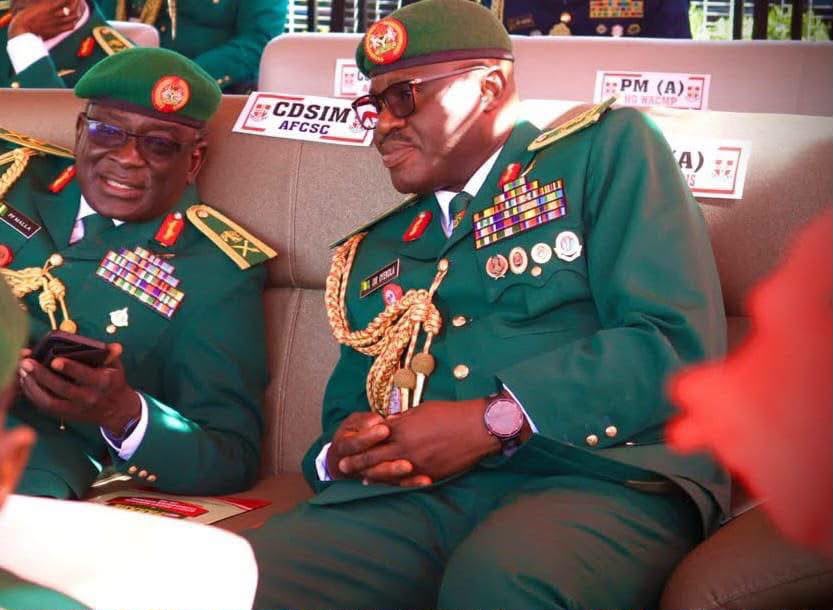
The COAS said the commissioning came at a critical stage in the transformation of the Nigerian Army, following President Bola Ahmed Tinubu’s approval for the expansion of the Army from eight to 12 divisions and the recruitment of an additional 28,000 soldiers.
He said the expansion would significantly increase the responsibilities of the officer corps, particularly in ensuring that additional manpower translates into improved operational readiness, effectiveness and combat capability.
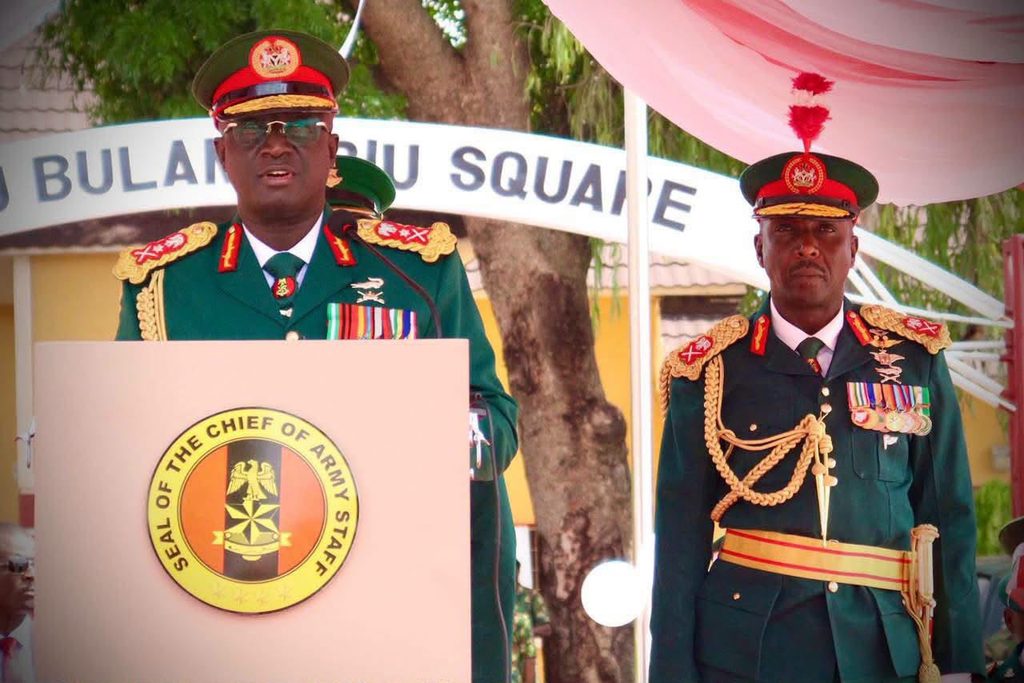
According to him, numbers alone cannot guarantee improved security outcomes.
He stressed that the value of an expanded force would ultimately depend on the quality of leadership, the ability of commanders to make sound and timely decisions and their capacity to maintain discipline and operational effectiveness under pressure.
The COAS therefore urged the new officers to lead by example, earn the confidence of their soldiers and place mission accomplishment and troop welfare above personal interests.

He reminded them that military rank provides authority, but character, integrity, competence and personal example are what ultimately generate trust and willing followership.
Shaibu further directed the officers to remain combat-ready regardless of their professional specialisations, noting that the demands of military service could require them to assume combat and other operational responsibilities whenever duty called.
He encouraged them to continuously develop their tactical competence, maintain physical fitness and pursue professional development while embracing emerging technologies increasingly shaping modern warfare.
These, he said, include unmanned systems, enhanced surveillance capabilities, intelligence fusion and digital communications.
The Army Chief also stressed the importance of joint operations and inter-agency cooperation in confronting Nigeria’s increasingly complex security environment.
He urged the officers to build effective professional relationships with the other Services, the Nigeria Police Force, intelligence agencies, paramilitary organisations and other relevant stakeholders.
He said intelligence sharing, operational synergy and coordinated action remained critical to achieving mission objectives and protecting civilians.
The commissioning of DSSC 29/2026 followed six months of intensive military training and adds another cadre of professionally trained officers to the Nigerian Army’s expanding force structure.
Shaibu tasked the officers to justify the nation’s investment in their training through competence, discipline, loyalty and dedicated service.
He urged them to leave Jaji prepared to accept responsibility, provide solutions rather than excuses and lead their soldiers with courage, fairness and professionalism.
The COAS said the Army’s ongoing expansion must ultimately produce a more capable and responsive force able to confront contemporary and emerging security threats across the country..
Army expansion: COAS tasks new officers to turn manpower into combat power
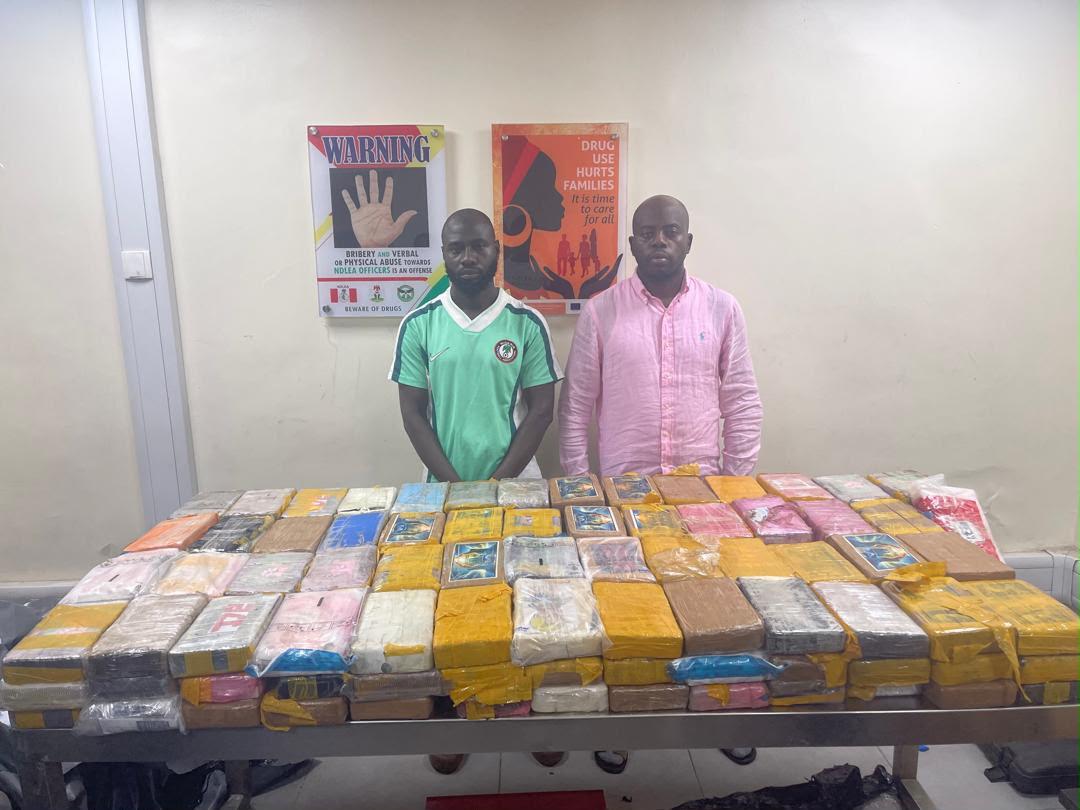
₦39bn Cocaine Haul: NDLEA Docks KC Luxury, 2 Others, Uncovers Multi-Billion Naira Money Trail
…Court remands trio as agency links luxury influencer to 184.5kg UK-bound cocaine (Updated)
By: Michael Mike
The National Drug Law Enforcement Agency (NDLEA) has uncovered an alleged multi-billion-naira financial network behind a 184.5-kilogramme cocaine shipment valued at about ₦39 billion, as the agency arraigned luxury lifestyle influencer Afolabi Kazeem Michael, popularly known as KC Luxury, and two alleged accomplices before the Federal High Court in Lagos.
The development has opened a new dimension in the investigation of the massive cocaine haul, with the prosecution filing 22 counts against the defendants — six relating to alleged cocaine trafficking and illegal export and 16 bordering on alleged money laundering.
KC Luxury, Boniface Freeman Ochoche Sule and Ikechukwu Ekugo Patriarch were arraigned on Friday before Hon. Justice Musa Kakaki of the Federal High Court, Lagos, on a 22-count charge bordering on cocaine trafficking, illegal export of narcotics and money laundering. They all pleaded not guilty to all the charges.
The NDLEA alleged that the trio conspired between July 28 and August 1, 2026, with Atandare Oluwarotimi and Latifat Yusuf, who have been arrested in London over the same case, to smuggle the cocaine out of Nigeria to the United Kingdom.
The drug, according to the charge, was concealed in five separate consignments processed through a Lagos-based courier logistics company and shipped under the name Yemi Ejide.
The case, therefore, stretches beyond a single drug seizure, with the prosecution alleging a coordinated international operation involving Nigeria, the United Kingdom, courier logistics and a network of financial transactions.
In one of the counts, the NDLEA alleged that Afolabi paid ₦13.2 million from a Mallamawa Ventures Zenith Bank account to BOT Express Logistics as consideration for processing the illicit consignments.
The agency further accused Boniface of procuring Ikechukwu to facilitate the export, while Afolabi allegedly secured the assistance of a staff member of BOT Express Logistics on Lagos Island to process the shipments.
The first count specifically alleges that the defendants conspired to export 184.5 kilogrammes of cocaine, contrary to Section 14(b) of the National Drug Law Enforcement Agency Act.
The prosecution also linked Afolabi to possession of the cocaine ahead of its intended export.
The agency’s 16 money-laundering counts allege that Afolabi funnelled several billions of naira through a web of companies and personal accounts in transactions allegedly designed to conceal the source of the funds.
Named in the charges are Mallamawa Ventures, Fateey Man Multi-Purpose Nigeria Limited, Patonifa Limited, Ade-Lak Resources, Holmestas Global Services Limited and La Capital Enterprises, among others.
The prosecution alleged that proceeds of the illicit trade were used to acquire motor vehicles and landed properties, allegedly as part of efforts to disguise their origin.
The agency also accused Afolabi of failing to declare his assets to the NDLEA as required by law.
The allegations have brought the financial dimension of the case into sharp focus, with investigators seeking to establish not only how the cocaine was allegedly moved but also how proceeds of the suspected trade were generated, transferred and invested.
The development followed the interception of the 184.5 kilogrammes cocaine consignment.
NDLEA operatives subsequently arrested Afolabi on the night of August 13, 2026, at the Murtala Muhammed International Airport, Lagos, as he allegedly attempted to leave Nigeria on a business-class flight to Paris.
The agency said a subsequent search of his Banana Island apartment led to the recovery of exotic vehicles, foreign currencies and jewellery, which it said were suspected to be proceeds of illicit activities.
Afolabi, who allegedly operated online under several identities including KayCee Luxury, KayCee Lux, KC, Mr Luxury and Yemi Ejide, had presented himself publicly as a luxury-goods dealer and lifestyle influencer.
The prosecution’s case also extends beyond Nigeria.with two other individuals, Atandare Oluwarotimi and Latifat Yusuf, named as alleged collaborators in the charge, have already been arrested in London in connection with the same cocaine shipment.
Their arrests, according to the charge, form part of the international dimension of the investigation into the attempted export of the consignment.
The prosecution’s allegations therefore place the case at the intersection of drug trafficking, international courier operations and alleged laundering of proceeds through businesses, bank accounts and asset acquisitions.
Following the defendants’ not-guilty pleas, NDLEA prosecutor Abu Ibrahim opposed their applications for bail and urged the court to remand them, citing the gravity of the offences.
Justice Faji subsequently ordered that the three defendants be remanded in the NDLEA’s custody.
The court adjourned the matter until October 4, 2026, for ruling on the bail applications.
The arraignment marks the formal commencement of the prosecution of the trio over the alleged ₦39 billion cocaine shipment and the financial transactions the NDLEA says were connected to the suspected drug trade.
The defendants remain presumed innocent unless and until the allegations against them are established in court.
₦39bn Cocaine Haul: NDLEA Docks KC Luxury, 2 Others, Uncovers Multi-Billion Naira Money Trail
CBN RATE CUT: NIGERIA ENTERS A NEW PHASE OF MONETARY EASING AND ECONOMIC DEVELOPMENT
By Dr Bolade Agbola DBA
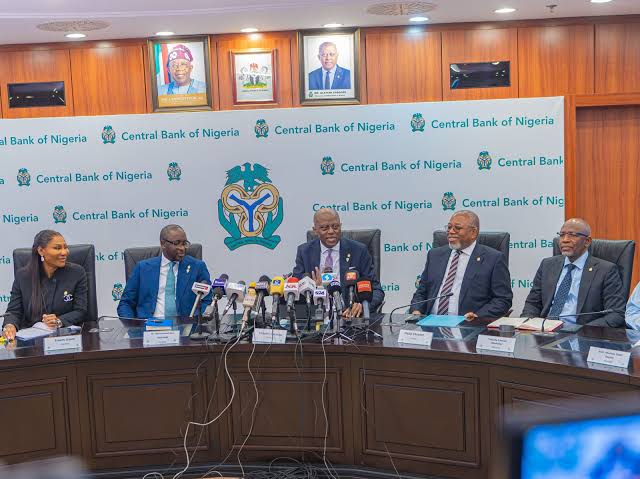
The Central Bank of Nigeria’s Monetary Policy Committee’s decision to cut the Monetary Policy Rate (MPR) by 350 basis points to 23% is more than a reduction in the policy rate; it represents an important signal about the changing direction of Nigeria’s monetary-policy cycle and economic development.
After a prolonged period of monetary tightening aimed at containing inflation and stabilising the macroeconomic environment, Nigeria now appears to be entering a new phase of monetary easing. The decision suggests that CBN is increasingly confident that inflationary pressures are moderating and that the economy may now require greater support for credit, investment and productive activity. The critical question, however, is not simply whether the MPR has been reduced, but how effectively the reduction will be transmitted through the financial system to businesses and households.
The inflation trajectory in the months ahead will ultimately determine how much further monetary easing can proceed. The gradual moderation in inflation is encouraging, while the expected improvement in domestic food supply during the harvesting season could provide additional relief to food inflation.
Inflation figures in recent months suggest that some of the inflationary pressures from earlier economic adjustments may be gradually dissipating. If this trend is sustained, Nigeria could move progressively towards single-digit inflation over time. That, however, remains an expectation rather than a certainty. Inflation remains vulnerable to exchange-rate movements, food-supply shocks, energy costs and fiscal pressures.
The most immediate implication is that the era of exceptionally high yields on Naira fixed-income instruments may gradually begin to recede. As monetary conditions ease, investors should expect downward pressure on yields of Treasury bills, government bonds, bank deposits, commercial paper, and money-market funds. This will create a significant portfolio-allocation challenge for investors who have benefited from elevated short-term interest rates. The investment environment could therefore shift from “high yield with relatively low duration” towards a greater emphasis on capital appreciation, duration management and asset.
For the banking industry, the implications are more complex. Banks will be expected to transmit the reduction in the policy rate through lower lending rates, particularly for productive sectors of the economy. But this could create pressure on their net interest margins (NIM) if loan yields decline faster than banks’ funding costs. The repricing of loan assets will therefore become an important issue for bank profitability.
At the same time, lower borrowing costs could strengthen the cash flows of viable businesses, improve debt-service capacity and support the restructuring of some stressed loan assets.
For manufacturers, agriculture, SMEs and other productive-sector businesses, the most important test is whether the MPR reduction translates into meaningfully lower commercial lending rates. A lower cost of funds could free up working capital, support new investment, and improve corporate cash flows. Businesses that have been constrained by high borrowing costs may have greater capacity to expand production, replace equipment and create employment.
But the transmission mechanism must work.
A 350-basis-point reduction in MPR does not automatically translate into a 350-basis-point reduction in every bank’s lending rate. Banks will continue to price credit according to their cost of funds, credit risk, liquidity requirements, capital costs and operating expenses. The real economic benefit will therefore depend on how much of the monetary easing reaches the productive sector.
The equity market could also enter an interesting phase. As yields on fixed-income instruments decline, investors may begin to reassess the relative attractiveness of equities. Lower interest rates can support equity valuations by reducing the opportunity cost of holding shares and potentially lowering companies’ financing costs. For listed companies, cheaper credit can support investment and earnings, while stronger economic activity could improve revenues and profitability. Companies with sustainable cash flows and the capacity to maintain or increase dividend payments may become increasingly attractive in a declining-yield environment.
However, lower interest rates alone do not guarantee higher equity returns. Corporate earnings, exchange rate stability, economic growth, governance and investor confidence will remain critical determinants of share prices and dividends.
The significance of the CBN’s decision therefore extends beyond the MPR itself. If disinflation continues, food supply improves and macroeconomic stability is maintained, Nigeria could gradually move towards a more accommodative monetary environment. The objective should not simply be lower interest rates, but a sustainable reduction in inflation that allows interest rates to fall without reigniting price pressures or undermining financial stability.Nigeria needs an environment in which inflation falls, real economic activity expands, credit becomes more affordable, businesses invest, employment improves and financial-sector stability is preserved.
The rate cut is an important signal of a possible change in the monetary cycle, but it is only one part of the equation. The coming months will reveal whether the current disinflationary trend is sufficiently durable to support further easing. For investors, banks, manufacturers and policymakers alike, the message is clear: the investment landscape is changing.
The period of exceptionally high naira yields may be nearing its end, while the premium on productive investment, quality equities, efficient businesses, and prudent portfolio diversification is likely to rise. We wait and see.
Dr Bolade Agbola DBA, MD, Lam Agro Consult Limited, is an agricultural economist, banker, stockbroker and business consultant, writes from Lagos
CBN RATE CUT: NIGERIA ENTERS A NEW PHASE OF MONETARY EASING AND ECONOMIC DEVELOPMENT

Army expansion: COAS tasks new officers to turn manpower into combat power

COAS unveils Nigerian Army Airborne School, tasks troops on special operations readiness

FACT-CHECK: How a man killed in 2023 is now being recycled as a “terror kingpin” in Plateau

Roger Federer’s Shock as DNA Results Reveal Myla and Charlene Are Not His Biological Children

THE PLIGHT OF FARIDA

FAILED COUP IN BURKINA FASO: HOW TRAORÉ NARROWLY ESCAPED ASSASSINATION PLOT AMID FOREIGN INTERFERENCE CLAIMS
-
 News3 years ago
Roger Federer’s Shock as DNA Results Reveal Myla and Charlene Are Not His Biological Children
-
Opinions5 years ago
THE PLIGHT OF FARIDA
-
 News1 year ago
FAILED COUP IN BURKINA FASO: HOW TRAORÉ NARROWLY ESCAPED ASSASSINATION PLOT AMID FOREIGN INTERFERENCE CLAIMS
-

 News3 years ago
EYN: Rev. Billi, Distortion of History, and The Living Tamarind Tree
-
 Opinions5 years ago
POLICE CHARGE ROOMS, A MINTING PRESS
-

 ACADEMICS3 years ago
A History of Biu” (2015) and The Lingering Bura-Pabir Question (1)
-

 Columns3 years ago
Army University Biu: There is certain interest, but certainly not from Borno.
-

 Politics1 year ago
2027: Why Hon. Midala Balami Must Go, as Youths in Hawul and Asikira/Uba Federal Constituency Reject ₦500,000 as Sallah Gift
