
News
FAILED COUP IN BURKINA FASO: HOW TRAORÉ NARROWLY ESCAPED ASSASSINATION PLOT AMID FOREIGN INTERFERENCE CLAIMS

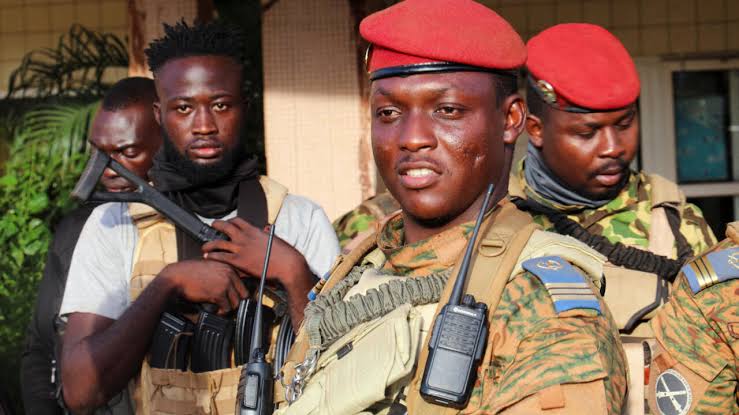
FAILED COUP IN BURKINA FASO: HOW TRAORÉ NARROWLY ESCAPED ASSASSINATION PLOT AMID FOREIGN INTERFERENCE CLAIMS
By: Zagazola Makama
The government of Burkina Faso has announced the foiling of an attempted coup allegedly involving President Ibrahim Traoré’s Chief of Staff and a network of foreign and local actors, in what authorities describe as a sophisticated plot to assassinate the junta leader and destabilize the Sahel nation.
The accused high-ranking official, whose name has not been officially disclosed, was arrested after reportedly confessing to accepting a bribe of 25 billion CFA francs (approx. $41 million USD) and an arms shipment allegedly facilitated through Côte d’Ivoire with French involvement.
The plot, uncovered through a military-led internal investigation, was said to be in the advanced planning stages. The confession reportedly links foreign powers to the destabilization attempt, with security sources accusing France Burkina Faso’s former colonial ruler of channeling weapons through Ivorian President Alassane Ouattara’s network. The French and Ivorian governments have not responded to the allegations as of the time of filing this report.
“This is a grave betrayal of national sovereignty,” the Ministry of Security said in a statement. “The Burkinabé people remain resolute and united behind President Ibrahim Traoré, whose leadership continues to command overwhelming support in our fight against insecurity and external manipulation.”
The revelation has triggered increased security in Ouagadougou and its environs, with checkpoints erected across key routes and military deployments strengthened at sensitive installations. The government says nine individuals, including foreign nationals, have so far been arrested in connection to the attempted coup.
Since assuming power in 2022, Captain Ibrahim Traoré has charted a new course in Burkina Faso’s foreign relations, distancing from Western powers particularly France and deepening strategic and military ties with Russia and fellow juntas in Mali and Niger under the Alliance of Sahel States (AES).
This realignment has heightened tensions in West Africa, with regional power blocs increasingly split between pro-Western governments and military-led regimes advocating self-determination and reduced foreign interference. Security experts suggest that Traoré’s pivot and strong anti-colonial rhetoric may have provoked foreign interests seeking to retain influence in the mineral-rich nation.
However, Zagazola could not independently verify the claims of external funding or logistical support to the coup plotters.
Burkina Faso has faced growing insecurity with large portions of its territory under the control of jihadist groups linked to al-Qaeda and the Islamic State. Multiple coups, the most recent in 2022, have reflected the country’s fragile political climate and rising frustration over government inaction. Traoré’s administration has pursued aggressive counter-insurgency campaigns and citizen mobilization, gaining popularity among some segments of the population but also drawing criticism for limited democratic oversight.
Zagazola Makama is a Counter Insurgency Expert and Security Analyst in the Lake Chad Region
FAILED COUP IN BURKINA FASO: HOW TRAORÉ NARROWLY ESCAPED ASSASSINATION PLOT AMID FOREIGN INTERFERENCE CLAIMS


News
After Owo, Katsina Death Sentences, Kogi Court Imposes Maximum Penalty On Man Arrested By DSS For Kidnapping, Murdering Neighbour
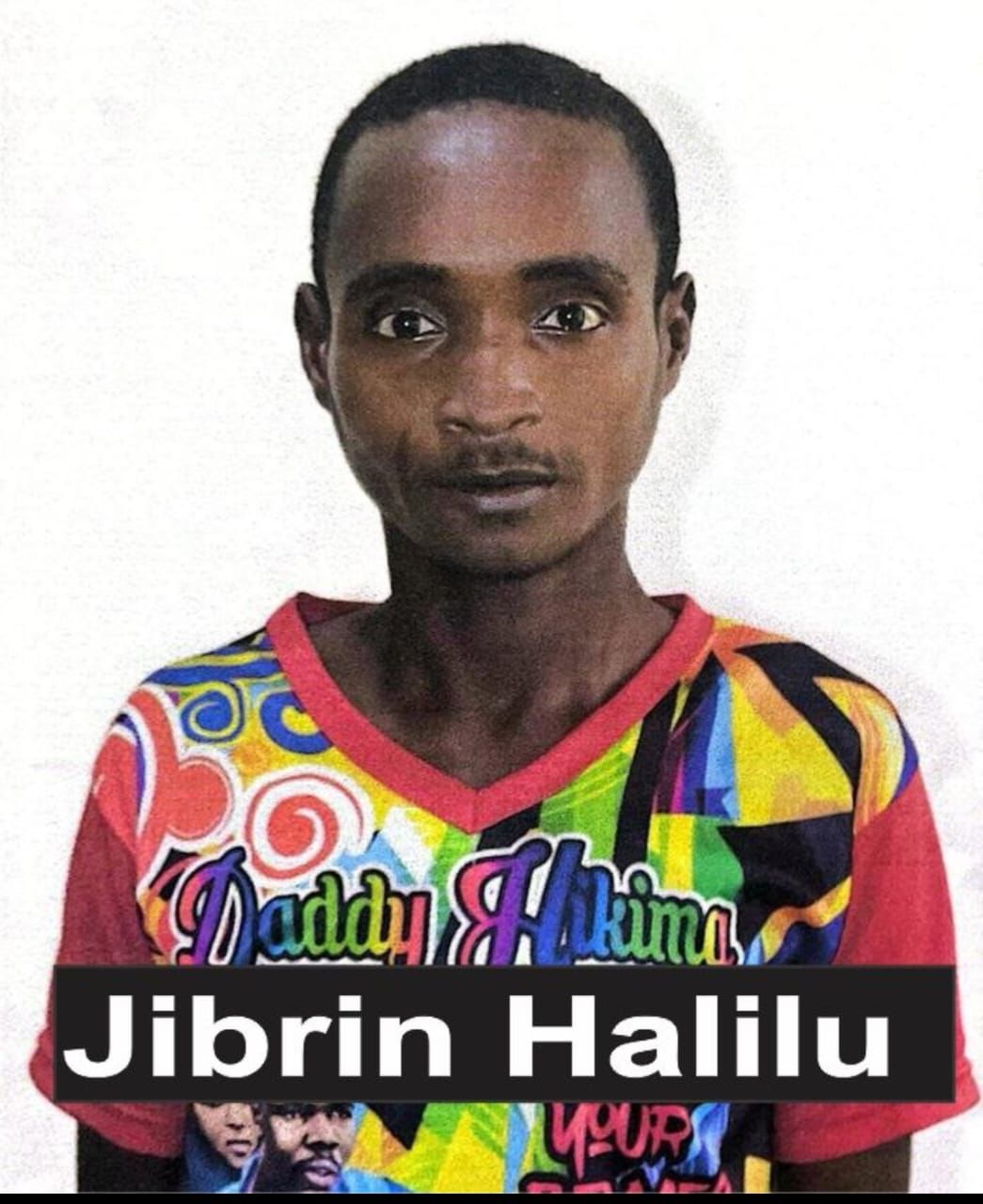
After Owo, Katsina Death Sentences, Kogi Court Imposes Maximum Penalty On Man Arrested By DSS For Kidnapping, Murdering Neighbour
Barely 24 hours after a Katsina State High Court sentenced to death a female arms courier arrested by the Department of State Services (DSS), a High Court of Kogi State has also imposed the death penalty on a man the DSS successfully prosecuted for kidnapping and murdering his neighbour, who ran a hotel in Obajana.
The Katsina and Kogi sentences came less than two weeks after a Federal High Court sitting in Abuja, imposed the death penalty on four men arrested by the DSS for carrying out the June 5, 2022 terrorist attack on St. Francis Catholic Church in Owo, Ondo State.
The Kogi court, presided over by Justice Abdul Nicodemus Awulu, on Tuesday, found Jibrin Halilu guilty on the charges of conspiracy and kidnapping, in contravention of Sections 12, 6 (1), and 4 (3)(a) of the Kogi State Kidnapping and Other Related Offences Prohibition Law, 2023. The court subsequently sentenced Halilu to death.
According to the prosecution, on March 23, 2023, Halilu and other members of his armed gang stormed Ever Ready hotel, Angwa-Tiv, in Obajana town,
abducting the proprietor, Uche Andrew Offo. Even though Offo’s family handed his abductors the N2.5 million ransom they demanded, they, nonetheless, killed him.
The DSS prosecutor told the court that operatives of the Service arrested Halilu on December 4, 2025.
“DSS investigations revealed that, while with his abductors, Offo was able to identify Halilu, who happened to be his neighbour, as being part of those who kidnapped him. That was when Halilu, despite the N2.5 million ransom he collected from Offo’s family, still killed him.
“Further investigations by the DSS also linked Halilu and his gang to the April 2, 2023 kidnapping of one Ibrahim Abdullahi, a resident of Oshokoshoko Community in Lokoja, from whom the gang collected a N5 million ransom,” a source also revealed.
The Kogi and Katsina convictions and sentencings come on the heels of a June 3, 2026, landmark verdict by a Federal High Court in Abuja sentencing four men to death for their roles in the June 5, 2022 terrorist attack on St. Francis Catholic Church in Owo, Ondo State.
The court sentenced the quartet of Idris Abdulmalik Omeiza, Al Qasim Idris, Jamiu Abdulmalik, and Abdulhaleem Idris to death by hanging for the attack which resulted in the death of over 40 worshippers and left over 100 persons injured.
“These convictions mark a significant run of courtroom victories for the DSS, reinforcing the message that those who engage in terrorism, kidnapping, and armed violence will not only be caught, but will be prosecuted and made to face the full consequences of their actions,” the source declared.
After Owo, Katsina Death Sentences, Kogi Court Imposes Maximum Penalty On Man Arrested By DSS For Kidnapping, Murdering Neighbour
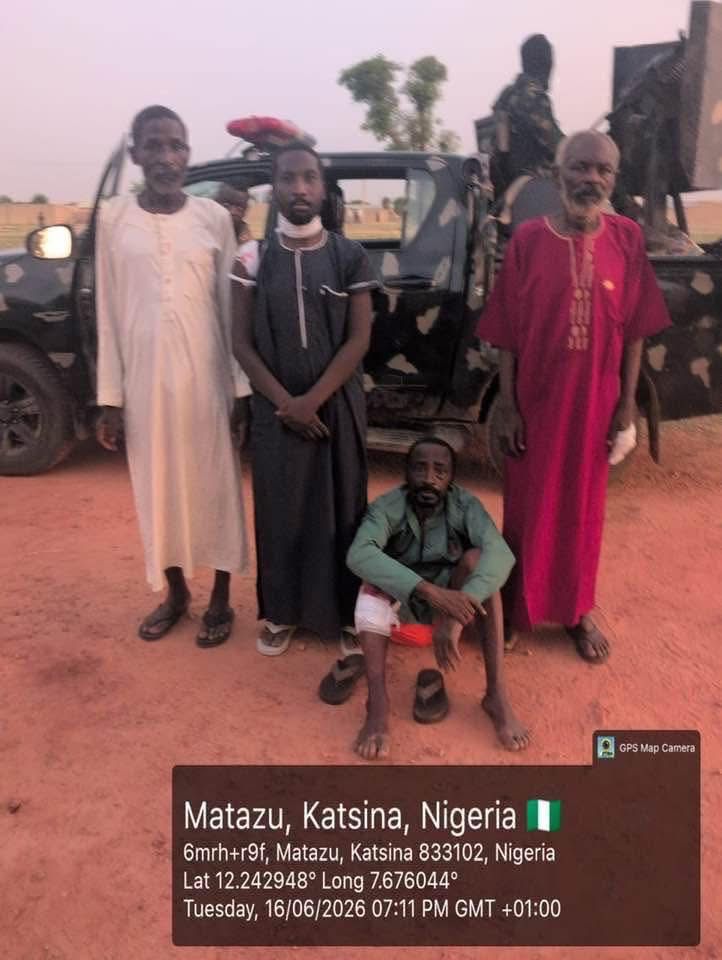
Troops Rescue Four Kidnap Victims in Katsina, Intensify Hunt for Bandit Kingpin
By: Zagazola Makama
Troops of the Nigerian Army have rescued four kidnap victims during ongoing operations targeting a notorious bandit leader, Kachalla Muhammadu Fulani, and members of his criminal gang in Katsina State.
The Katsina State Government disclosed this in a statement issued on Wednesday by the Commissioner for Internal Security and Home Affairs, Dr. Nasir Mu’azu.
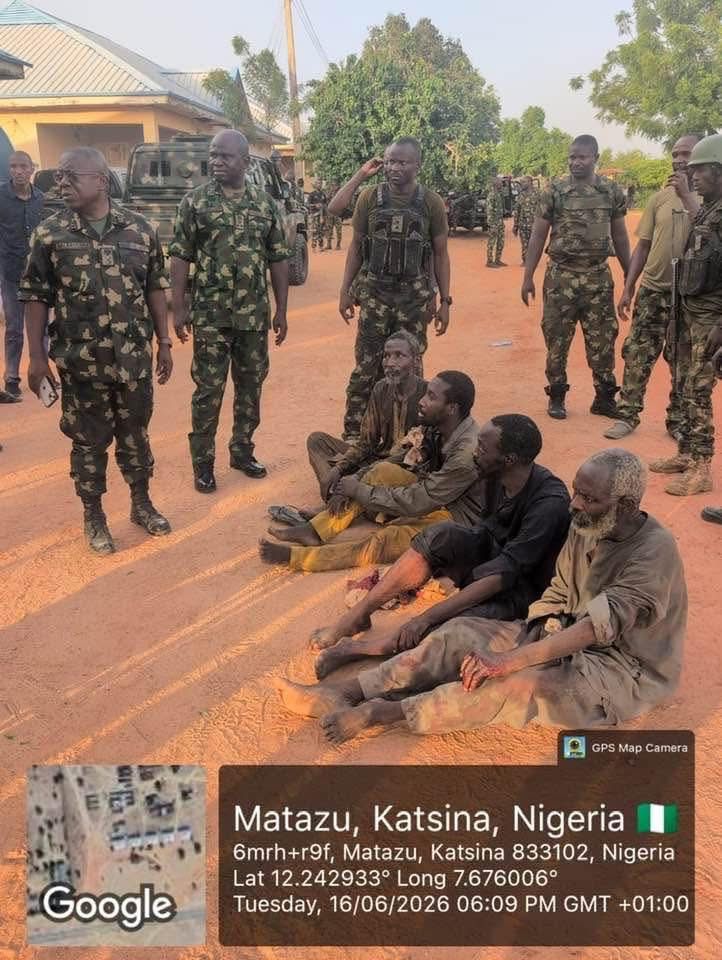
The rescued victims were identified as Musa Yakuba, 62; Alhaji Sa’adu Dayi, 68; Mukhtar Danja, 36; and Salisu Danja, 50.
According to the statement, the victims were rescued during sustained military operations in areas where the bandits were believed to be operating.
It added that medical personnel immediately attended to the victims following their rescue, as they had sustained gunshot wounds during their captivity.
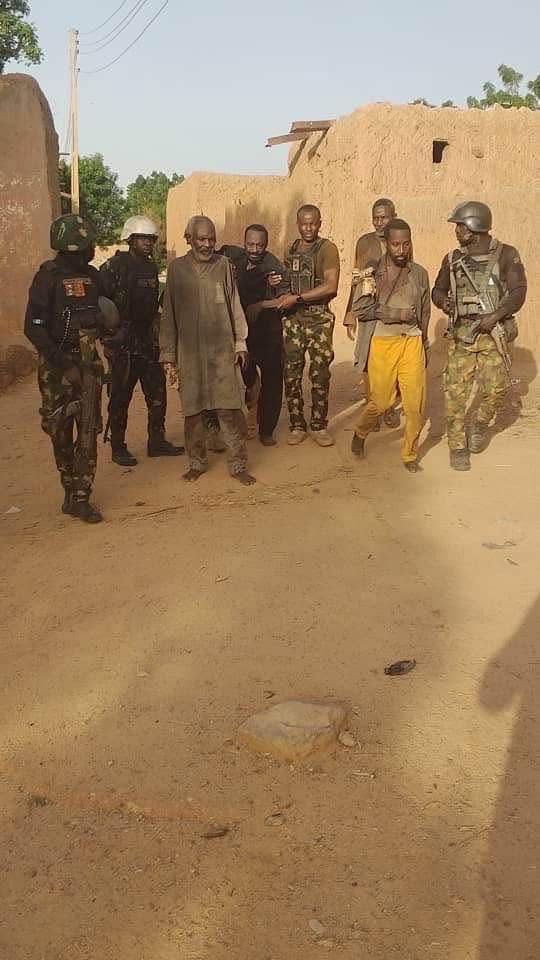
The government recalled that the wife of the late Major General Rabe Abubakar (rtd) had earlier been rescued in a related operation.
It noted that the four victims were among those previously seen in a photograph alongside the late senior military officer while in captivity.
The state government commended the bravery, professionalism and commitment of the Nigerian Army and other security agencies involved in the operation.
It stated that the security forces’ relentless efforts continued to yield positive results in the fight against banditry and kidnapping across the state.
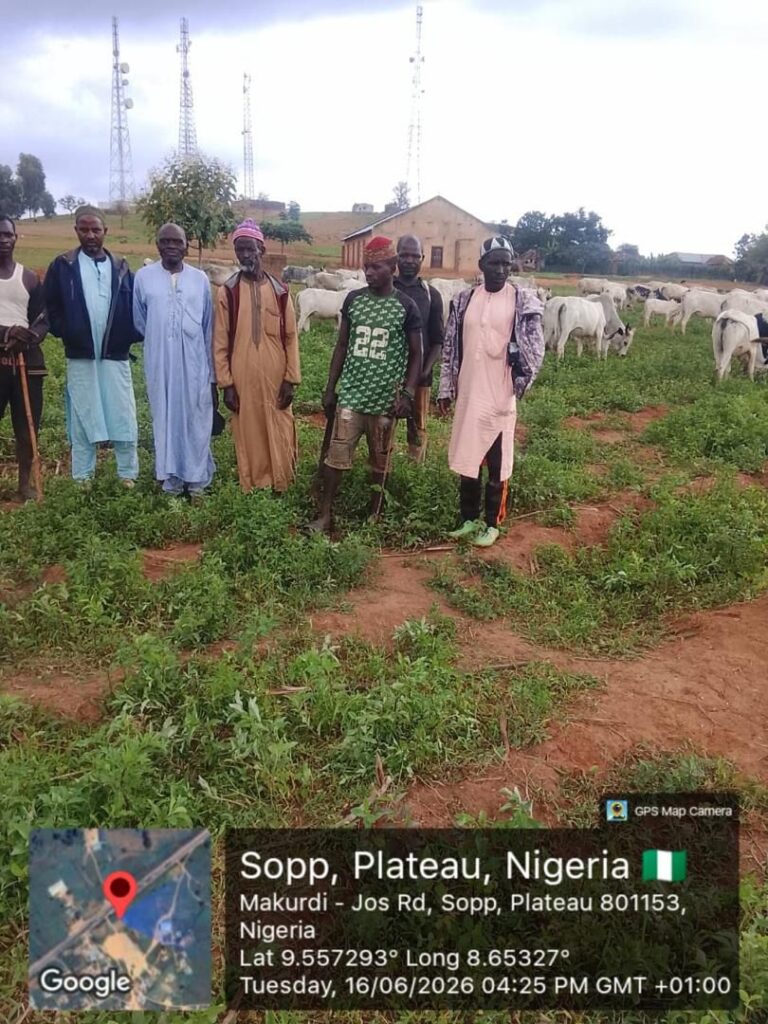
The government further assured residents that security operatives remained on the trail of Kachalla Muhammadu Fulani and other criminal elements responsible for terrorising communities.
It emphasised that ongoing operations would continue until all those responsible for acts of terror against innocent citizens were apprehended and brought to justice.
The government reaffirmed its commitment to protecting lives and property and pledged continued collaboration with security agencies to ensure that criminal elements have no safe haven anywhere in the state.
Troops Rescue Four Kidnap Victims in Katsina, Intensify Hunt for Bandit Kingpin
News
Nigeria, Saudi Arabia Deepen Humanitarian Alliance as NEMA, KSrelief Roll Out Food Aid to Five States
Nigeria, Saudi Arabia Deepen Humanitarian Alliance as NEMA, KSrelief Roll Out Food Aid to Five States
By: Michael Mike
The National Emergency Management Agency (NEMA) has reaffirmed its commitment to strengthening humanitarian cooperation with the King Salman Humanitarian Aid and Relief Centre (KSrelief), as both partners move to scale up emergency food assistance for vulnerable communities across Nigeria.
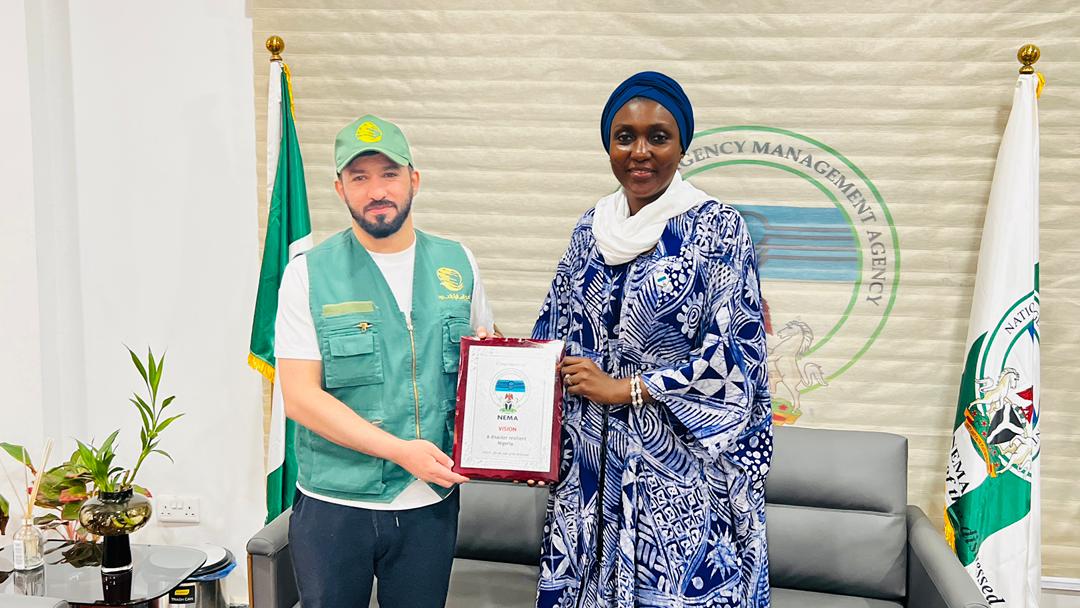
This was disclosed in Abuja when the Director-General of NEMA, Mrs. Zubaida Umar, received a delegation from KSrelief at the agency’s headquarters, where both sides reviewed ongoing collaboration and planned the next phase of direct humanitarian interventions.
Mrs. Umar commended KSrelief for its sustained support to disaster-affected and vulnerable populations in Nigeria, noting that the partnership has continued to reinforce federal humanitarian response efforts, particularly in reaching communities impacted by disasters, food insecurity, and other vulnerabilities.
KSrelief’s representative, Mr. Majeed Alanazi, said the visit was aimed at strengthening coordination with NEMA ahead of the rollout of direct food basket distribution to selected households in targeted states. He emphasized the organisation’s continued commitment to supporting vulnerable populations and improving welfare outcomes in affected communities.
According to the plan, the food assistance programme will be implemented across Yobe, Benue, Kebbi, Taraba, and Anambra States—covering both conflict-affected and food-insecure populations.
Both organisations described the initiative as part of a broader effort to deepen humanitarian reach and ensure more efficient delivery of aid to households most in need across Nigeria.
Nigeria, Saudi Arabia Deepen Humanitarian Alliance as NEMA, KSrelief Roll Out Food Aid to Five States

After Owo, Katsina Death Sentences, Kogi Court Imposes Maximum Penalty On Man Arrested By DSS For Kidnapping, Murdering Neighbour

Troops Rescue Four Kidnap Victims in Katsina, Intensify Hunt for Bandit Kingpin

Nigeria, Saudi Arabia Deepen Humanitarian Alliance as NEMA, KSrelief Roll Out Food Aid to Five States

Roger Federer’s Shock as DNA Results Reveal Myla and Charlene Are Not His Biological Children

THE PLIGHT OF FARIDA

FAILED COUP IN BURKINA FASO: HOW TRAORÉ NARROWLY ESCAPED ASSASSINATION PLOT AMID FOREIGN INTERFERENCE CLAIMS
-
 News2 years ago
Roger Federer’s Shock as DNA Results Reveal Myla and Charlene Are Not His Biological Children
-
Opinions4 years ago
THE PLIGHT OF FARIDA
-

 News2 years ago
EYN: Rev. Billi, Distortion of History, and The Living Tamarind Tree
-
 Opinions5 years ago
POLICE CHARGE ROOMS, A MINTING PRESS
-

 ACADEMICS2 years ago
A History of Biu” (2015) and The Lingering Bura-Pabir Question (1)
-

 Columns2 years ago
Army University Biu: There is certain interest, but certainly not from Borno.
-

 Politics1 year ago
2027: Why Hon. Midala Balami Must Go, as Youths in Hawul and Asikira/Uba Federal Constituency Reject ₦500,000 as Sallah Gift
-

 Opinions2 years ago
Tinubu,Shettima: The epidemic of economic, insecurity in Nigeria
