
News
Federal Government Commissions Public Toilets in Nasarawa

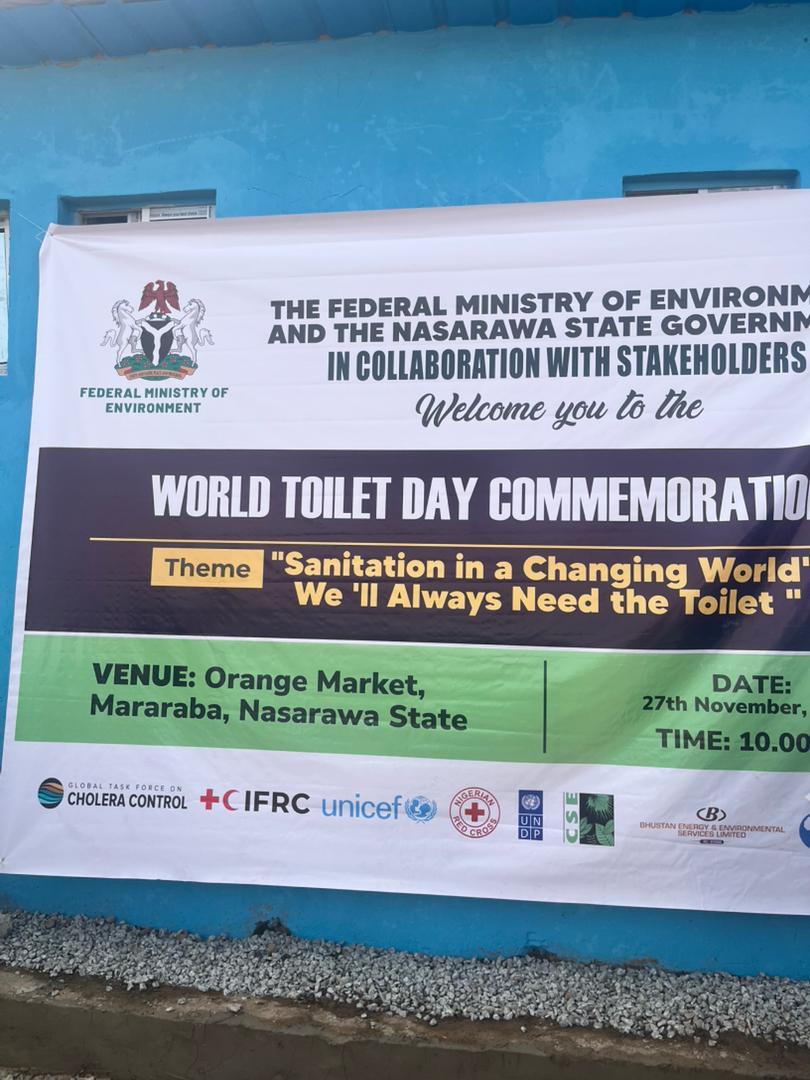
Federal Government Commissions Public Toilets in Nasarawa
By: Michael Mike
The Federal Government on Thursday inaugurated a new smart toilet in Nasarawa State, calling for stronger sanitation efforts across the state to ensure Nigeria exits her unenviable position as one of the top nations with open defecation.
Few days ago, the Minister of Environment, Balarabe Lawal decried that just about 25 per cent of Nigerians have access to safely managed sanitation facilities leaving over 45 million Nigerians still practice open defecation.
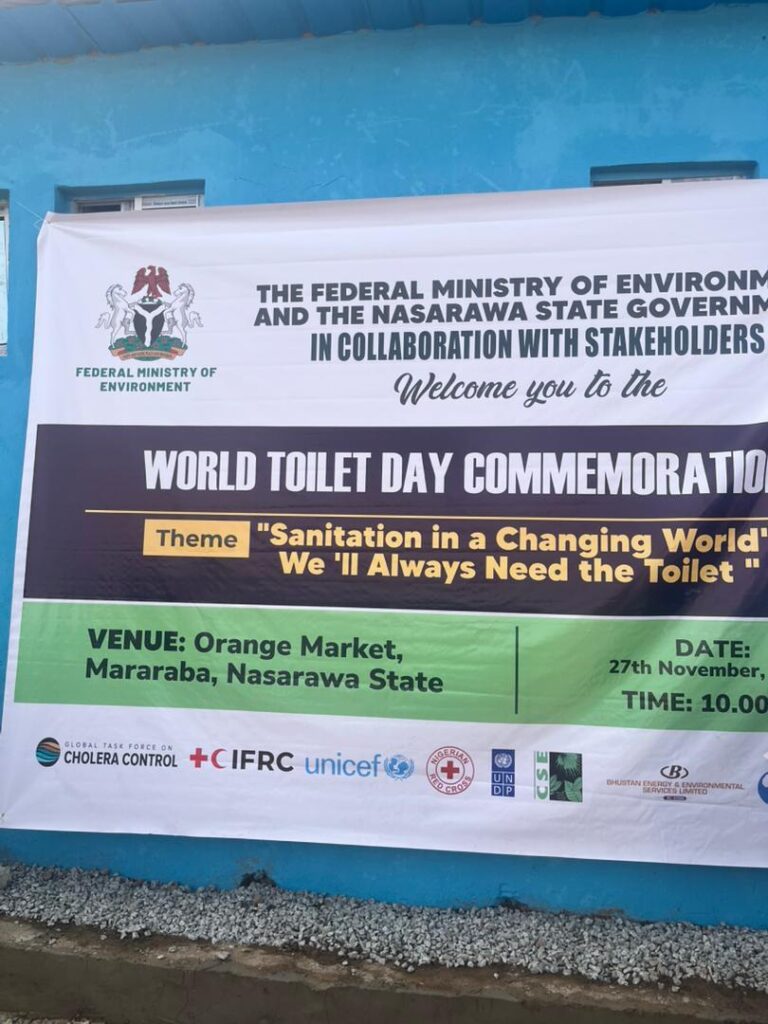
The Federal Ministry of Environment on Thursday called for stronger sanitation efforts across the states at the commissioning of new smart public toilets at Orange Market, Mararaba, in Nasarawa state to mark the 2025 World Toilet Day
The Director General of the Nasarawa State Waste Management and Sanitation Authority (NASWAMSA), Hon. Muhammad Isah, warmly welcomed dignitaries and partners to the 2025 World Toilet Day commemoration, expressing deep appreciation for the strong support the state has continued to receive toward improving sanitation and environmental health.
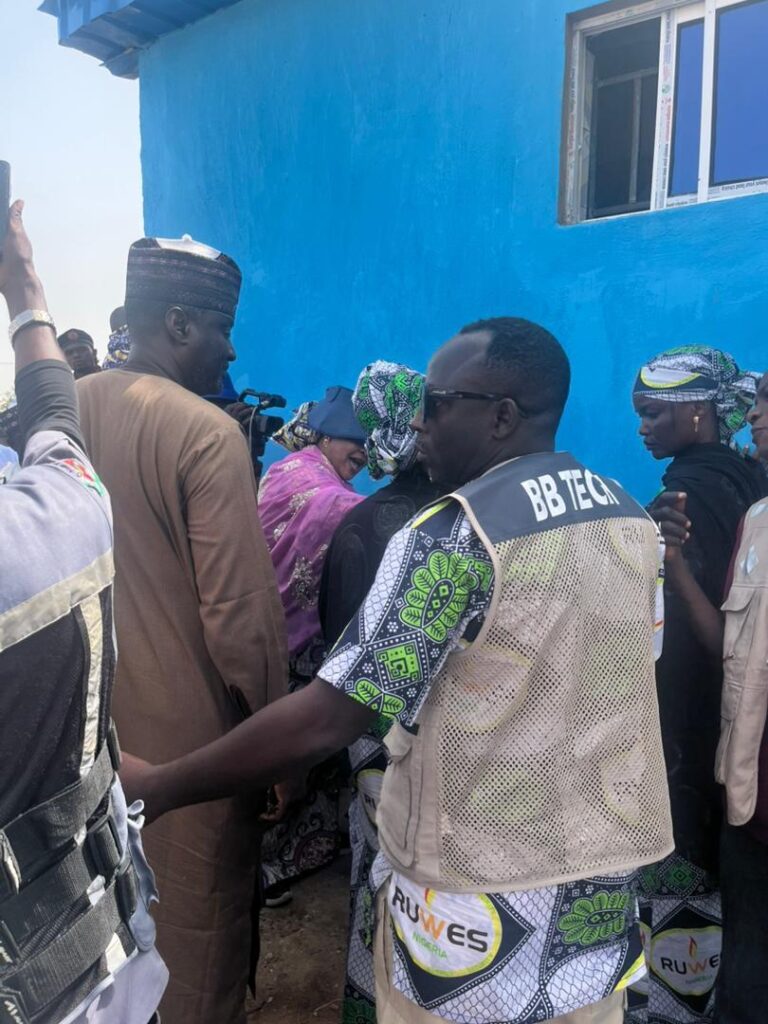
Addressing the Governor of Nasarawa State, the Honourable Minister of Environment, the Permanent Secretary, the Director of Pollution Control and Environmental Health, the Commissioner of Environment, the Nasarawa State Ministry of Environment, and other distinguished officials and partners, the DG extended his gratitude for their presence and ongoing collaboration.
Isah said “on behalf of our Authority, I sincerely appreciate His Excellency, the Governor, for his strong support toward improving sanitation and environmental health in our state.” He applauded the Federal Ministry of Environment for its continued partnership, noting that the provisioning of smart toilets being commissioned at the event, as well as an earlier air pollution monitoring facility, have contributed meaningfully to improving community well-being.
According to him, “our deep gratitude also goes to the Honourable Minister of Environment and the entire staff of the Federal Ministry of Environment for their continued partnership. The provision of the Smart Toilets we commission today, as well as the air pollution monitoring facility earlier provided, are meaningful contributions that strengthen our work and improve the well-being of our communities.” The DG also highlighted new collaborative initiatives between NASWAMSA and the Ministry, particularly in waste-to-energy development and job creation. He noted that the Ministry requested ten locations for public toilets between Mararaba and Masaka, areas where sanitation facilities are urgently needed.
He explained that “NASWAMSA worked with Orange Market management to provide two suitable sites for modern public toilets. These are the facilities being commissioned today.” Hon. Isah further expressed sincere appreciation to Dr. Engr. Bahijjahtu Abubakar, describing her as “maman talakawar jahar Nasarawa,” for her consistent support of women’s engagement and youth initiatives in the state. He stated, “your dedication is having a significant impact, and both the government and the people of Nasarawa State are truly grateful for your contributions. Thank you for your commitment to improving our environment and community.” The DG reaffirmed NASWAMSA’s commitment to continued collaboration with partners in pursuit of a cleaner and healthier Nasarawa State,
Also speaking at the event, the Executive Chairman of Karu Local Government Council, Barr. Abubakar Aliyu Madaki, described the newly commissioned Public Toilet Project at Orange Market, Mararaba, as a significant milestone in efforts to promote public health, environmental sanitation, and community wellbeing in Karu Local Government Area. During the Community Engagement/Sensitization Campaign and Commissioning of the Public Toilet Project organized by the Federal Ministry of Environment, he expressed appreciation to the Ministry for selecting Karu as one of the beneficiaries of the initiative.
He said “it is with great pleasure and a deep sense of responsibility that I stand before you today on behalf of Government and the good people of Karu Local Government Area.” He noted that the commissioning marks “another significant milestone in our collective efforts to promote public health, environmental sanitation, and community wellbeing in Karu.”
Madaki emphasized that Orange Market, being one of the busiest commercial hubs in the Local Government, attracts thousands of traders, buyers, transporters, and visitors daily, which creates the urgent need for proper sanitation facilities to prevent pollution and disease outbreaks. Describing the facility, he said, “This Public Toilet Project is therefore not just a building but it is an investment in public health, dignity, and environmental protection. It provides a safe, hygienic, and accessible facility for all market users, and supports our ongoing efforts toward a cleaner and a healthier Karu for everyone in line with the vision of His Excellency Engr. Abdullahi A. Sule the Executive Governor of Nasarawa State.”
He outlined recent efforts of the Local Government Council toward improving sanitation, stating that “over the past months, we have intensified efforts to improve waste management in markets and across communities, strengthen environmental monitoring and compliance, support community-based sanitation initiatives, and promote health education and community awareness.” Madaki assured the Federal Ministry that Karu Local Government would ensure the facility is well managed, adding, “Karu Local Government Council will take full responsibility for the maintenance, security, and effective use of this facility.” He urged traders and residents to safeguard the facility, saying, “this facility is yours. I urge you to take ownership of it. Let us use it properly, keep it clean, and protect it from vandalism.”
In his remarks, he expressed special appreciation to the Honourable Minister of Environment, the Honorable Commissioner of Environment, the DG NASWAMSA and their staff “for the support and dedication to environmental sustainability nationwide,” and stated that Karu Local Government remains open to more partnerships aimed at uplifting the health, economic, and social wellbeing of the people.
As the ceremony concluded, the Chairman reminded attendees that “development is meaningful only when it touches the lives of the people directly,” urging renewed commitment toward a cleaner society. He added, “Together, let us continue to promote a cleaner, safer, and healthier Karu for us and the future generation to come,” and ended with, “Thank you and may God bless us all. God bless Karu Local Government Area, Nasarawa State and the Federal Republic of Nigeria.”
Federal Government Commissions Public Toilets in Nasarawa


Borno: Zulum Deepens UMTH Partnership, Targets Medical Equipment for 20 Borno Hospitals
By: Our Reporter
Borno State Governor, Professor Babagana Umara Zulum, has reiterated his administration’s commitment to strengthening its partnership with the University of Maiduguri Teaching Hospital (UMTH) to improve healthcare delivery, particularly in resettled communities across the state.
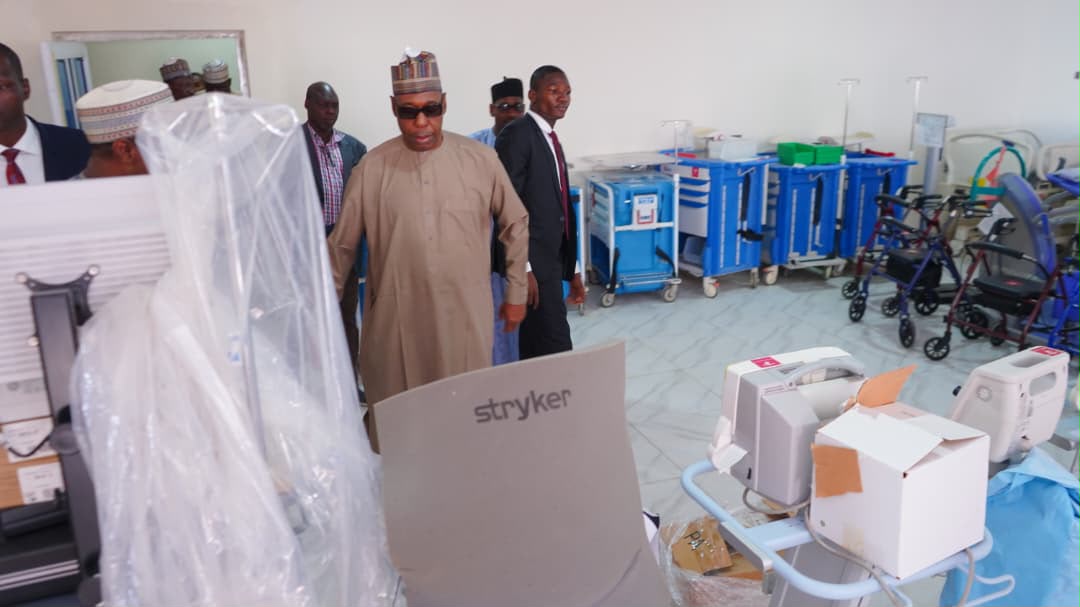
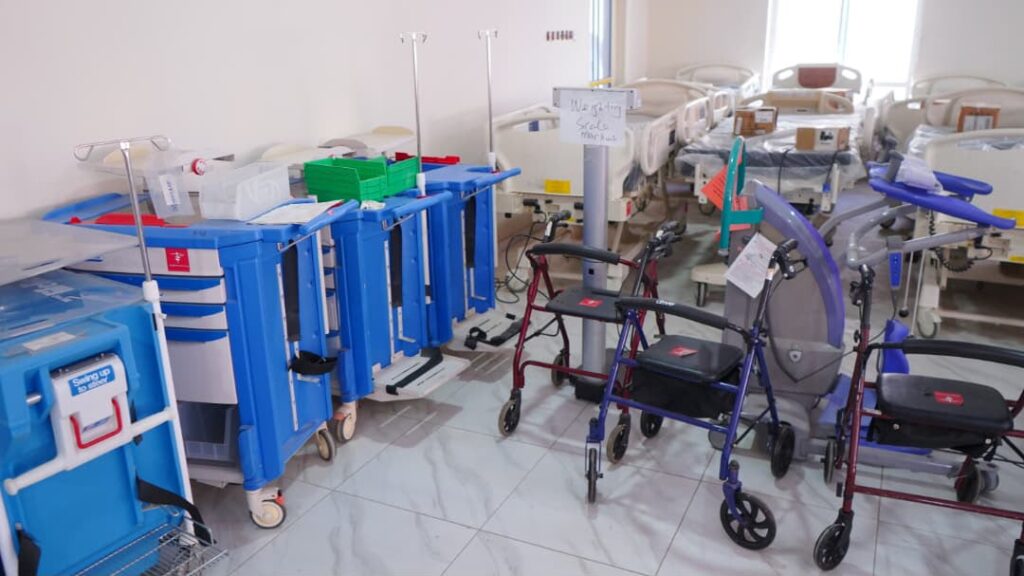
Governor Zulum made the pledge while inspecting drugs, medical equipment, and consumables donated to UMTH from the United States, which were transported to Maiduguri with support from the Borno State Government at the Stroke Center of Teaching Hospital.
The Governor disclosed that discussions are underway with UMTH and development partners to replicate the initiative across 20 general hospitals in the state, including the 10 newly constructed facilities, by attracting more medical equipment and healthcare interventions.
He also welcomed the decision by the Teaching Hospital to support two comprehensive health centres in Rumirgo and Baga, assuring that the state government would provide the required infrastructure and facilities before the outgoing hospital management completes its tenure, paving the way for the partnership to commence.
“Before you leave office, we shall do everything possible to ensure that the required facilities are on the ground so that the partnership will be implemented. I also commend those working with you because, without the support of the staff, such achievements cannot be made,” Zulum said.
He commended the outgoing Chief Medical Director of the hospital, Professor Ahmed Ahidjo, for what he described as remarkable achievements that have transformed the institution despite limited resources and thanked the Chief Adviser on Sustainable Development Goals, Dr. Mairo Mandara, for facilitating the connection with the United States.
“We have witnessed phenomenal growth and development in this teaching hospital since you assumed duty. I want to assure you that posterity will judge you positively for all the good works that you have done for us in Borno State and indeed in Nigeria,” he added.
Chief Medical Director of the University of Maiduguri Teaching Hospital (UMTH), Professor Ahmed Ahidjo, commended Governor Babagana Umara Zulum for the N500 million intervention following the 2024 flood disaster and other invaluable support to the hospital.
He said the N75 million out of the amount was used to ship the donated equipment, which includes state-of-the-art endoscopy and ultrasound machines, ICU beds, theatre beds, incubators, monitors, dental chairs, and other critical medical supplies.
“Part of the N500 million you gave us, precisely N75 million, was used in shipping these donated items from the United States. All these items came at no cost to the hospital apart from the shipping expenses, and today they are worth hundreds of millions of naira,” Ahidjo stated.
“We have over 20 modern ICU beds, advanced diagnostic equipment, and many other medical facilities that will be distributed across our departments. We believe Borno State can also benefit from similar donations through this same partnership,” he added.
According to the CMD, the hospital’s standalone Stroke Centre, is the only dedicated stroke facility in the county, noting that the centre currently has nearly 100 patients on admission, most of them receiving specialised treatment for stroke, significantly improving healthcare delivery in the region.
The Governor was accompanied on the visit by the Secretary to the State Government, Bukar Tijjani; Acting Chief of Staff, Dr. Babagana Mustapha Mallumbe; Commissioner for Local Government and Emirate Affairs, Hon. Sugun Mai Mele; Permanent Secretary, Government House, Barrister Mustapha Ali Busuguma; among others.
Borno: Zulum Deepens UMTH Partnership, Targets Medical Equipment for 20 Borno Hospitals
Gombe govt, UNICEF launch project to tackle malnutrition
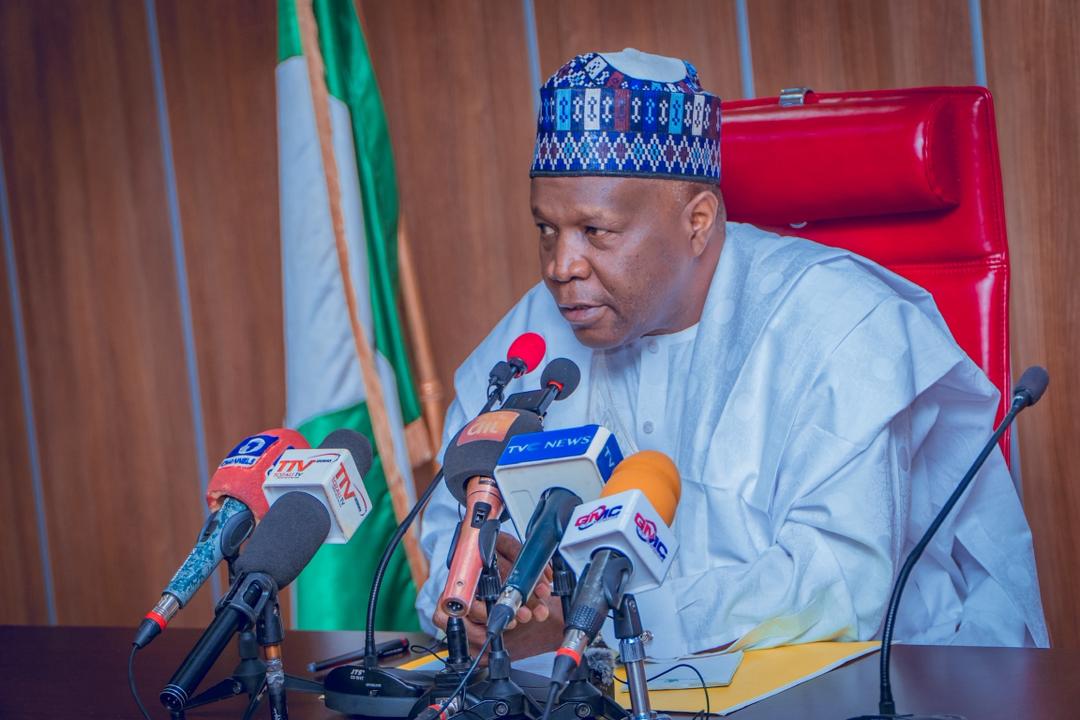
The Gombe State government in collaboration with the United Nations Children’s Fund, UNICEF has launched the Latter-Day Saints (LDSC)-Supported Project to tackle malnutrition through sustained investment in the first 1000 days of life.
The project tagged “Preventing Malnutrition in the First 1000 Days of Life” is to be implemented across Gombe State for a year.
Inaugurating the project in Gombe on Monday, Dr Abdulrahman Shuaibu, the Executive Secretary of the Gombe State Primary Health Care Department Agency said that the initiative was key to improving the health of children in the state.
Shuaibu said that the impact of malnutrition on children was severe, affecting the mental and overall development of the children, hence urged collective action to tackle the menace.
Stating that the statistics for Nigeria and Gombe State were not looking good, the Executive Secretary stressed the need to strengthen the fight against malnutrition through sustained investment and collaborations.
He advocated the need for antenatal care, safe delivery, exclusive breastfeeding, complementary and supplementary feeding as part of preventive measures that should be embraced by residents of the state.
Shuaibu highlighted efforts by the state government in collaboration with critical stakeholders to tackle the menace.
On her part, the Chief of UNICEF, Bauchi Field Office, Dr Nuzhat Rafique said that the one-year project was to support malnourished children to improve their nutritional status and to strengthen support for children during their first 1000 days.
Rafique decried the high number of children who were suffering malnutrition and the need for more investments in the first 1000 days of life to prevent malnutrition and ensure that children grow well to contribute to societal development.
“Today represents another important milestone in our collective commitment to ensuring that every mother and every child in Gombe State have the opportunity not only to survive but to thrive.
“The first 1,000 days of life — from conception until a child’s second birthday — represent the most critical period for brain development, physical growth, immunity and lifelong health.
“Investments made during this window yield some of the highest returns in human capital development and are fundamental to achieving sustainable development,” she said.
The Chief also lamented that the situation of hygiene and open defecation was very common, stressing that the nutritional status and availability of diverse food everyday in appropriate quality and quantity was unavailable.
“We need a very strong system to prevent malnutrition and promote healthy growth of the children and this grant is going to support that.”
Rafique said that the state needed a system strengthening approach and a good evidence based planning to tackle malnutrition amongst children in the state, stressing the importance of data-driven planning in all LGAs.
She called for a change in the community behaviour that often led children into malnutrition which she said wasn’t supposed to be.
“These children shouldn’t go into malnutrition in the first place because when they do, they lose a part of their I.Q, energy and potential to grow and be productive for the society.
“Once a child grows malnourished, everything they lose, even when they are treated at high cost, still we are at loss.
“As a nation we will be at a loss in future with more children malnourished although they are recovered,” she said.
The UNICEF Chief appealed to the media to help effect the needed behaviour change amongst communities to build a culture of prevention rather than treatment.
Rafique commended the Gombe State government for its continued investment and commitment to improving the wellbeing of children and women in the state which she said was evident in its sustained collaboration with UNICEF and other partners in the efforts to advance child rights.
Ms Philomena Irene, a Nutrition Specialist with UNICEF Nigeria’s Bauchi Field Office, highlighted the importance of the first 1000 days of a child, saying that the period was key to brain development.
Irene said investing in such a period was the most effective, high-impact strategy to break the cycle of malnutrition, poverty and inequality.
Breaking down the 1000 days, she said that the period comprised 270 days of pregnancy, 180 days of infancy, 550 days of toddler.
She called on stakeholders in the state to invest in the first 1,000 days to reduce child malnutrition and mortality while improving education, productivity and economic growth in the future.
Gombe govt, UNICEF launch project to tackle malnutrition

Ex-CDS Petinrin Lauds DSS On Oriire Rescue
*Says Intelligence Key To All Operations
By: Our Reporter
A former Chief of Defence Staff, Air Chief Marshal Oluseyi Petinrin, has praised the Department of State Services (DSS) for the recent rescue of 46 kidnapped pupils and teachers of a school in Oriire, Oyo State.
He described intelligence as key to all military operations, saying the intelligence supplied by the DSS greatly helped in the rescue operation.
In a statement he personally signed, Petinrin, a retired Four-star General, said he found the silence of the secret police before, during and after the rescue, impressive.
“While the side players were being eulogised and the main DSS actors responsible for the release were being ignored, the DSS kept silent,” noted the retired military officer.
He continued, “Students of military operations, including its planning and execution, know that intelligence is the grandfather of most successful operations. But it is a fact that is not immediately obvious to many members of the public and even to some that have spent years in the military establishments.”
He noted, “The Oriire kidnap victims’ release was already being credited to the military until one of the released victims told the true story.
“They were released by the kidnappers, and no kinetic action was involved in that release. The kidnappers even told their victims why they were being released: members of the kidnappers’ families had been arrested and their videos were sent to the kidnappers,” he stated.
The former Defence Chief noted that the ability of the DSS to identify relatives of the kidnappers and to use such intelligence to turn the tide against the abductors, led to the success of the operation.
Petinrin, who also served as Chief of the Air Staff, said he was particularly impressed by the conduct of the DSS after the operation was considered by many as a huge success.
“That is the way of solid intelligence professionals. They keep mum after doing the job that leads to the success of operations and will not raise a whimper even when the wrong people are being credited for the job. I must say it again: intelligence is the grandfather of military operations,” he declared.
Ex-CDS Petinrin Lauds DSS On Oriire Rescue

Borno: Zulum Deepens UMTH Partnership, Targets Medical Equipment for 20 Borno Hospitals

Gombe govt, UNICEF launch project to tackle malnutrition

Ex-CDS Petinrin Lauds DSS On Oriire Rescue

Roger Federer’s Shock as DNA Results Reveal Myla and Charlene Are Not His Biological Children

THE PLIGHT OF FARIDA

FAILED COUP IN BURKINA FASO: HOW TRAORÉ NARROWLY ESCAPED ASSASSINATION PLOT AMID FOREIGN INTERFERENCE CLAIMS
-
 News2 years ago
Roger Federer’s Shock as DNA Results Reveal Myla and Charlene Are Not His Biological Children
-
Opinions4 years ago
THE PLIGHT OF FARIDA
-
 News1 year ago
FAILED COUP IN BURKINA FASO: HOW TRAORÉ NARROWLY ESCAPED ASSASSINATION PLOT AMID FOREIGN INTERFERENCE CLAIMS
-

 News2 years ago
EYN: Rev. Billi, Distortion of History, and The Living Tamarind Tree
-
 Opinions5 years ago
POLICE CHARGE ROOMS, A MINTING PRESS
-

 ACADEMICS2 years ago
A History of Biu” (2015) and The Lingering Bura-Pabir Question (1)
-

 Columns2 years ago
Army University Biu: There is certain interest, but certainly not from Borno.
-

 Politics1 year ago
2027: Why Hon. Midala Balami Must Go, as Youths in Hawul and Asikira/Uba Federal Constituency Reject ₦500,000 as Sallah Gift
