
News
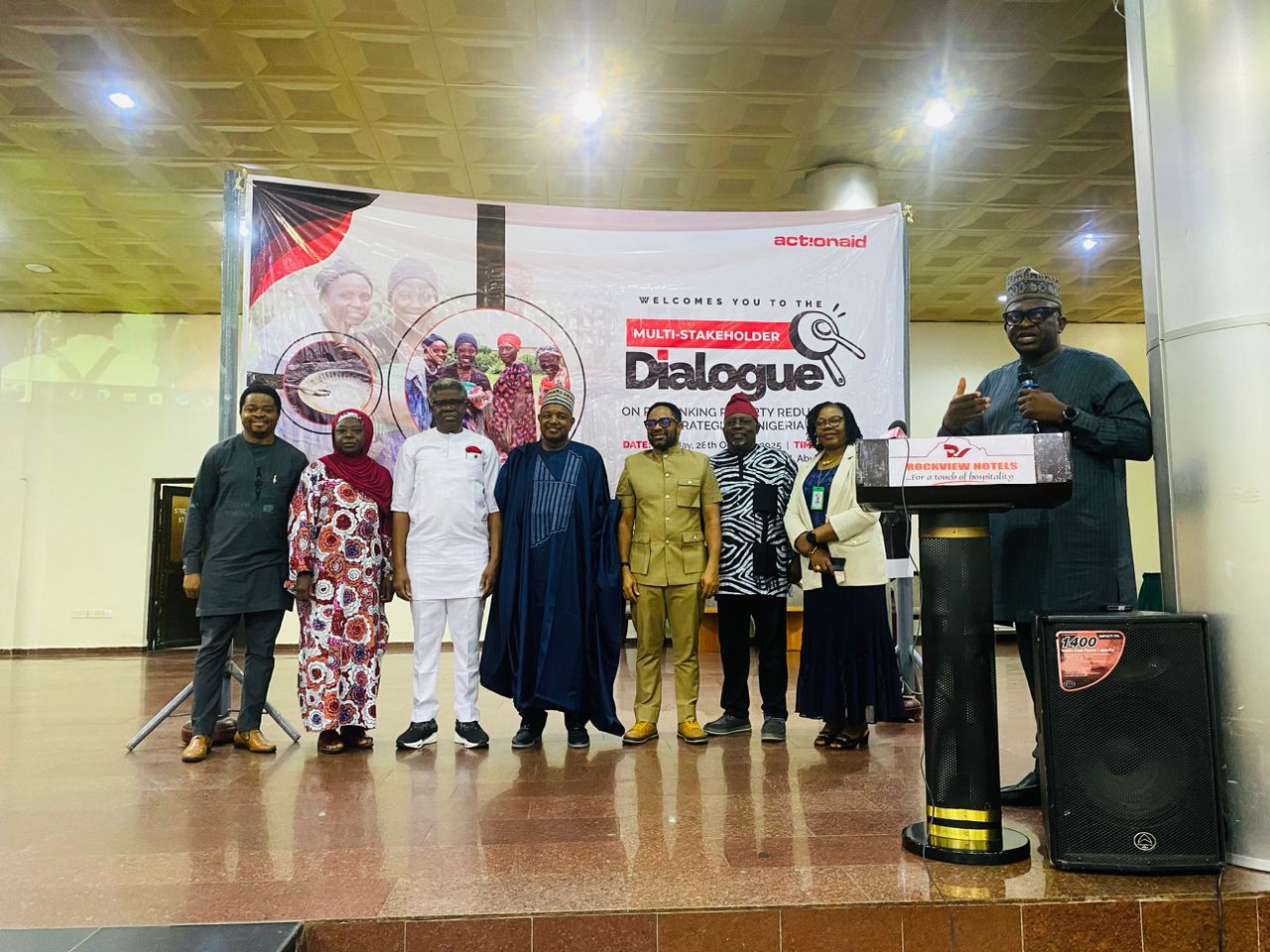
FG, ActionAid, World Bank Push New Plan to End Poverty

FG, ActionAid, World Bank Push New Plan to End Poverty
By: Michael Mike
The Federal Government, ActionAid Nigeria, and development experts have reaffirmed their collective resolve to eliminate poverty through inclusive growth, fiscal accountability, and citizen empowerment by the year 2030.
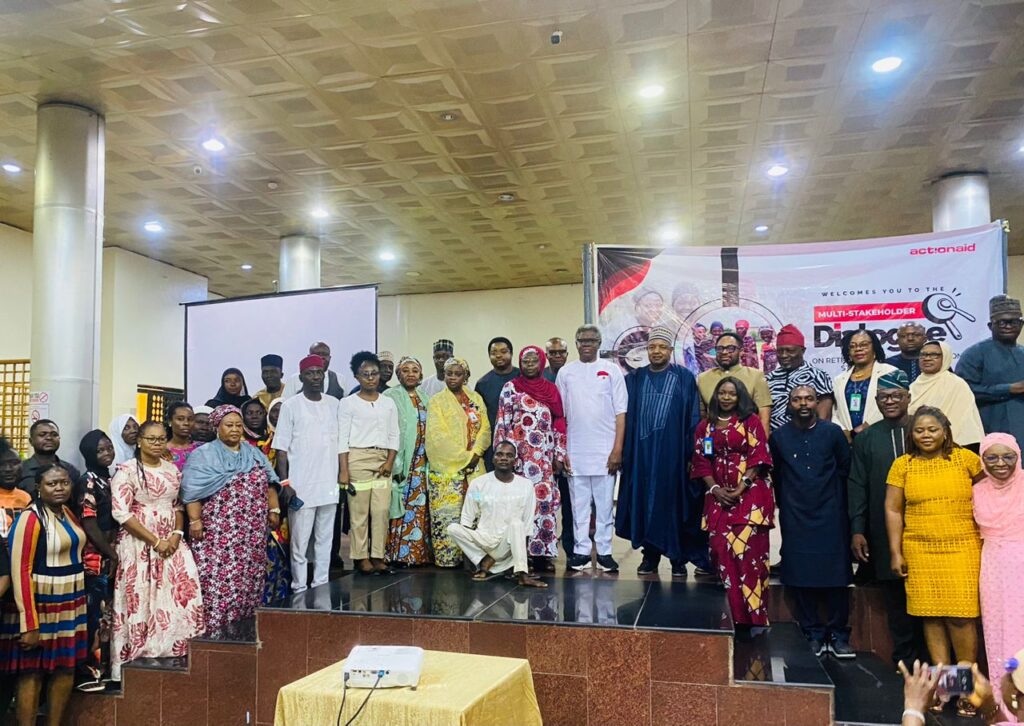
Speaking at the High-Level Dialogue on Rethinking Poverty Reduction Strategies in Nigeria held in Abuja, the Minister of Budget and National Planning, Senator Atiku Bagudu, said the government’s focus is on building an economy that rewards hard work, ensures fairness, and supports only those genuinely in need.
“The biggest form of social protection is ensuring that hardworking Nigerians receive fair rewards for their efforts, while social transfers go to those genuinely disadvantaged,” Bagudu stated.
He said President Bola Ahmed Tinubu’s administration is committed to eliminating poverty by 2030 through the Renewed Hope Development Plan, which emphasizes productivity, innovation, and inclusion.
“We are determined, by God’s grace, to eliminate poverty by 2030,” the minister affirmed.
Bagudu expressed optimism that ongoing reforms are already yielding positive results, citing increased revenues, renewed investor confidence, and new economic initiatives as signs of early recovery.
“Our economy is showing early signs of recovery, revenues are improving, private investment is returning, and new initiatives are taking root,” he said.
Describing President Tinubu’s policy direction as “bold and forward-looking,” the minister urged Nigerians to remain patient and supportive, assuring that the long-term benefits of reforms will soon reflect in people’s lives.
In his remarks, the Country Director of ActionAid Nigeria, Andrew Mamedu, called for a comprehensive review of Nigeria’s poverty reduction strategies to ensure that economic growth translates into real benefits for citizens.
He noted that despite Nigeria’s budget increasing from ₦300 billion in 1999 to ₦54.5 trillion in 2024, poverty levels have not declined proportionately.
“This tells us that we must do things differently. At ActionAid, we believe poverty can be eradicated, but only when government and citizens take shared responsibility and ensure accountability from the federal to the local level.” He said .
Mamedu, who recently visited Edo and Delta States, decried poor infrastructure despite increased financial allocations to subnational governments.
“The situation raises critical questions about how resources are being used at sub-national levels,”
“For us in ActionAid, the only party we recognize is the party of the people the fight against poverty.”he disclosed .
He urged government at all levels to emulate countries like China and India, which successfully lifted millions out of poverty through major investments in infrastructure, education, health, and social protection, ensuring that local contractors benefited from such projects.
“It is not enough to increase spending; we must ensure resources are used efficiently,” he said. “Reports show we lose about $18 billion annually to illicit financial flows. If we can stop such leakages, more funds will remain in our economy to drive development.”
While commending the Federal Government’s pledge to lift 100 million Nigerians out of poverty in 10 years, Mamedu stressed that the goal can only be achieved through consistency, accountability, and collaboration among all stakeholders.
“We need to move about 10 million Nigerians out of poverty every year,”
“To achieve that, everyone government, civil society, and private sector must work together.” He said .
He also called for greater discipline and punctuality among citizens and officials, describing them as symbols of accountability and efficiency.
“Governance is not only about the President or ministers. It involves all of us. If we begin to do the small things right, like keeping to time, it will reflect in how we manage bigger responsibilities,” he added.
Mamedu reaffirmed ActionAid’s 10-year strategy to support and hold government accountable in lifting five million Nigerians out of poverty.
“We must ensure that the next poverty review shows progress, not decline,” “Together, we can build a Nigeria where prosperity is shared and poverty becomes history.”he said .
Both Bagudu and Mamedu agreed that sustainable poverty eradication will depend on shared responsibility, transparency, and a renewed focus on rewarding hard work across all sectors of the economy.
At the same dialogue, Dr. Chris Uwadoka, Special Adviser to the Executive Chairman of the Fiscal Responsibility Commission, emphasized that fiscal discipline and transparency are fundamental to reducing poverty.
“Fiscal responsibility is at the heart of poverty reduction, period. It is not merely a technical framework. It is a people-centred philosophy driven by transparency, accountability, and prudence,” he stated.
He acknowledged that while the government’s reforms have stabilized key indicators like revenue and debt, the real challenge lies in translating these macroeconomic gains into tangible human welfare.
“The challenge now… is how to translate these statistical macroeconomic results into tangible human welfare improvement. I believe that this question is at the heart of this multi-stakeholder dialogue today,” Uwadoka said.
He also urged state and local governments to take fiscal discipline seriously to prevent financial leakages and ensure that public resources directly benefit citizens.
“State and local governments need to hold themselves accountable to their people and to poverty alleviation… Without this commitment to good public financial management, the drivers of poverty will overwhelm our best intentions,” he cautioned.
Meanwhile, a World Bank presentation delivered by Mr. Imole Ibukun from the National Economic Council Secretariat highlighted a disturbing rise in poverty levels despite ongoing reforms.
According to the report, about 139 million Nigerians (61% of the population) now live in poverty up from 81 million (40%) in 2019. It also projects that poverty could rise by another 3.6 percentage points by 2027, making Nigeria one of the few resource-rich countries likely to see worsening poverty due to structural weaknesses.
The World Bank identified key drivers of poverty, including high food inflation, stagnant wages, oil dependence, poor infrastructure, low agricultural productivity, insecurity, and weak governance.
The report warns that without urgent corrective action, rising poverty could reverse development gains and threaten social stability. It recommends expanding social safety nets, investing in rural infrastructure and agriculture, improving food security, and strengthening governance to ensure economic growth benefits citizens.
FG, ActionAid, World Bank Push New Plan to End Povertyp



DSS Trails, Nabs Man Impersonating Personnel in Abuja
By: Zagazola Makama
*Arrested in tactical uniform, with fake pistol, allegedly extorting motorists
The Department of State Services (DSS) late on Wednesday in Abuja arrested a man identified as Moferewa Maiye, discovered to be impersonating a personnel of the Service.
Maiye, who claimed to hail from Agbajojun Village, Mopamuro Local Government Area of Kogi State, was trailed and arrested by DSS officers in his hideout around the NITEL Junction, along Adetokunbo Ademola Way, Wuse II, Abuja.
At the time of his arrest, Maiye was in DSS tactical uniform and armed with a fake pistol.
According to a security source, the Secret police acted on credible intelligence that Maiye was using the uniform and the fake weapon to intimidate commuters and motorists, extorting money from them.
During interrogation, added the source, the suspect reportedly claimed that his brother was a DSS personnel who died years ago.
He identified the brother as Monday Maiye, stressing that the DSS kit in his possession was his late brother’s.
The suspect is currently being interrogated as security operatives, the source stated, adding that the Service was investigating how he came about the DSS uniform and kit.
“Investigators are also trying to establish how long the suspect has been involved in similar acts of impersonation and extortion.
“The arrest underscores growing concerns by the Service over the activities of individuals who impersonate security personnel to intimidate members of the public and commit criminality,” the source declared.
DSS Trails, Nabs Man Impersonating Personnel in Abuja
Yobe: Wali visits Emir of Damaturu
By: Yahaya Wakili
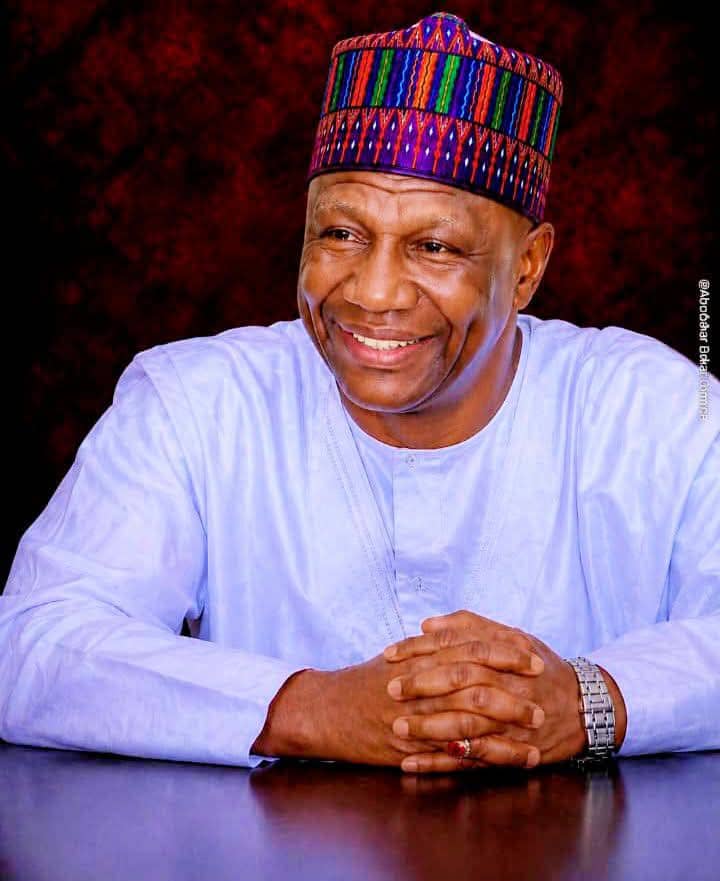
Yobe State All Progressives Congress (APC), 2027 gubernatorial candidate Alhaji Baba Malam Wali MNI, FCAN, has paid a courtesy visit to His Royal Highness, the Emir of Damaturu, Alhaji Shehu Hashimi II Ibn Umar Al-Amin El-Kanemi, at his palace in Damaturu.
During the visit, the APC governorship candidate, Alhaji Baba Malam Wali MNI, said they were at the emir’s palace to solicit the prayers and blessings of the emir.
According to Baba Wali, “We are in the race; therefore, the visit was very significant. We need the prayers of the royal fathers and leaders because they were very vital and important at this crucial time.
Responding, His Royal Highness, the emir of Damaturu, Alhaji Shehu Hashimi II Ibn Al-Amin El-Kanemi, thanked the governorship candidate for the visit and prayed Almighty Allah (SWT) would guide and protect him throughout his struggle in his life.
Those accompanying the incoming governor, Inshallah, in 2027 during the visit are his deputy, Barrister Saleh Samanja; APC State chairman, Alhaji Mohammed Gadaka; and Madakin Gudi.
Others are Alhaji Aji Yarima Bularafa, Hon. Commissioner of the Ministry of Wealth Creation, Empowerment, and Employment Generation; Hon. Nasiru Hassan Yusuf, candidate for the Federal House of Representatives, representing Damaturu, Gujba, Gulani, and Tarmuwa local government areas; and others.
The emir conferred the traditional title of Mukaddam of the Damaturu emirate council on Alhaji Baba Malam Wali, mni, and fcan, respectively.
Yobe: Wali visits Emir of Damaturu

Fire Razes Building Material Shops in Satellite Town, Lagos
By Zagazola Makama
LAGOS — A fire outbreak has destroyed several building material shops along Fin-Niger, Satellite Town, Lagos State.
The incident occurred at about 6:10 a.m. on Aug. 18, when a distress call was received reporting a fire outbreak in the area.
Following the alert, a team of policemen and firefighters was swiftly mobilised to the scene.
The fire affected building material shops located at 58/196 Old Ojo Road, along Fin-Niger, Satellite Town.
The emergency responders successfully contained and extinguished the fire, preventing it from spreading further.
No casualty or loss of life was recorded in the incident.
The cause of the fire and the estimated value of property destroyed have not yet been established.
The police said investigation into the incident is ongoing to determine the circumstances surrounding the outbreak.
Fire Razes Building Material Shops in Satellite Town, Lagos

When Official Directives Become More Powerful Than the Law

DSS Trails, Nabs Man Impersonating Personnel in Abuja

Ogwashi-Uku Palace: Izediunor Faction Has Lost At Every Court Level, Including Supreme Court

Roger Federer’s Shock as DNA Results Reveal Myla and Charlene Are Not His Biological Children

THE PLIGHT OF FARIDA

FAILED COUP IN BURKINA FASO: HOW TRAORÉ NARROWLY ESCAPED ASSASSINATION PLOT AMID FOREIGN INTERFERENCE CLAIMS
-
 News2 years ago
Roger Federer’s Shock as DNA Results Reveal Myla and Charlene Are Not His Biological Children
-
Opinions5 years ago
THE PLIGHT OF FARIDA
-
 News1 year ago
FAILED COUP IN BURKINA FASO: HOW TRAORÉ NARROWLY ESCAPED ASSASSINATION PLOT AMID FOREIGN INTERFERENCE CLAIMS
-

 News2 years ago
EYN: Rev. Billi, Distortion of History, and The Living Tamarind Tree
-
 Opinions5 years ago
POLICE CHARGE ROOMS, A MINTING PRESS
-

 ACADEMICS2 years ago
A History of Biu” (2015) and The Lingering Bura-Pabir Question (1)
-

 Columns2 years ago
Army University Biu: There is certain interest, but certainly not from Borno.
-

 Politics1 year ago
2027: Why Hon. Midala Balami Must Go, as Youths in Hawul and Asikira/Uba Federal Constituency Reject ₦500,000 as Sallah Gift
