News
FG, GEF Launch Project to Tackle Plastic Pollution

FG, GEF Launch Project to Tackle Plastic Pollution
By: Michael Mike
Nigeria has taken another step toward addressing plastic pollution with the inauguration of the Global Environment Facility (GEF) Child Project 11193, titled “Circular Solutions to Plastic Pollution in Abuja, Nigeria.”
The project was formally unveiled in Abuja, and is being implemented by the National Environmental Standards and Regulations Enforcement Agency (NESREA) in collaboration with the United Nations Environment Programme (UNEP) and other partners.
It is aimed at reducing plastic waste associated with single-use water sachets through circular economy approaches.
Speaking at the event, the Director-General and Chief Executive Officer of NESREA, Prof. Innocent Barikor described the project as a critical intervention in Nigeria’s environmental sustainability efforts. He noted that while sachet water has improved access to drinking water for millions of Nigerians, its widespread use has contributed significantly to plastic pollution, clogged drainage systems, flooding, ecosystem degradation, and public health concerns.
According to NESREA, Nigeria consumes more than 2.5 billion litres of sachet water annually, produced by over 32,000 manufacturers nationwide. The scale of consumption, the agency said, underscores the urgency of adopting innovative and sustainable solutions to manage plastic waste without compromising access to potable water.
The GEF-supported project is designed around a circular model that goes beyond conventional waste management. Its key focus areas include strengthening policies and regulations on sustainable water packaging, promoting public-private partnerships, piloting reuse and refill systems for community water supply, increasing public awareness, and enhancing coordination and knowledge sharing at national and global levels.
Meanwhile, the Global Environment Facility (GEF) has reaffirmed its support for Nigeria’s efforts to curb plastic pollution with the launch of the Nigeria Plastics Child Project, also known as “Circular Solutions to Plastic Pollution in Nigeria,” under the Plastic Reboot Nigeria initiative.
Speaking at the project launch, Senior Environmental Specialist at the GEF and Lead of the GEF-8 Plastics Integrated Programme, Evelyn Swain,, praised the National Environmental Standards and Regulations Enforcement Agency (NESREA) for convening the event and for its role as the national executing agency.
She also acknowledged the United Nations Environment Programme (UNEP) for its partnership in supporting Nigeria’s transition to sustainable and circular plastic solutions.
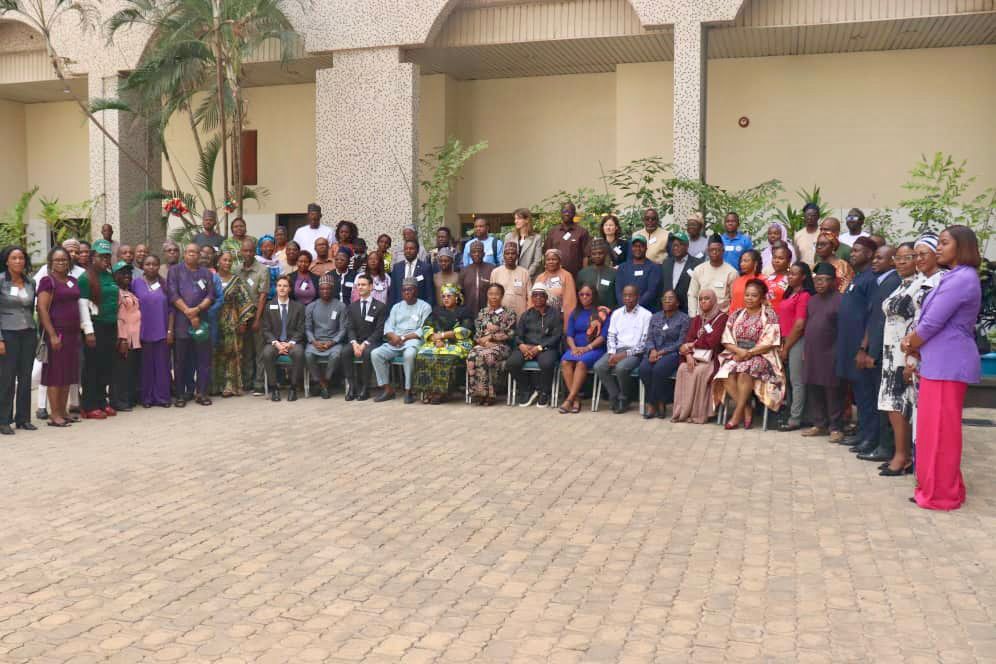
Swain noted that the wide representation of government institutions, civil society organisations, the private sector, academia and development partners at the event reflected a shared determination to tackle plastic pollution through inclusive and coordinated action.
She explained that the Nigeria Plastics Child Project is part of a broader GEF-8 investment under the Circular Solutions for Plastic Pollution Integrated Programme, one of eleven integrated programmes approved by the GEF in 2022.

According to her, the integrated programme approach is designed to address the root causes of environmental degradation through systems-based interventions that generate multiple global environmental benefits across climate change, biodiversity, chemicals and ocean protection.
The programme, led by UNEP in collaboration with partners including the World Wide Fund for Nature (WWF), focuses on transforming single-use plastics in the food and beverage sector. Swain stressed that unlike traditional approaches centred mainly on waste management, the initiative prioritises upstream and midstream solutions such as product design, innovative business models, supportive policies and market incentives.
She disclosed that Nigeria emerged from a competitive selection process in early 2023, citing the country’s strong political commitment to plastic pollution reduction, ongoing efforts to track plastic flows, and active engagement through the National Plastic Action Partnership. These factors, she said, demonstrated Nigeria’s readiness to work collaboratively across sectors to achieve large-scale impact.
Following its selection, Nigeria worked with UNEP to develop au project concept aligned with GEF priorities, including policy coherence, financial leverage, innovation and stakeholder engagement. Swain added that while the global integrated programme was officially launched in Washington, DC in 2025 and strengthened through its first annual conference in Brazil, its true success would be measured by results delivered at the country level.
She described Nigeria’s project as a strong example of how national “child projects” serve as the driving force of the integrated programme’s ambitions.
As implementation begins, Swain called for effective coordination and communication within the global programme, deeper private sector involvement—particularly in transforming the sachet water industry—and a strong focus on scaling lessons learned. She emphasised that Nigeria’s experience could inform policy reforms and future investments both within and beyond the GEF partnership.
She noted that the GEF, views Nigeria not only as a beneficiary of the Plastic Reboot initiative but as a potential leader whose actions can help shape global responses to plastic pollution, while ensuring continued access to safe drinking water.
The Nigeria Plastics Child Project is expected to play a key role in reducing reliance on single-use plastic water sachets and advancing circular economy solutions nationwide.
FG, GEF Launch Project to Tackle Plastic Pollution