
National News
FG Intensifies Employment Drive, Inaugurates NJFP Steering Committee

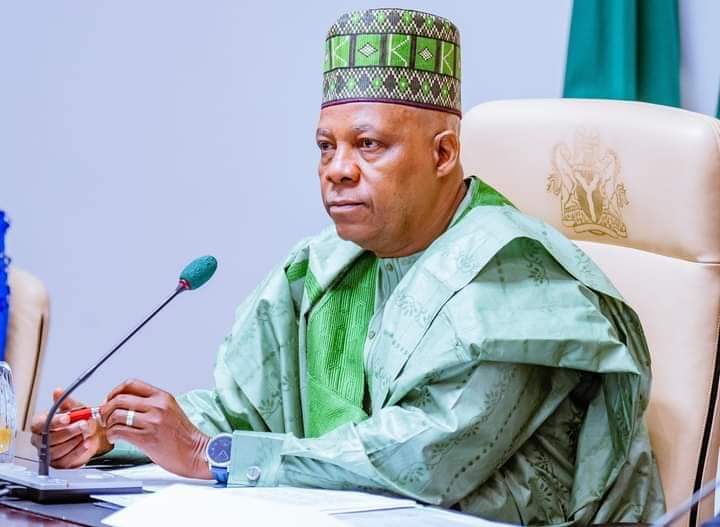
FG Intensifies Employment Drive, Inaugurates NJFP Steering Committee
*** We must act collectively to tackle unemployment, equip our youths, says VP Shettima
By: Our Reporter
The Vice President, Senator Kashim Shettima, has inaugurated the Steering Committee of the Nigeria Jubilee Programme (NJFP), as part of measures by the Federal Government to scale up its employment initiative and enhance the employability of fresh graduates with market-ready skills and competence.
NJFP, a Nigerian government initiative being implemented by the United Nations Development Programme (UNDP) with a seed investment from the European Union (EU), is coordinated by the office of the Vice President.
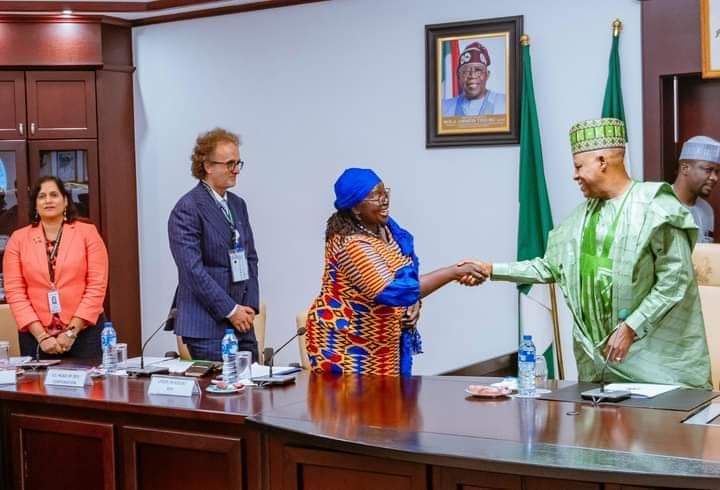
It was established to address challenges confronting Nigerian graduates in accessing meaningful jobs, as well as develop, test and deploy a scalable model that would effectively assist in tackling the root causes of growing unemployment and underemployment in Nigeria.
Speaking on Monday while inaugurating the Steering Committee of the NJFP at the Presidential Villa, Vice President Shettima described the programme as a decisive step by the administration of President Bola Ahmed Tinubu toward equipping Nigerian youth with the required tools to become employees, innovators and leaders in their chosen careers.
He stated: “The Nigeria Jubilee Fellows Programme is more than just an employment initiative—it is a catalyst for broader engagement in youth-driven innovation, employability, and entrepreneurship. Programmes like this are a decisive step toward equipping our youth with the tools to become not just employees but also innovators and leaders in their respective fields.
“The NJFP has clearly made commendable progress, and it is now time to build on that foundation to provide a wider coverage through innovative adaptations that ensure that this programme does not just provide job placements but also emphasizes the development of key skills through practical, real-world applications.
“This is how we scale impact—by embedding long-lasting, transformative learning experiences into the programme structure”.
Acknowledging that youth unemployment has remained a serious challenge in Nigeria, Senator Shettima implored stakeholders and development partners to act cooperatively to combat the menace before it destabilizes the nation’s future.
“Unemployment remains a critical challenge for Nigeria, and youth unemployment is an even more pressing concern. As a government, we fully recognize the far-reaching consequences that economic downturns have on young people.
His words: “Prolonged periods of unemployment or underemployment can hinder future income potential and significantly diminish career opportunities. This is precisely why today’s gathering is so important.
“We cannot afford to delay; we must act collectively to tackle this issue before it severely undermines our future. It is therefore with a deep sense of responsibility and urgency that I convene this inauguration of the Steering Committee for the Nigeria Jubilee Fellows Programme (NJFP).”
VP Shettima explained that his office directly coordinates the NJFP and some other crucial federal government initiatives, including Human Capital Development (HCD) programme, Investment in Digital and Creative Enterprises (iDICE) and the Expanded MSME Clinics programmes, because they are priorities for the Tinubu administration.
The NJFP, he said, is more vital because Nigeria’s future lies in the hands of the youth, adding that everything must be done within to secure their success.
He continued: “It is imperative that we focus on the long-term sustainability and scalability of the NJFP while further aligning the objectives of the programme with the overarching priorities of His Excellency President Bola Ahmed Tinubu.
“To guarantee this, we must offer all support to ensure that NJFP is not only sustained but also expanded. We will prioritise the counterpart financing to fulfill the government’s obligation and unlock more funding for the programme.”
Earlier in her remarks, the UNDP Resident Representative in Nigeria, Ms. Elsie Attafuah, commended the federal government for its “unwavering leadership and commitment to advancing Nigerian human capital development, particularly youth development as part of the Renewed Hope Agenda.”
Admitting that “the Vice President’s leadership role on this has been very exemplary,” she recalled that since VP Shettima inaugurated the steering committee of the Human Capital Development programme a few weeks ago, many young Nigerians have been seen breaking barriers, opening up new frontiers based on their talent – not just locally but also on the global stage.
“Young Nigerians are demonstrating to the world that they have the capacity and ingenuity to transform not just their own lives but also those of their communities and Africa at large. Nigeria does not carry last,” she stated.
While thanking the European Union for supporting the programme to the tune of 44 million Euros, Ms. Elsie said the NJFP seeks to champion home-grown talent, connecting young Nigerians with local opportunities through twelve months of placement where they apply their expertise to gain market-ready skills.
On his part, the European Union Head of Cooperation, Mr. Massino de Luca, said the Nigeria Jubilee Fellows Programme is a flagship that generates pride and excitement, not only here in their Abuja office but also in the EU Headquarters.
He maintained that youth involvement and focus remain the ace of the EU’s action in Nigeria, even as he said NJFP typifies the EU’s commitment to the youth agenda in Nigeria and the world.
He said the fundamental aspect of the programme is finance sustainability which the EU has funded with 44 million Euros, adding Nigerians and European businesses have both benefited by the programme and since its inception, it has built strong relationships and partnerships as well as empower thousands of fellows.
Shedding light on the impact of the programme on the Ministry of Youth Development, the Hon. Minister of Youth Development, Dr. Jamila Bio Ibrahim, said the NJFP is an initiative which aligns with the ministry’s initiative called the work-experience-programme where graduates are fixed into jobs and there is an opportunity to upscale and improve it with the NJFP programme.
She said her Ministry has the agenda to create 10 million jobs by 2027, adding that as a ministry they cannot achieve that alone.
Also speaking, the Minister of Industry, Trade and Investment, Dr. Doris Uzoka-Anite, said a total of 3,100 youths have been trained, far below the estimated target, attributing it to a number of reasons, including COVID-19 and the transition process of the immediate past administration.
“But seeing what the head of UNDP has brought in and the commitment of the EU, I am quite optimistic that we’ll do much more,” she added.
FG Intensifies Employment Drive, Inaugurates NJFP Steering Committee



FG moves to operationalise 112 national emergency number
By Zagazola Makama
The Federal Government has commenced steps to operationalise the 112 national emergency number as a single, toll-free channel through which Nigerians can access emergency services across the country.
The move followed a directive by Vice-President Kashim Shettima during a stakeholders’ meeting on the National Emergency Number 112 Project in Abuja on Tuesday, Sept. 8, 2026.
Shettima directed relevant government agencies to develop a comprehensive operational roadmap and standard operating procedures for the nationwide rollout of the emergency number.
The Federal Government has consequently constituted a committee comprising the Nigeria Police Force (NPF), Nigerian Communications Commission (NCC), National Emergency Management Agency (NEMA), Federal Road Safety Corps (FRSC) and other relevant agencies to finalise the framework for consideration and formal endorsement by the National Economic Council (NEC).
The NEC had recently approved 112 as Nigeria’s single universal toll-free emergency number, replacing the fragmented emergency response lines currently operated by different agencies.
The initiative is aimed at eliminating delays and bureaucratic bottlenecks while providing citizens with easier access to rapid assistance during emergencies, including fires, road crashes, medical emergencies and security incidents.
Speaking at the meeting, Shettima urged members of the committee to draw from global best practices in developing the operational framework and ensure that the project moves from policy approval to practical implementation.
He charged the stakeholders to finalise the roadmap and standard operating procedures for presentation to the NEC, stressing the importance of making tangible progress.
“Let’s make progress so that whatever time we have spent here is worth spending,” the Vice-President said, while assuring stakeholders that the Federal Government would provide the resources required to drive the process.
He said adequate funding would be made available once the project progressed to the implementation stage.
The Inspector-General of Police, Olatunji Rilwan Disu, expressed the full support of the Nigeria Police Force for the adoption of 112 as the country’s unified national emergency number.
Disu described the initiative as a significant step towards providing Nigerians with a simple and reliable means of accessing emergency assistance.
He said that during emergencies such as armed attacks, road crashes, fire outbreaks, medical crises or kidnapping incidents, citizens often face the additional challenge of determining which agency to contact.
According to him, the 112 system would provide a single access point through which an emergency call could be directed to the appropriate response agency.
Earlier, the Personal Assistant to the President on e-Governance in the Office of the Vice-President, Mrs Lydia Aina, said Nigeria’s emergency response system currently operates across multiple agencies, platforms and jurisdictions.
She explained that the fragmented structure often affects how emergencies are received, coordinated and responded to.
Aina said the objective was to move from the existing fragmented system to a coordinated and eventually fully integrated national emergency response framework.
She stressed that the success of the 112 initiative would depend not only on the emergency number itself but also on the people, agencies, operational standards and systems required to make it functional when citizens place emergency calls.
“Our job now is to turn it into an actual working programme with milestones,” she said.
According to her, six immediate priorities have been identified, beginning with governance and a clear delineation of responsibilities among participating agencies.
Other stakeholders at the meeting pledged their support for the initiative, including the Director-General of NEMA, Mrs Zubaida Umar; Corps Marshal of FRSC, Shehu Mohammed; and Director-General of the National Orientation Agency (NOA), Mallam Lanre Issa-Onilu, among others.
The Federal Government’s move is expected to strengthen coordination among emergency response agencies, reduce response delays and provide Nigerians with a more accessible mechanism for seeking urgent assistance.
If successfully implemented nationwide, the 112 system could provide a unified gateway linking citizens to police, fire, medical, road safety, disaster management and other emergency response services.
The initiative is therefore being positioned as a major step towards building a faster, more coordinated and citizen-centred emergency response system in Nigeria.
FG moves to operationalise 112 national emergency number
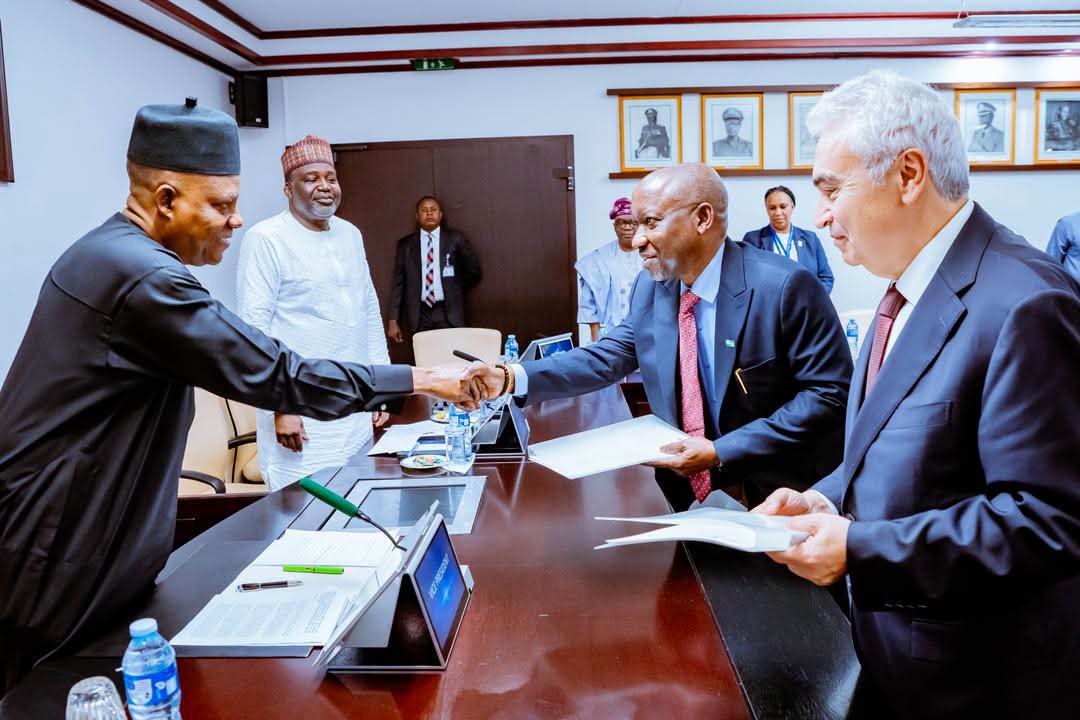
Nigeria, IEA Solidify Partnership, Sign Pact On Energy Policy, Security
**It’s a justification of President Tinubu’s policy choices, gains of his economic reforms – VP Shettima
By: Our Reporter
Nigeria and the International Energy Agency (IEA) have signed an agreement for a Joint Work Programme to strengthen strategic partnership in the development of data for energy policy and investment across the value chain for economic growth and energy security.
This is just as the Vice President, Senator Kashim Shettima, has said Nigeria’s formal admission into the IEA as an Association Country is a significant milestone for the country and another testament to the gains of the economic reforms of the administration of President Bola Ahmed Tinubu.
Senator Shettima stated this on Thursday during the signing of the agreement for the Joint Work Programme between Nigeria and IEA, signaling the formal commencement of the partnership.
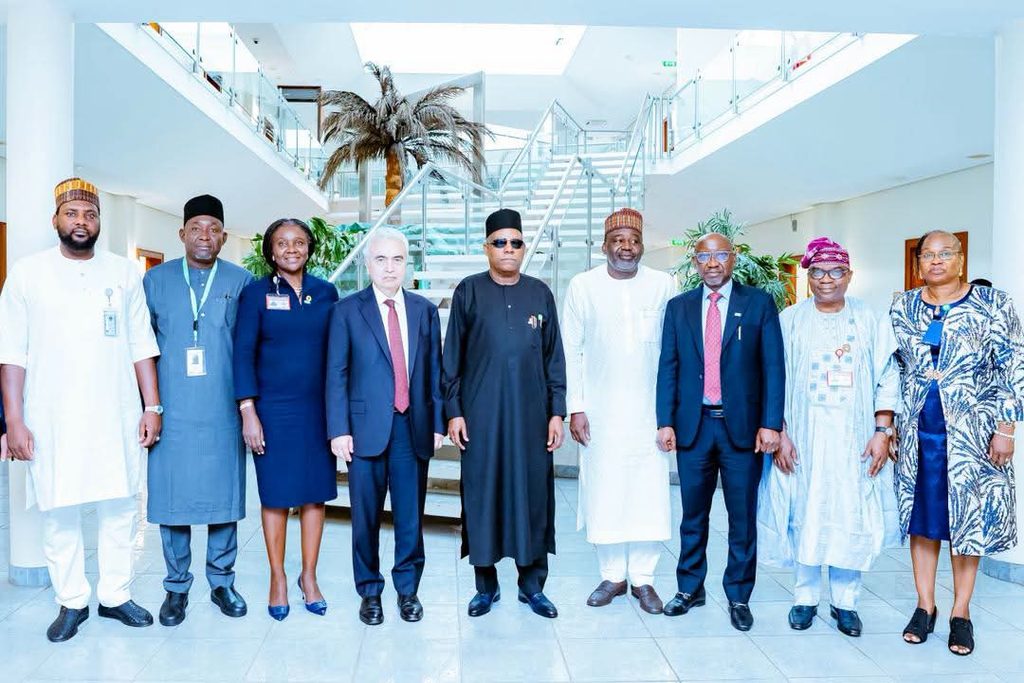
Speaking on behalf of President Tinubu, the Vice President noted that Nigeria’s formal entry into the fold of the Paris-based non-governmental organisation justifies his administration’s policy choices and efforts aimed at leveraging the country’s abundant energy resources scattered across the nation.
Commending the IEA for the important role it is playing in shaping global energy landscape, he said the effort of the agency in the global energy conversation and in supporting countries to navigate the challenges of energy security, affordability, sustainability and economic development, cannot be overstated.
His words: “Nigeria’s admission as an association country with the IEA is a significant milestone for our country and it reflects Nigeria’s strategic importance in the global energy landscape and the confidence that IEA has placed in our commitment to constructive international energy cooperation.”
VP Shettima added that given Nigeria’s potential, “the country will benefit from IEA’s institutional knowledge, the intellectual resources, the reach and expertise to support our nation’s ambitions in this sector.”
He acknowledged Nigeria’s abundant renewable energy resources and his commitment to repositioning the economy leveraging available resources which are already manifesting across different sectors of the economy.
The Vice President assured the IEA team of his administration’s commitment to continue to partner with other stakeholders within the setting to contribute to the global energy debate on a fair and just energy transition.
Earlier, leader of the IEA delegation, Dr. Fatih Birol explained that his organisation is an organisation of governments that covers all technological fields, including oil, gas, solar, nuclear power, artificial intelligence and electric cars based in Paris.
Working with top 500 energy experts of the world in terms of giving policy advice, sharing data and expertise, he said to be a member of the IEA family is not an easy task, as it requires a lot of considerations and tests.
According to Dr. Birol, after detailed discussions with the Minister of State for Petroleum and Gas, Mr. Ekperikpe Ekpo, the Board comprising the governments of the United States, Japan, Germany, Italy, and UK voted and accepted Nigeria unanimously as a member.
“The IEA will accompany the Nigerian energy sector for the next few years to come for a much better energy future. We will provide policy advice from clean cooking to gas markets, from gas markets to training Nigerian experts at the IEA on our own,” he assured.
Earlier, Minister of State Petroleum Resources (Gas), Mr Ekperikpe Ekpo, stressed that Nigeria’s admittance into the IEA was based on the performance of the Tinubu administration reflected in the reforms undertaken in the economy.
He said the signing of the Joint Work Programme, which portends the involvement of the technical team of the IEA with Nigeria in the development of data for energy policy and investment across the value chain and targeted for economic growth and energy security.
On his part, the Minister of State for Foreign Affairs, Ambassador Sola Enikanoaiye, described IEA’s partnership with Nigeria as strategically important, noting that the Nigerian Mission in Paris played a critical role in ensuring its success.
Pledging the commitment of the Minister of Foreign Affairs, Mrs. Bianca Odumegwu-Ojukwu, towards the process, “Our role is to ensure that whatever government does at home is projected effectively in advancing and promoting the interest of Nigeria.
“We take this as a critical component of our national interest and we will not fail in ensuring that we assist, as facilitators and coordinators, in ensuring that the maximum benefit of this endeavor is derived for the benefit of the Nigerian people.”
Also, the Director General of Energy Commission of Nigeria, Dr. Mustapha Abdullahi, said the Commission’s relationship with IEA led to the joint sponsorship of Nigeria’s last National Energy Master Plan, even though there was no structure to their relationship.
He expressed optimism that Nigeria’s formal joining of the IEA and the agreement will strengthen the Commission’s relationship with the organisation.
Nigeria, IEA Solidify Partnership, Sign Pact On Energy Policy, Security

60th Birthday: VP Shettima Opts For Low-Key Celebration
By: Our Reporter
As Vice President Kashim Shettima marks his 60th birthday on September 2, 2026, he has appealed to friends, associates and well-wishers to refrain from placing congratulatory advertisements in newspapers or airing celebratory messages on radio, television and digital platforms.
VP Shettima said his decision to keep the milestone low-key reflects his conviction that public attention should remain focused on the serious work of national development rather than on personal celebrations.
“To ensure absolute propriety, I respectfully appeal that there should be no public birthday celebrations, congratulatory gatherings or goodwill advertorials across print, broadcast and digital media platforms,” the Vice President said.
Rather than celebrate him through elaborate events or paid advertisements, VP Shettima urged well-wishers to channel their goodwill into prayers for Nigeria and for the administration of President Bola Ahmed Tinubu.
He specifically called for prayers for the success of the administration’s economic reforms, lasting solutions to the nation’s security challenges, greater national unity, and the peace and prosperity of all Nigerians.
For VP Shettima, the occasion should serve less as a celebration of a personal milestone and more as an opportunity for reflection, gratitude and renewed commitment to the service of the country.
60th Birthday: VP Shettima Opts For Low-Key Celebration

Troops neutralise terrorist, recover phones and cash in Zamfara

Correctional Service, Army Intelligence deepen collaboration on custodial security

FG moves to operationalise 112 national emergency number

Roger Federer’s Shock as DNA Results Reveal Myla and Charlene Are Not His Biological Children

THE PLIGHT OF FARIDA

FAILED COUP IN BURKINA FASO: HOW TRAORÉ NARROWLY ESCAPED ASSASSINATION PLOT AMID FOREIGN INTERFERENCE CLAIMS
-
 News2 years ago
Roger Federer’s Shock as DNA Results Reveal Myla and Charlene Are Not His Biological Children
-
Opinions5 years ago
THE PLIGHT OF FARIDA
-
 News1 year ago
FAILED COUP IN BURKINA FASO: HOW TRAORÉ NARROWLY ESCAPED ASSASSINATION PLOT AMID FOREIGN INTERFERENCE CLAIMS
-

 News2 years ago
EYN: Rev. Billi, Distortion of History, and The Living Tamarind Tree
-
 Opinions5 years ago
POLICE CHARGE ROOMS, A MINTING PRESS
-

 ACADEMICS3 years ago
A History of Biu” (2015) and The Lingering Bura-Pabir Question (1)
-

 Columns3 years ago
Army University Biu: There is certain interest, but certainly not from Borno.
-

 Politics1 year ago
2027: Why Hon. Midala Balami Must Go, as Youths in Hawul and Asikira/Uba Federal Constituency Reject ₦500,000 as Sallah Gift
