
News
FG Launches New Offensive Against Human Trafficking as Criminal Syndicates Move Online

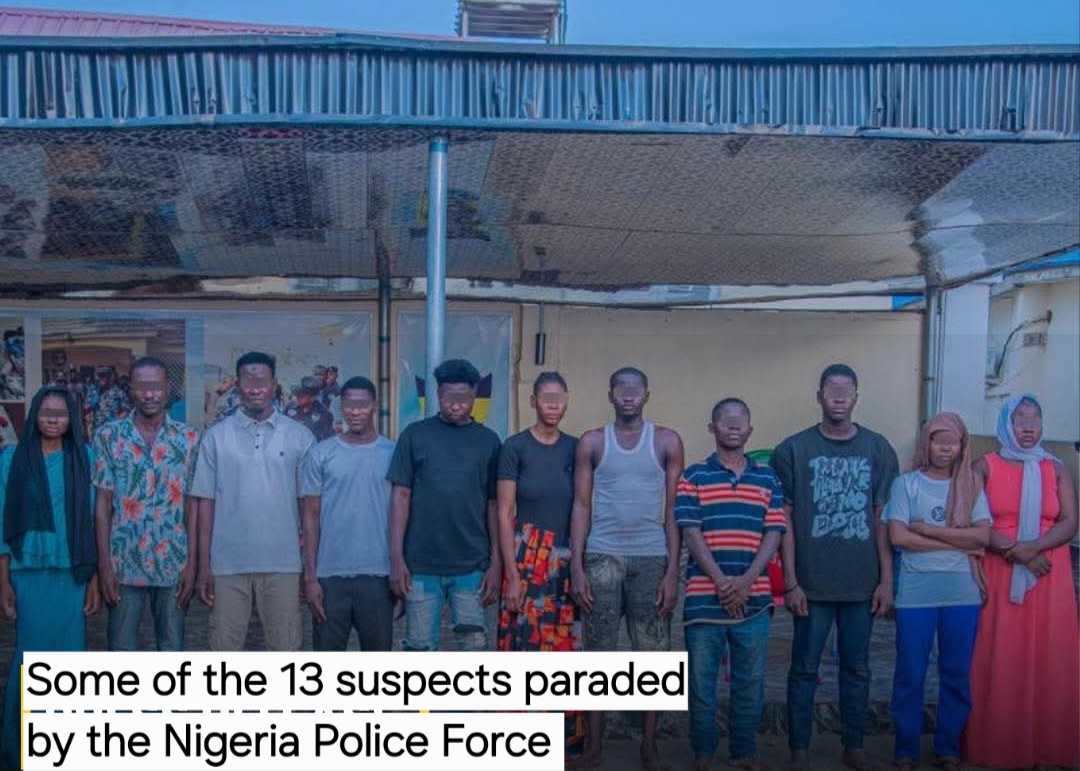
FG Launches New Offensive Against Human Trafficking as Criminal Syndicates Move Online
By: Michael Mike
The Federal Government has announced a major shift in Nigeria’s fight against human trafficking, declaring that the country must urgently strengthen its laws, institutions and international partnerships as criminal networks increasingly migrate from traditional exploitation methods to sophisticated online recruitment and cyber-enabled forced criminality.
The Attorney-General of the Federation and Minister of Justice, Chief Lateef Fagbemi (SAN), said the evolving nature of trafficking requires a comprehensive national response capable of confronting criminals who now exploit digital technology, cross-border networks and online platforms to deceive and control victims.
Fagbemi, represented by the Director of Research, Planning and Statistics in the Federal Ministry of Justice, Mrs Victoria Ojogbane, delivered the message at the national commemoration of the 2026 World Day Against Trafficking in Persons in Abuja, with the theme: “Trapped Behind the Scam.”
He said the Federal Government was determined to strengthen Nigeria’s legal and institutional framework to confront emerging trafficking patterns, particularly those connected with online scams, cybercrime and organised transnational criminal activities.
According to him, traffickers are increasingly using technological advancement to evade detection, recruit victims and move illicit proceeds, making stronger coordination among law enforcement agencies, improved intelligence sharing, effective prosecution and enhanced victim protection critical to Nigeria’s response.
“The changing dynamics of human trafficking require stronger laws, closer inter-agency collaboration and deeper international cooperation to ensure traffickers no longer exploit technological advances and cross-border criminal networks to evade justice,” he said.
The Attorney-General assured that the government would continue to support coordinated intelligence operations, strengthen partnerships with security agencies, development partners and neighbouring countries, and ensure that victims receive adequate protection and support.
He noted that trafficking has moved beyond conventional forms of exploitation, with criminal syndicates now using fake employment opportunities, scholarships, business proposals and migration promises shared through social media and messaging platforms to lure unsuspecting victims.
The Federal Government’s renewed approach comes amid growing concerns over the increasing connection between human trafficking, cybercrime, money laundering and organised criminal enterprises.
Director-General of the National Agency for the Prohibition of Trafficking in Persons (NAPTIP), Binta Bello, said the digital transformation of trafficking represents one of the most serious challenges confronting anti-trafficking agencies globally.
She warned that traffickers are exploiting unemployment, poverty and the desire for better opportunities among young Nigerians, using sophisticated online deception to recruit victims before subjecting them to exploitation.
Bello said the theme, “Trapped Behind the Scam,” reflects the changing reality of trafficking, where victims are often trapped through online manipulation before being forced into cyber fraud, sexual exploitation, forced labour and other forms of modern slavery.
She called for stronger partnerships among government agencies, technology companies, financial institutions, security organisations and civil society groups to dismantle criminal networks.
Delivering the keynote address, the United Nations Office on Drugs and Crime (UNODC) Country Representative, Cheikh Touré, warned that trafficking in persons, cybercrime, money laundering and financial fraud are increasingly merging into a single transnational criminal enterprise.
Touré said victims are deceived through social media platforms and online advertisements offering fake jobs, educational opportunities and migration pathways, only to find themselves trapped in scam compounds where their identity documents are seized, their movement restricted and they are forced to carry out online fraud.
He disclosed that many victims are compelled to operate romance scams, investment fraud schemes and cryptocurrency-related scams targeting people across the world.
According to him, UNODC research across 21 Nigerian states found increasing evidence that traffickers are exploiting digital platforms for recruitment, while survivors identified fraudulent employment and migration opportunities as major tactics used by criminals.
He added that Nigerians are increasingly being trafficked into overseas scam compounds, while similar patterns of forced online criminality are beginning to emerge locally, requiring broader investigations involving anti-trafficking agencies, cybercrime units and financial intelligence institutions.
To strengthen the response, UNODC announced the establishment of a Joint Operational Task Force involving NAPTIP and the Nigeria Immigration Service under the European Union-funded Partnership Against Cybercrime and Trafficking in Persons (PACTS) Project.
The task force will focus on intelligence gathering, preservation of digital evidence, tracing criminal proceeds and improving cross-border investigations against trafficking networks.
The Head of Office of the International Centre for Migration Policy Development (ICMPD) Nigeria, Isabelle Wolfsgruber, said traffickers have changed their methods by moving recruitment from physical locations to digital spaces.
She said many trafficking cases now begin with a message on a phone offering a job, scholarship or migration opportunity that appears genuine but is designed to exploit victims.
“Trafficking today rarely begins at a border. It begins on a phone, with a message from someone who seemed trustworthy about a job that does not exist, a scholarship that was never approved. By the time a young person understands what has happened, they are already webbed inside the deception,” she said.
Wolfsgruber said ICMPD is supporting Nigeria’s response through initiatives including the European Union-funded Free Movement of Persons and Migration in West Africa (FMM II) project, the School Anti-Trafficking Education and Advocacy Project (STEAP) supported by the Netherlands, and the Trafficking in Persons Victim Assistance Programme (TIPVAP) implemented with NAPTIP.
She stressed that no single organisation or country could defeat trafficking alone, noting that criminal networks operate across borders and share tactics rapidly.
The International Organisation for Migration (IOM) also emphasised the need for a survivor-focused approach, warning that trafficking often begins with promises of hope rather than immediate violence.
The Chief of Mission, IOM Nigeria, Sharon Dimanche, recalled meeting children rescued from trafficking by NAPTIP in Lagos, describing how some had been deceived with promises of education and better lives before being exploited and robbed of their childhood.
“Traffickers do not sell fear; they sell hope,” she said, explaining that fake job offers, education opportunities and promises of economic advancement remain some of the strongest tools used by traffickers.
She highlighted the case of a Nigerian who was lured with what appeared to be a genuine employment opportunity in Southeast Asia but ended up trapped in a cyber scam compound, where his passport was confiscated and he was forced into online fraud under threats and abuse.
According to IOM, the victim was later returned to Nigeria through coordinated efforts involving the government, NAPTIP, IOM and partners, but his experience reflected the increasingly complex nature of modern trafficking.
The organisation disclosed that it has assisted more than 7,700 trafficking victims since 2017, with nearly nine out of every ten victims being women and girls, most of them young adults seeking better economic opportunities.
IOM stressed that rescuing victims is only the beginning, adding that survivors require psychosocial support, education, skills development and sustainable livelihoods to rebuild their lives and avoid being re-trafficked.
The organisation reaffirmed its commitment to working with NAPTIP, government institutions, civil society organisations and development partners to strengthen prevention, victim identification, protection and prosecution efforts.
Stakeholders at the commemoration agreed that human trafficking has evolved from a traditional crime into a complex security, justice and development challenge requiring technology-driven enforcement, stronger regional cooperation, public awareness and sustained support for survivors.
The emerging consensus was that Nigeria’s success in combating trafficking will depend on whether its response can move as quickly and strategically as criminal networks adapting to the digital age.
FG Launches New Offensive Against Human Trafficking as Criminal Syndicates Move Online



Chad Accuses Sudanese Forces of Crossing Border, Bombing Convoy Deep Inside Chadian Territory
By Zagazola Makama
The Chadian General Staff has accused the warring parties in Sudan of violating Chad’s territorial integrity after aircraft and drones allegedly pursued and bombarded a convoy more than 100 kilometres inside Chadian territory.
The incident reportedly occurred at about 8 p.m. on Thursday, August 20, 2026, near Chad’s common border with Sudan, particularly around the Mourdi Department in the Ennedi-Est Province.
In a communiqué issued to the national and international public, the Chadian General Staff said aerial and ground assessments conducted throughout Friday, August 21, confirmed that the fighting in Sudan had once again spilled into Chadian territory.
According to the military authorities, aircraft and drones identified as belonging to the Sudanese Armed Forces (SAF) and/or forces supporting them were involved in the pursuit of a convoy.
The Chadian military said the operation initially took place on Sudanese territory but subsequently extended deep into Chad, with the convoy reportedly pursued and bombarded more than 100 kilometres inside Chadian territory.
The military authorities did not provide details on the identity of the convoy, the nature of its cargo, or the circumstances that led to the pursuit across the border.
However, the Chadian General Staff described the incident as a fresh violation of the country’s territorial integrity and warned all parties involved in the Sudan conflict against attempting to extend the war into Chad.
“Although no Chadian casualties have been recorded to date,” the military said, it strongly condemned what it described as the latest violation of Chad’s territorial integrity.
The General Staff issued a stern warning to the Sudanese belligerents, saying continued attempts to expand the Sudanese conflict into Chadian territory could have serious consequences.
It described such actions as a “suicidal risk” for those seeking to bring the Sudanese war onto Chadian soil.
The latest incident comes amid the continuing conflict in Sudan between the Sudanese Armed Forces and the paramilitary Rapid Support Forces, which has increasingly generated security concerns for neighbouring countries.
Chad shares a long and porous border with Sudan, particularly along its eastern frontier, where the security situation has remained fragile due to the movement of armed groups, refugees, weapons and combatants fleeing the Sudanese conflict.
The Chadian military said its defence and security forces remain on the highest level of alert to prevent further violations and protect the country’s population.
It further assured citizens that the security forces are prepared to respond forcefully to any threat capable of undermining the peace and security of the Chadian people.
The statement did not indicate whether Chad had identified the specific aircraft or drones involved through direct visual confirmation, radar data or other intelligence means, but said assessments conducted through aerial and physical means established that the operation had crossed into Chadian territory.
The development raises concerns over the potential regionalisation of the Sudan conflict, particularly as fighting and military operations continue to take place close to Sudan’s borders with Chad and other neighbouring countries.
For Chad, the alleged incursion represents a particularly sensitive security issue given the country’s proximity to the conflict and the potential for cross-border military operations to trigger a broader confrontation.
The Chadian authorities have therefore placed their forces on heightened alert while warning the Sudanese belligerents that further violations of its territory could provoke an energetic response.
The Chadian General Staff stressed that its priority remains the protection of the country’s territorial integrity and the safety of its citizens amid the continuing instability along its eastern border.
Chad Accuses Sudanese Forces of Crossing Border, Bombing Convoy Deep Inside Chadian Territory
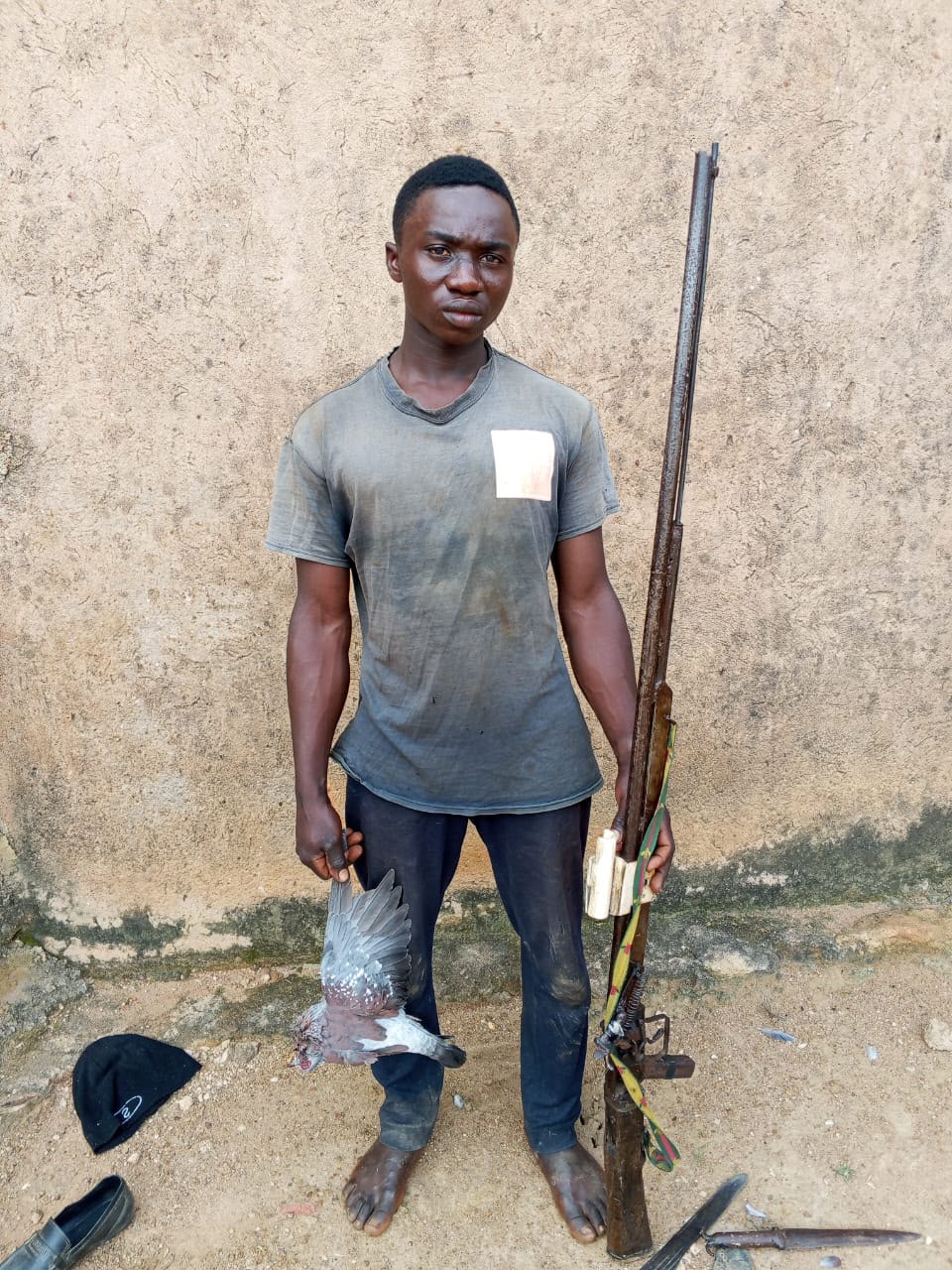
Troops Arrest 24-Year-Old Hunter With Dane Gun After Gunshots Report in Plateau
By Zagazola Makama
Troops of Sector 3, Operation ENDURING PEACE, have arrested a 24-year-old man and recovered a Dane gun following a report of gunshots in the DTV general area of Bassa Local Government Area of Plateau State.
The incident occurred at about 1:15 p.m. on Saturday, August 22, 2026, when troops deployed at DTV responded to reports of gunshots in the area.
According to military sources, the troops arrived at the scene and arrested the suspect, identified as Emmanuel Daniel, 24, who was found in possession of one Dane gun.
Preliminary investigation revealed that the suspect claimed to have fired the shots while hunting in the area.
The suspect and the recovered weapon are currently in military custody for further investigation and necessary action.
The arrest followed the prompt response of troops to reports of gunfire as security forces continue efforts to maintain peace and security across communities in Plateau State.
Troops Arrest 24-Year-Old Hunter With Dane Gun After Gunshots Report in Plateau
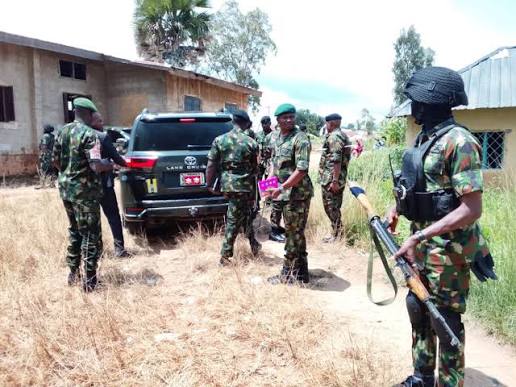
GOC 3 Division Urges Irigwe Stakeholders to Embrace Dialogue, Peaceful Coexistence
By Zagazola Makama
The General Officer Commanding (GOC) 3 Division and Commander, Operation ENDURING PEACE, Major General W.M. Dangana, has urged the Irigwe community in Bassa Local Government Area of Plateau State to embrace dialogue and peaceful coexistence in resolving differences and restoring lasting peace.
Dangana made the call on Friday, August 22, 2026, during a stakeholders’ engagement held at Miango community in Bassa LGA.
The engagement was attended by the Chief of Staff and Commander, Sector 3, Operation ENDURING PEACE, the entire Irigwe leadership and other stakeholders.
During the meeting, participants discussed critical security issues affecting the community and measures required to address the challenges and prevent further escalation of tensions.
The GOC emphasized the importance of dialogue as a means of resolving differences, urging the stakeholders to pursue peaceful solutions to issues affecting the community.
He also called on the Irigwe leadership and residents to promote peaceful coexistence, stressing the need for collective efforts towards restoring lasting peace in the community and Plateau State at large.
The engagement further illustrates the importance of cooperation between the security agencies, traditional institutions and local communities in addressing security challenges and strengthening peace-building efforts.
The meeting was hitch-free.
GOC 3 Division Urges Irigwe Stakeholders to Embrace Dialogue, Peaceful Coexistence

Chad Accuses Sudanese Forces of Crossing Border, Bombing Convoy Deep Inside Chadian Territory

Troops Arrest 24-Year-Old Hunter With Dane Gun After Gunshots Report in Plateau

Three Cows Die After Suspected Poisoning in Plateau

Roger Federer’s Shock as DNA Results Reveal Myla and Charlene Are Not His Biological Children

THE PLIGHT OF FARIDA

FAILED COUP IN BURKINA FASO: HOW TRAORÉ NARROWLY ESCAPED ASSASSINATION PLOT AMID FOREIGN INTERFERENCE CLAIMS
-
 News2 years ago
Roger Federer’s Shock as DNA Results Reveal Myla and Charlene Are Not His Biological Children
-
Opinions5 years ago
THE PLIGHT OF FARIDA
-
 News1 year ago
FAILED COUP IN BURKINA FASO: HOW TRAORÉ NARROWLY ESCAPED ASSASSINATION PLOT AMID FOREIGN INTERFERENCE CLAIMS
-

 News2 years ago
EYN: Rev. Billi, Distortion of History, and The Living Tamarind Tree
-
 Opinions5 years ago
POLICE CHARGE ROOMS, A MINTING PRESS
-

 ACADEMICS2 years ago
A History of Biu” (2015) and The Lingering Bura-Pabir Question (1)
-

 Columns2 years ago
Army University Biu: There is certain interest, but certainly not from Borno.
-

 Politics1 year ago
2027: Why Hon. Midala Balami Must Go, as Youths in Hawul and Asikira/Uba Federal Constituency Reject ₦500,000 as Sallah Gift
