News
FG Pushes Deeper Reforms in Prisons, Border Security, and Financial Systems

FG Pushes Deeper Reforms in Prisons, Border Security, and Financial Systems
By: Michael Mike
The Federal Government has reaffirmed its commitment to comprehensive reforms in Nigeria’s correctional system, the deployment of technology to strengthen border security, and the entrenchment of financial integrity across public institutions.
The Minister of Interior, Olubunmi Tunji-Ojo, made this known on Wednesday in Abuja while receiving the President and Chairman of Council of the Institute of Chartered Accountants of Nigeria (ICAN), Mallam Haruna Yahaya, who led a delegation on a courtesy visit.

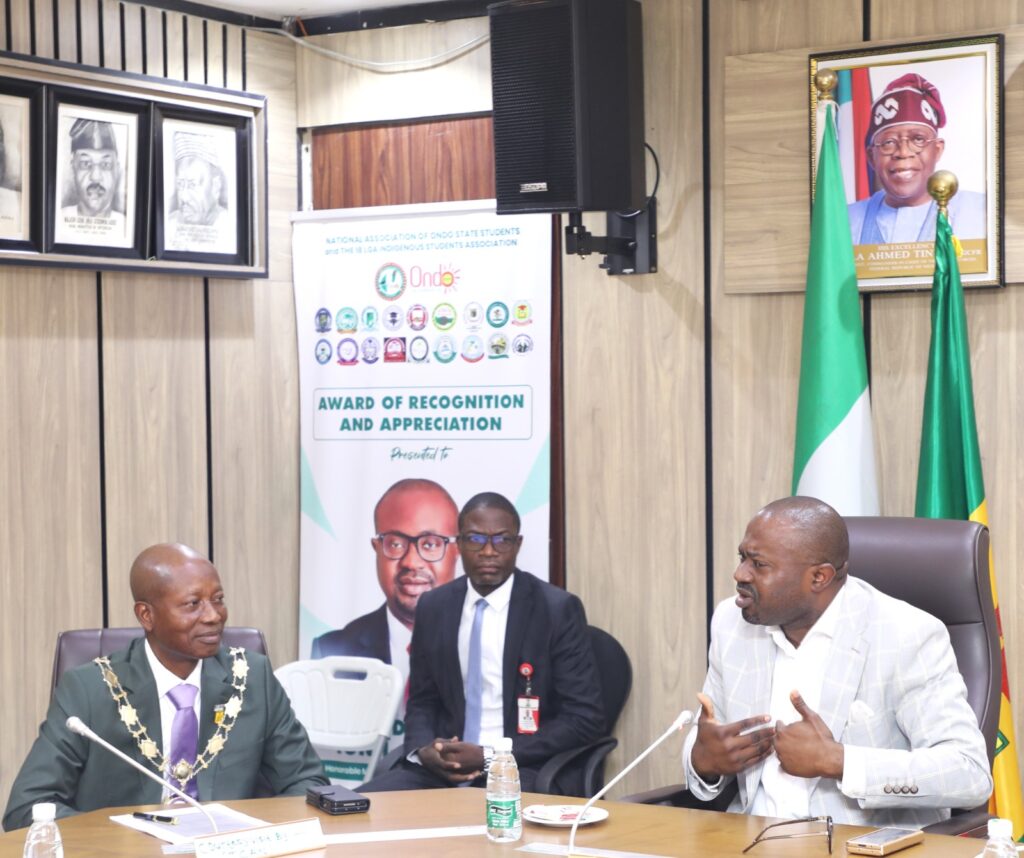
Tunji-Ojo emphasized that reforming the nation’s correctional system remains a top priority, stressing that the focus must extend beyond incarceration to rehabilitation and reintegration of inmates into society.
“Government has a duty of care to its citizens. Even where freedom is restricted by law, those in custody must be treated with dignity and given opportunities to return to society better than they came,” he said.
He noted that the shift from the Prisons Act to the Nigerian Correctional Service Act marked a deliberate transition toward a system that prioritizes reformation over mere detention.
On border management and internal security, the Minister disclosed that the Correctional Information Management System (CIMS) now contains over 50 million records compiled from operations at seaports and airports, with ongoing integration of land border data.
According to him, the system enhances the government’s ability to detect irregularities and prevent unauthorized entry, aligning with modern security strategies that prioritize proactive measures over reactive responses.
“We are building systems that can stop problems before they happen, not just respond after the damage is done,” he added.
Addressing financial governance, Tunji-Ojo stressed the importance of strengthening internal controls across government institutions, noting that preventive mechanisms are more effective than post-incident audits.
“It is not enough to detect issues after they occur. The goal is to build systems that make such issues difficult to happen in the first place,” he said.
He called on professional bodies such as ICAN to deepen their collaboration with government, particularly in areas of revenue assurance, transparency, and institutional accountability, while also encouraging stronger public-private partnerships to enhance efficiency and boost investor confidence.
On infrastructure, the Minister highlighted the need to expand fire and rescue services nationwide, pointing out that innovative funding models, including private sector participation, would be crucial to achieving this goal.
Tunji-Ojo also congratulated ICAN on its leadership and its upcoming West Africa Accountants Conference 2026 scheduled for December 2026, assuring the institute of government support. He further commended the increasing representation of women in professional leadership, describing it as a positive sign for the future.
Earlier, ICAN President Haruna Yahaya applauded the Ministry’s ongoing reforms and proposed the creation of a Joint ICAN–Ministry Financial Integrity and Revenue Assurance Task Force.
He explained that the initiative would target key areas including revenue assessment within the Nigeria Immigration Service, payroll analysis across uniformed services, and procurement risk review, with the aim of reducing leakages and strengthening accountability across government operations.
FG Pushes Deeper Reforms in Prisons, Border Security, and Financial Systems