
News
FG, Stakeholders Brainstorm to Avert Perennial Flooding in Abuja

FG, Stakeholders Brainstorm to Avert Perennial Flooding in Abuja
By: Michael Mike
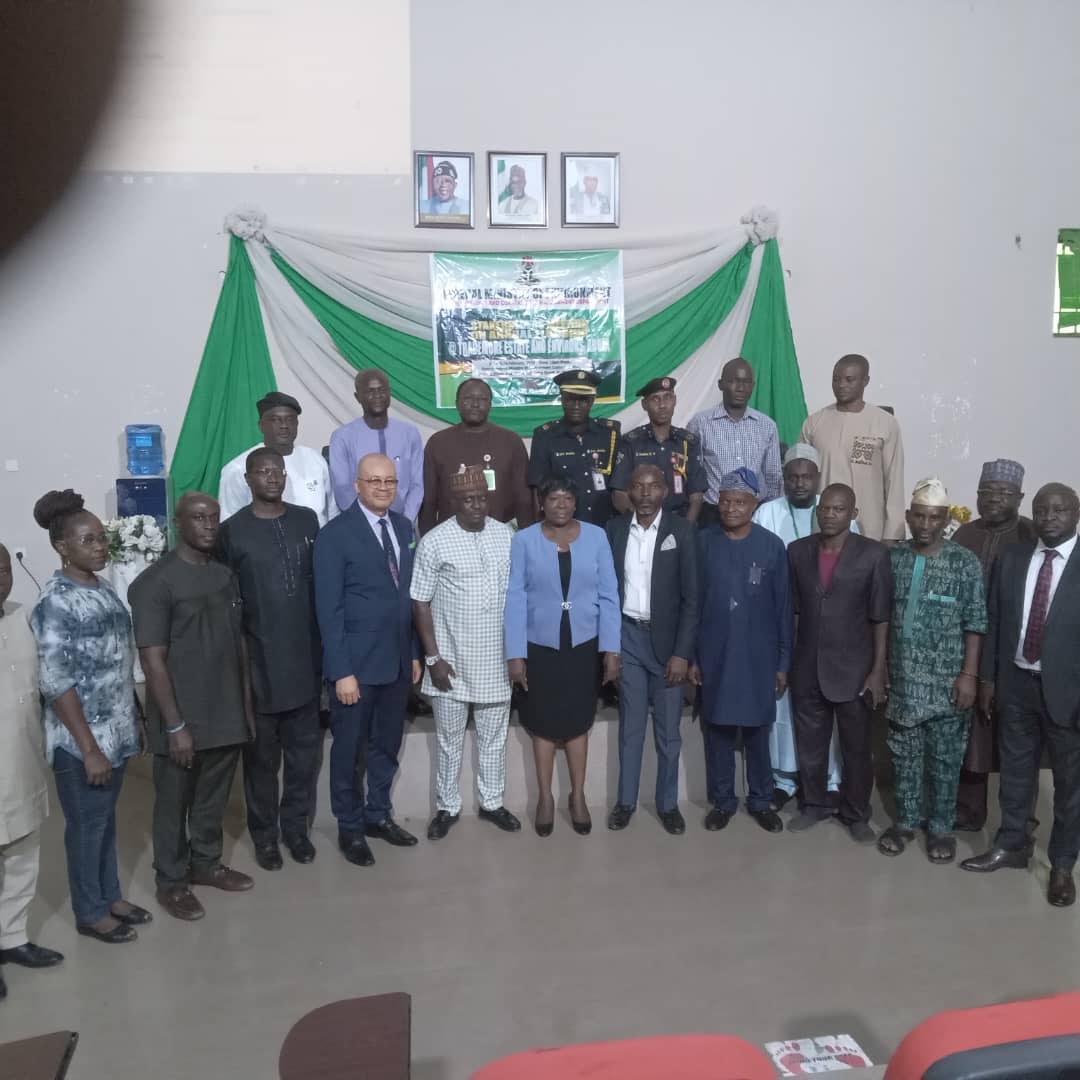
As the rainy season draws close, the federal government and prominent stakeholders have brainstormed to put out strategies to advert the perennial erosion and flooding problems in the Federal Capital Territory FCT, particularly in the Trademore Estate, Lugbe.
The Permanent Secretary, Federal Ministry of Environment, Mahmud Kambari at the Stakeholders meeting on the Annual Flooding at Lugbe Trademore Estate and Environs held in Abuja on Tuesday tasked stakeholders to brainstorm and provide possible solutions to avert annual erosion and flooding in the capital city.
The Permanent Secretary, who was represented by the Director Special Duties in his office, Mrs, Adelopo Oluwatoyin, reiterated the importance of the meeting considering the incessant flooding along River Pyakasa during annual rainy season and its devastating impact on Trademore Estate and its Envrions.
Kambari noted that, “The annual flood event along this river has been occurring since 2019, which has cost the nation huge loss of lives and property of citizens. the event is attributed to among other things, the following: climate change through unsual downpour, urbanisation through population and infrastructural growth, under sized hydraulic structures, and siltation of hydraulic structures and the Pyakasa River. “
The flooding, according the the Permanent Secretary, has affected the economy of Federal Capital Territory and Nigeria at large with devastating effect on livelihood and the ecosystem.
He decried the loss of market that was flooded in Goza community and farmlands at Kuje community, noting that the situation if not addressed could be worsen in different parts of FCT due to rate of population growth and its impact of water waves.
He said the ministry deem it fit to gather all relevant stakeholders together in the meeting in order to exchange ideas that will make FCT safe from flooding, and encourages sustainable development.
He asserted Government’s Commitment to safety of lives and properties in the estate and Nigeria at large. “I remind you of the commitment of President Bola Ahmed Tinubu Renewed Hope Agenda towards ensuring a sustainable quality environment devoid of annual havocs occasion by flood, the administration recognises the need to urgently provide steps to assuage the problem and its attendance hardship in the FCT. It is this commitment that necessitated the organisation of the stakeholders meeting.”
Kambari however urged stakeholders to share ideas and show the New Zeal towards addressing the flood challenges along Pyakasa River.
Earlier, in his welcome address, the Director, Erosion, Flood and Coastal Zone Management Department of the Ministry, Mr Dilichukwu Etigbue said the flooding in Trademore Estate has caused huge economic losses to the FCT and the Nation.
He noted that the workshop with the stakehokders is at the instance of his department to take proactive steps to avert the reoccurrence through proper handling of waste and adhering to FG directives and advise on flood warning signals and flood management to help address some of the challenges.
Etigbue said flooding along Pyakasa River has become an annual event with Trademore Estate been its major flash point.
Speaking further he said, as you all are aware, the Department of Erosion, flood and Coastal Zone Management had it’s statutory responsibility of formulating environmental policies, measures that are relevant to solve erosion and flood control management through out the country and this meeting is to enable us have a robust deliberation on ways to avert this annual disaster.
He pointed out that the Ministry has documented the root causes of the erosion which would be shown during the technical session for inputs and way forward for a safer Trademore and other areas affected by flood.
In the same vein, the Deputy Director Environmental Services, Division of Safe the Town Development Department, FCDA, Mr. Lateef Olawuwo called on the general public to support the government policy as this will help in addressing erosion control.
Olawumo disclosed that supporting the FG policy is very crucial as most of the problems we are talking about can be tackled if we adhere to building plan, not tempering with green areas as well as living just and fair without building on flood plains and blocking the drainage.
“If you love our environments, you love yourself because your environment is you, if you treat the environment in a negative way the impacts are the consequences coming back to us. The message we have for everybody here that we should please support the policy that will help everybody so that at the end of the day, we will have the focus to glorify.” He added.
He also pointed out that there should be more enforcement of these policies if we have to enjoy the Environment we all crave for.
“The message we have majorly is support from all stakeholders, the developers, the residents, and all sorts of people so that at the end of the day everybody will be happy.” He concluded.
The representative of Trade More Estate, Mr Abdul Abubakar in his remark, appealed to the government to quickly swing into action to come up with solutions to address the menace.
Abubakar noted that if urgent measures are not taken the flooding issue will still occur.
“So now that we are expecting the rains again, definitely all the residents in Trademore are already getting scared of the outcome, so this an opportunity for us really to say our mind on this, Trademore itself is not where the problem lies, But because of where it is located,” he said.
FG, Stakeholders Brainstorm to Avert Perennial Flooding in Abuja


Troops conduct clearance patrol in Borno
By: Our Reporter
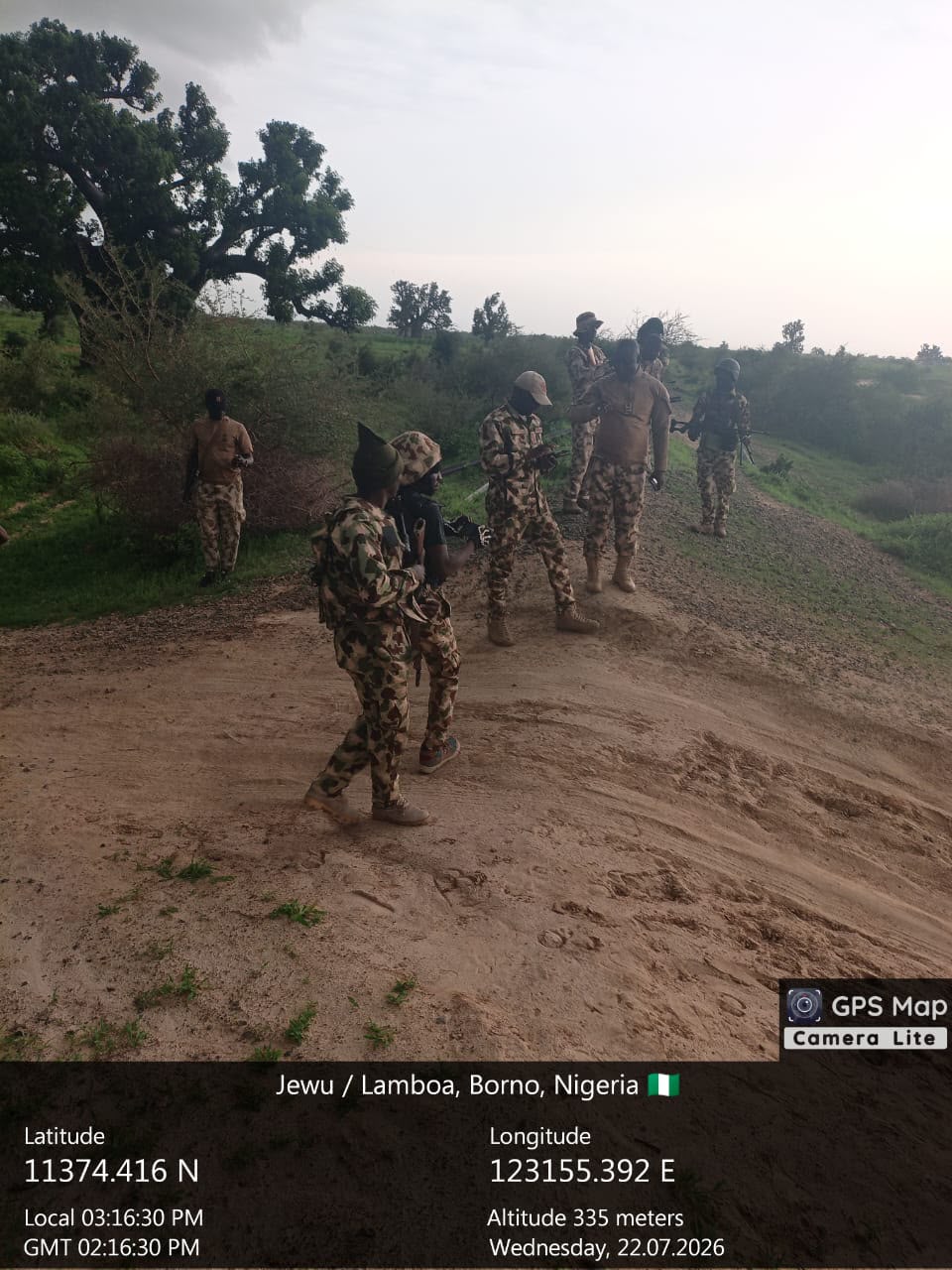
Following the clearance mission, the patrol occupied a tactical ambush position along a suspected terrorist route to monitor movement and deter any attempt by insurgents to infiltrate the area.
Military sources described the patrol as hitch-free, adding that troops maintained a high level of vigilance throughout the operation.
The clearance mission forms part of the ongoing Operation Desert Sanity V, which is aimed at sustaining pressure on Boko Haram and ISWAP elements, preventing their return to previously cleared locations, and creating a secure environment for civilian populations to carry out their livelihoods.
Sources added that the general security situation in the area remained calm but fluid, while the morale and fighting efficiency of the troops were reported to be satisfactory.
Troops conduct clearance patrol in Borno
Troops Arrest Two Suspected Boko Haram Members During Clearance Operation in Borno
By Zagazola Makama
Troops of the Joint Task Force North East, Operation HADIN KAI, have arrested two suspected Boko Haram members during a clearance operation conducted along the Mandaragirau–Kurtum axis in Borno State.
Security sources told Zagazola Makama that the operation was carried out at about 10:00 a.m. on July 22 by troops of the 162 Amphibious Battalion in conjunction with members of the Civilian Joint Task Force (CJTF), local hunters and the Vigilante Group of Nigeria (VGN).
The joint security team, mounted on a gun truck and 10 motorcycles, conducted the operation along the Mandaragirau–Kurtum route, extending to the Nguma area as part of ongoing efforts to clear suspected terrorist hideouts and deny insurgents freedom of movement.
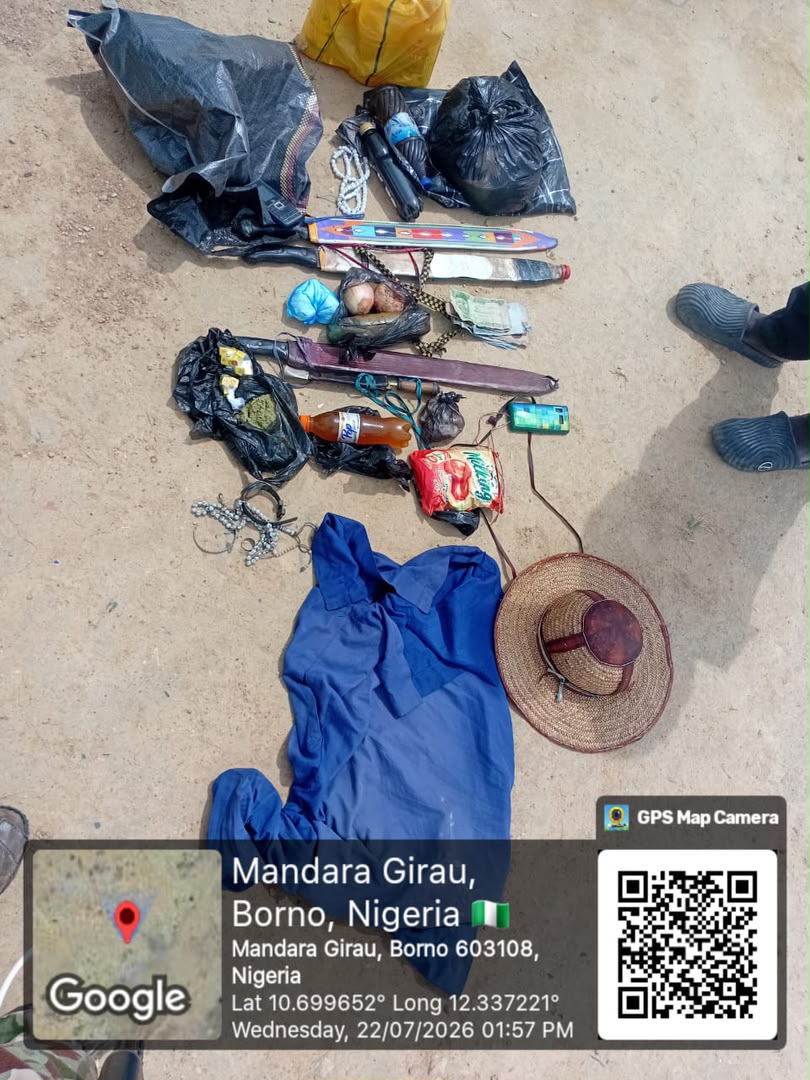
During the operation, troops apprehended two suspected Boko Haram members identified as Sidi Shagari, 42, and Abubakar Sadiq, popularly known as “Buba,” 25, both natives of Birni in Biu Local Government Area of Borno State.
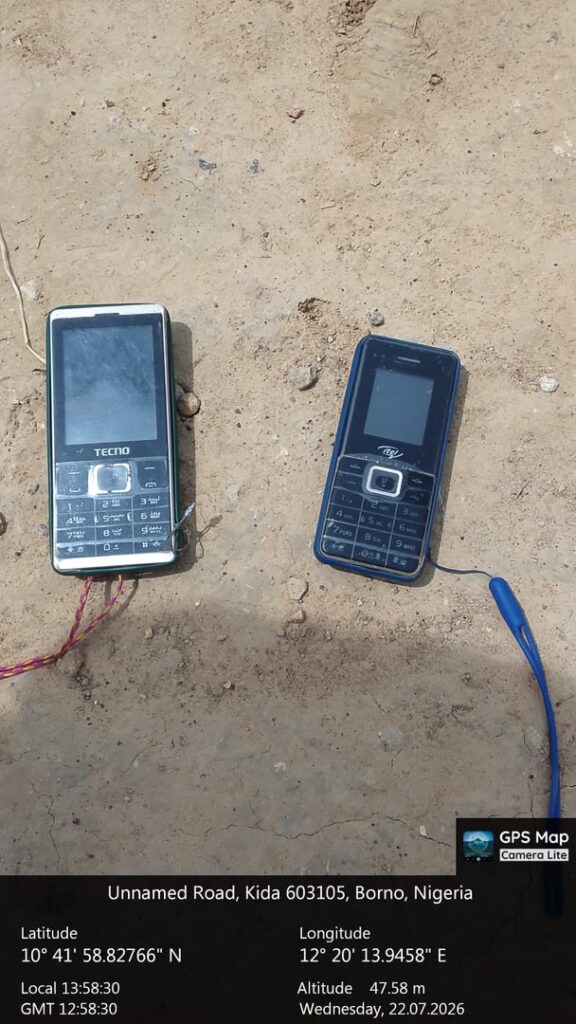
Items recovered from the suspects included two mobile phones, three cutlasses, one dagger, and the sum of N9,500.
The suspects and the recovered exhibits have been taken to the Abogo Largema Cantonment for further investigation and other necessary actions.
Military sources said the operation forms part of the ongoing Operation Desert Sanity V, a theatre-wide offensive aimed at disrupting terrorist activities, dismantling insurgent networks, and enhancing security across the North-East.
The sources added that although the general security situation across the theatre remains calm, it is still unpredictable, with troops maintaining a high level of vigilance while morale and fighting efficiency remain high.
Troops Arrest Two Suspected Boko Haram Members During Clearance Operation in Borno
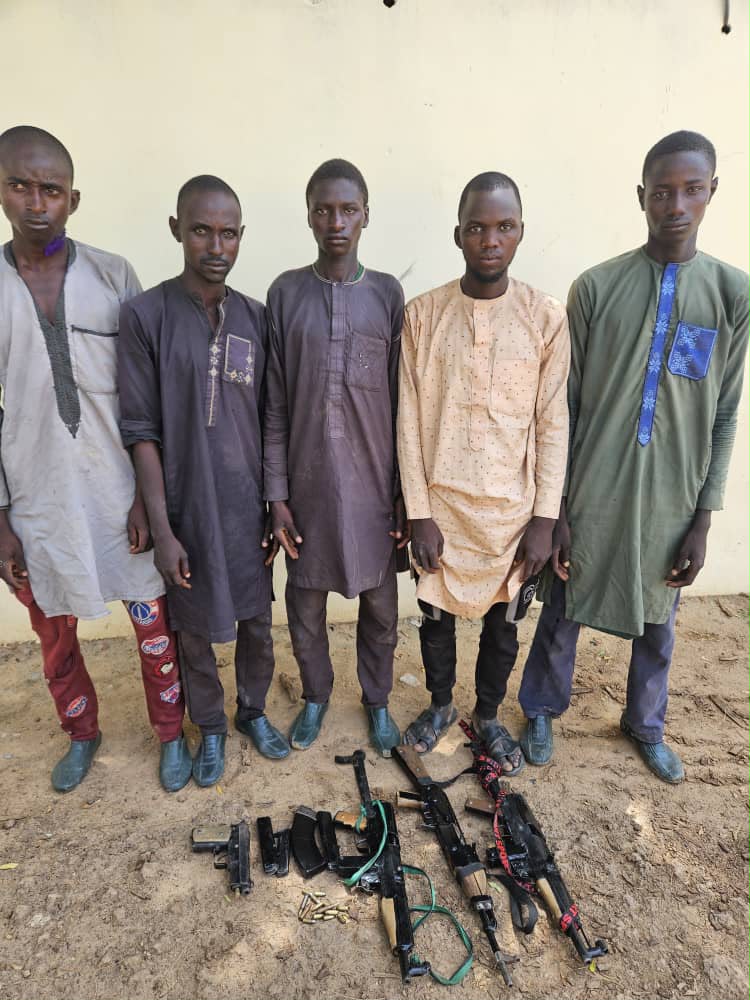
Troops, Hunters Arrest Five Suspected Kidnappers, Recover Firearms in Yobe
By Zagazola Makama
Troops of the Joint Task Force North East, Operation HADIN KAI, in collaboration with the Yobe State Hunters Group, have arrested five suspected kidnappers during a coordinated raid operation in Fune Local Government Area of Yobe State.
Security sources told Zagazola Makama that the operation was conducted at about 2:00 p.m. on July 23 following credible intelligence on the activities of suspected kidnappers in Jegalari village.
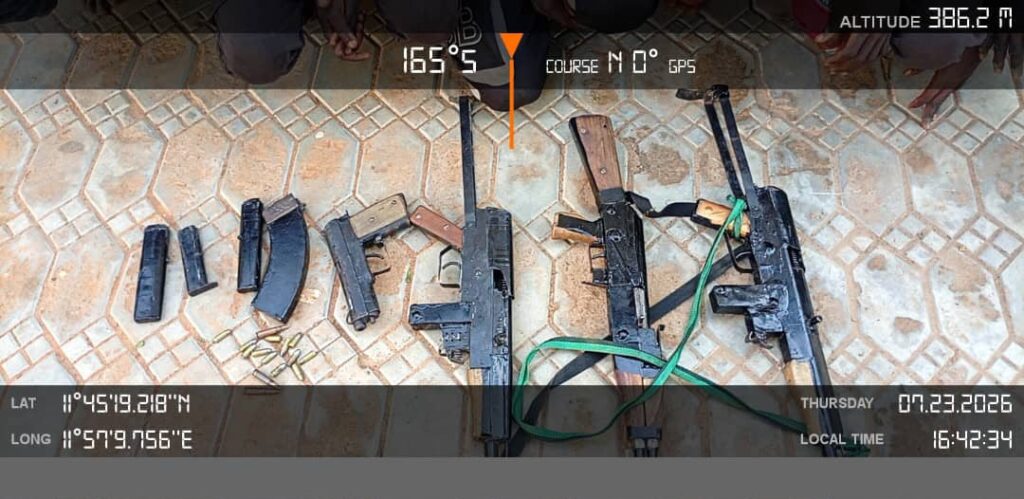
The sources said troops of the 233 Battalion, deployed at Damaturu Military Cantonment, stormed the hideout in conjunction with the local hunters, leading to the arrest of five suspects identified as Hassan Lawan (28), Isah Bello (30), Haruna Suleiman (20), Ibrahim Bello (20), and Ahmadu Haruna (19).
During the operation, security personnel recovered three locally fabricated AK-47 rifles, one locally made pistol, two rounds of 7.62mm Special ammunition, 12 rounds of 9mm pistol ammunition, three Tecno mobile phones, and one Android phone.
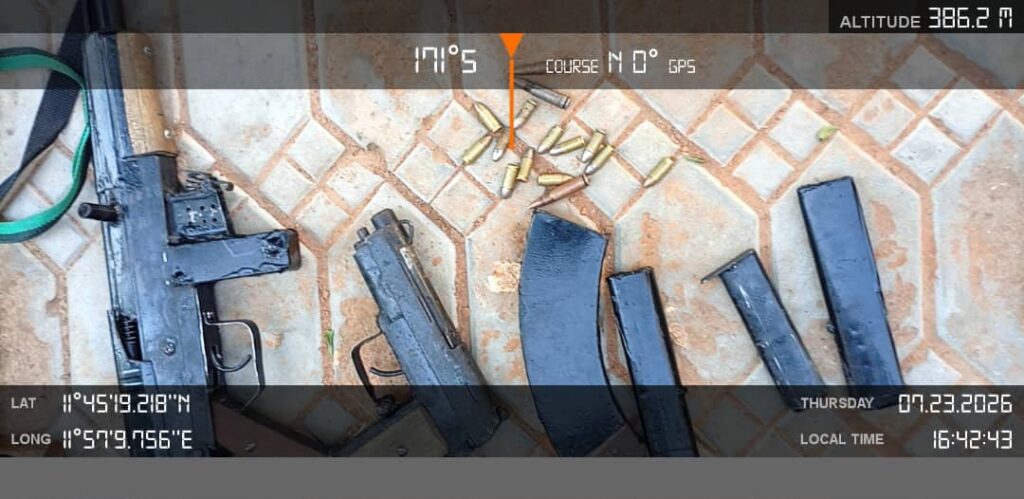
Preliminary investigation revealed that the suspects are indigenes of Ririn Village in Rano Local Government Area of Kano State. They identified themselves as members of the Fulani ethnic group and claimed to be cattle rearers.
The suspects and the recovered exhibits have been taken into military custody for further investigation to determine their involvement in kidnapping and other criminal activities.
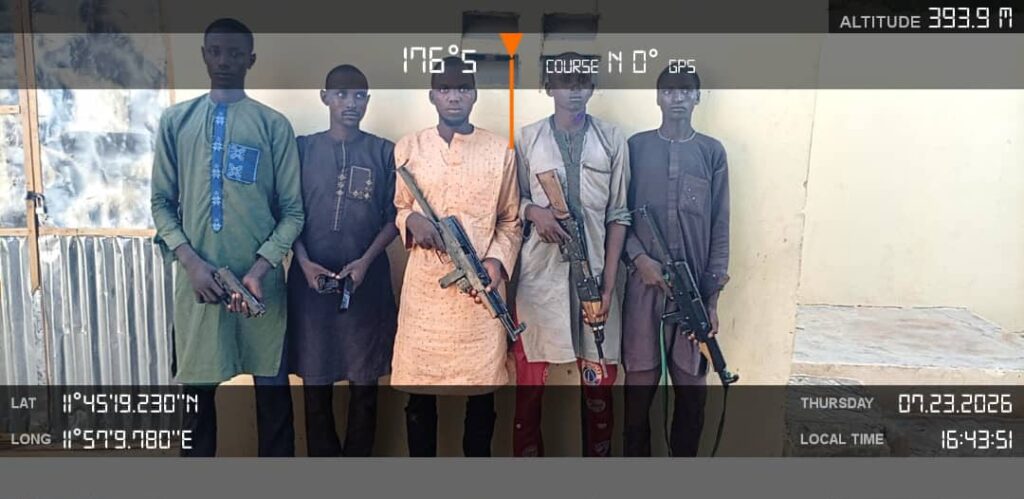
Military sources said the successful operation forms part of ongoing intelligence-driven efforts by Operation HADIN KAI and other security stakeholders to dismantle kidnapping and criminal networks operating across the North-East and adjoining states.
The security situation in the area was reported to be calm after the operation, although security forces remain on alert to prevent any retaliatory or related criminal activities.
Troops, Hunters Arrest Five Suspected Kidnappers, Recover Firearms in Yobe

Troops conduct clearance patrol in Borno

Air Component OPHK Neutralises Terrorists in Precision Night Strike on ISWAP Hideout in Southern Lake Chad

1 Brigade dismantles terrorist camps, seizes heavy weapons in sustained Zamfara offensive

Roger Federer’s Shock as DNA Results Reveal Myla and Charlene Are Not His Biological Children

THE PLIGHT OF FARIDA

FAILED COUP IN BURKINA FASO: HOW TRAORÉ NARROWLY ESCAPED ASSASSINATION PLOT AMID FOREIGN INTERFERENCE CLAIMS
-
 News2 years ago
Roger Federer’s Shock as DNA Results Reveal Myla and Charlene Are Not His Biological Children
-
Opinions4 years ago
THE PLIGHT OF FARIDA
-
 News1 year ago
FAILED COUP IN BURKINA FASO: HOW TRAORÉ NARROWLY ESCAPED ASSASSINATION PLOT AMID FOREIGN INTERFERENCE CLAIMS
-

 News2 years ago
EYN: Rev. Billi, Distortion of History, and The Living Tamarind Tree
-
 Opinions5 years ago
POLICE CHARGE ROOMS, A MINTING PRESS
-

 ACADEMICS2 years ago
A History of Biu” (2015) and The Lingering Bura-Pabir Question (1)
-

 Columns2 years ago
Army University Biu: There is certain interest, but certainly not from Borno.
-

 Politics1 year ago
2027: Why Hon. Midala Balami Must Go, as Youths in Hawul and Asikira/Uba Federal Constituency Reject ₦500,000 as Sallah Gift
