
News
FG Targets 20,000 Jobs Annually As VP Shettima Flags Off NJFP 2.0, Policy Dialogue

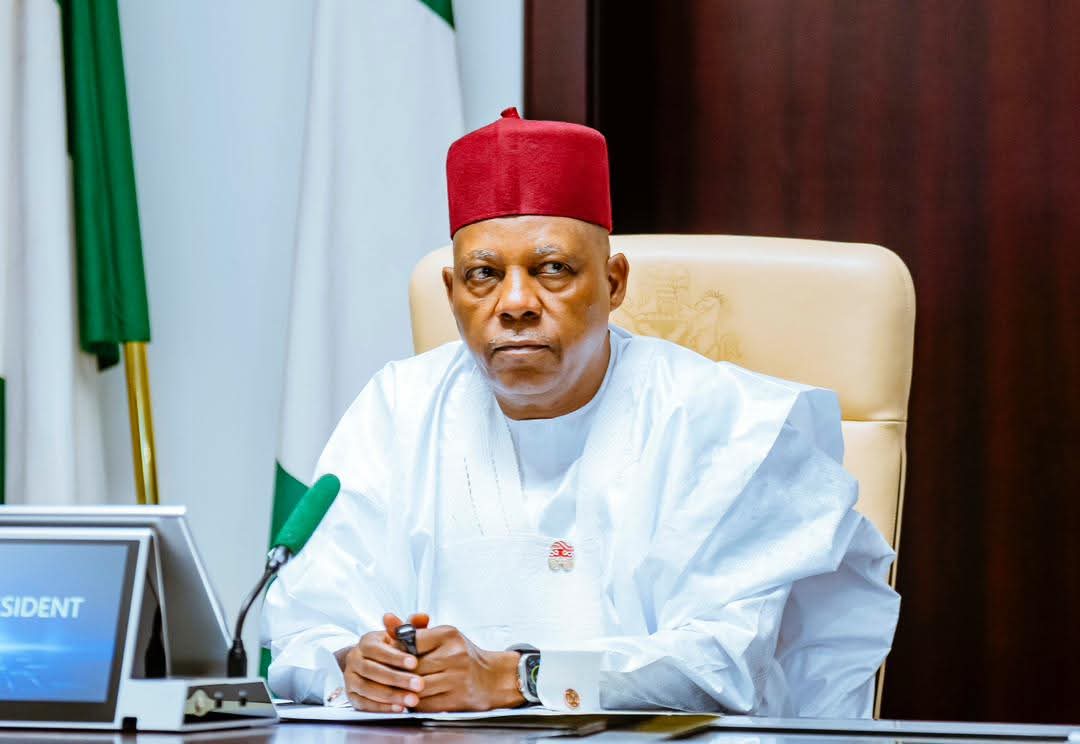
FG Targets 20,000 Jobs Annually As VP Shettima Flags Off NJFP 2.0, Policy Dialogue
By: Our Reporter
Inaugurates project steering committee, tasks members on inclusivity, tangible outcomes
The Federal Government of Nigeria is targeting the creation of at least 20,000 jobs annually through the launch of the second phase of the Nigeria Jubilee Fellows Programme (NJFP) aimed at connecting high-potential graduates with real-world work experience, training, and mentorship.
And to spearhead the initiative in line with President Tinubu’s Renewed Hope Agenda, the Vice President, Senator Kashim Shettima, will on Wednesday, October 22, 2025, in Abuja, flag off the Nigeria Jubilee Fellows Programme (NJFP) 2.0 and declare open a High-Level Policy Dialogue on Job Creation with the theme, “From Skills to Jobs and Enterprises: Driving Youth Employment and Entrepreneurship in Key Economic Sectors.”
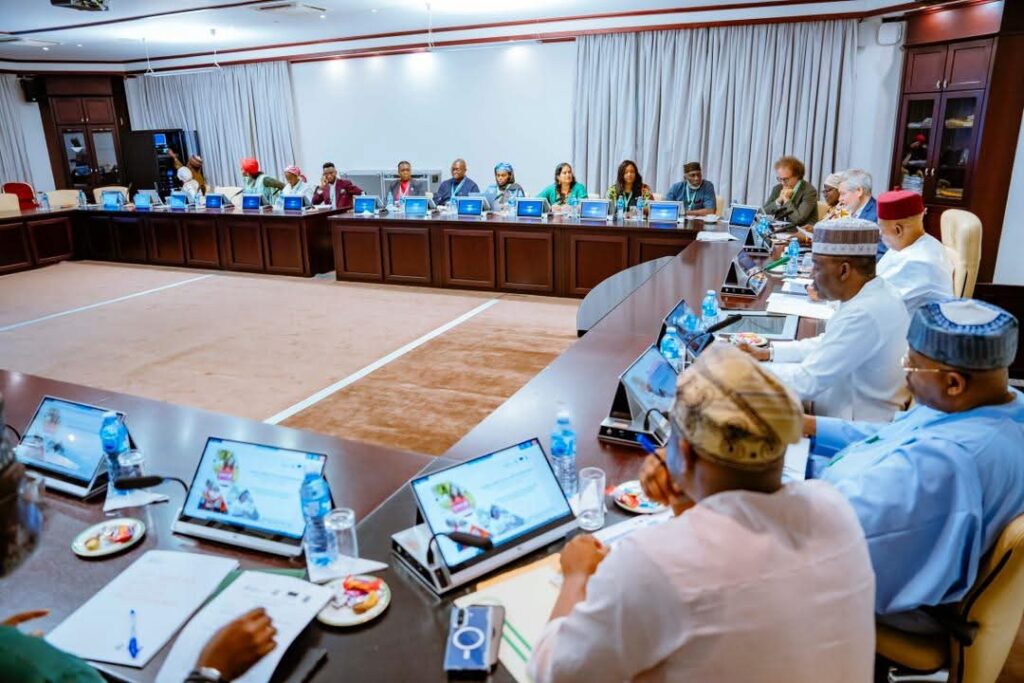
Ahead of the flag-off, the Vice President, on Monday inaugurated the Project Steering Committee of the NJFP 2.0, with a charge to members to make sure the programme is inclusive, ensuring that the opportunity reaches every part of the country.
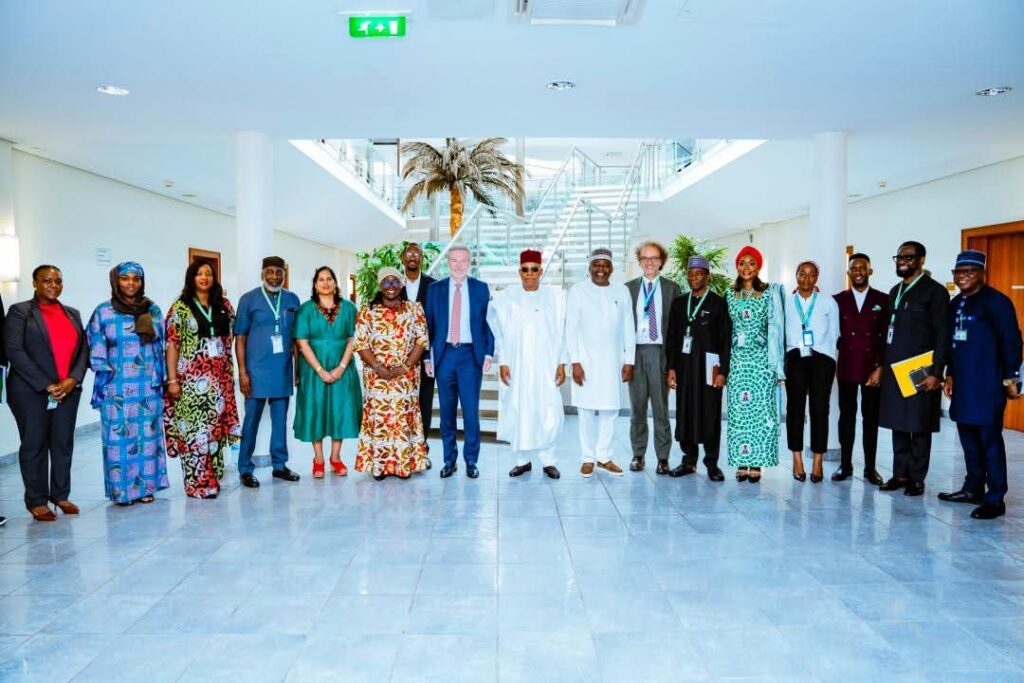
The NJFP, a flagship initiative of the Federal Government being coordinated by the Office of the Vice President, is implemented by the United Nations Development Programme (UNDP), and funded by the European Union (EU).
Launched in 2022 to bridge the gap between skills, jobs, and enterprise, the programme has already empowered over 14,000 young Nigerians through the 12-month paid fellowships that build experience, confidence, and lasting career opportunities.
Inaugurating the Project Steering Committee, Senator Shettima noted that the goal of the NJFP is to bridge the transition gap between learning and earning for thousands of young graduates with the required education but no job opportunity.
The programme, he said, represents “a deliberate attempt to translate the nation’s demographic strength into productive economic power, demonstrating that when government provides structure, partnership, and purpose, young Nigerians rise to the occasion.”
Maintaining that the NJFP is a Nigerian programme, shaped by national priorities and the nation’s sense of purpose, the VP told members of the committee “to deepen that ownership, strengthen coordination across our institutions, and ensure that NJFP remains accountable to the ambitions of this administration.”
Imploring the committee to work towards tangible outcomes and ensure inclusivity, VP Shettima said, “As we deliberate today, I encourage us to think not in terms of targets or figures alone, but in terms of outcomes that matter; young people whose lives change because this system works as intended.
“We have an opportunity here to demonstrate what partnership done right can achieve: where government leads with clarity, partners contribute with confidence, and results speak for themselves. Therefore, let us approach our work with that understanding.
“In scaling NJFP 2.0, inclusivity must remain at the heart of our design. Our young people are not a homogenous group; they live in different realities across regions, genders, and social backgrounds. We must ensure that this opportunity reaches every corner of the country — and that placements are tied to the sectors that will shape Nigeria’s future: agriculture, digital technology, renewable energy, manufacturing, and the creative industries.”
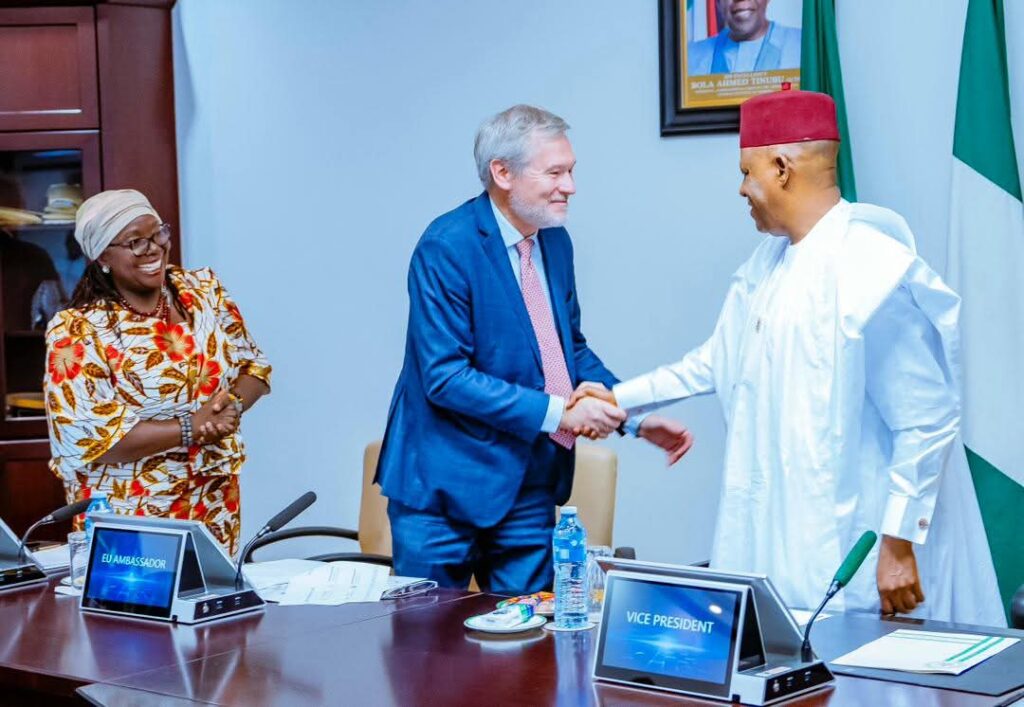
On his part, European Union (EU) Ambassador to Nigeria and ECOWAS, Mr. Gautier Mignot, expressed confidence that the programme would transform the lives of young Nigerians, saying the support of the Nigerian government will optimize the full mandate of the NJFP 2.0.
Also, the UNDP Resident Representative, Elsie Attafuah, described the NJFP 2.0 as a part of a larger national and continental vision which the UNDP is proud to support, noting that the target is to work across Nigeria to build an ecosystem that creates jobs.
She applauded Vice President Shettima for spearheading the initiative, saying what young Nigerians need is investment opportunities and an enabling ecosystem to make use of their skills and expertise.
Earlier, Deputy Chief of Staff to the President, Senator Ibrahim Hassan Hadejia, said following the flag-off of the NJFP 2.0 on Wednesday, “the Vice President will also declare open the High-Level Policy Dialogue on Job Creation, themed: “From Skills to Jobs and Enterprises: Driving Youth Employment and Entrepreneurship in Key Economic Sectors.”
Speaking during a press conference at the Presidential Villa, Abuja, ahead of the event scheduled to take place at the old banquet hall of the Presidential Villa, Senator Hadejia said the dialogue will bring together Federal and State policymakers, private sector leaders, and development partners to discuss actionable strategies for expanding employment, supporting enterprise growth, and aligning youth skills with national priorities.”
He explained that building on the success of the NJFP, the second phase, NJFP 2.0, has been redesigned to respond to current economic realities and lessons learned from the first phase.
The target, he said, is to “put structures in place to sustain the deployment of at least 20,000 fellows annually”.
He explained that the new phase of the initiative, NJFP 2.0, which “will place a minimum of 24,000 fellows over the next 10 months, with the funding support of the EU,” directly “supports the Renewed Hope Agenda of President Bola Ahmed Tinubu, GCFR, which prioritizes job creation, skills development, and youth empowerment as key pillars of Nigeria’s economic transformation.
“It shows that this administration is not only focused on policy — it is focused on impact. Through NJFP 2.0, we are demonstrating how government programmes can translate into real opportunities for decent work and enterprise creation for young Nigerians,” he added.
Shedding more light on the NJFP 2.0, Senator Hadejia explained that with the new phase, the Federal Government plans to create two clear pathways for every fellow namely “a pathway to employment, through extended professional placements, and a pathway to entrepreneurship, through business mentorship and enterprise support.”
The idea, according to him, is to ensure that “every fellow is empowered to either secure meaningful employment or launch a viable business in strategic sectors of the economy at the end of the fellowship.”
Hadejia observed that under the Tinubu administration, the NJFP is “a bold and practical response to the aspirations of young Nigerians – a generation of problem-solvers and innovators who only need opportunity to thrive.
“The Nigeria Jubilee Fellows Programme is one of several opportunities created by the government of President Bola Ahmed Tinubu (GCFR)— a platform to turn skills into jobs, ideas into enterprises, and hope into results,” he further stated.
FG Targets 20,000 Jobs Annually As VP Shettima Flags Off NJFP 2.0, Policy Dialogue



Troops intercept 11 youths with donkeys during patrol in Borno
By: Zagazola Makama
Troops of 68 Battalion have intercepted 11 youths during a routine patrol in Mallam Fatori area of Abadam Local Government Area of Borno State.
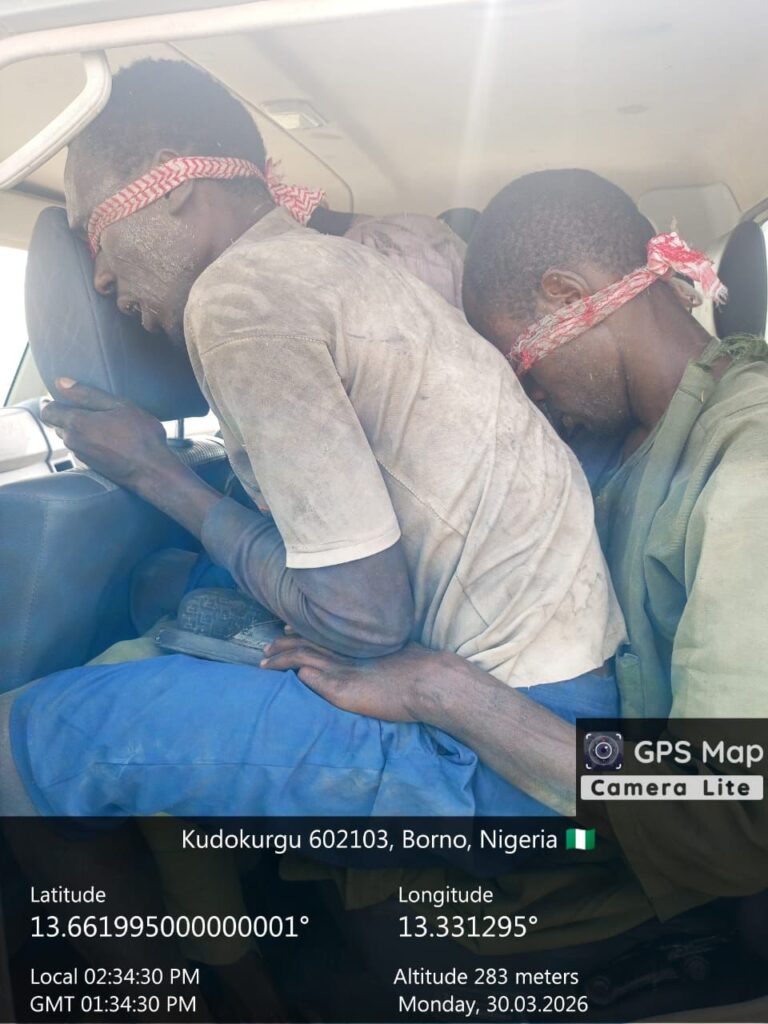
Security sources said the interception occurred along the Bulagana–Cheisa axis on April 2 during ongoing clearance operations in the area.
According to the sources, the individuals were found moving in the area with 12 donkeys when they were stopped and briefly interrogated by troops.
The sources added that the youths were later handed over, alongside the animals, to relevant authorities in a neighbouring country for further necessary action.
The military said the patrol was part of sustained efforts to maintain security dominance and prevent exploitation of border communities by criminal elements.
Troops intercept 11 youths with donkeys during patrol in Borno
Troops recover ammunition, logistics items in Kwara patrol operation
By: Zagazola Makama
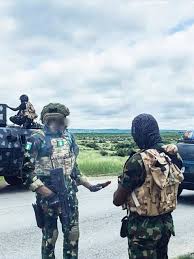
Troops of the Nigerian Army under the 22 Brigade have recovered ammunition and other logistics items during a fighting patrol in Ifelodun Local Government Area of Kwara State.
A security source disclosed that the operation was conducted at about 4:00 p.m. on April 2 at Daban Lema, where troops of the brigade, operating from the Patrol Base, encountered signs of suspected terrorist activities in a deserted location.
According to the source, the troops immediately carried out exploitation of the area, leading to the recovery of four rounds of 7.62mm special ammunition and one empty PKT ammunition belt link.
Other items recovered include four mobile phones, two head warmers, two small solar panels, and assorted repair tools believed to have been used by the suspected terrorists.
The source added that the recovery indicates the presence and movement of suspected criminal elements within the area, noting that troops have intensified surveillance and patrols to deny them freedom of action.
Troops recover ammunition, logistics items in Kwara patrol operation
Troops foil attack by Criminal Youths, rescue victims, arrest suspects in plateau
By: Zagazola Makama
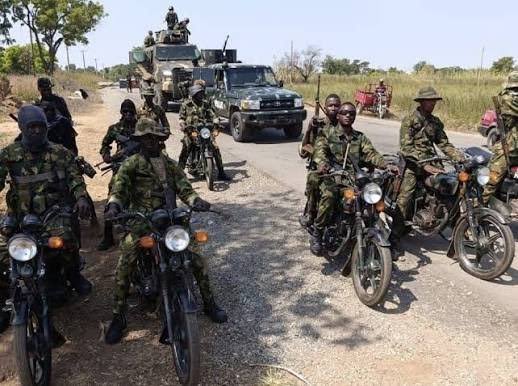
Troops of Sector 1, Operation Enduring Peace (OPEP), have foiled an attack on residents at Dutse Uku in Jos North Local Government Area of Plateau State.
A security source said the troops responded swiftly to a report of sporadic gunshots in the area at about 11:50 p.m. on April 2.
According to the source, upon arrival at the scene, the suspected criminals fled, abandoning their operation due to the prompt intervention of the troops.
He said the troops rescued two victims who sustained gunshot wounds during the incident and immediately evacuated them to a hospital for medical attention.
The source further disclosed that two suspects, dressed in black attire, were arrested at the scene.
Items recovered from the suspects include a cutlass and a knife.
He added that the suspects are currently in military custody and undergoing preliminary investigation, while efforts are ongoing to track down other fleeing members of the group.
Zagazola report that despite heightened security, there has been report of pocket of attacks in some communities.
The source reassured residents of the military’s commitment to protecting lives and property and urged the public to continue providing timely information to security agencies.
Troops foil attack by Criminal Youths, rescue victims, arrest suspects in plateau

Troops intercept suspected Boko Haram logistics convoy conveying 13 persons in Borno

Troops intercept 11 youths with donkeys during patrol in Borno

Troops, CJTF arrest three suspected Boko Haram logistics suppliers in Borno

Roger Federer’s Shock as DNA Results Reveal Myla and Charlene Are Not His Biological Children

THE PLIGHT OF FARIDA

FAILED COUP IN BURKINA FASO: HOW TRAORÉ NARROWLY ESCAPED ASSASSINATION PLOT AMID FOREIGN INTERFERENCE CLAIMS
-
 News2 years ago
Roger Federer’s Shock as DNA Results Reveal Myla and Charlene Are Not His Biological Children
-
Opinions4 years ago
THE PLIGHT OF FARIDA
-
 News12 months ago
FAILED COUP IN BURKINA FASO: HOW TRAORÉ NARROWLY ESCAPED ASSASSINATION PLOT AMID FOREIGN INTERFERENCE CLAIMS
-

 News2 years ago
EYN: Rev. Billi, Distortion of History, and The Living Tamarind Tree
-
 Opinions4 years ago
POLICE CHARGE ROOMS, A MINTING PRESS
-

 ACADEMICS2 years ago
A History of Biu” (2015) and The Lingering Bura-Pabir Question (1)
-

 Columns2 years ago
Army University Biu: There is certain interest, but certainly not from Borno.
-

 Opinions2 years ago
Tinubu,Shettima: The epidemic of economic, insecurity in Nigeria
