
News
FG to Equip 251 Hospitals as Health Sector Reforms Begin to Deliver Results

FG to Equip 251 Hospitals as Health Sector Reforms Begin to Deliver Results
By: Michael Mike
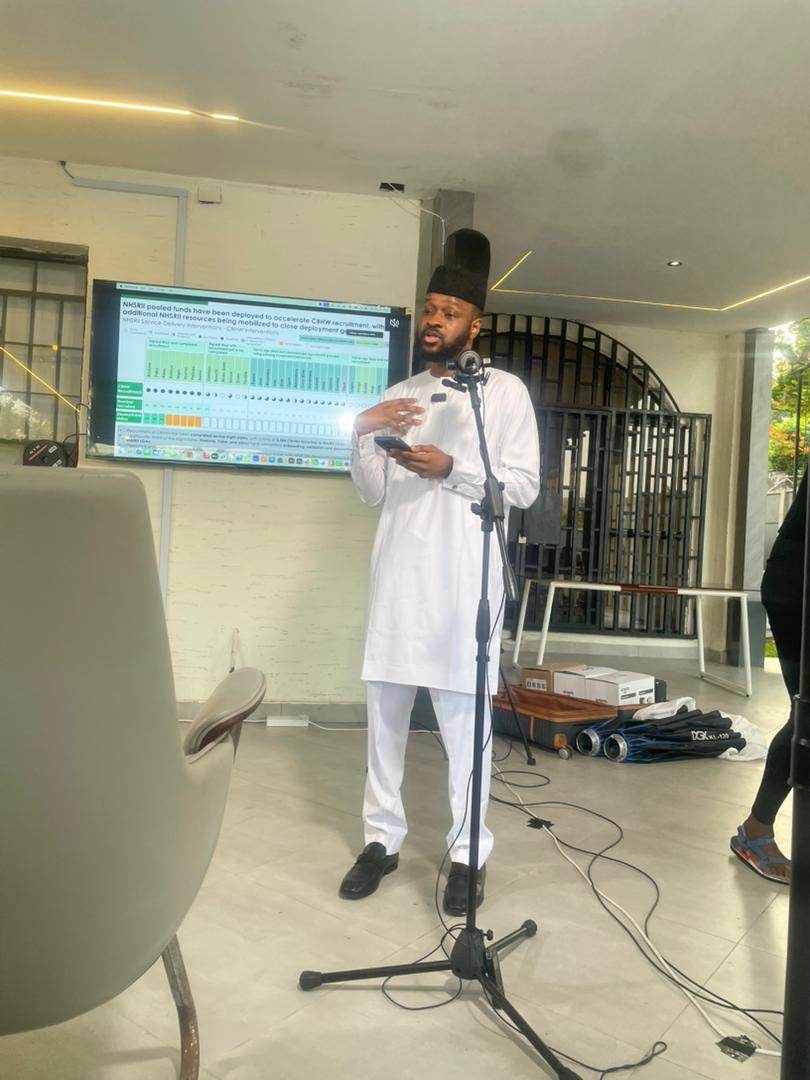
The Federal Government has announced plans to distribute critical medical equipment to 251 secondary healthcare facilities across Nigeria as ongoing reforms in the health sector begin to show early gains in maternal and child healthcare outcomes.
The disclosure was made during a stakeholders’ and media engagement ahead of the formal launch of the equipment distribution programme under the Nigeria Health Sector Renewal Investment Initiative and the Sector-Wide Approach (SWAp) Coordination Office domiciled in the Federal Ministry of Health and Social Welfare in Abuja.
The National Coordinator of the programme, Muntaqa Umar-Sadiq, said the reforms were designed to address long-standing structural weaknesses in Nigeria’s healthcare system, including poor coordination, inadequate infrastructure, weak data management systems, shortage of health workers, and limited access to affordable healthcare.
He explained that the reform agenda aligns with the human capital development priorities of Bola Ahmed Tinubu and focuses on strengthening governance, accountability, and service delivery across all levels of healthcare.
According to him, the reform strategy recognises that improving health outcomes requires more than increased funding, stressing that stronger governance systems, coordinated resource management, and enforceable accountability mechanisms are essential to achieving sustainable progress.
“We speak a lot about one plan, one budget, one report, and one conversation. Governance is at the heart of how we can address these long-standing issues,” Umar-Sadiq said.
He noted that the interventions are targeting both the supply and demand sides of healthcare delivery through the recruitment of community healthcare workers, revitalisation of primary healthcare centres, upgrading of Comprehensive Emergency Obstetric and Newborn Care (CEmONC) facilities, and improved provision of equipment and medical commodities.
He added that efforts were also underway to improve healthcare affordability through the National Health Insurance Authority reimbursement scheme, particularly for caesarean sections and obstetric complications.
As part of the reforms, the Federal Government signed a compact with the 36 states and the Federal Capital Territory to establish a unified accountability framework for healthcare delivery.
Under the arrangement, federal, state, and local governments are assigned clear responsibilities, including quarterly performance reviews, mandatory data reporting, and incentive-based financing tied to independently verified results.
Describing the framework as an “ask-and-offer” arrangement, Umar-Sadiq said the Federal Government would provide funding and technical support, while states would commit to agreed reforms and investments before qualifying for reimbursements.
“For the first time, expectations are clearly documented. States know what they are expected to do, and the Federal Government also has obligations it must fulfil,” he stated.
He disclosed that the government had committed to upgrading at least one CEmONC facility in every local government area nationwide.
According to him, 774 secondary healthcare facilities offering comprehensive emergency obstetric and newborn care were assessed across the country to determine infrastructure and equipment gaps, with 251 facilities eventually selected for equipment support covering operating theatres, laboratories, neonatal units, pharmacies, and emergency obstetric care services.
He said the intervention would significantly improve hospitals’ capacity to manage maternal and neonatal emergencies while reducing preventable deaths.
The upgraded facilities, he added, would also support empanelment under the National Health Insurance Authority, enabling more Nigerians to access reimbursed maternal healthcare services.
The reform office further disclosed that over 3,000 primary healthcare centres had already been revitalised nationwide in collaboration with state governments and the National Primary Health Care Development Agency.
Of the revitalised facilities, 808 are located in 172 high-burden local government areas identified as accounting for about 55 per cent of maternal deaths in Nigeria.
Umar-Sadiq also revealed that more than 3,000 community healthcare workers had been recruited and deployed to underserved communities to improve access to frontline healthcare services.
He said emergency transportation systems and referral mechanisms were also being strengthened to ensure that women experiencing pregnancy-related complications could be transferred quickly from primary healthcare centres to equipped referral hospitals.
According to him, 259 healthcare facilities have already been empanelled under the NHIA reimbursement initiative, while more than 42,000 women and newborns have benefited from free caesarean sections and other reimbursed obstetric services.
He also highlighted ongoing efforts to improve access to essential medicines and medical commodities through a pooled procurement initiative known as Medipool, which is expected to reduce stock-outs, lower costs, improve quality assurance, and strengthen value-for-money procurement across the health sector.
Providing further updates on the programme’s impact, Umar-Sadiq said utilisation of healthcare services had increased significantly in targeted local government areas, with more than 2.1 million pregnant women accessing antenatal care services in priority communities.
He noted that skilled birth attendance and facility-based deliveries had also improved, while facility-based maternal mortality rates had declined in participating areas.
He described the development as evidence that the sector-wide reform strategy was beginning to produce measurable improvements in healthcare delivery and maternal health outcomes.
Umar-Sadiq stressed that data intelligence and evidence-based policymaking remained central to the reform programme, noting that authorities now routinely track indicators such as maternal mortality, healthcare worker deployment, facility revitalisation, commodity availability, and emergency response systems.
He added that lessons from previous interventions, including the Midwives Service Scheme, had informed the current implementation model.
Under the arrangement, states are expected to gradually absorb the salaries of newly recruited healthcare workers into their payroll systems over a three-year period to ensure sustainability beyond federal and donor funding support.
The coordinator disclosed that independent verification agents had been engaged to confirm states’ performance before reimbursements are released under the pay-for-results financing model.
He, however, acknowledged that some states were still facing challenges related to the signing of Memoranda of Understanding on healthcare worker recruitment and financing commitments.
According to him, issues involving fiscal planning, accommodation, and long-term workforce absorption remain under discussion with states such as Lagos State, Delta State, and Rivers State.
Umar-Sadiq said the government was also investing in training institutions and workforce expansion programmes to boost the production of midwives and other frontline health personnel.
He added that additional investments were being made in health technology schools and accommodation facilities to improve training capacity and welfare for healthcare workers across the country.
FG to Equip 251 Hospitals as Health Sector Reforms Begin to Deliver Results



Chad Accuses Sudanese Forces of Crossing Border, Bombing Convoy Deep Inside Chadian Territory
By Zagazola Makama
The Chadian General Staff has accused the warring parties in Sudan of violating Chad’s territorial integrity after aircraft and drones allegedly pursued and bombarded a convoy more than 100 kilometres inside Chadian territory.
The incident reportedly occurred at about 8 p.m. on Thursday, August 20, 2026, near Chad’s common border with Sudan, particularly around the Mourdi Department in the Ennedi-Est Province.
In a communiqué issued to the national and international public, the Chadian General Staff said aerial and ground assessments conducted throughout Friday, August 21, confirmed that the fighting in Sudan had once again spilled into Chadian territory.
According to the military authorities, aircraft and drones identified as belonging to the Sudanese Armed Forces (SAF) and/or forces supporting them were involved in the pursuit of a convoy.
The Chadian military said the operation initially took place on Sudanese territory but subsequently extended deep into Chad, with the convoy reportedly pursued and bombarded more than 100 kilometres inside Chadian territory.
The military authorities did not provide details on the identity of the convoy, the nature of its cargo, or the circumstances that led to the pursuit across the border.
However, the Chadian General Staff described the incident as a fresh violation of the country’s territorial integrity and warned all parties involved in the Sudan conflict against attempting to extend the war into Chad.
“Although no Chadian casualties have been recorded to date,” the military said, it strongly condemned what it described as the latest violation of Chad’s territorial integrity.
The General Staff issued a stern warning to the Sudanese belligerents, saying continued attempts to expand the Sudanese conflict into Chadian territory could have serious consequences.
It described such actions as a “suicidal risk” for those seeking to bring the Sudanese war onto Chadian soil.
The latest incident comes amid the continuing conflict in Sudan between the Sudanese Armed Forces and the paramilitary Rapid Support Forces, which has increasingly generated security concerns for neighbouring countries.
Chad shares a long and porous border with Sudan, particularly along its eastern frontier, where the security situation has remained fragile due to the movement of armed groups, refugees, weapons and combatants fleeing the Sudanese conflict.
The Chadian military said its defence and security forces remain on the highest level of alert to prevent further violations and protect the country’s population.
It further assured citizens that the security forces are prepared to respond forcefully to any threat capable of undermining the peace and security of the Chadian people.
The statement did not indicate whether Chad had identified the specific aircraft or drones involved through direct visual confirmation, radar data or other intelligence means, but said assessments conducted through aerial and physical means established that the operation had crossed into Chadian territory.
The development raises concerns over the potential regionalisation of the Sudan conflict, particularly as fighting and military operations continue to take place close to Sudan’s borders with Chad and other neighbouring countries.
For Chad, the alleged incursion represents a particularly sensitive security issue given the country’s proximity to the conflict and the potential for cross-border military operations to trigger a broader confrontation.
The Chadian authorities have therefore placed their forces on heightened alert while warning the Sudanese belligerents that further violations of its territory could provoke an energetic response.
The Chadian General Staff stressed that its priority remains the protection of the country’s territorial integrity and the safety of its citizens amid the continuing instability along its eastern border.
Chad Accuses Sudanese Forces of Crossing Border, Bombing Convoy Deep Inside Chadian Territory
Troops Arrest 24-Year-Old Hunter With Dane Gun After Gunshots Report in Plateau
By Zagazola Makama
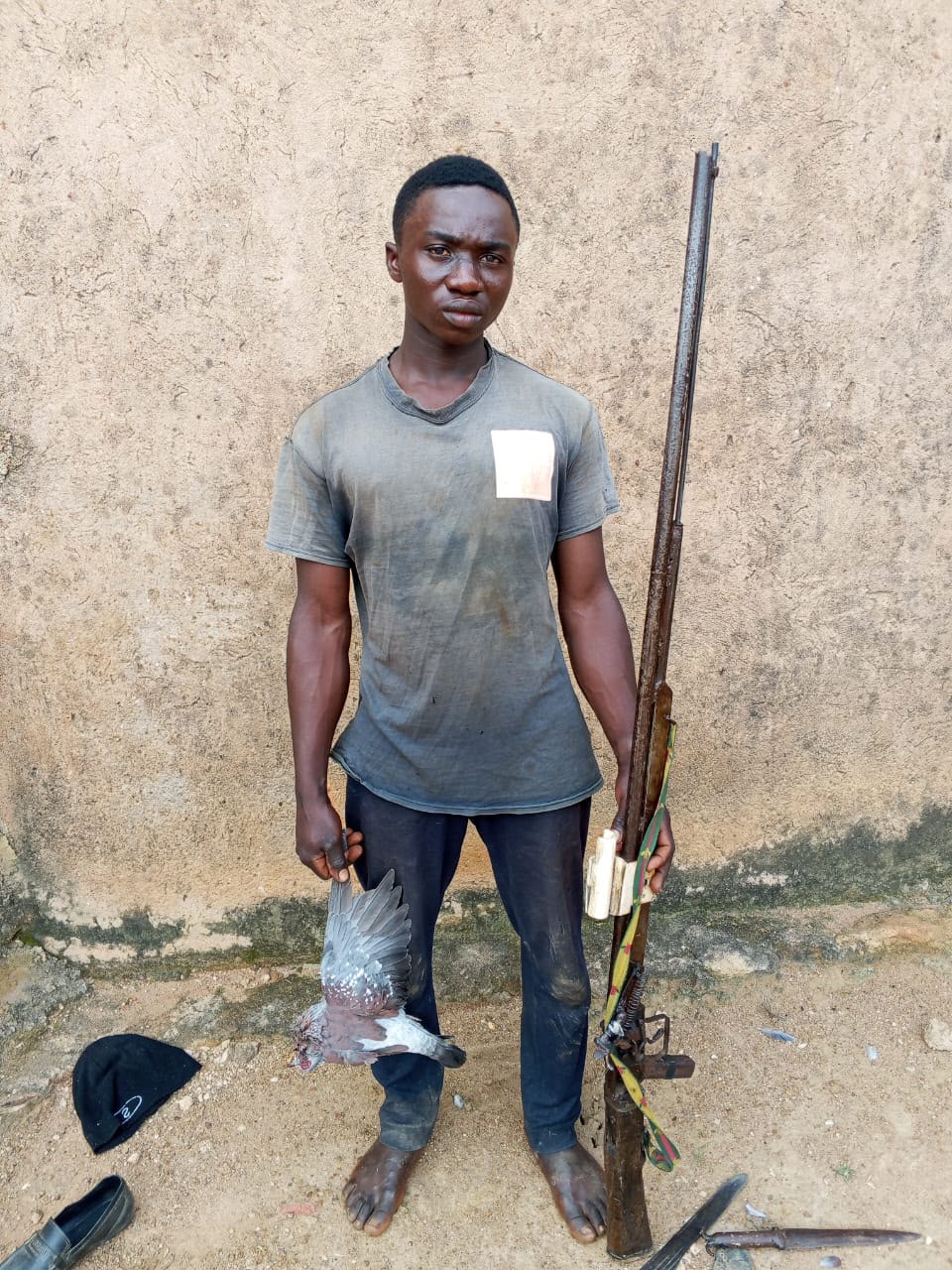
Troops of Sector 3, Operation ENDURING PEACE, have arrested a 24-year-old man and recovered a Dane gun following a report of gunshots in the DTV general area of Bassa Local Government Area of Plateau State.
The incident occurred at about 1:15 p.m. on Saturday, August 22, 2026, when troops deployed at DTV responded to reports of gunshots in the area.
According to military sources, the troops arrived at the scene and arrested the suspect, identified as Emmanuel Daniel, 24, who was found in possession of one Dane gun.
Preliminary investigation revealed that the suspect claimed to have fired the shots while hunting in the area.
The suspect and the recovered weapon are currently in military custody for further investigation and necessary action.
The arrest followed the prompt response of troops to reports of gunfire as security forces continue efforts to maintain peace and security across communities in Plateau State.
Troops Arrest 24-Year-Old Hunter With Dane Gun After Gunshots Report in Plateau
GOC 3 Division Urges Irigwe Stakeholders to Embrace Dialogue, Peaceful Coexistence
By Zagazola Makama
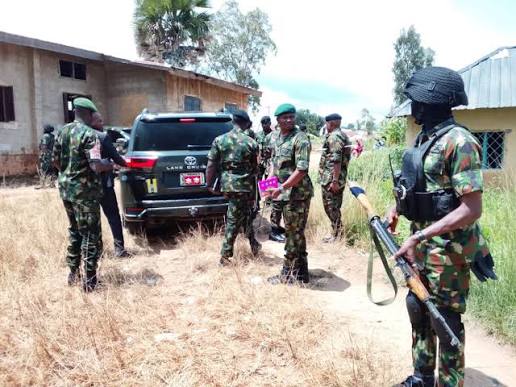
The General Officer Commanding (GOC) 3 Division and Commander, Operation ENDURING PEACE, Major General W.M. Dangana, has urged the Irigwe community in Bassa Local Government Area of Plateau State to embrace dialogue and peaceful coexistence in resolving differences and restoring lasting peace.
Dangana made the call on Friday, August 22, 2026, during a stakeholders’ engagement held at Miango community in Bassa LGA.
The engagement was attended by the Chief of Staff and Commander, Sector 3, Operation ENDURING PEACE, the entire Irigwe leadership and other stakeholders.
During the meeting, participants discussed critical security issues affecting the community and measures required to address the challenges and prevent further escalation of tensions.
The GOC emphasized the importance of dialogue as a means of resolving differences, urging the stakeholders to pursue peaceful solutions to issues affecting the community.
He also called on the Irigwe leadership and residents to promote peaceful coexistence, stressing the need for collective efforts towards restoring lasting peace in the community and Plateau State at large.
The engagement further illustrates the importance of cooperation between the security agencies, traditional institutions and local communities in addressing security challenges and strengthening peace-building efforts.
The meeting was hitch-free.
GOC 3 Division Urges Irigwe Stakeholders to Embrace Dialogue, Peaceful Coexistence

Chad Accuses Sudanese Forces of Crossing Border, Bombing Convoy Deep Inside Chadian Territory

Troops Arrest 24-Year-Old Hunter With Dane Gun After Gunshots Report in Plateau

Three Cows Die After Suspected Poisoning in Plateau

Roger Federer’s Shock as DNA Results Reveal Myla and Charlene Are Not His Biological Children

THE PLIGHT OF FARIDA

FAILED COUP IN BURKINA FASO: HOW TRAORÉ NARROWLY ESCAPED ASSASSINATION PLOT AMID FOREIGN INTERFERENCE CLAIMS
-
 News2 years ago
Roger Federer’s Shock as DNA Results Reveal Myla and Charlene Are Not His Biological Children
-
Opinions5 years ago
THE PLIGHT OF FARIDA
-
 News1 year ago
FAILED COUP IN BURKINA FASO: HOW TRAORÉ NARROWLY ESCAPED ASSASSINATION PLOT AMID FOREIGN INTERFERENCE CLAIMS
-

 News2 years ago
EYN: Rev. Billi, Distortion of History, and The Living Tamarind Tree
-
 Opinions5 years ago
POLICE CHARGE ROOMS, A MINTING PRESS
-

 ACADEMICS2 years ago
A History of Biu” (2015) and The Lingering Bura-Pabir Question (1)
-

 Columns2 years ago
Army University Biu: There is certain interest, but certainly not from Borno.
-

 Politics1 year ago
2027: Why Hon. Midala Balami Must Go, as Youths in Hawul and Asikira/Uba Federal Constituency Reject ₦500,000 as Sallah Gift
