
News
FGC Maiduguri Alumni Decries Deteriorating Level Of Unity Schools


FGC Maiduguri Alumni Decries Deteriorating Level Of Unity Schools
By: Francis Okoye
A former minister of information, Mr Frank Nweke Junior has decried the deteriorating condition of the 104 unity colleges across the federation.
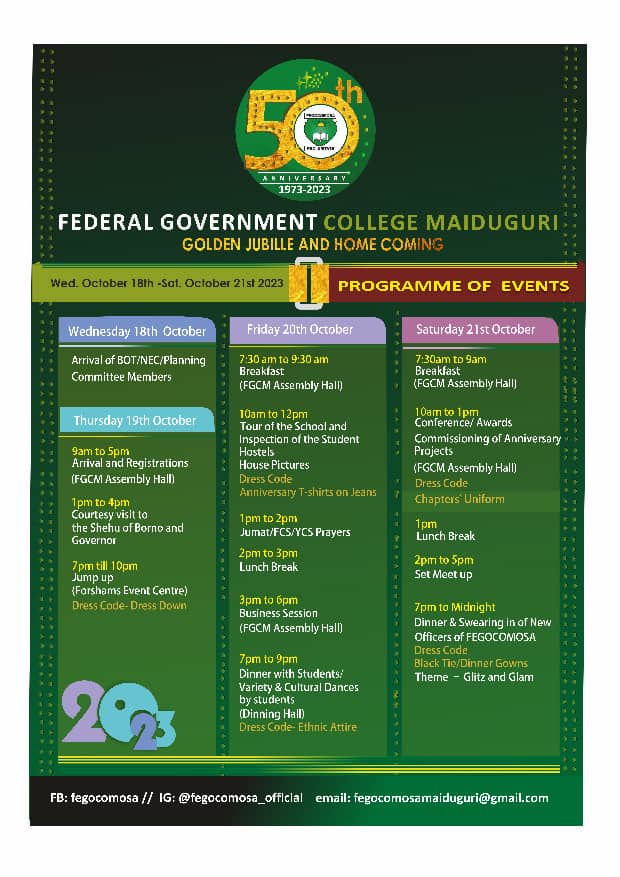
Nweke Junior stated this in an interview with Journalists yesterday in Maiduguri as part of the activities marking the 50th anniversary of the Federal Government College Maiduguri in Borno where he had his secondary education between 1977 to 1982.

He said even though the main objective of establishing the unity schools which is fostering national cohesion, unity and diversity have been achieved, he must confess that he is not unaware of significant drop in standard not only in his alma mata, the FGC Maiduguri, but in all unity colleges across the federation.
He said for this reason, various sets of the old students under the umbrella of the old students association of the FGC Maiduguri have been coming together with different projects to assist the management of the school in tackling some of the challenges facing the school.
The former minister said during the 50th anniversary coming up between 18th to 22nd of this month, old students from as far as the United States, Canada, England and others coming from across the federation will converge in Maiduguri and discuss on how to further develop their former school.
The President of the Alumni association, Suleiman Muhammed Dikwa, said the anniversary will serve as a message to the world that Maiduguri is back as a center of education.
Suleiman recounted some projects which the association have executed in Federal Government College Maiduguri through the state and individuals, part of which include donation of vocational equipment by one its members, facilitation of e-libary and, ongoing installation of solar electricity in the dining hall, music equipment and construction of sport complex with modern sporting equipments.
Also speaking, the Chairman Board of Trustees, FGC Maiduguri Old Students Association, Engr Abel Imonighavwe recalled that when he was admitted to the FGC Maiduguri then, each state of the federation was represented in the school despite being in Borno State.
He said a lot of activities have been rolled out for the 50th anniversary adding the old students will use the occasion to further tour the school and come out with more interventions to make the college one of the best in the country.
FGC Maiduguri Alumni Decries Deteriorating Level Of Unity Schools


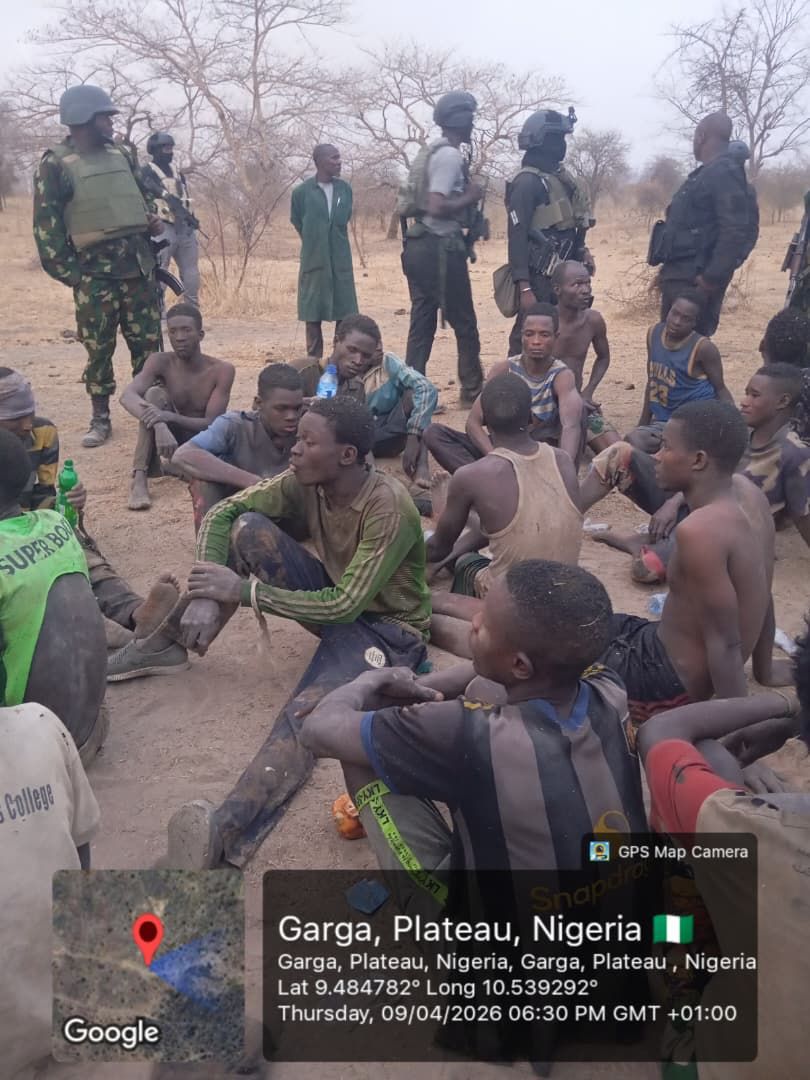
Troops rescue 21 kidnapped victims, clear bandits’ camps in forest operation in Plateau
By: Zagazola Makama
Troops of the Nigerian Army have rescued 21 kidnapped victims and dismantled several bandits’ camps during a coordinated clearance operation in Daji Madam Forest in Plateau State.
Security sources said the operation was conducted in the early hours of April 9 by troops of 33 Artillery Brigade, led by the Brigade Commander, Brig.-Gen. S.S. Shehu, in collaboration with a team from the Office of the National Security Adviser (ONSA).l
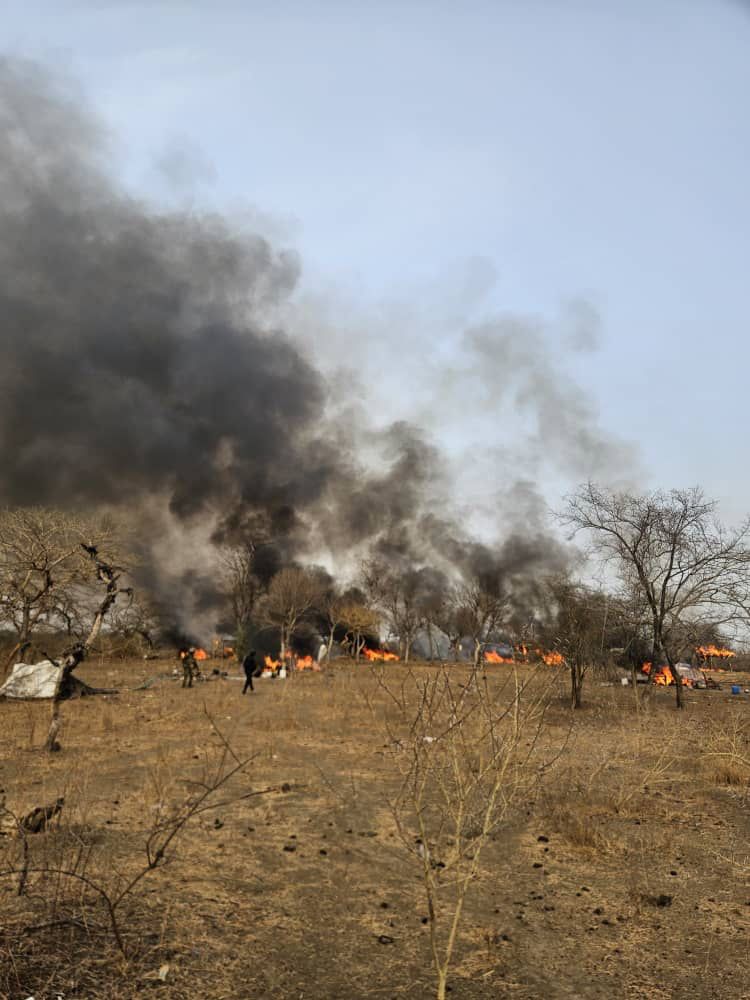
The operation targeted identified bandits’ enclaves in locations including Dogo Ruwa and Bogwas within the forest.
Simultaneously, troops of a Combat Support Infantry Battalion deployed at Mansur, led by Lt.-Col. J.T. Bere, in conjunction with Civilian Joint Task Force (CJTF) elements, mounted blocking positions at key crossing points to prevent the escape of fleeing bandits.
During the operation, troops made contact with the armed elements and successfully cleared multiple camps, including one linked to a notorious bandit leader identified as Auta Kachalla.
In the course of the operation, troops rescued 21 kidnapped victims and destroyed several motorcycles belonging to the bandits,” a source said.
Items recovered from the camps included one G3 rifle, four magazines, three generating sets and a solar panel.
The rescued victims are expected to undergo medical checks and debriefing, while efforts are ongoing to reunite them with their families.pp
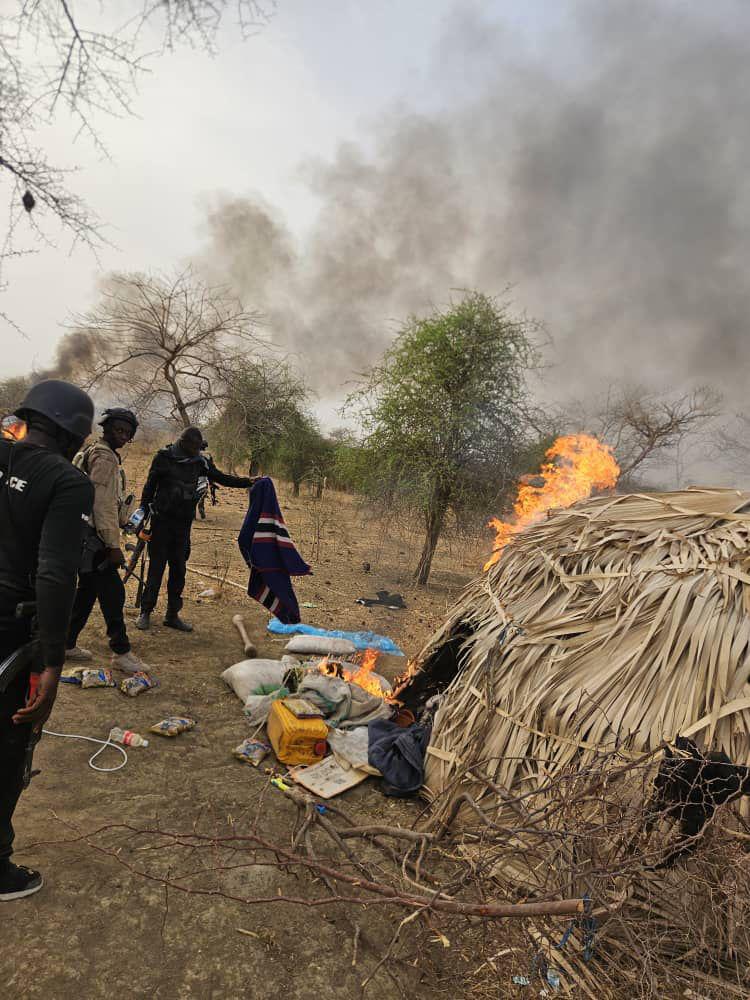
Troops said offensive operations continue in the general area to eliminate remaining threats.
The operation is part of ongoing efforts by security forces to dismantle criminal networks and restore stability across forested enclaves in Plateau and adjoining states.
Troops rescue 21 kidnapped victims, clear bandits’ camps in forest operation in Plateau
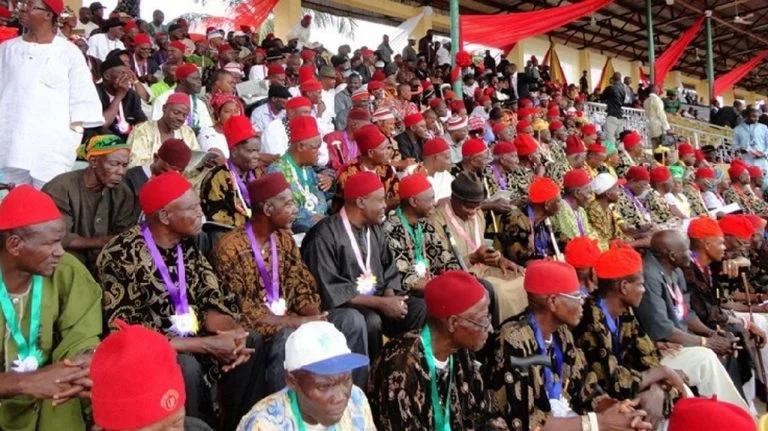
FG, Ohanaeze Outlaw ‘Eze Ndigbo’ Titles Abroad Amid Rising Diplomatic Tensions
By: Michael Mike
The Federal Government has moved to curb the controversial installation of “Eze Ndigbo” in foreign countries, backing a sweeping decision by Ohanaeze Ndigbo Worldwide and South East traditional rulers to abolish the practice outside Igboland, following a series of international incidents that have strained Nigeria’s diplomatic relations.
Minister of State for Foreign Affairs, Bianca Odumegwu-Ojukwu, delivered the government’s position at the high-level Imeobi meeting of Ohanaeze in Enugu on Thursday, describing the proliferation of Igbo “kings” in the diaspora as a growing embarrassment to Nigeria and a trigger for avoidable conflicts abroad.
She warned that while diaspora communities are free to promote their culture, attempts to replicate traditional rulership structures in foreign lands have repeatedly sparked tensions with host authorities and local populations.
The latest flashpoint occurred in East London, where the coronation of Solomon Ogbonna Eziko ignited violent protests. The unrest led to the destruction of property, attacks on foreign-owned businesses, and clashes with security forces, after locals interpreted the installation as a challenge to South Africa’s traditional authority system.
South African institutions, including the Eastern Cape House of Traditional and Khoi-San Leaders and the Department of Cooperative Governance and Traditional Affairs, declared the coronation illegal, underscoring the diplomatic sensitivity of such actions.
Nigeria’s foreign missions quickly distanced themselves from the development, with officials clarifying that the event was merely cultural and not a recognized monarchy. The Nigerian Embassy in Pretoria subsequently issued an apology and urged citizens to maintain a low profile.
Odumegwu-Ojukwu revealed that similar tensions had surfaced in Accra in 2025, where protests against Nigerians escalated over the same issue. She led a diplomatic delegation to calm the situation, engaging directly with John Mahama and other key stakeholders.
According to her, the intervention of the Ghanaian president was pivotal in diffusing tensions, as he reaffirmed his country’s commitment to ECOWAS protocols on free movement and rejected calls for xenophobic actions against Nigerians.
The minister stressed that such crises place Nigerian lives, businesses, and diplomatic standing at risk, insisting that urgent measures were necessary to prevent further escalation.
In response, Ohanaeze Ndigbo Worldwide has formally proscribed the conferment and use of “Eze Ndigbo” titles outside Igboland. President-General of the organization, Azuta Mbata, declared that any individual assuming such a title abroad does so without the backing of the Igbo people.
He disclosed that the group would notify state governments and Nigerian missions globally of the decision and is working with traditional rulers to establish sanctions for violators, including community-level enforcement through hometowns and town unions.
The Federal Government has pledged to reinforce the directive through its diplomatic channels, signaling a coordinated effort to prevent further international disputes linked to cultural misrepresentation.
The development marks a decisive shift by both the government and Igbo leadership to separate cultural expression from traditional authority in diaspora settings, amid growing concern over the global implications of local customs.
FG, Ohanaeze Outlaw ‘Eze Ndigbo’ Titles Abroad Amid Rising Diplomatic Tensions
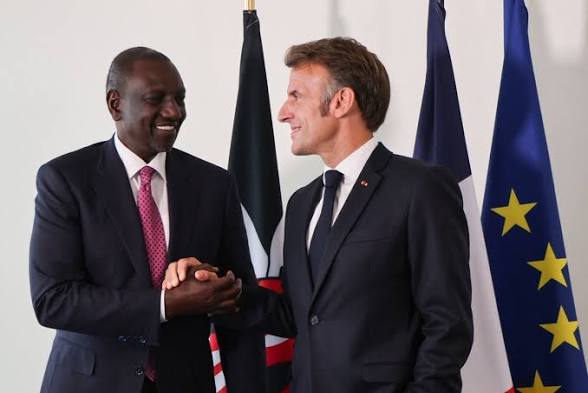
Africa, France Move to Reset Economic Ties at Nairobi Summit
By: Michael Mike
African leaders and their French counterparts are set for a critical engagement next month as Kenya and France prepare to host the Africa Forward Summit: Africa–France Partnerships for Innovation and Growth in Nairobi, amid growing calls for a new model of cooperation that delivers real economic impact for the continent.
The summit, scheduled for May 11–12, 2026, will convene top political leaders including Emmanuel Macron and William Ruto, alongside African Heads of State, investors, development partners, civil society groups, and youth representatives.
A Business Forum on May 11 is expected to drive private sector engagement and set the tone for the main summit, where discussions will centre on investment, innovation, and long-term economic collaboration.
Organisers said the summit is designed to move beyond diplomatic symbolism, focusing instead on actionable partnerships in key sectors such as healthcare, agriculture, digital technology, energy, and infrastructure—areas considered vital to Africa’s transformation.
For countries like Nigeria, the outcomes could be significant, offering pathways to attract investment, create jobs, and strengthen economic resilience at a time of global uncertainty.
The summit comes against the backdrop of evolving relations between Africa and France, marked by increasing demands from African nations for more equitable and transparent partnerships.
Historically, France has maintained strong political, economic, and military ties with several African countries, particularly in West and Central Africa. However, in recent years, these relationships have come under scrutiny, with critics calling for an end to perceived imbalances and a shift toward mutual respect and shared benefits.
At the same time, Africa’s global relevance has risen, driven by its growing population, expanding markets, and strategic importance in global supply chains. This has intensified competition among global powers seeking influence on the continent, prompting France to recalibrate its engagement strategy.
The Africa Forward Summit is seen as part of that reset—an attempt to reposition France as a partner in innovation and sustainable development rather than a traditional power broker.
The timing is also significant as it feeds into preparations for the upcoming G7 Summit, where Africa’s economic future, climate challenges, and development financing are expected to dominate discussions.
Analysts said the Nairobi meeting could serve as a testing ground for how Africa and its international partners engage moving forward—shifting from aid-driven relationships to investment-led cooperation.
With unemployment rising and infrastructure gaps widening across many African economies, expectations are high that the summit will produce concrete commitments rather than broad declarations.
Diplomatic missions in Abuja have indicated that further details will be unveiled at a press briefing, but stakeholders are already positioning the summit as a defining moment in reshaping Africa–Europe relations.
If successful, the Africa Forward Summit could mark a turning point—signaling a transition from historic ties to future-focused partnerships built on innovation, shared prosperity, and measurable outcomes.
Africa, France Move to Reset Economic Ties at Nairobi Summit
.

Troops rescue 21 kidnapped victims, clear bandits’ camps in forest operation in Plateau

Troops neutralize 13 bandits in Plateau offensive, recover weapons and logistics items

FG, Ohanaeze Outlaw ‘Eze Ndigbo’ Titles Abroad Amid Rising Diplomatic Tensions

Roger Federer’s Shock as DNA Results Reveal Myla and Charlene Are Not His Biological Children

THE PLIGHT OF FARIDA

FAILED COUP IN BURKINA FASO: HOW TRAORÉ NARROWLY ESCAPED ASSASSINATION PLOT AMID FOREIGN INTERFERENCE CLAIMS
-
 News2 years ago
Roger Federer’s Shock as DNA Results Reveal Myla and Charlene Are Not His Biological Children
-
Opinions4 years ago
THE PLIGHT OF FARIDA
-
 News12 months ago
FAILED COUP IN BURKINA FASO: HOW TRAORÉ NARROWLY ESCAPED ASSASSINATION PLOT AMID FOREIGN INTERFERENCE CLAIMS
-

 News2 years ago
EYN: Rev. Billi, Distortion of History, and The Living Tamarind Tree
-
 Opinions4 years ago
POLICE CHARGE ROOMS, A MINTING PRESS
-

 ACADEMICS2 years ago
A History of Biu” (2015) and The Lingering Bura-Pabir Question (1)
-

 Columns2 years ago
Army University Biu: There is certain interest, but certainly not from Borno.
-

 Opinions2 years ago
Tinubu,Shettima: The epidemic of economic, insecurity in Nigeria
