
News
Fiscal Responsibility Commission Seeks Stronger Enforcement Powers, More Funding, Act Amendment


Fiscal Responsibility Commission Seeks Stronger Enforcement Powers, More Funding, Act Amendment
By: Michael Mike
The Fiscal Responsibility Commission (FRC) has called on the Federal Government to strengthen its enforcement powers, increase its funding and amend the Fiscal Responsibility Act (FRA), 2007, to enhance accountability and transparency in the management of public resources.
The Acting Chairman of the Commission, Charles Abana, made the appeal in Abuja on Monday at the public presentation of the 2026 Fiscal Responsibility Index (FRI) Report, covering the 2023–2025 financial years.
Abana said the Commission had continued to discharge its statutory responsibilities despite challenges, including limited enforcement powers, inadequate funding, staff shortages and insufficient office accommodation, more than 16 years after its establishment.
He stressed that strengthening the Commission was necessary to improve fiscal discipline, ensure accountability in government institutions and promote the prudent management of public funds.
According to him, the Commission’s internally generated revenue has grown significantly through the monitoring and payment of operating surpluses and other independent revenue sources, rising from about N300 million in 2010 to more than N2 trillion annually.
He urged the government to deliberately address the institutional challenges confronting the Commission, particularly by strengthening its enforcement capacity and providing adequate financial and operational support.
The Acting Chairman described the Fiscal Responsibility Index as an evidence-based instrument for measuring and ranking the compliance of Federal Ministries, Departments and Agencies (MDAs) with statutory public financial management obligations.
He said the Index goes beyond administrative assessments and rankings, providing a mechanism for identifying compliance gaps, encouraging institutional competition and promoting transparency and accountability in the utilisation of public resources.
Specifically, the assessment examines MDAs’ compliance with requirements relating to public financial management practices, budgeting thresholds, procurement transparency and revenue remittance under the Fiscal Responsibility Act and other applicable public financial management frameworks.
Abana said the fundamental objective was to establish a credible basis for measuring institutional performance, identifying areas requiring improvement and strengthening accountability across the Federal Government.
He noted that the 2026 edition, the second of its kind, assessed the performance of Federal MDAs over three consecutive financial years — 2023, 2024 and 2025 — offering a broader picture of their compliance and institutional performance.
He explained that the assessment was conducted through a rigorous and participatory process designed to ensure transparency, fairness and the credibility of the final findings.
According to him, the Commission organised technical peer-review and methodology validation sessions on June 2 and 11, 2026, involving more than 80 representatives of Federal MDAs.
The sessions provided stakeholders with opportunities to examine the assessment methodology, review questionnaires and make technical contributions to ensure that the indicators were clear, measurable and consistent with the statutory responsibilities of the institutions.
He further disclosed that the Commission held two-day score reconciliation and evidence review meetings at its headquarters in Abuja on September 1 and 2, 2026.
During the meetings, participating MDAs were engaged in two batches and given opportunities to review their preliminary scores, clarify issues and reconcile discrepancies between submitted information and available documentary evidence.
Abana said the process was important in ensuring that the final assessment was based on verifiable evidence rather than assumptions or subjective judgments.
He added that the Commission subsequently received and verified outstanding physical and electronic documents submitted by participating MDAs up to the September 4, 2026 deadline.
The Acting Chairman commended the participating institutions, the Commission’s technical team and development partners for their contributions to the successful completion of the exercise.
He particularly acknowledged the support of International IDEA, the European Union and the Centre for Social Justice, describing their contributions as instrumental to the development of the initiative.
Also speaking at the event, the Executive Director of the Centre for Social Justice (CSJ), Eze Onyekpere, said the organisation collaborated with the Fiscal Responsibility Commission in the design, research, preparation and validation of the 2023–2025 Fiscal Responsibility Index.
Onyekpere explained that the project was implemented under CSJ’s programme, Improving the Effectiveness of Anti-Corruption Processes and Reforms in Nigeria, with support from the European Union, International IDEA and the Rule of Law and Anti-Corruption Project (RoLAC 2).
He said the broader programme was designed to improve the effectiveness of anti-corruption laws, policies, interventions and strategies at national and subnational levels, ultimately strengthening compliance with existing anti-corruption frameworks.
According to him, anti-corruption laws and policies should go beyond their mere existence to produce systemic changes, institutional compliance and behavioural transformation in society.
He noted that effective implementation of such frameworks should promote corruption prevention, facilitate corrective action, improve the detection and prosecution of offenders and discourage future violations.
Onyekpere emphasised that fiscal policies, particularly government budgets, played a central role in the security and welfare of citizens, as well as the consolidation of democracy.
He argued that democracy and development were closely connected, noting that the collection, management, expenditure, reporting, monitoring and evaluation of public resources remained among the principal ways governments affected citizens’ lives.
He said the implementation of the Fiscal Responsibility Act, 2007, was therefore central to Nigeria’s development aspirations and required continuous monitoring, reporting and evaluation to identify shortcomings and facilitate necessary reforms.
The CSJ Executive Director recalled that the first Fiscal Responsibility Index was developed through a collaboration between the Centre for Social Justice and the Fiscal Responsibility Commission in 2015 and used to benchmark 16 Federal MDAs.
He said the revised Index was designed to advance fiscal responsibility by promoting prudent public financial management practices among government institutions.
Onyekpere explained that the findings were expected to encourage MDAs to abandon practices capable of undermining their institutional integrity and performance.
He added that the report would also provide civil society organisations, the media, the private sector and other stakeholders with evidence-based tools to advocate reforms and demand greater accountability in public financial management.
Of particular significance, he disclosed that evidence emerging from the Index was being deployed in the preparation of the Fiscal Responsibility Rules, a proposed binding subsidiary legislation intended to strengthen the implementation and enforcement of the Fiscal Responsibility Act.
According to him, the proposed rules are expected to establish timelines, enforcement procedures, a code of conduct, offences and penalties for violations of the Act.
He said the Index was also designed to establish a context-specific framework of indicators for monitoring and assessing the fiscal prudence of Federal MDAs, collect relevant data, benchmark institutional performance and establish baseline information for measuring future progress or setbacks.
Other objectives include preparing comprehensive fiscal responsibility reports, facilitating their use for advocacy and stakeholder engagement, and encouraging the Federal Government to adopt appropriate reforms based on the findings.
Meanwhile, Abana said the Index had become particularly important given Nigeria’s growing development needs and the increasing demand for infrastructure, social services, economic opportunities and improved citizens’ welfare.
He maintained that the country’s ability to meet its development obligations depended not only on revenue generation but also on the quality of expenditure management, transparency in procurement, discipline in budget implementation and effective institutional accountability.
He therefore urged MDAs to see the findings of the Index as an opportunity for institutional learning and improvement rather than merely a competition for positions on the ranking table.
“Institutions that have demonstrated strong compliance should sustain and deepen their performance, while those with identified gaps should develop clear and measurable action plans to address them,” he said.
He assured that the Commission would continue to engage relevant institutions, provide guidance within its mandate and strengthen its monitoring and enforcement mechanisms to promote compliance with the Fiscal Responsibility Act.
The Acting Chairman also called for a shift from the practice of merely preparing reports and submitting returns to a system in which fiscal compliance is reflected in actual institutional practices and measurable public value.
He urged the media and civil society organisations to support the dissemination of the Index’s findings and sustain public engagement on fiscal transparency and accountability.
According to him, public awareness and constructive scrutiny remain essential components of an effective accountability framework.
Abana said the Commission remained committed to building a public financial management system in which government budgets are credible, procurement processes transparent, revenues properly accounted for and expenditures disciplined.
He added that the ultimate objective of fiscal responsibility should be to ensure that public resources translate into tangible improvements in the lives of Nigerians.
He called on government institutions, oversight agencies and citizens to collectively support the institutionalisation of fiscal responsibility principles across the public service.
The Fiscal Responsibility Commission is responsible for monitoring and enforcing compliance with the provisions of the Fiscal Responsibility Act, 2007, which establishes a framework for promoting fiscal discipline, transparency and accountability in the management of public finances.
Fiscal Responsibility Commission Seeks Stronger Enforcement Powers, More Funding, Act Amendment



NSCDC Promotes 59 Senior Officers to Commandants, Tasks Them on Tackling Security Threats
By: Michael Mike
The Nigeria Security and Civil Defence Corps (NSCDC) has decorated 59 senior officers elevated to the rank of Commandants of Corps, with the Minister of Interior, Olubunmi Tunji-Ojo, charging them to demonstrate courage, firmness and decisive leadership in tackling Nigeria’s security challenges.
The minister gave the charge on Tuesday in Abuja during the decoration ceremony at the NSCDC National Headquarters, where he urged the newly promoted officers to regard their elevation as a call to greater responsibility rather than merely an advancement in rank.
Tunji-Ojo, represented by the Permanent Secretary of the Ministry of Interior, Magdalene Ajani, said the officers must place national interest above personal considerations and make the security and safety of Nigerians their overriding priority.
He challenged them to be bold, strong and proactive in confronting security threats, developing practical solutions to emerging challenges and ensuring that security policies and strategies translate into measurable results.
The minister emphasised that their new positions came with increased managerial responsibilities and expectations, requiring them to demonstrate professionalism, courage and an unwavering commitment to protecting lives and property.
The development represents a significant leadership advancement within the Corps, with the 59 officers expected to bring their experience and enhanced responsibilities to bear on the NSCDC’s operational effectiveness and national security mandate.
The Commandant General of the NSCDC, Ahmed Audi, congratulated the newly promoted officers, describing their elevation as well-deserved and the outcome of collective efforts by the Corps’ management.
He, however, warned that promotion must translate into improved performance, discipline and leadership, reminding the officers that their new ranks come with higher expectations.
“Promotion is not a reward for the past alone but a trust for the future,” Audi declared.
He urged the officers to justify their elevation through exemplary conduct, effective supervision and commitment to the Corps’ mandate, stressing the need for them to become mentors to junior personnel.
The Commandant General further charged them to uphold merit, wear their new ranks with pride and demonstrate courage and dedication in the discharge of their duties.
He particularly cautioned against arrogance associated with elevated positions, urging the officers to allow humility to guide their leadership and ensure they leave the Corps stronger and better than they met it.
Audi also commended the Corps’ management team for its role in the promotion exercise, describing the achievement as a product of teamwork.
In a message to officers who were unsuccessful in the promotion exercise, the NSCDC boss urged them not to allow disappointment to undermine their commitment to service.
He encouraged them to remain steadfast, dedicated and hopeful, stressing that promotion comes from God and should not discourage anyone from giving their best to the Corps.
Audi also acknowledged the support of the Minister of Interior, expressing appreciation for his continued commitment to the growth, development and institutional advancement of the NSCDC.
The Secretary of the Civil Defence, Correctional, Fire and Immigration Services Board (CDCFIB), Jubril Abdulmalik, a retired Major General, also congratulated the newly promoted Commandants.
He urged them to approach their new responsibilities with courage, dedication and a strong sense of commitment to national service.
Similarly, the Comptroller-General of the Nigerian Correctional Service, Sylvester Ndidi Nwakuche, and representatives of the Director-General of the Department of State Services, the Chairman of the National Drug Law Enforcement Agency, the Chief of Naval Staff and the Chief of Army Staff congratulated the officers.
They emphasised that elevation in rank comes with greater responsibilities and expectations, expressing optimism that the development would positively impact the officers, the NSCDC and the country.
Speaking on behalf of his colleagues, Commandant of Corps Habila Njida Madanda expressed appreciation to the Minister of Interior and the Commandant General for addressing what he described as the longstanding challenge of promotion stagnation in the Corps.
He pledged that the newly promoted officers would justify the confidence reposed in them by leading through example, championing innovation and serving the country with courage and humility.
The ceremony also featured the administration of the oath of allegiance by Commandant Akomolafe Bamiyo of the Corps’ Legal Unit.
The elevation of the 59 officers comes with renewed expectations for stronger institutional leadership, improved operational coordination and greater effectiveness in the NSCDC’s responsibility of protecting critical national assets, infrastructure and public safety.
NSCDC Promotes 59 Senior Officers to Commandants, Tasks Them on Tackling Security Threats
News
ECOWAS, UN Women, AfDB Launch Regional Programme to Advance Women’s Leadership in Climate Action
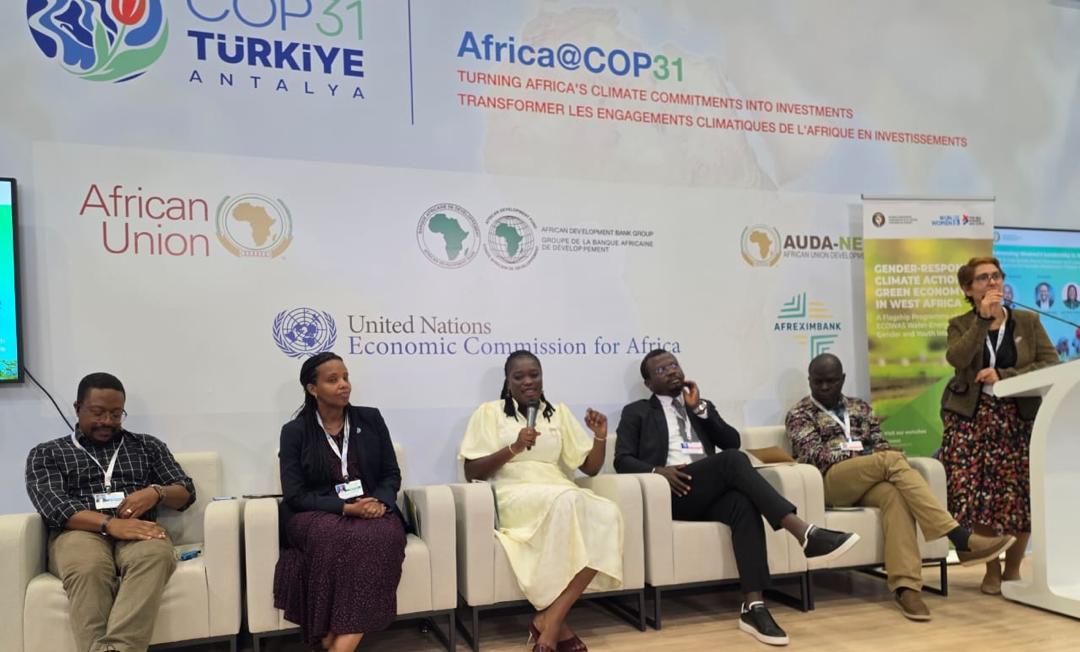
ECOWAS, UN Women, AfDB Launch Regional Programme to Advance Women’s Leadership in Climate Action
By: Michael Mike
The Economic Community of West African States (ECOWAS), UN Women and the African Development Bank (AfDB) have launched a regional programme aimed at strengthening women’s leadership and participation in climate action and the green economy across West Africa.
The initiative was unveiled during a high-level side event at the ongoing 31st United Nations Climate Change Conference (COP31) in Antalya, Türkiye.
The event, organised by ECOWAS through its Centre for Gender Development (EGDC), in partnership with UN Women and with support from the AfDB, was held under the theme, “Advancing Women’s Leadership in West Africa’s Green Transition.”

It brought together regional and international stakeholders to examine ways of positioning women as key drivers of climate solutions, green economic growth and sustainable development in the region.
In their opening remarks, the Director of the ECOWAS Centre for Gender Development, Sandra Oulaté Fattoh, and the Director of Policy, Programme and Intergovernmental Division at UN Women, Sarah Hendriks, stressed the need to place women at the centre of climate responses and sustainable development strategies.
A high-level panel discussion subsequently examined critical issues surrounding women’s participation in the green transition, including access to climate finance, green entrepreneurship, sustainable employment, technological opportunities and strategic partnerships.
Participants also highlighted the potential of the green economy to promote inclusive economic growth, strengthen community resilience and create new opportunities for women across West Africa.
The major highlight of the event was the presentation and official launch of the ECOWAS Regional Programme for Gender-Responsive Climate Action and a Green Economy in West Africa.
The programme, supported by UN Women and the African Development Bank, was officially launched by Senegal’s Minister of Environment and Ecological Transition and Chair of the ECOWAS Council of Environment Ministers, Aliou Gory Diouf.
The initiative is designed to expand women’s access to climate finance, green jobs, technology and markets, while strengthening their representation and participation in climate-related decision-making processes.
It also seeks to promote a gender-responsive approach to climate action and ensure that women are not merely beneficiaries of the green transition but active participants in shaping and driving its outcomes.
The launch underscores ECOWAS’ commitment to advancing gender equality within the region’s environmental and economic transformation agenda.
Through the partnership with UN Women and the African Development Bank, the regional bloc is seeking to strengthen institutional collaboration and mobilise support for a green transition that is inclusive, resilient and sustainable.
The initiative is expected to contribute to building a West African economy in which women have greater opportunities to access emerging green industries, influence environmental policies and participate meaningfully in addressing the challenges of climate change.
ECOWAS, UN Women, AfDB Launch Regional Programme to Advance Women’s Leadership in Climate Action

Suspected Fulani bandits Kill Operation Rainbow Unit Commander, One Other in Bokkos, Plateau
By: Zagazola Makama
Suspected Fulani bandits have killed a Unit Commander of the Plateau State-owned civilian security outfit, Operation Rainbow, and another person in an ambush in Bokkos Local Government Area of Plateau State.
The victims, identified as Mr. Gambo, an Operation Rainbow commander, and his companion, were reportedly attacked at about 1:30 p.m. on Monday while travelling on a motorcycle from Hurti village to Tadai community in Manguna District.
Sources said the victims had visited Hurti village to attend a condolence event and were returning when they were ambushed by the attackers.
Both men reportedly died on the spot from injuries sustained during the attack.
Gambo was said to have recently completed a refresher training programme organised for Operation Rainbow unit commanders in Jos as part of efforts to strengthen the capacity of the state-backed civilian security outfit.
Suspected Fulani bandits Kill Operation Rainbow Unit Commander, One Other in Bokkos, Plateau

NSCDC Promotes 59 Senior Officers to Commandants, Tasks Them on Tackling Security Threats

ECOWAS, UN Women, AfDB Launch Regional Programme to Advance Women’s Leadership in Climate Action

NDLEA Busts Transnational Cocaine Cartel, Arrests Eight Suspects in Lagos, Kano

Roger Federer’s Shock as DNA Results Reveal Myla and Charlene Are Not His Biological Children

THE PLIGHT OF FARIDA

FAILED COUP IN BURKINA FASO: HOW TRAORÉ NARROWLY ESCAPED ASSASSINATION PLOT AMID FOREIGN INTERFERENCE CLAIMS
-
 News3 years ago
Roger Federer’s Shock as DNA Results Reveal Myla and Charlene Are Not His Biological Children
-
Opinions5 years ago
THE PLIGHT OF FARIDA
-
 News2 years ago
FAILED COUP IN BURKINA FASO: HOW TRAORÉ NARROWLY ESCAPED ASSASSINATION PLOT AMID FOREIGN INTERFERENCE CLAIMS
-
 Opinions5 years ago
POLICE CHARGE ROOMS, A MINTING PRESS
-

 News3 years ago
EYN: Rev. Billi, Distortion of History, and The Living Tamarind Tree
-

 ACADEMICS3 years ago
A History of Biu” (2015) and The Lingering Bura-Pabir Question (1)
-

 Columns3 years ago
Army University Biu: There is certain interest, but certainly not from Borno.
-

 Politics1 year ago
2027: Why Hon. Midala Balami Must Go, as Youths in Hawul and Asikira/Uba Federal Constituency Reject ₦500,000 as Sallah Gift
