
News
FOOD SECURITY: VP Shettima Unveils Nigeria’s Macro-Strategy At Davos Meeting

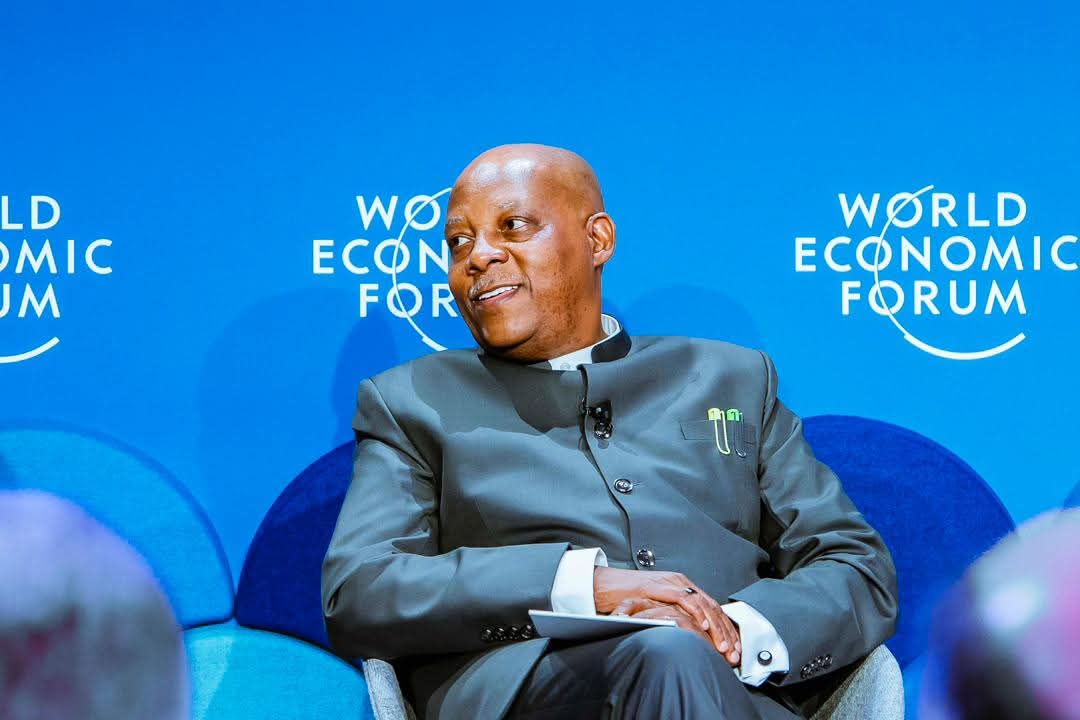
FOOD SECURITY: VP Shettima Unveils Nigeria’s Macro-Strategy At Davos Meeting
Says ‘Back to the Farm’ initiative to curb inflation, FX spending on imports
By: Our Reporter
Vice President Kashim Shettima has announced that Nigeria no longer views food security through a narrow agricultural lens, but as a fundamental macroeconomic, security, and governance issue.
He said the Federal Government had begun a multi-dimensional agricultural drive designed to insulate the nation from global shocks while restoring the productivity of its food basket regions.
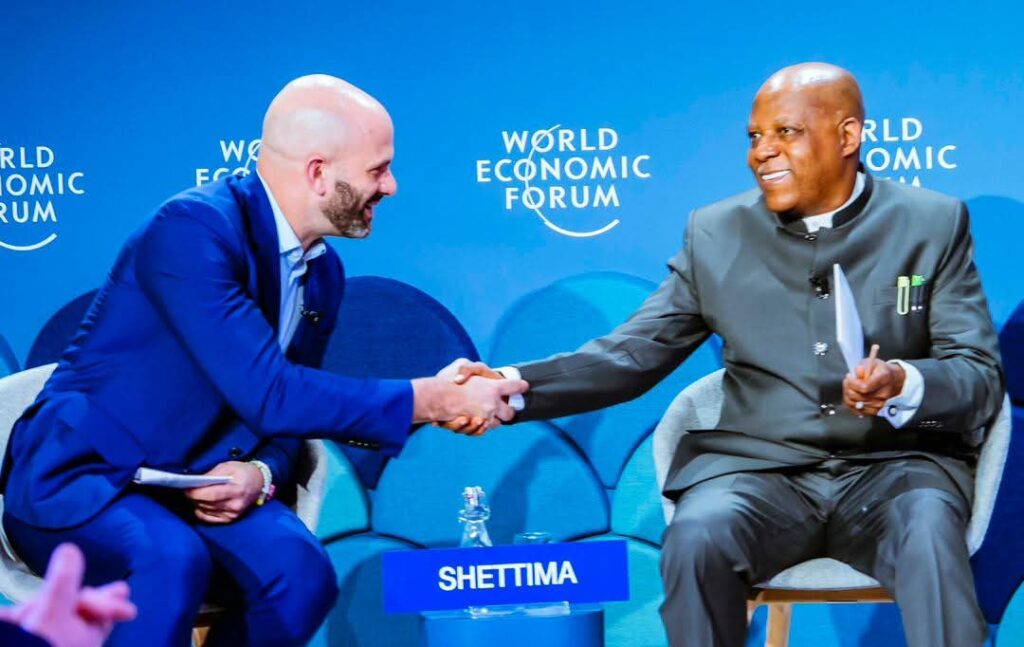
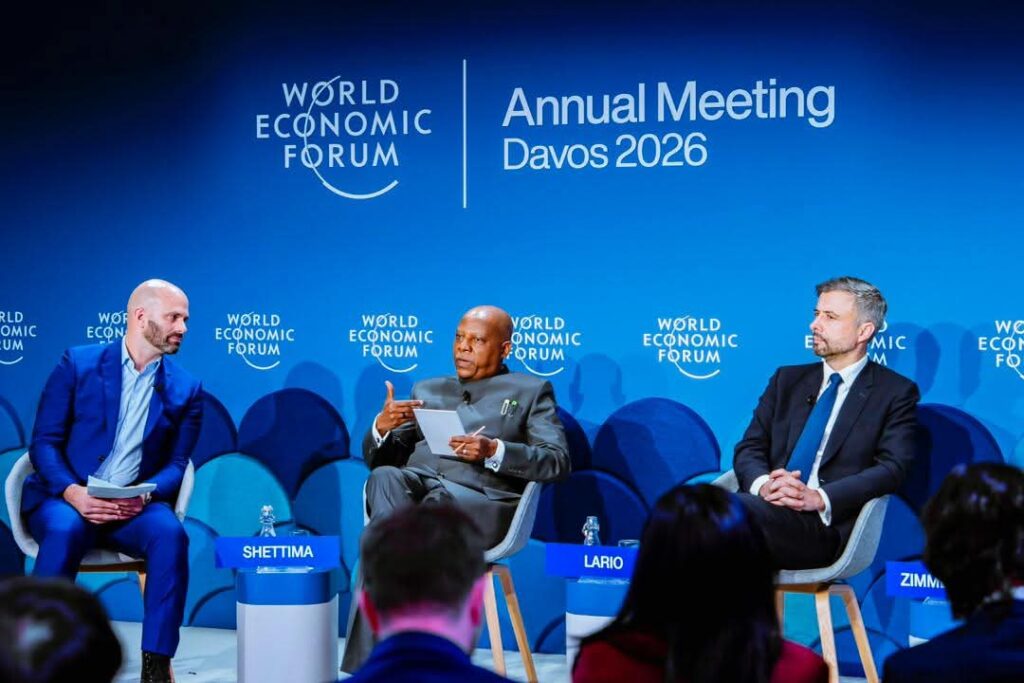
Speaking at a high-level panel titled “When Food Becomes Security” at the Congress Centre during the 56th World Economic Forum (WEF) meeting in Davos, Switzerland, VP Shettima said the Federal Government no longer treats food security as a narrow agricultural concern but as a strategic pillar for governance, economic stability, and regional cohesion.
“In Nigeria, we don’t look at food security purely as an agricultural issue. It is a macroeconomic, security and governance issue. Our focus is to use food security as a pillar for national security, regional cohesion and stability.”
According to the Vice President, Nigeria’s food security strategy is anchored on three pillars: increased food production, environmental sustainability, and deeper regional integration within the West African sub-region.
He explained that changing global trends and supply chain disruptions have compelled Nigeria to look inward and rebuild its agricultural base by developing resilient food systems tailored to its diverse ecological zones.
“Nigeria is a very large country, and there is an incestuous relationship between economy and ecology. In the Sahelian North, we are dealing with desertification, deforestation and drought. In the riverine South and parts of the North Central, flooding is our major challenge.”
To address these challenges, the Vice President said the government is promoting drought-resistant, flood-tolerant, and early-maturing varieties of staple crops such as rice, sorghum, and millet, while redesigning food systems in flood-prone southern regions to withstand climate shocks.
Security, he noted, remains a major constraint, particularly because many conflict-affected areas are also Nigeria’s primary food-producing zones.
“Most of the food baskets of our nation are security-challenged. That is why we are creating food security corridors and strengthening community-based security engagements so farmers can return safely to their land.”
He disclosed that the Federal Government has launched the Back to the Farm Initiative, a programme designed to resettle displaced farmers by providing them with agricultural inputs, insurance, and access to capital to restart food production.

Addressing Nigeria’s macroeconomic vulnerabilities, the Vice President identified import dependence and foreign exchange volatility as major drivers of food inflation.
“We largely import wheat, sugar and dairy products, and this has a direct impact on inflation. Our strategy is to accelerate local production and promote substitutes such as sorghum, millet and cassava flour to correct these structural imbalances,” VP Shettima said.
The Vice President said Nigeria’s approach aligns food security with national stability, inflation control, and regional cooperation, positioning agriculture as a frontline response to both economic and security threats.
The Vice President further highlighted that Nigeria, renowned as the African giant, has “woken up from its slumber” under President Tinubu, and that the government is on course to make “it possible for smallholders and fishers to become investable at scale” within 12 months.
The Vice President confirmed that, in Africa, especially in light of global trends, intra-African trade has almost become a necessity, adding that “there have been some alignments.”
Senator Kashim Shettima urged his African counterparts to intensify efforts under the canopy of the African Continental Free Trade Area (AfCFTA) to ensure that African nations get things right internally.
The Vice President expressed optimism that with the ongoing Renewed Hope Agenda reforms, the coming months will witness greater climate adaptation moving from pilot to reality, as well as a boom in intra-African trade far beyond 10.7%.
FOOD SECURITY: VP Shettima Unveils Nigeria’s Macro-Strategy At Davos Meeting


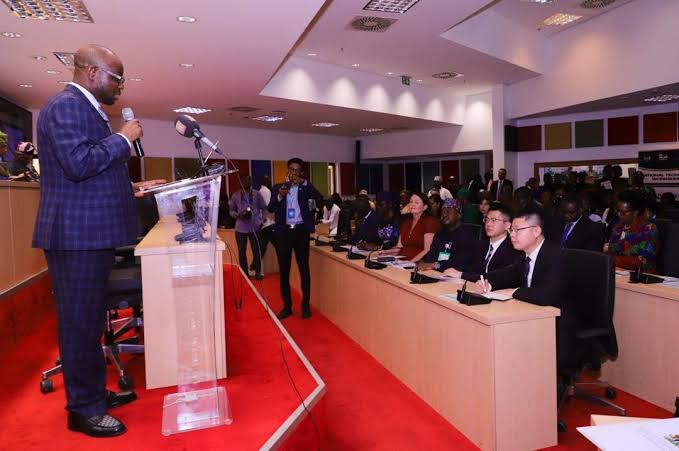
Nigeria Launches Unified Framework to Tackle Humanitarian Crises and Poverty
By: Michael Mike
The Federal Government has launched a new national framework aimed at ending fragmented humanitarian and poverty interventions through the One Humanitarian–One Poverty Response System (OHOPRS), a coordinated approach designed to align emergency assistance, social protection, and long-term poverty reduction.
The initiative, introduced under the Renewed Hope Agenda of President Bola Tinubu, seeks to harmonize government and partner efforts in responding to humanitarian crises while creating sustainable pathways out of poverty.
The framework was unveiled during a high-level engagement involving federal and state institutions, development partners, humanitarian agencies, academia, and technical organizations. Stakeholders at the meeting emphasized the need for a unified national system capable of addressing the growing complexity of humanitarian needs and multidimensional poverty across Nigeria.
Nigeria’s Minister of Humanitarian Affairs and Poverty Reduction, Bernard M. Doro, said the initiative marks a major shift from isolated interventions to a coordinated national architecture that connects humanitarian assistance with recovery, resilience, livelihoods, and sustainable development.
He stressed that poverty reduction and humanitarian response must be treated as a national priority, particularly in a country facing climate-related shocks, displacement, food insecurity, and widening economic vulnerability.
According to the minister, OHOPRS will help align institutions, resources, and data systems around measurable outcomes for citizens while enabling vulnerable households to transition from dependency to productivity.
International partners welcomed the reform and pledged support for its implementation.
The Resident Representative of the United Nations Development Programme (UNDP) described the framework as an important systems-based reform that places resilience and inclusion at the center of national development. He noted that the initiative provides a platform for linking humanitarian response with long-term development outcomes.
Similarly, the Head of Office of the United Nations Office for the Coordination of Humanitarian Affairs (UNOCHA) said the framework strengthens national ownership of humanitarian coordination and improves alignment between humanitarian operations and government systems.
The Country Representative of UNICEF highlighted the opportunity to better reach vulnerable children and families through integrated programming that connects emergency response with education, nutrition, child protection, and social protection services.
The World Bank Country Director also welcomed the initiative, noting that stronger data systems, measurable outcomes, and improved institutional coordination are essential for sustainable poverty reduction.
Support for the initiative also came from the European Union, whose ambassador to Nigeria and ECOWAS emphasized the importance of transparency, evidence-based planning, and stronger partnerships to ensure development investments produce lasting results.
Humanitarian partners also underscored the importance of improved coordination. The head of the European Civil Protection and Humanitarian Aid Operations (ECHO) highlighted the need for better vulnerability targeting and accountability, while the Nigeria Country Director of International Alert noted that poverty, insecurity, and vulnerability are interconnected and require integrated, conflict-sensitive responses.
Experts from academia and government statistical institutions also emphasized the role of research and data in the success of the initiative. The Vice Chancellor of Yakubu Gowon University called for strong collaboration between policymakers and research institutions, while the Statistician-General of the Federation stressed the need for credible data systems to support planning, targeting, and monitoring.
State governments are expected to play a critical role in implementing the framework, aligning their humanitarian and poverty reduction programmes with the national system to ensure better targeting and more responsive service delivery.
A key component of OHOPRS is the development of an integrated data and monitoring ecosystem to track needs, interventions, funding, and outcomes across different levels of government and partner organizations.
Officials say the initiative is not merely a programme but a broad systems reform intended to transform how Nigeria supports vulnerable populations. By linking humanitarian action with long-term poverty reduction, the government hopes to move communities from recurring crises toward resilience and economic opportunity.
The Federal Government called on ministries, state authorities, development partners, civil society organizations, academia, and the private sector to align with the framework and contribute to its implementation, stressing that addressing humanitarian vulnerability and poverty requires coordinated leadership and sustained collaboration.
Nigeria Launches Unified Framework to Tackle Humanitarian Crises and Poverty

One Week After Black Monday in Maiduguri, Police Headquarters Count Losses
By: Bodunrin Kayode
As Maiduguri residents continue to count the cost of casualties from last Monday’s IED explosion, the Nigerian Police Command headquarters has said that one of its men, Sergeant David Samuel has lost his life in the tragedy.
The Command which has been very careful in the way the death of the sergeant was managed announced through their spokesman Nahum Daso that it has been established that a police sergeant serving the country in the state paid the supreme sacrifice after being inflicted with multiple wounds at the Monday market explosion.
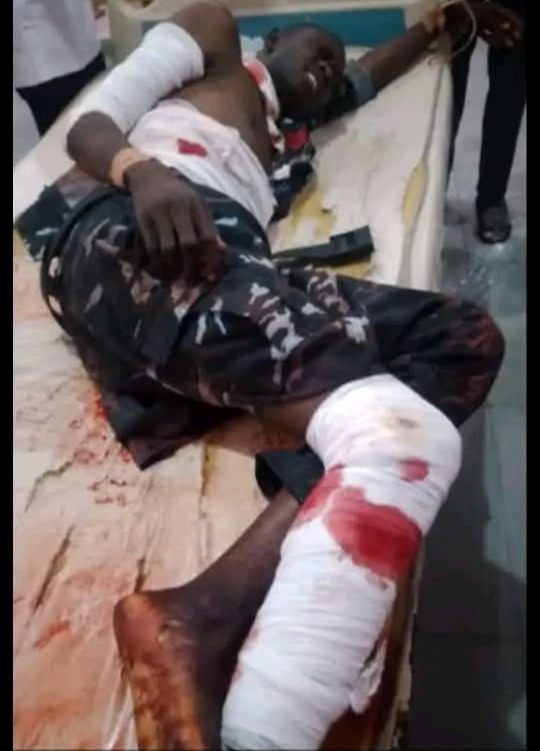
Until his death, the tall Sergeant David Samuel was one of the guards securing the Monday market against insurgents who have a penchant for penetrating multi billion naira crowded areas like the Monday market.
Though Police Sergeant Samuel did not die on the same Monday evening the tragic incident occurred, he died two days after possibly due to the resultant injuries which led to excessive bleeding.
While many others survived due to the innate resilience of residents of the city to survive, Sam however died two days after the blast on wednesday last week due to what hospital sources described as complications at the University of Maiduguri Teaching Hospital (UMTH) were he was finally admitted after the blast.
Spokesperson of the Police Command who disclosed the sad news to this reporter noted that Sergeant Samuel had reported for duty that day not knowing that last monday would be his last assignment for his country.
“He actually died of multiple injuries not on the spot but in the hospital. The injuries in many parts of his body obviously led to complications coupled with the trauma which would have dealt a heavy blow on him” said ASP Daso.
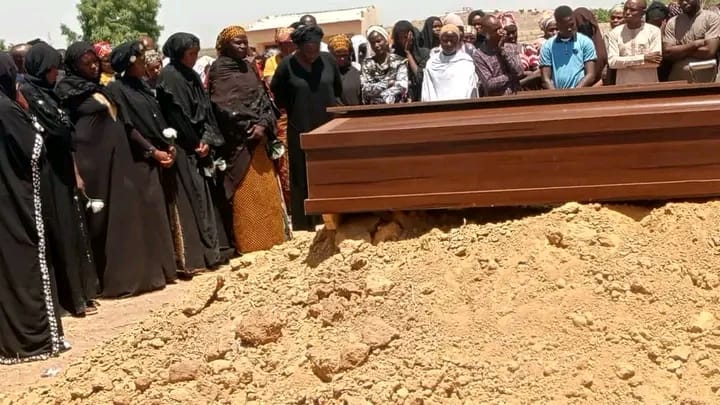
Sergeant Sam who hails from Askira Uba is survived by his parents, siblings and family members and has since being buried at the Dala cemetery in Maiduguri after the church service held at EYN tanki
Maiduguri had witnessed a lull in such violent active by these criminals until recently when troops embarked on clearance operations dealt heavy blows in the insurgent hideouts inside the Timbuktu triangular and beyond.
One Week After Black Monday in Maiduguri, Police Headquarters Count Losses
Strong Bilateral Ties, Trade, Others Top Agenda As VP Shettima, Swiss Counterpart Meet
By: Our Reporter
Switzerland to return Benin bronzes, artefacts to Nigeria, pledges support to combat insecurity in North East
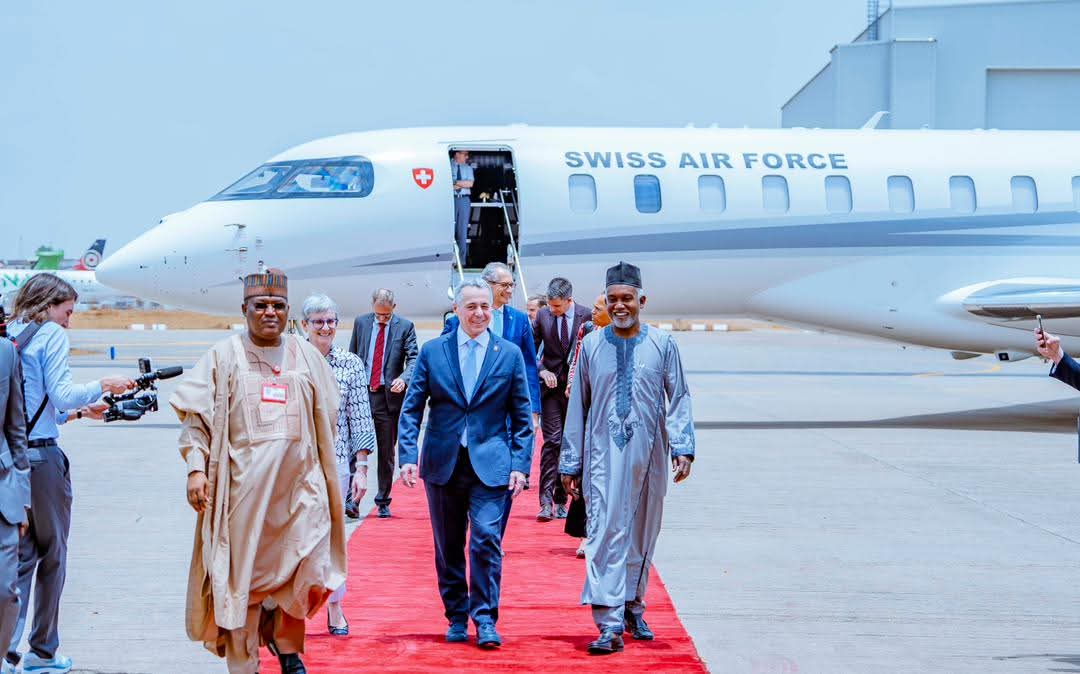
Nigeria and Switzerland have agreed to actively strengthen their bilateral relations, focusing on a multi-faceted approach that spans trade, economic cooperation, skills acquisition, migration, security and cultural exchange.
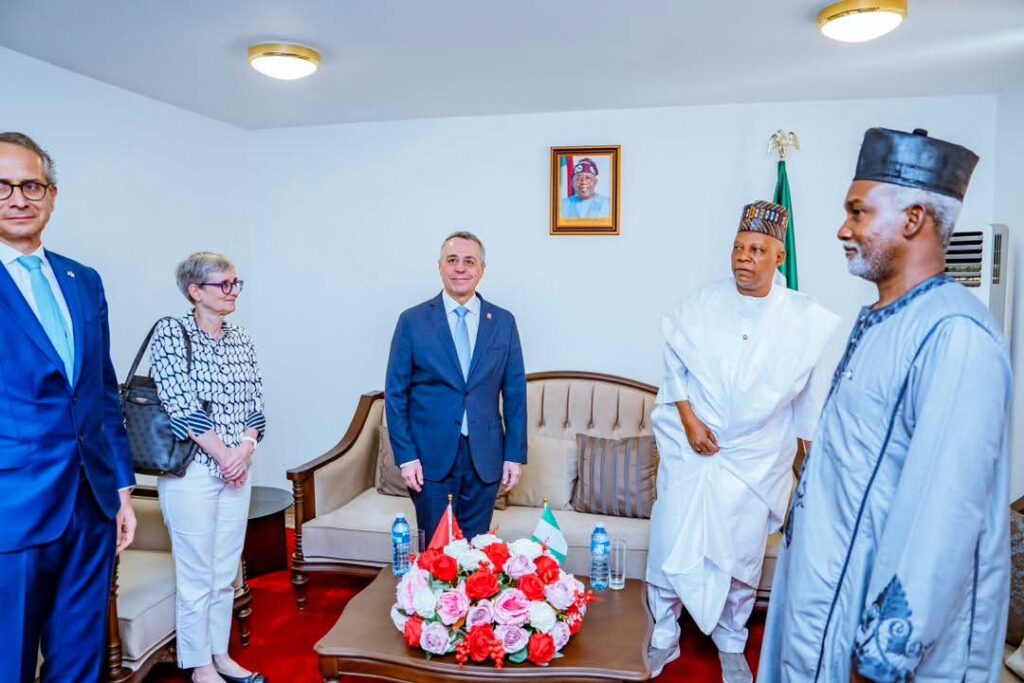
This was the outcome of the meeting between Vice President Kashim Shettima and the Vice President of Switzerland, Mr. Ignazio Cassis, on Tuesday.
The Nigerian Vice President received his Swiss counterpart and his spouse, Paola Rodoni Cassis, at the presidential wing of the Nnamdi Azikiwe International, Abuja, where they met behind closed doors.
Addressing journalists after the meeting, Vice President Cassis, who is also the Foreign Minister of Switzerland, disclosed that discussions dwelled on improved bilateral relations, free trade agreement, skills acquisition, migration, cultural exchange, and support for Nigeria in tackling the security situation in the North East region.
He said, “We are considering improving our bilateral relations. We are considering to analyse the opportunity of making a free trade agreement with the AfCFTA family and Nigeria. Secondly, we are working together very much in diplomatic efforts to address the many different conflicts in the North Eastern part of Nigeria.
“Thirdly, we are contributing to vocational training in Nigeria, with the Swiss companies in Nigeria creating the best conditions for young people to peacefully live together by being skilled enough to have jobs for the future.”
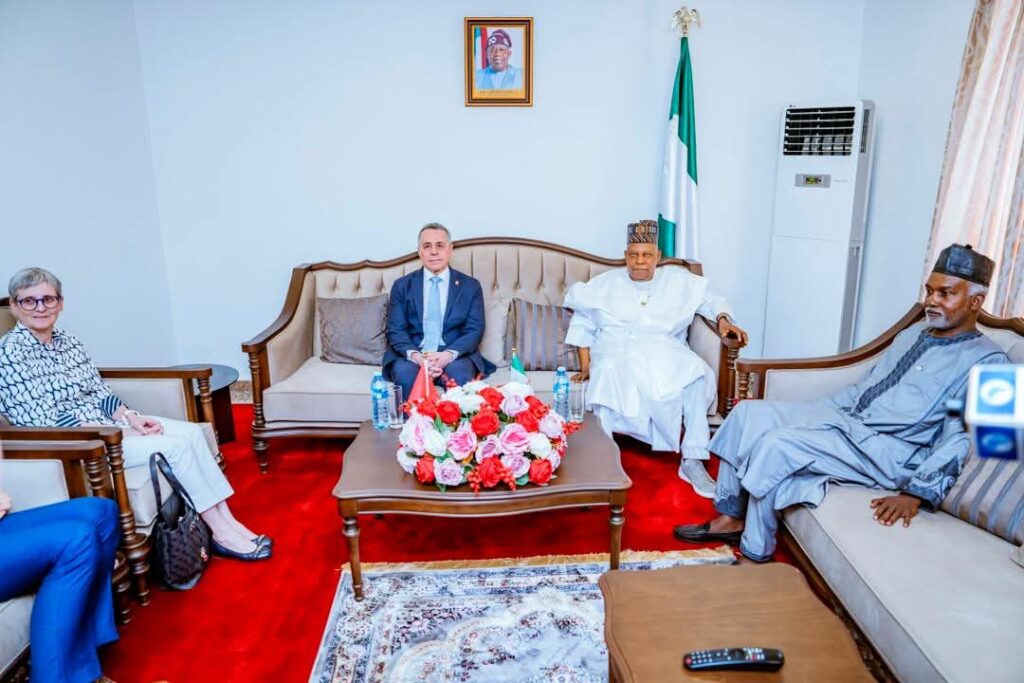
Vice President Cassis noted that the two countries also agreed to improve cultural cooperation, including restitution of cultural materials, even as he said, “We also have cooperation in migration issue, and every year, we are meeting together, where we explore every facet of this cooperation.”
He expressed gratitude to Nigeria for its continuous presence in the World Economic Forum (WEF) held annually in Davos, just as he congratulated the nation for the Nigeria House commissioned in Davos this year.
Shedding more light on the outcome of the meeting, Nigeria’s Minister of Foreign Affairs, Ambassador Yusuf Tuggar, said the discussions were a continuation of the old relationship between both countries that dates back to 1961.
He said, “Vice President Cassis expressed keenness to see Nigeria and Switzerland sign a free trade agreement, and this is a very welcome development. There were other discussions about Swiss businesses and investments. There are so many of them, and that is why from here he goes to Lagos to engage with the private sector.”
The Minister disclosed that the Swiss government also agreed to return bronzes and artefacts belonging to the Benin Kingdom in Edo State, as part of efforts to strengthen cultural ties between both countries.
“There was a general assurance that we need to strengthen the relationship between the two countries not just when it comes to business but also cultural aspect of the relationship.
“So, there are Benin bronzes that are going to be returned from Switzerland. He informed the Vice President that the Swiss Minister of Culture will be visiting Nigeria shortly, and this was something that was highly appreciated,” Tuggar stated.
He said Vice President Shettima welcomed the developments “and assured that Nigeria will continue to engage with Switzerland and continue to attend the World Economic Forum in Davos because there were some uncertainties as to whether it will remain in Davos or not.”
Other members of the Swiss delegation included Director of the Swiss Agency for Development and Cooperation, Ambassador Patricia Danzig; Head of the Africa Division, Ministry of Foreign Affairs, Ambassador Philip Stalder; Head of the Peace and Human Rights Division, Ministry of Foreign Affairs, Ambassador Tim Enderlin, and Swiss Ambassador to Nigeria, Ambassador Patrick Egloff,” among others.
Strong Bilateral Ties, Trade, Others Top Agenda As VP Shettima, Swiss Counterpart Meet

Nigeria Launches Unified Framework to Tackle Humanitarian Crises and Poverty

One Week After Black Monday in Maiduguri, Police Headquarters Count Losses

Strong Bilateral Ties, Trade, Others Top Agenda As VP Shettima, Swiss Counterpart Meet

Roger Federer’s Shock as DNA Results Reveal Myla and Charlene Are Not His Biological Children

THE PLIGHT OF FARIDA

FAILED COUP IN BURKINA FASO: HOW TRAORÉ NARROWLY ESCAPED ASSASSINATION PLOT AMID FOREIGN INTERFERENCE CLAIMS
-
 News2 years ago
Roger Federer’s Shock as DNA Results Reveal Myla and Charlene Are Not His Biological Children
-
Opinions4 years ago
THE PLIGHT OF FARIDA
-
 News11 months ago
FAILED COUP IN BURKINA FASO: HOW TRAORÉ NARROWLY ESCAPED ASSASSINATION PLOT AMID FOREIGN INTERFERENCE CLAIMS
-

 News2 years ago
EYN: Rev. Billi, Distortion of History, and The Living Tamarind Tree
-
 Opinions4 years ago
POLICE CHARGE ROOMS, A MINTING PRESS
-

 ACADEMICS2 years ago
A History of Biu” (2015) and The Lingering Bura-Pabir Question (1)
-

 Columns2 years ago
Army University Biu: There is certain interest, but certainly not from Borno.
-

 Opinions2 years ago
Tinubu,Shettima: The epidemic of economic, insecurity in Nigeria
