
News
Foreign Aid Regulation Bill: Safeguard or Shackles for Civil Society?

Foreign Aid Regulation Bill: Safeguard or Shackles for Civil Society?
Nigeria’s 10th National Assembly is considering the Foreign Aid (Regulation, Transparency and Disclosure) Bill, 2026 (SB. 1034). On the outlook, the Bill promises accountability, transparency, and alignment of foreign aid with national priorities. In an era of heightened concern about terrorism financing, such regulation may appear necessary. However, beneath its good intentions lies a framework that could strangle civil society and weaken the very communities aid is meant to serve.
Moreover, the simple question: Is the proposed law truly about accountability, or is it about control?
What the Bill Seeks: The Bill plans to establish a Foreign Aid Regulatory Commission (FARC) to register, monitor, and audit all foreign aid inflows. The big question is: why another agency in a country already borrowing heavily to fund development interventions?
With this Bill, NGOs would be required to: register within 30 days of receiving aid; disclose donor details, amounts, conditions, partners, and utilisation reports — all made publicly accessible; submit to annual independent audits and align projects strictly with national development plans; face punitive penalties: ₦5,000,000 fines or imprisonment for individuals, and ₦20,000,000 fines plus license revocation for organisations.
So, individuals are not left out. Small NGOs, already stretched thin, will be burdened by excessive bureaucracy occasioned by compliance paperwork, risking their vital role in fostering trust within communities. The Bill’s requirements, like mandatory registration and disclosure, could limit NGO independence, posing potential threats to civil society’s autonomy and effectiveness. This Bill can be largely classified as Government Overreach. The mandatory alignment with government priorities weakens NGOs’ liberty to identify local priorities and restricts community-driven initiatives.
In addition, public disclosure of donor and project details could expose NGOs to harassment, politicisation, or security threats, especially in sensitive environments. Imagining such risks emphasises the need for safeguards to protect civil society actors.
The punitive penalties are excessive; administrative lapses, not deliberate misuse, could land NGO leaders in jail or bankrupt organisations. Just imagine when the law is used to target NGOs and their leaders. Donor confidence is crucial; if Nigeria is perceived as hostile to civil society, international partners may redirect funds elsewhere, risking Nigeria’s development progress and global standing.
The real implications, therefore, if passed in its current form, are that the Bill will shrink civic space, reduce aid flows, and force smaller NGOs to shut down. Grassroots communities, the most vulnerable, will be left without support. What is framed as a tool against terrorism financing risks becoming a weapon of state control.
Acknowledging that civil society is not rejecting accountability, NGOs are already subjected to several regulatory agencies, for instance:
Agency
Role for NGOs
Key Requirements
Corporate Affairs Commission (CAC)
Oversees registration of NGOs as Incorporated Trustees under CAMA 2020.
- Name reservation and incorporation – Annual returns filing – Governance compliance (trustees, constitution)
National Revenue Service (NRS)
Tax authority ensuring NGOs comply with tax laws.
- Obtain Tax Identification Number (TIN) – File tax returns (even if exempt) – Withholding tax compliance
Special Control Unit Against Money Laundering (SCUML)
Supervises NGOs and DNFBPs to prevent money laundering and terrorism financing.
- Mandatory SCUML registration – Suspicious transaction reporting – Compliance audits
Financial Reporting Council of Nigeria (FRCN)
Ensures financial transparency and accountability.
- Compliance with financial reporting standards – Submission of audited accounts
National Planning Commission (NPC)
Regulates NGOs involved in international development.
- Registration for foreign-funded projects – Alignment with national development priorities
Labour & Employment Agencies
Oversees employment practices.
- Compliance with labour laws – Pension and social insurance contributions
Data Protection Commission (NDPA)
Regulates data privacy and protection.
- Compliance with the Nigeria Data Protection Act – Safeguarding donor and beneficiary data
For instance, SCUML is Nigeria’s regulatory body responsible for monitoring and supervising designated Non-Financial Businesses and Professions (DNFBPs) to ensure compliance with Anti-Money Laundering (AML) and Combating the Financing of Terrorism (CFT) laws.
These agencies have not outlived their responsibilities; they can be empowered to ensure transparency without duplicating mandates or creating another costly bureaucracy. This approach fosters a sense of partnership and shared responsibility, rather than conflict or suspicion. Nigeria must combat terrorism financing, but not at the expense of civil society.
This Bill, as drafted, risks silencing NGOs and weakening democracy. Lawmakers should embrace a balanced regulatory framework that ensures accountability while preserving the independence and vitality of NGOs. Civil society is ready to partner with government in safeguarding aid. What it cannot accept is being shackled by laws that treat NGOs as suspects rather than allies.
Austin Aigbe FSM, wrote from Abuja; he can be reached by email: aigbeomoruyi@gmail.com
Foreign Aid Regulation Bill: Safeguard or Shackles for Civil Society?


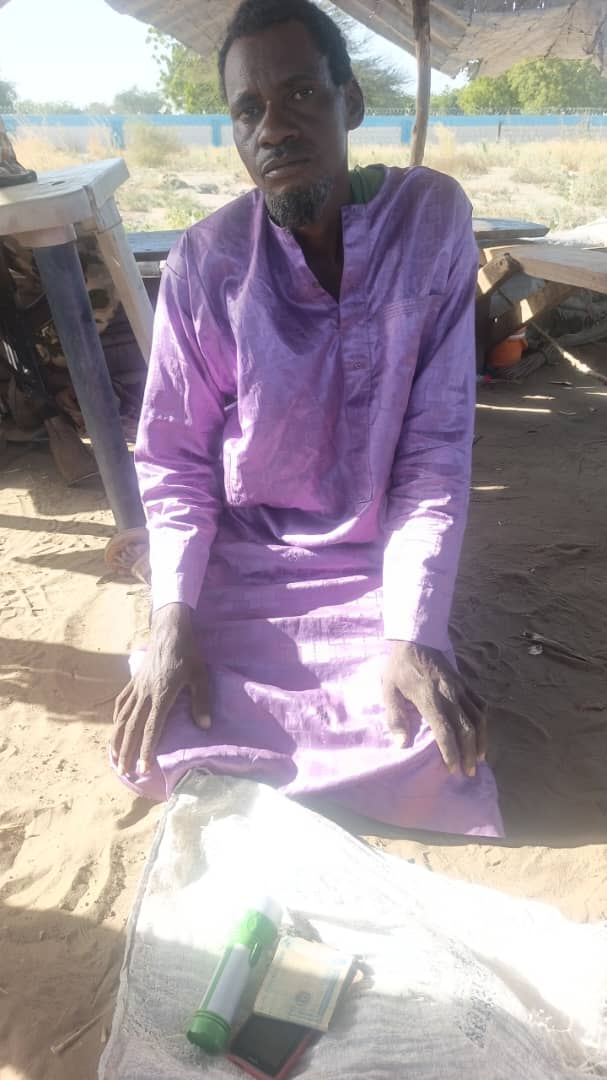
Troops Arrest Suspected Terrorist Collaborator in Monguno, Recover Phone, Cash
By: Zagazola Makama
Troops of Sector 3, in collaboration with members of the Civilian Joint Task Force (CJTF), have arrested a suspected terrorist collaborator accused of facilitating the movement of recruits to terrorist elements in Borno State.
The suspect, identified as Abdulmuminu Adamu, 45, was arrested at about 3:00 p.m. on November 20 at Cross Motor Park in Monguno town, Monguno Local Government Area.
Security sources said the arrest followed intelligence received by troops at about 1:43 p.m. concerning alleged negotiations between Adamu and a suspected terrorist member, identified as Afo Asso.
The duo were reportedly planning to transport two individuals, comprising a female and a suspected new terrorist recruit, from Kekeno and Minatti communities in Monguno LGA to a designated location.
During interrogation, Adamu allegedly confessed that he had been tasked with conveying the two individuals to Karfe village in Kukawa LGA, where terrorist elements were expected to receive them.
Items recovered from the suspect included one mobile phone, a torchlight, a turban, a mirror and ₦7,400 in cash.
Troops Arrest Suspected Terrorist Collaborator in Monguno, Recover Phone, Cash
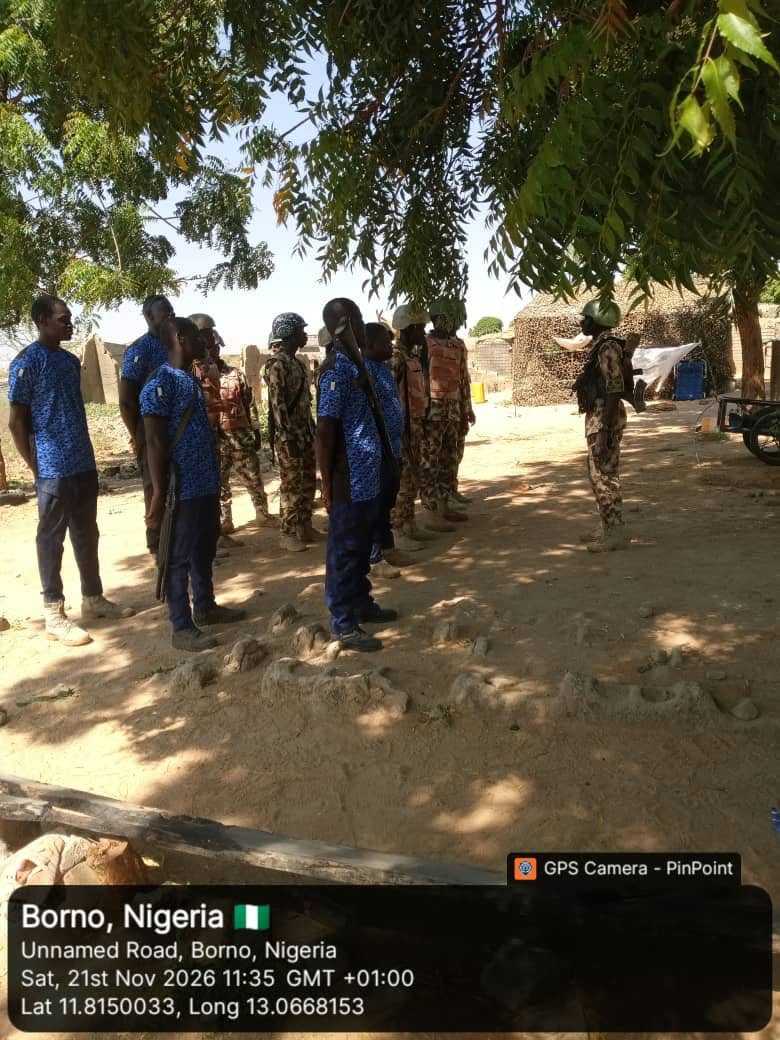
Troops Clear Suspected Militia Camp in Borno, Arrest Two Suspects, Recover Arrows, Ammunition
By: Zagazola Makama
Troops of the 333 Artillery Regiment, in collaboration with members of the Civilian Joint Task Force (CJTF), have cleared a suspected militia camp at Katapilar village in Borno State and arrested two suspects during a clearance patrol.
The operation was conducted on November 21, following a patrol to Katapilar village, where troops cleared a suspected Fulani militia camp.
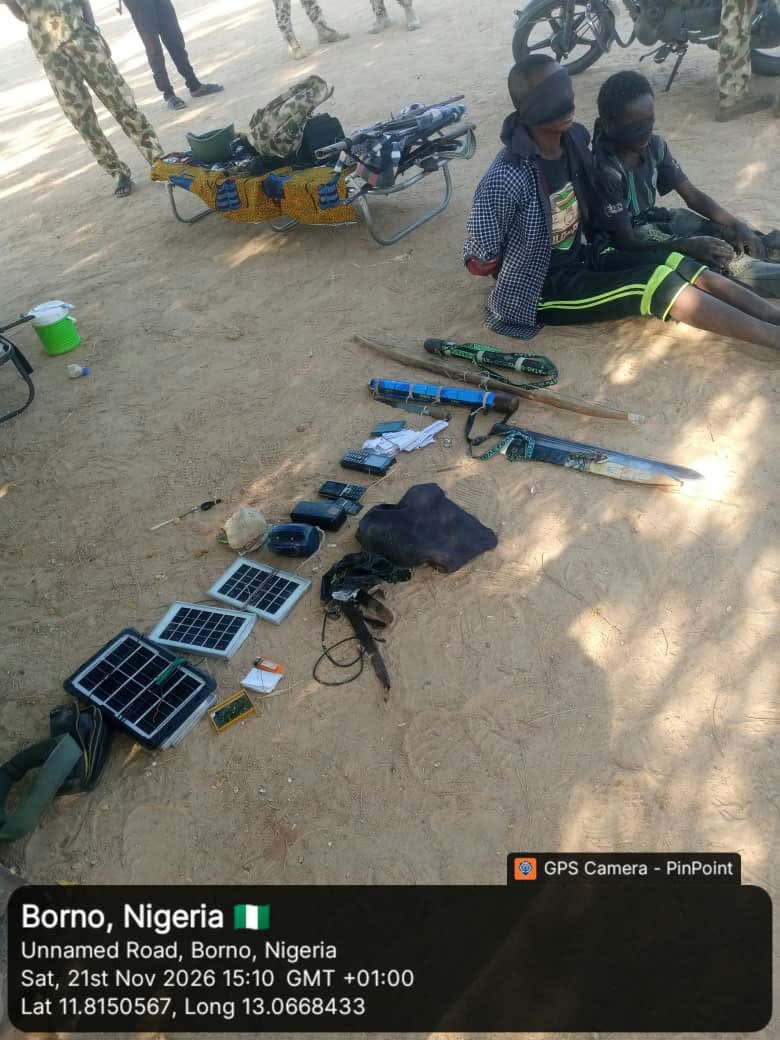
Items recovered from the location included one bow, 14 arrows, three rounds of 7.62mm special ammunition, two mobile phones, one cutlass and two mini solar panels.
The troops subsequently extended the operation to Duwairi village, where they arrested two suspects identified as Umaru Shehu, 32, from Gubio, and Ali Yahaya, 16, from Konduga.
Items recovered from the suspects included 16 arrows, one knife, an MP3 player, one power bank, four mini solar panels and ₦37,170 in cash.
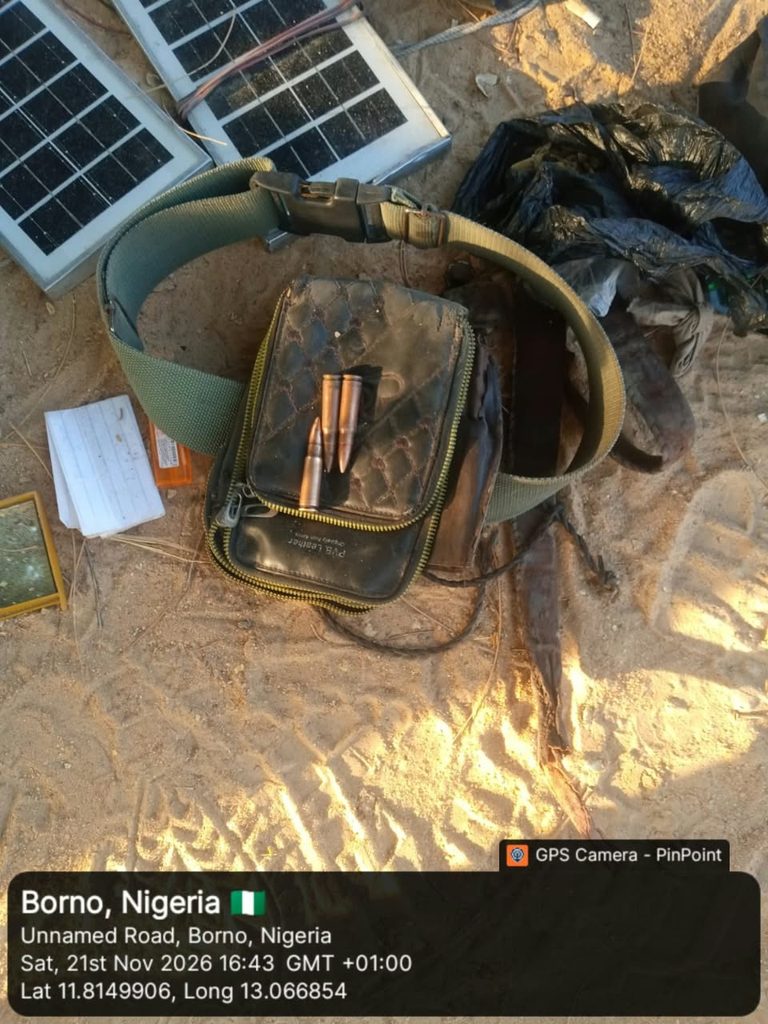
The patrol team returned to base at about 4:35 p.m. on the same day.
The two suspects and recovered items are currently in the custody of 7 Division Garrison for further investigation and necessary action.
Troops Clear Suspected Militia Camp in Borno, Arrest Two Suspects, Recover Arrows, Ammunition
News
Plateau local militiamen Kill Two, Injure One, Burn Three Houses in Attack on Plateau Community
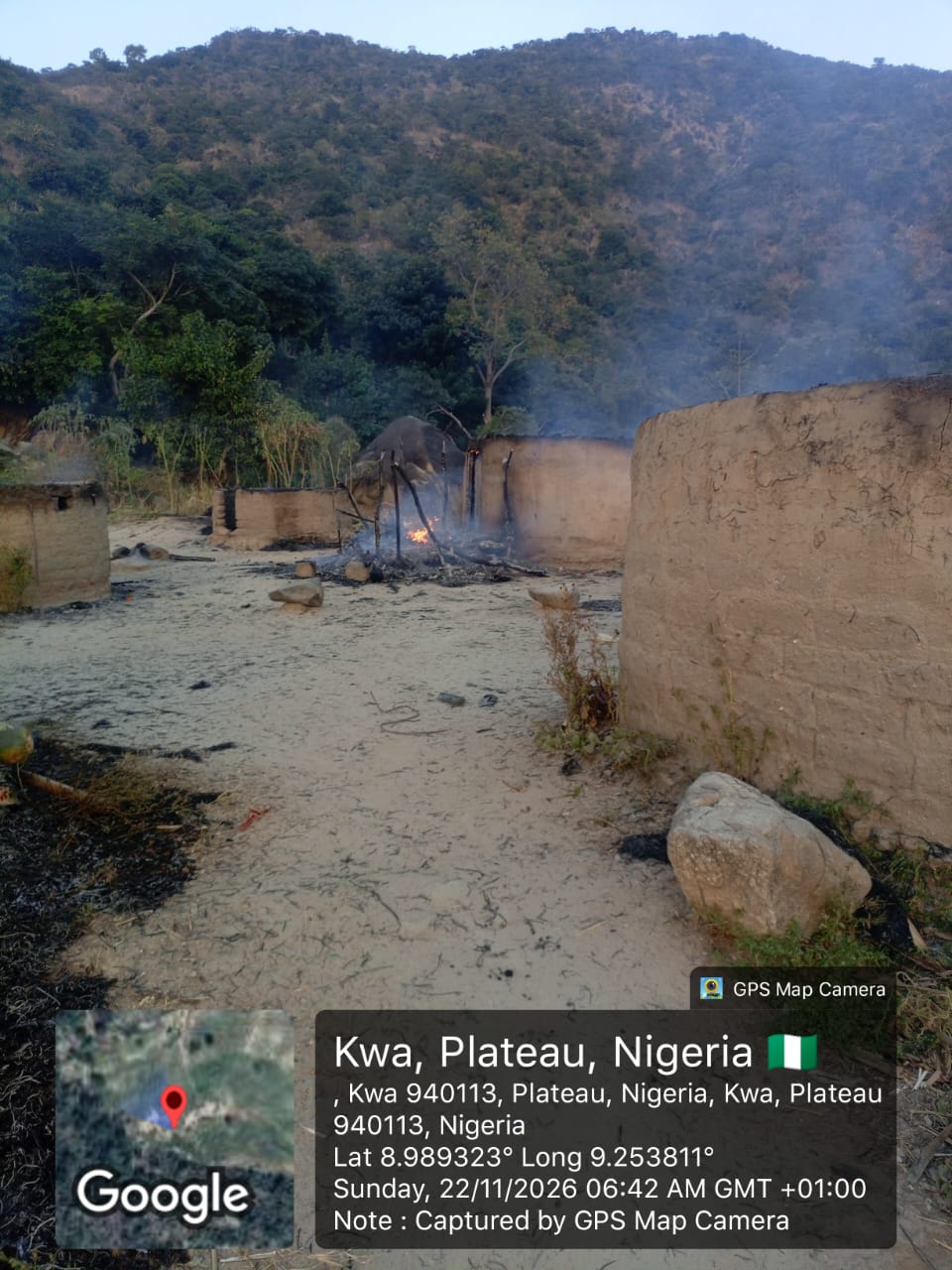
Plateau local militiamen Kill Two, Injure One, Burn Three Houses in Attack on Plateau Community
By: Zagazola Makama
Plateau local militia men have killed two people, injured another and set three houses ablaze during an attack on Maket community in Qua’an Pan Local Government Area of Plateau State.
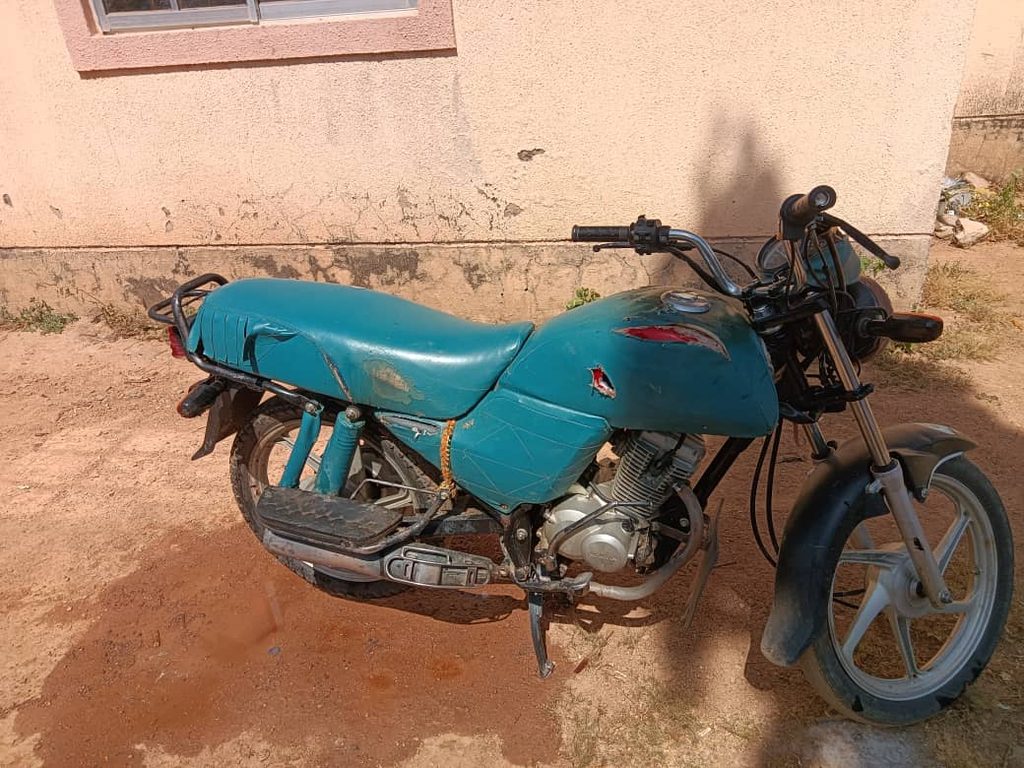
The attack occurred at about 6:05 a.m. on November 22 at Maket Village, Kwa District.
Troops of Sector 9, Operation Enduring Peace (OPEP), Shendam, who responded to a distress report, discovered that two victims had been shot dead, while another sustained gunshot wounds.
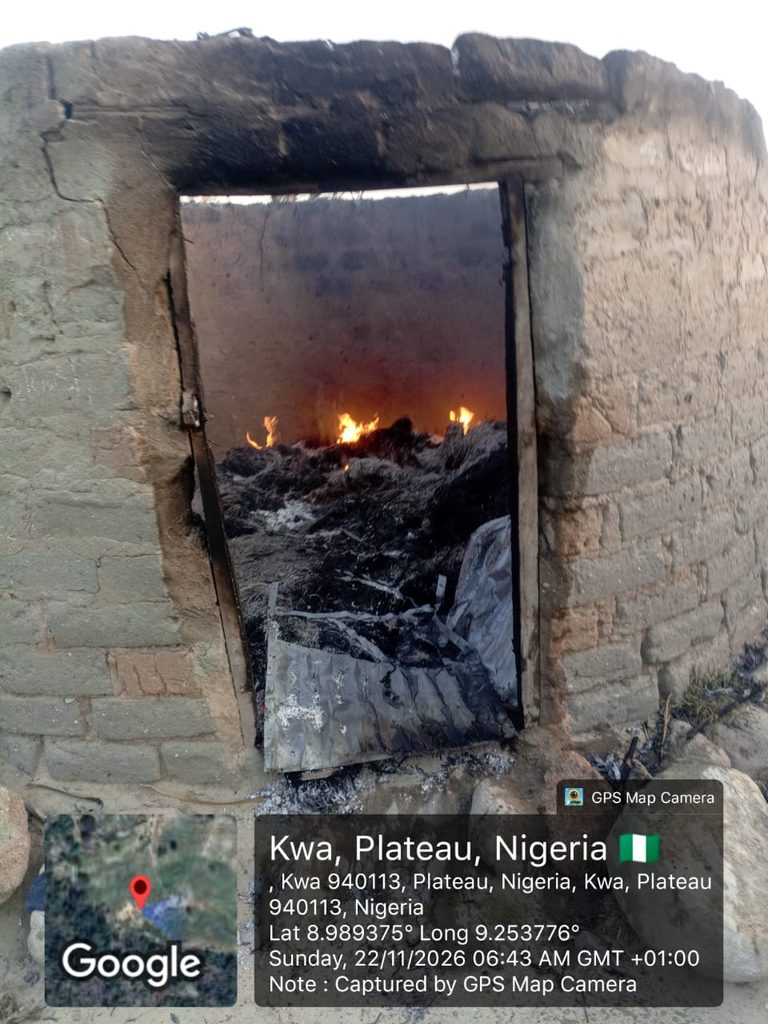
The attackers also killed two cows and set three houses on fire before fleeing the community ahead of the arrival of security personnel.
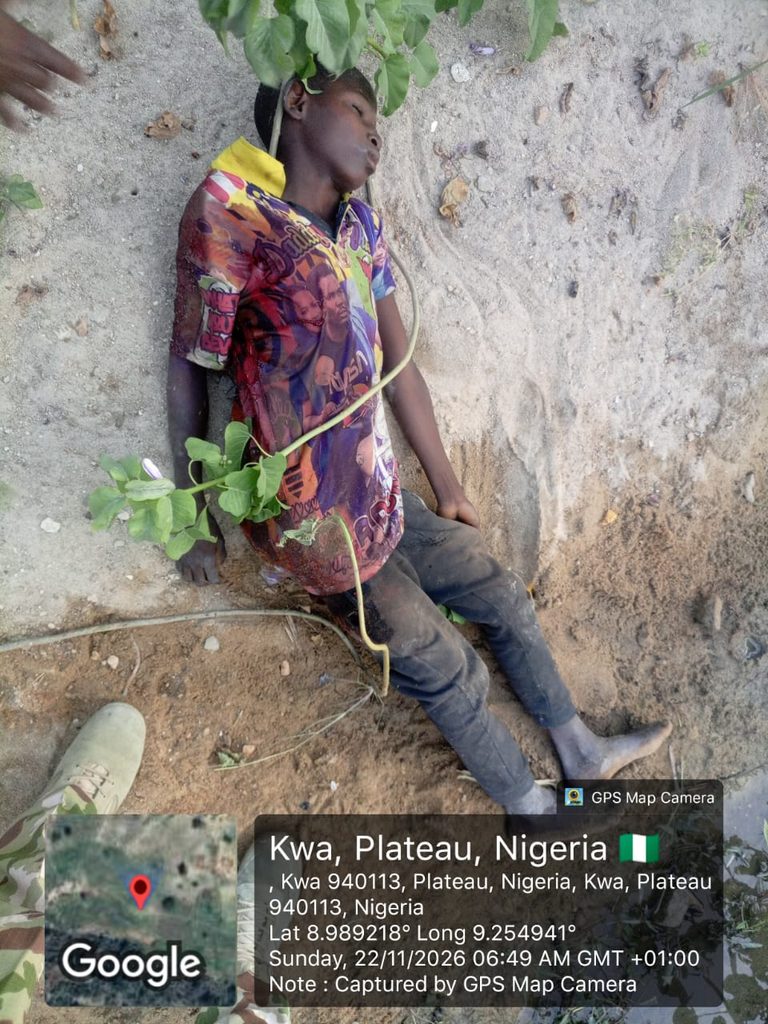
Following the incident, troops dominated the general area with aggressive patrols and launched a manhunt for the fleeing assailants.
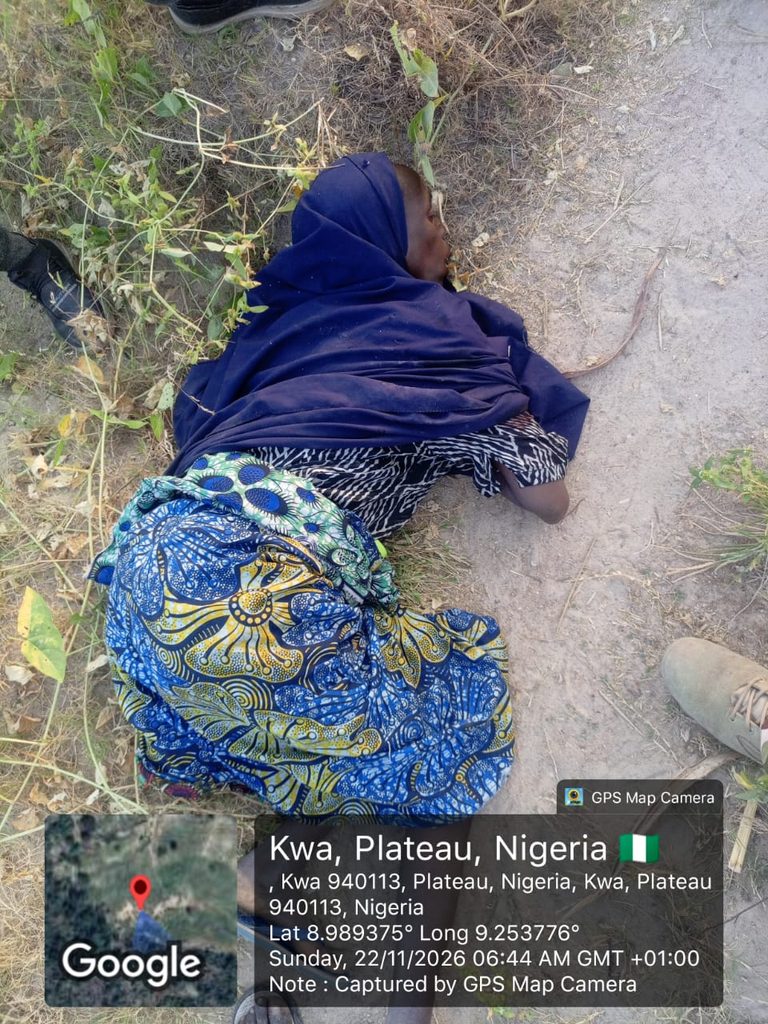
Security operations are ongoing to track down those responsible for the attack and prevent further violence in the area.
Plateau local militiamen Kill Two, Injure One, Burn Three Houses in Attack on Plateau Community

Troops Discover 4,858 Litres of Stolen Crude Oil, Illegal Refining Sites in Rivers

Troops Arrest Suspected Terrorist Collaborator in Monguno, Recover Phone, Cash

Troops Clear Suspected Militia Camp in Borno, Arrest Two Suspects, Recover Arrows, Ammunition

Roger Federer’s Shock as DNA Results Reveal Myla and Charlene Are Not His Biological Children

THE PLIGHT OF FARIDA

FAILED COUP IN BURKINA FASO: HOW TRAORÉ NARROWLY ESCAPED ASSASSINATION PLOT AMID FOREIGN INTERFERENCE CLAIMS
-
 News3 years ago
Roger Federer’s Shock as DNA Results Reveal Myla and Charlene Are Not His Biological Children
-
Opinions5 years ago
THE PLIGHT OF FARIDA
-
 News2 years ago
FAILED COUP IN BURKINA FASO: HOW TRAORÉ NARROWLY ESCAPED ASSASSINATION PLOT AMID FOREIGN INTERFERENCE CLAIMS
-
 Opinions5 years ago
POLICE CHARGE ROOMS, A MINTING PRESS
-

 News3 years ago
EYN: Rev. Billi, Distortion of History, and The Living Tamarind Tree
-

 ACADEMICS3 years ago
A History of Biu” (2015) and The Lingering Bura-Pabir Question (1)
-

 Columns3 years ago
Army University Biu: There is certain interest, but certainly not from Borno.
-

 Politics1 year ago
2027: Why Hon. Midala Balami Must Go, as Youths in Hawul and Asikira/Uba Federal Constituency Reject ₦500,000 as Sallah Gift
