
News
France Collaborates with 13 Nigerian Universities to Research into Plastic Waste Management

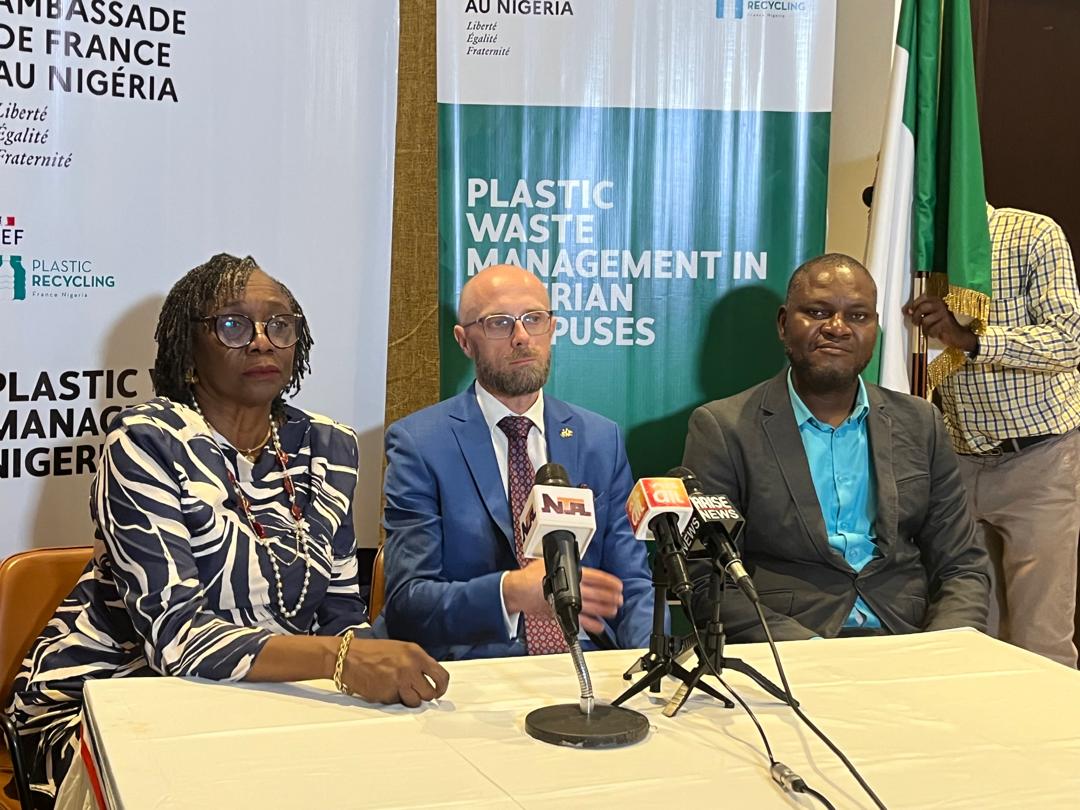
France Collaborates with 13 Nigerian Universities to Research into Plastic Waste Management
By: Michael Mike
France in order to help Plastic Waste Management in the country has entered a sponsorship agreement with 13 Nigeria universities to develop research centres and build micro plants.
The agreement which €753,000 is part of the French Embassy Fund (FEF) Project 2024 and the benefiting institutions are Alex Ekwueme University, Bayero University Kano, Nile University, Covenant University, Babcock University, University of Jos (UNIJOS), Obafemi Awolowo University (OAU), University of Ibadan, University of Lagos (UNILAG), Yaba College of Technology, University of Calabar, University of Nigeria, Nsukka and University of Delta.
This FEF project is an initiative of the French Government as part of the global dynamic to fight against plastic pollution. Funding under this programme is intended to support Young Nigerian researchers from the partnered Universities in order to develop innovative adaptive ideas for a healthier and safer environment, where Plastic Waste has less to no impact, especially in the educational environment.
The French Embassy Fund is a programme under the French Ministry of Europe and Foreign Affairs designed to help French representations abroad to carry out innovative actions on the ground that have a rapid impact and are highly visible for the benefit of local populations.
The project will be deployed within the next 18 months, through three components: Funding and delivery of micro plants co-designed by and for two universities (UNILAG and Nile University), equipped with adapted machineries to tackle plastic collection, processing and eventually transformation; Funding five to six research projects in innovative solutions with high added value with regards to sustainable development, circular economy, qualitative value chain, gender inclusivity and strong entrepreneurial potential; Boosting capacity building with focus training programmes to support the research projects, scientific exchange between Nigerian and French researchers and mobility programmes at a Higher Education level.
Funded projects are expected to be fully implemented and sustainable by December 2025.
Speaking at the event which held on Thursday night at the French Embassy in Nigeria in Abuja, the Chargé d’Affaires a.i. of France to Nigeria and ECOWAS, Jean Francois Hasperue said: “We are witnessing climate change effects, whether in the form of extreme weather events, rising sea levels, loss of biodiversity or severe droughts. Nigeria is a sad example of this, as it is one of the 10 countries in the world most sensitive to climate change. Climate change is no longer a distant threat, but a present reality, contrary to what the climatoseptics would have us believe.”
He noted that: “These issues are global and we need to find global solutions together as air pollution does not stop at the border nor plastic pollution in the oceans.
“The rise of youth activism is one of the most significant developments in the fight against climate change in my view. All along the events I have seen and met the young people and also the public committed to tackle these issues. We owe it to them to listen to their voices and to provide them with answers that are sometimes incomplete, but also to always leave room for discussion.
“It’s with a great deal of humility that we need to listen to each other and recognize that we can no longer continue to act as we have in the past. Combating climate change and building climate resilience require international collaborative and cross-generational solutions.”
The envoy said: “This means investing in renewable energy, protecting natural ecosystems and developing adaptation strategies to cope with the inevitable impacts of climate change.”
He said the French Embassy Fund entitled “Plastic waste management in Nigerian campuses” project will be deployed within the next 18 months.
He added that at the French Embassy in Nigeria, and as with every event, we are going the extra mile to reach out to researchers, civil society, artists, students and activists to make our events exceptional and to put the experts and professionals in each field at the centre of all discussions.
The envoy revealed that through scholarship programmes, “we support five bachelors students currently attending the “French+Sciences” Sustainable Development short training programme in Montpellier during one month. And today, seven more candidates have been selected as laureates of the France Excellence scholarship programme to continue their studies in Environmental sciences for a two years Master programme.
France Collaborates with 13 Nigerian Universities to Research into Plastic Waste Management


Troops Arrest Suspected Military Impostor in Katsina
By Zagazola Makama
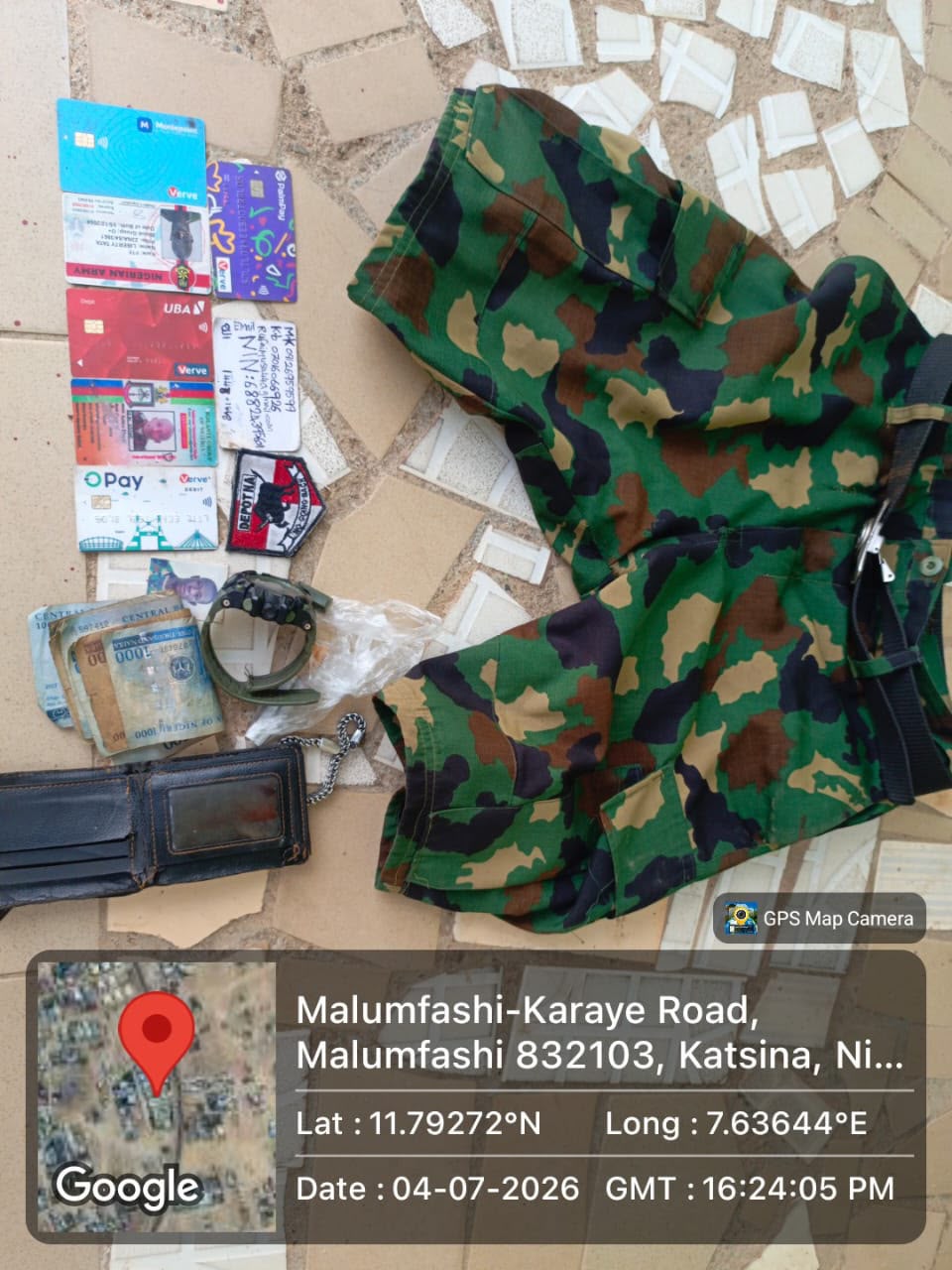
Troops of 17 Brigade have arrested a suspected military impostor during a fighting patrol in Malumfashi Local Government Area.
Security sources told Zagazola Makama that the suspect was apprehended at about 1:30 p.m. on July 4 by troops deployed at the Forward Operating Base (FOB) Malumfashi while conducting routine patrols within Malumfashi town.
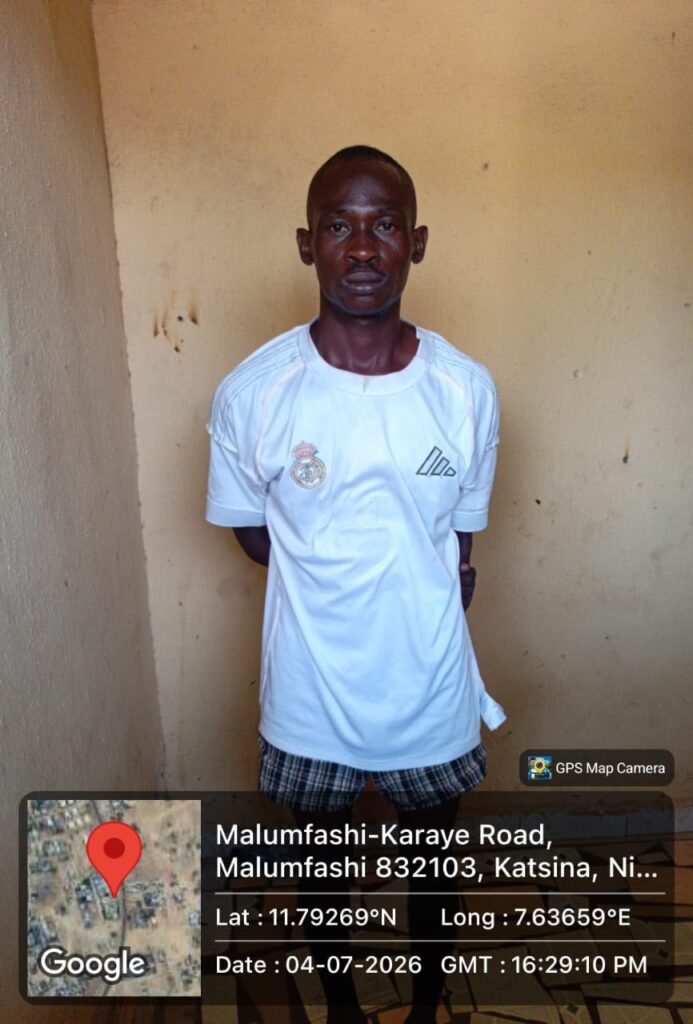
According to the sources, the suspect was intercepted while wearing a woodland camouflage three-quarter short, raising suspicion among the troops.
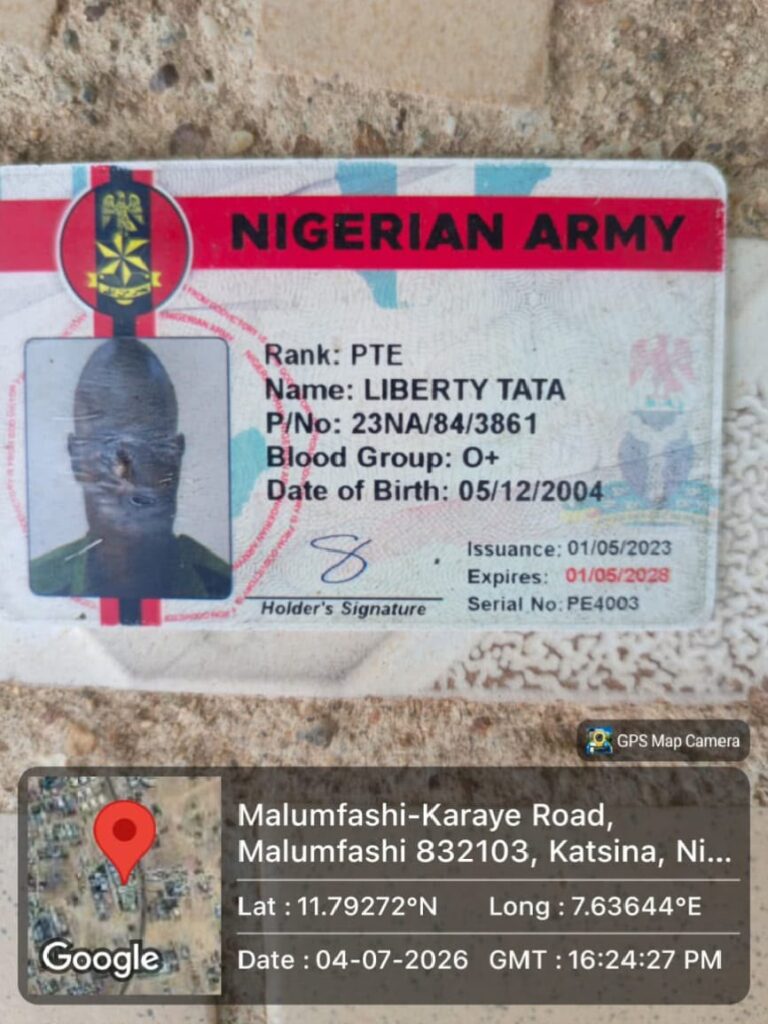
A search conducted on the suspect led to the recovery of a fake Nigerian Army identity card, four Automated Teller Machine (ATM) cards, one woodland camouflage three-quarter short, a wristwatch and the sum of ₦17,000.
The suspect and the recovered exhibits are currently in military custody pending further investigation.
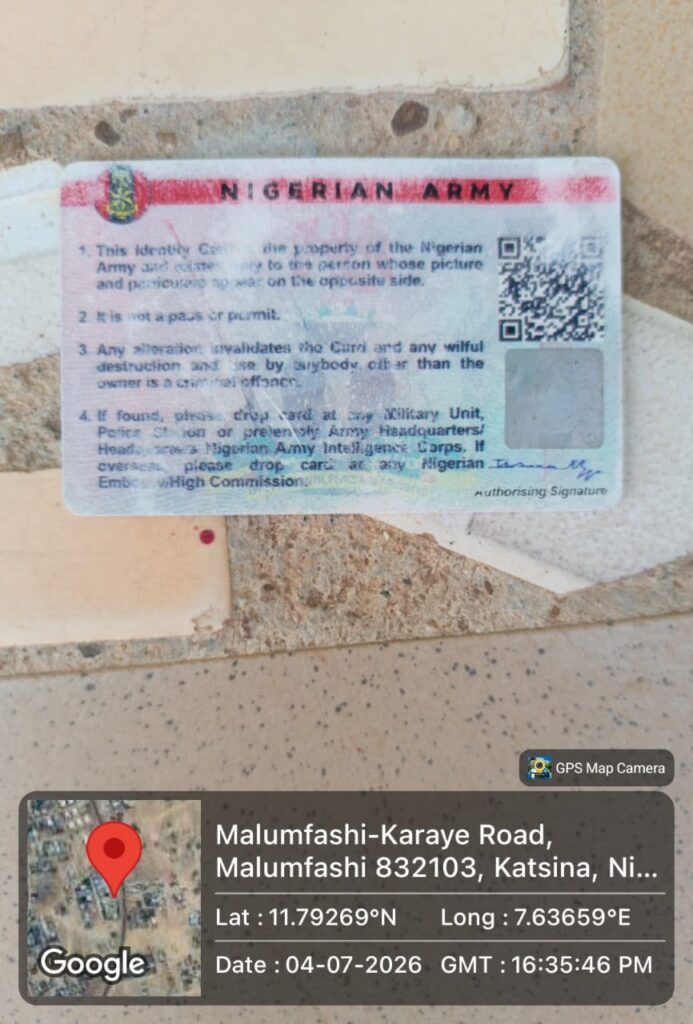
Military sources said the arrest forms part of ongoing efforts to curb impersonation of security personnel and other criminal activities within the area.
Troops Arrest Suspected Military Impostor in Katsina
Troops Recover 50 Rustled Cattle, Repel Suspected Rustlers in Kaduna
By Zagazola Makama
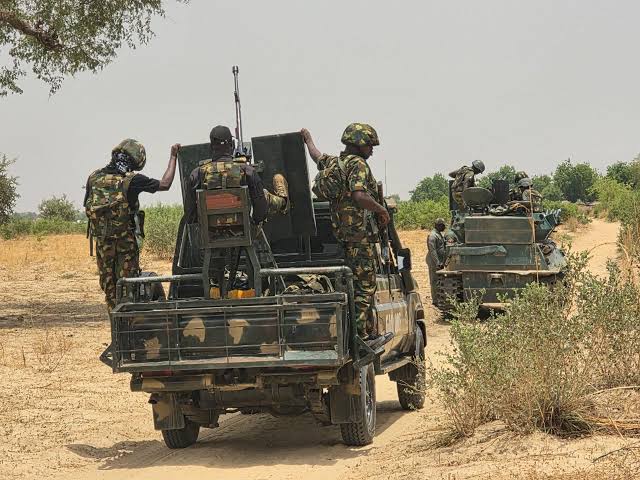
Troops deployed at the Forward Operating Base (FOB) Kankomi have recovered 50 rustled cattle after repelling suspected cattle rustlers during an ambush operation in Chikun Local Government Area.
Security sources told Zagazola Makama that the troops responded to a distress call at about 9:55 a.m. on July 4 over the activities of suspected rustlers at Ungwan Gontu community.
According to the sources, the troops swiftly laid an ambush and made contact with the fleeing suspects, forcing them to abandon the stolen livestock and escape into the surrounding area.
During the operation, the troops recovered 50 rustled cattle, which were subsequently identified and handed over to their rightful owner.
Military sources said efforts are ongoing to track down the fleeing suspects as security operations continue to combat cattle rustling and other criminal activities across Kaduna State.
Troops Recover 50 Rustled Cattle, Repel Suspected Rustlers in Kaduna
Troops Arrest Suspected Terrorist in Kogi, Suspect Confesses to Group Membership
By Zagazola Makama
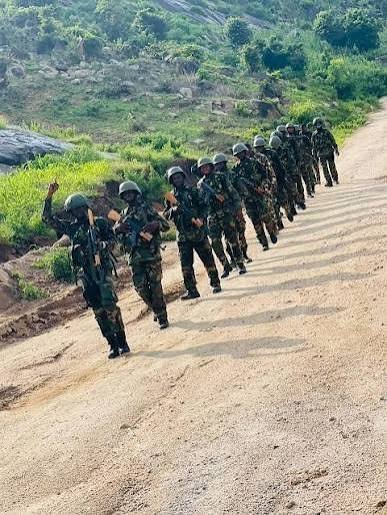
Troops of 12 Brigade, in collaboration with Office of the National Security Adviser (ONSA) Hybrid Forces, have arrested a suspected terrorist during an operation in Lokoja Local Government Area.
Security sources told Zagazola Makama that the troops responded at about 1:00 p.m. on July 4 to reports of a confrontation between local residents and a suspected terrorist at a Ruga settlement behind Obajana community.
According to the sources, the troops swiftly intervened and arrested one suspect at the scene.
During preliminary interrogation, the suspect reportedly confessed to being a member of a terrorist group led by an individual identified as Haruna, which allegedly operates within the Okene general area.
The suspect is currently in military custody and is undergoing further investigation to establish the extent of his involvement and identify other members of the group.
Military sources said the arrest forms part of ongoing security operations aimed at dismantling terrorist and criminal networks across Kogi State.
Troops Arrest Suspected Terrorist in Kogi, Suspect Confesses to Group Membership

Troops Arrest Suspected Military Impostor in Katsina

Troops Recover 50 Rustled Cattle, Repel Suspected Rustlers in Kaduna

Troops Arrest Suspected Terrorist in Kogi, Suspect Confesses to Group Membership

Roger Federer’s Shock as DNA Results Reveal Myla and Charlene Are Not His Biological Children

THE PLIGHT OF FARIDA

FAILED COUP IN BURKINA FASO: HOW TRAORÉ NARROWLY ESCAPED ASSASSINATION PLOT AMID FOREIGN INTERFERENCE CLAIMS
-
 News2 years ago
Roger Federer’s Shock as DNA Results Reveal Myla and Charlene Are Not His Biological Children
-
Opinions4 years ago
THE PLIGHT OF FARIDA
-
 News1 year ago
FAILED COUP IN BURKINA FASO: HOW TRAORÉ NARROWLY ESCAPED ASSASSINATION PLOT AMID FOREIGN INTERFERENCE CLAIMS
-

 News2 years ago
EYN: Rev. Billi, Distortion of History, and The Living Tamarind Tree
-
 Opinions5 years ago
POLICE CHARGE ROOMS, A MINTING PRESS
-

 ACADEMICS2 years ago
A History of Biu” (2015) and The Lingering Bura-Pabir Question (1)
-

 Columns2 years ago
Army University Biu: There is certain interest, but certainly not from Borno.
-

 Politics1 year ago
2027: Why Hon. Midala Balami Must Go, as Youths in Hawul and Asikira/Uba Federal Constituency Reject ₦500,000 as Sallah Gift
