
News
Fresh Crisis Rocks Osun APC as Aspirants Reject Ife Primary, Allege Imposition, Delegate Exclusion


Fresh Crisis Rocks Osun APC as Aspirants Reject Ife Primary, Allege Imposition, Delegate Exclusion
By: Michael Mike
A fresh political crisis has erupted within the All Progressives Congress in Osun State following allegations of widespread manipulation, delegate exclusion, intimidation, and candidate imposition during the party’s House of Representatives primary election in Ife Federal Constituency.
The disputed primary, held on Saturday, May 16, has triggered outrage among aspirants and party stakeholders, who accused influential figures within the party hierarchy of hijacking the exercise and undermining internal democracy.
The aggrieved aspirants alleged that the credibility of the primary process was compromised by desperate political interests allegedly operating under the influence of Osun APC Chairman, Tajudeen Lawal, popularly known as “Sooko.”
According to multiple accounts from wards and local government areas across the constituency, many recognised party members and delegates were allegedly prevented from participating in the exercise despite expectations that the primary would be transparent, inclusive, and democratic.
The dissatisfied aspirants described the process as a “scam,” alleging that figures and results were arbitrarily allocated to favoured candidates even before voting was concluded in some areas.
They further claimed that the exercise was characterised by intimidation, violence, and acts of thuggery, developments they said have deepened divisions within the party and raised serious concerns over the future of internal democracy in the Osun APC.
“The entire process was manipulated from the beginning. Genuine delegates were sidelined while party leaders imposed their preferred outcome,” one of the aggrieved stakeholders alleged.
The controversy is the latest sign of intensifying internal tensions within the Osun APC ahead of future electoral contests, as rival blocs continue to battle for control of the party structure in the state.
Political observers say the latest crisis could further weaken the opposition party in Osun, where it has struggled to regain political stability following its defeat in the 2022 governorship election.
The allegations have also revived memories of the controversial APC primary election conducted in the constituency on May 27, 2022, which similarly generated accusations of irregularities, manipulation, and exclusion among party members.
Several stakeholders claimed that the same pattern of political interference and delegate suppression witnessed during the 2022 exercise resurfaced during Saturday’s primary.
The aggrieved aspirants insisted that the disputed outcome has not yet received official recognition from the national leadership of the APC, noting that petitions and formal complaints have already been submitted to the party’s national secretariat.
They also argued that the legitimacy of the process remains uncertain because the Independent National Electoral Commission has yet to validate the conduct of the primary.
The development has heightened anxiety among party loyalists in the constituency, with fears that unresolved grievances could trigger defections, parallel structures, or prolonged legal battles capable of weakening the party ahead of future elections.
Analysts say the growing disputes within the Osun APC reflect wider internal struggles currently confronting major political parties across Nigeria, where accusations of imposition, delegate manipulation, and lack of transparency have continued to threaten party cohesion and democratic processes.
In recent years, party primaries across the country have increasingly become flashpoints for litigation and internal rebellion, with dissatisfied aspirants often challenging outcomes in court or defecting to rival platforms.
For many observers, the unfolding crisis in Ife Federal Constituency is another test of the APC leadership’s ability to manage internal disputes and restore confidence among party members in Osun State.
As of the time of filing this report, the Osun APC leadership had yet to officially respond to the allegations surrounding the conduct of the primary election.
Fresh Crisis Rocks Osun APC as Aspirants Reject Ife Primary, Allege Imposition, Delegate Exclusion


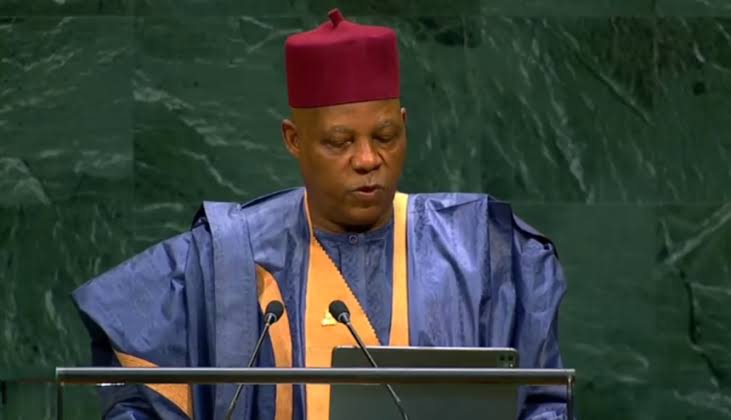
President Tinubu To UN: We Can’t Rule 2026 World With 1945 Distribution of Power
** *Warns Africa can’t continue to fill UN agenda without permanent membership at Security Council
** *Calls for immediate end to global warfare, respect for UN Charter
** *Demands radical shakeup of global financial system, equitable participation in economic decision-making
** *Says Africa deserves fairness in climate financing, reaffirms commitment to Paris Agreement, fair energy transition
By: Our Reporter
President Bola Ahmed Tinubu has renewed calls for a radical shake-up of the United Nations (UN), insisting that reforms must start with reconstituting the Security Council to grant Africa permanent seats.
He warned that the continent can no longer afford to fill the Council’s agenda from the margins, pointing out that the world of 2026 cannot remain captive to the distribution of power in 1945.
The Nigerian leader made the position in his address delivered by his deputy, Vice President Kashim Shettima, during the General Debate at the ongoing 81st Session of the United Nations General Assembly in New York, United States.
Specifically, he demanded at least two permanent seats for the continent—including full rights, responsibilities, and veto power—along with a total of five non-permanent seats.
“The reform of this institution must begin with the reconstitution of the Security Council, for the world of 2026 cannot remain captive to the distribution of power in 1945. Africa cannot continue to fill the Council’s agenda while remaining absent from its permanent membership.
“Nigeria demands, in accordance with the Ezulwini Consensus and the Sirte Declaration, at least two permanent seats for Africa, with all the rights and responsibilities of permanent membership, including the veto for as long as it exists, and five non-permanent seats in total. The authority to speak for humanity carries an obligation to represent it,” he stated.
President Tinubu also issued a wake-up call to world leaders, demanding an immediate end to global warfare and a total rejection of the rising tide of nationalism.
With urgent moral clarity, he warned that the global order hangs in the balance, while fiercely rallying the international community to dismantle unilateral aggression, resurrect the foundational principles of the United Nations Charter, and forge an unyielding, unified front through a recommitted era of global multilateralism.
The Nigerian leader categorically told the global leaders not to pretend that distant or domestic conflicts do not exact a price from other nations, underscoring the UN’s urgent duty to restore trust in institutions built to reconcile differences and advance global common interests.
“The persistence of conflict across the world recalls the purpose for which the United Nations was founded: to spare succeeding generations the devastation of war. We must therefore return to the founding principles of dialogue, mutual respect and collective responsibility.
“Nigeria stands by the Charter and its promise of a world in which diplomacy prevails over coercion, cooperation over isolation and international law over the arbitrary exercise of power,” he declared.
The President framed Nigeria’s peacekeeping efforts in Africa as a model, noting that the nation stands ready to take on greater responsibility and sacrifice to restore peace across the continent—just as it did in Liberia, Sierra Leone, Darfur, Mali, and The Gambia, where it committed personnel and resources when global solidarity demanded action.
“Through ECOWAS, the African Union and our Gulf of Guinea partnerships, we continue to advance mediation, democratic governance, counter-terrorism and maritime security,” he said, adding that Nigeria’s foreign policy depends on the same conviction that guides its economic reforms.
President Tinubu stated that Nigeria is actioning its sustainable development commitments through disciplined macroeconomic management, robust institutions, private-sector growth, and strategic public investment.
Emphasising that the mission directly links Nigeria’s national advancement to Africa’s progress and a global duty to foster peace, equity, and prosperity, he observed that internal achievements mean nothing if the nation ignores gathering external threats, declaring that geography offers no exemption from the consequences of a fractured world.
Government trust, according to him, is earned only when decisions improve lives, stressing, however, that since no nation is insulated from global conflicts, leaders must face security and climate realities head-on rather than pretending borders offer safety.
The President urged global action on climate change, rejecting the false choice between development and climate action, even as he emphasized that developing countries must industrialize, eradicate poverty, and expand energy access using low-carbon pathways backed by technology transfer and climate finance.
He reaffirmed Nigeria’s commitment to the Paris Agreement and a fair energy transition, stressing that Africa bears a heavy climate burden despite contributing under 4% of global emissions.
Under the Energy Transition Plan, he hinted that the nation is working towards net-zero emissions by 2060 while expanding access to affordable, reliable and sustainable energy.
President Tinubu declared that Nigeria will not let fear dictate its technological future, affirming that AI is a tool driven by human intent, and to harness the tool for human advancement, the nation is aggressively expanding its digital public infrastructure, accelerating broadband deployment, and driving tech entrepreneurship.
He reiterated Nigeria’s call for reform of the international financial architecture, wider access to concessional financing and debt sustainability structure that recognise developmental needs, pointing out that “one of the greatest obstacles to sustainable development is inadequate financing,” as most developing nations spends a good part of their resources on debt servicing at the expense of education, healthcare and infrastructure.
Drawing lessons from Nigeria’s prolonged struggle against Boko Haram, ISWAP and other armed groups, the President said “no nation, however formidable its defences, can secure itself completely against dangers sustained beyond its borders.”
He noted that while modern threats like terrorism and cyberattacks exploit gaps in global action, lasting military victory requires a foundation of education, economic opportunity, accountable governance, and human rights.
As a founding member of ECOWAS, President Tinubu said Nigeria remains ready to uphold regional solidarity and African leadership in resolving security challenges, “reinforced by principled international partnerships.”
The Nigerian leader maintained that Nigeria is committed to the peaceful settlement of disputes under the United Nations Charter, as “the conflicts in Sudan and other war-torn countries demand urgent diplomacy to address their humanitarian, economic and geopolitical consequences.”
“We should all be afraid of a world in which we can no longer tell the victim from the aggressor. When our investment in propaganda shields perpetrators from justice to the point that telling the truth becomes a crime, the promise of this institution stands betrayed,” he stated.
On the expectations from the UN general debate the Nigerian leader noted that “a reformed, inclusive and effective United Nations is indispensable to the peaceful, just and sustainable world that future generations deserve.
“Whatever our differences, we must remember that humanity is our oldest citizenship, and peace is the inheritance we owe every child,” he further stated.
President Tinubu To UN: We Can’t Rule 2026 World With 1945 Distribution of Power
News
A call for an independent review of Operation Rainbow as allegations of attacks on Fulani communities deepen

A call for an independent review of Operation Rainbow as allegations of attacks on Fulani communities deepen
By: Zagazola Makama
The Plateau State Government can no longer afford to treat growing allegations of bias, arson and attacks involving personnel of Operation Rainbow as ordinary complaints in a state already trapped in a cycle of communal violence.
The allegations are serious enough to demand an independent investigation because repeated allegations that a security outfit is attacking the very communities it is mandated to protect can rapidly destroy public confidence and deepen an already dangerous conflict into another layer.
Operation Rainbow was created as a state security initiative to support the protection of lives and property and has since undergone substantial expansion. In December 2025, Governor Caleb Mutfwang said the outfit was intended to protect residents regardless of faith or ethnicity and instructed its personnel to respect the law, human rights and civilian engagement. The state has also subjected its personnel to training on standard operating procedures and rules of engagement.
That makes the allegations now being raised particularly disturbing.
There have been previous accusations by some fulani residents of Mangu that Operation Rainbow personnel were involved in extrajudicial killings . The European Union Agency for Asylum documented those allegations in its review of the Plateau security situation. Operation Rainbow denied similar allegations in 2024, describing them as false and misleading.
The fact that the allegations have been denied does not make them irrelevant. Nor does the fact that they have been made make them proven.
That is precisely why there must be an independent investigation.
According to accounts from Fulani residents in some affected communities, there is now a growing perception that Operation Rainbow is not being seen as a neutral security presence.
One Fulani community leader alleged that residents came under heavy fire from personnel they initially believed had arrived to protect them. According to his account, the residents were caught off guard when the security personnel allegedly opened fire, resulting in several deaths and forcing others to flee for safety.
The allegations of arson are even more troubling
There are also allegations from Fulani residents that Operation Rainbow personnel have, in some instances, been involved in the burning of homes or property belonging to members of their communities. If established, such conduct would represent an extraordinary breach of the basic purpose of a security organisation.
A security officer who participated in burning the home of a civilian is not protecting that civilian. A security officer who attacks an unarmed community is not restoring peace.
And a security formation that is perceived to punish an entire community because of the alleged actions of individuals risks becoming another source of insecurity.
There are thousands of security personnel and community-based operatives across Plateau. Many may be performing difficult and dangerous duties in communities where attacks occur with little warning. Indeed, Operation Rainbow personnel themselves have also been attacked: a senior officer of the outfit was killed in an ambush along the Bokkos–Barkin Ladi axis on Sept. 22, according to reports.
That reality makes accountability even more important.
Security personnel deserve protection. Civilians deserve protection. Both cannot be protected by allowing allegations of abuse to remain unresolved. Plateau cannot fight an insurgency of mistrust The greatest danger is not simply what happened during any single alleged operation. It is what happens afterward.
When a Fulani community believes that the security forces have come to attack rather than protect it, residents may stop providing intelligence.
When indigenous communities believe that security forces are failing to protect them, they may turn increasingly hostile towards the security agencies. When both sides begin to see security personnel through an ethnic lens, every movement of a patrol vehicle can become a source of suspicion. That is how a security crisis becomes self-perpetuating.
The state has already witnessed how quickly violence can move from an attack to reprisal, from reprisal to counter-reprisal, and eventually to a cycle in which civilians who had nothing to do with the original incident become targets.
Recent security incidents across Mangu, Barkin Ladi and Bokkos demonstrate how fragile the situation remains. Security personnel themselves have become targets, while civilians continue to face killings, attacks and destruction of property.
Against that background, the security architecture must be above ethnic suspicion.
Government must investigate not defend
The Plateau State Government should resist the temptation to automatically defend Operation Rainbow whenever allegations emerge. The appropriate response is investigation. Where an allegation is false, establish that clearly and publicly. Where an operative acted lawfully, explain the circumstances. Where misconduct occurred, identify the personnel involved and prosecute them. Where command failure occurred, hold the responsible commanders accountable. And where evidence shows that civilians were deliberately targeted, there should be no institutional protection for the perpetrators.
This is particularly important because the state has repeatedly emphasised that Operation Rainbow is supposed to be an inclusive security structure. In December 2025, Governor Mutfwang said the outfit was designed to protect people of all faiths and ethnic backgrounds and that legitimate complaints against operatives would attract disciplinary action where wrongdoing was established.
Those commitments must now be tested through transparent action.
Bring in the federal security agencies
There is also a strong case for reviewing the operational role of Operation Rainbow in the most volatile areas of Plateau.
The Nigerian Army, Nigeria Police Force, Department of State Services and other constitutionally mandated agencies should have a decisive role in operations involving the use of lethal force, arrests and intelligence-led raids.
Operation Rainbow can continue to contribute community intelligence, early warning and local knowledge, but its operations should be subject to clear command arrangements, documented rules of engagement, civilian oversight and effective mechanisms for investigating complaints.
The recent training of Operation Rainbow personnel on standard operating procedures and rules of engagement is a positive step, but training has meaning only when compliance is monitored and violations have consequences.
Protect every community
Plateau does not need a security structure that is perceived as protecting one ethnic group against another. It needs a security structure that protects citizens against criminals.
If a Fulani herder is attacked, the perpetrator must be pursued. If a Berom, Mwaghavul, Afizere or any other citizen is attacked, the perpetrator must equally be pursued. If a farmer’s crops are destroyed, the law must address it. If cattle are stolen, the law must address it. If a community is attacked, security forces must protect it. If a member of a security formation commits a crime, the law must protect the victim by holding that operative accountable.
The uniform cannot become a shield against accountability. And ethnicity cannot become evidence of guilt. The growing allegations surrounding Operation Rainbow therefore deserve something more serious than political denials or counter-accusations. They deserve an independent, transparent and credible investigation capable of establishing what happened, who was responsible and whether operational procedures were followed.
Because in a conflict as deeply polarised as Plateau’s, perceived injustice can become fuel for the next attack.
And if the people who are supposed to protect communities are themselves increasingly perceived as a threat by some of those communities, then the government has a security problem that cannot be solved by deploying more personnel alone.
Plateau needs security that citizens can trust and that trust must be earned through impartiality, evidence, accountability and equal protection under the law.
A call for an independent review of Operation Rainbow as allegations of attacks on Fulani communities deepen
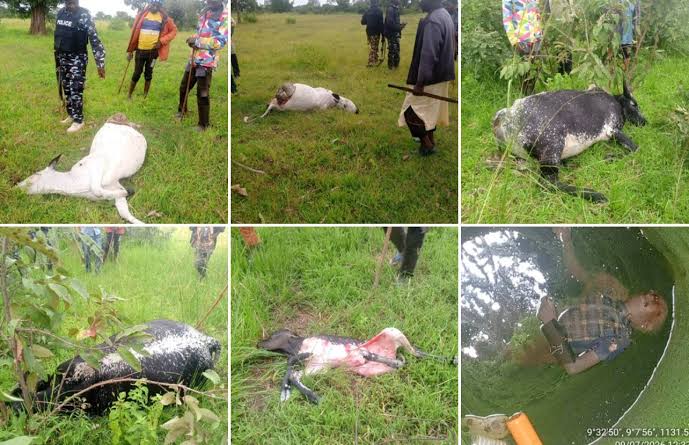
Fulani herder reportedly killed, 42 cattle rustled by Mwaghavul Militia in Mangu
By: Zagazola Makama
A Fulani youth reportedly herding cattle has been killed while 42 cows were allegedly rustled by Mwaghavul Militia at Bankansarki area, around Sagas in Kongon Langai District of Mangu Local Government Area of Plateau State.
According to report received Zagazola Makama on Thursday, Sept. 24, 2026, the victim was attacked while tending the cattle, with the attackers reportedly taking away the 42 animals.
The incident reportedly follows an earlier attack on Sept. 12, 2026, around Sabon Gari in Mangu, where three Fulani herders were reportedly killed and about 50 cattle rustled.
There have also been reports of the destruction of houses and cattle around Kantoma on Sunday, although details of the incident have yet to be independently established.
The latest incident adds to growing concerns over recurring attacks, cattle rustling and property destruction in parts of Mangu, where retaliatory violence has continued to deepen tensions between communities.
Community leaders and stakeholders have called for an impartial and transparent investigation by the Federal Government, Plateau State Government and security agencies to establish the circumstances surrounding the attacks.
They also urged authorities to identify and prosecute anyone found responsible, regardless of ethnic or religious affiliation, while strengthening security around vulnerable communities and livestock routes to prevent further attacks and reprisals.
Fulani herder reportedly killed, 42 cattle rustled by Mwaghavul Militia in Mangu

President Tinubu To UN: We Can’t Rule 2026 World With 1945 Distribution of Power

A call for an independent review of Operation Rainbow as allegations of attacks on Fulani communities deepen

Fulani herder reportedly killed, 42 cattle rustled by Mwaghavul Militia in Mangu

Roger Federer’s Shock as DNA Results Reveal Myla and Charlene Are Not His Biological Children

THE PLIGHT OF FARIDA

FAILED COUP IN BURKINA FASO: HOW TRAORÉ NARROWLY ESCAPED ASSASSINATION PLOT AMID FOREIGN INTERFERENCE CLAIMS
-
 News3 years ago
Roger Federer’s Shock as DNA Results Reveal Myla and Charlene Are Not His Biological Children
-
Opinions5 years ago
THE PLIGHT OF FARIDA
-
 News1 year ago
FAILED COUP IN BURKINA FASO: HOW TRAORÉ NARROWLY ESCAPED ASSASSINATION PLOT AMID FOREIGN INTERFERENCE CLAIMS
-

 News3 years ago
EYN: Rev. Billi, Distortion of History, and The Living Tamarind Tree
-
 Opinions5 years ago
POLICE CHARGE ROOMS, A MINTING PRESS
-

 ACADEMICS3 years ago
A History of Biu” (2015) and The Lingering Bura-Pabir Question (1)
-

 Columns3 years ago
Army University Biu: There is certain interest, but certainly not from Borno.
-

 Politics1 year ago
2027: Why Hon. Midala Balami Must Go, as Youths in Hawul and Asikira/Uba Federal Constituency Reject ₦500,000 as Sallah Gift
