
News
FRSC moves to enforce discipline, professionalism

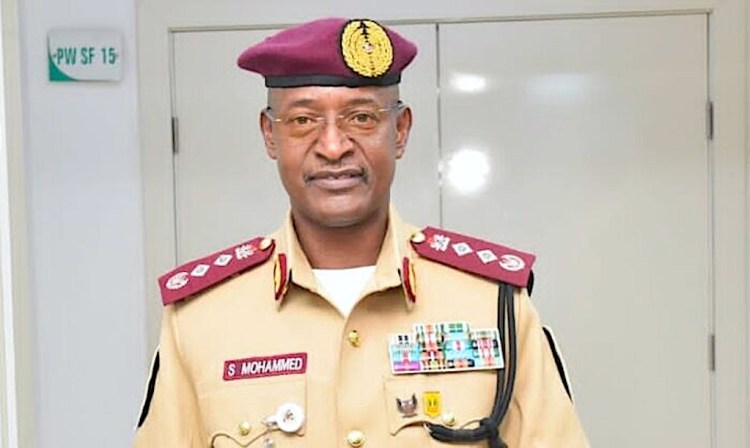
FRSC moves to enforce discipline, professionalism
The Federal Road Safety Corps (FRSC) on Tuesday, sensitised its personnel in Gombe State to enhance discipline, professionalism, and service delivery.
Corps Marshal, Shehu Mohammed while engaging with personnel at the FRSC Gombe Sector Command said the initiative was borne out of the need to respond to recent operational reports that reveal trends “we cannot and will not ignore.”
Mohammed who was represented by an Assistant Corps Marshal Ezekiel SonAllah said the Corps had observed a disturbing decline in discipline and professionalism.
He said that those lapses had manifested as misconduct, unethical practices, abuse of authority, extortion, reckless enforcement behaviours and other actions that contradicted its mandate and were steadily eroding public trust in the Corps.
The Corps Marshal reminded the personnel that such behaviours were not only unacceptable but endangered the credibility and reputation of the Corps.
“Every time a road user loses confidence in us, our mandate becomes harder to achieve; every act of unprofessional conduct damages the image of thousands of disciplined staff and every abuse of authority weakens the trust built over decades,” he stressed.
Mohammed further told personnel that discipline was not punishment but protection, as “ It protects our reputation, our careers, the Corps and ultimately the lives of Nigerians who depend on us daily.”
According to him, professionalism to the Corps is mandatory and not optional.
The Corps Marshal also warned personnel against extortion, harassment and abuse of authority, emphasising that such acts were illegal and would not be tolerated.
He expressed optimism that the engagement with personnel would help restore the highest standards of discipline, rebuild public confidence, towards making the Corps an enduring symbol of professionalism and integrity.
Our Correspondent reports that the theme of the sensitisation is “Discipline, Reinforcement and Strengthening of Command and Control in the Field Commands.”
Recall that FRSC, in February, dismissed 43 of its personnel over offences bordering on desertion, scandalous conduct and patrol-related misconduct.
The move was described by the Corps as a firm demonstration of its zero tolerance for indiscipline and ethical breaches.
FRSC moves to enforce discipline, professionalism



Troops Arrest Suspected Military Impostor in Katsina
By Zagazola Makama
Troops of 17 Brigade have arrested a suspected military impostor during a fighting patrol in Malumfashi Local Government Area.
Security sources told Zagazola Makama that the suspect was apprehended at about 1:30 p.m. on July 4 by troops deployed at the Forward Operating Base (FOB) Malumfashi while conducting routine patrols within Malumfashi town.

According to the sources, the suspect was intercepted while wearing a woodland camouflage three-quarter short, raising suspicion among the troops.
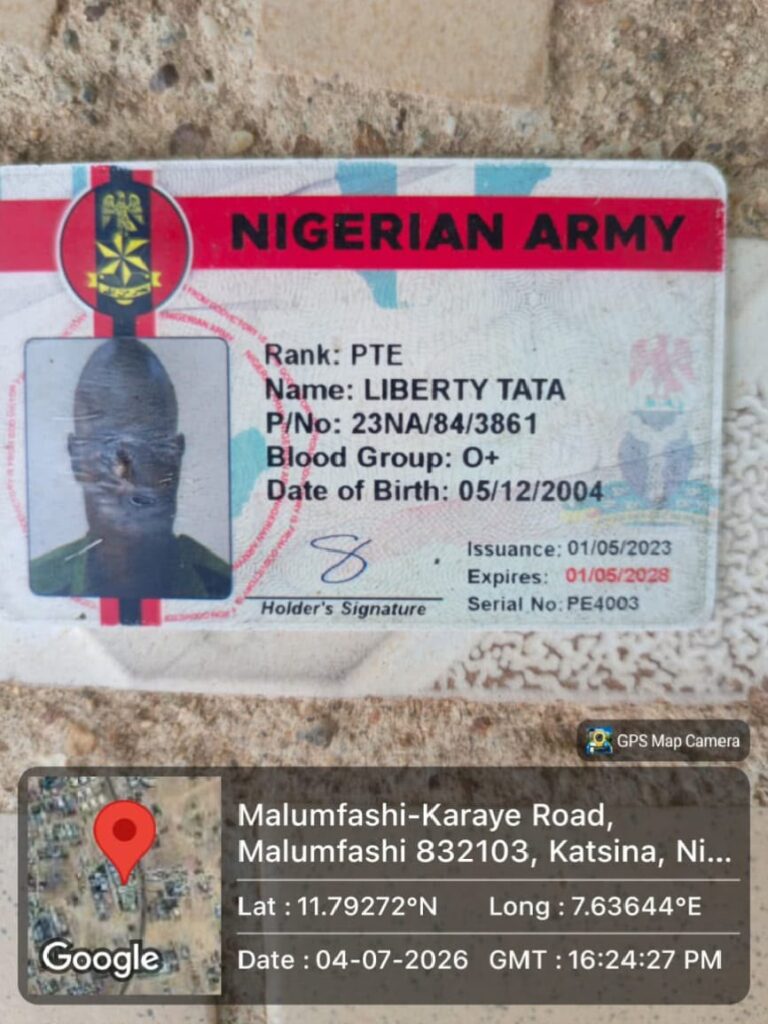
A search conducted on the suspect led to the recovery of a fake Nigerian Army identity card, four Automated Teller Machine (ATM) cards, one woodland camouflage three-quarter short, a wristwatch and the sum of ₦17,000.
The suspect and the recovered exhibits are currently in military custody pending further investigation.
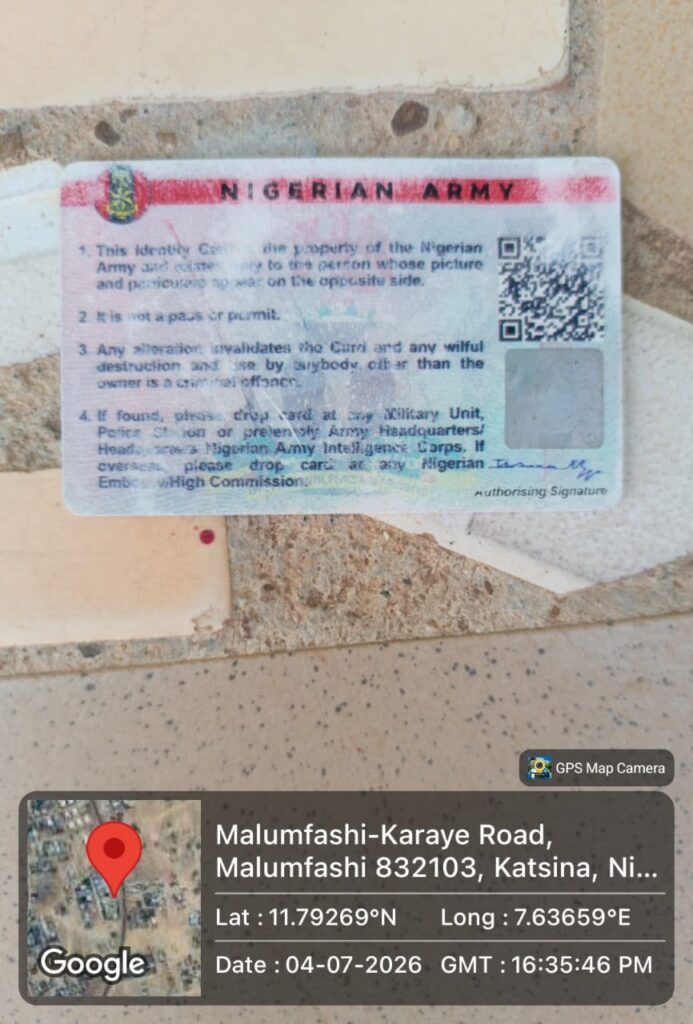
Military sources said the arrest forms part of ongoing efforts to curb impersonation of security personnel and other criminal activities within the area.
Troops Arrest Suspected Military Impostor in Katsina
Troops Recover 50 Rustled Cattle, Repel Suspected Rustlers in Kaduna
By Zagazola Makama
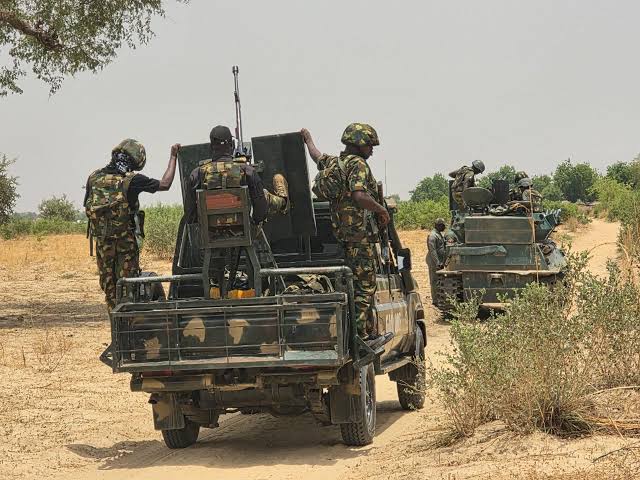
Troops deployed at the Forward Operating Base (FOB) Kankomi have recovered 50 rustled cattle after repelling suspected cattle rustlers during an ambush operation in Chikun Local Government Area.
Security sources told Zagazola Makama that the troops responded to a distress call at about 9:55 a.m. on July 4 over the activities of suspected rustlers at Ungwan Gontu community.
According to the sources, the troops swiftly laid an ambush and made contact with the fleeing suspects, forcing them to abandon the stolen livestock and escape into the surrounding area.
During the operation, the troops recovered 50 rustled cattle, which were subsequently identified and handed over to their rightful owner.
Military sources said efforts are ongoing to track down the fleeing suspects as security operations continue to combat cattle rustling and other criminal activities across Kaduna State.
Troops Recover 50 Rustled Cattle, Repel Suspected Rustlers in Kaduna
Troops Arrest Suspected Terrorist in Kogi, Suspect Confesses to Group Membership
By Zagazola Makama
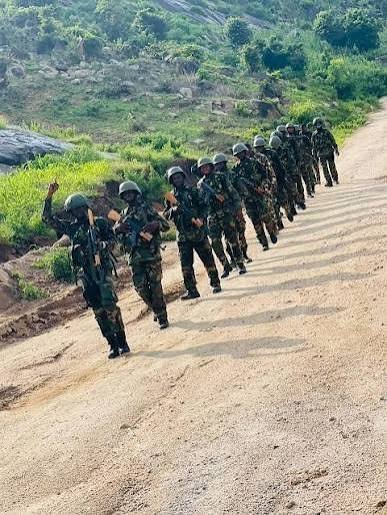
Troops of 12 Brigade, in collaboration with Office of the National Security Adviser (ONSA) Hybrid Forces, have arrested a suspected terrorist during an operation in Lokoja Local Government Area.
Security sources told Zagazola Makama that the troops responded at about 1:00 p.m. on July 4 to reports of a confrontation between local residents and a suspected terrorist at a Ruga settlement behind Obajana community.
According to the sources, the troops swiftly intervened and arrested one suspect at the scene.
During preliminary interrogation, the suspect reportedly confessed to being a member of a terrorist group led by an individual identified as Haruna, which allegedly operates within the Okene general area.
The suspect is currently in military custody and is undergoing further investigation to establish the extent of his involvement and identify other members of the group.
Military sources said the arrest forms part of ongoing security operations aimed at dismantling terrorist and criminal networks across Kogi State.
Troops Arrest Suspected Terrorist in Kogi, Suspect Confesses to Group Membership

Troops Arrest Suspected Military Impostor in Katsina

Troops Recover 50 Rustled Cattle, Repel Suspected Rustlers in Kaduna

Troops Arrest Suspected Terrorist in Kogi, Suspect Confesses to Group Membership

Roger Federer’s Shock as DNA Results Reveal Myla and Charlene Are Not His Biological Children

THE PLIGHT OF FARIDA

FAILED COUP IN BURKINA FASO: HOW TRAORÉ NARROWLY ESCAPED ASSASSINATION PLOT AMID FOREIGN INTERFERENCE CLAIMS
-
 News2 years ago
Roger Federer’s Shock as DNA Results Reveal Myla and Charlene Are Not His Biological Children
-
Opinions4 years ago
THE PLIGHT OF FARIDA
-
 News1 year ago
FAILED COUP IN BURKINA FASO: HOW TRAORÉ NARROWLY ESCAPED ASSASSINATION PLOT AMID FOREIGN INTERFERENCE CLAIMS
-

 News2 years ago
EYN: Rev. Billi, Distortion of History, and The Living Tamarind Tree
-
 Opinions5 years ago
POLICE CHARGE ROOMS, A MINTING PRESS
-

 ACADEMICS2 years ago
A History of Biu” (2015) and The Lingering Bura-Pabir Question (1)
-

 Columns2 years ago
Army University Biu: There is certain interest, but certainly not from Borno.
-

 Politics1 year ago
2027: Why Hon. Midala Balami Must Go, as Youths in Hawul and Asikira/Uba Federal Constituency Reject ₦500,000 as Sallah Gift
