
News
Gambari Calls for Reform of UN Security Council to Meet Today’s Economic Demographic, Political Realities


Gambari Calls for Reform of UN Security Council to Meet Today’s Economic Demographic, Political Realities
By: Michael Mike
The call for the reform of the United Nations Security Council was once again on the front burner of discussions in the context of preventing genocide as witnessed against the Tutsi in Rwanda.
Speaking at the 30th anniversary of the 1994 genocide against the Tutsi, held at Covenant University, Ota Ogun State at the weekend, the former Under-Secretary-General and Head of the United Nations Department of Political Affairs, UN Headquarters New York, Prof Ibrahim Gambari called on the UN to reform not only in terms of the use or misuse of veto power but in the expansion of its membership in both permanent and non-permanent categories.
Gambari, who was a former Nigeria’s Minister of External Affairs (now Foreign Affairs) and at a time the Chief of Staff to former President Muhammadu Buhari,
emphasized in his keynote speech at the commemorative public lecture organised by the United Nations Information Centre (UNIC) Nigeria, Rwandan High Commission in Nigeria and Covenant University, that the membership of the UN Security Council should be reformed and democratized to reflect today’s economic demographic and political realities, and Africa should be fully represented and taken into consideration.
He said: “The genocide in Rwanda had the additional and perhaps unintended consequence of reawakening governments in Africa to an appreciation of their own Responsibility to Protect regarding civilian populations beyond their territorial borders.”
He added that: “Rwanda taught Africans not to rely purely on the goodwill of the larger international community to police and resolve conflicts on their continent. The need for Pax Africana, for Africa to develop its own resources and mechanisms to initiate effective and robust engagements to resolve the problems of the continent, was becoming increasingly apparent.”

On his part, the UN Secretary-General António Guterres, in his statement to the gathering, urged everyone to shun hatred and discrimination and stand as one. He said: “On this solemn day of remembrance, let’s pledge to stand as one against all forms of hatred and discrimination. Let’s ensure that the acts that began on April 7 1994, are never forgotten — and never repeated anywhere.”
Guterres, whose statement was read by the UNIC National Information Officer, Oluseyi Soremekun, assured that “We will never forget the victims of this genocide. Nor will we ever forget the bravery and resilience of those who survived, whose courage and willingness to forgive remain a burst of light and hope amidst this dark chapter in human history.”
The Rwandan High Commissioner to Nigeria, Ambassador Christophe Bazivamo noted that: “The path to lasting peace demands constant vigilance. As we renew, we restate our unbreakable pledge to fight intolerance, discrimination, ethnic hatred, hate speech, genocide revisionism, and denial in all their forms.”
He said on this occasion of Kwibuka 30, “Let’s together ensure that the memory of the victims becomes a powerful force for good, inspiring future generations to choose peace over hate, unity over division, and hope over despair.”
According to him, this could be achieved in different ways including putting course lessons about the 1994 Genocide against the Tutsi in schools to educate the young and the next generation on the need to fight hate ideologies and stand against any form of discrimination and divisionism.
He charged everyone to work together to build a world where such atrocities never happen again. “Let us renew our commitment to the values of tolerance, compassion, human dignity in our transformative journey, continuously building a better future for all.”
The Vice Chancellor of Covenant University, Prof Abiodun Adebayo acknowledged that in all the conflicts leading to devastating loss of civilian life, massive displacement, capital flights, destruction of infrastructure and economic institutions, violations of human rights and international humanitarian law, the United Nations has always played a pivotal role in maintaining international peace and security, protect human rights, deliver humanitarian aid, promote sustainable development, and uphold international law.
He said: “Today’s reflection is critical because those who do not remember the past or mind history are predestined to repeat history. We remember, therefore, the heinous crime of inhumane treatment meted out not only to the Tutsi but the entire humanity that took place in Rwanda in 1994.”
The Chancellor of the university, Bishop David Oyedepo charged African leaders to be sensitive to injustice to ensure peace and stability of the region. He spoke on ‘It’s time to awake and take responsibility.’
Gambari Calls for Reform of UN Security Council to Meet Today’s Economic Demographic, Political Realities


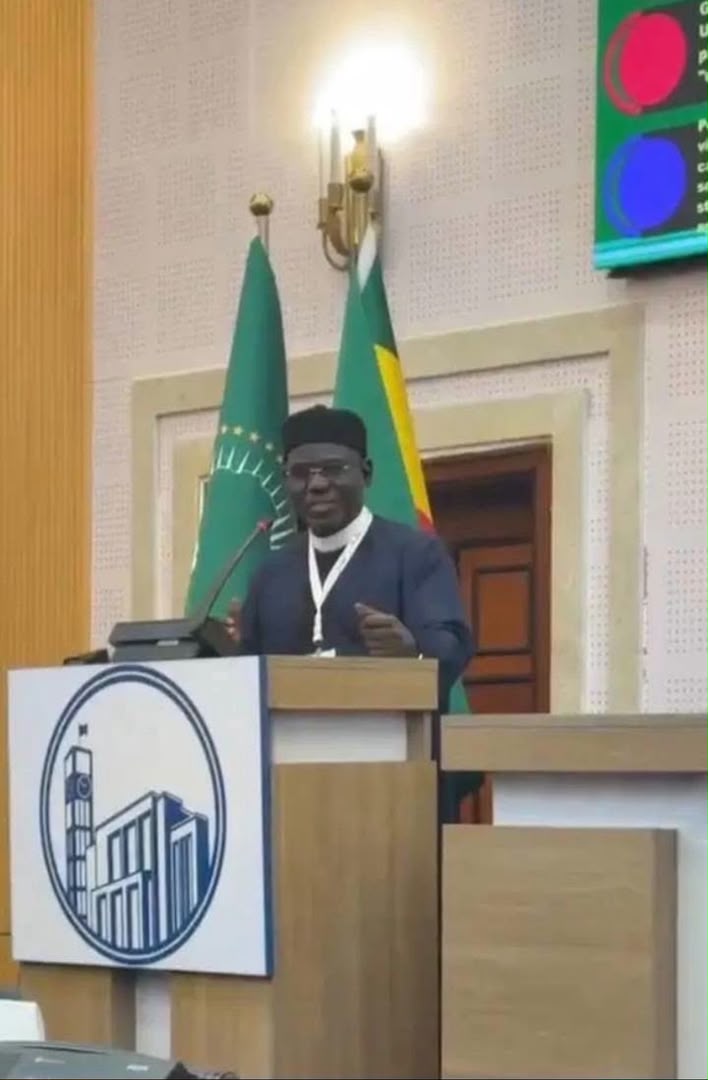
Africa Must Lead Response to Growing Security Threats, Buratai Tells Forum
By Zagazola Makama
Former Chief of Army Staff, retired Lt.-Gen. Tukur Yusuf Buratai, has called for African-led solutions to the continent’s worsening security challenges, warning that the continent is facing an unprecedented convergence of threats requiring collective action.
Buratai made the call on Friday while delivering the keynote address titled, “Africa’s Priority Security Threats,” at the 32nd Parliamentary Intelligence-Security Forum in Addis Ababa, Ethiopia.
The retired army chief identified terrorism and violent extremism, transnational organised crime, cybersecurity vulnerabilities, governance-related instability, and the erosion of sovereignty through external dependence as the five major security threats confronting Africa.
According to him, the continent can no longer rely solely on external interventions but must strengthen regional cooperation, intelligence sharing and indigenous security capabilities.
Buratai described the Sahel as the global epicentre of terrorism, noting that the region now accounts for nearly half of all terror-related deaths worldwide.
He said that between January and November 2025, West Africa recorded about 450 terrorist attacks, resulting in more than 1,900 fatalities.
The former army chief noted that although Burkina Faso had recorded significant military gains under President Ibrahim Traoré, with government forces reclaiming about 72.7 per cent of occupied territories by June 2025 through Operation Lalmassga, extremist groups continued to stage deadly attacks.
He said intensified military operations in early 2026 reportedly eliminated at least 400 militants, but fresh attacks by jihadist groups, including those linked to Jama’at Nusrat al-Islam wal-Muslimin (JNIM), underscored the persistent threat.
Buratai also expressed concern over the withdrawal of Burkina Faso, Mali and Niger from the Economic Community of West African States (ECOWAS), saying the development had weakened regional intelligence-sharing and collective security efforts.
He warned that violent extremism was spreading beyond the Sahel into coastal West African countries, citing a sharp increase in attacks in northern Benin over the past three years.
On transnational organised crime, Buratai said West Africa was facing increasingly interconnected threats involving terrorism financing, piracy, arms trafficking, drug smuggling and cybercrime.
He noted that criminal networks were becoming more sophisticated and exploiting weak border controls, digital technologies and fragile governance structures to expand their operations across the region.
The retired general also identified cybersecurity as an emerging national security challenge, stressing that African countries must invest in cyber defence capabilities, digital infrastructure protection and regional cooperation to counter growing cyber threats.
Buratai urged African governments, policymakers and security institutions to adopt coordinated, home-grown strategies capable of addressing the continent’s evolving security landscape while safeguarding sovereignty and promoting sustainable peace and development.
He emphasised that lasting security on the continent would require stronger institutions, enhanced intelligence cooperation, economic resilience and greater political commitment among African nations.
Africa Must Lead Response to Growing Security Threats, Buratai Tells Forum
News
Release of Oyo School Kidnap Victims, a Testimony of Effective Inter-Agency Collaboration- NSCDC Boss
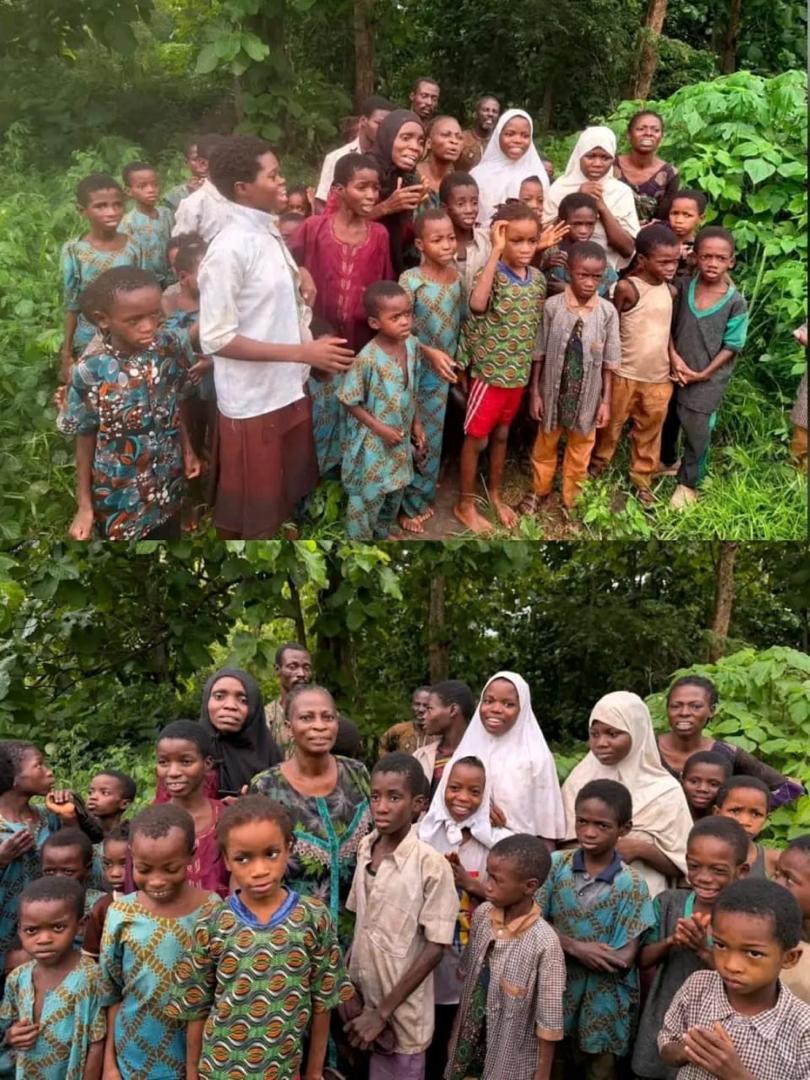
Release of Oyo School Kidnap Victims, a Testimony of Effective Inter-Agency Collaboration- NSCDC Boss
By: Michael Mike
The Nigeria Security and Civil Defence Corps (NSCDC) has applauded the successful rescue of 44 pupils and teachers abducted in Oyo State, describing the operation as a major boost to the Federal Government’s Safe Schools Initiative.
The Commandant General of the Corps, Prof. Ahmed Audi, commended the coordinated efforts of security agencies involved in the operation, saying the rescue underscored the effectiveness of intelligence sharing and inter-agency collaboration in tackling insecurity.
The victims were kidnapped by armed terrorists on May 15, 2026, in Oriire Local Government Area of Oyo State before they were freed in a coordinated intelligence-led operation involving multiple security agencies.
Those involved in the rescue include the National Counter Terrorism Centre (NCTC) under the Office of the National Security Adviser, Defence Headquarters, the Nigerian Army Special Forces, the Nigerian Navy, the Nigerian Air Force, the Nigeria Police Force, the Department of State Services (DSS), the National Intelligence Agency (NIA), and the NSCDC.
Reacting to the development, Prof. Audi said the operation reflected the Federal Government’s resolve to combat terrorism, secure schools and safeguard the lives of Nigerians.
He praised the courage, professionalism and commitment demonstrated by the security personnel, noting that the NSCDC would continue to support efforts aimed at protecting schools and other critical national assets through intelligence gathering, strategic deployment of personnel, community engagement and sustained collaboration with sister security agencies.
The NSCDC boss also called on Nigerians to support security agencies by providing timely and credible information that could aid the arrest of criminal elements, stressing that security is a shared responsibility.
Reaffirming the Corps’ commitment to its statutory responsibilities, Audi said the NSCDC would continue to protect critical national assets and infrastructure, respond to emergencies, strengthen disaster management and work closely with other security agencies to promote peace and security across the country.
Release of Oyo School Kidnap Victims, a Testimony of Effective Inter-Agency Collaboration- NSCDC Boss
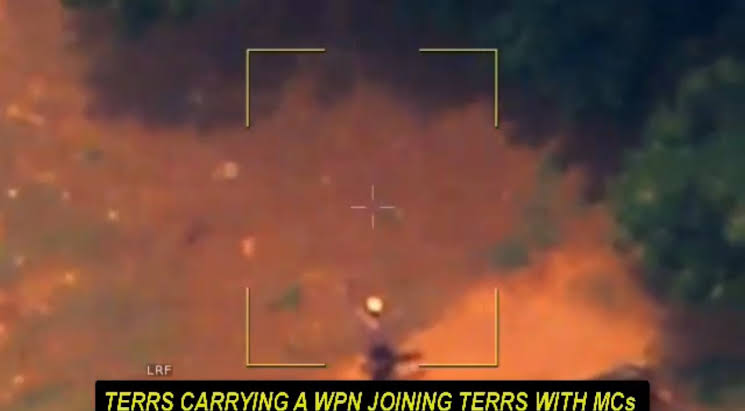
Airstrikes Destroy ISWAP Stronghold, Logistics Hub in Borno
By Zagazola Makama
The Air Component of Operation HADIN KAI has sustained its relentless air campaign against terrorist elements in the North-East, destroying a key terrorist enclave and logistics hub during a precision air interdiction mission in Borno State.
Intelligence sources told Zagazola Makama that the operation was carried out at about 2:40 p.m. on Friday, July 10.
The sources disclosed that the target was located at Yaganari, a notorious terrorist enclave within the Gezuwa general area, where insurgents had reportedly been regrouping and consolidating logistics for planned operations.
According to the sources, the strike followed credible intelligence indicating increased terrorist activities and the massing of fighters at the location.
“Persistent ISR missions were conducted to verify the intelligence before any engagement. The surveillance platform positively identified multiple terrorist structures, logistics hubs and visible movement of insurgents within the objective area,” one of the sources said.
Following confirmation of the hostile activity, the aircraft acquired the designated targets and executed a series of precision attacks in successive passes, delivering onboard munitions with high accuracy.
The coordinated strikes destroyed the identified terrorist structures, obliterated logistics facilities and neutralized several terrorists operating within the enclave.
Military sources described the mission as another significant setback to terrorist operations in the North-East, noting that the destruction of logistics infrastructure would further degrade the insurgents’ ability to sustain attacks and coordinate movements.
The latest operation emphasis on intelligence-driven precision strikes aimed at dismantling terrorist command centres, safe havens and supply networks while supporting ongoing ground operations by troops of Operation HADIN KAI.
Security sources said battle damage assessment is ongoing to determine the full extent of the damage inflicted on the terrorist network, while air surveillance over the area has been intensified to exploit the success of the operation and prevent any attempt by surviving fighters to regroup.
Airstrikes Destroy ISWAP Stronghold, Logistics Hub in Borno

Kashim Shettima: When Loyalty Pays

Troops Arrest Suspected ISWAP Logistics Supplier with Assorted Drugs in Borno

Four Family Members Flee ISWAP Enclave, Surrender to Troops in Gwoza

Roger Federer’s Shock as DNA Results Reveal Myla and Charlene Are Not His Biological Children

THE PLIGHT OF FARIDA

FAILED COUP IN BURKINA FASO: HOW TRAORÉ NARROWLY ESCAPED ASSASSINATION PLOT AMID FOREIGN INTERFERENCE CLAIMS
-
 News2 years ago
Roger Federer’s Shock as DNA Results Reveal Myla and Charlene Are Not His Biological Children
-
Opinions4 years ago
THE PLIGHT OF FARIDA
-
 News1 year ago
FAILED COUP IN BURKINA FASO: HOW TRAORÉ NARROWLY ESCAPED ASSASSINATION PLOT AMID FOREIGN INTERFERENCE CLAIMS
-

 News2 years ago
EYN: Rev. Billi, Distortion of History, and The Living Tamarind Tree
-
 Opinions5 years ago
POLICE CHARGE ROOMS, A MINTING PRESS
-

 ACADEMICS2 years ago
A History of Biu” (2015) and The Lingering Bura-Pabir Question (1)
-

 Columns2 years ago
Army University Biu: There is certain interest, but certainly not from Borno.
-

 Politics1 year ago
2027: Why Hon. Midala Balami Must Go, as Youths in Hawul and Asikira/Uba Federal Constituency Reject ₦500,000 as Sallah Gift
