Security
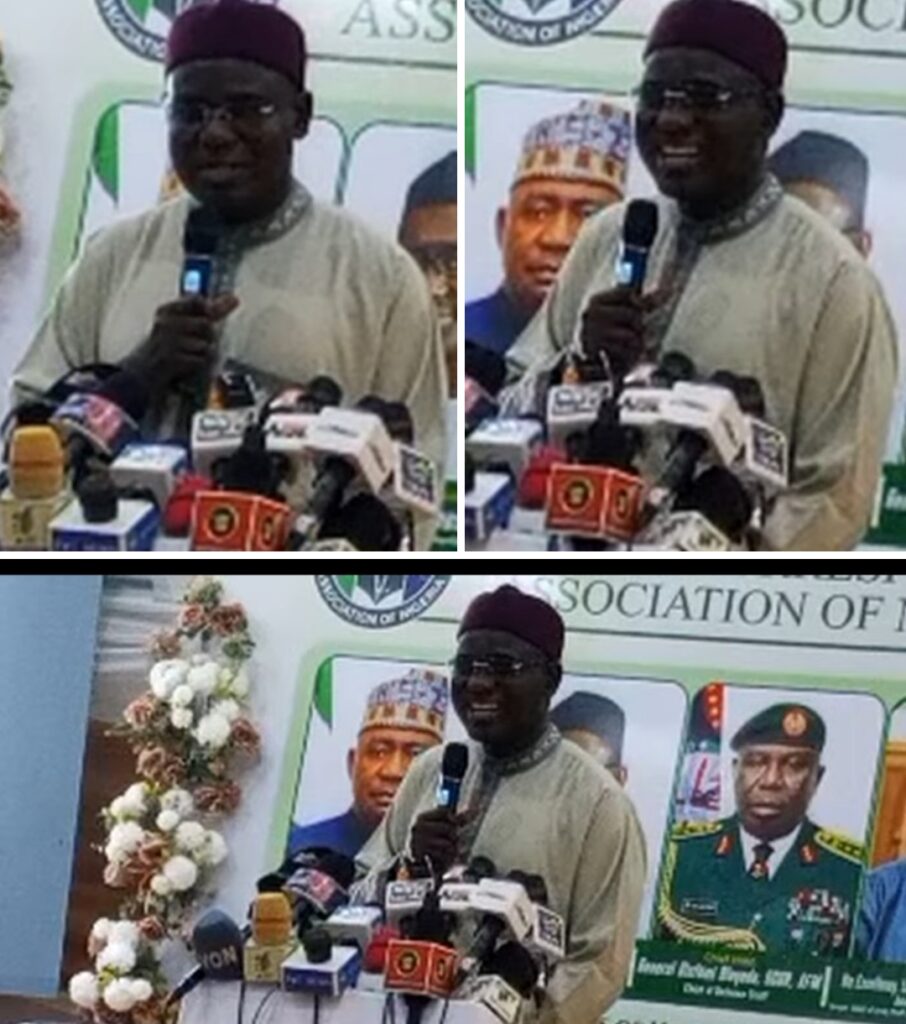
General TY Buratai spoke at the DECAN Annual Lecture and Awards Ceremony in Abuja.

General TY Buratai spoke at the DECAN Annual Lecture and Awards Ceremony in Abuja.
By: Dr James Bwala
At the 2026 annual lecture and awards ceremony of the Defence Correspondents Association of Nigeria (DECAN), held in Abuja on October 12, former Chief of Army Staff Lieutenant General Tukur Yusuf Buratai delivered a keynote address that combined experience, wisdom and strategic insight. Speaking on the theme, “Beyond Kinetic Warfare: Harnessing Technology and Intelligence-Led Operations for Nigeria’s National Security,” General Buratai reminded Nigeria’s security community that modern warfare is no longer determined only by weapons, troop movements or territorial control. It is also shaped by information, technology, intelligence and the ability to communicate with clarity and speed.
The occasion, organised under the leadership of DECAN President, Comrade Odita Sunday, provided an important platform for reflection on Nigeria’s evolving security challenges. It also offered an opportunity to recognise individuals whose contributions have strengthened national defence and responsible security reporting. General Buratai, who received DECAN’s Distinguished Leadership Award for his contributions to military statecraft and national defence, used the occasion to emphasise a truth that is increasingly relevant to Nigeria’s security environment: a nation can win battles on the ground and still lose the larger strategic contest if it fails to control the information space.
His warning that timely and credible military communication is the cornerstone of modern warfare deserves serious attention. In an age where information travels instantly across social media platforms, digital news outlets and encrypted communication channels, silence is no longer neutral. An information gap arises when official institutions fail to deliver accurate and timely information. That gap is quickly filled by insurgents, terrorists, propagandists and other hostile actors. Through false claims, manipulated images and exaggerated reports, they can influence public opinion, create fear, weaken confidence in the military and portray tactical setbacks as national collapse.
READ ALSO:https://newsng.ng/2027-ali-gwandzang-and-the-renewed-hope-for-hawul-and-askira-uba/
General Buratai’s message was therefore not merely a call for better public relations. It was a strategic argument for recognising information as an operational domain. In contemporary conflicts, military success depends not only on defeating an enemy’s physical capabilities but also on defeating its ability to recruit, intimidate, deceive and mobilise support. A terrorist organisation may be militarily weaker than the state, yet it can remain dangerous if it succeeds in projecting an image of strength and inevitability. This is why communication must be treated as part of national security planning rather than as an activity reserved for moments of crisis.

Nigeria’s security challenges have become increasingly complex. The country continues to confront terrorism and insurgency in the North-East, banditry and kidnapping in several parts of the North-West and North-Central zones, separatist violence, communal conflict, oil theft, cybercrime and other forms of criminality. These threats do not operate within clearly defined battlefields. They exploit difficult terrain, porous borders, local grievances, weak institutions, online networks and gaps in intelligence. They also use propaganda to distort events and recruit vulnerable populations.
The traditional model of warfare, based mainly on kinetic operations, is therefore no longer sufficient. When confronting armed groups and protecting communities, kinetic action remains essential. However, force alone cannot permanently resolve the conditions that allow violent groups to emerge and survive. Sustainable security requires an integrated approach that combines military strength with intelligence, technology, diplomacy, development, public engagement and justice.
READ ALSO: https://newsng.ng/2027-ali-gwandzang-and-the-renewed-hope-for-hawul-and-askira-uba/
Intelligence-led operations are central to this approach. Effective intelligence enables security agencies to identify threats before they mature, understand the structure of criminal and terrorist networks, locate their logistics and anticipate their movements. It helps commanders deploy resources more accurately and reduces the likelihood of unnecessary casualties and collateral damage. Intelligence also supports cooperation among the military, police, intelligence services, border agencies and local authorities.
For Nigeria, improving intelligence-led operations should involve investment in modern surveillance systems, satellite imagery, unmanned aerial vehicles, secure communications and advanced data analysis. However, technology must not be viewed as a substitute for human intelligence. Local knowledge remains indispensable, particularly in environments where armed groups operate among civilian populations. Community members often possess information about unusual movements, suspicious activities and emerging threats long before such information reaches formal intelligence channels.
The challenge is to build trust between communities and security institutions. Citizens are more likely to share information when they believe that their identities will be protected, their concerns will be taken seriously and security agencies will act professionally. Intelligence gathering must therefore be accompanied by respect for human rights, accountability and disciplined engagement with the public. Where communities fear both criminals and the authorities, vital information may remain hidden.
READ ALSO: https://newsng.ng/2027-ali-gwandzang-and-the-renewed-hope-for-hawul-and-askira-uba/
Technology also presents a significant opportunity in the fight against insecurity. Digital platforms can improve coordination between units, speed up the transmission of field reports and support real-time decision-making. Geographic information systems can help security agencies map criminal patterns and identify vulnerable areas. Artificial intelligence, when responsibly applied, can assist analysts in detecting connections across large volumes of data. Digital forensics can help trace financial transactions, communication networks and online recruitment activities linked to terrorism and organised crime.
Nevertheless, technological modernisation must be carefully managed. Acquiring sophisticated equipment without adequate training, maintenance and institutional coordination will produce limited results. Nigeria must invest not only in hardware but also in skilled personnel, research institutions, cybersecurity, data protection and long-term technical support. The country should also encourage cooperation among the armed forces, universities, technology companies and defence industries. National security cannot depend permanently on imported solutions that may not fully reflect Nigeria’s unique operational realities.
Another important issue arising from General Buratai’s remarks is the role of the media. Defence correspondents occupy a sensitive position between the military, government and the public. Their reporting can strengthen democratic accountability, improve public understanding and expose misconduct. It can also, if careless or poorly sourced, compromise operations, spread panic or provide useful information to hostile actors. Responsible security journalism requires accuracy, context and an understanding of operational security.
READ ALSO: https://newsng.ng/2027-ali-gwandzang-and-the-renewed-hope-for-hawul-and-askira-uba/
This does not mean that journalists should become uncritical extensions of the military. On the contrary, credible reporting requires independence. But independence must be combined with professionalism. Defence reporters should verify information, distinguish between confirmed facts and allegations, avoid publishing sensitive operational details that could endanger troops or civilians and resist the pressure to sensationalise tragedy. The military, for its part, must understand that journalists are not enemies. Transparent and timely engagement with the media can prevent rumours, reduce confusion and strengthen public confidence.
The relationship between the military and the media should therefore be based on mutual respect and clearly established communication channels. Regular briefings, accessible spokespersons, rapid clarification of false reports and professional media liaison structures can significantly reduce the information gap identified by General Buratai. When official voices are absent, uncertainty grows. When official information is delayed, rumours become more persuasive. When statements are inconsistent, public trust declines.
Communication is particularly important during military operations because morale is a strategic asset. Soldiers need to know that their sacrifices are recognised and that the nation understands the dangers they face. Families of military personnel deserve reliable information about their loved ones. Civilians affected by conflict need to know what is happening, what assistance is available and how they can remain safe. Without credible communication, fear and frustration can undermine cooperation with security forces.
READ ALSO: https://newsng.ng/2027-ali-gwandzang-and-the-renewed-hope-for-hawul-and-askira-uba/
General Buratai’s emphasis on the fallen heroes also carries a profound national message. The courage of Nigeria’s military personnel must not be remembered only during ceremonial occasions. It should be reflected in the country’s commitment to equipping troops properly, caring for wounded veterans, supporting military families and preserving the dignity of those who gave their lives in service. Honouring the fallen means ensuring that their sacrifices contribute to a safer and more united nation.
It also means that military leadership must combine courage with responsibility. Strength is not measured only by the ability to deploy force. It is also demonstrated through discipline, strategic patience, respect for the law and the wisdom to use the right instrument for each security challenge. Intelligence-led operations, when properly conducted, can reduce unnecessary violence and improve the precision of military action. They can help security forces distinguish between combatants and civilians and focus pressure on the networks that sustain violence.
Nigeria’s national security strategy must therefore move beyond fragmented responses. The country needs a comprehensive framework that integrates kinetic operations, intelligence, technology, public communication, border management, economic development and community resilience. No single agency can address the full range of threats facing the nation. Inter-agency cooperation must become an operational reality rather than a recurring slogan. Information-sharing systems, joint training and common procedures can improve the speed and effectiveness of national responses.
READ ALSO: https://newsng.ng/2027-ali-gwandzang-and-the-renewed-hope-for-hawul-and-askira-uba/
The private sector and civil society also have roles to play. Technology companies can assist in developing secure communication tools and detecting harmful digital activities. Civil society organisations can support peacebuilding, public education and early-warning mechanisms. Traditional and religious leaders can help counter extremist narratives and mediate local disputes. Young people, who are both major users of digital platforms and potential targets of online radicalisation, should be engaged through education, employment and constructive civic programmes.
Ultimately, the theme of the DECAN lecture points to a necessary transformation in how Nigeria understands security. The future will not belong exclusively to the side with more weapons. It will belong to the side that can gather better information, interpret it accurately, act decisively and communicate its actions credibly. Military power remains important, but power without intelligence can be wasteful, and action without communication can be misunderstood or defeated in the public mind.
Lieutenant General Tukur Yusuf Buratai’s address was significant because it connected military experience with the demands of a changing world. His words reflected the authority of a commander who understood both the realities of the battlefield and the wider responsibilities of national leadership. His warning about the dangers of an information gap should be treated as a strategic directive, not a ceremonial observation.
READ ALSO: https://newsng.ng/2027-ali-gwandzang-and-the-renewed-hope-for-hawul-and-askira-uba/
As Nigeria confronts increasingly sophisticated security threats, the country must strengthen its capacity to operate across physical, digital and psychological spaces. It must invest in intelligence, embrace responsible technology, build trust with communities and ensure that credible information reaches the public in good time. The military must be supported.
- James Bwala, PhD, is a security analyst and writes from Abuja.
General TY Buratai spoke at the DECAN Annual Lecture and Awards Ceremony in Abuja.