
News
GIFSEP Empowers Women to Champion Renewable Energy in Nigeria

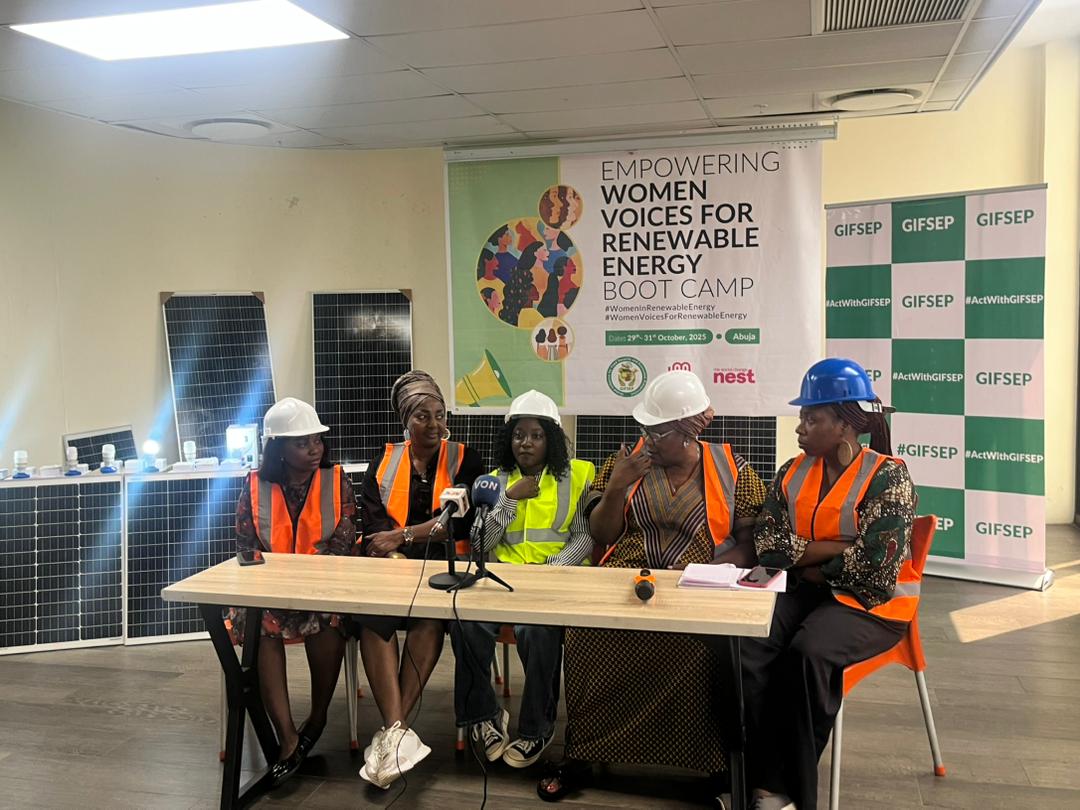
GIFSEP Empowers Women to Champion Renewable Energy in Nigeria
By: Michael Mike
The Global Initiative for Food Security and Ecosystem Preservation (GIFSEP) has launched a campaign to empower women as key voices in Nigeria’s renewable energy transition.
The organization convened a media parley and exhibition under the theme “Empowering Women Voices for Renewable Energy: Media Coverage Parley and Exhibition in Nigeria” at Novare Mall, Shoprite, Wuse Zone 5, Abuja, bringing together women leaders, activists, and clean energy advocates to promote gender inclusion in climate and energy solutions.
The gathering, which drew women from various communities and organizations, highlighted the urgent need for a shift from fossil fuels to renewable energy in Nigeria.
In his statement, Dr. Michael Terungwa David, Executive Director of GIFSEP, emphasized that women are disproportionately affected by the country’s reliance on oil, gas, and coal, which continue to pollute the environment and deepen poverty.
Nigeria, despite being Africa’s largest economy, still has over 85 million citizens without access to electricity, forcing many families especially in rural areas to depend on kerosene, firewood, and diesel generators.
Dr. David noted that these traditional energy sources endanger women’s health, limit educational opportunities for girls, and worsen economic inequality.
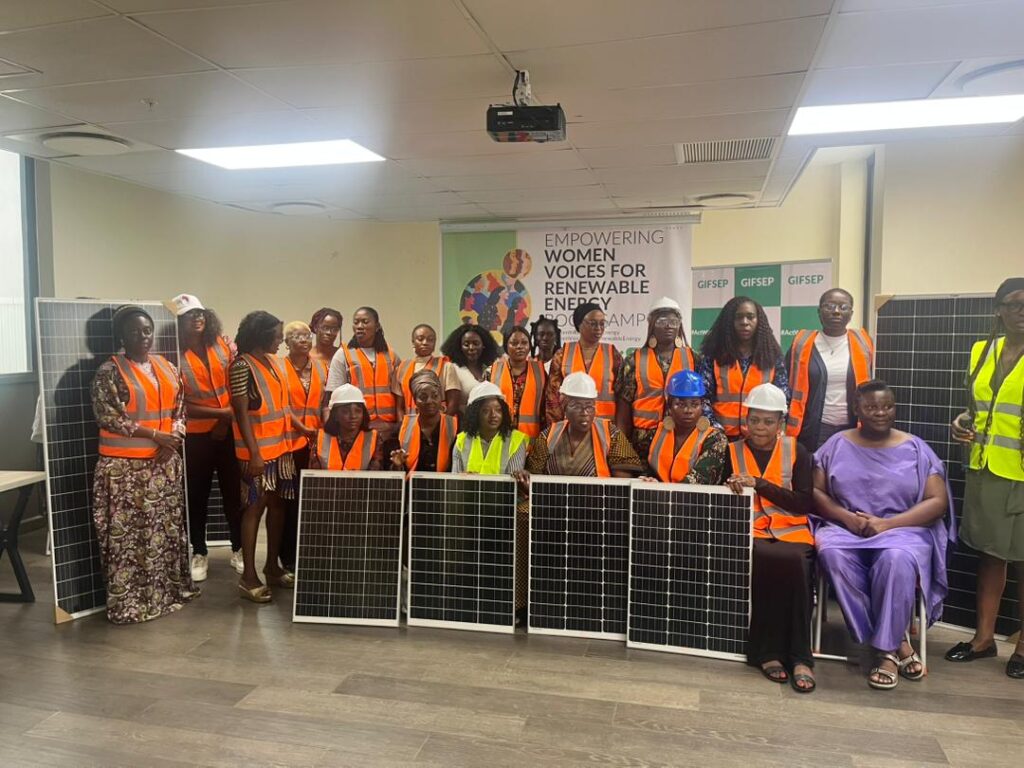
GIFSEP’s recent Women for Renewable Energy Boot Camp, supported by Social Change Nest and UMI Fund, trained women from fossil fuel-impacted communities as solar technicians and clean energy advocates.
Participants received hands-on instruction in solar installation, maintenance, and community education, equipping them to lead clean energy adoption in their localities.
Speaking at the event, Dr. Michael Terungwa David emphasized the urgent need for a just energy transition in Nigeria, calling on governments, partners, and the private sector to support women-led renewable energy initiatives. He stressed that access to clean energy is a human right and key to equity, health, and opportunity.
“As the world prepares for COP30, GIFSEP calls on government agencies, development partners, and the private sector to invest in women-led renewable energy solutions and scale up climate and adaptation finance that directly reaches local communities. Energy is not just power, it’s health, education, and opportunity.
World leaders must remember that renewable energy access is not charity; it’s a human right. A just energy transition in Nigeria must prioritize equity, inclusiveness, and community ownership ensuring that no one, especially women and the poor, is left behind. Together, with women, we can power Nigeria’s future with clean energy, justice, and hope.’”
Dr. David also revealed that GIFSEP has launched the Women Voices for Renewable Energy in Nigeria initiative, training women from fossil fuel–impacted communities as solar technicians and clean energy advocates. The program equips participants with practical skills to transform their communities.
He further stated “Recognizing this gap, GIFSEP has taken proactive steps to empower women as key drivers of Nigeria’s energy transition through the Women Voices for Renewable Energy in Nigeria initiative with support from Social Change Nest and UMI Fund. Over the past three days, we held a Women for Renewable Energy Boot Camp, where we trained women and girls from fossil fuel–impacted communities to become solar technicians and clean energy advocates.
Through hands-on sessions and mentorship, participants gained practical skills in solar installation, maintenance, and community energy education, preparing them to return to their communities as both practitioners and change agents for renewable energy adoption.’” He stated .
He further disclosed Nigeria’s dependence on oil, gas, and coal, particularly in the Niger Delta and North Central regions, continues to fuel greenhouse gas emissions, air and water pollution, and severe environmental degradation.
“Nigeria stands at a crossroads. The country’s dependence on oil, gas, and coal particularly in the Niger Delta and North Central regions continues to fuel greenhouse gas emissions, air and water pollution, and severe environmental degradation. Gas flaring and fossil fuel combustion release significant amounts of methane and carbon dioxide, driving both climate change and environmental injustice in host communities.”
He emphasized that Nigeria Despite being Africa’s largest economy, over 85 million Nigerians more than 40% of the population still lack electricity, keeping many trapped in cycles of poverty and limiting economic development.
“Despite being Africa’s largest economy, over 85 million Nigerians more than 40% of the population still lack access to electricity. This persistent energy poverty stifles economic development, worsens inequality, and keeps millions trapped in cycles of hardship.”
Women and girls are disproportionately affected by energy poverty. Traditional fuels like firewood and kerosene expose them to health risks and reduce opportunities for education and income generation.
“Families across rural Nigeria continue to depend on kerosene, firewood, and diesel generators options that are expensive, unsafe, and harmful to human health and the environment. The consequences are especially severe for women and girls, who spend hours fetching firewood and are exposed to dangerous indoor smoke, losing valuable time for education, income generation, and rest.”he added.
Doorcas Nicanor, Team Lead of Women Voices for Renewable Energy, introduced the women participants and highlighted the importance of energy access as a human right for communities, homes, schools, and health facilities.
“Energy access is not charity, it is a human right ,it is renewable energy for our small scale businesses.” She stated .
Juliat Ooja Okoh, Coordinator of Owukpa Women in Training, spoke on the challenges women face in coal-impacted communities like Owukpa and Awo, emphasizing energy deprivation and the empowering effect of the boot camp.
“For us, renewable energy is no longer charity, it’s our right lending our voices to the issues of renewable energy is going to make the world know what women are going through.”she added.
Amanie Stella, Executive Director of Women and Youth Affairs (SWAYA), highlighted the Niger Delta’s oil exploitation, environmental degradation, and energy poverty, calling for climate and energy justice for women and their communities.
“This boot camp has given us the opportunity as women to demand climate justice ,it will be nice if women have clean energy in their homes so their children can read at night.”
Rejoice Asoloko, a member of Brum Brum Community, addressed the poverty and insecurity in mineral-rich areas like Asraigon, noting that renewable energy access can empower women and improve community development.
“This boot camp is an eye opener,it shows the need for women to get involved in renewable energy and have access to it.”
Best Nbani of Lekeh Development Foundation, representing youth from the Niger Delta, called on multinational oil companies like Shell to remediate environmental damage in Oguni, linking energy access to justice and environmental restoration ahead of COP30.
“Shell should come and clean up Oguni land ,Shell should remediate, restore, and repair.” She added.
GIFSEP Empowers Women to Champion Renewable Energy in Nigeria


Group demands zoning of Gombe Central Senatorial seat to Yamaltu/Deba
A sociocultural group under the auspices of Nyimatli Development Association (NDA) has demanded that the 2027 senatorial seat of Gombe Central be zoned to Yamaltu Deba Local Government Area of the State.
Speaking at a news conference on Monday in Gombe, Mr Emmanuel Usman, the secretary of the group in the company of other executive members said the demand was from the entire people of Yamaltu Deba LGA.
Usman said the demand was a necessary step for equity, unity, justice and inclusiveness.
He stated that since Gombe Central has two Local Government Areas of Akko and Yamaltu Deba and Akko has held the seat for 16 years, zoning it to Yamaltu Deba would ensure parity and correct the zoning imbalance.
“Akko has held the seat for too long and it is our turn to ensure equitable representation; this is the message from the Tera people and the people of Yamaltu Deba.
“The people of Yamaltu Deba LGA are concerned about the issue of representation at the National Assembly particularly at the Senate.
“Yamaltu Deba is in Gombe Central Senatorial District and the district is owned by Akko and Yamaltu Deba and by extension this seat should go round between the two LGAs in the zone.
“When we returned into the present democratic era, the first senator was from Akko who served for four years and then it returned to Yamaltu Deba, for another four years.
“Until it came to the time when Senator Danjuma Goje, from Akko became senator and he has served four consecutive terms that is for 16 years, without it being returned to Yamaltu Deba.
“We feel as a people if we own this seat collectively, equity and justice should have been the right thing and if Akko has enjoyed 16 years, it should now be returned to Yamaltu Deba,” he said.
Usman said that the people of Yamaltu Deba were already feeling maginalised not because the current senator Goje lacked competence or representation, but because they have been denied the right to represent the district.
He said the LGA has a lot of competent politicians and technocrats who could effectively represent the Senatorial District and fast track development.
Usman pleaded with Goje not to contest the 2027 senatorial seat but allow Yamaltu Deba in the spirit of “our unwritten consensus” for turn taking in representation.
“We have supported Goje, voted for him and given him the platform to lead, it is now time for him to return the favour and step aside for others from Yamaltu Deba to occupy the senate seat.”
He also appealed to Gov Inuwa Yahaya of Gombe State as the party leader of the All Progressives Congress (APC) in the state to listen to their plea towards ensuring fairness, inclusion and justice.
Group demands zoning of Gombe Central Senatorial seat to Yamaltu/Deba
Eight aspirants eye Governor Buni’s seat in Yobe
By: Yahaya Wakili
As 2027 general elections are approaching, over 8 aspirants from the three senatorial districts of Yobe state are jostling for the governorship ticket of the All Progressives Congress (APC) in the 2027 general elections.
Notably among them are the current Secretary to the Yobe State Government and the longest SSG in Northeastern Nigeria, Alhaji Baba Mallam Wali (BMW) mni; the former Senate President of the Federal Republic of Nigeria and the longest member at the National Assembly since 1999 up to date and the current Senator for the Yobe North Senatorial District, Senator Ahmed Ibrahim Lawan, GCON (SAIL), Sardaunan Bade; and Senator Mohammed Ibrahim Bomai (MIB), two-term Senator for the Yobe South Senatorial District and Madakin Fika Emirate Council.
Others notable among them include Senator Musa Mustapha (COOLERS), current Senator of the Yobe East Senatorial District; Engr. Abubakar D. Aliyu, former Deputy Governor of Yobe State and former Minister of Power and Jarman of the Pataskum Emirate Council; and Kashim Musa Tumsah, a lawyer and diplomat, and hosts of others. The All Progressives Congress (APC) has been ruling the state since the return of democracy in 1999 or since the creation of the state. Muhammad Abba, a political analyst in the state, revealed that we are advising the party stakeholders in the state that if they want the party to continue ruling the state, they should adopt the rotation or zoning formula so that every senatorial district will benefit from the governorship seat in the state.
Dr. Garba Adamu, also a political analyst in the state, said rotation or zoning is the best option for the APC in the state, adding that since the creation of the state, Zone A, or the Yobe East Senatorial District, for a long time has held the power or has produced the governor, and the Yobe South Senatorial District has produced only one governor, Mamman B. Ali, who spent only 18 months in office before he died. But in the Yobe North Senatorial District, Zone C, they never produce anything else, neither the governor nor the deputy; they never get the opportunity or the chance.
He added that, but this time around if the party wants to win the election easily without facing any challenges from the opposition party, they should reintroduce the zoning system because it will encourage the electorates to come out en masse to vote for the party, especially from Zone C, because they picked its son to be the party candidate. However, he said the best candidate from the zone, who would win the election 100%, is Alhaji Baba Mallam Wali (BMW), the current secretary to the state government; he has the capacity, and he has the experience to handle the affairs of the state because of his long experience in administration.
According to him, the election of Baba Mallam Wali as the fifth democratically elected governor of Yobe State will steady impactful walks through the corridors of power at both local and state levels. He is a man blessed with a character of humility, sympathy, and accessibility and a genius in letting go of what rightfully and lawfully belongs to him for peace to reign. However, BMW’s plan is to continue building on what they call the “Renewed Hope and Vision of Governor Mai Mala Buni and the legacy of His Excellency, Senator Ibrahim Geidam,” aimed at delivering a better life for residents of Yobe State.
“Baba Mallam Wali’s agenda is anchored on People-Oriented Development (POD), a strategy designed to ensure that government decisions directly continue to improve the daily lives of citizens. Alhaji Idris Musa, also a political analyst in the state, reiterates his call to the APC-led administration in Yobe State to adopt the rotation formula aimed to balance its political equations, adding that if care is not carefully taken in Yobe politics this time and if they fail to implement the zoning formula, they will face the consequences because likely the opposition party will win the election, because the two senatorial zones will react, especially Zone C and Zone B.
Zone C deserved to pick the governorship ticket of Yobe State in 2027, and if there is fairness, equity, and justice in the 2027 election, then from Zone C, the current Secretary to the State Government, Alhaji Baba Mallam Wali MNI, is capable and has the capacity to hold the ticket, and he will deliver, inshallah.
Eight aspirants eye Governor Buni’s seat in Yobe
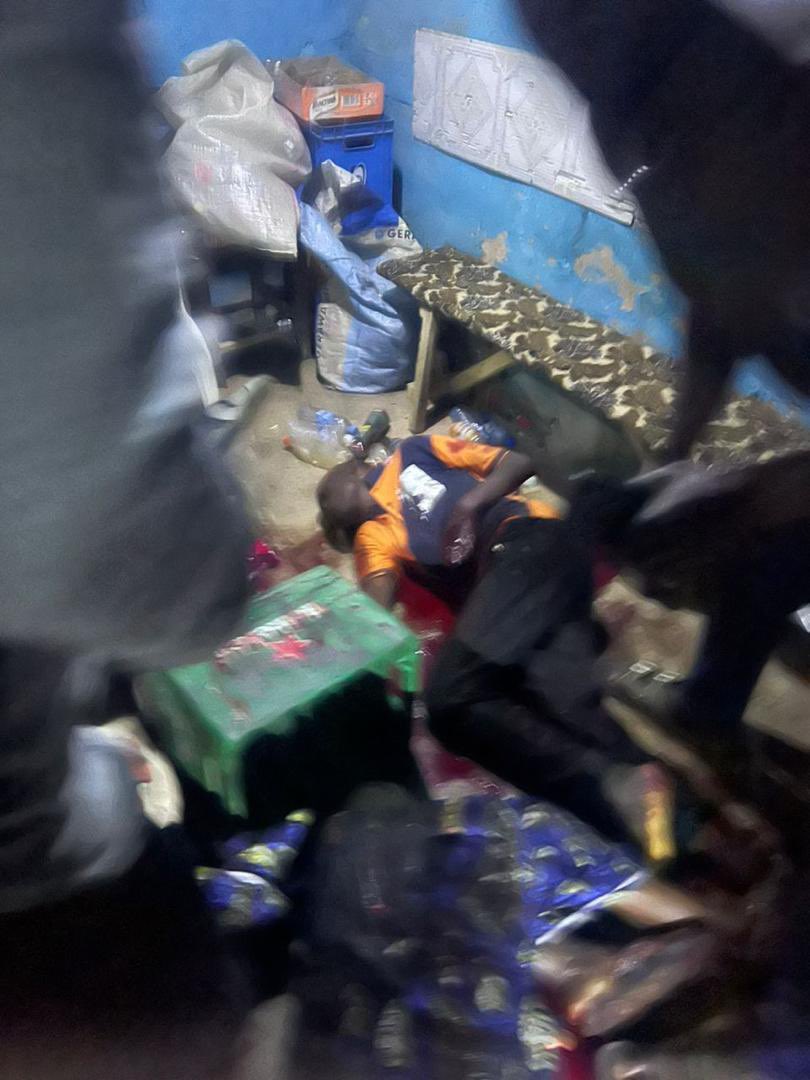
Reprisal attack leaves two dead as plateau govt imposes curfew in Jos
By: Zagazola Makama
A reprisal attack has claimed the lives of two persons in Jos North Local Government Area of Plateau State, following an earlier shooting incident along the Jos–Bauchi highway.
A security source said the incident occurred on March 29 at Angwan Rukuba junction, where residents allegedly carried out retaliatory attacks on passersby after a morning assault by gunmen.
According to the source, the initial attack, which occurred at about 7:30 a.m., involved assailants who drove on a vehicle and opened fire on commuters, killing several persons and injuring others before fleeing the scene.
Security sources blamed the attack on cultist, while some blame it on the fulani bandits, sone said they are Boko Haram while some maintain that the attackers were some criminal elements because they fled in a vehicle.
Sources however said that in the aftermath of the shooting, some aggrieved residents reportedly attacked unsuspecting passersby on the highway, resulting in the death of two persons,” the source said.
He added that the situation created heightened tension in the area, with fears of further escalation.
The situation further compounded after a Foreigner went to the scene of the accident to demonstrate and threatened to President Bola Ahmed Tinubu, saying will regret what he was doing for not admitting Christian Genocide.
The Plateau State Government subsequently imposed an immediate 48-hour curfew to restore calm and prevent additional reprisal attacks.
The source said casualties from the incidents had been evacuated to the Jos University Teaching Hospital (JUTH), while security agencies had commenced investigations to identify and apprehend those responsible.
He noted that no arrests had been made as of the time of filing this report.
The source further stressed the need for sustained security presence and community engagement to de-escalate tensions and prevent a breakdown of law and order.
Security agencies have also intensified patrols and surveillance in the area, as efforts continue to restore normalcy and ensure the safety of residents.
Reprisal attack leaves two dead as plateau govt imposes curfew in Jos

Group demands zoning of Gombe Central Senatorial seat to Yamaltu/Deba

Eight aspirants eye Governor Buni’s seat in Yobe

Reprisal attack leaves two dead as plateau govt imposes curfew in Jos

Roger Federer’s Shock as DNA Results Reveal Myla and Charlene Are Not His Biological Children

THE PLIGHT OF FARIDA

FAILED COUP IN BURKINA FASO: HOW TRAORÉ NARROWLY ESCAPED ASSASSINATION PLOT AMID FOREIGN INTERFERENCE CLAIMS
-
 News2 years ago
Roger Federer’s Shock as DNA Results Reveal Myla and Charlene Are Not His Biological Children
-
Opinions4 years ago
THE PLIGHT OF FARIDA
-
 News11 months ago
FAILED COUP IN BURKINA FASO: HOW TRAORÉ NARROWLY ESCAPED ASSASSINATION PLOT AMID FOREIGN INTERFERENCE CLAIMS
-

 News2 years ago
EYN: Rev. Billi, Distortion of History, and The Living Tamarind Tree
-
 Opinions4 years ago
POLICE CHARGE ROOMS, A MINTING PRESS
-

 ACADEMICS2 years ago
A History of Biu” (2015) and The Lingering Bura-Pabir Question (1)
-

 Columns2 years ago
Army University Biu: There is certain interest, but certainly not from Borno.
-

 Opinions2 years ago
Tinubu,Shettima: The epidemic of economic, insecurity in Nigeria
