
News
Gombe Govt. prioritises economic growth, job creation in 2026 budget

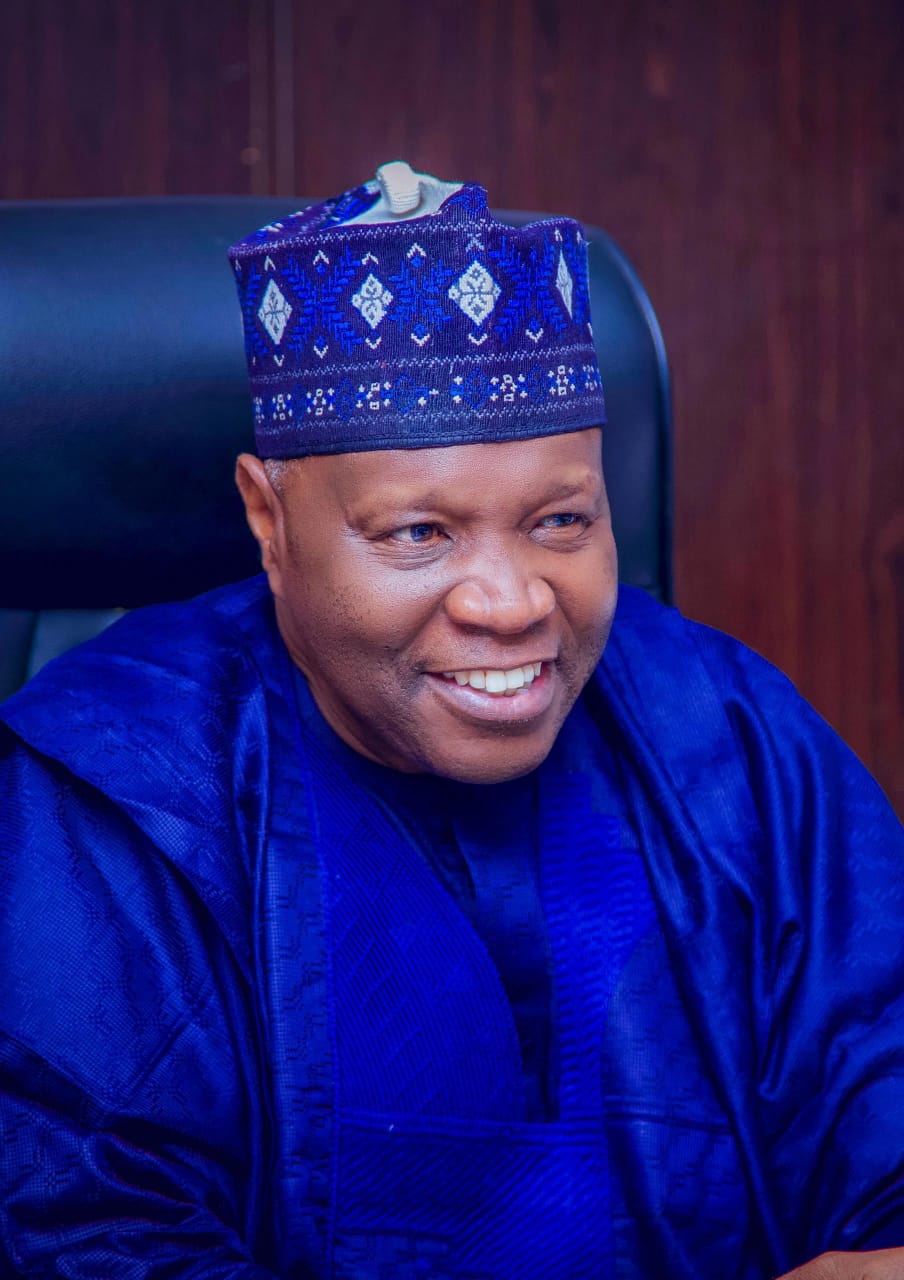
Gombe Govt. prioritises economic growth, job creation in 2026 budget
Gov. Inuwa Yahaya of Gombe State, says his administration will prioritise economic growth, job creation and social welfare in 2026 budget.
Yahaya, who was represented by his deputy, Manassah Jatau, stated this on Thursday in Gombe, during the inauguration of a one-day citizens’ engagement on the 2026 budget.
He said the state government would increase investments in critical sectors and focus on consolidating ongoing reforms in 2026.
The governor said that his administration had made remarkable progress in areas such as fiscal responsibility, budget discipline, and public financial management reforms over the years.
According to Yahaya, the state is being ranked among the top states in Nigeria in transparency and ease of doing business in view of his administration’s progress.
“As we prepare the 2026 budget, our focus will remain on consolidating ongoing reforms and deepening investments in critical sectors that drive economic growth, job creation and social welfare.
“We are also committed to aligning our budget priorities with the State Development Plan and Nigeria’s National Fevelopment framework, as well as global commitments like the Sustainable Development Goals (SDGs),” he said.
On the citizens’ engagements, Yahaya said the forum was a demonstration of his administration’s firm belief that good governance must be participatory, inclusive, relevant and responsive to the desire and priorities of the people.
“As a government that values transparency and accountability, we recognise that an effective budget is not merely a financial document.
“It is the roadmap for delivering the aspirations of our people and a reflection of our collective priorities as a state,” he said.
Yahaya assured that his administration remained resolute in promoting fiscal prudence, expanding the revenue base, adding that, “every naira spent delivers maximum value to the people of Gombe State.”
Yahaya urged citizens to contribute meaningfully to the design of the 2026 fiscal plan, stressing that their inputs would help shape decisions on how scarce public resources would be utilised.
Mr Salihu Baba-Alkali, Commissioner for Budget and Economic Planning, reiterated government’s commitment to foster transparency, inclusiveness and accountability in budgeting process.
Also, Muhammad Magaji, Commissioner for Finance and Economic Development, said the engagement had given voice to the people in the state’s development process.
Magaji said the engagement played a major role in strengthening partnership between government and the people.
“When we work together, we can create budget that not only meets the immediate needs of the population but also lays a foundation for a prosperous and resilient Gombe State in years to come,” he said.
Gombe Govt. prioritises economic growth, job creation in 2026 budget


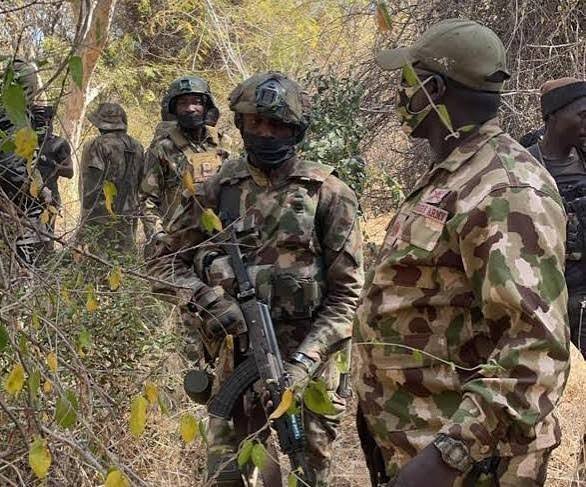
Troops neutralise eight terrorists in failed ambush operation in Borno
By: Zagazola Makama
Troops of 21 Special Armoured Brigade (21 SAB), in collaboration with Civilian Joint Task Force (CJTF) and hybrid forces, have neutralised eight suspected terrorists during an ambush operation in Bama Local Government Area of Borno.
A military source told Zagazola Makama that the operation was carried out at about 2:06 a.m. on April 1 around the Gadangari axis, behind Government Girls Secondary School (GGSS), Bama.
The source said the troops conducted a planned ambush targeting suspected Boko Haram terrorists and their logistics collaborators operating around the area.
“While lying in wait, the troops intercepted terrorists’ collaborators and logistics suppliers moving towards Yale axis,” the source said.
He added that the troops engaged the targets in a brief exchange of fire, resulting in the neutralisation of eight terrorists, while others escaped with possible gunshot wounds.
The source further noted that follow-up operations were ongoing to track fleeing elements and dismantle their logistics networks in the area.
He assured that the situation remained under control, with troops maintaining aggressive posture in the general area.
Troops neutralise eight terrorists in failed ambush operation in Borno
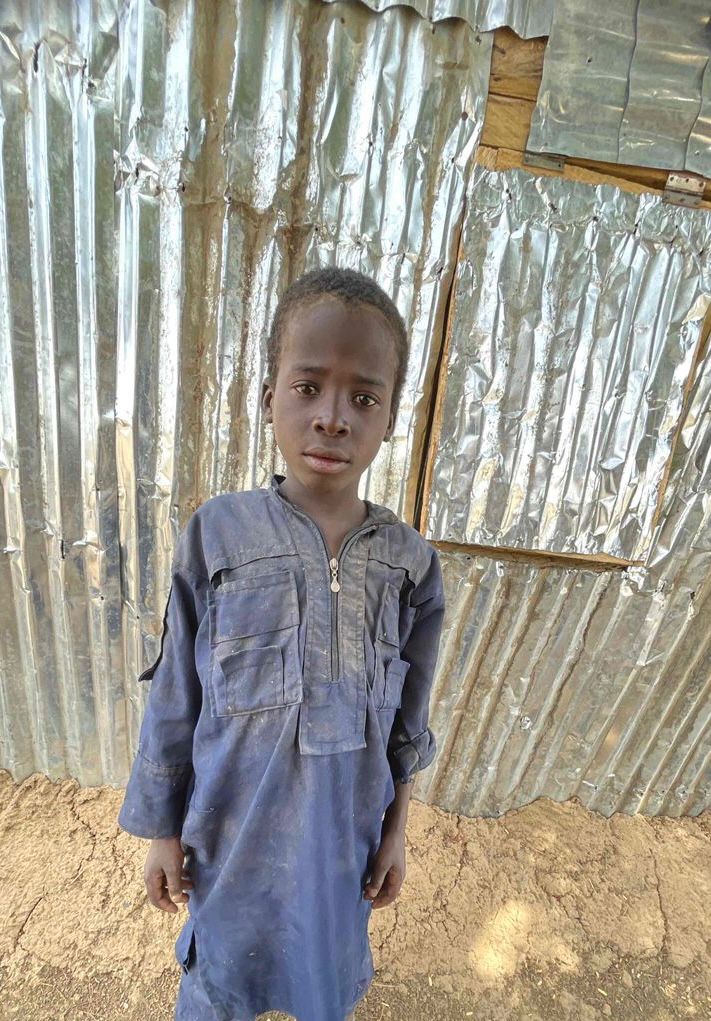
Troops rescue two teenage boys escaping suspected terrorist camp in Borno
By: Zagazola Makama
Troops of 25 Brigade, operating from Forward Operating Base (FOB) Azir in Damboa Local Government Area of Borno State, have rescued two teenage boys who reportedly escaped from a suspected terrorist camp in Dusula.
A military source told Zagazola Makama that the incident occurred at about 10:00 a.m. on April 1 after the village head of Azir alerted troops to the arrival of two minors in the community under suspicious circumstances.
The source said troops immediately mobilised to the village and apprehended the boys, who were later taken to the Forward Operating Base for interrogation.
He identified the teenagers as Abuna Yammadu Kala, 15, and Abulkaka Yammadu Kala, 10.
According to preliminary interrogation, the boys reportedly disclosed that they recently escaped from a suspected terrorist camp located in Dusula.
The source said the children stated that they fled the camp due to harsh conditions and fear for their lives.
He added that the minors have been moved for profiling and further necessary action.
Troops rescue two teenage boys escaping suspected terrorist camp in Borno
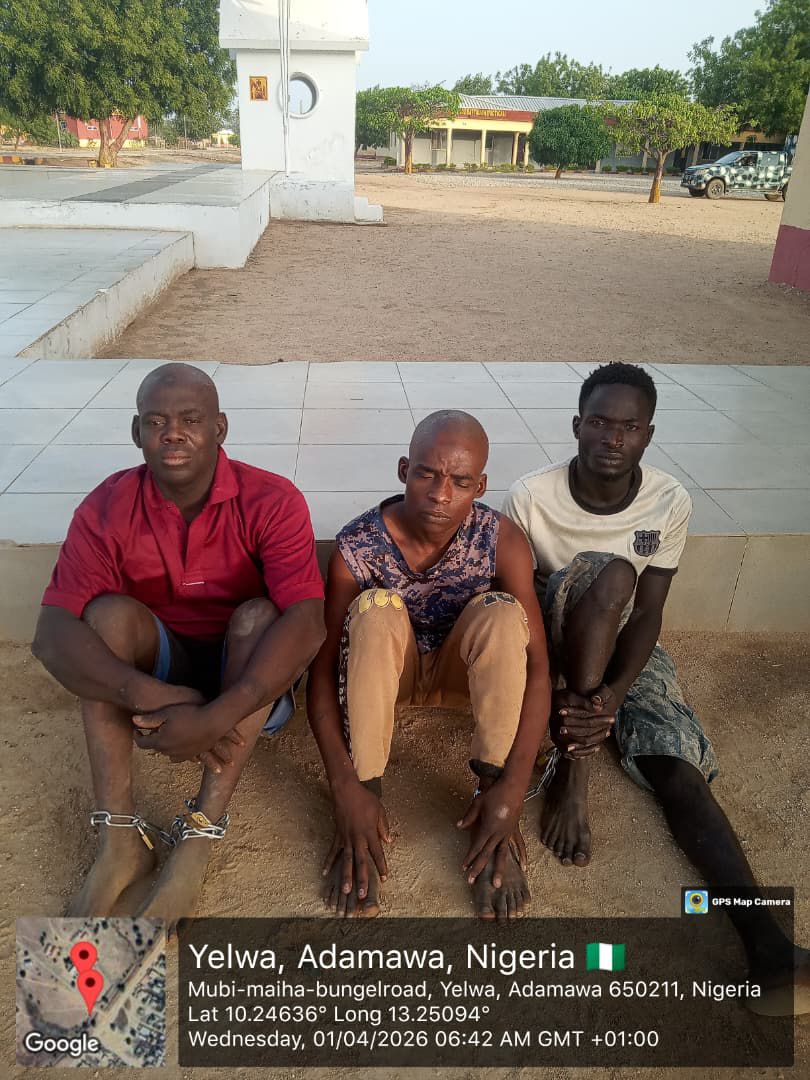
Troops arrest three suspected terrorists in Adamawa, foil alleged attack plan on Mubi barracks
By: Zagazola Makama
Troops of 232 Battalion (Tactical), in collaboration with professional hunters, have arrested three suspected terrorists during a cordon-and-search operation in Mubi North Local Government Area of Adamawa State.
A military source told Zagazola Makama that the operation was conducted at about 1:15 a.m. on April 1 in Angwan Rami general area based on credible human intelligence on terrorist activities.
The source said the troops apprehended three suspects identified as Ado John, 27; Umaru Yunusa, 22; and Alhaji Saleh Mamman Ibrahim, 44.
He added that preliminary investigation confirmed the suspects to be members of terrorist elements operating in the area.
According to him, one of the suspects, Alhaji Saleh Mamman Ibrahim, who was previously documented as a repentant terrorist, allegedly confessed to participating in the attack on Ngoshe in Borno State.
The source further disclosed that the suspect also admitted to acting as a double agent and allegedly planning an attack on Mubi barracks with the intention of carting away weapons.
He said the suspects are currently in the custody of 232 Battalion for further investigation and intelligence exploitation.
He reaffirmed the commitment of security forces to sustain ongoing operations aimed at denying terrorists freedom of action in the North-East.
Troops arrest three suspected terrorists in Adamawa, foil alleged attack plan on Mubi barracks

Troops neutralise eight terrorists in failed ambush operation in Borno

Troops rescue two teenage boys escaping suspected terrorist camp in Borno

Troops arrest three suspected terrorists in Adamawa, foil alleged attack plan on Mubi barracks

Roger Federer’s Shock as DNA Results Reveal Myla and Charlene Are Not His Biological Children

THE PLIGHT OF FARIDA

FAILED COUP IN BURKINA FASO: HOW TRAORÉ NARROWLY ESCAPED ASSASSINATION PLOT AMID FOREIGN INTERFERENCE CLAIMS
-
 News2 years ago
Roger Federer’s Shock as DNA Results Reveal Myla and Charlene Are Not His Biological Children
-
Opinions4 years ago
THE PLIGHT OF FARIDA
-
 News12 months ago
FAILED COUP IN BURKINA FASO: HOW TRAORÉ NARROWLY ESCAPED ASSASSINATION PLOT AMID FOREIGN INTERFERENCE CLAIMS
-

 News2 years ago
EYN: Rev. Billi, Distortion of History, and The Living Tamarind Tree
-
 Opinions4 years ago
POLICE CHARGE ROOMS, A MINTING PRESS
-

 ACADEMICS2 years ago
A History of Biu” (2015) and The Lingering Bura-Pabir Question (1)
-

 Columns2 years ago
Army University Biu: There is certain interest, but certainly not from Borno.
-

 Opinions2 years ago
Tinubu,Shettima: The epidemic of economic, insecurity in Nigeria
