
News
The resurgence of coups and the uncertain future of democracy in Africa

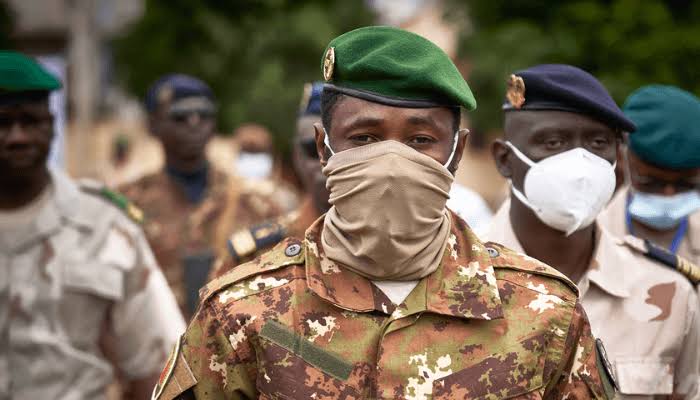
The resurgence of coups and the uncertain future of democracy in Africa
By: Zagazola Makama
The growing wave of political instability across Africa underscores the continent’s fragile democratic foundations and the deepening crisis of governance, legitimacy, and public trust. The recent developments in Madagascar and Cameroon illustrate how decades of poor governance, corruption, and military interference have converged to threaten democratic stability across the region.
On 11 October 2025, Madagascar descended once again into military rule following a coup led by Colonel Michael Randriannirina, commander of the elite Corps d’Administration des Personnel et des Services des Armées Terrestres (CAPSAT). The coup, staged in the capital city, Antananarivo, came after weeks of public protests and defections within the military, with demands for President Andry Rajoelina’s resignation.
As in previous interventions, the junta cited corruption, economic hardship, and poor service delivery particularly in electricity and water supply as justifications for their action. Rajoelina’s whereabouts remain uncertain amid reports that he fled aboard a French military plane. Despite the country’s top court directing the junta to organize elections within 60 days, Colonel Michael has declared a two-year transition period before elections are held.
The coup has drawn cautious reactions from the international community. The African Union, United Nations, and Western governments have called for restraint, while France suspended flights to Madagascar and the United States advised its citizens to shelter in place. The crisis signals the re-emergence of military dominance in Malagasy politics, reminiscent of the 2009 coup that first brought Rajoelina to power, raising fears that Colonel Michael’s youthful leadership could easily devolve into authoritarian rule.
Meanwhile, Cameroon’s 12 October 2025 presidential election has deepened tensions in an already volatile polity. President Paul Biya now seeking an unprecedented eighth term faces mounting opposition, with rival candidate Issa Tchiroma Bakary declaring victory and urging Biya to concede. The ruling party, RDPC, has dismissed such declarations, emphasizing that only the Constitutional Council can certify results. Minister of Territorial Administration, Paul Atanga Nji, further warned that any parallel announcement of results would amount to high treason.
The polls were marred by widespread allegations of vote-buying, irregularities, and intimidation. The RDPC’s sweeping victory in earlier senatorial elections reflected its entrenched control over state institutions. Compounding this is the deepening Anglophone crisis, where fighting between government forces and separatist groups continues to displace thousands. Civil society restrictions, NGO suspensions, and arrests of human rights defenders have further undermined democratic space, raising questions about the credibility and transparency of the entire process.
The election’s outcome will significantly shape Cameroon’s political trajectory. With Biya’s advanced age and the regime’s dependence on coercive control, growing frustrations among the youth and opposition may lead to renewed protests or even attempts at military intervention.
These crises in Madagascar and Cameroon unfold within a broader continental pattern of democratic decline. The failure to dismantle existing juntas in Niger, Mali, and Burkina Faso combined with the unresolved war in Sudan has emboldened new actors to seize power through unconstitutional means. Eight military regimes now govern across Africa, signaling a regression to the pre-2000 era of chronic coups.
The underlying causes remain consistent: corruption, poverty, insecurity, and elite manipulation of institutions. Militaries across the region continue to view themselves as the ultimate guardians of national stability, stepping in where civilian administrations appear weak or compromised. The inconsistent and often selective responses of regional bodies and international partners have further undermined deterrence, emboldening coup plotters and deepening cynicism toward global democratic norms.
From Madagascar and Cameroon to the recent foiled coup plot in Nigeria, where the Defence Headquarters (DHQ) under the leadership of the then Chief of Defence Staff, General Christopher Musa, successfully foiled a deadly violent coup plot aimed at toppling the federal government and democracy. Thanks to the military.
The pattern of instability reveals how corruption, weak institutions, and elite power struggles continue to erode democratic norms and threaten regional stability. Democratic governance and human rights across Africa are now at a crossroads. The continent’s modest gains over the last two decades are being rapidly reversed, with state fragility and authoritarian resurgence threatening regional peace and development.
To arrest this decline, African leaders must prioritize good governance, transparency, and inclusive economic reform to rebuild public trust. Regional organizations like the African Union and ECOWAS must adopt consistent, non-selective sanctions against unconstitutional regimes, while international partners should focus on strengthening democratic institutions rather than individual rulers.
The future of democracy in Madagascar and Cameroonian and indeed across sub-Saharan Africa depends on leaders’ willingness to uphold constitutional order, respect term limits, and deliver tangible socio-economic progress. Only through sustained political accountability and people-centered governance can Africa break the recurring cycle of coups and restore faith in democracy.
Zagazola Makama is a Counter Insurgency Expert and Security Analyst in the Lake Chad
End


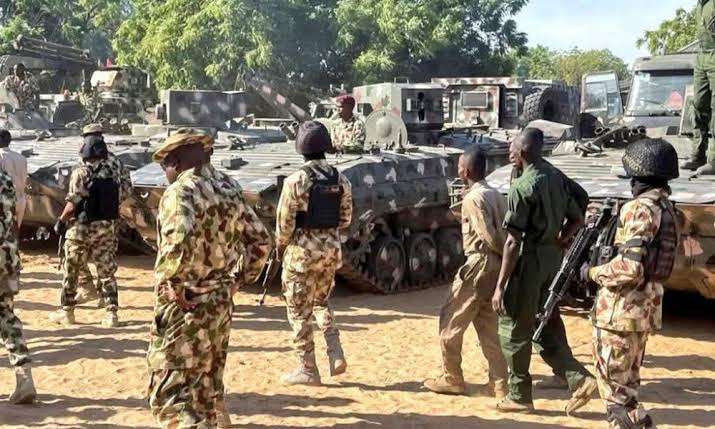
Troops arrest suspected foreign national along Azir–Damboa road in Borno
By Zagazola Makama
Troops of 25 Brigade, in collaboration with the Civilian Joint Task Force (CJTF), have arrested a suspected foreign national along the Azir–Damboa road in Borno State.
Military sources told Zagazola Makama that the suspect was apprehended at about 5:55 p.m. on Sept. 5 following a tip-off from local residents about the movement of a suspected foreigner along the route.
During preliminary questioning, the suspect reportedly identified himself as a national of the Republic of Cameroon.
He told the troops that he entered Nigeria through Taraba State and was travelling towards Niger State in search of artisanal work but lost his way.
The suspect remains in military custody for further investigation and necessary action, while authorities work to establish his identity, travel history and circumstances surrounding his presence in the area.
Troops arrest suspected foreign national along Azir–Damboa road in Borno
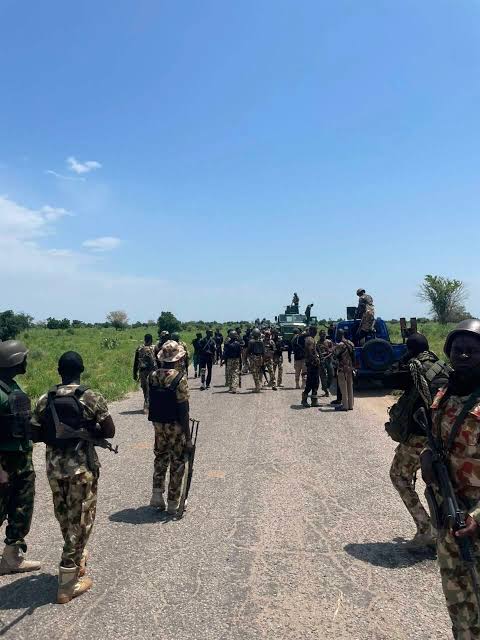
Troops arrest suspected ISWAP member with gunshot wound in Borno
By Zagazola Makama
Troops of 82 Division Task Force Battalion have arrested a suspected ISWAP member who was found loitering around Papa 7 location in Borno State.
Military sources told Zagazola Makama that the suspect was apprehended at about 9:35 a.m. on Sept. 6 while troops were conducting picketing duties in the area.
The suspect was found with a gunshot wound and was taken into custody for questioning.
Preliminary interrogation reportedly indicated that the suspect had descended from Gava in the Mandara Mountains in search of medical attention.
Sources attributed his movement to the effects of sustained military pressure and psychological operations targeting terrorist enclaves in the area.
The suspect remains in military custody for further investigation, while security forces continue operations aimed at degrading terrorist groups and disrupting their activities in the Mandara Mountains.
Troops arrest suspected ISWAP member with gunshot wound in Borno
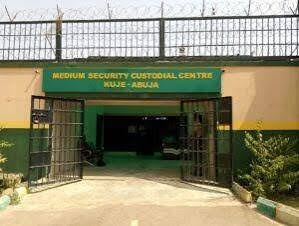
Investigation begins as SNCO dies after shooting incident at Kuje custodial centre
By Zagazola Makama
Authorities have commenced an investigation into a shooting incident involving a senior non-commissioned officer at the Kuje Medium Security Custodial Centre in the Federal Capital Territory.
Sources told Zagazola Makama that the incident occurred at about 9:37 a.m. on Sept. 7 while the personnel was on duty at the facility.
According to the sources, the SNCO fired at his commanding officer, but the shot missed after the officer moved away.
The SNCO subsequently died from a self-inflicted gunshot wound.
The circumstances surrounding the incident remain unclear, and an investigation has been launched to establish what led to the shooting.
The remains of the deceased personnel were evacuated to the University of Abuja Teaching Hospital (UATH) for further action.
Authorities are expected to provide additional details as the investigation progresses.
Investigation begins as SNCO dies after shooting incident at Kuje custodial centre

Troops arrest suspected foreign national along Azir–Damboa road in Borno

Troops arrest suspected ISWAP member with gunshot wound in Borno

Investigation begins as SNCO dies after shooting incident at Kuje custodial centre

Roger Federer’s Shock as DNA Results Reveal Myla and Charlene Are Not His Biological Children

THE PLIGHT OF FARIDA

FAILED COUP IN BURKINA FASO: HOW TRAORÉ NARROWLY ESCAPED ASSASSINATION PLOT AMID FOREIGN INTERFERENCE CLAIMS
-
 News2 years ago
Roger Federer’s Shock as DNA Results Reveal Myla and Charlene Are Not His Biological Children
-
Opinions5 years ago
THE PLIGHT OF FARIDA
-
 News1 year ago
FAILED COUP IN BURKINA FASO: HOW TRAORÉ NARROWLY ESCAPED ASSASSINATION PLOT AMID FOREIGN INTERFERENCE CLAIMS
-

 News2 years ago
EYN: Rev. Billi, Distortion of History, and The Living Tamarind Tree
-
 Opinions5 years ago
POLICE CHARGE ROOMS, A MINTING PRESS
-

 ACADEMICS3 years ago
A History of Biu” (2015) and The Lingering Bura-Pabir Question (1)
-

 Columns3 years ago
Army University Biu: There is certain interest, but certainly not from Borno.
-

 Politics1 year ago
2027: Why Hon. Midala Balami Must Go, as Youths in Hawul and Asikira/Uba Federal Constituency Reject ₦500,000 as Sallah Gift
