
News
Government will not approve any request that is not captured in the budget – Kadafur


By: Bodunrin Kayode
The Deputy Governor of Borno state Umar Kadafur has said that the Government will not approve any request that is not captured in the budget.
He said this during a town hall meeting held recently by the ministry of budget and planning to listen to stakeholders and take inputs against the 2025 budget which is already being tinkered by the budget ministry.
Kadafur told the gathering of stake holders recently in Maiduguri that the government was concerned about about fiscal transparency adding that the fact that the executive is sticking to these details of precision indicates a high level of fiscal discipline by them.

The Deputy governor urged the tinkers of the budget to be mindful of the 25 year plan of the State in all they do concerning all the critical sectors of the budget.
“I believe this town hall meeting will bring about coordination of transparency into the budget for the good of the people. This is why I wish to use this opportunity to assure you that the state government will adhere strictly to the details of transparency which is needed at this critical time ” said Kadafur.
Commissioner of Budget and planning, Engr Babagana Mallumbe noted in his remarks that the budget for 2025 is going to be a blue print for collective appreciation of the economic challenges affecting the state.
He assured that there would be a very strong emphasis on the improvement of the health care of the people and the proper resettlements of internally displaced people (idps). Who are already in their ancestral local councils but yet to be given homes
Mallumbe called on stakeholders to participate actively in the pre-budget process which he noted would ultimately bring about a robust 2025 fiscal package which would be fulfilling to the people at this critical time when a lot of them are trying to settle down after the unexpected flood in the state capital.
Many stake holders gave their goodwill messages including the Nigerian labour Congress (NLC) who called on the tinkers of the budget to capture their lingering arrears spanning from 2016 to 2020.
They equally called on the ministry to include the issue of training and retraing which is quite critical to them.
Responding to some of the challenges before the budget Ministry, Chief Adviser to the Governor and Coordinator sustainable development, partnership and humanitarian support Dr Mario Mandara said that she will engage the Governor Prof Babagana Zulum to renovate the special school for the disables in the state.
She assured that she will liaise with the head of service to ensure that a sizable number of disabled people who have the right qualifications are employed in the service.
She called on stakeholders to ensure that they submit long term primary issues into the budget even as they consider the 25 year plan of the government aimed at growing the economy when building the budget.
The 2024 budget for Borno State was pegged at 358.7 billion, which was signed into law on January 10, 2024 by Governor Babagana Zulum.
The budget includes: Over N208.4 billon for capital receipts and N150.4 billion for recurrent expenditures.
Government will not approve any request that is not captured in the budget – Kadafur


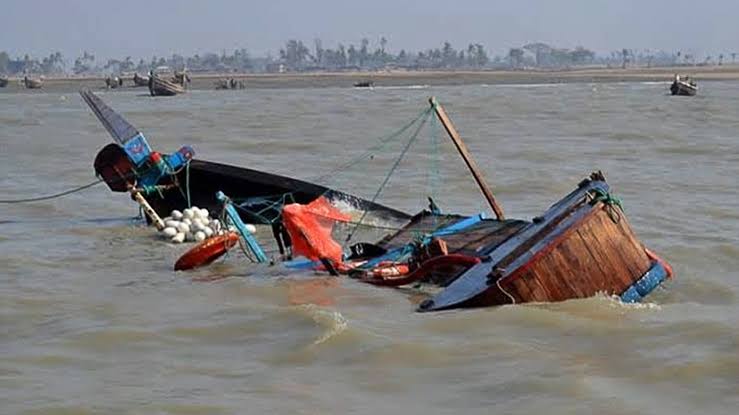
Kula Boat Tragedy: HOMEF Condemns Oil Industry’s Human Cost
By: Michael Mike
The Health of Mother Earth Foundation (HOMEF) has condemned the death of seven people in a boat incident in Kula Kingdom, Akuku-Toru Local Government Area of Rivers State, describing the tragedy as a reminder of the human cost of petroleum extraction in the Niger Delta.
The environmental advocacy group called for urgent action to address the grievances that reportedly triggered the protest preceding the October 20 incident, including an unresolved oil spill, alleged unpaid debts to local vendors and contractors, and perceived neglect of the host community.
The incident occurred amid tensions surrounding a blockade of the Floating Storage and Offloading (FSO) vessel, Anambra Basin, in the waterways of Kula Kingdom, with seven bodies reportedly recovered after a community boat capsized.
In a statement, HOMEF Executive Director, Dr Nnimmo Bassey, said the tragedy exposed the consequences of an extractive economic system that prioritised commercial interests over human lives, community welfare and environmental protection.
“The Kula tragedy exposes the cruelty of an extractive model that places commercial interests above human lives and the wellbeing of communities. No barrels of crude oil are worth a human life,” Bassey said.
He argued that decades of petroleum extraction had left communities in the Niger Delta grappling with oil pollution, damaged fishing grounds, declining livelihoods and threats to food security.
According to him, the tragedy should prompt a fundamental reassessment of an economic model that measures development through oil production and revenue without adequately accounting for its human and ecological consequences.
Bassey said environmental degradation posed a particular threat to communities such as Kula, where fishing and waterways sustain livelihoods and underpin social and economic life.
“Environmental justice cannot be reduced to compensation after damage has occurred. It demands preventing harm, restoring affected environments, respecting community rights and challenging the assumption that nature exists primarily to generate profit,” he said.
The HOMEF director urged oil companies and public institutions to take responsibility for the consequences of activities affecting host communities and the ecosystems on which they depend.
The organisation also warned that when the benefits of resource extraction accrue to a few while local communities bear the environmental and social costs, the resulting grievances could deepen insecurity and expose residents to preventable suffering.
It rejected the treatment of resource-rich communities as sacrifice zones for commercial interests, insisting that residents must not be regarded as obstacles to oil production.
HOMEF called for a shift away from extractive-led development towards an approach that prioritised human dignity, ecological wellbeing and sustainable livelihoods.
It urged the authorities and relevant stakeholders to prevent oil pollution, restore degraded ecosystems, protect fishing grounds and ensure that host communities participated meaningfully in decisions affecting their lands and waterways.
The organisation further stressed the need for measures to safeguard community members during protests and ensure that residents could express grievances over environmental damage and other concerns without being exposed to violence or avoidable danger.
HOMEF expressed solidarity with the bereaved families, survivors and people of Kula Kingdom, saying the deaths should not become another statistic in the history of suffering associated with petroleum extraction in the Niger Delta.
It called on Nigeria to reassess its approach to resource exploitation, arguing that economic development should not come at the expense of human lives and the environment.
“No profit is worth a human life. No resource is more valuable than the people and ecosystems that sustain life,” the organisation said.
Kula Boat Tragedy: HOMEF Condemns Oil Industry’s Human Cost
Nigeria targets 840,000 jobs from climate transition, seeks investment at COP31
…NCCC says climate pledges must translate into projects, businesses and incomes
By: Michael Mike
Nigeria will seek to attract climate investment and unlock up to 840,000 net new jobs by 2060 as it heads to the 31st United Nations Climate Change Conference (COP31), with the National Council on Climate Change (NCCC) insisting that global climate commitments must translate into tangible economic benefits for Nigerians.
The country’s strategy is to convert climate finance pledges into deployable capital, attract investors into energy transition projects and expand opportunities in green industrialisation, carbon markets and emerging green value chains.
The Director-General of the NCCC, Tenioye Majekodunmi said at a pre-COP31 media briefing in Abuja on Thursday that Nigeria would use the conference in Antalya, Türkiye, to demonstrate its readiness to move from climate commitments to implementation, investment and measurable development outcomes.
She said Nigeria had strengthened its climate policy framework through its updated Nationally Determined Contribution, known as NDC 3.0, and its broader climate action and energy transition agenda, but stressed that the real test would be the delivery of results.
“Capital follows certainty,” the Director-General said, explaining that investors needed predictable policies, credible institutions, bankable projects and confidence that the rules would support long-term investments.
Nigeria’s opportunity at COP31, she said, was not merely to present its financing needs but also to showcase viable projects and partnerships through which investors and development partners could participate in the country’s climate transition.
The NCCC outlined a four-stage pathway for turning climate finance into economic benefits: “Dollars. Deals. Deliveries. Dividends.”
She explained that under the framework, finance commitments must translate into investment agreements, signed deals must result in projects delivered on the ground, and those projects must generate jobs, businesses and incomes for Nigerians.
The Director-General said the country’s climate transition must be judged not only by reductions in carbon emissions but also by its contribution to economic growth and improved livelihoods.
“Nigeria’s climate transition will not be measured only in tonnes of carbon avoided. It will be measured in jobs created, businesses built and incomes improved,” the official said.
Nigeria’s Energy Transition Plan estimates about 340,000 net new jobs by 2030, rising to 840,000 by 2060, with opportunities concentrated in power, clean cooking and transport.
The NCCC said the projections underscored the economic potential of climate action, particularly for young Nigerians seeking employment and businesses looking to participate in emerging green industries.
The country will also pursue investment opportunities in green industrialisation, value addition and economic diversification, including those linked to critical minerals and emerging green value chains. It intends to strengthen opportunities under Article 6 of the Paris Agreement, which provides mechanisms for international cooperation on emissions reductions, while maintaining environmental integrity.
She said Nigeria would also advocate stronger access to climate finance and more effective pathways for converting global funding commitments into capital that developing countries can deploy to implement climate projects.
She added that the country would push for a just transition that recognises its development needs and energy-access realities, rather than treating climate action solely as an environmental issue.
The NCCC said Nigeria’s ability to secure these outcomes would depend partly on the preparedness of its negotiators to defend national interests and influence decisions shaping the global climate framework.
“A country that negotiates well captures resources, protects its interests and shapes outcomes. A country that negotiates poorly inherits terms written by others,” the Director-General said.
As part of preparations, Nigeria held a pre-COP31 briefing and negotiators’ capacity-building workshop on October 20, covering multilateral negotiating tracks, climate finance, loss and damage, carbon markets, Article 6 and the New Collective Quantified Goal on Climate Finance.
The workshop also examined the priorities of the Türkiye-Australia COP31 presidency and the Belém-Antalya Just Transition Mechanism.
The council said it had concluded the seventh and eighth UK PACT workshops on enhancing Nigeria’s capacity in global climate negotiations, held from October 26 to 28. The sessions focused on practical negotiation exercises covering the Just Transition Work Programme, the Mitigation Work Programme, climate finance, the Global Goal on Adaptation and Article 6.
Nigeria’s negotiators have also been working to establish their opening positions, potential compromise points and red lines to clarify the country’s objectives and protect its interests during negotiations.
The NCCC said it had continued its structured mentorship programme and introduced the Nigeria Climate Negotiator Network and a digital resource repository to preserve the expertise being developed beyond COP31.
Alongside preparations for the negotiations, the council announced the launch of its annual media training programme to improve journalists’ capacity to report climate change with greater accuracy, depth and context.
The programme will cover not only emissions and environmental impacts but also climate finance, energy transition, carbon markets, adaptation, green industrialisation, jobs and investment.
The Director-General said journalists had an important role in translating complex international negotiations into information Nigerians could understand and use, while connecting global climate decisions to local development needs.
Nigeria will also seek to strengthen Africa’s collective voice in climate negotiations as preparations begin for COP32, which is expected to provide a major platform for the continent’s climate priorities.
The NCCC said Africa’s climate agenda must remain connected to energy access, industrialisation, economic diversification, jobs and investment, while global climate finance mechanisms should provide developing countries with more effective access to funding.
The Director-General said Nigeria was going to COP31 prepared to negotiate, build partnerships and attract investment, with implementation serving as the measure of its climate ambition.
For Nigeria, the challenge will be to turn climate policies and international commitments into viable projects that expand economic opportunities, create jobs and improve livelihoods.
The NCCC said its priority was to ensure that climate finance translated into investment and that investment delivered tangible prosperity for Nigerians.
Nigeria targets 840,000 jobs from climate transition, seeks investment at COP31
UK-funded education programme closes after reaching 2m Nigerian children
…Partners face test of sustaining learning gains as £-backed initiative ends after seven years
By: Michael Mike
More than two million Nigerian children have been reached by a United Kingdom-funded education programme that also supported the training of over 25,000 teachers, raising the stakes for federal and state governments to sustain the learning gains following its closure.
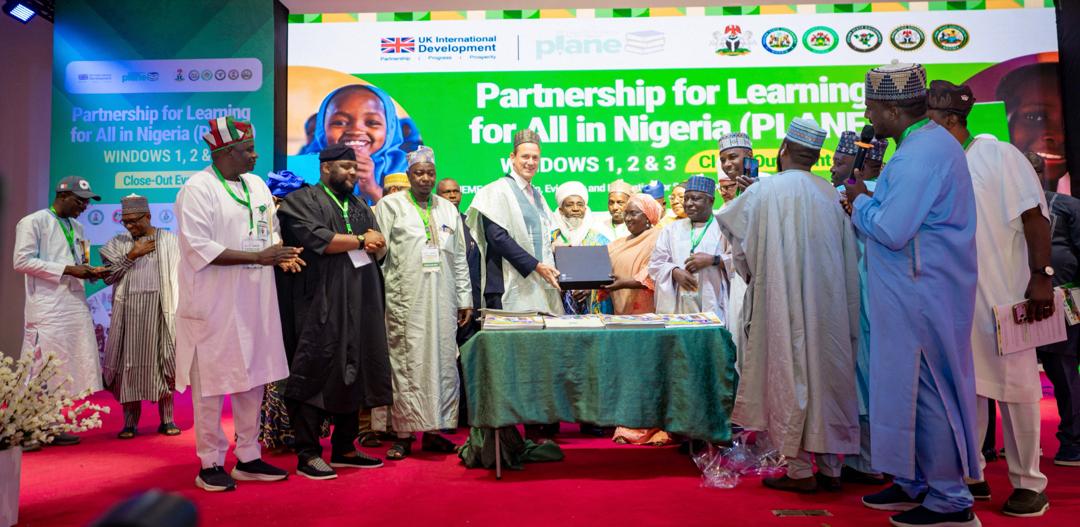
The Partnership for Learning for All in Nigeria (PLANE), which worked to improve foundational literacy and numeracy and strengthen education systems across northern Nigeria, formally ended its programme at a close-out event in Kaduna on Wednesday.
Although the UK and its Nigerian partners celebrated the achievements, the central challenge is whether the government can sustain and expand the interventions after the programme’s closure, particularly in communities where children face barriers to quality education.
British High Commissioner to Nigeria, Pete Vowles, said the programme had demonstrated how collaboration among governments, teachers, communities and development partners could improve children’s access to education and the quality of learning.
“While we are celebrating the achievements of the programme today, the most important question is what happens next,” Vowles said.
He said the UK was encouraged that successful approaches were being adopted and scaled by Nigerian institutions, expressing confidence that the improvements could continue beyond the programme’s lifespan.
“PLANE is closing. The UK’s education partnership with Nigeria is not,” he said.
Funded by the UK and implemented by DAI, UNICEF, Save the Children and consortium partners, PLANE has supported education reform since 2019, working with policymakers and education stakeholders at the federal level and in Kaduna, Kano, Jigawa, Yobe and Borno states.
Its interventions focused on foundational skills, education in emergencies and community-centred initiatives. The programme also supported stronger safeguarding systems to make schools safer for children and generated evidence on approaches capable of improving learning outcomes when implemented at scale.
The closure comes as Nigeria continues to grapple with the challenge of ensuring that children not only enrol in school but also acquire the literacy, numeracy and other foundational skills needed to progress through the education system.
For the governments and institutions involved, the next phase will require sustained funding, stronger implementation capacity and the integration of successful interventions into public education systems.
Kaduna State Deputy Governor, Dr Hadiza Balarabe, who represented Governor Uba Sani at the event, acknowledged the UK government, the Foreign, Commonwealth and Development Office, the British High Commission and the PLANE leadership and implementation teams for their contributions.
She said the programme had worked directly with state officials and communities, including those in remote areas, while strengthening the skills of teachers and public officers.
“You worked in our offices, in our local government areas, and in some of our most remote communities. Often under difficult conditions,” she said.
Balarabe said the programme’s support had helped build capacity over the past seven years, adding that the knowledge and skills acquired would remain with teachers and government officials after its closure.
Head of Development Cooperation at the British High Commission in Nigeria, Cynthia Rowe, said education remained one of the most important investments any country could make in its future.
She said PLANE’s achievements showed what could be accomplished when evidence, innovation and partnerships were aligned around a common objective.
“As the programme closes, we look forward to building on these successes through continued collaboration with government, schools, universities and communities across Nigeria,” Rowe said.
She added that the UK would continue to support opportunities for young Nigerians, from foundational learning in primary schools to higher education and advanced skills development.
As part of the visit, UK representatives also visited the College of Petroleum and Energy Studies in Kaduna, where partnerships between Nigerian institutions and UK universities are helping students develop advanced technical and professional skills.
The partnerships form part of the UK’s wider transnational education agenda, which seeks to strengthen cooperation between Nigerian and British institutions in teaching, research and skills development.
Since 2019, PLANE has worked across federal and state education structures, supporting foundational learning, education in emergencies and community participation in education.
Its reported reach of more than two million children and support for over 25,000 teachers provide a significant measure of its scale. However, the lasting impact will depend on whether the approaches can be maintained, adequately funded and extended to more schools and communities.
The programme’s closure therefore marks not only the end of a development initiative but also a test of institutional ownership: whether the policies, skills and systems developed through external support can continue delivering results under Nigerian leadership.
For millions of children whose futures depend on the quality of their education, the real measure of PLANE’s legacy will be whether better learning continues long after the programme has ended.
UK-funded education programme closes after reaching 2m Nigerian children

Kula Boat Tragedy: HOMEF Condemns Oil Industry’s Human Cost

Coalition Urges Lagos Assembly to Ban GMOs, Cites Health, Environmental Risks

Nigeria targets 840,000 jobs from climate transition, seeks investment at COP31

Roger Federer’s Shock as DNA Results Reveal Myla and Charlene Are Not His Biological Children

THE PLIGHT OF FARIDA

FAILED COUP IN BURKINA FASO: HOW TRAORÉ NARROWLY ESCAPED ASSASSINATION PLOT AMID FOREIGN INTERFERENCE CLAIMS
-
 News3 years ago
Roger Federer’s Shock as DNA Results Reveal Myla and Charlene Are Not His Biological Children
-
Opinions5 years ago
THE PLIGHT OF FARIDA
-
 News2 years ago
FAILED COUP IN BURKINA FASO: HOW TRAORÉ NARROWLY ESCAPED ASSASSINATION PLOT AMID FOREIGN INTERFERENCE CLAIMS
-
 Opinions5 years ago
POLICE CHARGE ROOMS, A MINTING PRESS
-

 News3 years ago
EYN: Rev. Billi, Distortion of History, and The Living Tamarind Tree
-

 ACADEMICS3 years ago
A History of Biu” (2015) and The Lingering Bura-Pabir Question (1)
-

 Columns3 years ago
Army University Biu: There is certain interest, but certainly not from Borno.
-

 Politics1 year ago
2027: Why Hon. Midala Balami Must Go, as Youths in Hawul and Asikira/Uba Federal Constituency Reject ₦500,000 as Sallah Gift
