
News
Governments, Others Asked to Integrate Human Connection into AI-Driven Early Childhood Education Innovation

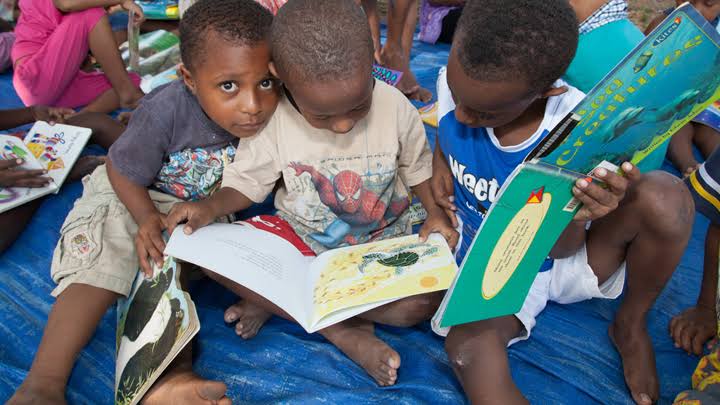
Governments, Others Asked to Integrate Human Connection into AI-Driven Early Childhood Education Innovation
By: Michael Mike
A call has gone to governments, international organisations, NGOs, tech companies, and educational institutions to join forces in ensuring that AI-driven early childhood educational tools are developed and deployed with a focus on human connection, especially in humanitarian contexts.
The call which was made to commemorate the International Day of Education by the Moving Minds Alliance (MMA) and the International Step by Step Association (ISSA), insisted that early deployment of AI would make solid impact.
The statement read: “On this International Day of Education, the Moving Minds Alliance (MMA) and the International Step by Step Association (ISSA) call upon governments, international organisations, NGOs, tech companies, and educational institutions to join forces in ensuring that AI-driven early childhood educational tools are developed and deployed with a focus on human connection, especially in humanitarian contexts. This year’s theme, “AI and Education: Preserving Human Agency in a World of Automation, resonates deeply with our vision of a world where families caught up in crisis are able to rebuild resilience and foster the wellbeing and development of their young children.”
The statement said: “Research shows that quality early childhood interventions can mitigate the adverse effects of trauma and provide a foundation for lifelong learning and well-being. Early childhood is a pivotal period for cognitive, emotional, and social development. In humanitarian contexts, where children face compounded risks from displacement, conflict, and instability, the need for robust Early Childhood Education (ECE) programmes is even more pressing.
“Investing in holistic education in humanitarian settings not only addresses academic needs but also the mental, emotional, and physical well-being of children, providing comprehensive support. Schools offer a safe space, protecting children from exploitation and violence, while promoting long-term development by equipping them with essential skills and knowledge.”
The statement added that: “As we navigate the rapid advancements in technology, it is crucial to ensure that these innovations serve to enhance, rather than replace, the essential human elements of learning and connection that children need to thrive. AI offers many benefits such as enhanced delivery of essential services like healthcare, education, and emergency relief. For example, AI-driven chatbots provide personalised learning experiences to children in crisis-affected areas.
“However, the use of AI in humanitarian settings raises significant concerns about data privacy and protection. Children’s data can be misused, putting them at risk of exploitation and abuse. It is crucial to implement these technologies responsibly to protect vulnerable children and ensure their rights are upheld.
“Beyond concerns for data privacy, there is significant worry regarding screen time, which should be very limited for young children. Research indicates that excessive screen time can negatively impact the cognitive development of children under six years old, affecting memory, attention, and critical thinking skills. Additionally, it can hinder the development of empathy and social skills.
“Moreso, Human connection is crucial for early childhood development, especially in humanitarian settings, as it provides emotional and psychological support, helping children feel safe and secure. Positive interactions with caregivers and peers stimulate cognitive development, essential for language acquisition and problem-solving skills. Additionally, human connection promotes better physical health, as emotionally connected caregivers ensure proper nutrition and healthcare. Strong relationships also build resilience, enabling children to cope better with adversities, and teach essential social skills like empathy and communication.”
The statement further said: “The need for multistakeholder collaboration in designing and deploying ECE programmes is even more crucial now as the situation of children living in humanitarian crises have worsened significantly in 2024: Over 473 million children—nearly 19% of the world’s children—are living in conflict zones
“47.2 million children have been displaced due to conflict and violence. More than 52 million children in conflict-affected countries are out of school.
“We therefore call upon governments, international organisations, NGOs, tech companies, and educational institutions to join forces to: Foster partnerships across sectors to develop and deploy AI-driven educational tools that are accessible, inclusive, and culturally relevant with a focus on human connection and encourage expansion of learning beyond the screen with support from adults; Ensure that the necessary technological infrastructure is in place to support AI initiatives, including reliable internet access and digital devices for all children.
“Establish robust frameworks to protect the privacy and security of children’s data, ensuring that AI applications are used ethically and responsibly; Provide training and resources for educators to effectively integrate AI tools into their teaching practices, enhancing their ability to support students in diverse and challenging environments; Implement continuous monitoring and evaluation mechanisms to assess the impact of AI in education, ensuring that it meets the needs of children and contributes to their holistic development.”
It emphasized that: “By committing these actions, we can leverage AI to provide quality education to children in humanitarian settings, helping them to overcome the barriers they face and build a brighter future.”
Governments, Others Asked to Integrate Human Connection into AI-Driven Early Childhood Education Innovation


Troops Arrest Suspected Military Impostor in Katsina
By Zagazola Makama
Troops of 17 Brigade have arrested a suspected military impostor during a fighting patrol in Malumfashi Local Government Area.
Security sources told Zagazola Makama that the suspect was apprehended at about 1:30 p.m. on July 4 by troops deployed at the Forward Operating Base (FOB) Malumfashi while conducting routine patrols within Malumfashi town.

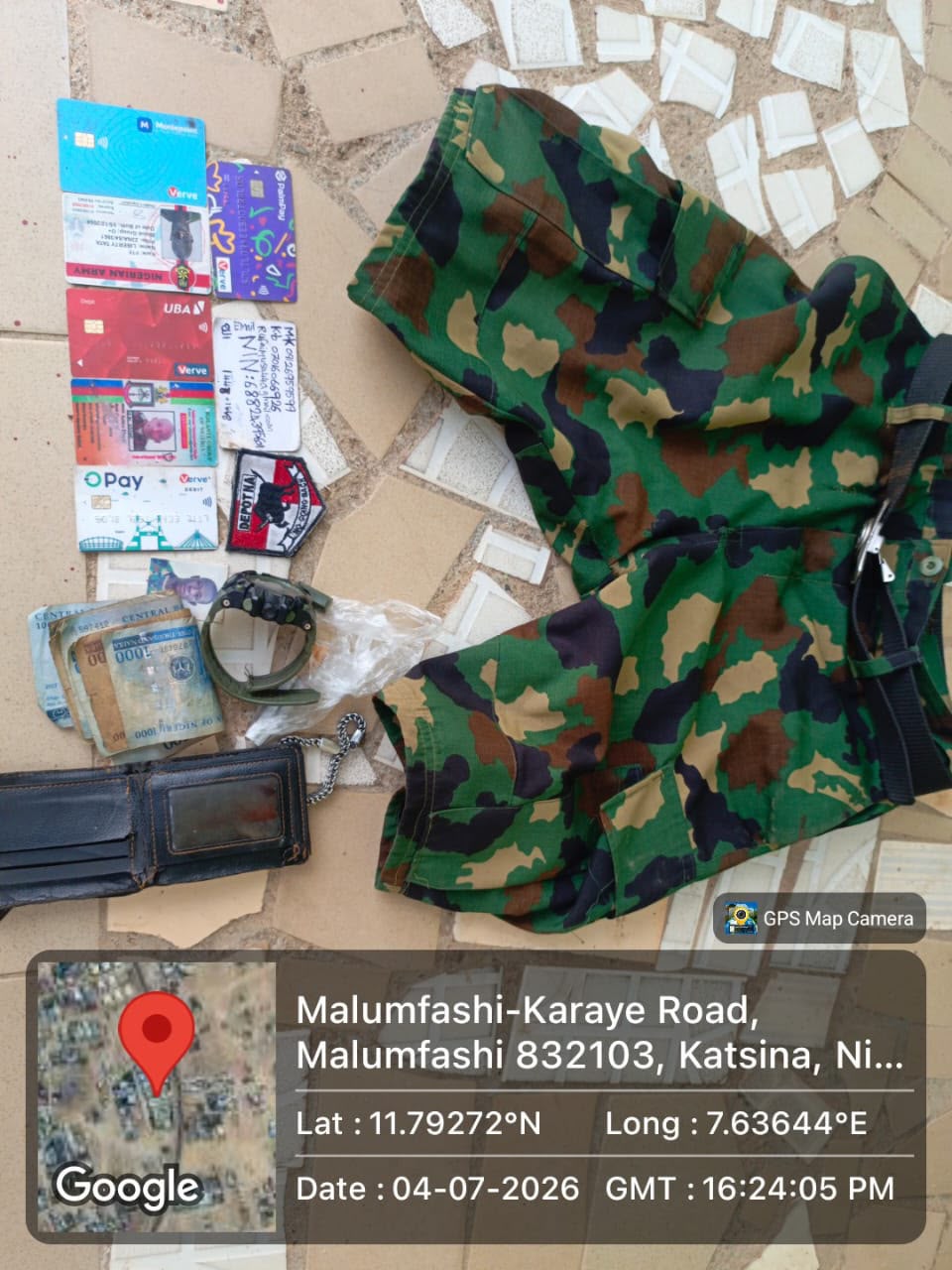
According to the sources, the suspect was intercepted while wearing a woodland camouflage three-quarter short, raising suspicion among the troops.
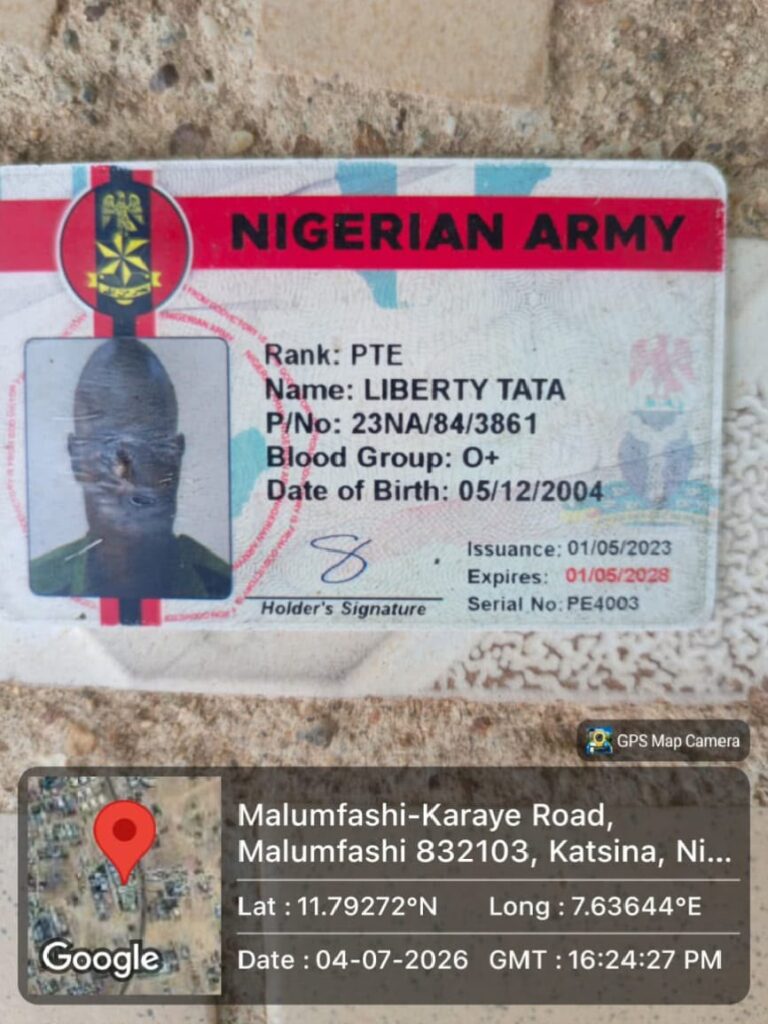
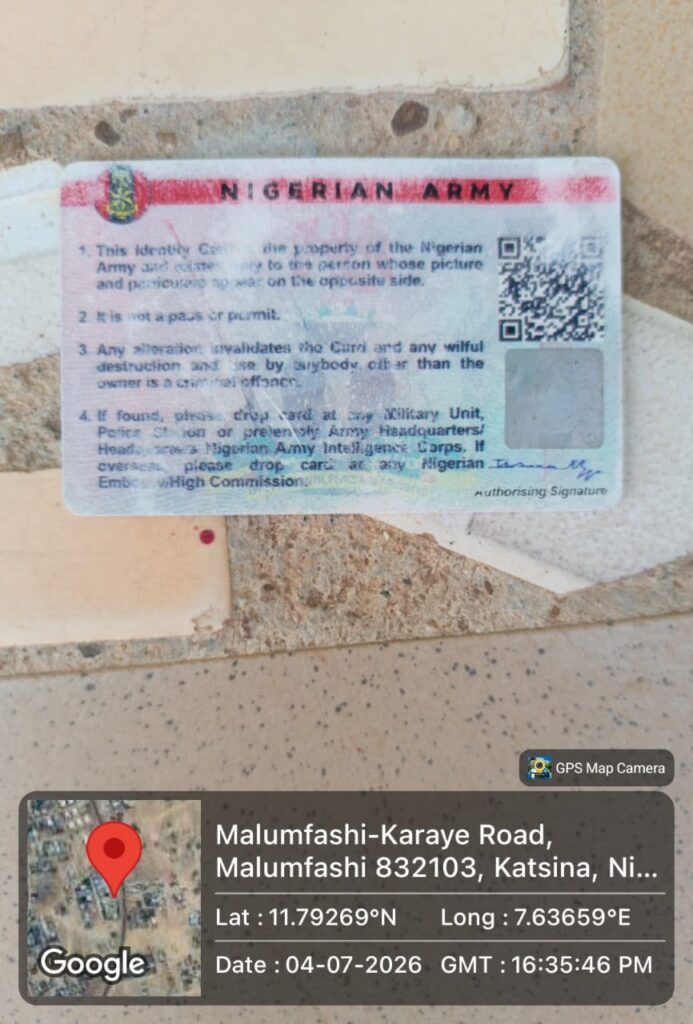
A search conducted on the suspect led to the recovery of a fake Nigerian Army identity card, four Automated Teller Machine (ATM) cards, one woodland camouflage three-quarter short, a wristwatch and the sum of ₦17,000.
The suspect and the recovered exhibits are currently in military custody pending further investigation.
Military sources said the arrest forms part of ongoing efforts to curb impersonation of security personnel and other criminal activities within the area.
Troops Arrest Suspected Military Impostor in Katsina
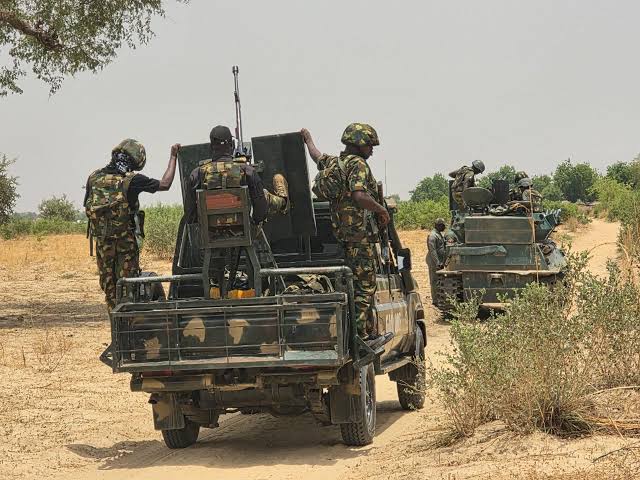
Troops Recover 50 Rustled Cattle, Repel Suspected Rustlers in Kaduna
By Zagazola Makama
Troops deployed at the Forward Operating Base (FOB) Kankomi have recovered 50 rustled cattle after repelling suspected cattle rustlers during an ambush operation in Chikun Local Government Area.
Security sources told Zagazola Makama that the troops responded to a distress call at about 9:55 a.m. on July 4 over the activities of suspected rustlers at Ungwan Gontu community.
According to the sources, the troops swiftly laid an ambush and made contact with the fleeing suspects, forcing them to abandon the stolen livestock and escape into the surrounding area.
During the operation, the troops recovered 50 rustled cattle, which were subsequently identified and handed over to their rightful owner.
Military sources said efforts are ongoing to track down the fleeing suspects as security operations continue to combat cattle rustling and other criminal activities across Kaduna State.
Troops Recover 50 Rustled Cattle, Repel Suspected Rustlers in Kaduna
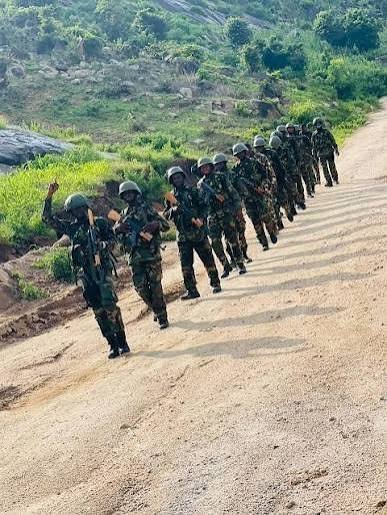
Troops Arrest Suspected Terrorist in Kogi, Suspect Confesses to Group Membership
By Zagazola Makama
Troops of 12 Brigade, in collaboration with Office of the National Security Adviser (ONSA) Hybrid Forces, have arrested a suspected terrorist during an operation in Lokoja Local Government Area.
Security sources told Zagazola Makama that the troops responded at about 1:00 p.m. on July 4 to reports of a confrontation between local residents and a suspected terrorist at a Ruga settlement behind Obajana community.
According to the sources, the troops swiftly intervened and arrested one suspect at the scene.
During preliminary interrogation, the suspect reportedly confessed to being a member of a terrorist group led by an individual identified as Haruna, which allegedly operates within the Okene general area.
The suspect is currently in military custody and is undergoing further investigation to establish the extent of his involvement and identify other members of the group.
Military sources said the arrest forms part of ongoing security operations aimed at dismantling terrorist and criminal networks across Kogi State.
Troops Arrest Suspected Terrorist in Kogi, Suspect Confesses to Group Membership

Troops Arrest Suspected Military Impostor in Katsina

Troops Recover 50 Rustled Cattle, Repel Suspected Rustlers in Kaduna

Troops Arrest Suspected Terrorist in Kogi, Suspect Confesses to Group Membership

Roger Federer’s Shock as DNA Results Reveal Myla and Charlene Are Not His Biological Children

THE PLIGHT OF FARIDA

FAILED COUP IN BURKINA FASO: HOW TRAORÉ NARROWLY ESCAPED ASSASSINATION PLOT AMID FOREIGN INTERFERENCE CLAIMS
-
 News2 years ago
Roger Federer’s Shock as DNA Results Reveal Myla and Charlene Are Not His Biological Children
-
Opinions4 years ago
THE PLIGHT OF FARIDA
-
 News1 year ago
FAILED COUP IN BURKINA FASO: HOW TRAORÉ NARROWLY ESCAPED ASSASSINATION PLOT AMID FOREIGN INTERFERENCE CLAIMS
-

 News2 years ago
EYN: Rev. Billi, Distortion of History, and The Living Tamarind Tree
-
 Opinions5 years ago
POLICE CHARGE ROOMS, A MINTING PRESS
-

 ACADEMICS2 years ago
A History of Biu” (2015) and The Lingering Bura-Pabir Question (1)
-

 Columns2 years ago
Army University Biu: There is certain interest, but certainly not from Borno.
-

 Politics1 year ago
2027: Why Hon. Midala Balami Must Go, as Youths in Hawul and Asikira/Uba Federal Constituency Reject ₦500,000 as Sallah Gift
