
News
Headquarters 3 Division Hosts Sensitization Lecture on Campaign and Contingency Planning for Enhanced National Security


Headquarters 3 Division Hosts Sensitization Lecture on Campaign and Contingency Planning for Enhanced National Security
By: Our Reporter
The Headquarters 3 Division, in collaboration with the Army Headquarters (AHQ) Department of Army Operations (DAOPS), has conducted a sensitization lecture aimed at improving the knowledge and skills of commanders and staff officers in drafting campaign and contingency plans. The event took place at Maxwell Khobe Cantonment, Jos, on Friday 29 November 2024 and was attended by key military personnel within the 3 Division’s area of responsibility.
Delivering the welcome address, the General Officer Commanding (GOC) 3 Division and Commander Operation SAFE HAVEN (OPSH), Major General Abdulsalam Abubakar, emphasized the critical importance of effective campaign planning in addressing contemporary security challenges. “The dynamic and evolving nature of threats and challenges we face in the contemporary security environment demands not just actions but carefully planned, well-coordinated, and adaptable responses,” stated Major General Abubakar. He further articulated that the complexities arising from asymmetric threats such as terrorism, insurgency, kidnapping, and banditry necessitate proactive measures from security agencies.“It has become imperative for us not just to respond to these threats but to anticipate, prevent, and counter them with innovative strategies,” he urged participants.

Highlighting the importance of meticulous planning, Major General Abubakar remarked, “A well-crafted contingency or campaign plan is the cornerstone of successful operations.” He encouraged all attendees to approach the lecture with an open mind and a collaborative spirit, stressing that the security and well-being of the nation hinge on the quality of their planning and execution.
The Chief of Operations Army, Major General BR Sinjen, represented by the Deputy Chief of Operations, Campaign Planning, Major General AM Alechenu, echoed the GOC’s sentiments, underscoring the necessity of effective campaign and contingency plans in addressing existential security threats. “Planning identifies the actions, effects, decisive conditions, and objectives required for mission accomplishment,” he affirmed. The lecture, titled “Drafting Contingency Plan and Campain Plans” presented by Lt Col SS Ajakaiye, Assistant Director Planning, detailed the procedures for drafting effective campaign and contingency plans for military formations and units.The event culminated in an interactive session, a group photograph, and media interviews, reinforcing the collaborative spirit among military personnel.

In a separate development, a delegation of heads of security agencies in Plateau State visited Headquarters 3 Division to express their condolences on the passing of the Late Chief of Army Staff (COAS), Lt Gen Lagbaja. Commissioner of Police, Plateau State, CP Emmanuel Adeshina, conveyed the solidarity of the delegation, highlighting the late COAS’s significant contributions to security efforts in the state.

Responding to the delegation, Major General Abubakar honored the legacy of the Late Gen Lagbaja, commending his leadership and unwavering support for the security agencies in Plateau State.The visit concluded with a group photograph and the signing of the Division’s condolence register.
Headquarters 3 Division Hosts Sensitization Lecture on Campaign and Contingency Planning for Enhanced National Security


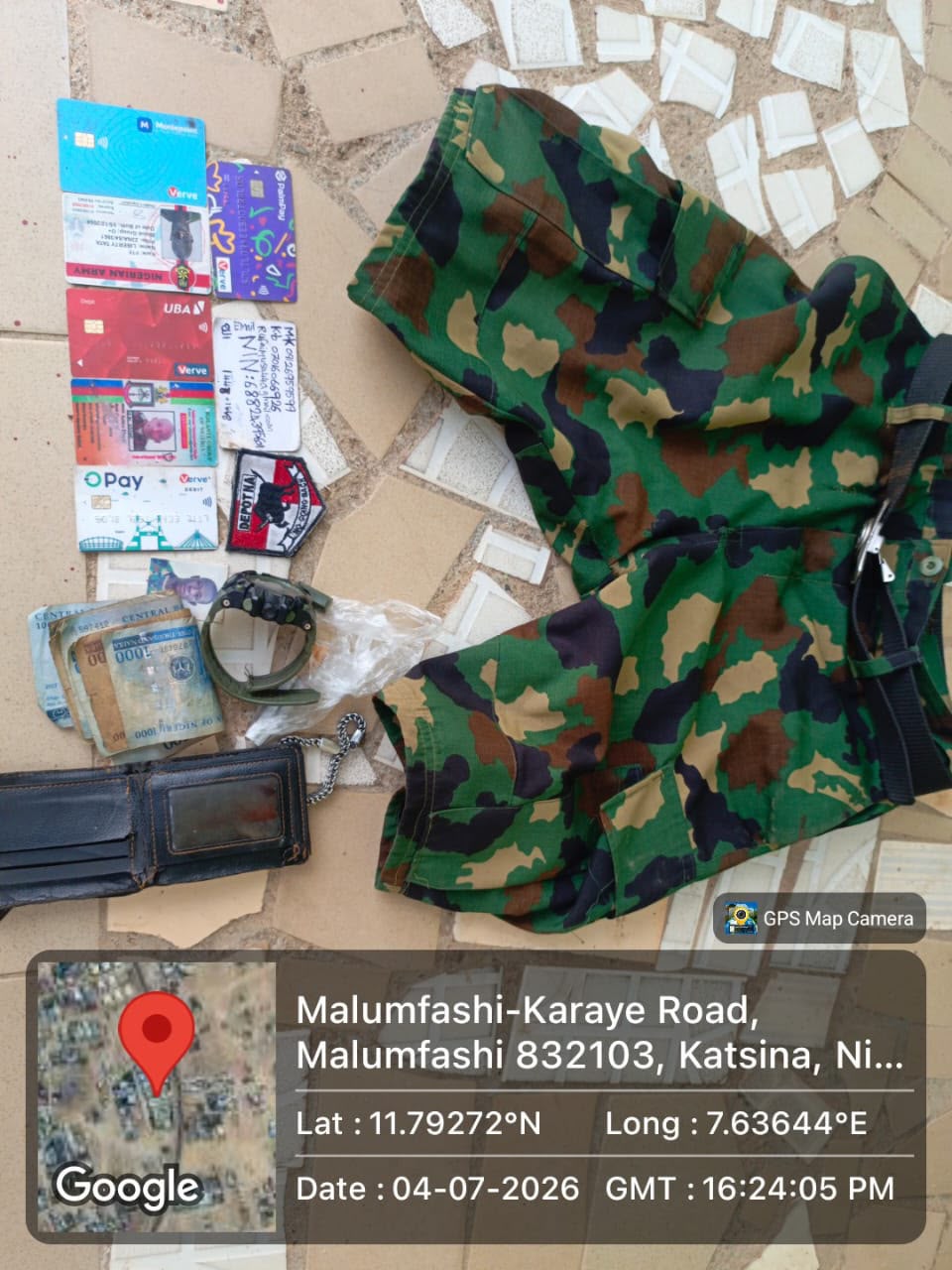
Troops Arrest Suspected Military Impostor in Katsina
By Zagazola Makama
Troops of 17 Brigade have arrested a suspected military impostor during a fighting patrol in Malumfashi Local Government Area.
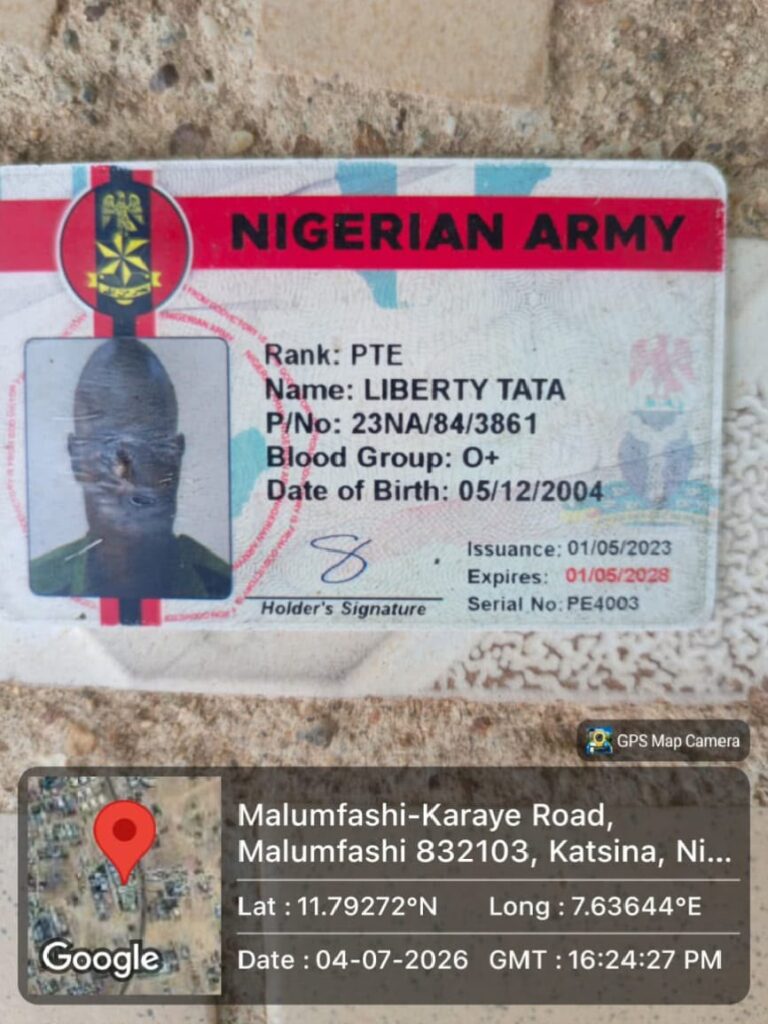
Security sources told Zagazola Makama that the suspect was apprehended at about 1:30 p.m. on July 4 by troops deployed at the Forward Operating Base (FOB) Malumfashi while conducting routine patrols within Malumfashi town.
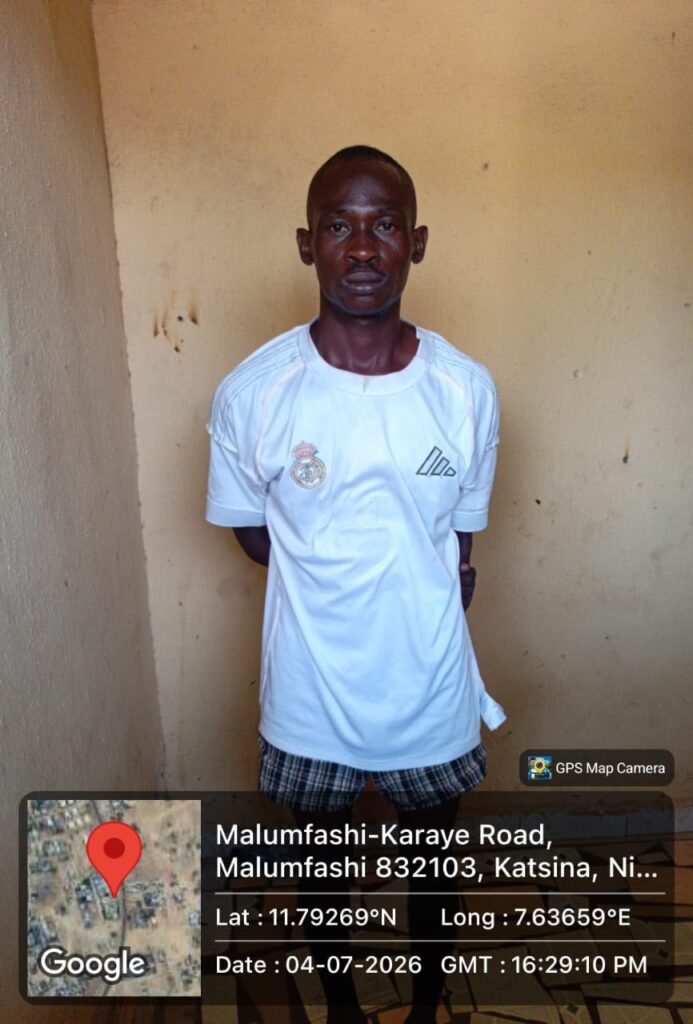
According to the sources, the suspect was intercepted while wearing a woodland camouflage three-quarter short, raising suspicion among the troops.
A search conducted on the suspect led to the recovery of a fake Nigerian Army identity card, four Automated Teller Machine (ATM) cards, one woodland camouflage three-quarter short, a wristwatch and the sum of ₦17,000.
The suspect and the recovered exhibits are currently in military custody pending further investigation.
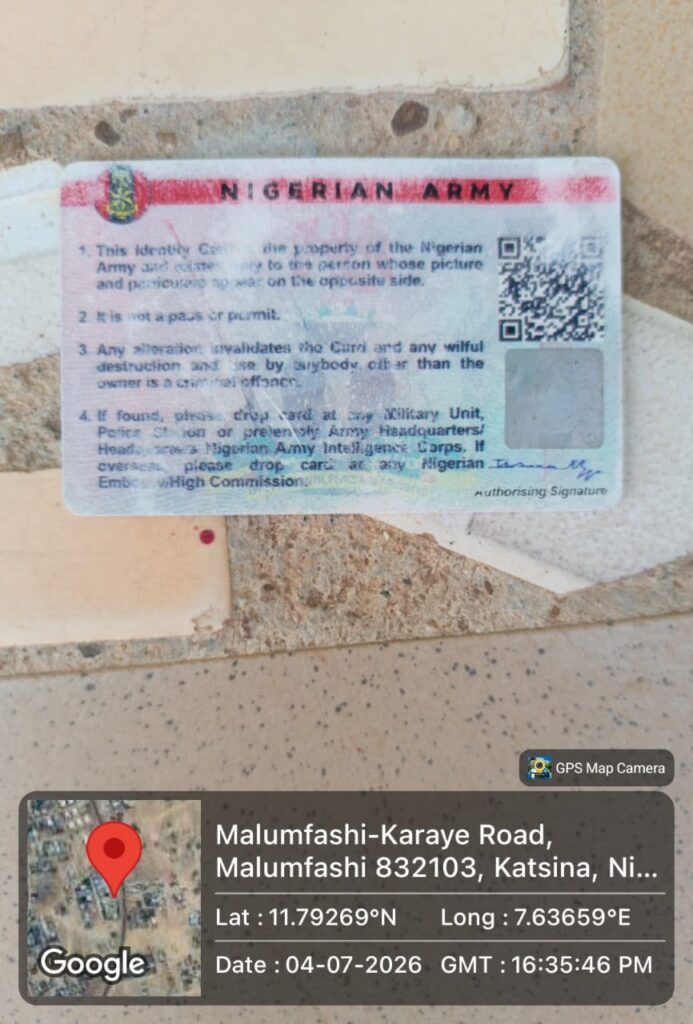
Military sources said the arrest forms part of ongoing efforts to curb impersonation of security personnel and other criminal activities within the area.
Troops Arrest Suspected Military Impostor in Katsina
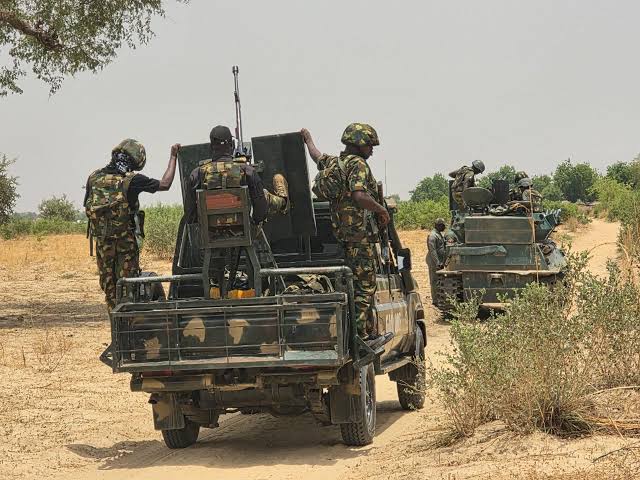
Troops Recover 50 Rustled Cattle, Repel Suspected Rustlers in Kaduna
By Zagazola Makama
Troops deployed at the Forward Operating Base (FOB) Kankomi have recovered 50 rustled cattle after repelling suspected cattle rustlers during an ambush operation in Chikun Local Government Area.
Security sources told Zagazola Makama that the troops responded to a distress call at about 9:55 a.m. on July 4 over the activities of suspected rustlers at Ungwan Gontu community.
According to the sources, the troops swiftly laid an ambush and made contact with the fleeing suspects, forcing them to abandon the stolen livestock and escape into the surrounding area.
During the operation, the troops recovered 50 rustled cattle, which were subsequently identified and handed over to their rightful owner.
Military sources said efforts are ongoing to track down the fleeing suspects as security operations continue to combat cattle rustling and other criminal activities across Kaduna State.
Troops Recover 50 Rustled Cattle, Repel Suspected Rustlers in Kaduna
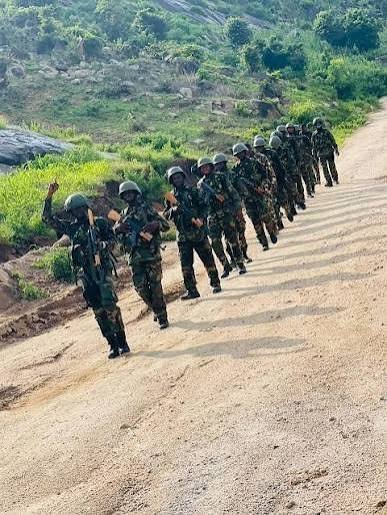
Troops Arrest Suspected Terrorist in Kogi, Suspect Confesses to Group Membership
By Zagazola Makama
Troops of 12 Brigade, in collaboration with Office of the National Security Adviser (ONSA) Hybrid Forces, have arrested a suspected terrorist during an operation in Lokoja Local Government Area.
Security sources told Zagazola Makama that the troops responded at about 1:00 p.m. on July 4 to reports of a confrontation between local residents and a suspected terrorist at a Ruga settlement behind Obajana community.
According to the sources, the troops swiftly intervened and arrested one suspect at the scene.
During preliminary interrogation, the suspect reportedly confessed to being a member of a terrorist group led by an individual identified as Haruna, which allegedly operates within the Okene general area.
The suspect is currently in military custody and is undergoing further investigation to establish the extent of his involvement and identify other members of the group.
Military sources said the arrest forms part of ongoing security operations aimed at dismantling terrorist and criminal networks across Kogi State.
Troops Arrest Suspected Terrorist in Kogi, Suspect Confesses to Group Membership

Troops Arrest Suspected Military Impostor in Katsina

Troops Recover 50 Rustled Cattle, Repel Suspected Rustlers in Kaduna

Troops Arrest Suspected Terrorist in Kogi, Suspect Confesses to Group Membership

Roger Federer’s Shock as DNA Results Reveal Myla and Charlene Are Not His Biological Children

THE PLIGHT OF FARIDA

FAILED COUP IN BURKINA FASO: HOW TRAORÉ NARROWLY ESCAPED ASSASSINATION PLOT AMID FOREIGN INTERFERENCE CLAIMS
-
 News2 years ago
Roger Federer’s Shock as DNA Results Reveal Myla and Charlene Are Not His Biological Children
-
Opinions4 years ago
THE PLIGHT OF FARIDA
-
 News1 year ago
FAILED COUP IN BURKINA FASO: HOW TRAORÉ NARROWLY ESCAPED ASSASSINATION PLOT AMID FOREIGN INTERFERENCE CLAIMS
-

 News2 years ago
EYN: Rev. Billi, Distortion of History, and The Living Tamarind Tree
-
 Opinions5 years ago
POLICE CHARGE ROOMS, A MINTING PRESS
-

 ACADEMICS2 years ago
A History of Biu” (2015) and The Lingering Bura-Pabir Question (1)
-

 Columns2 years ago
Army University Biu: There is certain interest, but certainly not from Borno.
-

 Politics1 year ago
2027: Why Hon. Midala Balami Must Go, as Youths in Hawul and Asikira/Uba Federal Constituency Reject ₦500,000 as Sallah Gift
