
Health
Health Worker Exodus Deepens as Policy Brief Warns of Systemic Risk to Nigeria’s Healthcare Sector

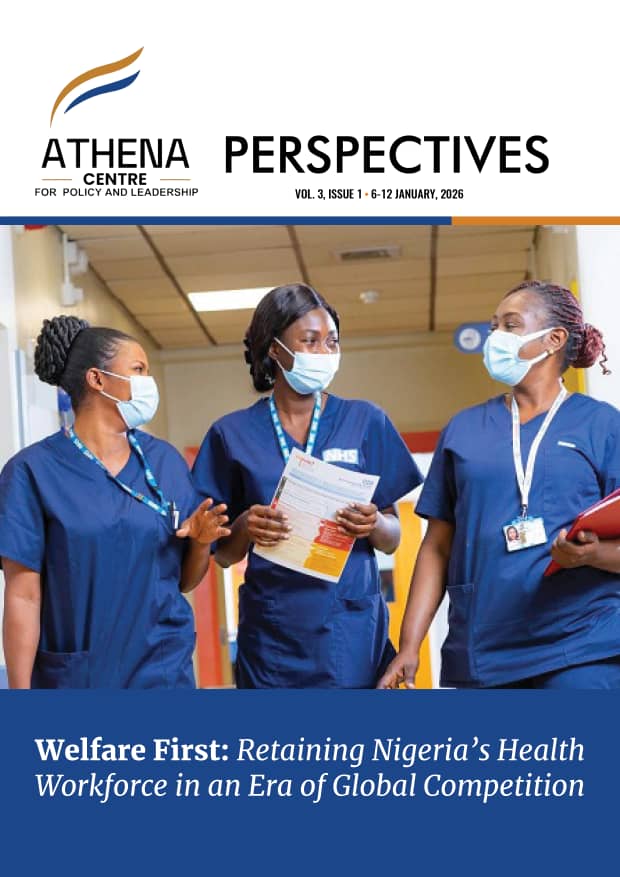
Health Worker Exodus Deepens as Policy Brief Warns of Systemic Risk to Nigeria’s Healthcare Sector
By: Michael Mike
A new policy brief has warned that unless urgent welfare-focused reforms are implemented, the country risks a deepening crisis that could undermine access to quality healthcare nationwide.
Nigeria’s healthcare system is facing mounting pressure as the steady departure of doctors and nurses continues to erode service capacity, raising concerns about long-term system viability.
According to the policy analysis authored by health policy expert Dr Emmanuel Ejimonu, of the Athena Centre for Policy and Leadership, more than 42,000 nurses left Nigeria between 2021 and early 2024, while thousands of Nigerian-trained doctors have registered to practise abroad, particularly in the United Kingdom. The trend shows no sign of slowing, as survey data cited in the report indicate that nearly three-quarters of medical and nursing students intend to seek employment overseas, with about one in three expressing no plans to return.
The report attributed the exodus largely to domestic welfare and governance challenges rather than professional ambition. Health workers interviewed consistently pointed to low and irregular salaries, unsafe and overstretched working environments, limited opportunities for funded specialist training and weak social protection systems. These challenges, the brief notes, have made emigration a rational choice in the face of institutional uncertainty, especially as global demand for health professionals continues to rise.
Although the Federal Government introduced a National Policy on Health Workforce Migration in 2023 to promote ethical recruitment and retention, the brief argues that its impact has been limited. Implementation gaps, inadequate funding and uneven execution at state and facility levels have prevented the policy from delivering meaningful improvements in working conditions.
The consequences of sustained health worker losses are already visible. Teaching hospitals are reportedly struggling to maintain specialist training and mentorship programmes, while recurring strikes highlight growing mistrust between health workers and government authorities. Economically, the country is losing returns on public investments in training, even as staff shortages compromise care delivery in both urban and rural facilities. Remaining workers also face rising burnout, further fuelling migration intentions.
Drawing on international experiences from countries such as Ghana, Kenya, the Philippines and Cuba, the policy brief stresses that health worker migration cannot be completely stopped. Instead, it recommends managing mobility through welfare-based retention strategies and credible governance structures.
Central to the recommendations is a proposed Welfare-First Retention Package, which prioritises guaranteed and timely payment of salaries, improved workplace safety, funded career progression, fair bonding arrangements and strengthened social protection. The package also calls for disciplined use of bilateral agreements and ethical recruitment frameworks to protect Nigeria’s investment in health worker training.
The brief estimates that, if properly funded and implemented, the proposed measures could reduce short-term health worker attrition by up to one-third within two years, while significantly improving retention over a five-year period.
The report stated that reversing the health workforce crisis will require treating welfare reform as a core economic and governance priority, backed by political will, fiscal discipline and strong institutional coordination. Without such action, the report warns, Nigeria risks the gradual hollowing out of its healthcare system, with far-reaching consequences for public health and national development.
Health Worker Exodus Deepens as Policy Brief Warns of Systemic Risk to Nigeria’s Healthcare Sector



Troops foil IED threat on Dikwa–Gajibo road, safely detonate explosive
By Zagazola Makama
Troops of Operation Hadin Kai have discovered and safely detonated an improvised explosive device (IED) planted along the Dikwa–Gajibo road in Borno State, preventing what could have been a deadly attack on security personnel and commuters.
Intelligence sources told Zagazola Makama that the device was discovered at about 10:10 a.m. on July 27 by troops of the 81 Division Task Force Battalion while conducting a routine picketing patrol along the Dikwa–Gajibo axis.

The sources said the patrol team immediately secured the area and alerted the Explosive Ordnance Disposal (EOD) team, which responded promptly and carried out a controlled detonation of the IED at the scene.
No casualties or damage were recorded during the operation.
Military sources described the successful detection and neutralisation of the explosive as part of ongoing efforts to counter the use of improvised explosive devices by Boko Haram and Islamic State West Africa Province (ISWAP) terrorists targeting troops and civilian traffic in the North-East.
The operation underscores the continued vigilance of security forces in maintaining the safety of key supply routes and denying insurgents the opportunity to disrupt military and civilian movement across the theatre of operations.
Security sources added that the general security situation across the theatre remains calm but unpredictable, with troops maintaining high morale and operational readiness.
Troops foil IED threat on Dikwa–Gajibo road, safely detonate explosive
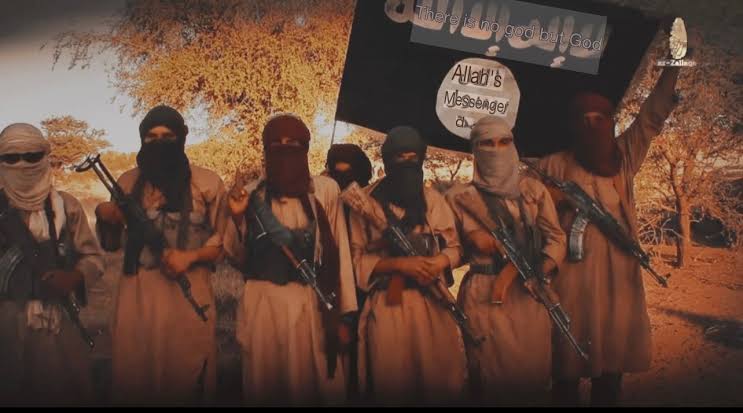
Cholera Outbreak Kills Nine ISWAP Terrorists in Timbuktu Triangle
By: Zagazola Makama
A cholera outbreak has reportedly claimed the lives of nine fighters of the Islamic State West Africa Province (ISWAP) in the Timbuktu Triangle, a known terrorist stronghold in Borno State, intelligence sources have disclosed.
The sources told the News Agency of Nigeria (NAN) that the outbreak had spread through the group’s enclaves, highlighting deteriorating sanitary conditions and limited access to medical care within the insurgents’ camps.
According to the intelligence, two additional ISWAP fighters infected with the disease were allegedly executed by fellow terrorists after attempts to manage their condition at Kimba village proved unsuccessful.
The sources said the development pointed to the worsening health conditions within the terrorist hideouts, where sustained military pressure has disrupted logistics, including access to medicines and treatment facilities.
The sources added that commanders had also been urged to intensify efforts to intercept medical supplies and pharmaceuticals intended for terrorist camps in order to further degrade ISWAP’s treatment capability and operational resilience.
The reported outbreak comes amid sustained offensives by troops of Operation HADIN KAI, who continue to target terrorist enclaves and logistics networks across the Lake Chad region in a bid to degrade the insurgents’ fighting capacity.
Cholera Outbreak Kills Nine ISWAP Terrorists in Timbuktu Triangle
Health
Investigation: Why Barrister Hamza Nuhu Dantani should apologize to UMTH over his claims; his father’s case—”Prostate Cancer at Stage Four”—was a hopeless situation despite the fact that he was attended to by one of the best urologists.

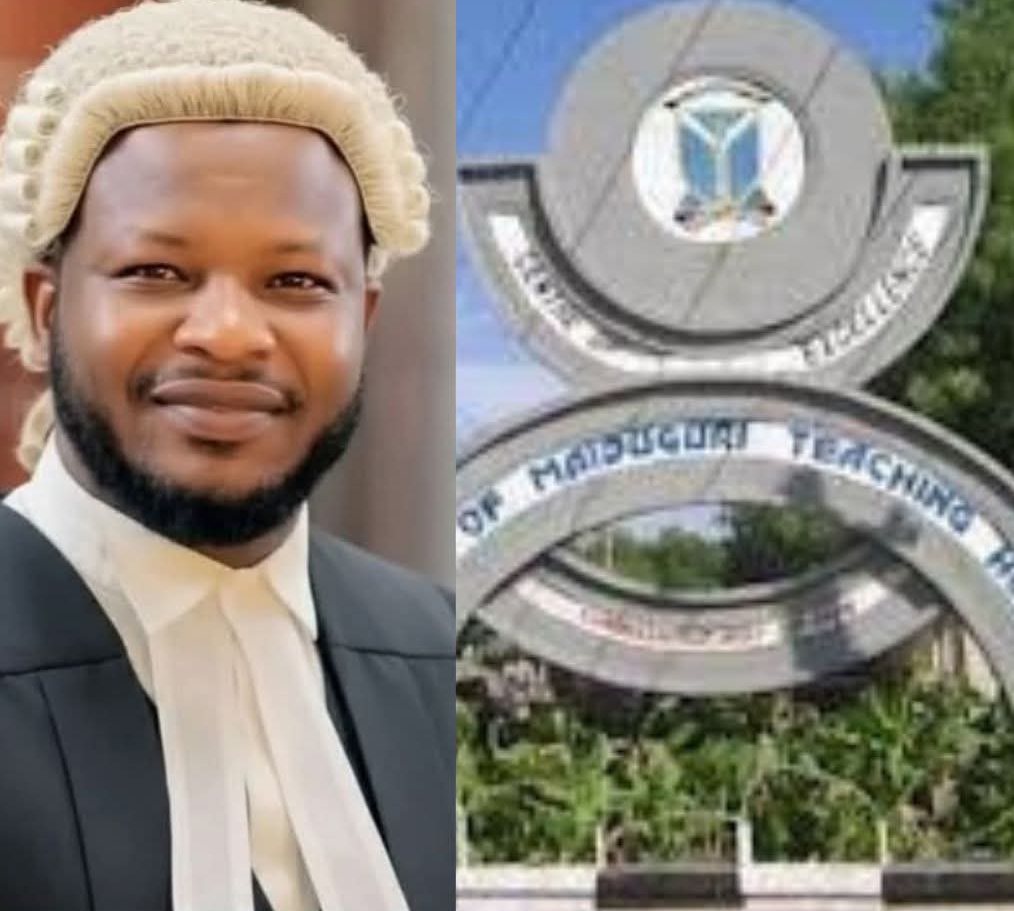
Investigation: Why Barrister Hamza Nuhu Dantani should apologize to UMTH over his claims; his father’s case—”Prostate Cancer at Stage Four”—was a hopeless situation despite the fact that he was attended to by one of the best urologists.
By: Dr. James Bwala
The recent public allegations made by Barrister Hamza Nuhu Dantani against the University of Maiduguri Teaching Hospital (UMTH) concerning the treatment of his late father have stirred significant controversy and raised critical questions about professional conduct, medical ethics, and the responsibilities of legal practitioners in public discourse. While empathy for the loss of a family member is natural, it is vital that claims made in the public domain, especially those affecting reputable institutions, are founded on verified facts and conveyed with professionalism. After thorough investigation and engagement with UMTH officials and medical experts, it becomes evident that Barrister Dantani’s assertions lack merit and, more importantly, that his conduct in this matter falls short of the standards expected from a legal professional. Consequently, Barrister Hamza Nuhu Dantani should publicly apologize to UMTH for the unsubstantiated nature of his claims and the undue damage inflicted upon the institution’s reputation.
To appreciate fully why an apology is necessary, one must first understand the medical circumstances surrounding the late Alhaji Dantani’s admission to UMTH. Medical records and testimonies indicate that the elder Dantani was admitted at an advanced stage of prostate cancer—specifically stage four—in February 2026. This is a critical point in the disease’s progression wherein the cancer has metastasized extensively, generally rendering curative treatment unattainable regardless of the quality of care provided. Globally, stage four prostate cancer presents a near-hopeless prognosis, demanding palliative rather than curative efforts to maximize quality of life. It is misleading, therefore, to interpret the outcome as resultant from negligence or substandard care following Alhaji Dantani’s demise on March 31, 2026.
READ ALSO: https://newsng.ng/the-complex-reality-of-healthcare-a-perspective-on-the-university-of-maiduguri-teaching-hospital-and-the-loss-experienced-by-barrister-nuhu-dantani-hamza/
My findings also revealed that the late patient’s care was overseen by Professor Hassan Dogo, a urologist of outstanding repute both within and beyond Nigerian medical circles. Professor Dogo’s involvement underscores the level of expertise committed to the patient’s management. The hospital’s Chief Medical Director, Professor Ahmed Ahidjo, personally intervened to ensure that the Dantani family had access to the best possible care, even offering private quarters within the hospital should general wards be unavailable. This proactive and compassionate response demonstrates the hospital’s commitment to patient welfare and contradicts any insinuations of neglect or unprofessionalism.
The decision by Barrister Dantani to publicly air grievances on social media and through petitions before fully engaging with hospital authorities exemplifies unprofessional conduct unbecoming of a lawyer. As an officer of the court, a barrister bears the responsibility not only to uphold the law but also to maintain decorum and integrity in all public interactions. Recklessly disseminating claims without validation jeopardizes the credibility of the legal profession and undermines public trust in medical institutions that serve critical societal needs. In this instance, such premature public accusations inflicted reputational harm on UMTH, an institution known for its high standards and dedicated service.
READ ALSO: https://newsng.ng/the-complex-reality-of-healthcare-a-perspective-on-the-university-of-maiduguri-teaching-hospital-and-the-loss-experienced-by-barrister-nuhu-dantani-hamza/
In addition to institutional harm, the manner in which Barrister Dantani handled the situation reflects poorly on the principles of due diligence and respectful dialogue. Rather than pursuing direct communication with UMTH management to clarify concerns, he resorted to externalizing grievances, thereby exacerbating tensions. The fact that members of the Dantani family subsequently contacted the hospital to express regret over the son’s approach confirms that the claims were disproportionately escalated. This sequence of events highlights the need for measured responses grounded in factual understanding, especially when involving matters as sensitive as terminal illness.
It is also essential to contextualize the nature of cancer prognosis within the public discourse. Awareness that advanced-stage cancers often defy medical intervention is critical in mitigating misplaced blame on healthcare providers. By advancing inaccurate narratives, public figures risk fostering distrust in healthcare systems, potentially discouraging others from seeking timely medical attention. Barrister Dantani, equipped with professional training and access to legal and investigative resources, had an obligation to ascertain the veracity of the situation before turning to public condemnation.
READ ALSO: https://newsng.ng/the-complex-reality-of-healthcare-a-perspective-on-the-university-of-maiduguri-teaching-hospital-and-the-loss-experienced-by-barrister-nuhu-dantani-hamza/
Some people out there might argue that the family’s grief justified Barrister Dantani’s public expressions or that highlighting perceived gaps in patient care could promote systemic improvements. While grief is deeply personal and valid, it does not justify undermining established protocols for dispute resolution or tarnishing reputations without substantiation. Constructive criticism aimed at improving health services is best channeled through official and collaborative frameworks rather than adversarial and public confrontations lacking evidence. Moreover, in this case, available information strongly suggests that the hospital maintained high standards of care, negating the premise for such allegations.
I believe the intersection of professional responsibility, respect for institutional integrity, and empathetic understanding of medical realities informs the necessity for Barrister Hamza Nuhu Dantani to issue an unambiguous apology to UMTH. His premature and unfounded public criticisms unfairly discredited the hospital, disregarding the complex and tragic nature of late-stage prostate cancer and the commendable efforts of its medical staff. An apology would not only restore dignity to UMTH but also reaffirm the ethical standards expected of legal practitioners. Moving forward, this episode should serve as a reminder of the importance of prudence, respect, and factual accuracy in public discourse—especially when lives and legacies are involved. Only through such conscientious conduct can professional integrity and public trust be preserved for the benefit of society at large. This is my take following the unfortunate incident.
* James Bwala, PhD, writes from Abuja.
Investigation: Why Barrister Hamza Nuhu Dantani should apologize to UMTH over his claims; his father’s case—”Prostate Cancer at Stage Four”—was a hopeless situation despite the fact that he was attended to by one of the best urologists.

Caught Between Terrorists and the State: How Insider Mediators Face the Greatest Risks in the Sahel and Lake Chad Basin

Troops Rescue Federal Polytechnic Rector, Foil Multiple Kidnap Attempts in Zamfara

Wanted Boko Haram spy arrested in Monguno over Cross Kauwa attack, kidnappings

Roger Federer’s Shock as DNA Results Reveal Myla and Charlene Are Not His Biological Children

THE PLIGHT OF FARIDA

FAILED COUP IN BURKINA FASO: HOW TRAORÉ NARROWLY ESCAPED ASSASSINATION PLOT AMID FOREIGN INTERFERENCE CLAIMS
-
 News2 years ago
Roger Federer’s Shock as DNA Results Reveal Myla and Charlene Are Not His Biological Children
-
Opinions4 years ago
THE PLIGHT OF FARIDA
-
 News1 year ago
FAILED COUP IN BURKINA FASO: HOW TRAORÉ NARROWLY ESCAPED ASSASSINATION PLOT AMID FOREIGN INTERFERENCE CLAIMS
-

 News2 years ago
EYN: Rev. Billi, Distortion of History, and The Living Tamarind Tree
-
 Opinions5 years ago
POLICE CHARGE ROOMS, A MINTING PRESS
-

 ACADEMICS2 years ago
A History of Biu” (2015) and The Lingering Bura-Pabir Question (1)
-

 Columns2 years ago
Army University Biu: There is certain interest, but certainly not from Borno.
-

 Politics1 year ago
2027: Why Hon. Midala Balami Must Go, as Youths in Hawul and Asikira/Uba Federal Constituency Reject ₦500,000 as Sallah Gift
