
News
HOMEF’s Nnimmo Bassey Receives Wallenberg Medal for Humanitarian Contributions

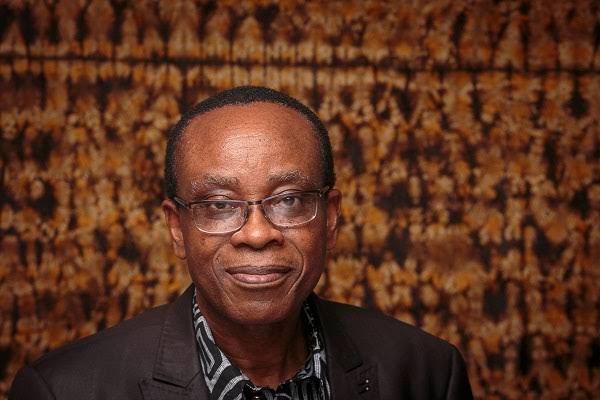
HOMEF’s Nnimmo Bassey Receives Wallenberg Medal for Humanitarian Contributions
By: Michael Mike
Health of Mother Earth Foundation (HOMEF) has celebrated with her Executive Director, Dr Nnimmo Bassey, on the prestigious honour of the 2024 Wallenberg Medal.
Bassey is the first Nigerian and the fifth African to have received the award. He joins the ranks of other giants like South Africa’s Helen Suzman (1992), Archbishop Desmond Tutu (2008), Rwanda’s Paul Rusesabagina (2005), and Congo’s Denis Mukwege (2010). Bassey’s long list of accomplishments is celebrated as he accepted this prestigious recognition.
According to a statement on Wednesday by HOMEF, the award took place on 10 September 2024, at the Ross School of Business Robertson Auditorium, at the University of Michigan. The Wallenberg Medal is a tribute to outstanding humanitarians who have gone above and beyond to protect the vulnerable and oppressed, much like Raoul Wallenberg, the Swedish diplomat who saved thousands of Jews during World War II, whom the award was named after.
At the occasion, the Swedish Ambassador to the United States, Ambassador Urban Ahlin, extolled the virtues of Raoul Wallenberg and enjoined the audience to dedicate their lives to the cause of humanity so that they may be remembered just as Wallenberg was being recognized. Other speakers included the Chair of the awards committee, Professor Sioban Harlow and the provost of the university, Professor Laurie McCauley.
In his acceptance speech and lecture title: “We Are Relatives,” Dr Nnimmo Bassey stressed “love, humility, dignity, and respect” as core to his vision of a livable future for all beings.”
He stated that as an environmental justice advocate whose work has been based on the understanding the polycrisis confronting us, we have a duty to always seek to uncover the roots of the crises rather than treating the symptoms.
He said: “Seeking out those roots helps us avoid superficial responses and pursue real solutions, some of which may be unattainable in our lifetimes. One of our key struggles has been understanding the mindset that permits inequalities in our societies. The mindset that elevates might over care and love. The mindset that promotes the individual rather than the community. The mindset that refuses to understand that we are relatives. The mindset that grabs, trashes, and feeds on the misery of others. The mindset that permits environmental racism.
“Understanding the roots of polycrisis helps us to see the phenomenon of expanding sacrifice zones in our world today. It also placed on us the duty of standing with the oppressed to halt the expansion of sacrifice zones in Nigeria, in Africa, and elsewhere by seeking to overcome the energy and other hegemonic transitions that sacrifice nature and are driven by colonial extractivism built on embedded geopolitical power imbalances.”
Bassey further stated that: “Climate action and inaction provide pictures that help us see the difficulties we face in trying to build a consensus that the climate crisis is a global crisis and not a national crisis. It also shows that the world is not yet ready to make the hard decisions by accepting that the pursuit of infinite growth on a finite planet is a false dream.”
Director of Programmes at Health of Mother Earth Foundation, Joyce Brown, on behalf of the organisation, applauded the executive director for his outstanding performance, stating that Dr. Bassey’s exceptional work and contributions have led to undeniable global recognition. It was also a veritable opportunity to showcase the work that HOMEF does and show the key place that cultural tools like poetry play in healing a hurting world.
Besides being an environmental activist, Bassey’s work includes significant environmental books like To Cook a Continent: Destructive Extraction and The Climate Crisis in Africa (2012), and Oil Politics: Echoes of Ecological War. His poetry, including We Thought It Was Oil But It Was Blood (1998), I Will Not Dance to Your Beat (2010), and the latest I See the Invisible (2024), continue to inspire the spirit of resistance and hope in all who read or listen to him.
HOMEF’s Nnimmo Bassey Receives Wallenberg Medal for Humanitarian Contributions


Zulum Donates ₦50m to Family of Fallen Officer, Reaffirms Support for Military Heroes
By: Michael Mike
Borno State Governor, Babagana Zulum has donated ₦50 million to the family of late Lieutenant Colonel OC Okolo, who was killed during a Boko Haram attack in Mandaragirau, Biu Local Government Area of Borno State, on February 16, 2026.
The gesture comes amid a series of similar interventions by the governor, including a recent ₦150 million donation to families of three military officers who lost their lives in separate attacks across the state.
Zulum reiterated his administration’s unwavering commitment to supporting families of fallen soldiers, describing their sacrifices as invaluable to Nigeria’s security and unity. He assured that his government would continue to identify with and assist families of personnel killed or declared missing in action in the ongoing counter-insurgency operations.
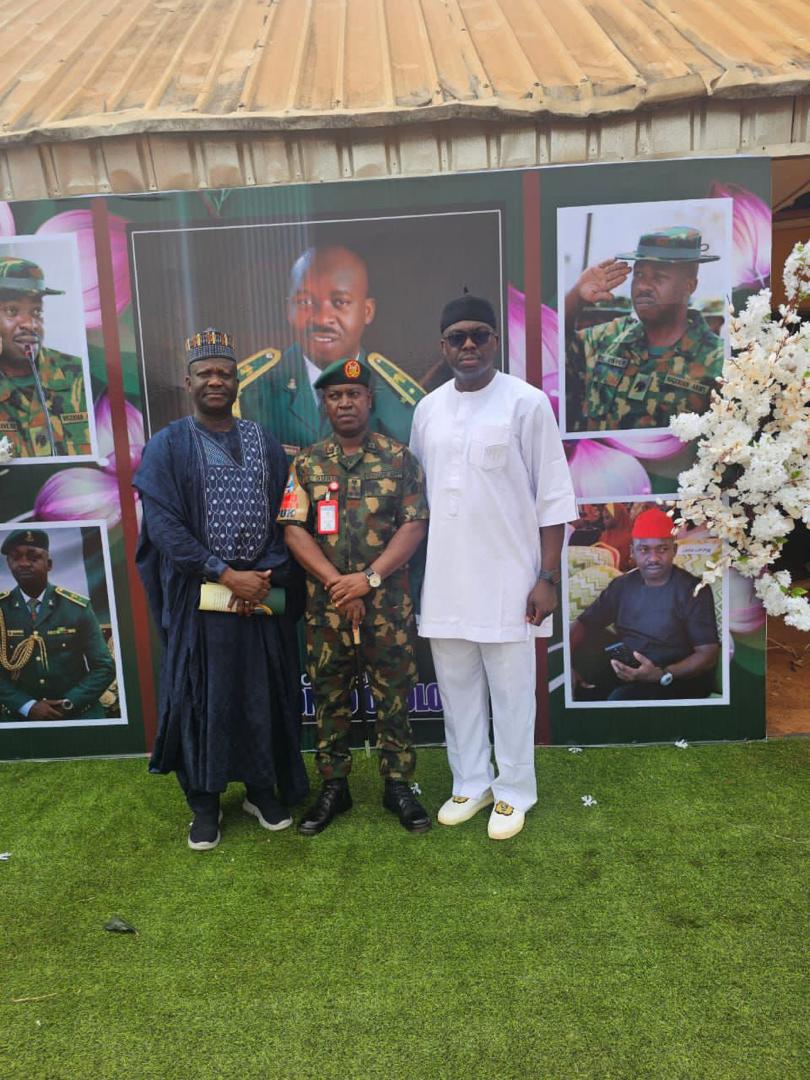
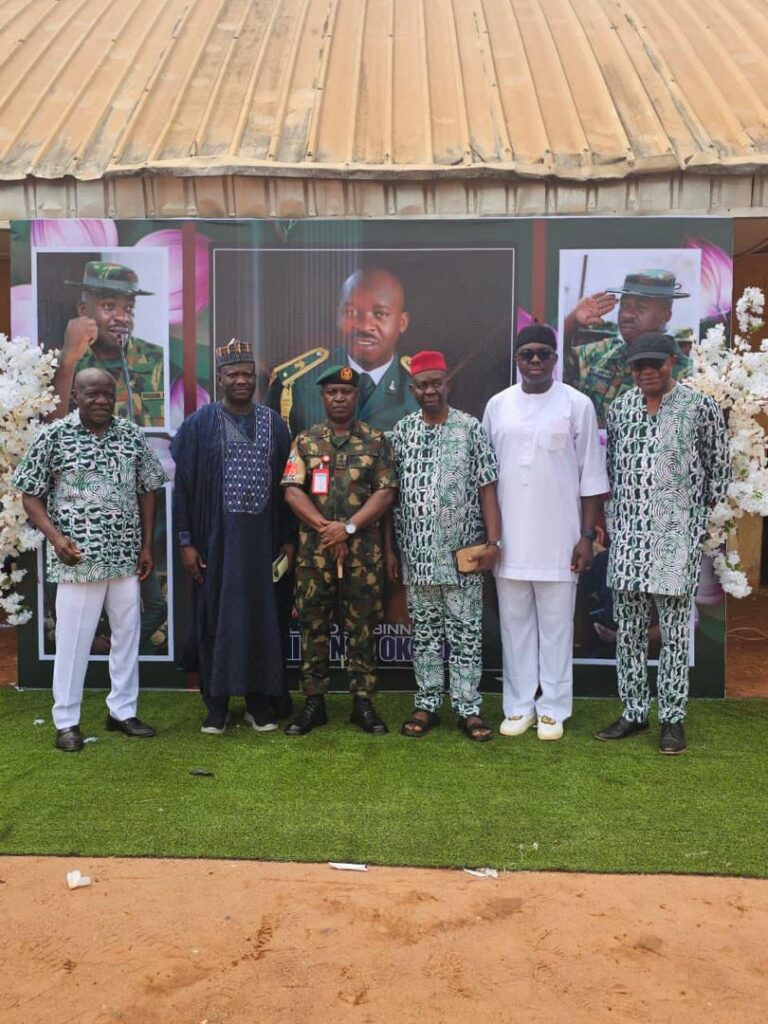
The donation was delivered at a funeral service held in Obinofia Ndiuno, Ezeagu Local Government Area of Enugu State on Firiday. The governor was represented by his Special Adviser on Security, Brigadier General Abdullahi Sabi Ishaq (Rtd), who presented the cash on behalf of the Borno State Government.
Speaking through his representative, Zulum expressed deep sorrow over the officer’s death.
He said: “Lt. Col OC Okolo was a gallant, dedicated and committed officer of the nation whose contributions will not be forgotten,” while extending condolences to the family, friends, and colleagues of the deceased.
He also prayed for the repose of the late officer’s soul and for strength for the bereaved family.
Responding on behalf of the family, Stanley Okolo expressed profound gratitude to the governor for the support and solidarity shown during their time of grief.
@The family members were particularly touched by the cash donation and the delegation sent from Maiduguri to attend the funeral service despite the short notice,” he said.

He further commended the Chief of Army Staff and the General Officer Commanding, 82 Division, for sending representatives to honour the late officer.
The funeral was attended by senior military representatives, including Brigadier General G.A. Suru, representing the Chief of Army Staff, and Brigadier General I.P. Omoke, who represented the Theatre Commander of Operation HADIN KAI, alongside members of the Nigerian Army Officers’ Wives Association (NAOWA) and the host community.
The donation underscores ongoing efforts by the Borno State Government to recognise and support the families of those who have made the ultimate sacrifice in Nigeria’s fight against insurgency.
Zulum Donates ₦50m to Family of Fallen Officer, Reaffirms Support for Military Heroes
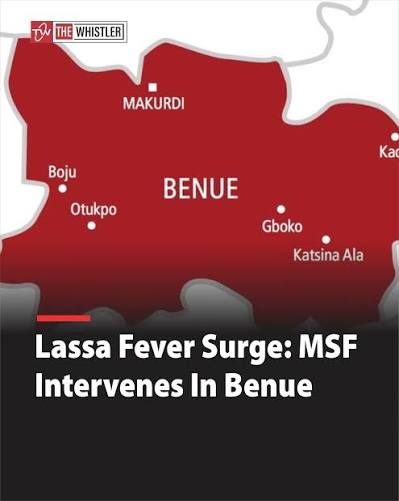
MSF Ramps Up Emergency Response as Lassa Fever Outbreak Deepens in Benue
By: Michael Mike
A worsening Lassa fever outbreak in Benue State has triggered an urgent intervention by international medical humanitarian organisation Médecins Sans Frontières (MSF), as rising infections and deaths place severe pressure on already stretched health facilities.
Working in collaboration with the Benue State Ministry of Health, MSF has deployed emergency teams to reinforce infection prevention and control (IPC) measures, following a surge in cases that has exposed critical gaps in healthcare safety systems—particularly affecting frontline workers.
Official data indicate that as of mid-March, the state recorded 410 suspected cases of Lassa fever, with 60 confirmed infections and 14 deaths. Disturbingly, 14 healthcare workers are among those infected, raising serious concerns about inadequate protective measures within treatment centres.
The situation reflects a broader national crisis. The Nigeria Centre for Disease Control and Prevention (NCDC) reports that Nigeria has recorded 167 deaths from Lassa fever in the first 13 weeks of 2026 alone, with a case fatality rate of 25.2 per cent—significantly higher than the 18.5 per cent recorded during the same period in 2025.
Benue State formally declared the outbreak on February 3, 2026, as infections escalated across communities in what is already recognised as one of Nigeria’s high-risk zones for the disease.
Lassa fever, an acute viral haemorrhagic illness endemic in Nigeria, typically peaks between November and April. It is primarily transmitted through contact with food or household items contaminated by infected rodents, but can also spread through direct contact with the bodily fluids of infected persons—making healthcare settings particularly vulnerable when safety protocols are weak.
Responding to the emergency, MSF launched a three-month intervention in March aimed at containing the outbreak and preventing further transmission. The mission was initiated at the request of state authorities, especially in light of rising infections among health workers and persistent shortages of personal protective equipment (PPE).
“Healthcare workers and patients are at significant risk when infection prevention measures are not fully in place,” said MSF Emergency Coordinator, Juniper Gordon. “Strengthening IPC and improving the organisation of care are critical to reducing transmission in health facilities.”
MSF teams are now providing hands-on support in selected facilities, focusing on strengthening clinical practices and improving patient management systems. This includes training healthcare workers on IPC protocols, reorganising triage processes, and establishing clearly defined high-risk and low-risk zones to limit cross-infection.
The organisation is also supplying essential materials, including PPE, hygiene kits, and sanitation supplies, while reinforcing waste management systems and infection control procedures. Handwashing stations are being installed across supported facilities, and surveillance efforts are being strengthened through improved data collection and monitoring.
In a move to support patient welfare, MSF is also providing food assistance to individuals in isolation centres, helping to ease the burden on affected families.
MSF said it is coordinating closely with global and national partners, including the World Health Organization, UNICEF, and the NCDC, to scale up response efforts and curb the spread of the disease.
Despite these interventions, public health experts warn that the outbreak underscores deeper systemic challenges in Nigeria’s healthcare system, particularly in infection control preparedness and rapid response capacity.
MSF Ramps Up Emergency Response as Lassa Fever Outbreak Deepens in Benue
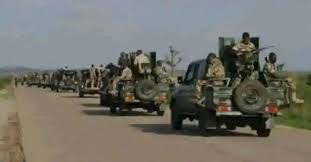
Troops arrest 20 suspects, recover cash, electronics in Adamawa raid
By: Zagazola Makama
Troops of 232 Battalion (Tactical) have arrested 20 suspects and recovered cash and electronics during a raid on suspected criminal hideouts in Mubi North Local Government Area of Adamawa State.
Security sources said the operation was conducted at about 5:00 a.m. on April 10 in Agwan Rami and Agwan Mallam areas, following credible intelligence.
The sources disclosed that troops, in collaboration with local hunters, stormed the identified hideouts and apprehended the suspects.
“During the operation, 20 suspects were arrested in criminal hideouts, while others were picked up for loitering during curfew hours,” the source said.
Items recovered include seven mobile phones, eight touch lights, one ThinkPad laptop and the sum of ₦2,137,285, among other items.
The suspects are currently in custody for further investigation and necessary action.
The operation is part of ongoing efforts to curb criminal activities and enforce law and order in Adamawa State.
Troops arrest 20 suspects, recover cash, electronics in Adamawa raid

Zulum Donates ₦50m to Family of Fallen Officer, Reaffirms Support for Military Heroes

MSF Ramps Up Emergency Response as Lassa Fever Outbreak Deepens in Benue

Troops foil motorcycle snatching attempt, rescue victims in Kaduna

Roger Federer’s Shock as DNA Results Reveal Myla and Charlene Are Not His Biological Children

THE PLIGHT OF FARIDA

FAILED COUP IN BURKINA FASO: HOW TRAORÉ NARROWLY ESCAPED ASSASSINATION PLOT AMID FOREIGN INTERFERENCE CLAIMS
-
 News2 years ago
Roger Federer’s Shock as DNA Results Reveal Myla and Charlene Are Not His Biological Children
-
Opinions4 years ago
THE PLIGHT OF FARIDA
-
 News12 months ago
FAILED COUP IN BURKINA FASO: HOW TRAORÉ NARROWLY ESCAPED ASSASSINATION PLOT AMID FOREIGN INTERFERENCE CLAIMS
-

 News2 years ago
EYN: Rev. Billi, Distortion of History, and The Living Tamarind Tree
-
 Opinions4 years ago
POLICE CHARGE ROOMS, A MINTING PRESS
-

 ACADEMICS2 years ago
A History of Biu” (2015) and The Lingering Bura-Pabir Question (1)
-

 Columns2 years ago
Army University Biu: There is certain interest, but certainly not from Borno.
-

 Opinions2 years ago
Tinubu,Shettima: The epidemic of economic, insecurity in Nigeria
