
News
How misdiagnosis, narratives are fuelling Nigeria’s banditry escalation

How misdiagnosis, narratives are fuelling Nigeria’s banditry escalation
By: Zagazola Makama
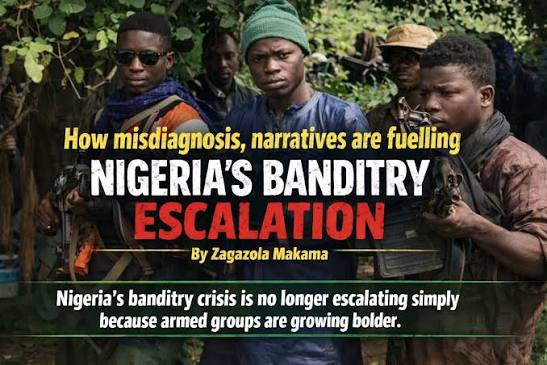
Nigeria’s banditry crisis is no longer escalating simply because armed groups are growing bolder. It is escalating because the country continues to misdiagnose the threat, apply blunt policy tools to differentiated actors, and unintentionally feed a violent criminal economy through ransom payments, politicised narratives and delayed state consolidation.
Across the North-West and parts of the North-Central, banditry has evolved beyond rural violence into a structured, profit-driven security threat. Yet public debate remains trapped between emotional appeals for dialogue and absolutist calls for force, leaving little room for the strategic clarity required to halt the violence.
At the heart of the escalation is money. Banditry today survives on a diversified revenue architecture that includes ransom payments, cattle rustling, illegal mining, arms trafficking, extortion levies on farming and mining communities, and collaboration with transnational criminal networks. Each successful kidnapping or “peace levy” reinforces the viability of violence as a business model.
Data released by the National Bureau of Statistics (NBS) in December 2024 underlined the scale of this economy with the North-West accounting for the highest number of kidnap incidents and victims.
Zagazola argue that as long as communities remain unprotected and ransom payments continue as a survival strategy, banditry will regenerate faster than military operations can suppress it. This is not ideology-driven violence at its core; it is cash-flow-driven criminality as every payment funds the next attack.
Another accelerant is Nigeria’s persistent failure to differentiate categories of armed actors. Security assessments increasingly point to at least two distinct groups operating within the banditry ecosystem.
The first consists of low-level, defensive armed actors, often rural residents who acquired weapons after suffering attacks and whose violence is reactive rather than predatory. The second group comprises entrenched, profit-driven bandit networks responsible for mass kidnappings, village destruction, sexual violence, arms trafficking and territorial control.
Yet public discourse and policy responses frequently collapse these actors into a single category of “bandits,” resulting in indiscriminate dialogue offers, blanket amnesty rhetoric or, conversely, broad-brush security operations that alienate communities. This conceptual error, allows high-value criminal leaders to masquerade as aggrieved actors while exploiting negotiations to buy time, regroup and rearm.
Dialogue has repeatedly been applied in contexts where the state lacks coercive leverage. Experiences in Zamfara, Katsina, Sokoto and Kaduna states and parts of the North-West show a consistent pattern: temporary reductions in violence following peace deals, followed by rapid relapse and escalation. Officials who participated in the dialogue have openly acknowledged that many agreements collapsed within months.
The negotiations conducted without sustained military pressure, intelligence dominance and post-agreement enforcement mechanisms merely incentivise armed groups to pause tactically. When criminals negotiate from a position of strength, dialogue becomes appeasement.
Perhaps the most dangerous accelerant is the ethnicisation of banditry. Although criminal gangs include actors of identifiable ethnic backgrounds, the violence itself is not driven by ethnic grievance. Nonetheless, selective media framing and political rhetoric like what had been witnessed in Plateau have increasingly cast banditry through identity lenses, particularly in farmer–herder contexts.
This framing obscures the criminal logic of the violence and deepens mistrust between communities that are themselves victims. In Nigeria today, the fulani herdsmen and pastoralists communities are being weaponized and stereotyped as bandits. This dangerous persecution has strengthens bandit recruitment narratives, allowing criminal leaders to cloak profit-driven violence in claims of ethnic persecution or genocide.
Historical records and sociological studies show that Fulani, Hausa, Tiv, Berom and other communities coexisted for decades through complementary economic systems. The breakdown of this coexistence has been exploited by armed groups seeking cover, recruits and informants. Security agencies possess significantly more intelligence on bandit networks than is visible in public debate. Lawful interceptions, human intelligence and post-operation assessments routinely reveal financial motives, supply routes and internal hierarchies within armed groups.
However, public advocacy for dialogue often relies on forest-level engagements that security officials describe as “theatrical performances” by bandits choreographed grievances designed to elicit sympathy and concessions. The disconnect between classified intelligence and public narratives has allowed emotionally compelling but strategically flawed arguments to dominate national discourse.
Another escalation factor is the emerging convergence between bandit networks and ideological terrorist groups as Nigeria’s internal security landscape firmly indicates that what has long been treated as banditry especially in the North-West and parts of North-Central Nigeria has evolved into a hybrid jihadist campaign, driven by Boko Haram (JAS faction) and reinforced by JNIM elements operating from Sahelian-linked forest sanctuaries. Shared arms supply chains, training exchanges and joint operations could transform banditry from criminal violence into full-spectrum insurgency if unchecked. Nigeria’s past experience with Boko Haram demonstrates the cost of dismissing such convergence as isolated or exaggerated.
Military operations have succeeded in degrading bandit camps in several corridors, but the absence of immediate governance has allowed violence to recycle. Clearing operations not followed by permanent security presence, functional courts, reopened schools, healthcare and markets leave vacuums that criminal actors quickly refill. Bandits and other criminals thrive where state authority is episodic rather than continuous. Security victories without governance consolidation merely displace violence spatially and temporally.
Therefore, Nigeria must urgently reset its approach by formally adopting threat differentiation, choking financial lifelines, regulating community defence structures, and ensuring intelligence-led, precise enforcement against high-risk criminal networks. Dialogue, they say, must be selective, conditional and embedded within formal disarmament and reintegration frameworks not deployed as a moral reflex.
Above all, the state must reclaim narrative control by defining banditry clearly as organised criminal violence, not a sociological misunderstanding. As one senior official put it, “Banditry escalates where sentiment overrides strategy. The cure begins with honesty.”
Without that honesty, Nigeria risks allowing a violent criminal economy to entrench itself deeper into the country’s security architecture at a cost measured not just in money, but in lives, legitimacy and national cohesion.
How misdiagnosis, narratives are fuelling Nigeria’s banditry escalation



UBEC, ADSUBEB distribute learning materials to support out-of-school children in Adamawa
Universal Basic Education Commission (UBEC) in collaboration with the Adamawa State Universal Basic Education Board (ADSUBEB) on Friday inaugurated the distribution of learning materials targeting out-of-school children across the state.
Speaking at the event in Yola, Dr Murtala Babayi, Executive Chairman, ADSUBEB appreciated President Bola Tinubu for his administration’s commitment to repositioning the education sector.
According to Babayi, no child should be left behind is not just a policy direction by the Tinubu administration but also a powerful national promise that we are proud to uphold today.
Babayi also commended the efforts of the first lady, Oluremi Tinubu for her advocacy for the welfare, dignity, and education of children especially the most vulnerable.
He said the commitment has become a beacon of hope and a source of inspiration to many across the country.
The Chairman said that the challenge of out-of-school children is not merely an educational issue but a social, economic, and moral concern that demands urgent and collective action.
“Every child out of school represents a dream deferred, a potential untapped, and a future at risk.
“Today, through this initiative, we are taking a bold and practical step to change that narrative”, he said.
According to him, the learning materials being distributed are more than just books and supplies but tools of transformation, instruments of empowerment, and symbols of renewed hope.
Babayi urged parents, guardians, and community leaders to ensure the children remain in school as a collective responsibility to secure their future.
Hajiya Amina Tafida, Zonal Coordinator UBEC in Adamawa, said the distribution of the materials is a collective effort to improve the quality of teaching and learning in public basic education schools across the state.
She said learning materials remain one of the most essential learning resources in any education system.
“When placed in the hands of learners and teachers at the right time and in the right quantity, they improve learners’ understanding, and support better academic performance.
“Today’s distribution is therefore a direct investment in the future of our children and the development of our state”, she said.
Tafida urged education secretaries across the state to ensure that the materials were distributed judiciously and strictly according to the enrollment figures of each school within their local government areas.
Mr Rimoh Jeremiah, Education Secretary of Demsa Local Government who spoke on behalf of his colleagues, assured judicious distribution of the materials and usage for maximum results.
The learning materials includes books, pencils, bags and Sandals among others.
UBEC, ADSUBEB distribute learning materials to support out-of-school children in Adamawa

ITF, NECA Train 30 Entrepreneurs to Turn Business Stories into Economic Value
…Eight-week programme targets weak business positioning, funding challenges
By: Michael Mike

The Industrial Training Fund (ITF) and the Nigeria Employers’ Consultative Association (NECA) have trained 30 entrepreneurs to overcome one of the major obstacles to business growth— the inability to communicate their value, attract customers and position their ventures for funding.
The intervention, delivered through an eight-week skills and storytelling programme, was designed to help business owners move beyond possessing technical or creative abilities to effectively presenting their products, services and economic contributions.
At the graduation ceremony in Abuja, the Executive Director of M-Search Creative Hub and M-Search Media, Zainab Salami, said the programme was conceived after the organisers identified storytelling and business positioning as persistent challenges among entrepreneurs.
She said many business owners had viable products and services but struggled to explain their value to customers, clients and potential investors, limiting their ability to grow and secure funding.
“When we were picking the participants, we wanted to make sure that we picked business owners. And we know that one issue they had was telling their stories and positioning themselves for customers, for clients and also for funding,” Salami said.
She explained that the training was intended to equip participants with practical tools to articulate their business journeys, demonstrate their impact and communicate the value they create for the economy.
“We wanted to make sure that they were able to position themselves, also talk about their value, talk about how they are also creating impact for the economy and make sure that they are able to tell their stories and become better storytellers that can improve Nigerian economic value basically,” she said.
The programme’s focus on storytelling reflects a growing recognition that business survival depends not only on the quality of a product or service but also on the ability of entrepreneurs to make their ventures visible, credible and attractive to the market.
Salami disclosed that the training featured mentors from Nigeria, the United Kingdom and South Africa, who provided practical frameworks on storytelling and business development.
She added that finance experts, including PhD holders in the field, also helped participants understand how businesses could combine profitability with value creation and economic impact.
“We had mentors across board. We had mentors from United Kingdom, we had from South Africa that were experts in storytelling and they were able to give them practical frameworks for them to be able to properly articulate what they were doing, their businesses,” she said.
Salami further explained that the financial component was designed to help participants appreciate the relationship between sustainable business growth, profit and wider economic contributions.
“We even had people from finance, PhD holders from finance that they were able to let them understand how your business can create impact, make profits and also provide value,” she added.
According to her, the organisers received 100 applications but selected only 30 participants to preserve the specialised nature of the programme and ensure that beneficiaries received adequate attention and practical guidance.
“We had 100 people, we had 100 applications but because we wanted to make it niche, we picked 30 participants for this cohort,” Salami said.
Representing the ITF-NECA Technical Skills Development Programme (TSDP), the Training Manager, ITF Modern Skills Training Centre, Abuja, Hayatu Abubakar Tamgol, said the initiative formed part of efforts to build a pool of skilled Nigerians capable of contributing meaningfully to the economy.
Tamgol said the ITF’s mandate was to encourage skills acquisition within Nigeria’s industrial and commercial sectors and develop indigenous manpower capable of meeting the changing needs of the economy.
“The Industrial Training Fund is a human resource development organisation that is empowered to encourage the acquisition of skills within the nation’s industry and commerce with a view to generate a pool of indigenous manpower sufficient to meet the needs of the economy,” he said.
He added that the organisation was committed to developing the competencies and capabilities of Nigerians to ensure that the country had sufficient skilled manpower to manage its economy.
“And in order to do that, the ITF needs to develop competencies and capabilities of Nigerians so as to have an adequate pool of Nigerians that are capable to manage the nation’s economy,” Tamgol said.
The ITF official said the organisation’s participation in the programme was aimed at ensuring that the skills acquired by youths and entrepreneurs could translate into employment, self-reliance and economic development.
Expressing satisfaction with the outcome of the training, Tamgol said the participants had demonstrated that the programme achieved its learning objectives.
“I’m coming in at the graduation time, and from what I have seen, and from the success stories that these trainees were able to share, I’m very satisfied that learning has taken place here,” he said.
He said both the ITF and NECA were satisfied with the results recorded during the programme, adding that skills development remained essential to tackling youth unemployment and promoting self-employment.
Tamgol also disclosed that the ITF, under the leadership of its Director-General, was implementing its flagship Skills of Artisans programme, which provides Nigerians across the country with opportunities to acquire practical skills.
He said the initiative was designed to enable beneficiaries to become self-employed, earn a livelihood and contribute to a stronger economy.
“The ITF presently, under the leadership of our Director General, is implementing her flagship programme, which is the Skills of Artisans programme. And this programme is giving Nigerians the opportunity, all over the country, for them to acquire skills, so as to be able to be self-employed, for them to be able to take care of themselves, so that Nigeria will be better off,” he said.
For one of the beneficiaries, the training offered a new understanding of the importance of deliberately communicating her personal and business journey.
She said the programme taught her that entrepreneurs risk losing control of their narratives when they fail to explain their experiences, vision and value effectively.
“Because one of the things we learn in class is, if you don’t tell your story, somebody will tell it for you and they will tell it wrongly,” she said.
The participant added that technical or creative ability alone was insufficient if customers, partners and investors remained unaware of the person behind the work or the value being created.
“One thing that I’ve learned is that no matter how good you are as a creative, if nobody knows you, it’s like a waste,” she said.
She said the training had equipped her to communicate her work more effectively, explain her vision and position her creative enterprise for greater visibility.
“For me now, learning the story now, I’m not just being a creative, I’m able to let people know what I do and my vision as a whole,” she added.
ITF, NECA Train 30 Entrepreneurs to Turn Business Stories into Economic Value

Airstrikes destroy terrorist logistics hubs, neutralise 18 in Tumbunma Baba
By Zagazola Makama

Nigerian military aircraft under Operation Hadin Kai have destroyed several terrorist structures and logistics hubs, neutralising about 18 terrorists in an air interdiction operation at Tumbunma Baba in the Tumbuns general area.
The operation, conducted at about 6:05 a.m. on Sept. 11, followed intelligence reports of a high-profile terrorist meeting taking place on the islands.
According to military sources, the formation, conducted the air interdiction after confirmatory intelligence, surveillance and reconnaissance (ISR) missions on Sept. 9 identified several terrorist structures and logistics hubs in the area.
The aircraft reportedly acquired and engaged the identified targets with onboard munitions, resulting in the destruction of several structures and logistics facilities.
The strikes also neutralised approximately 18 terrorists believed to be operating from the enclave.
Military sources assessed the operation as having achieved an estimated 85 per cent success rate, with further air interdiction recommended to consolidate the gains and disrupt surviving elements in the area.
The operation is part of sustained efforts by the military to degrade terrorist networks, destroy their logistics infrastructure and deny them freedom of movement and coordination within the Tumbuns.
Airstrikes destroy terrorist logistics hubs, neutralise 18 in Tumbunma Baba

Troops recover cattle after suspected crop destruction in Jos East

UBEC, ADSUBEB distribute learning materials to support out-of-school children in Adamawa

ITF, NECA Train 30 Entrepreneurs to Turn Business Stories into Economic Value

Roger Federer’s Shock as DNA Results Reveal Myla and Charlene Are Not His Biological Children

THE PLIGHT OF FARIDA

FAILED COUP IN BURKINA FASO: HOW TRAORÉ NARROWLY ESCAPED ASSASSINATION PLOT AMID FOREIGN INTERFERENCE CLAIMS
-
 News2 years ago
Roger Federer’s Shock as DNA Results Reveal Myla and Charlene Are Not His Biological Children
-
Opinions5 years ago
THE PLIGHT OF FARIDA
-
 News1 year ago
FAILED COUP IN BURKINA FASO: HOW TRAORÉ NARROWLY ESCAPED ASSASSINATION PLOT AMID FOREIGN INTERFERENCE CLAIMS
-

 News2 years ago
EYN: Rev. Billi, Distortion of History, and The Living Tamarind Tree
-
 Opinions5 years ago
POLICE CHARGE ROOMS, A MINTING PRESS
-

 ACADEMICS3 years ago
A History of Biu” (2015) and The Lingering Bura-Pabir Question (1)
-

 Columns3 years ago
Army University Biu: There is certain interest, but certainly not from Borno.
-

 Politics1 year ago
2027: Why Hon. Midala Balami Must Go, as Youths in Hawul and Asikira/Uba Federal Constituency Reject ₦500,000 as Sallah Gift
