
News
How Plateau Communities Are Weaponising Protest to Commit Atrocities and Distort the Narrative

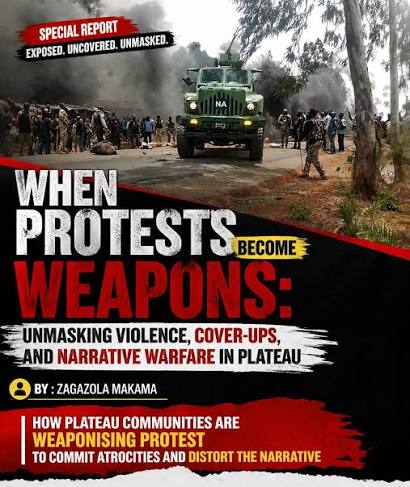
How Plateau Communities Are Weaponising Protest to Commit Atrocities and Distort the Narrative
By Zagazola Makama
A disturbing and increasingly dangerous pattern is emerging across parts of Plateau State, one in which protests, traditionally seen as a civic tool for grievance expression, are being weaponised as instruments of violence, obstruction of justice, and direct confrontation with security forces. Recent incidents in Barkin Ladi, Riyom, Jos South and surrounding flashpoints reveal a calculated mischief where anger, misinformation, and communal bias converge to produce mob action, often targeting the very troops deployed to protect lives.
What is unfolding across parts of Plateau State is no longer a series of isolated disturbances, it is the consolidation of dangerous occurrences: the weaponisation of protest as a shield for criminality, a tool for mob violence, and a mechanism for rewriting reality. Beneath the surface of seemingly spontaneous demonstrations lies a pattern, deliberate, repeated, and deeply corrosive to justice and national security.
At the heart of this troubling trend. A violent incident occurs sometimes involving external attackers, but increasingly linked to actors within the same communities. Before investigations can mature, a protest is mobilised. Women and youths are deployed en masse, roads are blocked, security personnel are confronted, and a narrative is rapidly constructed: the community is under siege, the suspects are innocent, and any attempt at accountability is framed as persecution. In this atmosphere, facts are buried, evidence is contaminated, and justice is effectively obstructed.
The events of 26 April shed light on the mischief: Shortly after the arrest of some youths who attacked and brutally killed a Fulani herder, killed six cattle and injured 20 others with gunshot wounds in Makera area of Riyom Local Government Area of Plateau State, women and youths tried to obstruct the troops and stop the movement of the arrested suspects. Tension rose shortly after the arrest when women and youths from the community mobilised in large numbers and blocked the road in an attempt to attack soldiers and prevent the troops from taking away the suspects.
The events of April 20 in Kassa, Barkin Ladi LGA, illustrate same dynamics following the burial of a local resident reportedly killed days earlier, a crowd descended on a military checkpoint at Rapung Kassa, burning structures, destroying equipment, and confronting soldiers. The anger was real, but it was also redirected. Rather than targeting the perpetrators of the initial killing, the mob turned on troops who had been actively deployed to prevent further attacks.
Despite the scale of provocation, the soldiers held their ground without firing a shot. Not a single civilian casualty was recorded. Yet, the narrative that followed in some quarters painted the troops as aggressors, not victims of mob violence. This is the paradox of Plateau’s crisis. Those enforcing the law are increasingly portrayed as the problem, while those undermining it are recast as defenders of community interest. More concerning is how protests are systematically used to exonerate individuals suspected of heinous crimes, murder or arson.
The arrest of three Berom militia and recovery of 84 rustled cattle after attack on Fulani pastoralist in Riyom Local Government Area of Plateau State should have marked a step toward accountability. Instead, it triggered immediate protests demanding their release. The justification was familiar “they were helping security agencies to protect their communities when they were arrested” This reflexive defence, regardless of the evidence, has become a hallmark of the current climate. Once a suspect is identified as a local Berom indigene, the machinery of protest is activated, not to seek truth, but to suppress it.
The same script was previously applied in April 7, 2026, when the Berom youths and women in Angwan Rukuba disrupted the mass funeral service for victims of a March 29, 2026, attack. The demonstrators, who gathered at an ECWA church, blocked the entrance, held the Plateau Deputy Governor at ransom and prevented the burial ceremony from proceeding to demand the immediate release of three community youths arrested by military authorities.
The three youths were arrested by the troops for targeted attack and arson. They attacked a family, injured two and burnt the house of the victims. But what followed was fabricated lies that the youths were only protecting their communities when they were arrested. In this context, protecting their communities means they should attack innocent people in their homes who had nothing to do with the Fulani crisis but because of their faith.
The arrest of nine suspects in Danwal on April 18, when men found with weapons was another evidence that those committing violence in Plateau were both from within and outside the state. Except that those from within have the support of the entire community.
This tactic extends beyond shielding suspects; it often evolves into direct attacks on perceived “outsiders.” In several instances, protests have morphed into targeted aggression against non-indigenes, individuals with no connection to the original incident. The 2021 killing of commuters in Jos North remains a grim reminder. Travellers were intercepted, profiled, and killed by a mob driven by suspicion and rage.
The August 14, 2021 Anguwan Rukuba Road massacre was one of the deadliest mob attacks on commuters in Plateau history. A convoy of buses carrying Muslim travellers returning from Bauchi was intercepted on Rukuba Road. Attackers blocked the road, identified passengers, and launched an assault. 22–25 people were killed, with several others injured.
Jos–Jingir Road killings (Jos North, February 2022). A passenger vehicle was attacked where three commuters were killed, while others were injured or rescued. The attack occurred alongside wider communal unrest in the area.
In 2025 in Mangu LGA, a passenger bus travelling to a wedding lost its way and entered a volatile area. An angry mob surrounded and attacked the vehicle. At least 12 passengers were massacred, others injured, and some rescued. The bus was reportedly set ablaze using weapons and petrol.
On February 23, 2026, angry youths and women blocked the major highway linking Barkin Ladi to Jos. The protest was over the killing of about 10 residents. At least five persons identified as Muslims and Hausa were selected and killed on the spot. No arrest was made while those that were previously arrested were released without prosecution.
More recently, similar patterns have emerged where roadblocks and protests create conditions for harassment, intimidation, and, in some cases, violence against innocent passersby. Protest, in these contexts, becomes both a cover and a catalyst.
Historical precedent suggests this is not a new phenomenon. The 2018 protests in Dura Du, Jos South LGA, offer a revealing case. At the time, hundreds of women dressed in black, some naked, staged demonstrations amid the search for a missing retired senior army officer who was murdered in cold blood. The protests drew sympathy and attention. But what followed was deeply unsettling: investigations later uncovered a site containing multiple bodies that were massacred and concealed vehicles, evidence of systematic killings that had gone undetected.
The implication was chilling: the protest had coincided with, and arguably distracted from, the concealment of serious crimes. It reinforced a growing belief that, in certain contexts, protests in Plateau State are not just reactions, they are strategic diversions.
This pattern of diversion is further compounded by a persistent “war of narratives.” In many Plateau incidents, initial reports quickly attribute violence to external actors, particularly Fulani herders or Islamist invaders. While such actors are indeed responsible for numerous attacks, the blanket attribution often obscures internal dynamics. The killing of a traditional ruler in Langtang North is instructive. Initially blamed on outsiders (Fulani bandits), the crime was later linked to individuals within the community. Yet, before the truth could fully emerge, a mob intervened and executed the suspects. The opportunity for due process and for uncovering the full network behind the crime was lost.
Same incident happened in Barkin Ladi when troops engaged supposedly Fulani bandits in a heavy gunfire, killing five attackers while others fled. Early in the morning, it was discovered that the corpses were hastily buried by residents in the community to avoid scrutiny on the identity of the attackers.
Such incidents reveal a deeper issue: the reluctance to confront internal culpability. By externalising blame, communities avoid difficult questions about local complicity, including the role of youth groups, informal militias, and even influential figures. In some cases, there are credible indications that elements within communities are involved in cattle rustling, reprisal attacks, and the harbouring of armed groups. These activities, in turn, provoke counter-attacks, creating a self-sustaining cycle of violence that is then publicly attributed to “outsiders.”
Amid this complexity, the role of the state government becomes critical and, increasingly, questionable. The relative silence or cautious neutrality of authorities in the face of repeated mob actions and attacks on security installations has not gone unnoticed. While efforts at dialogue and de-escalation are important, the absence of firm accountability measures risks being interpreted as tacit approval. When checkpoints are burned, suspects are shielded, and mobs confront armed forces without consequence, it sends a dangerous signal: that such actions carry little cost.
This perceived inaction feeds into the broader narrative battle. Plateau’s crisis is no longer fought only with weapons, it is fought with stories. Competing versions of events are amplified through local networks, media channels, and international advocacy platforms. In this environment, perception often overtakes reality. A community that attacks a military post can still present itself as a victim; a suspect apprehended with arms can be recast as a protector; a mob killing can be reframed as justice.
Meanwhile, on the ground, troops continue to operate under extraordinary constraints. Between April 9 and 20, multiple attacks were foiled across Barkin Ladi, Riyom, and Mangu. Armed groups were intercepted, civilians were rescued, and patrol dominance was established in key corridors. In Kampani Zurak, residents welcomed soldiers for restoring calm. Yet, in other areas, the same troops face hostility, obstruction, and even violence. The contrast is glaring and evident.
The restraint shown by these troops remains one of the few constants in an otherwise volatile environment. In Kassa, they absorbed the destruction of their post without retaliation. In Vom, they prevented a mob from attacking an NSCDC facility. Across flashpoints, they have chosen discipline over force, even when provoked. But such restraint is not inexhaustible. It relies on a broader ecosystem of accountability, cooperation, and truth elements that are currently under strain.
This restraint, however, should not be mistaken for weakness. It is a professional choice—one that prioritises civilian safety even in the face of aggression. But it also raises a pressing question: how long can such discipline hold if provocations continue unchecked?
What Plateau faces today is not just insecurity. It is a crisis of accountability and narrative integrity. When protests are used to shield criminals, when mobs replace courts, and when truth is subordinated to sentiment, the foundations of justice begin to erode. Reversing this trend will require more than security operations. It demands honest introspection within communities, decisive action from authorities, and a collective commitment to separating grievance from manipulation.
Zagazola Makama is a Counter Insurgency Expert and Security Analyst in the Lake Chad Region


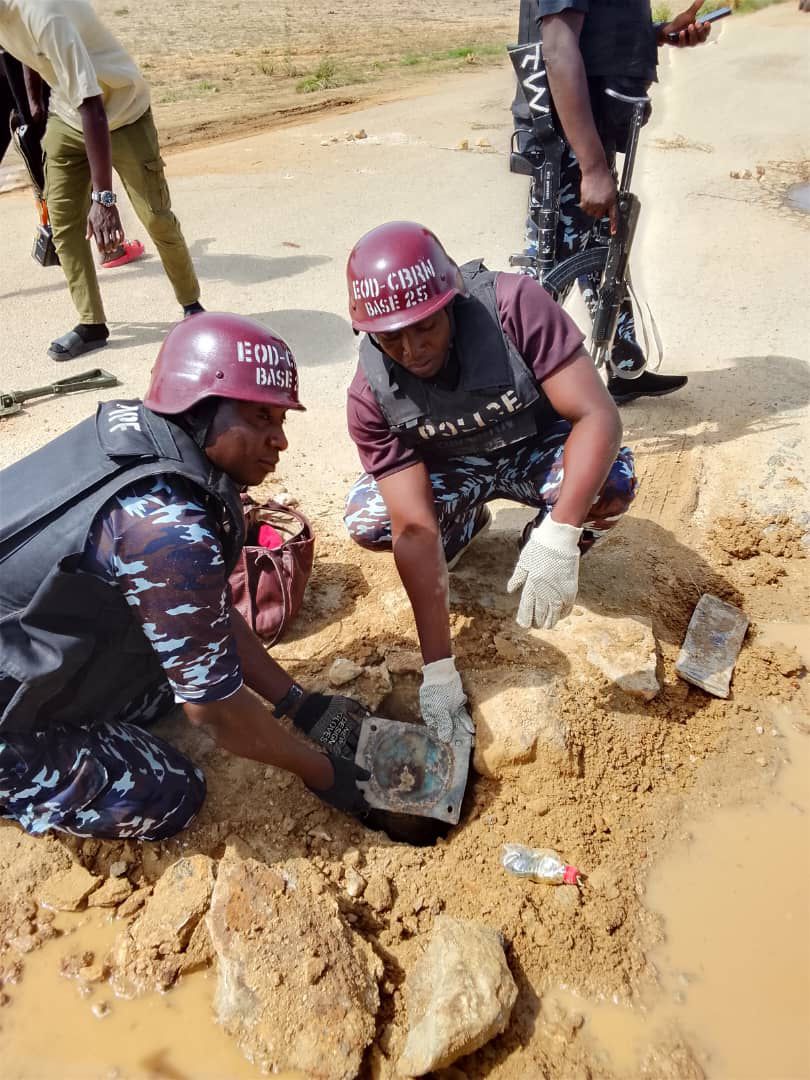
Police Foil IED Attack, Destroy Explosive Device in Zamfara
By: Zagazola Makama
The Zamfara State Police Command says it has successfully foiled a planned attack after its Explosive Ordnance Disposal (EOD) unit discovered and safely destroyed an Improvised Explosive Device (IED) in Tsafe Local Government Area of the state.
The Command said the operation was carried out on Friday at about 4:15 p.m. along the Kunchin Kalgo axis following credible intelligence received through community engagement efforts.
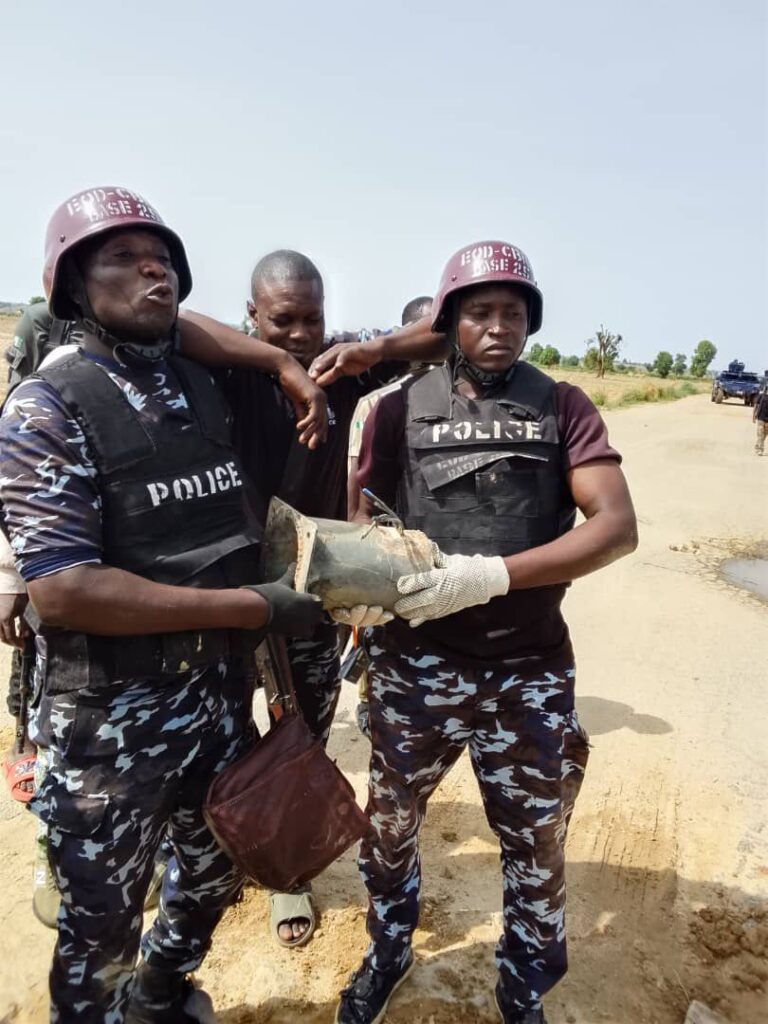
According to a statement issued by the Command, operatives of the Violence Crime Response Unit (VCRU), in collaboration with the EOD team, swiftly mobilised to the area after receiving information about a suspected explosive device planted by bandits.
Preliminary findings indicated that the device was strategically planted along the road with the intent of causing mass casualties among commuters and other road users.
The statement added that the timely response of the operatives led to the safe detection, evacuation and controlled destruction of the explosive device before it could cause any harm.
The Command commended the vigilance and cooperation of local residents, describing community support as critical to ongoing security operations in the state.
It further assured residents that efforts were ongoing to identify, arrest and prosecute those responsible for planting the device.
The police also disclosed that patrols had been intensified across vulnerable areas to prevent similar incidents and ensure the safety of road users.
The Commissioner of Police, A.M. Bello, reiterated the Command’s commitment to sustained operations against banditry and other violent crimes in Zamfara State.
Police Foil IED Attack, Destroy Explosive Device in Zamfara
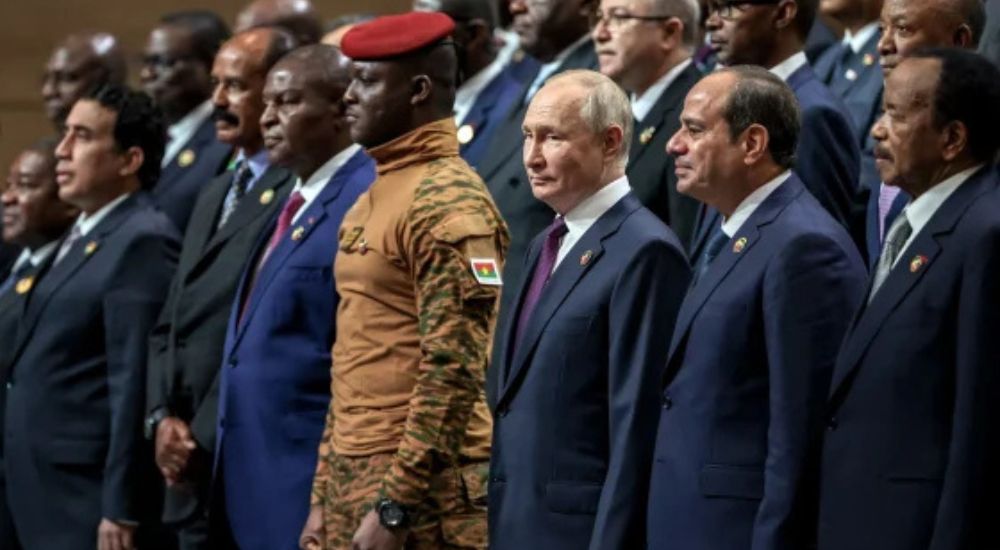
Russia’s Role in the Widening Insecurity in Africa
By Ipole Amajama
The African continent is once again at the centre of a geopolitical storm. From the Sahel to Nigeria, insecurity is spreading at an alarming speed, threatening fragile states and destabilising entire regions. While local dynamics and systemic weaknesses play a role, Russia’s involvement raises troubling questions about its motives and the consequences for Africa and beyond.
Nigeria faces a growing terrorist threat that is no longer confined to its borders. The collapse of governance in several states of the Alliance of Sahelian Juntas (AES) has created fertile ground for extremist groups. These failed states have become incubators of insecurity, exporting violence into neighbouring countries. The challenge is no longer whether to support or oppose the junta, but how to deal with their failures and the regional consequences of their isolation.
Russia’s actions in Africa reveal a clear pattern: its primary aim is not to stabilise the continent but to create a secondary frontline against the West. By fostering instability in Africa, Moscow seeks to divert European attention and resources away from Ukraine. The Kremlin’s involvement is less about partnership and more about exploiting chaos for strategic advantage.
This raises a critical question: is Russia simply incapable of offering meaningful support, or is it deliberately spreading insecurity? The evidence suggests that Moscow benefits from turmoil in Africa, whether by design or by opportunism.
Whatever happens in Africa has little direct impact on Russia. The continent is geographically distant, and Russia’s economic ties with African nations are minimal. In fact, Africa’s collapse could even benefit Moscow. African oil, gas, and mineral exports compete with Russia’s own. If insecurity disrupts African production, global prices rise—strengthening Russia’s export revenues.
Europe, however, bears the brunt of Africa’s instability. Migratory pressure from conflict zones is already reshaping European politics. Far-right parties, often sympathetic to Russia, are gaining ground in countries like France and the UK. By exacerbating insecurity in Africa, Moscow indirectly fuels migration flows that influence European voters. This strategy weakens European unity and undermines support for Ukraine.
From a Russian perspective, encouraging instability in Africa is a shrewd way to manipulate European politics. The more Africans flee insecurity and attempt to reach Europe, the greater the strain on European societies. This pressure amplifies populist narratives, strengthens far-right movements, and erodes mainstream political consensus. Since many far-right parties are pro-Russia, the Kremlin gains strategic leverage by destabilising Africa.
Russia’s record in the Sahel is damning. It has done nothing to fight terrorism. Instead, it has encouraged juntas to isolate themselves from the international community, sever ties with African neighbours, and expel Western intelligence and military support. In exchange, the Sahel states received nothing of substance. Russian involvement has failed to improve security, governance, or economic conditions. On the contrary, the situation has worsened.
It is difficult to determine whether Russia is acting with malicious intent or simply behaving irresponsibly. Either way, the outcome is the same: worsening insecurity. Moscow’s promises of support have proven empty. Its presence has deepened instability, leaving African populations more vulnerable than before.
The hypothesis of a cynical will to facilitate insecurity cannot be dismissed. Russia appears to be the only clear winner of Africa’s suffering. By exploiting chaos, Moscow strengthens its geopolitical position, increases its export revenues, and undermines European resolve.
The lesson is stark: Africa must never again rely on a self-proclaimed outside “saviour.” Russia’s involvement has shown that external powers may prioritise their own interests over African stability. The continent must instead build resilience through self-reliance and multilateral cooperation.
African nations should pursue balanced partnerships that preserve freedom of action. By engaging with multiple partners—regional organisations, international institutions, and diverse allies—Africa can avoid dependency and secure more effective support. Only through collective action can African states confront terrorism, strengthen governance, and protect their sovereignty.
Russia’s role in Africa is not about solidarity or development. It is about exploiting insecurity to advance its global strategy. By destabilising Africa, Moscow weakens Europe, strengthens far-right allies, and boosts its own economic position. Whether through negligence or deliberate manipulation, Russia has worsened Africa’s plight.
The challenge for Africa is to recognise this reality and chart a new path. The continent must rely on itself, build multilateral frameworks, and reject the false promises of external saviours. Only then can Africa safeguard its future and prevent its suffering from being weaponised to serve foreign ambitions.
Amajama, a social commentator, writes from Abuja and can be reached via amajamaip@gmail.com
Russia’s Role in the Widening Insecurity in Africa
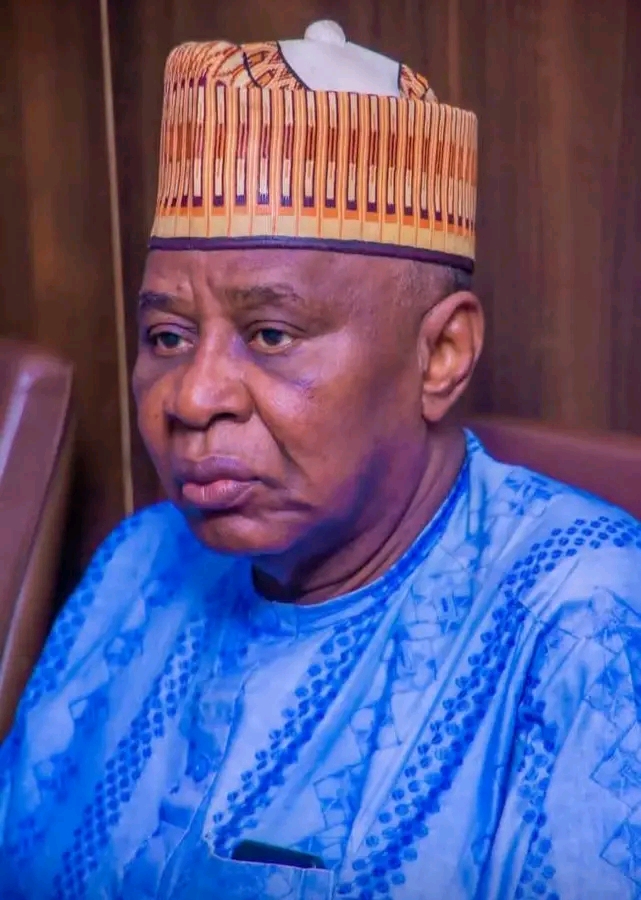
Buni approved the appointment of Yerima as the new emir of Ngazargamu.
By: Yahaya Wakili
Governor Mai Mala Buni CON, COMN of Yobe state has approved the appointment of Alhaji Yerima Ibn Mahmud as the new Emir of Ngazargamu.
This is contained in a statement signed and issued today, 12th June, 2026, by the acting secretary to the state government, Dr. Mohammed Goje, in Damaturu.
The appointment of the new emir of Ngazargamu followed the demise of the late emir, Alhaji Tijjani Ahmed Ibn-Saleh Geidam, who passed away recently in Cairo, Egypt, after a protracted illness.
Until his appointment, the new Mai Ngazargamu was the Turakin Ngazargamu, an office he held for 16 years. He was also a member of the State House of Assembly.
The new emir of Ngazargamu, Alhaji Yerima Ibn Mahmud, has at different times served as a member of the State Executive Council and the state commissioner for livestock development before the new appointment.
Governor Mai Mala Buni, while congratulating the new emir and the Ngazargamu emirate, urged the new emir to use his wealth of experience to unite the people, promote peace and peaceful coexistence, and foster economic growth of the emirate, Yobe State, and Nigeria as a whole.
Similarly, Governor Buni called on the people to support the new emir to execute the functions of his office diligently, effectively, and efficiently for the benefit of the people, peace, unity, and prosperity of the emirate.
Buni approved the appointment of Yerima as the new emir of Ngazargamu.

Police Foil IED Attack, Destroy Explosive Device in Zamfara

WHEN TERRORISTS MOCK THE STATE

Russia’s Role in the Widening Insecurity in Africa

Roger Federer’s Shock as DNA Results Reveal Myla and Charlene Are Not His Biological Children

THE PLIGHT OF FARIDA

FAILED COUP IN BURKINA FASO: HOW TRAORÉ NARROWLY ESCAPED ASSASSINATION PLOT AMID FOREIGN INTERFERENCE CLAIMS
-
 News2 years ago
Roger Federer’s Shock as DNA Results Reveal Myla and Charlene Are Not His Biological Children
-
Opinions4 years ago
THE PLIGHT OF FARIDA
-
 News1 year ago
FAILED COUP IN BURKINA FASO: HOW TRAORÉ NARROWLY ESCAPED ASSASSINATION PLOT AMID FOREIGN INTERFERENCE CLAIMS
-

 News2 years ago
EYN: Rev. Billi, Distortion of History, and The Living Tamarind Tree
-
 Opinions4 years ago
POLICE CHARGE ROOMS, A MINTING PRESS
-

 ACADEMICS2 years ago
A History of Biu” (2015) and The Lingering Bura-Pabir Question (1)
-

 Columns2 years ago
Army University Biu: There is certain interest, but certainly not from Borno.
-

 Politics1 year ago
2027: Why Hon. Midala Balami Must Go, as Youths in Hawul and Asikira/Uba Federal Constituency Reject ₦500,000 as Sallah Gift
