
Education
How we started Operation with only 12 staff 10 years ago – Misau Model Academy

How we started Operation with only 12 staff 10 years ago – Misau Model Academy
By Mohammed Kaka Misau
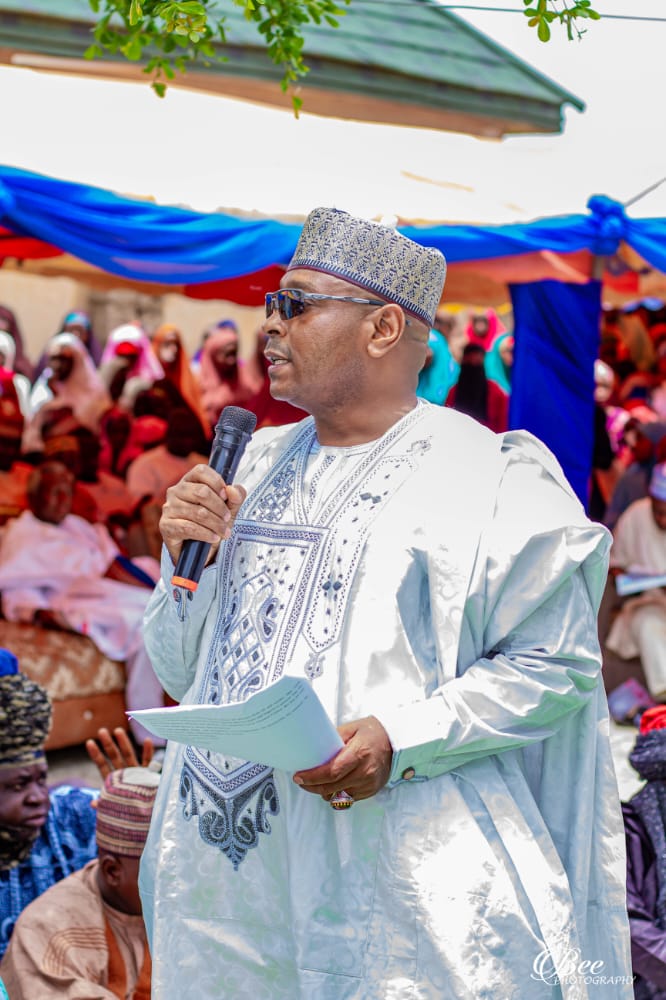
Misau Model Academy celebrates 10 years of existence. The Proprietor, Alhaji Ahmed Yaya revealed that the school commenced operations with only 12 staff in 2012 before it grew to the level it is today.
Speaking during the 10th year anniversary, speech and prize giving day of the school, Alhaji Yaya said that the school has recorded tremendous successes since its establishment in the last ten years.
Addressing parents, staff and dignitaries that graced the occasion, the proprietor pointed out that the 12 staff’s net-worth per month was just N139 thousand, equivalent to N1, 668,000 per annum as at 2012.
According to him, the number of the staff was increased from 12 to 22 with a salary net-worth of N2, 148,000 per annum.
He said that the school kept employing more staff up to the year 2022 where the primary section alone is having 26 staff with a monthly salary of over N300 thousand, with a total salary net-worth of over N4.6 million.
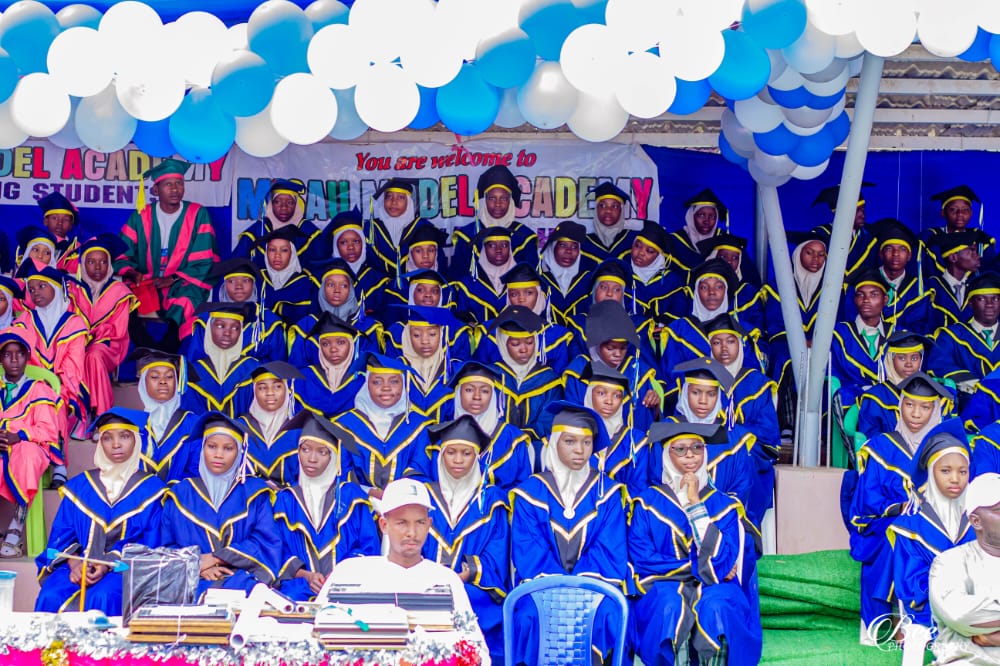
The school proprietor who said the school spends N15 million for the payment of staff of the secondary school session per annum, added that the only source of revenue for the school is school fees.
The Proprietor appealed to the parents to ensure timely payment of the children’s school fees to enable the management to pay staff salary as at when due for efficient service delivery.
While stating that the first enrollment of the school began in 2012, Alhaji Yaya said the total enrollment of boys for 2018 and 2019 stood at 239 while that of the girls was 231.
“As it is now, we have about 1,150 students in Misau Model Academy. We all know that students are not enrolled to be retained forever, hence, graduation becomes necessary”, he said.
To that regard, the proprietor said that the primary section of the school has since inception in 2012 graduated six sets, totaling 407 pupils while the school has graduated 5 sets in her secondary section totaling 550 students.
He said that over 80 percent of the secondary school students that graduated from the school are now studying in various higher institutions of learning.
On infrastructure, the proprietor stated that the school has five houses which are all named after the core values of the school which are Morality, Obedient, Discipline, Excellence and Learning.
According to him, the school which began operations with few classroom blocks now has a full complement of classes with a computer room, science laboratory and library, adding that the school is also involved in extracurricular activities.
“In March 2015, the school emerged first position in the MSS debate competition and represented Misau local government at state level”, he said.
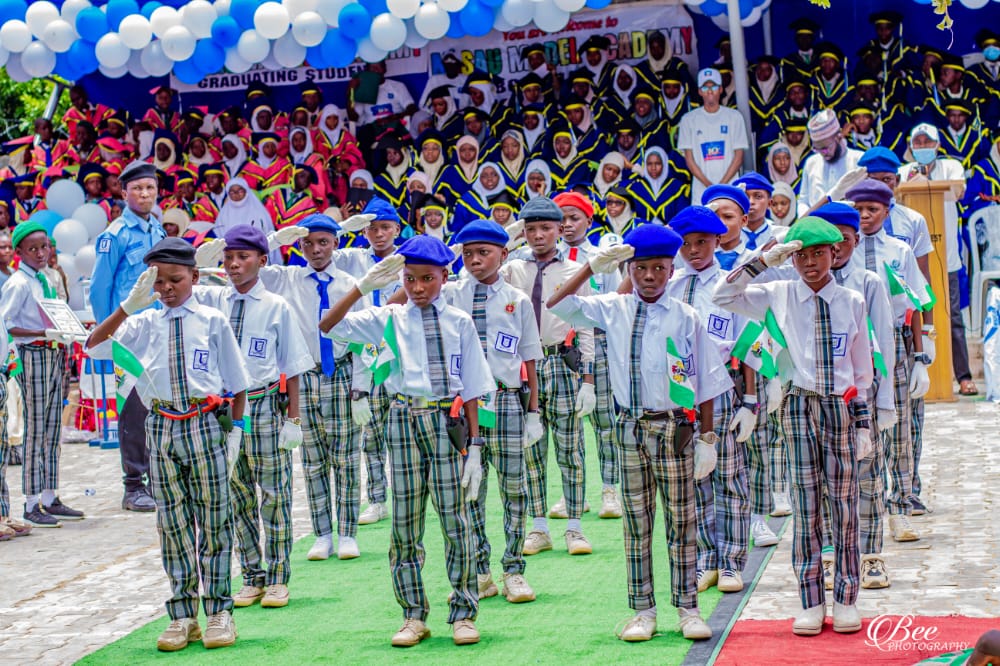
The proprietor who reeled out various performances of the school in extracurricular activities, pointed out that the school has performed excellently in external examinations.
The proprietor stated that 90 percent of the academy’s students got the minimum requirement for entry into the University of Five Credits, including English and mathematics.
“In 2018 WASC, 90 percent got the university requirement while in NECO, it stood at 85 percent. In 2019, WASC 80 percent while NECO 82 percent, in 2020, WASC 75 percent while NECO was 68 percent, in 2021 WASC 45 percent, NECO 70 percent, in 2022 WASC 85 percent, NECO is not ready yet”, he said.
“Our achievements so far, from the application of the five core values, to be candid and straight forward, the school has achieved a lot in morality as our students are morally sound, no much cases of immoral behavior were reported, obedience has been the philosophy of our students and are complying with directives given to them at all times”, Alhaji Yaya said.
He noted that commendations are being received from members of the public on a daily basis, added that the students are disciplined and the school ensured that only competent staff are engaged to work in the school.
Also Read: Hundreds of Boko Haram fighters fled to new location after…
The proprietor, who commended the staff for their efforts in ensuring the smooth academic activities in the school, thanked Misau emirate council for all the support it has been rendering to the school.
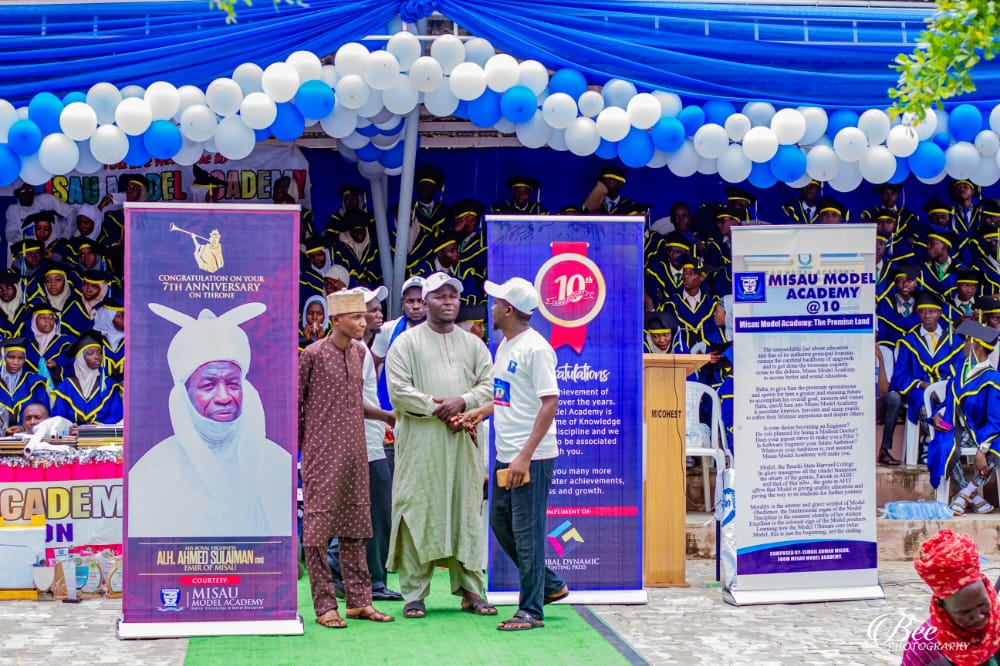
While congratulating the emir of Misau Alh. Ahmed Suleiman mni for spending 7 years on the throne so far, the proprietor said the school will present 10 copies of Holy Qur’an to the emirate council.
In his goodwill message, the emir of Misau, His Royal Highness, Alh. Ahmed Suleiman mni commended the Proprietor of the school for establishing the school in Misau local government area.
The Emir who expressed delight over the achievements recorded by the school, said for running the school successfully within ten years, the emirate and the entire people of Misau are proud of the management of the school.
The Emir prayed to Allah to continue to guide and uplift the Misau model academy to greater height, adding that both parents and other community members should also pray for the continued success of the school.
How we started Operation with only 12 staff 10 years ago – Misau Model Academy



A Time To Read, Reflect, and Learn
By: Our Reporter
As predicted by many, during his two-week leave, Vice President Kashim Shettima, by custom, takes time for study and reflection.
Leadership is sustained by the willingness to keep learning. Sometimes, stepping away from the daily rush creates the space to examine ideas more carefully and return to responsibility with greater clarity.

For the Vice President, the period is also an opportunity to deepen the knowledge required for continued service to Nigeria.

Learning does not end when responsibility begins. In many ways, greater responsibility makes learning even more necessary.
A Time To Read, Reflect, and Learn
Nigeria’s Education Crisis Now About System Capacity, Not School Enrolment – Report
By: Michael Mike
Nigeria’s education challenge has shifted from getting children into school to building an education system capable of delivering quality learning, according to a new policy report by the Athena Centre for Policy and Leadership.
The report, Nigeria’s Education Capacity Crisis: Closing the Gap Between Enrolment Growth and System Capacity, authored by Professor Temitayo Shenkoya and Anita Olatunde, argued that while the country has made remarkable progress in expanding access to education, inadequate investment in classrooms, teachers, infrastructure and governance has left the system overwhelmed and unable to translate rising enrolment into improved learning outcomes.
The publication, released on Wednesday in Abuja, described the situation as a structural capacity crisis rather than a temporary funding challenge, warning that without far-reaching institutional reforms, Nigeria risks undermining its human capital development and long-term economic competitiveness.
According to the report, 40.1 million pupils and students were enrolled in Nigeria’s public basic and secondary education system during the 2024/2025 academic session across 107,042 public schools.
However, the rapid increase in enrolment has far outpaced investments needed to sustain quality education.
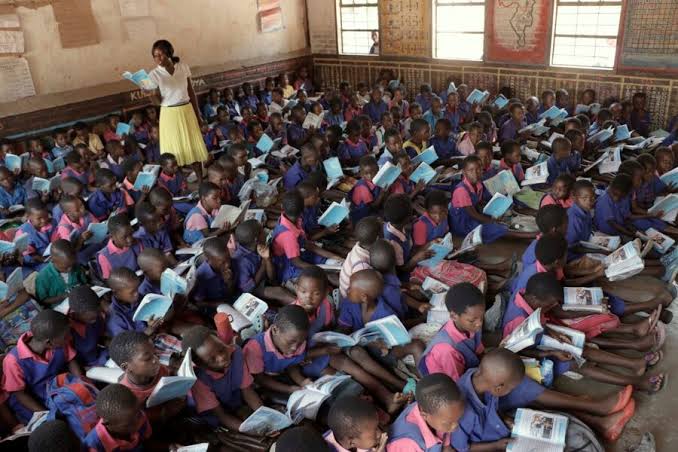
The report revealed that an average classroom accommodates about 60 students, while roughly 66 students share a single toilet, highlighting severe overcrowding and poor sanitation in many public schools.
It also noted that Nigeria devoted only 0.3 per cent of its Gross Domestic Product (GDP) to public education in 2025, a figure significantly lower than allocations recorded in several comparable African countries.
The authors argued that the country’s education system is constrained less by enrolment than by weak governance structures, fragmented planning, inadequate teacher deployment, poor instructional quality, weak institutional coordination and limited use of education data for policy decisions.
“Nigeria’s education challenge is no longer defined solely by access; it is increasingly one of system capacity,” the report stated.
Rather than focusing exclusively on expanding school access, the report urged governments at all levels to prioritise strengthening institutional capacity, improving accountability mechanisms and adopting evidence-based planning to enhance learning outcomes.
Central to its recommendations is the development and effective deployment of the Digital Nigeria Education Management Information System (DNEMIS), which it said should serve as the backbone for planning, monitoring and evaluating education performance nationwide.
Among other recommendations, the report called for the establishment of integrated State Education Management Information Systems linked to the national platform, sustained multi-year investments in classrooms, teachers and digital infrastructure, evidence-based teacher deployment, improved instructional quality and stronger school leadership.
It also advocated annual infrastructure and learning-performance scorecards to monitor progress, targeted interventions for vulnerable learners and improved coordination among the Federal Ministry of Education, state governments, State Universal Basic Education Boards (SUBEBs), Teaching Service Commissions (TESCOMs) and Local Government Education Authorities.
The report stressed that future education spending should be guided by verified data and measurable learning outcomes rather than enrolment figures alone.
Drawing lessons from Botswana, South Africa and Namibia, the authors argued that countries achieving better educational outcomes have done so by building institutions capable of continuous planning, performance monitoring and accountability.
According to the report, the true measure of success should no longer be the number of children enrolled in school or classrooms constructed, but the ability of governments to use reliable evidence to improve teaching quality, strengthen school leadership and ensure meaningful learning for every child.
The publication concluded that addressing Nigeria’s education capacity deficit is not only an education sector priority but also a national development imperative with direct implications for economic growth, workforce productivity and global competitiveness.
Nigeria’s Education Crisis Now About System Capacity, Not School Enrolment – Report
Education
Drama at Ogun Student Election as Umpire Allegedly Swallows Ballot Papers, Police Intervene


Drama at Ogun Student Election as Umpire Allegedly Swallows Ballot Papers, Police Intervene
By Zagazola Makama
Drama unfolded during the Joint Campus Ogun State Council election held at the Nigeria Labour Congress (NLC) Secretariat in Leme, Abeokuta, after an electoral umpire allegedly swallowed some ballot papers during vote counting.
Police sources said the election, which commenced at about 8:00 a.m., was briefly delayed following a two-hour recess to resolve disputes over the number of accredited institutions.
The sources disclosed that stakeholders later reached a consensus recognising 13 institutions, after which the election proceeded.
According to the sources, tension escalated during the counting of votes when one of the electoral umpires, whose identity is yet to be confirmed, allegedly chewed some ballot papers as participants demanded the announcement of results.
They added that the umpire later fainted, prompting the Divisional Police Officer (DPO) to evacuate him in a Department of State Services (DSS) vehicle for safety and urgent medical attention.
The sources further said the Chairman of the electoral commission, identified as Sileola, was also escorted to safety in a police SWAT vehicle.
They noted that three persons who attempted to cause a breakdown of law and order were arrested, while aggrieved parties were advised to channel their grievances through the appropriate authorities.
The sources said the situation was brought under control, with calm restored at the venue, while further developments are expected.
Drama at Ogun Student Election as Umpire Allegedly Swallows Ballot Papers, Police Intervene

Troops foil kidnapping attempt, rescue two victims in Plateau

Troops recover five cattle rustle by Berom Militia in Plateau

Troops investigate suspected Malicious poisoning of cattle in Plateau

Roger Federer’s Shock as DNA Results Reveal Myla and Charlene Are Not His Biological Children

THE PLIGHT OF FARIDA

FAILED COUP IN BURKINA FASO: HOW TRAORÉ NARROWLY ESCAPED ASSASSINATION PLOT AMID FOREIGN INTERFERENCE CLAIMS
-
 News2 years ago
Roger Federer’s Shock as DNA Results Reveal Myla and Charlene Are Not His Biological Children
-
Opinions5 years ago
THE PLIGHT OF FARIDA
-
 News1 year ago
FAILED COUP IN BURKINA FASO: HOW TRAORÉ NARROWLY ESCAPED ASSASSINATION PLOT AMID FOREIGN INTERFERENCE CLAIMS
-

 News2 years ago
EYN: Rev. Billi, Distortion of History, and The Living Tamarind Tree
-
 Opinions5 years ago
POLICE CHARGE ROOMS, A MINTING PRESS
-

 ACADEMICS3 years ago
A History of Biu” (2015) and The Lingering Bura-Pabir Question (1)
-

 Columns2 years ago
Army University Biu: There is certain interest, but certainly not from Borno.
-

 Politics1 year ago
2027: Why Hon. Midala Balami Must Go, as Youths in Hawul and Asikira/Uba Federal Constituency Reject ₦500,000 as Sallah Gift
