
News
Hunger, Conflict, Disease Push Northern Nigeria Toward Humanitarian Breaking Point — MSF

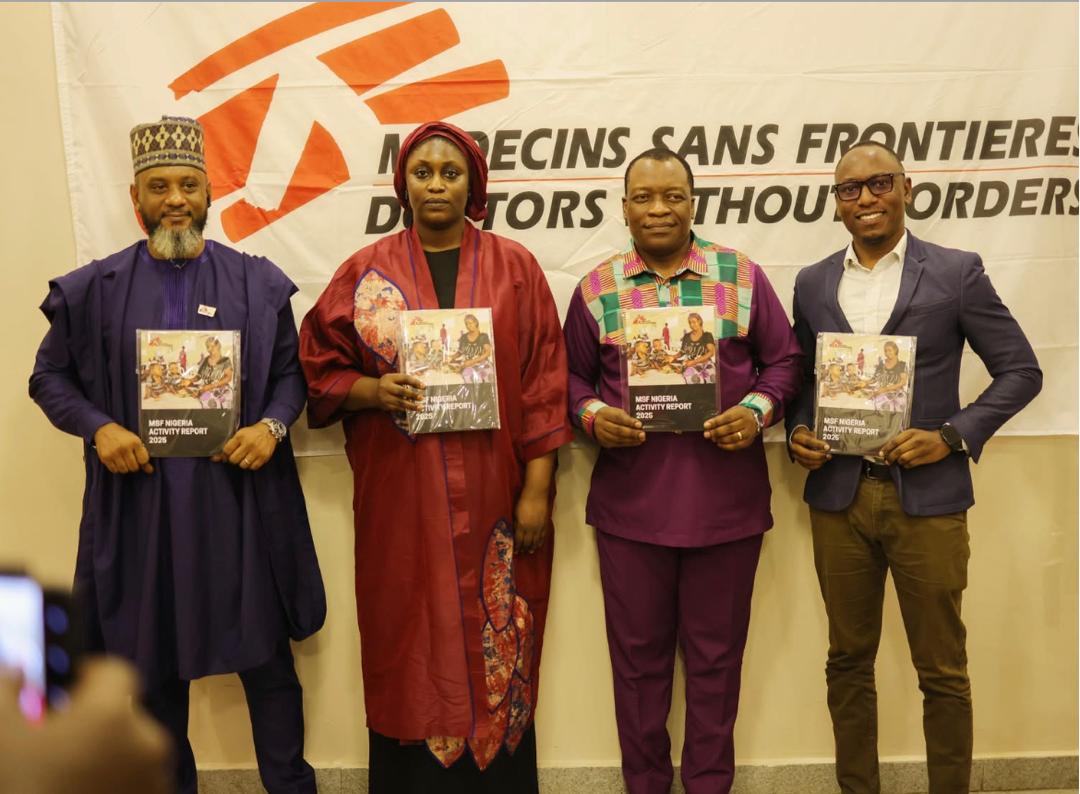
Hunger, Conflict, Disease Push Northern Nigeria Toward Humanitarian Breaking Point — MSF
By: Michael Mike
International medical humanitarian organisation, Médecins Sans Frontières, has raised fresh alarm over what it described as a deepening humanitarian catastrophe in Nigeria, warning that worsening hunger, disease outbreaks and insecurity are driving thousands of vulnerable families — especially children — toward death and despair.
In its 2025 Nigeria Country Report of Activities, the organisation painted a troubling picture of overstretched hospitals, rising cases of severe acute malnutrition and communities trapped between poverty and violent conflict, particularly across northern Nigeria.
The report revealed that hundreds of thousands of children are now battling life-threatening malnutrition in a country that remains Africa’s largest economy, exposing what humanitarian workers described as the widening gap between economic realities and human survival.
According to MSF, more than 250,000 severely malnourished children were treated in outpatient facilities in 2024, while over 76,000 children suffering dangerous complications linked to malnutrition required emergency hospital admission.
The organisation warned that the crisis is no longer seasonal or temporary but has evolved into a chronic humanitarian emergency fuelled by inflation, displacement, insecurity and collapsing access to healthcare.
“Malnutrition is no longer just an emergency during the lean season,” the organisation noted in the report. “For many families, it has become a permanent condition of survival.”
In states across the Northwest and Northeast, medical facilities supported by MSF are reportedly struggling under the weight of increasing admissions linked to severe hunger, measles, malaria and respiratory infections.
The situation in Bauchi State reflects the scale of the emergency. Between January and April 2025 alone, nearly 28,000 malnourished children were treated — a dramatic increase compared to the same period last year.
MSF also highlighted the deadly combination of malaria and malnutrition in Kano and surrounding states, warning that both conditions are reinforcing each other and placing children at even greater risk of death.
The humanitarian organisation said many parents now arrive at treatment centres after exhausting every coping mechanism, including skipping meals, selling possessions and withdrawing children from school.
Beyond hunger, the report drew attention to the impact of insecurity on healthcare delivery, especially in conflict-affected communities where violence, displacement and fear continue to cut millions off from medical services.
In several communities, MSF teams reportedly operated in fragile environments where healthcare workers face enormous logistical and security challenges while attempting to respond to disease outbreaks and medical emergencies.
The organisation also reflected on its long-running intervention against Lassa fever in Ebonyi State, where it supported treatment, laboratory systems and emergency preparedness before formally transferring responsibilities to local authorities this year.
Despite these interventions, MSF warned that humanitarian needs across Nigeria are expanding faster than available resources.
The report called for urgent and sustained investment in nutrition, primary healthcare, disease surveillance and protection for vulnerable populations, warning that failure to act decisively could worsen an already fragile humanitarian situation.
For many observers, the report represents more than a medical assessment — it is an indictment of the harsh realities confronting millions of Nigerians who remain trapped between economic hardship, insecurity and inadequate access to basic healthcare.
Hunger, Conflict, Disease Push Northern Nigeria Toward Humanitarian Breaking Point — MSF



Musa Spoke the Truth, But Northerners Are Turning His Words Into Another War
By Murtala Bello
General Christopher Gwabin Musa spoke about issues that demand serious reflection, but sadly, some Northerners are turning his comments into another divisive political battle.
What should have been an opportunity to examine the challenges facing Northern Nigeria has quickly become a contest between supporters and critics of former Kaduna State Governor Nasir El-Rufai.
Musa’s comments, particularly his assessment of El-Rufai’s administration and the divisions that emerged in Kaduna, should not be reduced to a personal confrontation between two prominent figures.
For me, the real question is not whether one supports Musa or El-Rufai. The question is whether the issues raised by the Minister of Defence deserve honest examination.
Northern Nigeria has suffered enormously from insecurity, communal violence, political disagreements and social divisions. Pretending that these problems do not exist will not make them disappear.
That is why I believe Musa was telling Northerners a truth that many people have been reluctant to confront. But instead of asking difficult questions, some people have chosen to attack the messenger.
Ironically, some of the same Northerners who constantly preach unity are now using Musa’s comments to deepen the very divisions they claim to oppose.
Every statement is being interpreted through political loyalty. If you support El-Rufai, you are expected to reject Musa completely. If you agree with Musa, you are immediately labelled as being against El-Rufai.
This is dangerous.
We cannot build a peaceful and prosperous North by making loyalty to individual politicians more important than the welfare of ordinary people.
Whether Musa is right or wrong on particular allegations, his comments provide an opportunity for Northerners to examine what happened in Kaduna and other parts of the region.
If there are claims that are inaccurate, let them be challenged with facts. If there are allegations that require evidence, let evidence be presented. But shouting, insults and political mobilisation will not solve anything.
The North has more serious problems to worry about than political quarrels. Banditry, terrorism, kidnapping, poverty, unemployment and the destruction of livelihoods continue to affect millions of our people.
Our leaders and citizens must therefore learn to separate issues from personalities. Criticising a former governor should not become an attack on an entire region, just as defending a former governor should not require dismissing every concern raised about his administration.
I am particularly concerned that some Northerners are turning Musa’s comments into an ethnic or sectional argument. That is precisely the wrong direction. We should be seeking reconciliation, understanding and justice rather than reopening old wounds for political advantage.
General Musa did not create every division that exists in Northern Nigeria. His comments have simply brought some uncomfortable questions back into public discussion.
The mature response is to confront those questions honestly. We must be able to say where our leaders succeeded, where they failed and what lessons should be learned without turning every conversation into a political war.
The North needs truth more than propaganda, accountability more than blind loyalty and unity more than political hero worship.
So, rather than turning General Musa’s comments into another divisive controversy, Northerners should listen carefully, examine the facts and ask ourselves what must be done differently.
Musa spoke the truth as he understood it. Our responsibility is not to turn that truth into another war, but to use the conversation to heal our divisions and build a better North.
Murtala Bello wrote in from Sokoto
Musa Spoke the Truth, But Northerners Are Turning His Words Into Another War
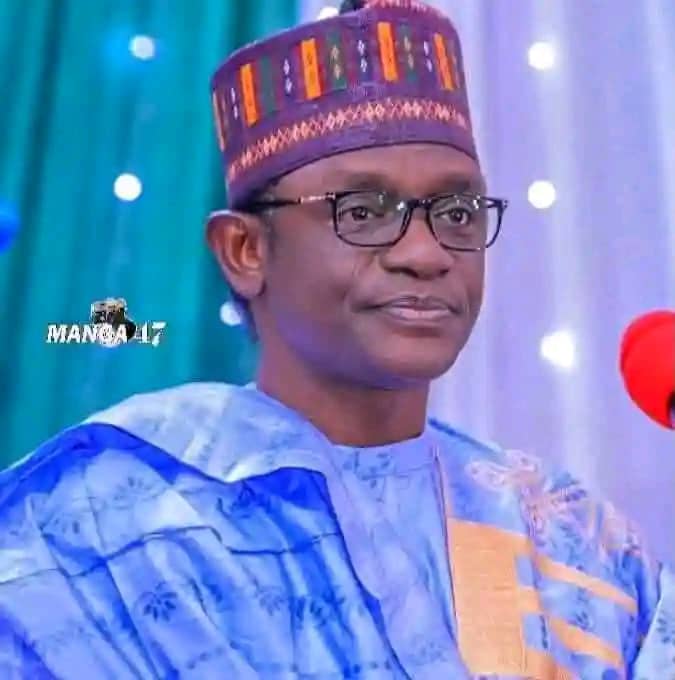
Yobe: Governor Buni urges media professional on reporting truth
By: Yahaya Wakili
Yobe state governor, Hon. Mai Mala Buni CON, COMN has tasks media to use there profession to communicate truthfully, explain policies clearly, listen to citizens and strengthen public confidence.
Governor Buni made this known today while declaring open a one day Yobe Media Summit, “Harnessing Digital Tools For Community Impact and Engagement,” at NEDC Events Center, GGC Damaturu.
Ably represented by the Secretary to the State Government, Dr Mohammed Goje, FRSH . He said digital technology has transformed how citizens receives information, express their views, engage government and participate in public affairs.
“Your role goes beyond photographs, press statementse and social media posts, occupy an important space between government and the people.” Governor Buni said.
“This summit addresses practical contemporary issues, including the effective use of digital tools for community engagement, women and youth participation in media, fake news and disinformation, algorithm literacy, responsible content creation and the measurement of social media impact.
According to Governor Buni, over the last seven years, our administration has remained guided by the philosophy of continuity and consolidation, building on established foundations while expanding development across our 17 local government areas.
“I also encourage our media assistants to develop deeper knowledge of particular sectors rather than every body attempting to communicate everything, and our people live in wards, villages and communities, and many communicate most effectively in languages they understand and through institutions they trust.
Earlier, the Commissioner of Home Affairs, Culture and Information, Hon. Abdullahi Bego said the media landscape was evolving rapidly due to advances in communication technologies and the expansion of social media platforms.
Bego further maintained that government had recently organised a workshop in Kano for media aides to the governor and other political appointees, where participants were trained on the effective use of social media.
Yobe: Governor Buni urges media professional on reporting truth
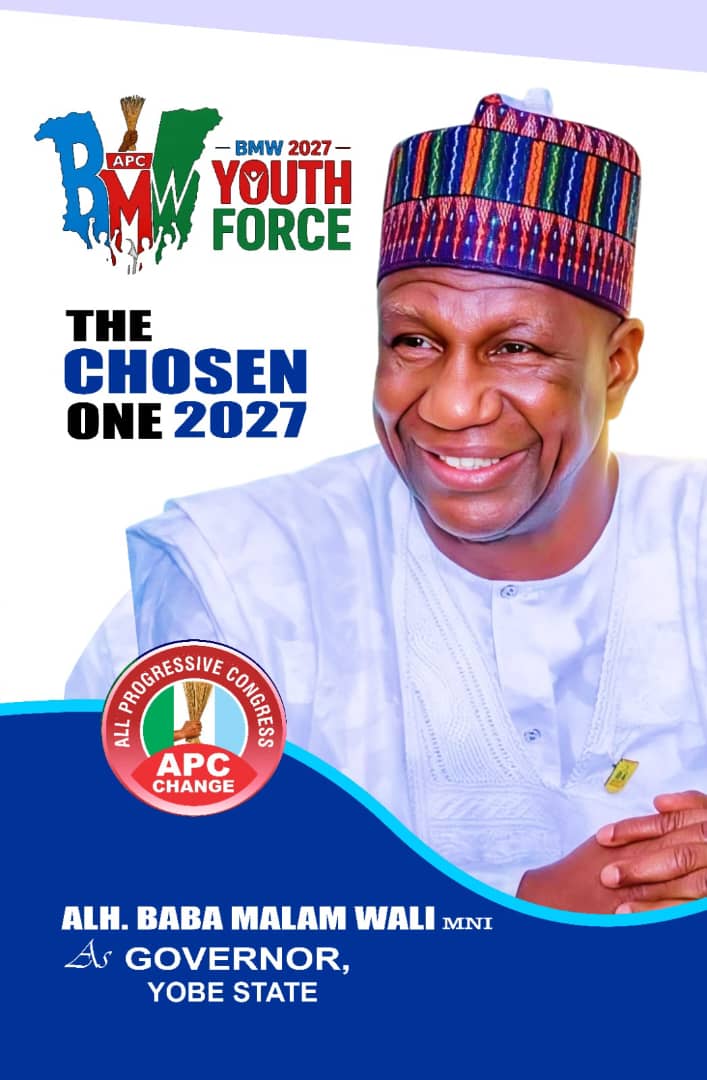
Yobe: APC gubernatorial candidate speaks on traditional institution’s role in promoting peace
By: Yahaya Wakili
Yobe State All Progressives Congress (APC) governorship candidate Alhaji Baba Malam Wali Mni FCAN has revealed the vital role played by traditional institutions in maintaining peace, promoting dialogue and mobilising citizens for development should not be ignored in governance.
Alhaji Baba Malam Wali made the announcement yesterday at Ngelzarma Palace while speaking to the press after completing his tour at Ngelzarma Palace.
He said the visits provided us with an opportunity to engage directly with the traditional institutions and listen to their concerns, expectations and advice.
Wali maintained that the traditional rulers have demonstrated a clear understanding of the importance of unity, stability and continuity in the development of the Yobe state.
According to BMW, traditional rulers’ support has strengthened our confidence that the people remain united behind the progress recorded by the administration and are committed to sustaining the peace and development of the state.
“Their cooperation has been invaluable, particularly in addressing security challenges and encouraging citizens to support government programmes.”
Wali urged the people to support President Bola Ahmed Tinubu GCFR in his re-election in the 2027 general election, adding that the President has performed well.
“His administration has demonstrated a strong commitment to national development, economic recovery, infrastructure, security and the welfare of Nigeria,” Wali said.
The governorship candidate urged the people to stay peaceful, law-abiding, and united as the 2027 general election approaches and united as the 2027 general election is around the corner.
Yobe: APC gubernatorial candidate speaks on traditional institution’s role in promoting peace

Musa Spoke the Truth, But Northerners Are Turning His Words Into Another War

Yobe: Governor Buni urges media professional on reporting truth

Yobe: APC gubernatorial candidate speaks on traditional institution’s role in promoting peace

Roger Federer’s Shock as DNA Results Reveal Myla and Charlene Are Not His Biological Children

THE PLIGHT OF FARIDA

FAILED COUP IN BURKINA FASO: HOW TRAORÉ NARROWLY ESCAPED ASSASSINATION PLOT AMID FOREIGN INTERFERENCE CLAIMS
-
 News2 years ago
Roger Federer’s Shock as DNA Results Reveal Myla and Charlene Are Not His Biological Children
-
Opinions5 years ago
THE PLIGHT OF FARIDA
-
 News1 year ago
FAILED COUP IN BURKINA FASO: HOW TRAORÉ NARROWLY ESCAPED ASSASSINATION PLOT AMID FOREIGN INTERFERENCE CLAIMS
-

 News2 years ago
EYN: Rev. Billi, Distortion of History, and The Living Tamarind Tree
-
 Opinions5 years ago
POLICE CHARGE ROOMS, A MINTING PRESS
-

 ACADEMICS3 years ago
A History of Biu” (2015) and The Lingering Bura-Pabir Question (1)
-

 Columns3 years ago
Army University Biu: There is certain interest, but certainly not from Borno.
-

 Politics1 year ago
2027: Why Hon. Midala Balami Must Go, as Youths in Hawul and Asikira/Uba Federal Constituency Reject ₦500,000 as Sallah Gift
