
Crime
I was paid N100,000 to bomb worshippers, says Maiduguri suicide bomber”

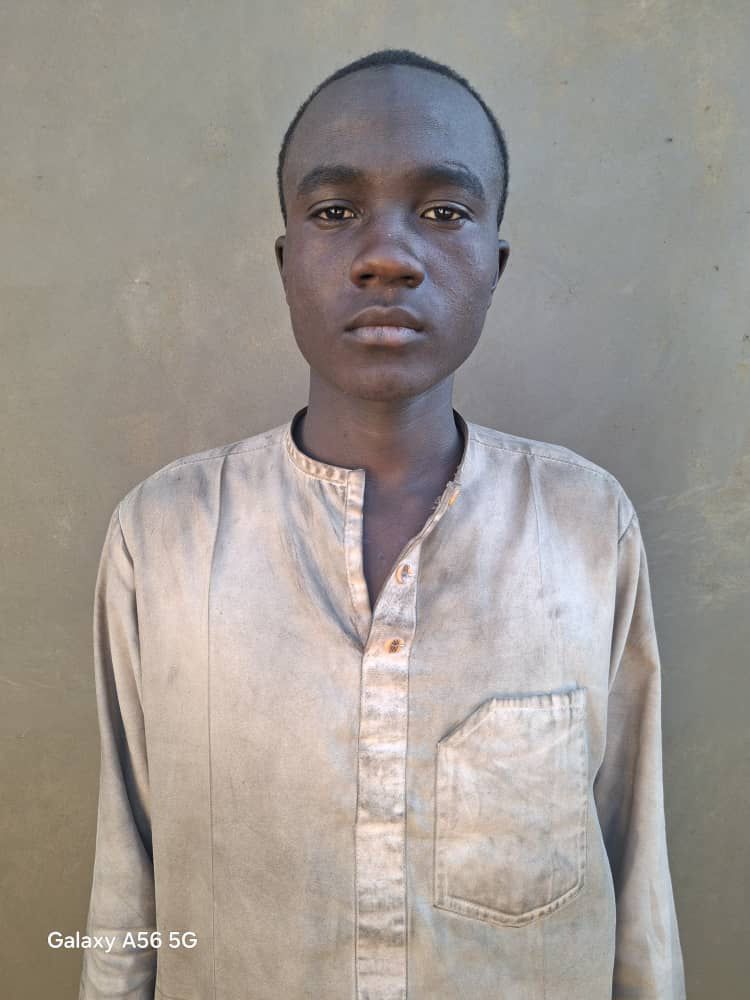
I was paid N100,000 to bomb worshippers, says Maiduguri suicide bomber”
By: Zagazola Makama
A suspected Boko Haram suicide bomber, Ibrahim Mohammed, captured by troops of Operation HADIM KAI in collaboration with hunters in Yobe state has revealed chilling details of how he was recruited, paid and deployed to carry out deadly attacks on worshippers in Maiduguri, admitting that he received up to N100,000 for suicide bombing missions.
Ibrahim, who confessed to involvement in the Dec. 24 suicide bombing at the Gamboru Market Mosque, Maiduguri, said the operation was planned and executed under the directive of Boko Haram commanders operating between Adamawa State and the Mandara Mountains.
“My name is Ibrahim from Michika in Adamawa. We came to Maiduguri to plant bombs in Izala Mosque. We were sent by our leaders, Adamu and Abubakar, who gave us two IEDs to plant in the mosque,” he said during interrogation.
The Gamboru Market Mosque attack claimed five lives and left 32 worshippers injured, plunging Maiduguri town into confusion during the festive period.
Narrating how the attack was executed, Ibrahim said the operatives exploited periods when mosques were empty to plant the explosive devices.
“We came after Zuhur and Asr prayers when the mosque was empty. We entered pretending to pray. My colleague was digging to plant the IED in the middle of the mosque while I was digging by the side,” he said.
According to him, the devices were coupled and timed ahead of the Maghrib prayers.
“As Muslim faithful gathered to pray Maghrib, after the first raka’at, we detonated the bomb. We set the timing for five minutes. Shortly after, I ran to the market area,” he said.
In a disturbing twist, Ibrahim admitted that after the explosion, he returned to the scene and pretended to be a civilian helper.
“When I returned to the mosque, they were evacuating dead bodies. I helped them to convey the corpses and injured people in emergency vehicles,” he confessed.
The suspect disclosed that suicide bombing had become a paid assignment within the terror network. “I was paid money ranging from N70,000 to N100,000 per mission,” he said.
However, he claimed to have regretted his actions after witnessing the scale of civilian casualties. “I regret my action for killing innocent people who did not commit any crime,” Ibrahim said.
Zagazola Makama report Ibrahim was part of a wider terror cell dispatched to conduct multiple attacks across the North-East as part of the coordinated plans by Jama’atu Ahlis Sunna Lidda’awati wal-Jihad (JAS), Ansaru and Jama’at Nusrat al-Islam wal-Muslimin (JNIM) elements to execute suicide bombings and improvised explosive device (IED) attacks across parts of the North-East zone.
It was gathered that a Boko Haram team led by a notorious IED expert, Munzir Abu Ziyadah, allegedly prepared up to 10 person-borne improvised explosive device (PBIED) attacks from the Ali Ngulde camp axis to carry out the mission.
After the Gamboru attack, Ibrahim reportedly moved to Yobe State to conduct reconnaissance for further operations.
“After the mission, I proceeded to Yobe for another assignment, to carry out recce on military positions and hunters’ groups for possible attacks on new recruits,” he said.
He added that additional suicide bombers had been deployed to Damaturu for attacks on mosques and markets.
At about 2:30 p.m. on Dec. 29, Ibrahim was arrested in Damaturu by local hunters working with Operation Hadin Kai during a raid on a suspected hideout inhabited by Almajirai.
Security sources said his strange presence among the group raised suspicion, leading to his arrest and interrogation.
During questioning, he confessed to being a member of the Boko Haram Terrorist (BHT) JAS faction from the Mandara Mountains and admitted he entered Maiduguri alongside the bomber who detonated the device at Gamboru Market Mosque.
He disclosed that while his accomplice carried out the Gamboru attack, he was assigned to detonate another bomb at the new Izala Mosque near Tashan Joni, Maiduguri.
“I dropped my own suicide vest or bag around the Izala Mosque because I couldn’t access the mosque due to strict security checks,” he said.
Following the confession, troops of Operation Hadin Kai, supported by Explosive Ordnance Disposal (EOD) teams of the police, were immediately deployed to the Izala Mosque area identified by the suspect.
Although no explosive device has been recovered so far, security sources said it was possible the bag may have been picked up by an unsuspecting individual.
Intelligence sources indicated that Izala mosques were deliberately selected as targets by the terror cell.
Consequently, troops and other security agencies across the North-East theatre have been placed on heightened alert, with specific instructions to reinforce security around places of worship, markets and other soft targets.
Zagazola reports that the confession has provided critical insight into Boko Haram’s recruitment tactics, financing of suicide missions and the evolving threat of coordinated attacks, reinforcing the need for sustained intelligence-led operations and community vigilance across the region.
I was paid N100,000 to bomb worshippers, says Maiduguri suicide bomber”


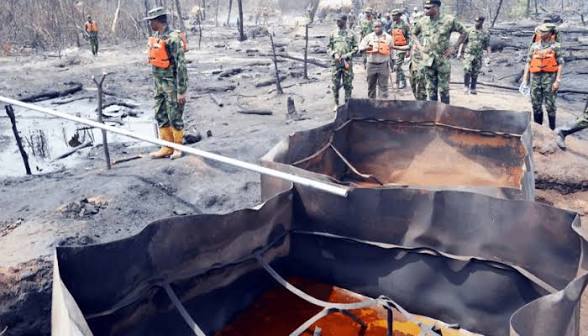
Troops destroy illegal mining sites in Niger
By: Zagazola Makama
Troops of Operation Savannah Shield have destroyed illegal mining sites during a fighting patrol in Borgu Local Government Area of Niger State.
A military source said the operation was carried out at about 3:45 p.m. on March 27 by troops of 22 Brigade, Sector 1, in conjunction with personnel of 221 Battalion.
The source disclosed that the troops conducted the patrol to Daban Woko area following intelligence on illegal mining activities in the locality.
“On arrival, troops discovered illegal mining sites, which were subsequently destroyed and set ablaze,” the source said.
He added that the illegal miners fled the area on sighting the troops.
According to the source, the operation was completed successfully without any incident.
The source reaffirmed the commitment of the military to clamp down on illegal mining and other criminal activities undermining economic and environmental security.
Troops destroy illegal mining sites in Niger
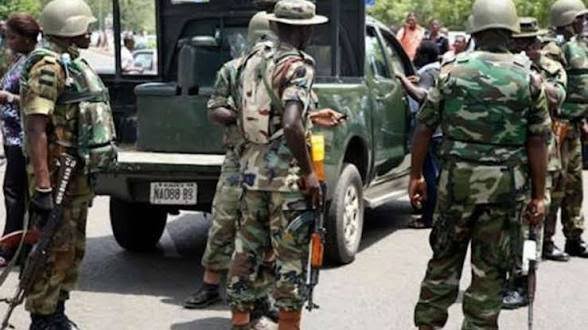
Troops foil kidnap attempt, repel gunmen in Sokoto community
By: Zagazola Makama
Troops of Operation FANSAN YANMA have foiled a kidnap attempt and repelled suspected terrorists in Gesa village, Illela Local Government Area of Sokoto State.
A military source said the troops of 248 Reconnaissance Battalion, deployed at Forward Operating Base Sauna, responded to a distress call at about 10:30 a.m. on March 27.
The source disclosed that on arrival, troops discovered that two armed men on a motorcycle had stormed the village, firing sporadically in an attempt to abduct a nurse who was in the community for a medical outreach.
“On sighting the troops, the terrorists fled the scene, abandoning their mission,” the source said.
He added that troops subsequently dominated the general area to forestall further attacks.
The source also said the troops warned residents on the need to provide timely and credible information to security agencies for prompt response.
Troops foil kidnap attempt, repel gunmen in Sokoto community
Troops arrest suspected cult members, recover locally made pistol in Ebonyi state
By: Zagazola Makama
Troops of Operation UDO KA have arrested three suspected cult members and recovered a locally made pistol during a swift response to a distress call at the Federal University Ndufu-Alike, Ikwo in Ebonyi State.
Security sources said the operation was carried out at about 9:25 p.m. on March 25 by troops deployed at Forward Operating Base Ikwo, following reports from the Chief Security Officer of the university about gunshots suspected to be linked to cult activities around the campus.
The sources said troops moved immediately to the scene, where they apprehended three suspects found in possession of knives and scissors.
During preliminary interrogation, the suspects allegedly disclosed that another accomplice was in possession of an illegal firearm.
Acting on the information, troops proceeded to the suspect’s accommodation; however, he was said to have fled before their arrival.
A subsequent search of the room led to the recovery of one locally made pistol, concealed inside a handbag placed in the suspect’s wardrobe.
The sources added that efforts are ongoing to track and arrest the fleeing suspect, while the three arrested individuals remain in custody for further investigation and possible prosecution.
Troops arrest suspected cult members, recover locally made pistol in Ebonyi state

Zulum Dissolves Borno State Executive Council

How corp member Samuel Orji bowed to humanity at the recent Monday market tragedy

Tension in jos north council area as government slams curfew over sunday’s killings in Plateau

Roger Federer’s Shock as DNA Results Reveal Myla and Charlene Are Not His Biological Children

THE PLIGHT OF FARIDA

FAILED COUP IN BURKINA FASO: HOW TRAORÉ NARROWLY ESCAPED ASSASSINATION PLOT AMID FOREIGN INTERFERENCE CLAIMS
-
 News2 years ago
Roger Federer’s Shock as DNA Results Reveal Myla and Charlene Are Not His Biological Children
-
Opinions4 years ago
THE PLIGHT OF FARIDA
-
 News11 months ago
FAILED COUP IN BURKINA FASO: HOW TRAORÉ NARROWLY ESCAPED ASSASSINATION PLOT AMID FOREIGN INTERFERENCE CLAIMS
-

 News2 years ago
EYN: Rev. Billi, Distortion of History, and The Living Tamarind Tree
-
 Opinions4 years ago
POLICE CHARGE ROOMS, A MINTING PRESS
-

 ACADEMICS2 years ago
A History of Biu” (2015) and The Lingering Bura-Pabir Question (1)
-

 Columns2 years ago
Army University Biu: There is certain interest, but certainly not from Borno.
-

 Opinions2 years ago
Tinubu,Shettima: The epidemic of economic, insecurity in Nigeria
