
News
ICPC Pushes Fresh Anti-Corruption Reforms in Health, Education, Warns Against Weak Governance

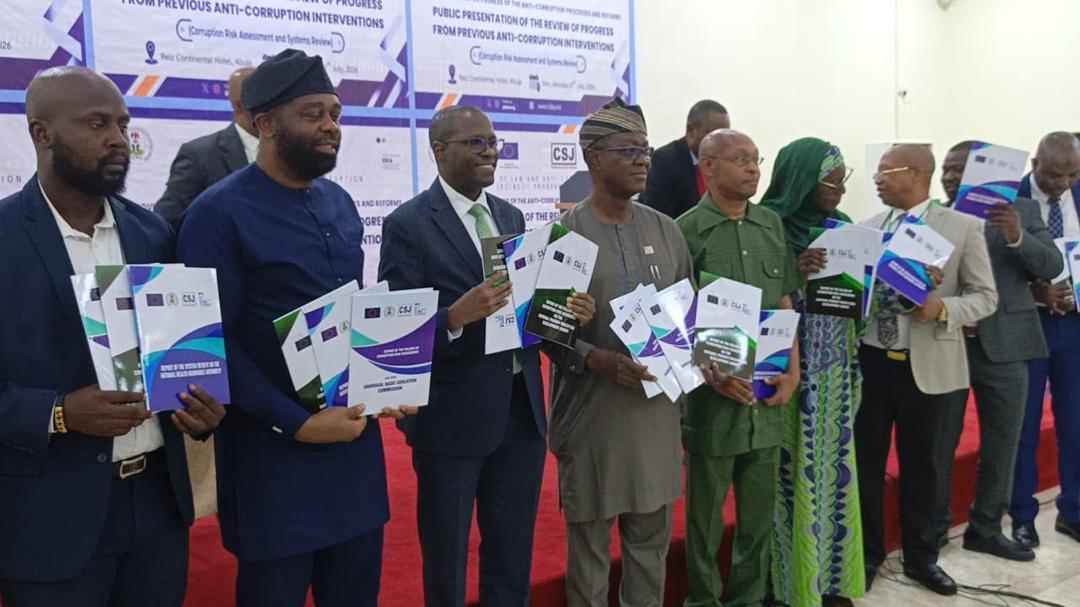
ICPC Pushes Fresh Anti-Corruption Reforms in Health, Education, Warns Against Weak Governance
By: Michael Mike
The Independent Corrupt Practices and Other Related Offences Commission (ICPC) has intensified its preventive anti-corruption campaign, unveiling three follow-up assessment reports that expose lingering governance gaps in Nigeria’s health and education sectors while urging sweeping institutional reforms to strengthen accountability and service delivery.
The reports, presented in Abuja on Monday, reviewed the implementation of earlier anti-corruption recommendations issued to the National Health Insurance Authority (NHIA), the National Primary Health Care Development Agency (NPHCDA), the Universal Basic Education Commission (UBEC) and selected State Universal Basic Education Boards (SUBEBs).
Speaking at the presentation, ICPC Chairman, Dr. Musa Aliyu (SAN), said the exercise underscored the Commission’s growing emphasis on preventing corruption by strengthening institutional systems rather than relying solely on prosecutions.
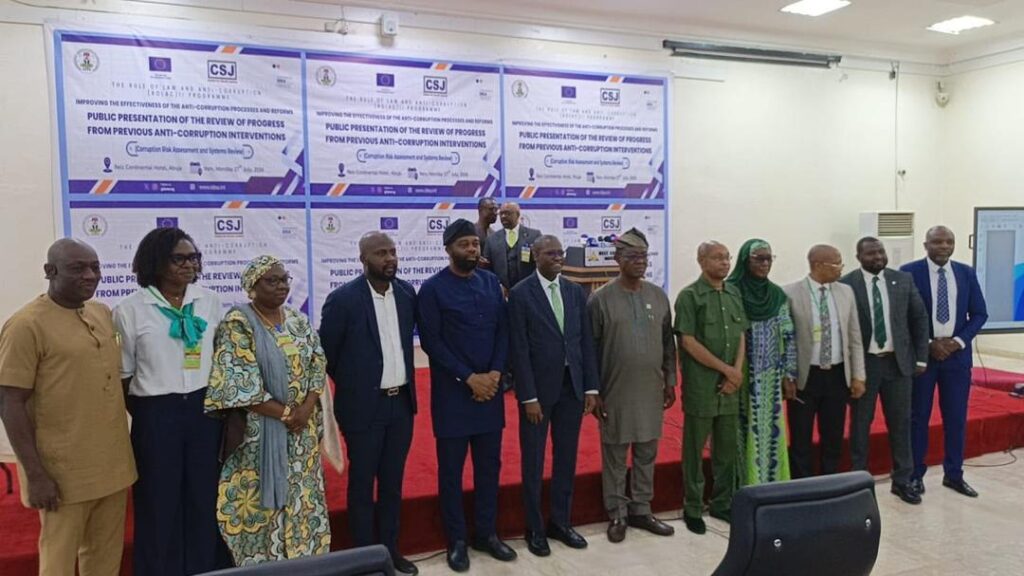
Aliyu explained that the Commission’s mandate under the Corrupt Practices and Other Related Offences Act empowers it to identify vulnerabilities within public institutions and recommend reforms capable of preventing corruption before it occurs.
He said the follow-up assessments measured the extent to which previous recommendations had been implemented, identified areas of progress, highlighted unresolved weaknesses and proposed further reforms to improve institutional performance.
“The value of system studies and corruption risk assessments lies not merely in producing reports but in implementing their recommendations. Their true impact is measured by improvements in governance, accountability, transparency, operational efficiency and service delivery,” he said.
According to him, the reviews were not designed to apportion blame but to encourage continuous institutional improvement and reinforce accountability across government agencies.
Aliyu noted that the NHIA, NPHCDA and UBEC were selected because of their strategic roles in delivering essential healthcare and education services to millions of Nigerians, stressing that stronger governance in the agencies would help safeguard public funds, improve service delivery and restore public confidence in government institutions.
While acknowledging that the institutions had implemented several recommendations from previous assessments, he maintained that significant reforms were still required.
He commended the leadership of the agencies for the progress recorded and urged them to sustain the reform momentum by implementing outstanding recommendations.
“The fight against corruption cannot be won through enforcement alone. Sustainable success depends on building resilient institutions with transparent systems, robust internal controls, effective oversight mechanisms and a culture of accountability,” Aliyu said.
He reaffirmed the Commission’s commitment to collaborating with Ministries, Departments and Agencies (MDAs), oversight institutions, development partners and civil society organisations to ensure effective implementation and monitoring of the recommendations.
Aliyu also acknowledged the support of the European Union-backed Rule of Law and Anti-Corruption (RoLAC II) Programme and the Centre for Social Justice (CSJ), which partnered with the Commission on the review process.
Earlier, the Lead Director of the Centre for Social Justice (CSJ), Eze Onyekpere, warned that corruption risk assessments would have little impact unless their recommendations translated into measurable institutional reforms.
He explained that the reviews formed part of the European Union-supported Rule of Law and Anti-Corruption Programme II aimed at strengthening Nigeria’s anti-corruption processes at both national and sub-national levels.
Onyekpere identified persistent corruption risks across the health and education sectors, including leakages in health insurance payments, diversion of medicines and vaccines, ghost workers in primary healthcare facilities, fraudulent enrolment practices, procurement irregularities, abandoned school projects and weak oversight of public funds.
He described corruption risk assessments as critical diagnostic tools that enable governments to detect and address systemic weaknesses before they undermine public service delivery.
“Our collective responsibility is to ensure that NHIA resources provide quality healthcare to beneficiaries, that medicines and vaccines reach intended patients, and that UBEC funds translate into better classrooms, improved learning outcomes and a brighter future for Nigerian children,” he said.
Onyekpere advocated wider deployment of digital governance systems, including integrated platforms that would allow citizens to monitor health insurance enrolment, primary healthcare services and education projects in real time.
He also recommended the institutionalisation of end-to-end electronic procurement, stronger whistleblower protection, improved staff welfare and capacity building, enhanced independent oversight mechanisms and greater deployment of technology to reduce human discretion in public administration.
Also speaking, Chairman of the Federal Civil Service Commission, Prof. Tunji Olaopa, said corruption prevention through institutional reforms offers a more sustainable solution than relying exclusively on law enforcement.
He commended the ICPC for prioritising system reviews and integrity plans, noting that transparent governance structures remain the strongest defence against corruption.
Olaopa urged public institutions to embrace technology-driven governance, transparent recruitment, conflict-of-interest declarations, stronger internal audit systems and ethical leadership, while challenging government agencies to move beyond mere compliance and institutionalise continuous reforms that promote prudent management of public resources.
The latest ICPC reports come amid increasing calls for public sector reforms as concerns grow over leakages, inefficiency and weak accountability in critical sectors responsible for healthcare and education delivery across the country.
ICPC Pushes Fresh Anti-Corruption Reforms in Health, Education, Warns Against Weak Governance







Troops arrest two suspected terrorist logistics suppliers in Borno
By: Zagazola Makama
Troops of the Nigerian Army’s 149 Battalion, in collaboration with members of the Civilian Joint Task Force (CJTF), have arrested two suspected terrorist logistics suppliers at Gubio town in Gubio Local Government Area of Borno State.
Security sources said the suspects were apprehended at about 4:00 p.m. on November 13, 2026, after troops intercepted a vehicle conveying the two men.
The suspects reportedly claimed that they had transported firewood and building materials to Damasak.
However, preliminary investigations allegedly revealed that the materials had been offloaded around the Binduldul general area, raising suspicions about the actual destination and intended recipients of the supplies.
The two suspects are currently in military custody for further investigation and necessary action.
The arrest forms part of ongoing intelligence-led operations by troops of Sector 3 to dismantle terrorist logistics networks, disrupt the supply of essential materials to insurgents and identify individuals suspected of facilitating their activities across the North-East.
Troops arrest two suspected terrorist logistics suppliers in Borno
Troops recover additional terrorist corpse, AK-47 rifle after ISWAP attack in Adamawa
By: Zagazola Makama
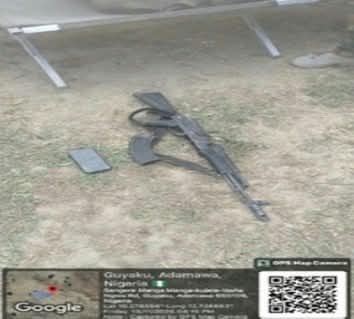
Troops of the Nigerian Army’s 226 Battalion have recovered an additional corpse of a suspected Islamic State West Africa Province (ISWAP) fighter, alongside an AK-47 rifle and ammunition, following a repelled terrorist attack on their Forward Operating Base in Adamawa State.
Security sources said the recovery was made at about 3:20 p.m. on November 13, during a foot patrol approximately four kilometres from the troops’ location at FOB Zangula Kilba Junction in Gombi Local Government Area.
The patrol was conducted following an earlier ISWAP attack on the military position on November 10, which was successfully repelled by the troops.
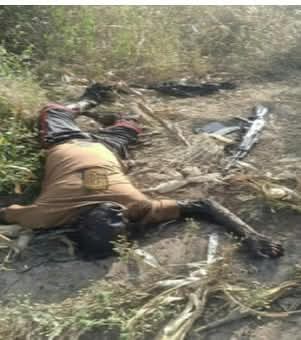
During the operation, the soldiers discovered an additional terrorist corpse believed to have been left behind during the failed assault.
Items recovered from the area included one AK-47 rifle, nine rounds of 7.62mm special ammunition and one mobile phone.
The recovery brings further evidence of the casualties and equipment losses suffered by the attackers during the foiled assault.
Troops have continued patrols and exploitation operations around the area to identify possible threats and prevent further terrorist activities.
Troops recover additional terrorist corpse, AK-47 rifle after ISWAP attack in Adamawa
Air strikes destroy ISWAP hideout, neutralise 10 fighters in Marte, Borno
By: Zagazola Makama
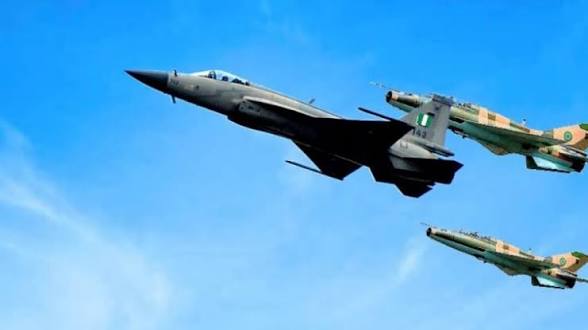
An intelligence-led air operation by the troops of Operation HADIN KAI has destroyed a suspected Islamic State West Africa Province (ISWAP) hideout and neutralised 10 fighters in Kerenoa, Marte Local Government Area of Borno State.
Security sources said the operation was conducted at about 8:10 p.m. on November 12, following human intelligence indicating that terrorists were converging for a possible meeting addressed by senior ISWAP commanders, including Abu Nazir.
The sources said the Guardian surveillance platform was deployed overhead Garin Abu Nazir in Kerenoa, where it identified three suspected terrorists entering a building.
A precision air strike was subsequently conducted on the structure, with battle damage assessment indicating that the building was completely destroyed, while nearby terrorists were seen fleeing for safety.
The military platform later identified and tracked another group of 10 suspected terrorists taking cover under a tree.
The targets were subsequently engaged with a precision strike, neutralising all 10 fighters.
A secondary explosion was also observed following the strike, suggesting the possible presence of explosive materials at the location.
The operation represents another intelligence-driven effort to disrupt ISWAP command activities, eliminate its fighters and degrade terrorist infrastructure in the Lake Chad region.
Troops and surveillance assets are expected to sustain pressure on terrorist elements and monitor possible movements around the affected locations.
Air strikes destroy ISWAP hideout, neutralise 10 fighters in Marte, Borno

Troops intercept two fleeing terrorists attempting to surrender in Borno

Troops arrest two suspected terrorist logistics suppliers in Borno

Troops recover additional terrorist corpse, AK-47 rifle after ISWAP attack in Adamawa

Roger Federer’s Shock as DNA Results Reveal Myla and Charlene Are Not His Biological Children

THE PLIGHT OF FARIDA

FAILED COUP IN BURKINA FASO: HOW TRAORÉ NARROWLY ESCAPED ASSASSINATION PLOT AMID FOREIGN INTERFERENCE CLAIMS
-
 News3 years ago
Roger Federer’s Shock as DNA Results Reveal Myla and Charlene Are Not His Biological Children
-
Opinions5 years ago
THE PLIGHT OF FARIDA
-
 News2 years ago
FAILED COUP IN BURKINA FASO: HOW TRAORÉ NARROWLY ESCAPED ASSASSINATION PLOT AMID FOREIGN INTERFERENCE CLAIMS
-
 Opinions5 years ago
POLICE CHARGE ROOMS, A MINTING PRESS
-

 News3 years ago
EYN: Rev. Billi, Distortion of History, and The Living Tamarind Tree
-

 ACADEMICS3 years ago
A History of Biu” (2015) and The Lingering Bura-Pabir Question (1)
-

 Columns3 years ago
Army University Biu: There is certain interest, but certainly not from Borno.
-

 Politics1 year ago
2027: Why Hon. Midala Balami Must Go, as Youths in Hawul and Asikira/Uba Federal Constituency Reject ₦500,000 as Sallah Gift
