
News
“Identity Cannot Become a Death Sentence, Crime Must Be Treated as Crime, Not Ethnicity” MACBAN Warns Against Collective Blame in Plateau

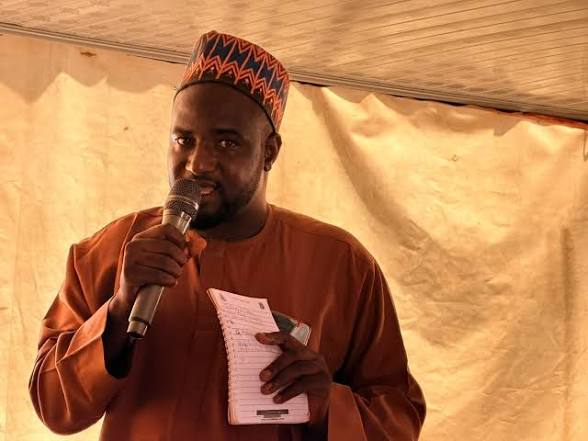
“Identity Cannot Become a Death Sentence, Crime Must Be Treated as Crime, Not Ethnicity” MACBAN Warns Against Collective Blame in Plateau
By: Zagazola Makama
The Assistant Youth Leader of Miyetti Allah Cattle Breeders Association of Nigeria (MACBAN), Barkin Ladi branch, Idris Saidu Adamu, has identified collective blame, civilian vigilantism, identity-based killings, social-media incitement and what he described as unequal treatment of displaced communities as major factors sustaining violence in Plateau State.
Adamu made the submission during an interaction with journalists in Plateau State, where he argued that lasting peace would remain difficult unless government and communities stopped treating criminality as a crime belonging to a particular ethnic or religious group.
He said the presence of criminals in every community should make investigation, evidence and due process the basis for determining responsibility for crimes.
“We are having criminals in all parts. Every tribe, every religion has criminals.”
According to him, one of the most dangerous developments in the Plateau crisis is the practice of civilians taking the law into their own hands whenever an incident occurs.
Adamu alleged that while the Fulani community generally accepts the prosecution of suspects arrested for crimes, there have been instances where community members from other groups have protested against the arrest or prosecution of suspects from their communities.
“As far as the Fulani community in Plateau State is concerned, we have never protested the arrest of any criminal that was. In fact, we want the law to take its course on any criminal that is caught.”
He added: “But on the contrary, in the part of the natives and other tribes, when a criminal is caught, they will come out and protest that such a criminal should not be prosecuted.”
Adamu said such behaviour creates an environment in which criminal suspects can become protected by communal identity, while victims and security agencies are placed under additional pressure.
‘If suspect is not caught, it must be Fulani’
The MACBAN youth leader also accused sections of the population of prematurely attributing crimes to Fulani people whenever the actual perpetrators are not immediately identified.
“If there is any ordinary incident that happens, be it a kidnapping, be it a robbery, anything, any criminality that everyone is capable of doing, if the suspect or the criminal is not caught, the final conclusion to the negative crimes is that it must have been committed by a Fulani.”
He said such assumptions can transform an ordinary criminal investigation into an ethnic confrontation.
Adamu cited Mushere as an example, recalling the kidnapping of the father of former Plateau State Governor Joshua Dariye.
He claimed that the initial suspicion at the time was that Fulani people were responsible, but that subsequent investigations, according to his account, pointed to individuals from the same community as the victim.
“The first thing they did that time was that it was Fulani that kidnapped him. But investigations later revealed that it was his close ally, his tribesman, that kidnapped him under the leadership of one Jethro Bassey.”
That historical claim was presented by Adamu as an illustration of the danger of assigning ethnic responsibility before investigations are completed.
May 2025 Mushere violence
Adamu also referred to the violence that followed the killing of a pastor in the Mushere area in May 2025, arguing that accusations against Fulani residents should have been subjected to investigation before retaliatory action was taken.
Contemporary reports from May 2025 documented the killing of Pastor Mimang Lekyil in Kwakas-Mushere and subsequent violence, including the reported burning of Fulani structures by youths, followed by further killings in Mbor and surrounding communities. Accounts of responsibility for the attacks differed, underscoring the complexity of the sequence of events.
Adamu said: “Instead of them to just let the allegation and fall back and allow security agencies to investigate, they came out and protested it. They began to pull in first that Fulani houses and they burn houses. They killed people on the 27th of May 2025.”
He alleged that Fulani residents were subsequently forced out of Mushere Central and neighbouring areas.
“So they chased all Fulani people out of Mushere central and all other neighboring areas in Mushere city.”
He argued that the incident demonstrated how an allegation, when converted into communal action without investigation, could produce a cycle of retaliation and further displacement.
Adamu further alleged that women confronted security personnel during the violence, some soldiers were wounded, and their houses were burnt while people were inside.
‘Identity cannot become a death sentence’
The MACBAN Youth Leader said another dimension of the crisis was the targeting of passengers travelling on public transportation simply because of their ethnic or religious identity.
“Passengers, people who are in public transit, that are moving from one place to another, they don’t even know what is happening where. They will be singled out of public bus and killed on highway because of their identity.”
He described this as unacceptable, arguing that an individual’s ethnicity or religion cannot constitute evidence of criminal involvement. “That one too must be stopped.”
This, perhaps more than any other issue, goes to the heart of Plateau’s security challenge: when identity becomes a substitute for evidence, ordinary criminality can rapidly become communal violence.
A kidnapper, robber or killer should be identified through investigation, intelligence and evidence. The failure to immediately identify a suspect cannot legitimately become proof against an entire ethnic group.
Social media and the escalation of violence
Adamu also raised concerns over social-media activity by individuals he described as influential figures who allegedly use their platforms to encourage retaliation and violence.
“You will see people that are supposed to be leaders, people that are supposed to take responsibility for this trend, they will come out and gather people and record it and put on social media.”
He alleged that some messages amount to direct calls for attacks. “They are calling for anarchy in this land.”
According to him, repeated public calls for violence should attract the attention of law-enforcement agencies.
“If one Fulani person will come out and do that on social media space, he will not stay more than 24 hours without being arrested.”
In addressing such allegations, however, the same principle of due process should apply: credible threats or incitement to violence should be investigated on the basis of evidence, while lawful expression should not itself be treated as a crime.
Political will and the question of displaced Fulani communities
Adamu said the deeper challenge was what he described as a lack of political will to apply peace and resettlement policies equally to all communities.
“That lack of political will, in fact, anything that we want to do, as far as we are doing it in order to have a lasting peace in this land, that political will must be there.”
He argued that government should not distinguish between displaced citizens on the basis of ethnicity or religion.
“You cannot be segregating among people who are supposed to be your subjects.”
He said some Fulani families who had lived for years in Plateau communities, owned houses and farmland, and established livelihoods had been forced to leave their homes during periods of violence.
“They are chased away. Some of them are now taking refuge in Bauchi, some are in other parts of Plateau.”
According to him, the question of their return has received insufficient attention.
“But this government has never talked about how to resettle the Fulani people back to where they were born and brought up.”
Adamu contrasted this with public calls for other displaced communities to return to their ancestral homes.
“But they are always saying that natives that have been displaced should go back to their houses.”
“Identity Cannot Become a Death Sentence, Crime Must Be Treated as Crime, Not Ethnicity” MACBAN Warns Against Collective Blame in Plateau


News
Fani-Kayode Meets South African DIRCO DG, Raises Alarm Over Killings, Mistreatment of Nigerians
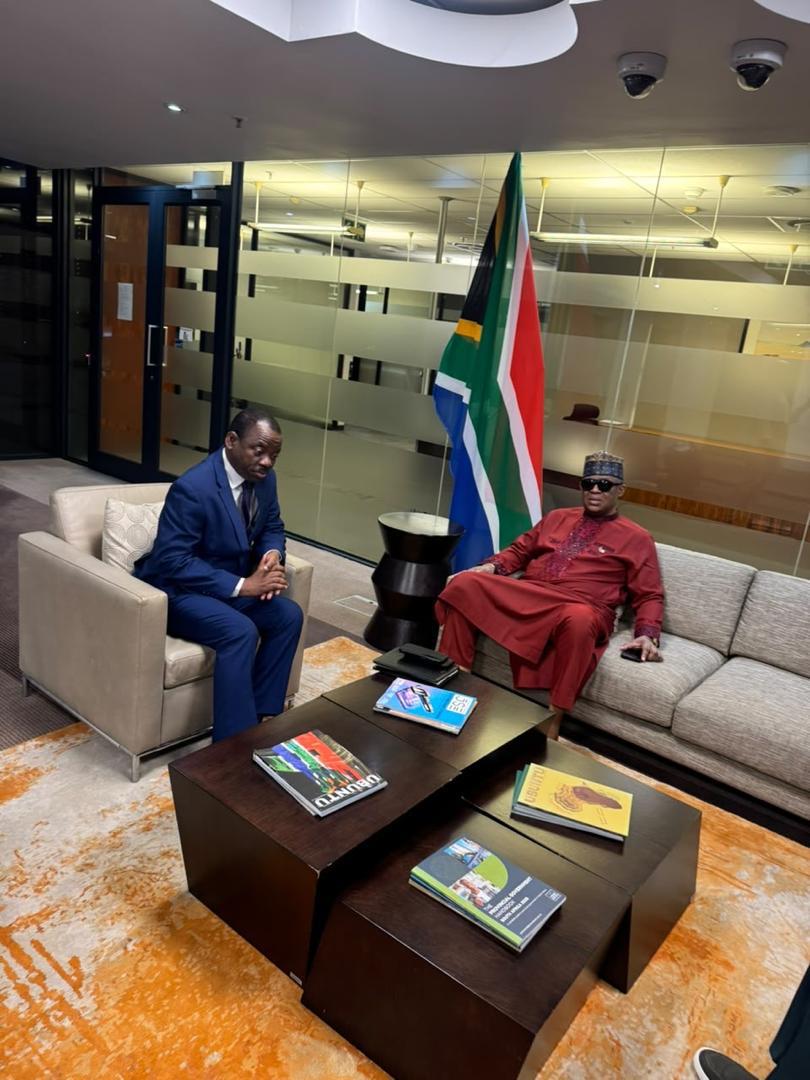
Fani-Kayode Meets South African DIRCO DG, Raises Alarm Over Killings, Mistreatment of Nigerians
By: Michael Mike
Nigeria’s High Commissioner to South Africa, Ambassador Femi Fani-Kayode, on Tuesday held a meeting with the Director-General of South Africa’s Department of International Relations and Cooperation (DIRCO), Mr Zane Dangor, following an earlier invitation by the South African government aimed at sustaining cordial and mutually beneficial relations between the two countries.
The meeting, which was convened against the backdrop of recent developments in Nigeria-South Africa relations, provided an opportunity for both sides to discuss matters of mutual concern, including events over the weekend.
During the engagement, Fani-Kayode expressed serious concerns over the recent killings of Nigerians in South Africa, as well as the hardship and alleged mistreatment faced by Nigerian nationals, warning that Nigeria’s patience over the persistent challenges confronting its citizens was wearing thin.
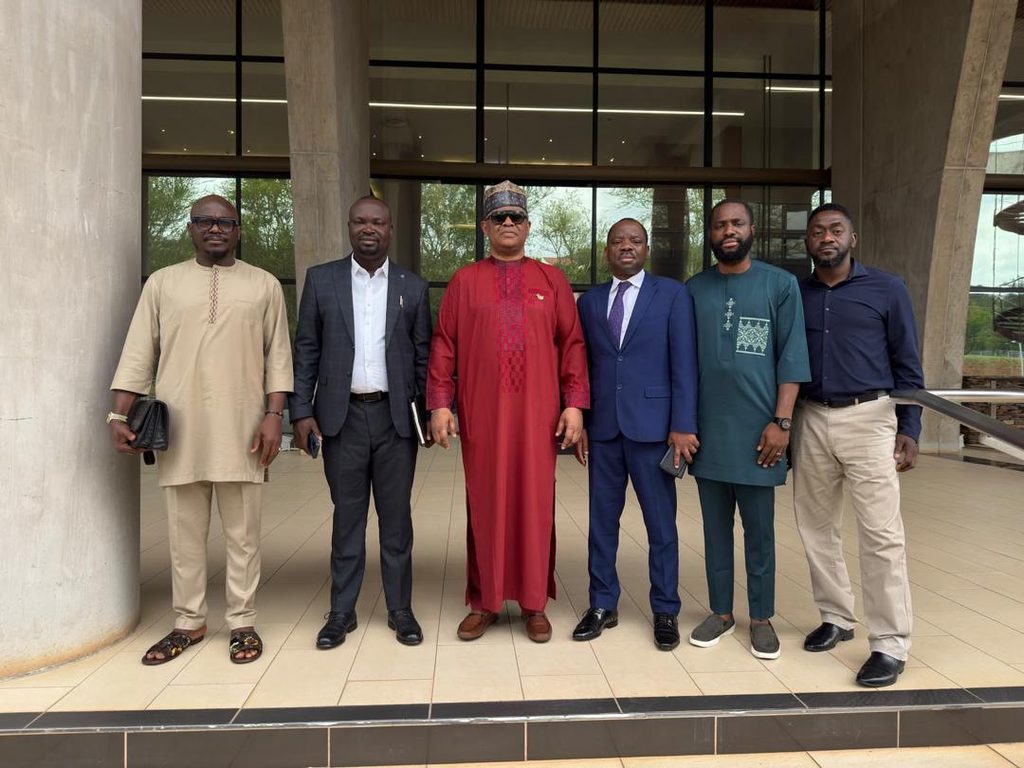
He maintained that such treatment was contrary to international law and human rights principles, stressing that the protection of Nigerians remained his foremost responsibility and a fundamental obligation of his diplomatic mandate. He also expressed displeasure over the manner in which South African Presidential Spokesperson, Vincent Magwenya, handled the recent controversy, with DIRCO indicating that the concerns raised would be addressed.
Fani-Kayode Describes Meeting as Cordial, Constructive
In a post on his official X handle after the meeting, Fani-Kayode described his engagement with Dangor as excellent and constructive, noting that both parties discussed mutual concerns regarding bilateral relations and recent events.
“Honoured to have had an excellent meeting with the DG of South Africa’s @DIRCO_ZA (Department of International Relations and Cooperation), Mr Zane Dangor, this morning.
“Mutual concerns regarding our bilateral relations and the events over the weekend were discussed,” he stated.
He said Nigeria looked forward to building on the outcome of the meeting and strengthening the longstanding relationship between both countries, founded on mutual respect, friendship and cooperation.
The High Commissioner also expressed his readiness to work closely with DIRCO and South Africa’s Minister of International Relations and Cooperation, Ronald Lamola, towards further strengthening ties between the two nations.
Envoy Dismisses Reports of Reprimand
Meanwhile, the Nigerian High Commission has dismissed media reports suggesting that Fani-Kayode was reprimanded or issued a warning by South African authorities during the meeting.
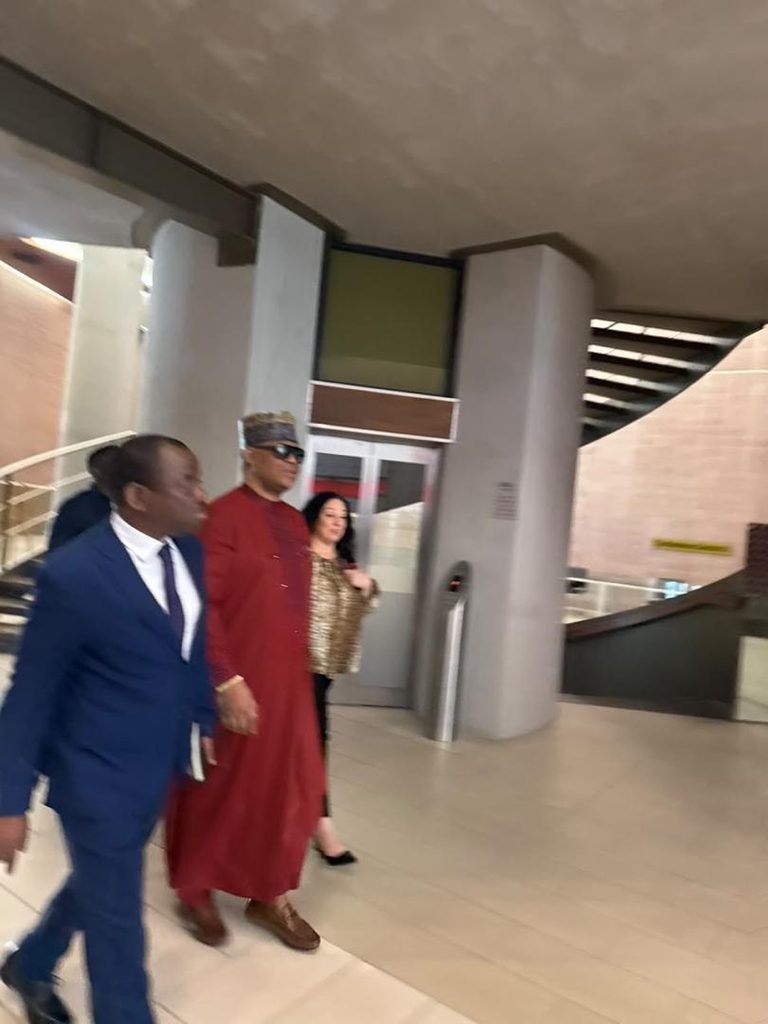
The mission maintained that the engagement was cordial and constructive, stressing that the High Commissioner was neither reprimanded nor warned. It described the meeting as a diplomatic engagement in which both parties exchanged views on issues of mutual concern while reaffirming their commitment to diplomatic protocols and longstanding bilateral relations.
Both sides also expressed willingness to sustain dialogue and work towards resolving outstanding concerns in the interest of the two countries.
Bilateral Relations Under Diplomatic Spotlight
The meeting comes amid recurring concerns over the safety of Nigerians in South Africa, including allegations of xenophobic attacks, violence, discrimination and other forms of mistreatment against foreign nationals.
Nigeria and South Africa maintain longstanding diplomatic, political and economic relations, with cooperation spanning trade, investment, regional security and multilateral engagements. However, incidents involving attacks on foreign nationals have periodically strained relations, prompting diplomatic interventions and calls for stronger protection of citizens.
The latest engagement underscores Nigeria’s commitment to constructive diplomacy while pursuing issues affecting its nationals abroad. It also reinforces Fani-Kayode’s position that the longstanding friendship between both countries must be underpinned by mutual respect, respect for human rights and the protection of citizens.
Both countries are expected to sustain diplomatic engagement towards addressing outstanding concerns and strengthening their bilateral relationship.
This formulation establishes the sequence without suggesting that the invitation and meeting happened on the same day.
Fani-Kayode Meets South African DIRCO DG, Raises Alarm Over Killings, Mistreatment of Nigerians
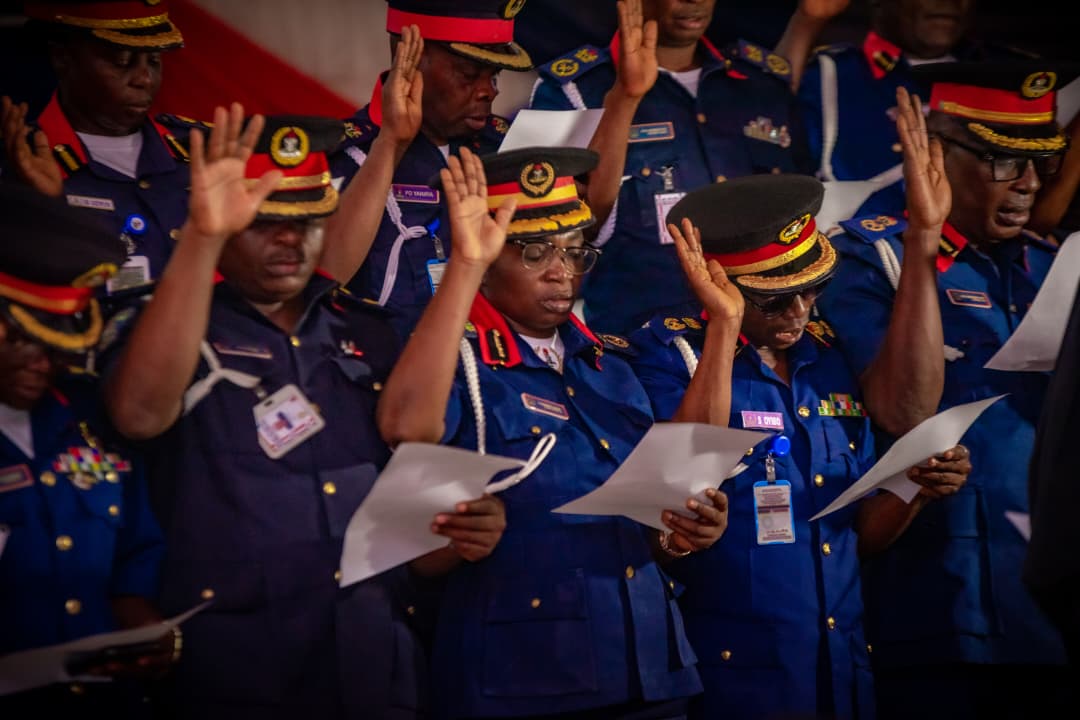
NSCDC Promotes 59 Senior Officers to Commandants, Tasks Them on Tackling Security Threats
By: Michael Mike
The Nigeria Security and Civil Defence Corps (NSCDC) has decorated 59 senior officers elevated to the rank of Commandants of Corps, with the Minister of Interior, Olubunmi Tunji-Ojo, charging them to demonstrate courage, firmness and decisive leadership in tackling Nigeria’s security challenges.
The minister gave the charge on Tuesday in Abuja during the decoration ceremony at the NSCDC National Headquarters, where he urged the newly promoted officers to regard their elevation as a call to greater responsibility rather than merely an advancement in rank.
Tunji-Ojo, represented by the Permanent Secretary of the Ministry of Interior, Magdalene Ajani, said the officers must place national interest above personal considerations and make the security and safety of Nigerians their overriding priority.
He challenged them to be bold, strong and proactive in confronting security threats, developing practical solutions to emerging challenges and ensuring that security policies and strategies translate into measurable results.
The minister emphasised that their new positions came with increased managerial responsibilities and expectations, requiring them to demonstrate professionalism, courage and an unwavering commitment to protecting lives and property.
The development represents a significant leadership advancement within the Corps, with the 59 officers expected to bring their experience and enhanced responsibilities to bear on the NSCDC’s operational effectiveness and national security mandate.
The Commandant General of the NSCDC, Ahmed Audi, congratulated the newly promoted officers, describing their elevation as well-deserved and the outcome of collective efforts by the Corps’ management.
He, however, warned that promotion must translate into improved performance, discipline and leadership, reminding the officers that their new ranks come with higher expectations.
“Promotion is not a reward for the past alone but a trust for the future,” Audi declared.
He urged the officers to justify their elevation through exemplary conduct, effective supervision and commitment to the Corps’ mandate, stressing the need for them to become mentors to junior personnel.
The Commandant General further charged them to uphold merit, wear their new ranks with pride and demonstrate courage and dedication in the discharge of their duties.
He particularly cautioned against arrogance associated with elevated positions, urging the officers to allow humility to guide their leadership and ensure they leave the Corps stronger and better than they met it.
Audi also commended the Corps’ management team for its role in the promotion exercise, describing the achievement as a product of teamwork.
In a message to officers who were unsuccessful in the promotion exercise, the NSCDC boss urged them not to allow disappointment to undermine their commitment to service.
He encouraged them to remain steadfast, dedicated and hopeful, stressing that promotion comes from God and should not discourage anyone from giving their best to the Corps.
Audi also acknowledged the support of the Minister of Interior, expressing appreciation for his continued commitment to the growth, development and institutional advancement of the NSCDC.
The Secretary of the Civil Defence, Correctional, Fire and Immigration Services Board (CDCFIB), Jubril Abdulmalik, a retired Major General, also congratulated the newly promoted Commandants.
He urged them to approach their new responsibilities with courage, dedication and a strong sense of commitment to national service.
Similarly, the Comptroller-General of the Nigerian Correctional Service, Sylvester Ndidi Nwakuche, and representatives of the Director-General of the Department of State Services, the Chairman of the National Drug Law Enforcement Agency, the Chief of Naval Staff and the Chief of Army Staff congratulated the officers.
They emphasised that elevation in rank comes with greater responsibilities and expectations, expressing optimism that the development would positively impact the officers, the NSCDC and the country.
Speaking on behalf of his colleagues, Commandant of Corps Habila Njida Madanda expressed appreciation to the Minister of Interior and the Commandant General for addressing what he described as the longstanding challenge of promotion stagnation in the Corps.
He pledged that the newly promoted officers would justify the confidence reposed in them by leading through example, championing innovation and serving the country with courage and humility.
The ceremony also featured the administration of the oath of allegiance by Commandant Akomolafe Bamiyo of the Corps’ Legal Unit.
The elevation of the 59 officers comes with renewed expectations for stronger institutional leadership, improved operational coordination and greater effectiveness in the NSCDC’s responsibility of protecting critical national assets, infrastructure and public safety.
NSCDC Promotes 59 Senior Officers to Commandants, Tasks Them on Tackling Security Threats
News
ECOWAS, UN Women, AfDB Launch Regional Programme to Advance Women’s Leadership in Climate Action
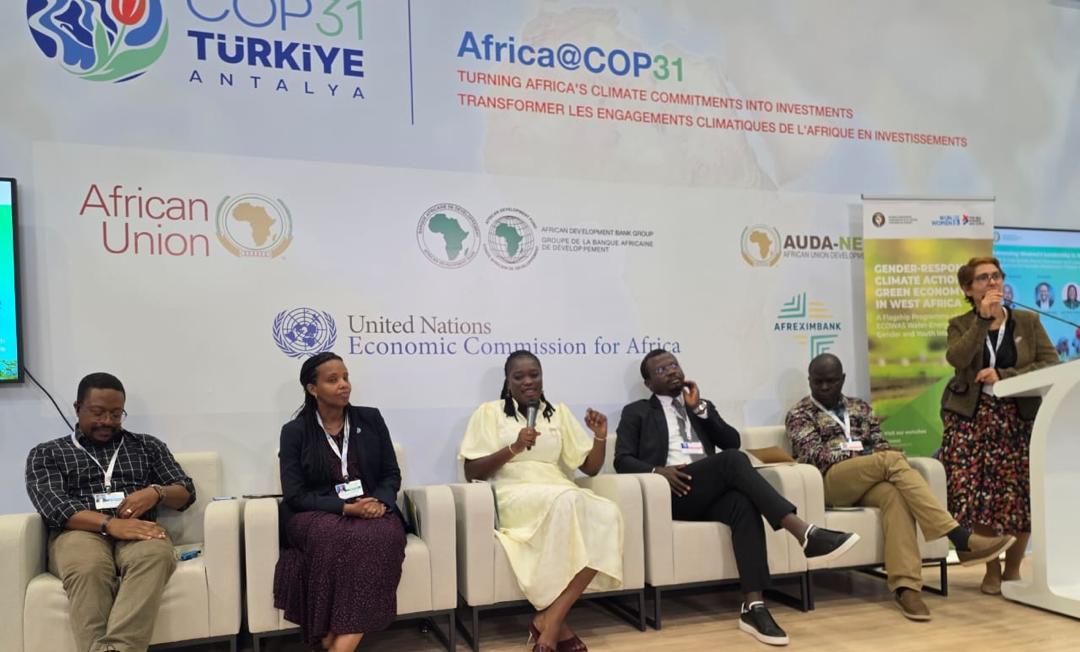
ECOWAS, UN Women, AfDB Launch Regional Programme to Advance Women’s Leadership in Climate Action
By: Michael Mike
The Economic Community of West African States (ECOWAS), UN Women and the African Development Bank (AfDB) have launched a regional programme aimed at strengthening women’s leadership and participation in climate action and the green economy across West Africa.
The initiative was unveiled during a high-level side event at the ongoing 31st United Nations Climate Change Conference (COP31) in Antalya, Türkiye.
The event, organised by ECOWAS through its Centre for Gender Development (EGDC), in partnership with UN Women and with support from the AfDB, was held under the theme, “Advancing Women’s Leadership in West Africa’s Green Transition.”
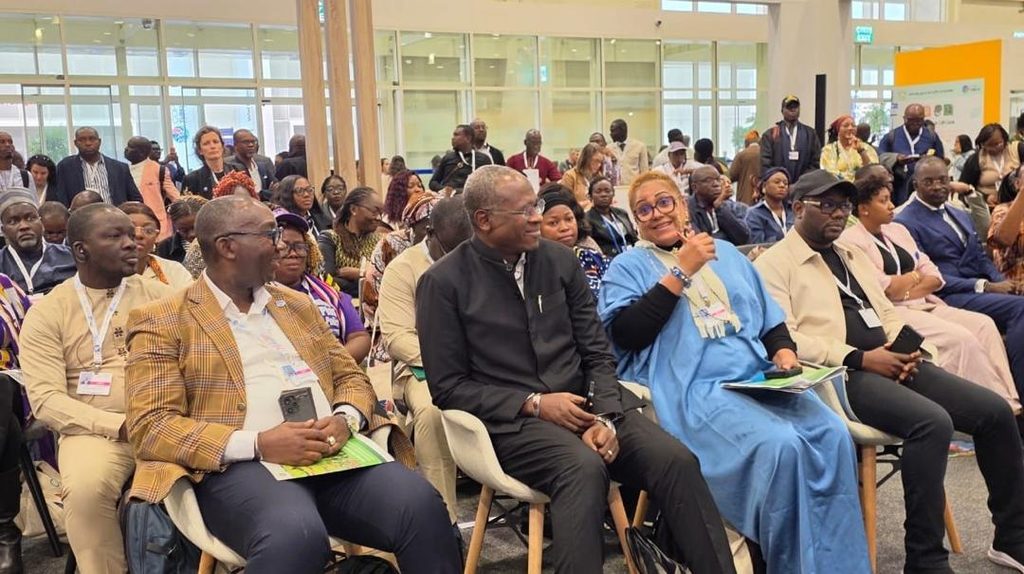
It brought together regional and international stakeholders to examine ways of positioning women as key drivers of climate solutions, green economic growth and sustainable development in the region.
In their opening remarks, the Director of the ECOWAS Centre for Gender Development, Sandra Oulaté Fattoh, and the Director of Policy, Programme and Intergovernmental Division at UN Women, Sarah Hendriks, stressed the need to place women at the centre of climate responses and sustainable development strategies.
A high-level panel discussion subsequently examined critical issues surrounding women’s participation in the green transition, including access to climate finance, green entrepreneurship, sustainable employment, technological opportunities and strategic partnerships.
Participants also highlighted the potential of the green economy to promote inclusive economic growth, strengthen community resilience and create new opportunities for women across West Africa.
The major highlight of the event was the presentation and official launch of the ECOWAS Regional Programme for Gender-Responsive Climate Action and a Green Economy in West Africa.
The programme, supported by UN Women and the African Development Bank, was officially launched by Senegal’s Minister of Environment and Ecological Transition and Chair of the ECOWAS Council of Environment Ministers, Aliou Gory Diouf.
The initiative is designed to expand women’s access to climate finance, green jobs, technology and markets, while strengthening their representation and participation in climate-related decision-making processes.
It also seeks to promote a gender-responsive approach to climate action and ensure that women are not merely beneficiaries of the green transition but active participants in shaping and driving its outcomes.
The launch underscores ECOWAS’ commitment to advancing gender equality within the region’s environmental and economic transformation agenda.
Through the partnership with UN Women and the African Development Bank, the regional bloc is seeking to strengthen institutional collaboration and mobilise support for a green transition that is inclusive, resilient and sustainable.
The initiative is expected to contribute to building a West African economy in which women have greater opportunities to access emerging green industries, influence environmental policies and participate meaningfully in addressing the challenges of climate change.
ECOWAS, UN Women, AfDB Launch Regional Programme to Advance Women’s Leadership in Climate Action

CONVOCATION LECTURER URGES BINGHAM GRADUANDS TO TURN FAITH, EXCELLENCE, INTO NATION BUILDING

ECOWAS, World Bank Intensify Drive to Bridge West Africa’s Electricity Gap, Target 1,800 Communities

Fani-Kayode Meets South African DIRCO DG, Raises Alarm Over Killings, Mistreatment of Nigerians

Roger Federer’s Shock as DNA Results Reveal Myla and Charlene Are Not His Biological Children

THE PLIGHT OF FARIDA

FAILED COUP IN BURKINA FASO: HOW TRAORÉ NARROWLY ESCAPED ASSASSINATION PLOT AMID FOREIGN INTERFERENCE CLAIMS
-
 News3 years ago
Roger Federer’s Shock as DNA Results Reveal Myla and Charlene Are Not His Biological Children
-
Opinions5 years ago
THE PLIGHT OF FARIDA
-
 News2 years ago
FAILED COUP IN BURKINA FASO: HOW TRAORÉ NARROWLY ESCAPED ASSASSINATION PLOT AMID FOREIGN INTERFERENCE CLAIMS
-
 Opinions5 years ago
POLICE CHARGE ROOMS, A MINTING PRESS
-

 News3 years ago
EYN: Rev. Billi, Distortion of History, and The Living Tamarind Tree
-

 ACADEMICS3 years ago
A History of Biu” (2015) and The Lingering Bura-Pabir Question (1)
-

 Columns3 years ago
Army University Biu: There is certain interest, but certainly not from Borno.
-

 Politics1 year ago
2027: Why Hon. Midala Balami Must Go, as Youths in Hawul and Asikira/Uba Federal Constituency Reject ₦500,000 as Sallah Gift
