
Crime
IIP-SARS Present Final Report on Human Rights Violations.

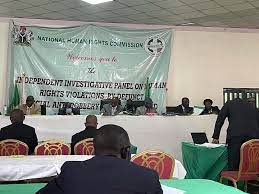
IIP-SARS Present Final Report on Human Rights Violations.
By: Michael Mike
The Independent Investigation Panel on Human Rights Violations by the defunct SARS and other units of the Nigerian Police (IIP-SARS) on Tuesday presented its report to the National Human Rights Commission after the payment of N438 million to 100 victims in the last 10 months.
The Executive Secretary of the Commission (NHRC), Tony Ojukwu who received the report on behalf of the Chairperson of the Governing Council of the Commission, Dr. Salamatu Suleiman, noted that Justice Galadima-led panel has dedicated the last two years hearing over 200 petitions on human rights violations.
He said: “Today, we are finally closing a chapter in the work of the panel but opening a new one for the Commission and all government institutions that will be charged with the implementation of the report”.
The NHRC Boss stated that the Office of the Attorney General of the Federation and Minister of Justice, the Police Service Commission, and the Nigerian Police Force have a huge responsibility to ensure full implementation of the decisions and recommendations of the panel.
Ojukwu observed that payment of compensation is just one step in the road to justice, insisting that there is the need to hold indicted officers of the Nigerian Police accountable for these violations.
He said: “I welcome the decisions and indictments issued by the Justice Galadima Panel and I want to assure Nigerians and victims and their families that the National Human Rights Commission already has an established reputation as a leading voice on Police reforms.”
According to Ojukwu, “We will study these recommendations and will work with the Nigerian Police, the relevant Committees of the National Assembly, civil society, and development partners to implement the recommendations”.
Besides, he commended the panel for its far-reaching recommendations on other spheres of justice delivery and human rights enforcement including, the payment of judgment awards, institutional reforms in medical institutions, compliance with the law of the Compulsory Treatment of Gunshot Wounds, and release of corpses amongst other recommendations.
In his address during the presentation of the final report, the Chairman of the panel, Justice Suleiman Galadima rtd stated, “We have cause to be grateful to the Commission for considering myself and Panel members worthy of undertaking the daunting assignment”.
The former Supreme Court Justice recalled that on two occasions, considering the mood and anxiety of those whose petitions have been concluded, the Commission as a matter of urgency awarded and compensated some victims already, to calm them down and give them hope, not waiting for today’s Report and Recommendations.
He added that the gesture is indicative of the government’s genuine intention in setting the various panels of investigation across the country.
Also Read: I Regret Using My Little Sister For Rituals To Boost My…
The eminent jurist, therefore, urged the government to look into the report and recommendations with a view to implementing, even as he suggested setting up a Victims Compensation Fund to settle the awards and compensations.
He further urged the National Economic Council which directed the establishment of various Panels on Human Rights Violations to once again direct the National Human Rights Commission to harmonise these various reports of all the Panels and urgently submit the same to the federal government for quick action.
He thanked other members of the Panel, the Head of the Commission’s legal team, Chino Obiagwu (SAN), and the Commission staff for making the panel work a huge success.
Earlier in his remarks, the Secretary of the Panel, Mr. Hilary Ogbonna recalled that the 2020 END SARS protests by the Nigerian youth resulted in the setting up of the panel to address large-scale human rights violations by the defunct SARS and other units of the Nigerian Police.
He disclosed that out of the over 200 petitions that came from 29 states including the FCT, 95 were fully decided, 54 were withdrawn, 33 were struck out, 56 judgment debt, and 57 were referred to the Commission.
He also revealed that 72 Policemen were indicted for various degrees of human rights violations, 28 recommended for prosecution, 25 for dismissal, 15 for different disciplinary actions, and 4 for reduction of rank.
On compensations, the Human Rights Adviser to the Executive Secretary said 39 compensations were paid for extra-judicial killings, 7 for enforced disappearance, 9 for unlawful arrests and detention, 30 for torture, cruel, inhuman, and degrading treatment, 6 for threat to life, 6 for confiscation/seizure of property and 3 for abuse of office
IIP-SARS Present Final Report on Human Rights Violations.



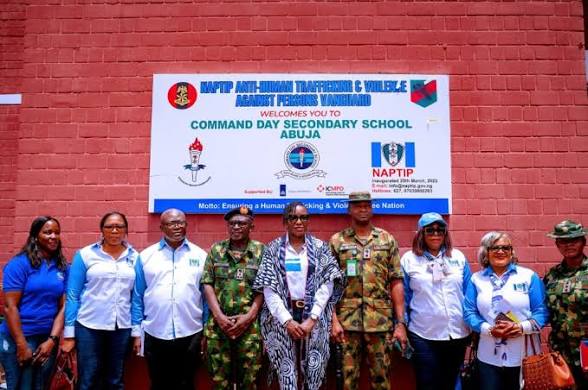
NAPTIP, ICMPD Sensitise Students on Trafficking, Safe Migration in Abuja
By: Michael Mike
About 100 secondary school students in Abuja have been sensitised on the dangers of human trafficking, violence and irregular migration during the Safe Futures Awareness Day organised to commemorate the 2026 celebration of International Women’s Day.
The one-day school outreach programme was organised by the International Centre for Migration Policy Development in partnership with the National Agency for the Prohibition of Trafficking in Persons as part of efforts to educate young Nigerians on personal safety and safe migration practices.
The event, which brought together students, government officials and development partners, was designed to be interactive, accessible and informative, creating a safe space where young people could learn about trafficking risks, ask questions and gain knowledge to protect themselves and their peers.
Organisers said the outreach programme aimed to raise awareness among students about the dangers of human trafficking and how to recognise early warning signs. It also provided clear information on safe and legal migration pathways as opposed to irregular and risky routes that often expose individuals to exploitation.
Participants were further equipped with practical personal safety tips and encouraged to openly discuss issues related to trafficking, migration and online safety. The initiative also sought to build stronger awareness among students about the mandates of the National Agency for the Prohibition of Trafficking in Persons and the Nigeria Immigration Service in protecting young Nigerians from exploitation and ensuring safe cross-border movement.
Speaking at the programme, the Director-General of NAPTIP, Binta Bello, warned students to be cautious of offers promising quick wealth, overseas jobs or travel opportunities without proper documentation or verification.
According to her, traffickers often exploit the hopes and aspirations of young people by presenting deceptive opportunities that eventually lead to exploitation and loss of freedom.
“Traffickers prey on hope, desperation and lack of information. They promise fast money, travel or glamour, but what they deliver is pain, loss of freedom and danger,” she said.
Bello stressed that irregular migration may appear attractive but often exposes individuals to abuse, trafficking and broken promises.
She advised students to verify any opportunity that involves travelling abroad and to ensure such offers come with the necessary skills, valid contracts, verified employers and legal migration channels.
“If someone offers you a great job abroad, that may sound fantastic, but it must be safe. Offers that come without relevant skills, clear contracts, verified employers or legal migration channels can be traps rather than opportunities,” she cautioned.
The NAPTIP boss also reminded the students that traffickers often manipulate trust and that awareness and fact-checking remain critical in protecting themselves.
“Some of you may think it cannot happen to you because you are careful, but traffickers are clever and know how to manipulate trust. Being informed and checking facts protects you,” she added.
Bello encouraged the students to remain focused on education and skills development, assuring them that their future should never be compromised by unsafe opportunities.
“You are not commodities to be traded. Your safety, your dreams and your future are priceless. Keep learning, keep building your skills and pursue opportunities through safe and legal channels,” she said.
She also assured participants that NAPTIP, together with partners including the International Centre for Migration Policy Development and the Government of the Netherlands, would continue to strengthen efforts to protect Nigerians from trafficking and hold perpetrators accountable.
The Safe Futures Awareness Day is supported by the Ministry of Asylum and Migration of the Kingdom of the Netherlands under the Building and Environment Free of Human Trafficking and Violence Against Persons in Nigeria (TIPVAP NG) project.
Through discussions, presentations and interactive sessions, students were encouraged to recognise trafficking risks, understand safe migration processes and learn practical ways to protect themselves both online and offline.
Organisers expressed optimism that the knowledge shared during the programme would empower young Nigerians to make informed decisions and pursue their aspirations without falling victim to trafficking networks.
NAPTIP, ICMPD Sensitise Students on Trafficking, Safe Migration in Abuja
Troops arrest suspected ISWAP member while attempting to infiltrate Maiduguri
By: Zagazola Makama
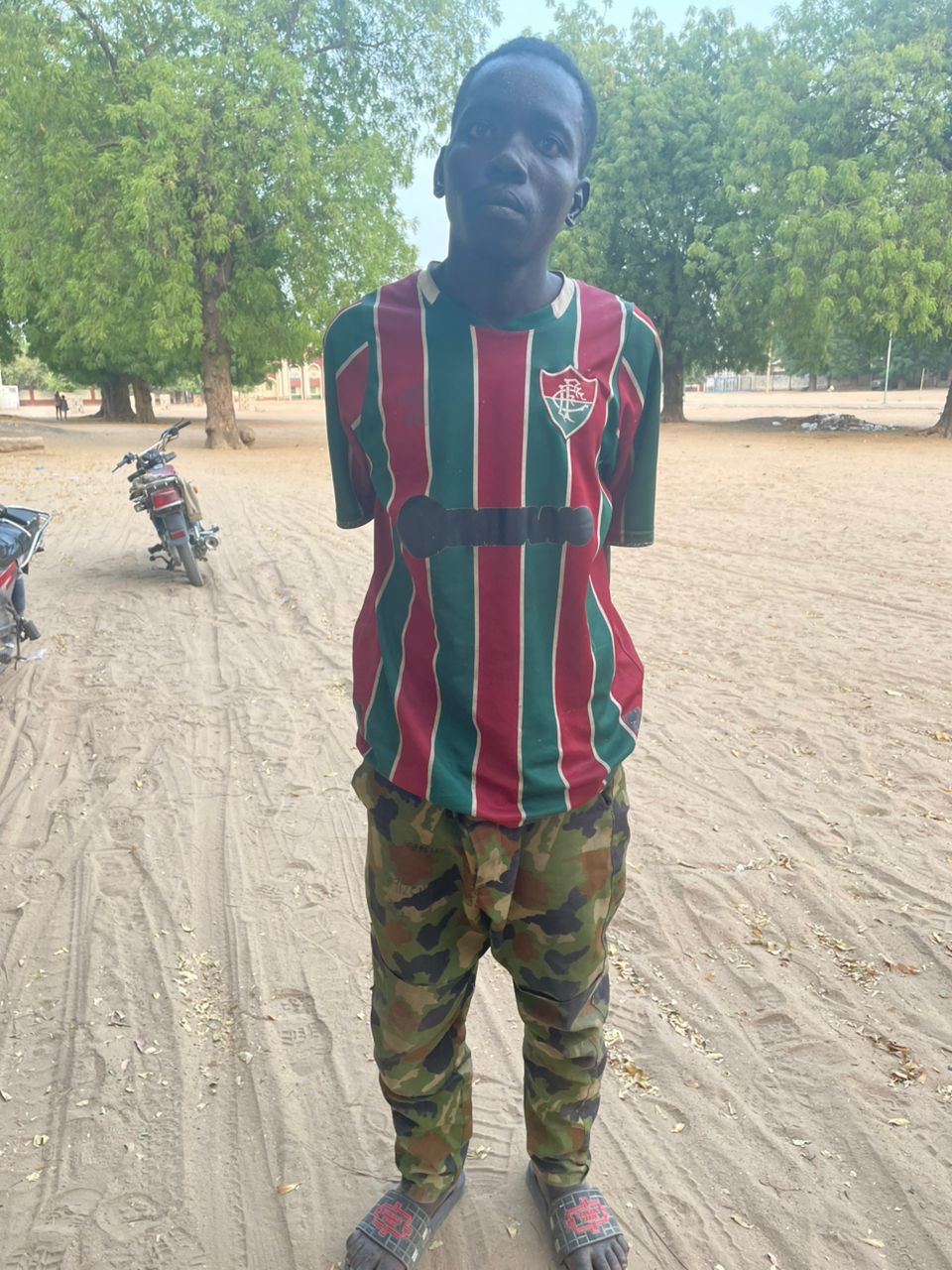
Troops of Operation Hadin Kai have arrested a suspected member of Boko Haram/ISWAP in Borno while attempting to infiltrate Maiduguri.
Sources told Zagazola Makama that the fighter known as Saina, was apprehended at about 4:42 p.m. on March 29 at a checkpoint in Kilo Papa area.
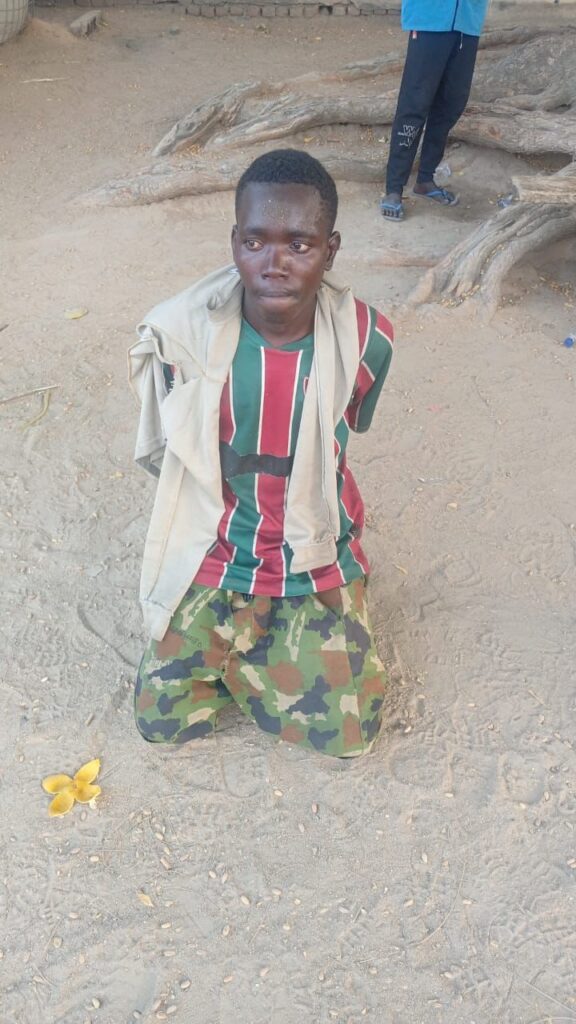
The arrest was carried out by troops of 21 Special Armoured Brigade and allied security operatives deployed at the checkpoint.
According to the sources, the suspect was intercepted while on transit to Maiduguri in a civilian vehicle and was found wearing a woodland camouflage trouser, raising suspicion.
Preliminary interrogation revealed that the suspect initially claimed to be a member of hybrid forces operating in Kumshe.
However, further questioning indicated that he is an active member of a terrorist group and was suspected to be on a reconnaissance mission.
The suspect has been handed over to military intelligence for detailed investigation.
Troops arrest suspected ISWAP member while attempting to infiltrate Maiduguri
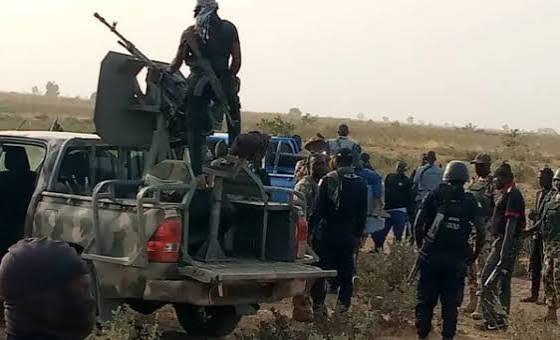
Troops arrest suspected gunrunner, intercept 200 rounds of ammunition in kaduna
By: Zagazola Makama
Troops of Operation FANSAN YAMMA have arrested a suspected gunrunner and intercepted 200 rounds of ammunition in Zaria Local Government Area of Kaduna State.
A security source disclosed that the suspect was apprehended at about 3:15 a.m. on March 29 during a joint intelligence-led operation involving troops of 2 Battalion and a team from the Office of the National Security Adviser (ONSA).
The source said the operation followed credible intelligence on the movement of the suspect, who was reportedly en route to Kaduna from Jos through Dambo community in Zaria.
“Troops swiftly established a snap checkpoint at Dambo, where the suspect was intercepted in possession of 200 rounds of 7.62 x 39mm ammunition,” the source said.
He added that the suspect has been handed over to ONSA for further investigation and necessary action.
The source noted that the arrest is part of ongoing efforts to curb the proliferation of illegal arms and ammunition, as well as disrupt criminal networks operating across the North-West and North-Central regions.
Troops arrest suspected gunrunner, intercept 200 rounds of ammunition in kaduna

NiMet predicts 107 to 138 days of rainfall in Gombe

Nigeria Advised to Treat Wildlife Crime as National Security Threat

WTO Ministerial Talks Collapse as E-Commerce Tariff Deal Fails

Roger Federer’s Shock as DNA Results Reveal Myla and Charlene Are Not His Biological Children

THE PLIGHT OF FARIDA

FAILED COUP IN BURKINA FASO: HOW TRAORÉ NARROWLY ESCAPED ASSASSINATION PLOT AMID FOREIGN INTERFERENCE CLAIMS
-
 News2 years ago
Roger Federer’s Shock as DNA Results Reveal Myla and Charlene Are Not His Biological Children
-
Opinions4 years ago
THE PLIGHT OF FARIDA
-
 News12 months ago
FAILED COUP IN BURKINA FASO: HOW TRAORÉ NARROWLY ESCAPED ASSASSINATION PLOT AMID FOREIGN INTERFERENCE CLAIMS
-

 News2 years ago
EYN: Rev. Billi, Distortion of History, and The Living Tamarind Tree
-
 Opinions4 years ago
POLICE CHARGE ROOMS, A MINTING PRESS
-

 ACADEMICS2 years ago
A History of Biu” (2015) and The Lingering Bura-Pabir Question (1)
-

 Columns2 years ago
Army University Biu: There is certain interest, but certainly not from Borno.
-

 Opinions2 years ago
Tinubu,Shettima: The epidemic of economic, insecurity in Nigeria
