
Uncategorized
IJAP Welcomes NJC Disciplinary Action, Demands Structural Reform in Electoral Justice

IJAP Welcomes NJC Disciplinary Action, Demands Structural Reform in Electoral Justice
By: Michael Mike
Independent Judicial Accountability Panel (IJAP) has welcomed the recent action taken by the National Judicial Council (NJC) in suspending three judges and nullifying the appointment of an Acting Chief Judge in Imo State, asking the body to adopt a proactive framework which rewards consistently ethical judicial officers while identifying and disqualifying those who act in breach of public trust
IJAP, in a statement signed by its Chairman, Honourable Justice Mojeed Adekunle Owoade JCA (rtd.), noted that: ‘‘The decisions, taken in response to judicial misconduct and procedural irregularities, reflect growing public demand for transparency, integrity, and accountability within the judiciary,” adding that: “However, this must not remain a reactive gesture. As a body entrusted with safeguarding the independence and ethics of the judiciary, the NJC must rise beyond disciplinary enforcement driven only by public petitions. We reiterate the urgent need for the NJC to adopt a proactive framework which rewards consistently ethical judicial officers while identifying and disqualifying those who act in breach of public trust.”
IJAP’s recommendations, outlined in its Technical Working Group’s policy submissions, call on the NJC to: Implement a “Punishment and Reward” System. Judges who uphold integrity and demonstrate consistent professionalism should be elevated. Conversely, those who compromise due processincluding misusing ex parte orders should not only face sanctions but also be disqualified from elevation to the Higher Bench and from being given sensitive roles like election tribunals.
IJAP commended the NJC for its resolution to henceforth publish the names of candidates being considered for appointment as judicial officers to Superior Courts of Record for information and comments by the public, noting that this will Introduce Citizens’ Scrutiny in Judicial Appointments, to enhance transparency, build public confidence, and ensure that only fit and proper candidates ascend to the bench
IJAP also recommended that Disciplinary Reports should be made public to deter judicial misconduct and align the Council’s actions with public interest; Strengthening of Judicial Oversight by investing in the collection and analysis of judicial performance data, addressing inconsistent judgments, and collaborating with the National Judicial Institute to train judiciary staff on global best practices.
It also advocated for the Passage of the Whistleblowing Bill on Judicial Misconduct, which would provide a formal mechanism for reporting unethical behaviour in the judiciary while protecting whistle-blowers from retaliation.
IJAP also called for urgent reform in post-electoral justice delivery, to ensure that tribunal decisions are not only timely but also uphold the democratic mandate of the people—free from political interference or inducement. “We further emphasise that justice in electoral matters must be both swift and credible. The current constitutional timelines for pre-election and post-election petitions—though important—must be revisited to ensure that all election disputes are resolved before the swearing-in of declared winners. Nigeria must learn from regional peers like Kenya, where judicial processes prioritise electoral integrity and prompt adjudication.” It further stated.
IJAP said that: ‘‘In this defining moment, we call on all judicial stakeholders including the NJC, legal practitioners, civil society, and the general public—to collectively restore faith in Nigeria’s judiciary by demanding proactive reform, fostering ethical leadership, and holding all actors accountable.’’
Independent Accountability Judicial Panel (IJAP) consists of a team of renowned retired court of appeal judges, academia, legal practitioners and development experts with a track record of transparent leadership in judicial matters, to review Judicial pronouncements/actions and provide informed analysis that will enable Citizens to hold the Judiciary accountable.
IJAP Welcomes NJC Disciplinary Action, Demands Structural Reform in Electoral Justice


Uncategorized
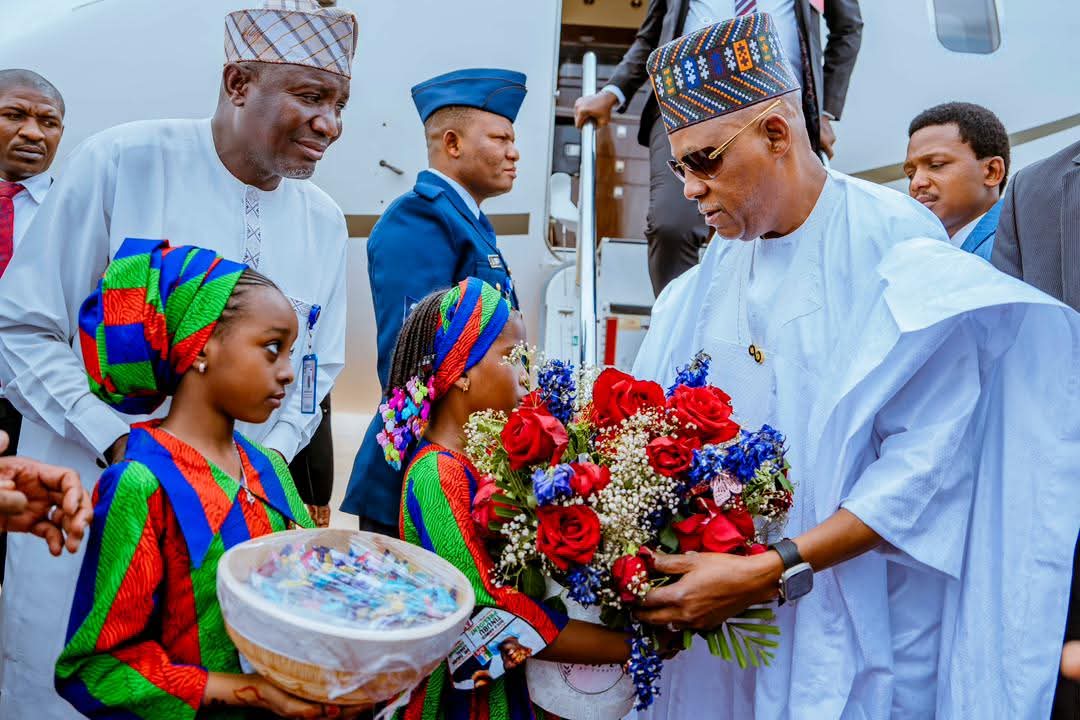
Vice President Kashim Shettima has arrived in Zamfara to formally receive Governor Dauda Lawal into the All Progressives Congress (APC)
Vice President Kashim Shettima has arrived in Zamfara to formally receive Governor Dauda Lawal into the All Progressives Congress (APC)
By: Our Reporter
The Vice President, representing President Bola Ahmed Tinubu, is billed to receive members of the governor’s cabinet and thousands of supporters into the APC fold at a grand reception at the Gusau Trade Fair Complex.
The Vice President was received by the governor, governors of Jigawa, Kaduna, Ogun, and Adamawa States; Umar Namadi, Uba Sani, Dapo Abiodun, and Ahmadu Umaru Fintiri as well as the governors of Plateau, Kano, and Sokoto States; Caleb Mutfwang, Abba Kabir Yusuf, and Ahmad Aliyu Sokoto.
Also on ground to receive him is the Deputy Senate President, the Speaker of the House of Representatives, the APC National Chairman, APC governors Forum Chairman, Governor Hope Uzodinma of Imo State, as well as ministers, party chieftains, and other dignitaries.
Vice President Kashim Shettima has arrived in Zamfara to formally receive Governor Dauda Lawal into the All Progressives Congress (APC)
Uncategorized
ECOWAS, Energy China Explore Partnership to Strengthen West Africa’s Power Infrastructure
ECOWAS, Energy China Explore Partnership to Strengthen West Africa’s Power Infrastructure
By: Michael Mike
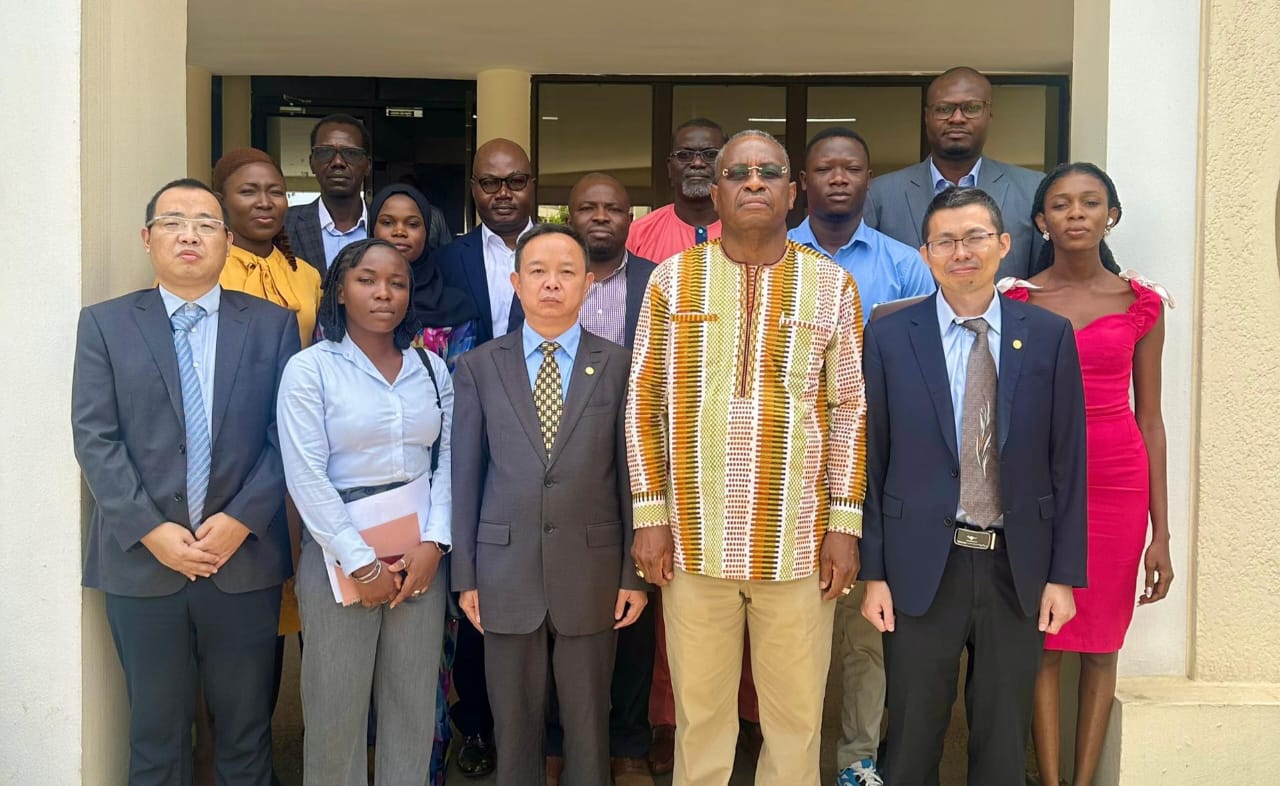
The Economic Community of West African States (ECOWAS) has begun discussions with Energy China International (CEEC) to deepen cooperation on the development of regional energy infrastructure aimed at expanding electricity access and strengthening power systems across West Africa.
The engagement took place during a meeting in Abuja, Nigeria, where officials from the ECOWAS Energy and Mines Directorate met with CEEC representatives to advance dialogue on priority regional energy projects.
The session also included participants from the West African Power Pool (WAPP), the regional body responsible for coordinating electricity generation and transmission among West African countries.
During the meeting, participants reviewed project portfolios, technical capabilities and potential financing channels designed to accelerate growth in the region’s power sector and support broader infrastructure development.
Discussions focused on exploring partnership opportunities and funding options for ECOWAS priority initiatives covering power generation, electricity transmission and distribution infrastructure.
Acting Director of Energy and Mines at ECOWAS, William Baidoe, provided an overview of the Directorate’s mandate and ongoing programmes aimed at improving energy access across the region. These include projects to expand electricity distribution networks as well as initiatives to develop energy storage systems that can enhance the stability and reliability of power supply.
Also speaking at the meeting, Director of Planning, Investment Programming and Environmental Safeguards at WAPP, Kodjo Afidegnon, outlined the status of several priority projects under the ECOWAS Master Plan for the Development of Power Generation and Transmission Infrastructure (2019–2033).
Among the flagship initiatives highlighted were the CLSG interconnection project linking Côte d’Ivoire, Liberia, Sierra Leone and Guinea; the North Core project connecting Nigeria, Niger, Burkina Faso and Benin; the OMVG interconnection linking Senegal, The Gambia and Guinea-Bissau; and the Medium Backbone project connecting Nigeria, Benin, Togo, Ghana and Côte d’Ivoire.
Afidegnon noted that the projects present significant financing and investment opportunities for development partners and international energy companies.
On behalf of CEEC, General Manager Huang Aijun highlighted the company’s expertise in conventional and renewable energy, grid expansion, power planning and electricity transmission infrastructure. He reaffirmed the company’s interest in supporting ECOWAS priority projects through technical support and access to diverse funding sources.
Both parties agreed to maintain close engagement on the identified projects in order to assess their development status and explore concrete areas of collaboration.
ECOWAS said the discussions reflect its continued efforts to build strategic partnerships and mobilise investments to improve electricity access, strengthen grid reliability and promote sustainable infrastructure development across West Africa.
ECOWAS, Energy China Explore Partnership to Strengthen West Africa’s Power Infrastructure
Sallah: FRSC deploys 620 personnel in Gombe
The Federal Road Safety Corps, Gombe Sector Command, has deployed no fewer than 620 personnel and operational logistics for the 2026 Eid-el-Fitri Special Patrol Operations.
Mr Samson Kaura, the Sector Commander of FRSC in the state disclosed this in Gombe while speaking in an interview with journalists.
Kaura said that the operation had commenced on Tuesday to end on March 22.
“The Federal Road Safety Corps, Gombe Command has deployed 620 personnel comprising regular and special marshals and operational logistics for the 2026 Eid-el-Fitr Special Patrol Operations.
“This is being done bearing in mind the kind of heavy traffic that comes with such festive period, so we are acting promptly to ensure safe and smooth travels during the Sallah celebrations,” he said.
In addition, he said 10 patrol vehicles, four ambulances and a tow truck were also deployed to serve the motoring public.
“We will enforce adherence to traffic regulations towards ensuring safety during the Sallah celebration.
“We advise drivers against engaging in dangerous driving, over speeding, route violations, overloading, use of phones while driving.
“We urge everyone to observe all traffic rules and regulations towards ensuring easy flow of traffic as personnel would be stationed on major routes.
“We must be mindful of the fact that it is only the living that can celebrate, so let’s drive safety and prioritise safety over speed or profits.
“Underage driving will not be permitted and use of drugs while driving too; we have commenced special patrol for enforcement and control of traffic,” he said.
Kaura further reiterated the command’s warnings against underage driving, particularly during the Sallah celebration in the state.
He said the call was imperative as child driving remained one of the causes of crash, alongside over speeding, overloading, dangerous driving and use of drugs and phone while driving.
He said that it had been observed that persons below 18 years drive cars, motorcycles and tricycles which he said was not permitted, stating that the FRSC would enforce compliance in that regard.
The sector commander assured the motoring populace of the command’s commitment to ensure safety while seeking their cooperation.
“I wish the Muslim faithful Happy celebration while assuring them of our readiness to serve them professionally,” he said.
Sallah: FRSC deploys 620 personnel in Gombe

Troops detect, detonate IED along Ngoshe–Pulka road in Borno

Vice President Kashim Shettima has arrived in Zamfara to formally receive Governor Dauda Lawal into the All Progressives Congress (APC)

ISWAP cleric threatens attack on Malam Fatori, after humiliating defeat, troops urged to remain alert

Roger Federer’s Shock as DNA Results Reveal Myla and Charlene Are Not His Biological Children

THE PLIGHT OF FARIDA

FAILED COUP IN BURKINA FASO: HOW TRAORÉ NARROWLY ESCAPED ASSASSINATION PLOT AMID FOREIGN INTERFERENCE CLAIMS
-
 News2 years ago
Roger Federer’s Shock as DNA Results Reveal Myla and Charlene Are Not His Biological Children
-
Opinions4 years ago
THE PLIGHT OF FARIDA
-
 News11 months ago
FAILED COUP IN BURKINA FASO: HOW TRAORÉ NARROWLY ESCAPED ASSASSINATION PLOT AMID FOREIGN INTERFERENCE CLAIMS
-

 News2 years ago
EYN: Rev. Billi, Distortion of History, and The Living Tamarind Tree
-
 Opinions4 years ago
POLICE CHARGE ROOMS, A MINTING PRESS
-

 ACADEMICS2 years ago
A History of Biu” (2015) and The Lingering Bura-Pabir Question (1)
-

 Columns2 years ago
Army University Biu: There is certain interest, but certainly not from Borno.
-

 Opinions2 years ago
Tinubu,Shettima: The epidemic of economic, insecurity in Nigeria
