
Crime
Illicit drugs: NDLEA partners Pakistani counterparts

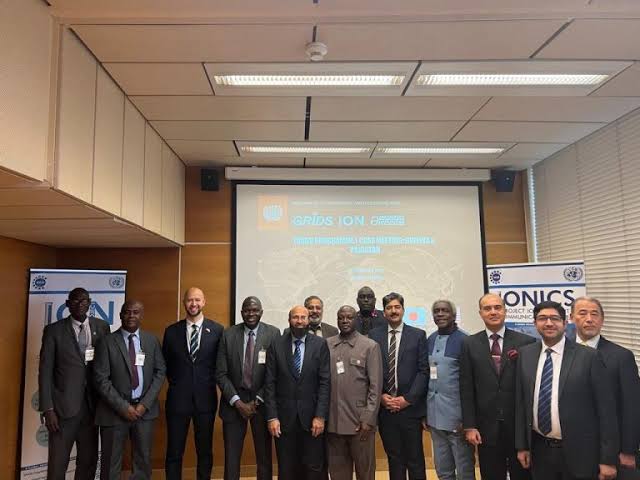
Illicit drugs: NDLEA partners Pakistani counterparts
By: Michael Mike
The National Drug Law Enforcement Agency (NDLEA) has held talks with its Pakistani counterparts, Division of Controlled Drugs Regulatory Authority of Pakistan (DRAP), Anti-Narcotics Force (ANF) and Controlled Substances Section, Ministry of Narcotics Control
to explore ways of collaboration to restrict channels of trafficking illicit substances between Nigeria and Pakistan.
A signed statement by the spokesman of the anti-narcotics agency, Femi Babafemi on Saturday said the Chairman/Chief Executive Officer of NDLEA, Brig. Gen. Buba Marwa (Retd) had approved a delegation comprising Joseph Sunday Nbona, Director, Prosecution and Legal Services; Gadzama Samuel Bashir, Director, Operations and General Investigation; Abdulrahman Adebowale, Head, Data/Digital Intelligence, Directorate of Intelligence and Aminu Danjuma Jega, Directorate of Seaport Operations, who were joined by Aderemi Afolabi, Deputy Director, Investigation and Enforcement, NAFDAC, for the February 27th meeting in Vienna, Austria.
He said the strategic case meeting, which brought the two countries face to face to discuss their responsibilities, held under the supervision of the International Narcotics Control Board (INCB) focused on improved communication and exchange of real time intelligence using the INCB communication tools, Ion Incident Communication System, IONICS between NDLEA and the Pakistani anti-narcotics agencies.
Babafemi disclosed that at the end of the talks, the two delegations adopted important resolutions on how to improve their cooperation and tackle the menace of illicit drug trafficking between both countries especially pharmaceutical opioids like tramadol.
He said the Pakistani delegation was composed of Mr. Ahmad Din, Director, Division of Controlled Drugs, DRAP; Mr. Arif Muhammad, Additional Director, Division of Controlled Drugs, DRAP; Mr. Ammar Ali, Director (Anti-Narcotics Force), Regional Directorate, North, ANF; and Mr. Syed Saadat Ali Bokhari, Section Officer, Controlled Substances Section, Ministry of Narcotics Control.
Babafemi said they expressed commitment to improving operational communication with the NDLEA through existing networks between both countries and by using more frequently the possibilities offered by IONICS, the INCB’s tool of real time communication.


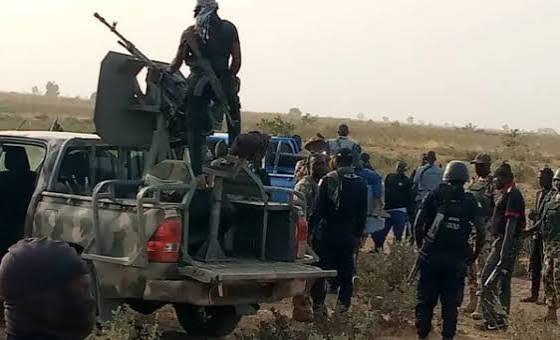
Troops arrest suspected gunrunner, intercept 200 rounds of ammunition in kaduna
By: Zagazola Makama
Troops of Operation FANSAN YAMMA have arrested a suspected gunrunner and intercepted 200 rounds of ammunition in Zaria Local Government Area of Kaduna State.
A security source disclosed that the suspect was apprehended at about 3:15 a.m. on March 29 during a joint intelligence-led operation involving troops of 2 Battalion and a team from the Office of the National Security Adviser (ONSA).
The source said the operation followed credible intelligence on the movement of the suspect, who was reportedly en route to Kaduna from Jos through Dambo community in Zaria.
“Troops swiftly established a snap checkpoint at Dambo, where the suspect was intercepted in possession of 200 rounds of 7.62 x 39mm ammunition,” the source said.
He added that the suspect has been handed over to ONSA for further investigation and necessary action.
The source noted that the arrest is part of ongoing efforts to curb the proliferation of illegal arms and ammunition, as well as disrupt criminal networks operating across the North-West and North-Central regions.
Troops arrest suspected gunrunner, intercept 200 rounds of ammunition in kaduna
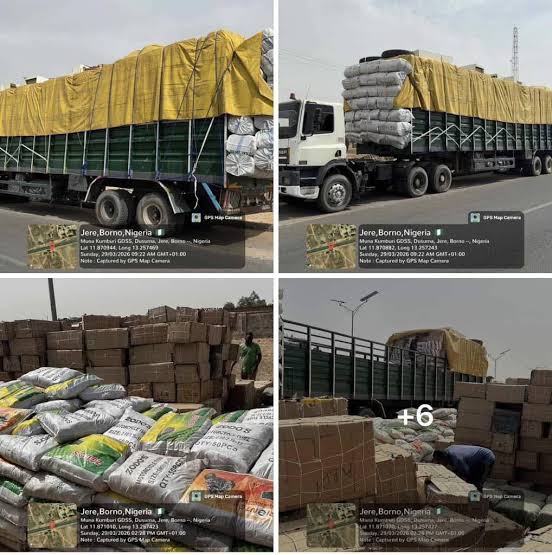
Troops intercept vehicle conveying suspected terrorist logistics in Borno
By: Zagazola Makama
Troops of Operation Hadin Kai have intercepted a vehicle conveying suspected logistics supplies meant for Boko Haram terrorists along Maiduguri–Mafa road in Borno State.
A military source disclosed that the vehicle, with registration number GZA 359 XA, was intercepted during a stop-and-check operation conducted by troops of 195 Battalion (Mechanised) at a checkpoint.
According to the source, the interception followed a thorough search of the vehicle, which revealed several cartons of assorted medical drugs, motorcycle tubes, and brand-new motorcycle tyres concealed in sacks.
Other items recovered include mosquito nets, rolls of mats, cartons of air brake cylinders for heavy-duty trucks, and cartons of detergent.
Preliminary investigation indicated that the items lacked proper clearance and were being transported to Kusuri, a border town en route to Chad.
“All efforts to trace the owners of the items proved abortive,” the source said.
He added that the vehicle, recovered items, and the civilian drivers would be handed over to the appropriate military intelligence unit for further investigation and necessary action.
Troops intercept vehicle conveying suspected terrorist logistics in Borno
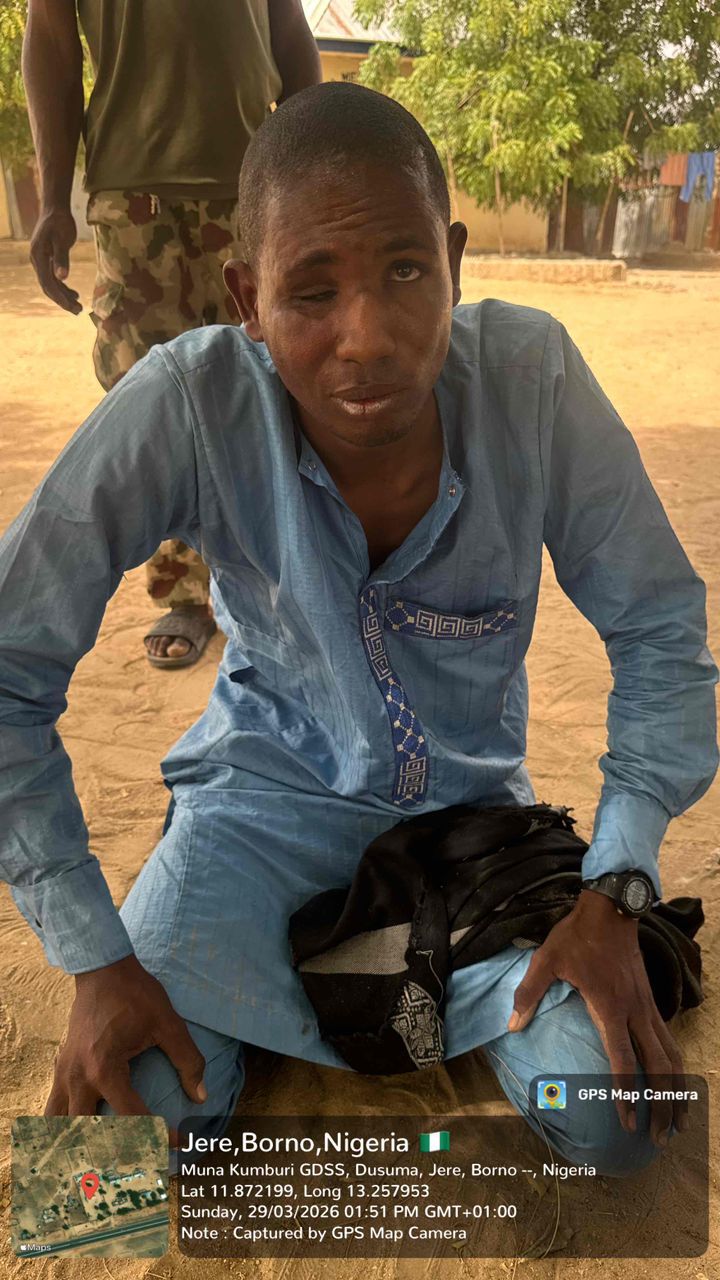
Troops arrest another suspected terrorist logistics supplier in maiduguri
By: Zagazola Malama
Troops of Operation Hadin Kai, in collaboration with members of the Civilian Joint Task Force (CJTF), have arrested a suspected Boko Haram logistics supplier in Maiduguri, Borno State.
A military source disclosed that the suspect, identified as Mohammed Adamu, 26, was apprehended at Muna Garage during an intelligence-led operation.
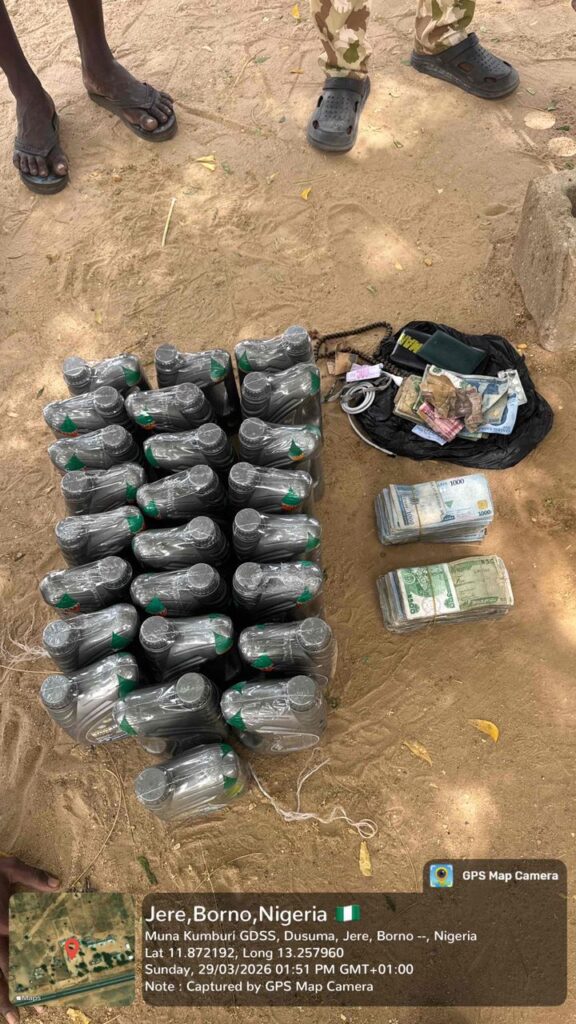
According to the source, the suspect was intercepted while conveying 25 one-litre containers of engine oil concealed in sacks, along with a sum of N624,900.
Preliminary investigations revealed that the suspect was on a mission to procure and supply logistics items, including motorcycle parts, to Boko Haram terrorists before his arrest.
“The suspect confessed to being involved in the supply of logistics to different террорист elements for a long period,” the source said.
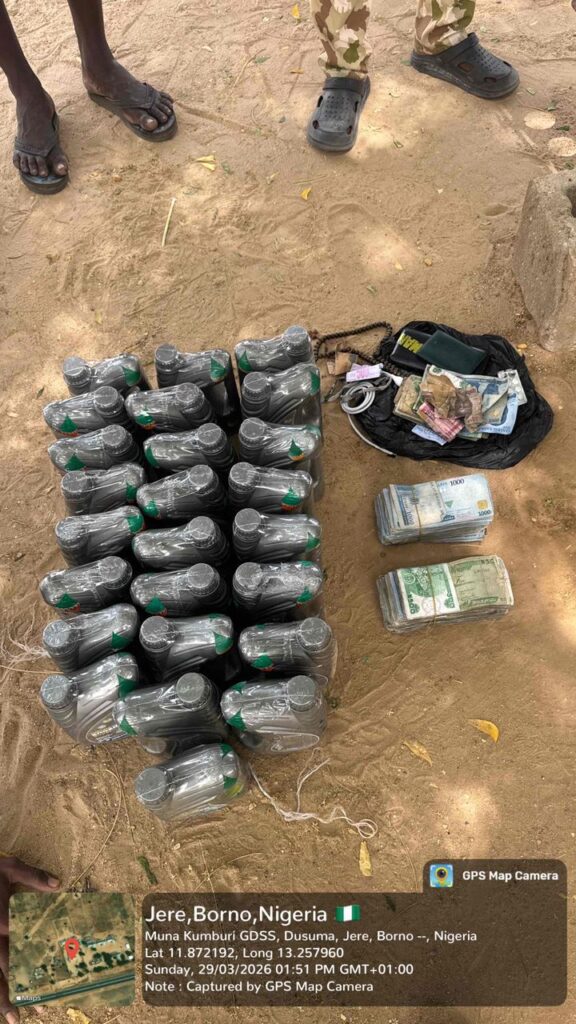
Items recovered from him include 25 one-litre containers of engine oil, the cash sum of N624,900, one Infinix mobile phone, a power bank, a national identity card and three ATM cards.
The source added that the suspect would be handed over to the appropriate military intelligence unit for further investigation and necessary action.
Troops arrest another suspected terrorist logistics supplier in maiduguri

Group demands zoning of Gombe Central Senatorial seat to Yamaltu/Deba

Eight aspirants eye Governor Buni’s seat in Yobe

Reprisal attack leaves two dead as plateau govt imposes curfew in Jos

Roger Federer’s Shock as DNA Results Reveal Myla and Charlene Are Not His Biological Children

THE PLIGHT OF FARIDA

FAILED COUP IN BURKINA FASO: HOW TRAORÉ NARROWLY ESCAPED ASSASSINATION PLOT AMID FOREIGN INTERFERENCE CLAIMS
-
 News2 years ago
Roger Federer’s Shock as DNA Results Reveal Myla and Charlene Are Not His Biological Children
-
Opinions4 years ago
THE PLIGHT OF FARIDA
-
 News11 months ago
FAILED COUP IN BURKINA FASO: HOW TRAORÉ NARROWLY ESCAPED ASSASSINATION PLOT AMID FOREIGN INTERFERENCE CLAIMS
-

 News2 years ago
EYN: Rev. Billi, Distortion of History, and The Living Tamarind Tree
-
 Opinions4 years ago
POLICE CHARGE ROOMS, A MINTING PRESS
-

 ACADEMICS2 years ago
A History of Biu” (2015) and The Lingering Bura-Pabir Question (1)
-

 Columns2 years ago
Army University Biu: There is certain interest, but certainly not from Borno.
-

 Opinions2 years ago
Tinubu,Shettima: The epidemic of economic, insecurity in Nigeria
