
Crime
Illicit drugs: NDLEA strengthens airport operations as officers undergo advanced trainings


Illicit drugs: NDLEA strengthens airport operations as officers undergo advanced trainings
. Deploy new skills, tools across airports operations, Marwa charges officers
By: Michael Mike
Selected Commanders and officers of the National Drug Law Enforcement Agency, have undergone series of trainings in Advance Passenger Information System (API) and Passenger Targeting/ Intelligence Gathering as part of ongoing efforts to strengthen NDLEA’s operational efficiency at the country’s major airports.
According to the United Nations Office on Drugs and Crime, UNODC, which facilitated the trainings held in Abidjan, Côte d’Ivoire and Abuja, the workshops were designed to enhance the capacity of the Agency’s Commands at Airports to target and intercept high-risk passengers, cargo and mail, to help combat illicit drug trafficking. They will also help to facilitate communication and coordination between countries of origin, transit and destination in order to destabilise illicit cross-border flows and criminal networks.

While the Commander of the Murtala Muhammed International Airport, MMIA, Strategic Command of NDLEA, ACGN Usman Ali Wadar and his counterpart at the Nnamdi Azikiwe International Airport, NAIA, Abuja, CN Mohammed Ajiya participated in the six-day training in Abidjan, Côte d’Ivoire, 13 other officers drawn from the MMIA and NAIA Commands took part in the five-day training that held in Abuja. They are all expected to impact the knowledge and skills acquired during the sessions on their other colleagues.
The trainings were funded by the European Union, Australia, Canada, France, Japan, the Netherlands, Norway, the United Kingdom and the United States under the AIRCOP Airport Communication Project, implemented by the UNODC.
Chairman/Chief Executive Officer of NDLEA, Brig Gen Mohamed Buba Marwa (Rtd) commended the facilitators: Ms. Fabienne Russel of UNODC and Anderson Leme Siqueira of Brazilian Customs Administration for taking their time to be in Abuja for the training after the engagement in Abidjan.
He equally praised the two NDLEA Commanders and other officers who participated in the Abijan and Abuja training sessions for their interest and commitment. He charged them to immediately reflect the new skills and tools in their operations across the international airports in the country.
Femi Babafemi
Director, Media & Advocacy
NDLEA Headquarters, Abuja
Friday 20th December 2024 Illicit drugs: NDLEA strengthens airport operations as officers undergo advanced trainings
. Deploy new skills, tools across airports operations, Marwa charges officers
Selected Commanders and officers of the National Drug Law Enforcement Agency, have undergone series of trainings in Advance Passenger Information System (API) and Passenger Targeting/ Intelligence Gathering as part of ongoing efforts to strengthen NDLEA’s operational efficiency at the country’s major airports.
According to the United Nations Office on Drugs and Crime, UNODC, which facilitated the trainings held in Abidjan, Côte d’Ivoire and Abuja, the workshops were designed to enhance the capacity of the Agency’s Commands at Airports to target and intercept high-risk passengers, cargo and mail, to help combat illicit drug trafficking.
They will also help to facilitate communication and coordination between countries of origin, transit and destination in order to destabilise illicit cross-border flows and criminal networks.
While the Commander of the Murtala Muhammed International Airport, MMIA, Strategic Command of NDLEA, ACGN Usman Ali Wadar and his counterpart at the Nnamdi Azikiwe International Airport, NAIA, Abuja, CN Mohammed Ajiya participated in the six-day training in Abidjan, Côte d’Ivoire, 13 other officers drawn from the MMIA and NAIA Commands took part in the five-day training that held in Abuja. They are all expected to impact the knowledge and skills acquired during the sessions on their other colleagues.
The trainings were funded by the European Union, Australia, Canada, France, Japan, the Netherlands, Norway, the United Kingdom and the United States under the AIRCOP Airport Communication Project, implemented by the UNODC.
Chairman/Chief Executive Officer of NDLEA, Brig Gen Mohamed Buba Marwa (Rtd) commended the facilitators: Ms. Fabienne Russel of UNODC and Anderson Leme Siqueira of Brazilian Customs Administration for taking their time to be in Abuja for the training after the engagement in Abidjan.
He equally praised the two NDLEA Commanders and other officers who participated in the Abijan and Abuja training sessions for their interest and commitment. He charged them to immediately reflect the new skills and tools in their operations across the international airports in the country.
Illicit drugs: NDLEA strengthens airport operations as officers undergo advanced trainings


Troops trail kidnappers, warn locals in Sokoto against complicity
By: Zagazola Makama
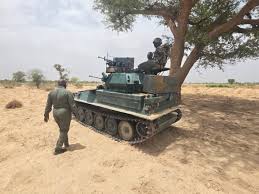
Troops of 8 Division, deployed at Forward Operating Base (FOB) Sabon Birnin in Sabon Birnin Local Government Area of Sokoto State, have traced a group of terrorists who kidnapped four farmers in Fadama village.
Security sources said that at about 10:00 a.m. on March 24, troops responded to reports of terrorist activity in the community. On arrival, they confirmed that a group of terrorists had invaded the village and abducted four local farmers.
Troops trailed the suspects along their withdrawal route but the terrorists had fled.
The troops admonished residents on the importance of timely reporting of suspicious activities to enable prompt security response and continued aggressive patrols to deny terrorists freedom of action in the area.
They also warned the residents against complicity with the terrorists.
Troops trail kidnappers, warn locals in Sokoto against complicity
Troops arrest notorious criminal in Jos East, Plateau
By: Zagazola Makama
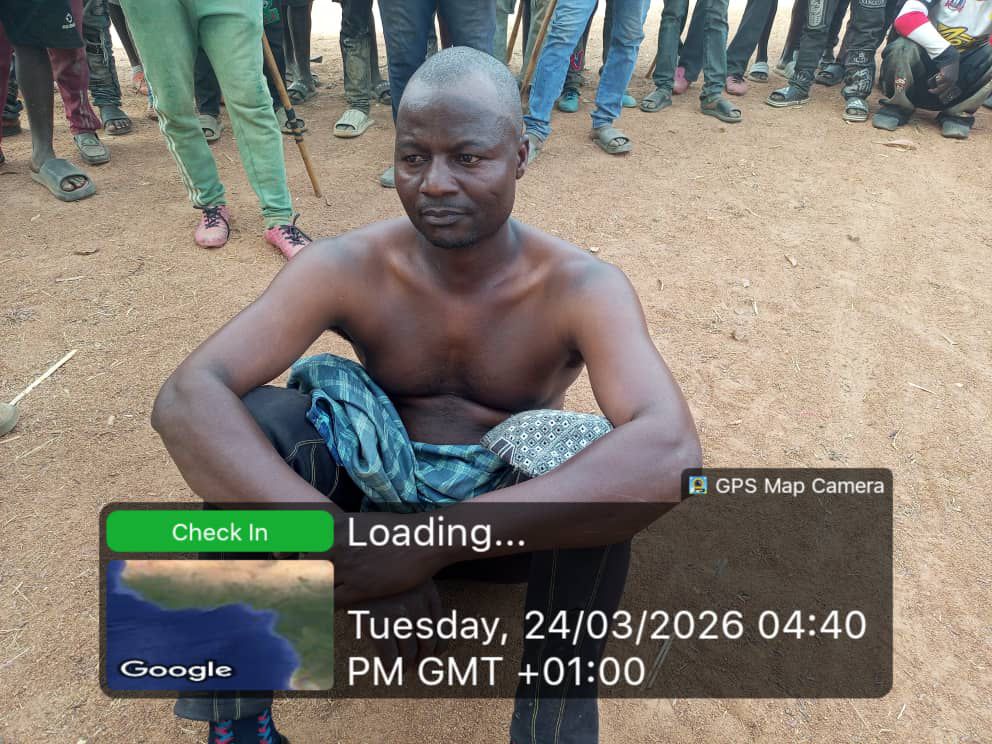
Troops of Operation Enduring Peace (OPEP) have arrested a notorious criminal terrorizing residents of Vatt Community.
Security sources said that at about 4:10 p.m. on March 24, troops of Sector 1, Sub-Sector 12, in collaboration with local residents, apprehended 40-year-old Suleiman Mohammed in Lamingo, Jos East Local Government Area.
The suspect, known for causing fear and committing crimes in the community, was handed over to the Keystone Maijuju Division for necessary legal action.
The operation forms part of ongoing efforts by troops of Operation Enduring Peace to maintain law and order, protect lives, and ensure the safety of residents across Plateau State.
Troops arrest notorious criminal in Jos East, Plateau
Troops of Operation Enduring Peace repel terrorists’ attack in Plateau
By: Zagazola Makama
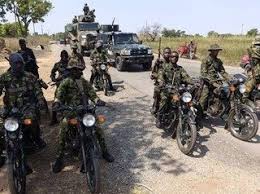
Troops of Operation Enduring Peace (OPEP) have successfully repelled an attack by suspected terrorists in Pinau community, Wase Local Government Area of Plateau State.
Security sources said the attack occurred at about 1:30 a.m. on March 26, when armed assailants attempted to strike the community.
Troops of Sector 2, in collaboration with local vigilante groups, engaged the attackers with superior firepower, forcing them to flee.
“No casualties were recorded during the encounter, and troops are currently conducting thorough exploitation of the area to ensure the safety of residents,” a security source said.
Troops of Operation Enduring Peace repel terrorists’ attack in Plateau

Troops restore calm after communal clash in Nasarawa

Troops conduct offensive, recover arms in Zamfara

Troops trail kidnappers, warn locals in Sokoto against complicity

Roger Federer’s Shock as DNA Results Reveal Myla and Charlene Are Not His Biological Children

THE PLIGHT OF FARIDA

FAILED COUP IN BURKINA FASO: HOW TRAORÉ NARROWLY ESCAPED ASSASSINATION PLOT AMID FOREIGN INTERFERENCE CLAIMS
-
 News2 years ago
Roger Federer’s Shock as DNA Results Reveal Myla and Charlene Are Not His Biological Children
-
Opinions4 years ago
THE PLIGHT OF FARIDA
-
 News11 months ago
FAILED COUP IN BURKINA FASO: HOW TRAORÉ NARROWLY ESCAPED ASSASSINATION PLOT AMID FOREIGN INTERFERENCE CLAIMS
-

 News2 years ago
EYN: Rev. Billi, Distortion of History, and The Living Tamarind Tree
-
 Opinions4 years ago
POLICE CHARGE ROOMS, A MINTING PRESS
-

 ACADEMICS2 years ago
A History of Biu” (2015) and The Lingering Bura-Pabir Question (1)
-

 Columns2 years ago
Army University Biu: There is certain interest, but certainly not from Borno.
-

 Opinions2 years ago
Tinubu,Shettima: The epidemic of economic, insecurity in Nigeria
