
News
In 50 Years, ECOWAS Have Never Had It This Bad With Departing Three Member Countries- ECOWAS Court PresidentMichael Olugbode in Abuja

In 50 Years, ECOWAS Have Never Had It This Bad With Departing Three Member Countries- ECOWAS Court President
Michael Olugbode in Abuja
By: Michael Mike
The President of Economic Community of West African States (ECOWAS) Court has lamented the situation the regional bloc is presenting facing, stating that the body which is celebrating its 50th anniversary has never had it this bad.
Speaking at the sent-forth ceremony for four of the Court staff, Dr Athanase Atannon, Dr William Towah, Mr Félicien Hounkanrin and Mr Iliyas Jonah on Wednesday in Abuja, the president of ECOWAS Court of Justice, Hon Justice Ricardo Cláudio Monteiro Gonçalves, said: “The path may not be easy, first of all, due to the particularly difficult situation that our Community is going through. In fact, in almost fifty years of its existence, for the first time, the ECOWAS Community is faced, at one stroke, with the departure of three countries, with all the consequences that may result: on a social level, on a financial level and on the level of security in our sub-region.”
He added that: “However, we believe that our political decision-makers will know how to take advantage of this moment to carry out a profound reflection on the path taken and what is intended for our Community in the next fifty years.
“This reflection will have to be plural, open, inclusive, participatory and its success will depend largely on the involvement of civil society in our countries.
“The path will still have challenges to be overcome [now focusing specifically on our Institution], if we consider that we will soon announce the recruitment competition for new employees.
“For this phase that is about to begin, it is our Institution’s duty to firmly commit to excellence, rigor, and individual merit. This attitude can conflict with heightened passions, personal commitments, parallel agendas, all of which are feelings and attitudes that we must tenaciously combat.”
On the challenges faced by the Court, the president said: “The problem of implementing our decisions has been highlighted as one of the greatest challenges facing our Institution. We fully agree and, along with this, we could also add the challenge of operationalizing the Court’s arbitration jurisdiction (mandate as an Arbitration Tribunal); the use of the prejudicial referral mechanism (legal advisory jurisdiction); the creation of a legal aid fund, just to name a few.”
He admitted that: “There is, however, a challenge that must be overcome as quickly as possible by the staff of this house, as this challenge appears to us to be crucial. This is the challenge of improvement and awareness on the part of our human resources.
“In an international institution like ours, professionalism, commitment and unreserved dedication, proactivity, knowledge of the profession, firm commitment to professional ethics and deontology and, above all, knowledge of the role that each person is assigned within our Institution, are crucial points that must be worked on. For some, more than others this is true, but these are certainly aspects that all employees should consider.
“This challenge falls to the staff because you are the continuity, the sap that gives life and guarantees the longevity of this Institution. We (The Court) will soon complete twenty-four years of existence. If our Institution is recognized internationally today, this is also largely due to its performance.
“But this cannot be interpreted as the end of the goal. Quite the opposite. Today, more than ever, you are all called to deeply reflect on crucial aspects of the collective existence of the Court, such as full dedication, disinterested analysis and advice, unreserved adherence to the objectives set by management, commitment to truth, rigor, honesty and respect for one another.”
On the retiring staff, he said: “They certainly had moments of uncertainty, frustration, misunderstanding and perhaps even anger. However, it could not be otherwise and there can be no surprises about it. In fact, we were warned well, at the beginning of our civilization, that in life we would face tribulations and that it could not be any different. We were given hope, however: in the end we would win, because we would never be alone.
“We are convinced that these were years of hard work, challenges overcame, valuable contributions and many shared moments, as they were “never alone”.
“Each of you leaves an indelible mark on this institution, both through your professional results and, above all, through the way you have left an impact on the people around you. Your wisdom and patience will continue to guide and inspire your colleagues. Your example and spirit of dedication will surely be a source of inspiration for many of us.”
A goodwill message read by a representative of the staff, Mr Ghislain Agbozo said: “We hope that this new chapter unfolding in each of your lives will be filled with opportunities for growth, fulfillment, and well-deserved rest. We wish you good health, so that you may enjoy your retirement pensions for many years to come, in peace and happiness. You will remain forever in our hearts and in our most vivid memories. We look forward to seeing you again—whether here in Nigeria, in Benin, Liberia, or wherever life may take you. This is not a goodbye; it is a fond farewell.”
One of the retiring staff, Mr Félicien Hounkanrin in an interview with journalists, thanked the ECOWAS Court management and staff for the elaborate celebration, stating that this has shown that the organisation is indeed a great family.
He said he would be going into his new facet of life with pride and with the feeling of having a family and friends in ECOWAS Court.
In 50 Years, ECOWAS Have Never Had It This Bad With Departing Three Member Countries- ECOWAS Court President
Michael Olugbode in Abuja


Troops Arrest Suspected Military Impostor in Katsina
By Zagazola Makama
Troops of 17 Brigade have arrested a suspected military impostor during a fighting patrol in Malumfashi Local Government Area.
Security sources told Zagazola Makama that the suspect was apprehended at about 1:30 p.m. on July 4 by troops deployed at the Forward Operating Base (FOB) Malumfashi while conducting routine patrols within Malumfashi town.

According to the sources, the suspect was intercepted while wearing a woodland camouflage three-quarter short, raising suspicion among the troops.
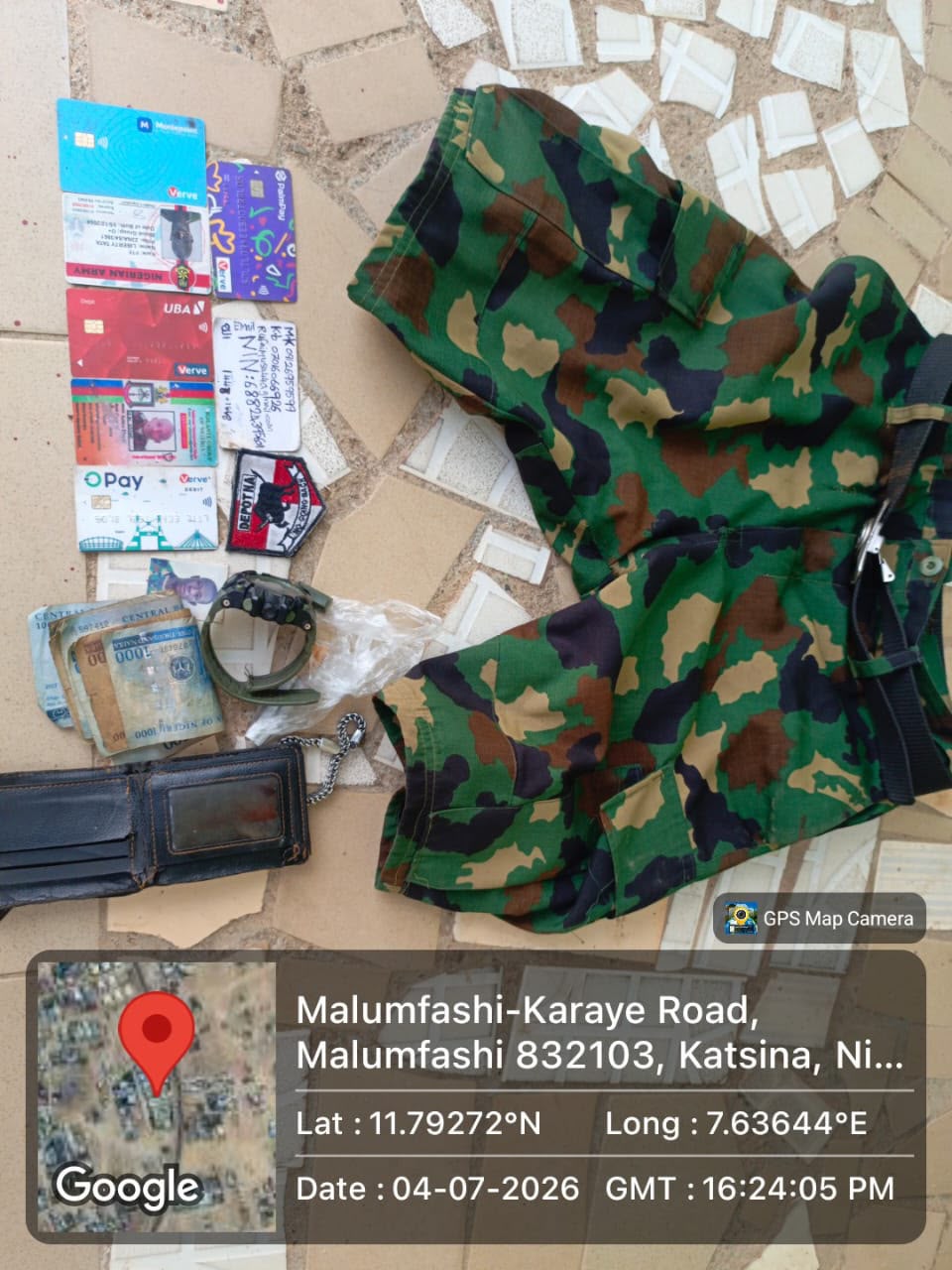
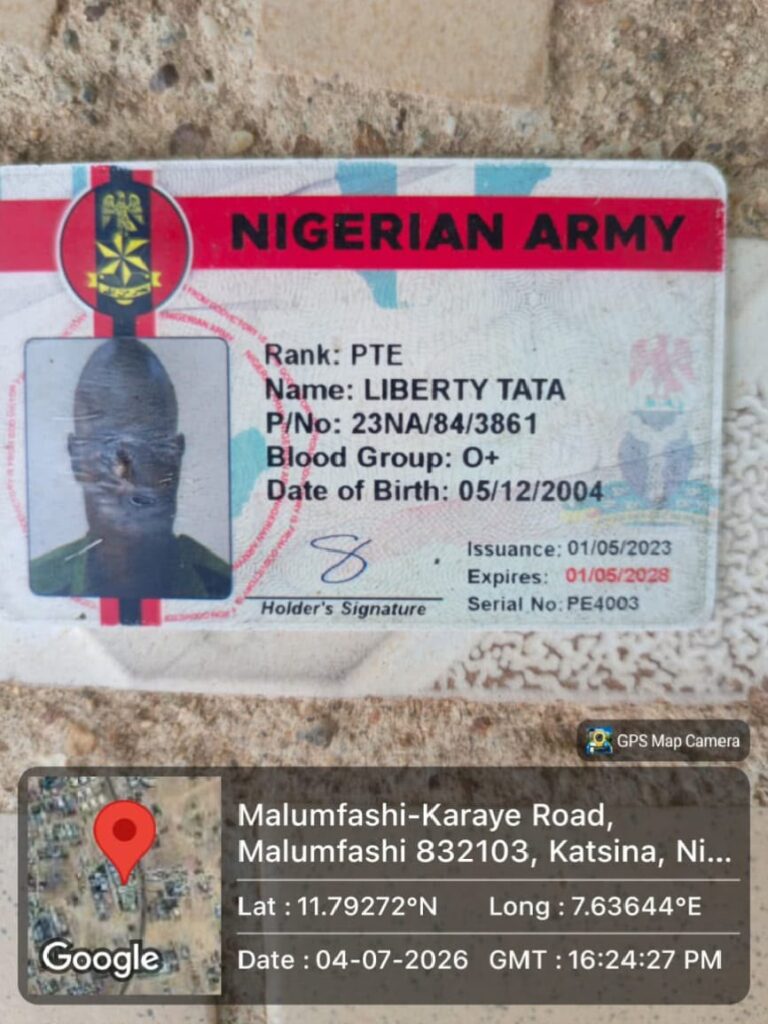
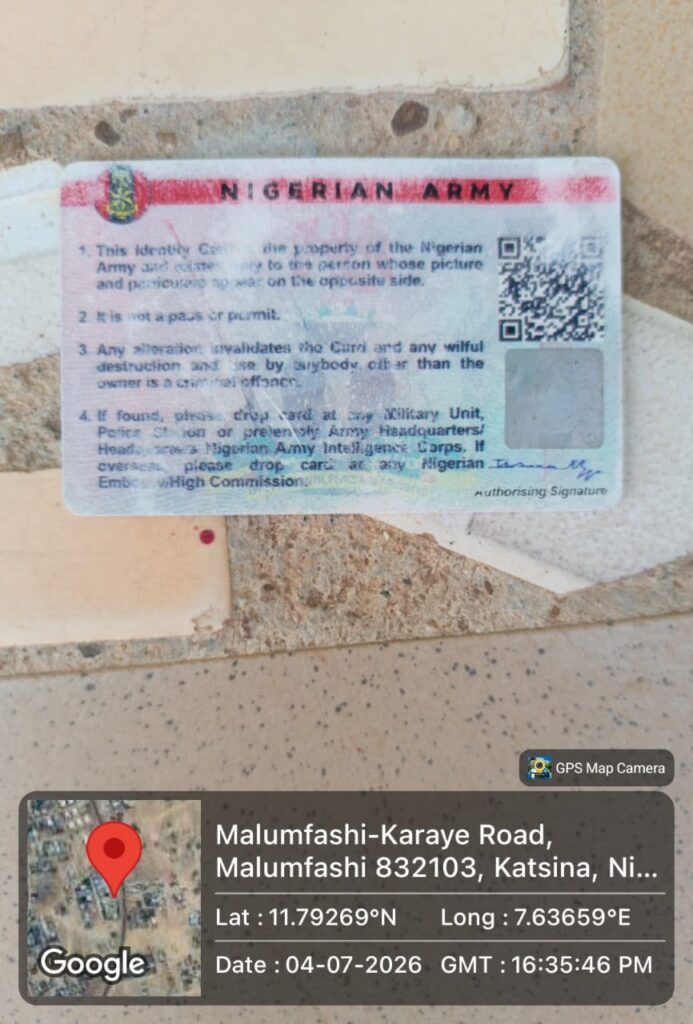
A search conducted on the suspect led to the recovery of a fake Nigerian Army identity card, four Automated Teller Machine (ATM) cards, one woodland camouflage three-quarter short, a wristwatch and the sum of ₦17,000.
The suspect and the recovered exhibits are currently in military custody pending further investigation.
Military sources said the arrest forms part of ongoing efforts to curb impersonation of security personnel and other criminal activities within the area.
Troops Arrest Suspected Military Impostor in Katsina
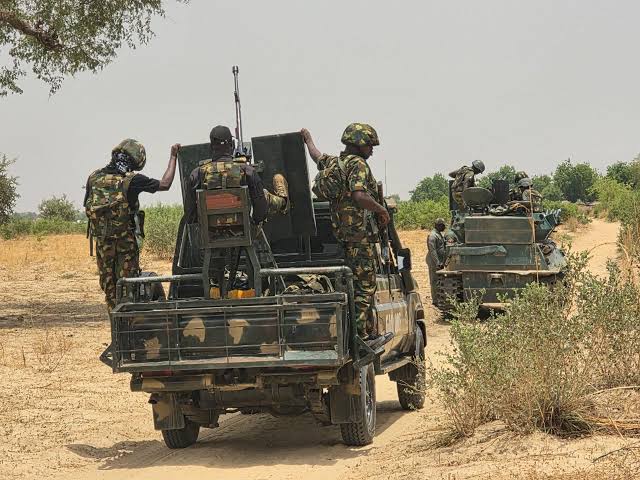
Troops Recover 50 Rustled Cattle, Repel Suspected Rustlers in Kaduna
By Zagazola Makama
Troops deployed at the Forward Operating Base (FOB) Kankomi have recovered 50 rustled cattle after repelling suspected cattle rustlers during an ambush operation in Chikun Local Government Area.
Security sources told Zagazola Makama that the troops responded to a distress call at about 9:55 a.m. on July 4 over the activities of suspected rustlers at Ungwan Gontu community.
According to the sources, the troops swiftly laid an ambush and made contact with the fleeing suspects, forcing them to abandon the stolen livestock and escape into the surrounding area.
During the operation, the troops recovered 50 rustled cattle, which were subsequently identified and handed over to their rightful owner.
Military sources said efforts are ongoing to track down the fleeing suspects as security operations continue to combat cattle rustling and other criminal activities across Kaduna State.
Troops Recover 50 Rustled Cattle, Repel Suspected Rustlers in Kaduna
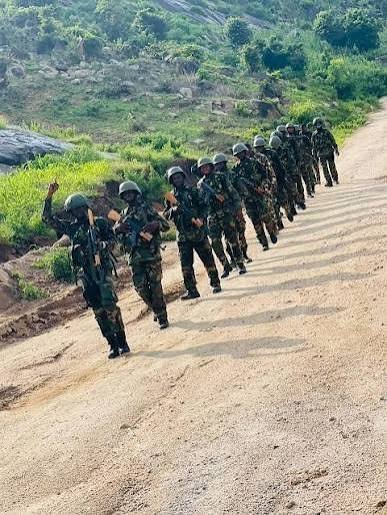
Troops Arrest Suspected Terrorist in Kogi, Suspect Confesses to Group Membership
By Zagazola Makama
Troops of 12 Brigade, in collaboration with Office of the National Security Adviser (ONSA) Hybrid Forces, have arrested a suspected terrorist during an operation in Lokoja Local Government Area.
Security sources told Zagazola Makama that the troops responded at about 1:00 p.m. on July 4 to reports of a confrontation between local residents and a suspected terrorist at a Ruga settlement behind Obajana community.
According to the sources, the troops swiftly intervened and arrested one suspect at the scene.
During preliminary interrogation, the suspect reportedly confessed to being a member of a terrorist group led by an individual identified as Haruna, which allegedly operates within the Okene general area.
The suspect is currently in military custody and is undergoing further investigation to establish the extent of his involvement and identify other members of the group.
Military sources said the arrest forms part of ongoing security operations aimed at dismantling terrorist and criminal networks across Kogi State.
Troops Arrest Suspected Terrorist in Kogi, Suspect Confesses to Group Membership

Troops Arrest Suspected Military Impostor in Katsina

Troops Recover 50 Rustled Cattle, Repel Suspected Rustlers in Kaduna

Troops Arrest Suspected Terrorist in Kogi, Suspect Confesses to Group Membership

Roger Federer’s Shock as DNA Results Reveal Myla and Charlene Are Not His Biological Children

THE PLIGHT OF FARIDA

FAILED COUP IN BURKINA FASO: HOW TRAORÉ NARROWLY ESCAPED ASSASSINATION PLOT AMID FOREIGN INTERFERENCE CLAIMS
-
 News2 years ago
Roger Federer’s Shock as DNA Results Reveal Myla and Charlene Are Not His Biological Children
-
Opinions4 years ago
THE PLIGHT OF FARIDA
-
 News1 year ago
FAILED COUP IN BURKINA FASO: HOW TRAORÉ NARROWLY ESCAPED ASSASSINATION PLOT AMID FOREIGN INTERFERENCE CLAIMS
-

 News2 years ago
EYN: Rev. Billi, Distortion of History, and The Living Tamarind Tree
-
 Opinions5 years ago
POLICE CHARGE ROOMS, A MINTING PRESS
-

 ACADEMICS2 years ago
A History of Biu” (2015) and The Lingering Bura-Pabir Question (1)
-

 Columns2 years ago
Army University Biu: There is certain interest, but certainly not from Borno.
-

 Politics1 year ago
2027: Why Hon. Midala Balami Must Go, as Youths in Hawul and Asikira/Uba Federal Constituency Reject ₦500,000 as Sallah Gift
