
News
Integrated campaign to boost health of 1m children, women in Gombe

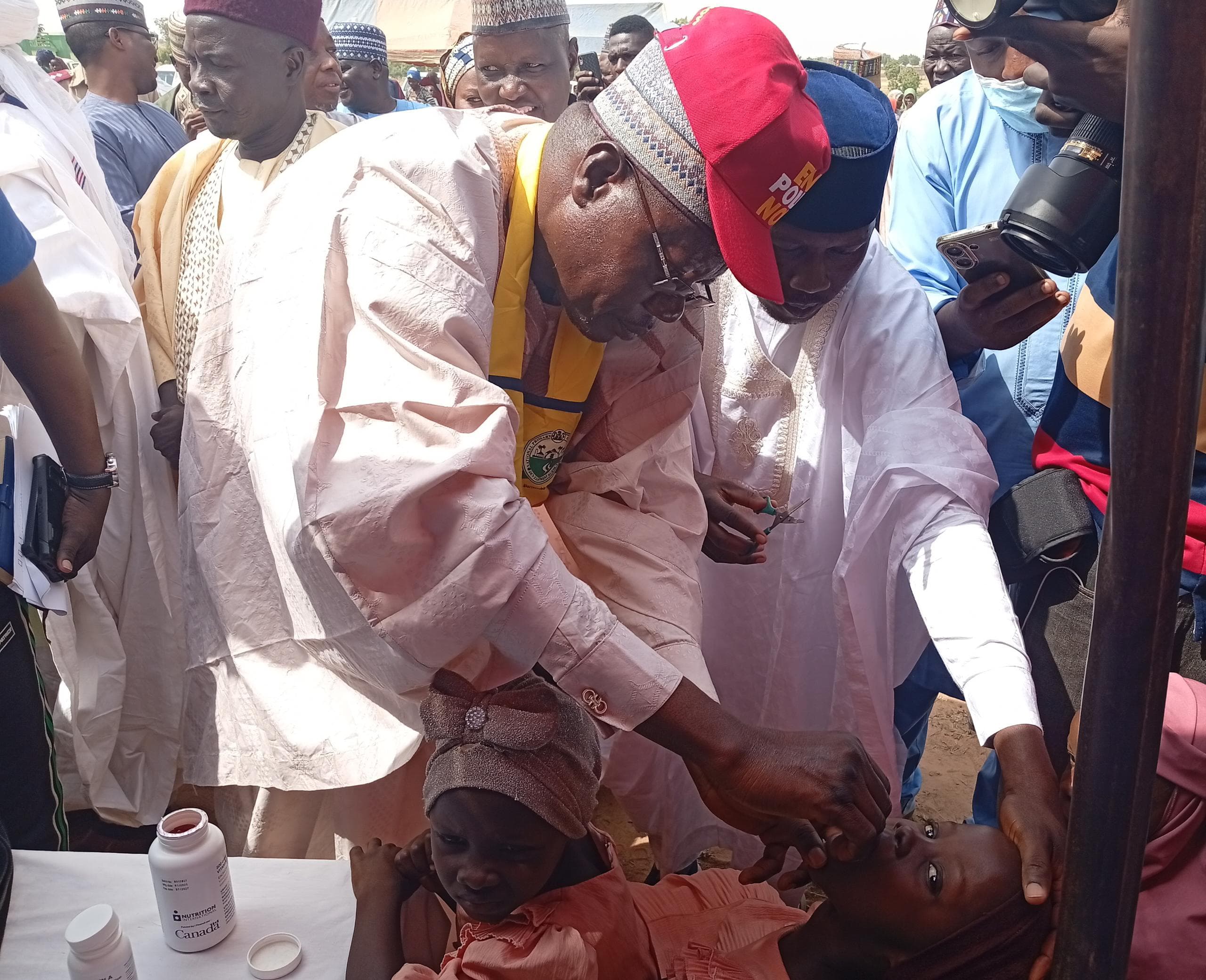
Integrated campaign to boost health of 1m children, women in Gombe
The Gombe State government in collaboration with the Federal Government and the United Nations Children’s Fund (UNICEF), has inaugurated the National Immunisation Plus Days campaign in the state.
The integrated campaign is targeting 1, 046, 553 beneficiaries, comprising 832, 427 children for vaccination against polio and 214,126 pregnant women to be provided multiple micronutrient supplements.
Mr Manassah Jatau, the state’s Deputy Governor while inaugurating the campaign on Friday in Swa community in Balanga LGA of Gombe State said the event also marked the launch of the Maternal Newborn and Child Health Week (MNCHW).
Jatau who was represented by Dr Ahmed Kashere, Chairman of the Governing Council of the Gombe State Primary HealthCare Development Agency described the campaign as crucial towards protecting the health of children and expectant mothers.
He said that the integrated campaign would ensure that children were protected from diseases that threaten their lives.
“This campaign targets 832,427 eligible children and pregnant mothers across 11 LGAs, focusing on polio vaccination for children under five.
“It will ensure vitamin A supplementation for 770,852 children aged 6-59 months, to boost their immune system and prevent night blindness
“Deworming for children aged 12-59 months, to improve their nutritional status and reduce the burden of worm infestation would also be part of the campaign.
“During the exercise, malnutrition screening for children aged 6-59 months, to identify and manage malnutrition early would be carried out.
“Multiple micronutrient supplements would be provided for 214,126 pregnant women, to ensure they have the necessary nutrients for a healthy pregnancy,” he said.
According to him, Sulphadoxine pyrimethamine will be provided for pregnant women, to prevent malaria and its complications.
Jatau stated that the campaign would also feature health education on key household practices, to empower communities across the state with knowledge on healthy living.
He urged all stakeholders, community members, and well-meaning individuals to support the campaign, towards protecting children, pregnant women, while promoting healthy practices in communities.
The deputy governor commended development partners for their continued support and commitment to improving health outcomes in the state while also appreciating community leaders and health workers for their contributions.
Mr Haruna Gambo, the Zonal Technical Officer, National Primary HealthCare Development Agency restated the commitment of the Federal Government to the wellbeing of children and mothers across the state and country.
Gambo said that the collaborative approach through the integrated campaign would strengthen the immunisation system towards improving the health of communities.
In her remarks, Dr. Nuzhat Rafique, Chief UNICEF Bauchi Field Office said that the earlier campaign in the year recorded remarkable success, reaching thousands of children.
Rafique said that the success of the earlier campaign demonstrated what is possible when governments, communities, health workers, and partners unite behind a common goal.
She stated that immunisation remained one of the most powerful tools to protecting children from life-threatening, yet entirely preventable, diseases.
“In Gombe State, the immunisation campaign is being integrated with the MNCHW to ensure that more children and mothers are reached with essential health services.
“As part of our support, UNICEF has provided over 20,000 bottles of Multiple Micronutrient Supplements (MMS) for pregnant women.
“We have also provided over 700,000 doses of Vitamin A to boost the immunity of children and keep them healthy,” she said.
While thanking all donors and governments at all levels, Rafique called on parents, caregivers, community leaders, and partners across all sectors to “help ensure that no child is missed.”
Mothers who came out en masse with their children told our Correspondent that they were appreciative of the government and development partners’ efforts at offering them free vaccines and supplements.
According to them, mothers and their children in their community no longer fall ill as they used to since they embraced health initiatives from the government and donor partners.
Integrated campaign to boost health of 1m children, women in Gombe



Chad Accuses Sudanese Forces of Crossing Border, Bombing Convoy Deep Inside Chadian Territory
By Zagazola Makama
The Chadian General Staff has accused the warring parties in Sudan of violating Chad’s territorial integrity after aircraft and drones allegedly pursued and bombarded a convoy more than 100 kilometres inside Chadian territory.
The incident reportedly occurred at about 8 p.m. on Thursday, August 20, 2026, near Chad’s common border with Sudan, particularly around the Mourdi Department in the Ennedi-Est Province.
In a communiqué issued to the national and international public, the Chadian General Staff said aerial and ground assessments conducted throughout Friday, August 21, confirmed that the fighting in Sudan had once again spilled into Chadian territory.
According to the military authorities, aircraft and drones identified as belonging to the Sudanese Armed Forces (SAF) and/or forces supporting them were involved in the pursuit of a convoy.
The Chadian military said the operation initially took place on Sudanese territory but subsequently extended deep into Chad, with the convoy reportedly pursued and bombarded more than 100 kilometres inside Chadian territory.
The military authorities did not provide details on the identity of the convoy, the nature of its cargo, or the circumstances that led to the pursuit across the border.
However, the Chadian General Staff described the incident as a fresh violation of the country’s territorial integrity and warned all parties involved in the Sudan conflict against attempting to extend the war into Chad.
“Although no Chadian casualties have been recorded to date,” the military said, it strongly condemned what it described as the latest violation of Chad’s territorial integrity.
The General Staff issued a stern warning to the Sudanese belligerents, saying continued attempts to expand the Sudanese conflict into Chadian territory could have serious consequences.
It described such actions as a “suicidal risk” for those seeking to bring the Sudanese war onto Chadian soil.
The latest incident comes amid the continuing conflict in Sudan between the Sudanese Armed Forces and the paramilitary Rapid Support Forces, which has increasingly generated security concerns for neighbouring countries.
Chad shares a long and porous border with Sudan, particularly along its eastern frontier, where the security situation has remained fragile due to the movement of armed groups, refugees, weapons and combatants fleeing the Sudanese conflict.
The Chadian military said its defence and security forces remain on the highest level of alert to prevent further violations and protect the country’s population.
It further assured citizens that the security forces are prepared to respond forcefully to any threat capable of undermining the peace and security of the Chadian people.
The statement did not indicate whether Chad had identified the specific aircraft or drones involved through direct visual confirmation, radar data or other intelligence means, but said assessments conducted through aerial and physical means established that the operation had crossed into Chadian territory.
The development raises concerns over the potential regionalisation of the Sudan conflict, particularly as fighting and military operations continue to take place close to Sudan’s borders with Chad and other neighbouring countries.
For Chad, the alleged incursion represents a particularly sensitive security issue given the country’s proximity to the conflict and the potential for cross-border military operations to trigger a broader confrontation.
The Chadian authorities have therefore placed their forces on heightened alert while warning the Sudanese belligerents that further violations of its territory could provoke an energetic response.
The Chadian General Staff stressed that its priority remains the protection of the country’s territorial integrity and the safety of its citizens amid the continuing instability along its eastern border.
Chad Accuses Sudanese Forces of Crossing Border, Bombing Convoy Deep Inside Chadian Territory
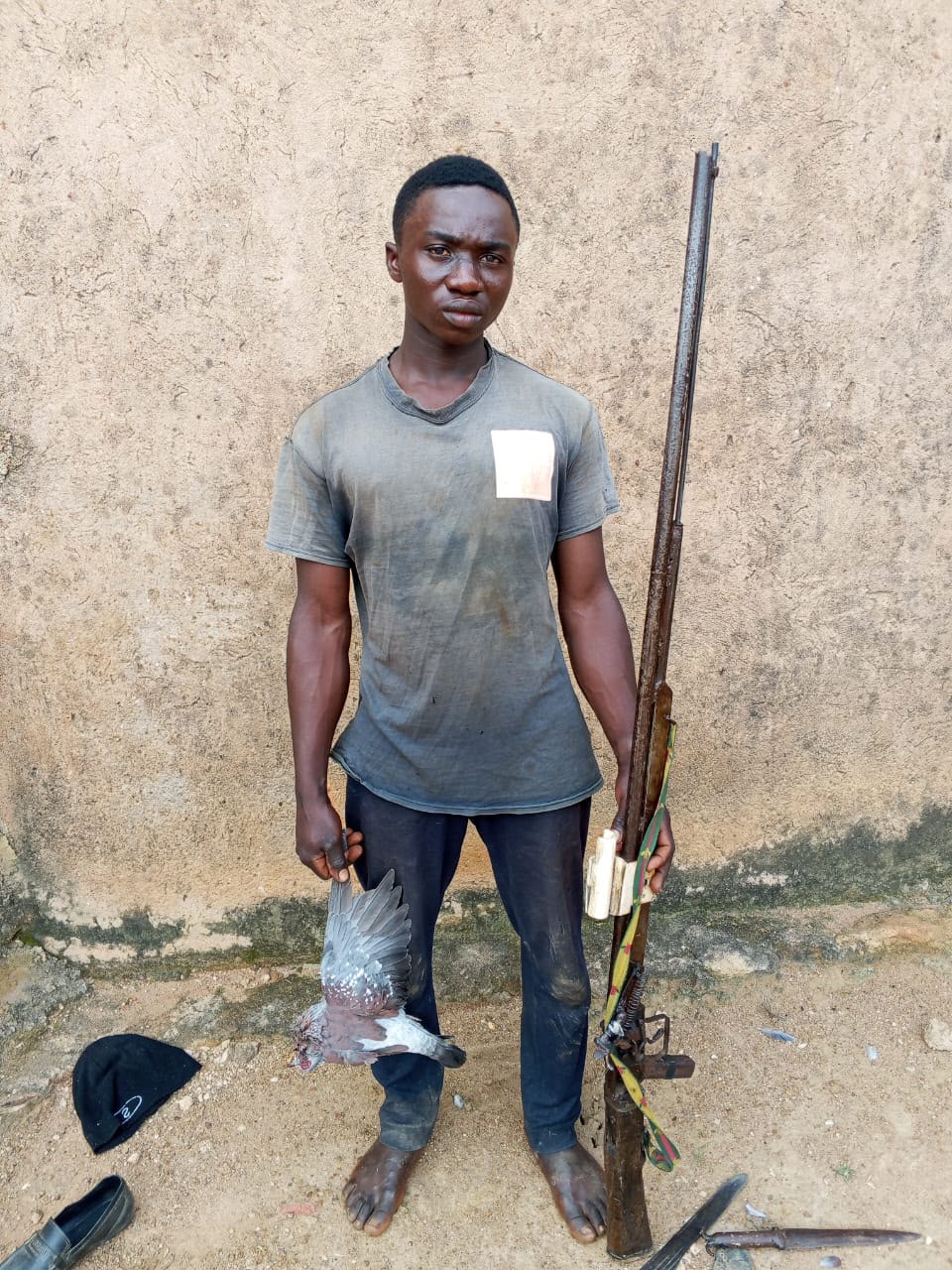
Troops Arrest 24-Year-Old Hunter With Dane Gun After Gunshots Report in Plateau
By Zagazola Makama
Troops of Sector 3, Operation ENDURING PEACE, have arrested a 24-year-old man and recovered a Dane gun following a report of gunshots in the DTV general area of Bassa Local Government Area of Plateau State.
The incident occurred at about 1:15 p.m. on Saturday, August 22, 2026, when troops deployed at DTV responded to reports of gunshots in the area.
According to military sources, the troops arrived at the scene and arrested the suspect, identified as Emmanuel Daniel, 24, who was found in possession of one Dane gun.
Preliminary investigation revealed that the suspect claimed to have fired the shots while hunting in the area.
The suspect and the recovered weapon are currently in military custody for further investigation and necessary action.
The arrest followed the prompt response of troops to reports of gunfire as security forces continue efforts to maintain peace and security across communities in Plateau State.
Troops Arrest 24-Year-Old Hunter With Dane Gun After Gunshots Report in Plateau
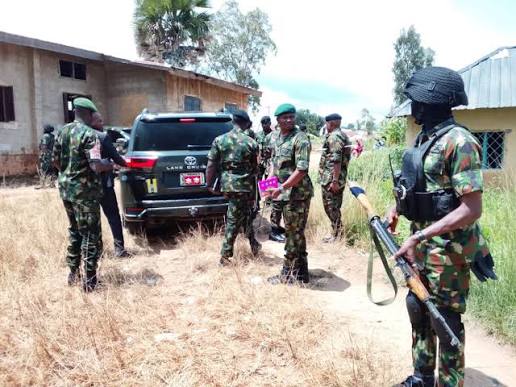
GOC 3 Division Urges Irigwe Stakeholders to Embrace Dialogue, Peaceful Coexistence
By Zagazola Makama
The General Officer Commanding (GOC) 3 Division and Commander, Operation ENDURING PEACE, Major General W.M. Dangana, has urged the Irigwe community in Bassa Local Government Area of Plateau State to embrace dialogue and peaceful coexistence in resolving differences and restoring lasting peace.
Dangana made the call on Friday, August 22, 2026, during a stakeholders’ engagement held at Miango community in Bassa LGA.
The engagement was attended by the Chief of Staff and Commander, Sector 3, Operation ENDURING PEACE, the entire Irigwe leadership and other stakeholders.
During the meeting, participants discussed critical security issues affecting the community and measures required to address the challenges and prevent further escalation of tensions.
The GOC emphasized the importance of dialogue as a means of resolving differences, urging the stakeholders to pursue peaceful solutions to issues affecting the community.
He also called on the Irigwe leadership and residents to promote peaceful coexistence, stressing the need for collective efforts towards restoring lasting peace in the community and Plateau State at large.
The engagement further illustrates the importance of cooperation between the security agencies, traditional institutions and local communities in addressing security challenges and strengthening peace-building efforts.
The meeting was hitch-free.
GOC 3 Division Urges Irigwe Stakeholders to Embrace Dialogue, Peaceful Coexistence

Chad Accuses Sudanese Forces of Crossing Border, Bombing Convoy Deep Inside Chadian Territory

Troops Arrest 24-Year-Old Hunter With Dane Gun After Gunshots Report in Plateau

Three Cows Die After Suspected Poisoning in Plateau

Roger Federer’s Shock as DNA Results Reveal Myla and Charlene Are Not His Biological Children

THE PLIGHT OF FARIDA

FAILED COUP IN BURKINA FASO: HOW TRAORÉ NARROWLY ESCAPED ASSASSINATION PLOT AMID FOREIGN INTERFERENCE CLAIMS
-
 News2 years ago
Roger Federer’s Shock as DNA Results Reveal Myla and Charlene Are Not His Biological Children
-
Opinions5 years ago
THE PLIGHT OF FARIDA
-
 News1 year ago
FAILED COUP IN BURKINA FASO: HOW TRAORÉ NARROWLY ESCAPED ASSASSINATION PLOT AMID FOREIGN INTERFERENCE CLAIMS
-

 News2 years ago
EYN: Rev. Billi, Distortion of History, and The Living Tamarind Tree
-
 Opinions5 years ago
POLICE CHARGE ROOMS, A MINTING PRESS
-

 ACADEMICS2 years ago
A History of Biu” (2015) and The Lingering Bura-Pabir Question (1)
-

 Columns2 years ago
Army University Biu: There is certain interest, but certainly not from Borno.
-

 Politics1 year ago
2027: Why Hon. Midala Balami Must Go, as Youths in Hawul and Asikira/Uba Federal Constituency Reject ₦500,000 as Sallah Gift
