
Agriculture
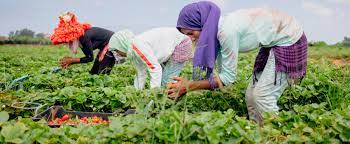
International group plans $500m for African farmers

International group plans $500m for African farmers
An international advocacy group, Global Citizen, organisers of the Global Citizen Festival, said it will raise $500m to help African farmers respond to the global food crisis and provide urgent relief from crushing debts to end extreme poverty.
The group said this in a statement to announce the 10th anniversary of the Global Citizen Festival taking place in New York City’s Central Park.
It said since the inception of the festival in 2012, it had been a global campaign, calling for an end to the extreme poverty that unites millions of voices, amplified by the world’s biggest artists, demanding world leaders take action now.
Part of the statement said, “The 2022 Global Citizen Festival will call on world leaders at the United Nations General Assembly and ahead of the G20 and COP27 in November to step up and invest $600m into the future of women and girls, close the annual $10bn climate financing shortfall, deliver $500m to help African farmers respond to the global food crisis;
“Provide urgent relief from crushing debts to end extreme poverty now, mitigate a global food system meltdown now by providing $500m for Africa’s farmers to make the most of the current planting season and fund the local production of fertilizers, tools, and equipment they need to produce more food.”
Co-Founder and Chief Executive Officer, Global Citizen, Hugh Evans, said, “Decades of systemic and political failures have led humanity into the midst of converging and rapidly deteriorating crises, climate, hunger, health, war and conflict.
“The most marginalised populations are paying the price of the stagnant inaction of our leaders, and now millions of lives, and the future of our planet, are at stake. We refuse to just stand by and watch! We refuse to accept the starvation of multitudes when solutions are readily at hand.
“We demand a secure future for girls everywhere. We demand governments keep their promises on climate funding. We demand relief from debts unjustly crashing economies. And we demand action now, while there’s still time to change our collective trajectory”


Agriculture
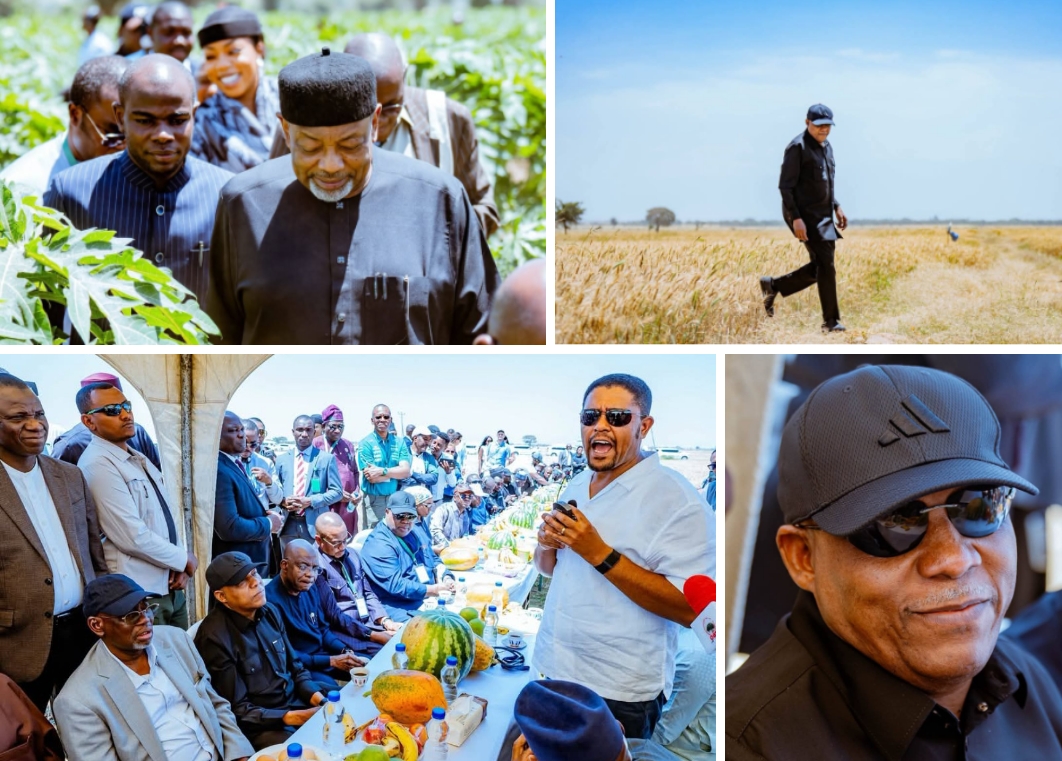
In Ethiopia, VP Shettima moves to strengthen Nigeria’s nutrition future through agricultural value-chain transformation.

In Ethiopia, VP Shettima moves to strengthen Nigeria’s nutrition future through agricultural value-chain transformation.
By: Dr James Bwala
Vice President Kashim Shettima’s visit to a wheat farm in Ethiopia’s Oromia Region represents more than a diplomatic engagement or a symbolic agricultural tour. It offers an important opportunity for Nigeria to examine how agricultural production, food systems and value-chain development can be deliberately connected to the urgent challenge of improving nutrition. The first field engagement of Day Two of the Ethiopia–Nigeria Leadership Exchange, themed “Moving the Needle on Nutrition”, reflects a timely recognition: food security cannot be measured only by the quantity of food produced but also by the quality, accessibility and nutritional value of that food.
Hosted by the President of Oromia National Regional State, H.E. Shimelis Abdissa, the Vice President and the Nigerian delegation are being exposed to an agricultural model with lessons that could support Nigeria’s own development priorities. Therefore, we should view the visit as a call for practical action. Nigeria must move beyond a narrow focus on increasing agricultural output and build an integrated food system that delivers affordable, nutritious and safe food to every citizen. A transformed agricultural value chain is one of the most effective ways to achieve this objective.
Nigeria possesses enormous agricultural potential. Its diverse climate, extensive arable land, large population and significant pool of young people provide the foundation for a productive agricultural economy. Yet this potential has not translated into adequate nutrition for all Nigerians. Many households face rising food prices, limited access to diverse diets and inadequate intake of essential nutrients. The country continues to confront multiple forms of malnutrition, including undernutrition, micronutrient deficiencies and obesity. These challenges are often most severe among children, pregnant women, low-income households and communities affected by conflict or climate-related shocks.
READ ALSO: https://newsng.ng/senator-abubakar-kyari-protecting-farmers-is-protecting-nigerias-food-security/
The problem is not simply that Nigeria produces too little food. Often, the deeper challenge lies in what the agricultural system produces, how food is processed, where it is distributed and who can afford it. A food system that prioritises calories without sufficient attention to nutrition may increase food availability while leaving millions vulnerable to poor health. This is why the focus of the Ethiopia–Nigeria Leadership Exchange is significant. “Moving the Needle on Nutrition” demands a shift from isolated interventions to coordinated strategies that link farming, processing, markets, health and social protection.
The wheat farm visit in Oromia provides a useful entry point for this discussion. Wheat is an important staple in Nigeria, widely consumed in bread, pasta, noodles and other products. However, Nigeria has historically depended heavily on wheat imports, exposing consumers and businesses to fluctuations in global prices, foreign exchange pressures and disruptions in international supply. Strengthening domestic wheat production can improve national resilience and create jobs. More importantly, it can become part of a broader nutrition strategy if production and processing are designed to support healthier food choices.
Domestic wheat production, for example, can reduce import dependence while supporting local farmers, millers, processors and transporters. It can also encourage investment in improved seeds, irrigation, storage and research. But increasing wheat production alone will not automatically improve nutrition. The value chain must be organised in a way that promotes food quality, affordability and dietary diversity. Wheat should complement, rather than displace, other nutritious crops such as legumes, vegetables, fruits, grains and animal-source foods.
READ, ALSO: https://newsng.ng/senator-abubakar-kyari-protecting-farmers-is-protecting-nigerias-food-security/
This distinction is essential. Agricultural policy can unintentionally encourage excessive concentration on a few staple crops. When farmers are rewarded primarily for producing commodities with the strongest commercial demand, nutritious but less commercially organised foods may receive insufficient attention. Nigeria’s agricultural transformation must therefore pursue two objectives at the same time: raising productivity and expanding the availability of diverse, nutrient-rich foods.
Oromia’s experience may provide valuable insights into linking regional agricultural production with broader economic and social goals. A successful value chain does not end at the farm gate. It includes access to quality inputs, extension services, irrigation, mechanisation, storage, processing, transportation, finance, markets and reliable information. Weakness in any one of these areas can reduce farmers’ incomes, increase post-harvest losses and raise the price of food for consumers.
Nigeria loses a substantial amount of agricultural produce after harvest because of inadequate storage, poor roads, limited cold-chain facilities and inefficient market systems. These losses are not only economic; they are nutritional. Fruits and vegetables that spoil before reaching consumers represent lost opportunities to improve diets. Grain losses reduce supplies and increase prices. Poor handling and contamination can compromise food safety. By investing in modern storage and processing infrastructure, Nigeria can preserve food, stabilise prices and make nutritious products available for longer periods.
READ ALSO: https://newsng.ng/senator-abubakar-kyari-protecting-farmers-is-protecting-nigerias-food-security/
Processing also has a central role in nutrition. Local processing can improve shelf life, reduce waste and create more convenient food products. However, it must be guided by appropriate nutritional standards. Highly processed foods that contain excessive salt, sugar or unhealthy fats may be affordable and convenient without contributing positively to public health. Nigeria should encourage processing that retains or enhances nutritional value, including fortification where appropriate, while ensuring clear labelling and effective regulation.
The wheat value chain illustrates both the opportunities and the risks involved. Wheat flour can be fortified with essential micronutrients to help address deficiencies, particularly when fortified products are widely consumed. Yet fortification should not become a substitute for dietary diversity. Nigerians need access to balanced diets that include vegetables, legumes, whole grains, eggs, fish, meat and other nutritious foods. Public policies should support all these sectors rather than allowing one commodity to dominate the national food strategy.
A major lesson from agricultural value-chain transformation is that farmers must be treated as participants in a business system, not merely as recipients of government assistance. Smallholder farmers require predictable markets, fair prices, affordable credit, insurance and access to quality inputs. They also need stronger producer organisations that can improve bargaining power and facilitate links with processors and large buyers. When farmers earn better incomes, they are more able to invest in their farms and provide nutritious food for their own households.
READ ALSO: https://newsng.ng/senator-abubakar-kyari-protecting-farmers-is-protecting-nigerias-food-security/
The role of women must receive particular attention. Women are central to food production, processing, household nutrition and child care, yet they often face limited access to land, finance, technology and decision-making structures. Supporting women farmers and entrepreneurs can produce wide-ranging nutritional benefits. Evidence from many development settings shows that when women control more resources, household spending is more likely to support children’s food, health and education. Nigeria’s agricultural policies should therefore include targeted financing, training, land access and market opportunities for women.
Young people must also be included in the transformation. Nigeria’s large youth population is often described as a challenge, but it can become a major asset if agriculture is presented as a modern and profitable sector. Opportunities exist not only in farming but also in logistics, agricultural technology, equipment maintenance, food processing, quality control, digital marketing and data services. A modern value chain can attract young Nigerians by offering careers that combine technology, entrepreneurship and social impact.
The government has an important role in creating the conditions for this transformation. It must provide consistent policies, invest in rural infrastructure and strengthen agricultural research and extension. Farmers cannot plan effectively when policies change unpredictably or when support programmes are poorly coordinated. National and subnational institutions must work together to align production targets with nutrition priorities. Ministries responsible for agriculture, health, education, water resources, trade and finance should not operate in isolation. Nutrition is a shared responsibility that requires an integrated policy framework.
READ ALSO: https://newsng.ng/senator-abubakar-kyari-protecting-farmers-is-protecting-nigerias-food-security/
Schools and public institutions can also support agricultural and nutrition goals through strategic procurement. School feeding programmes, hospitals and other public institutions represent significant markets for farmers and food processors. If these programmes prioritise locally produced, safe and nutritious foods, they can create stable demand while improving the diets of vulnerable populations. Such an approach would connect agricultural development with human capital development.
Nutrition education is equally important. Consumers need information about balanced diets, food preparation, hygiene and the value of locally available nutritious foods. However, education alone is insufficient when healthy food is unaffordable or unavailable. It must be combined with policies that lower the cost of nutritious products, improve household incomes and protect vulnerable families during periods of inflation or crisis.
The Ethiopia–Nigeria exchange is valuable because it creates space for both countries to learn from one another. Agricultural systems cannot be copied mechanically from one country to another; they must be adapted to local conditions. Nevertheless, exchanges of this kind can reveal practical solutions, strengthen institutional cooperation and encourage leaders to view agriculture as a central part of national development. The visit to Oromia should lead to sustained partnerships in research, irrigation, seed development, extension, processing and market organisation.
READ ALSO: https://newsng.ng/senator-abubakar-kyari-protecting-farmers-is-protecting-nigerias-food-security/
For Nigeria, the most important outcome should be a clear commitment to implementation. Field visits and policy dialogues are useful only when they result in measurable action. The country needs specific targets for reducing post-harvest losses, increasing the production of nutritious foods, improving food affordability, expanding irrigation and strengthening local processing. Progress should be monitored through indicators that measure not only agricultural output but also dietary diversity, child nutrition, household food security and farmers’ incomes.
Vice President Shettima’s engagement in Oromia therefore carries a message that extends beyond wheat. It highlights the need to build a food system capable of feeding Nigerians well, not merely feeding them adequately. It demonstrates that agricultural production, economic opportunity and public health are interconnected. It also reinforces the argument that Nigeria’s agricultural future should be based on value addition, cooperation, technology and nutrition-sensitive planning.
Nigeria should seize this opportunity to move decisively from fragmented agricultural programmes to a coordinated national food-system strategy. Such a strategy must support farmers, empower women and young people, modernise infrastructure, promote diverse production, improve processing and ensure that nutritious food reaches consumers at affordable prices. The goal should not be agricultural growth for its own sake, but agricultural growth that improves the quality of life of the Nigerian people.
READ ALSO: https://newsng.ng/senator-abubakar-kyari-protecting-farmers-is-protecting-nigerias-food-security/
The wheat farm visit in Oromia can become a starting point for that ambition. By learning from Ethiopia’s regional agricultural experience and adapting relevant lessons to Nigerian realities, the country can strengthen its food systems.
* James Bwala, PhD, writes from Abuja.
In Ethiopia, VP Shettima moves to strengthen Nigeria’s nutrition future through agricultural value-chain transformation.
Senator Abubakar Kyari: A Renewed Hope for Nigeria’s Agricultural Revolution
By: Dr. James Bwala
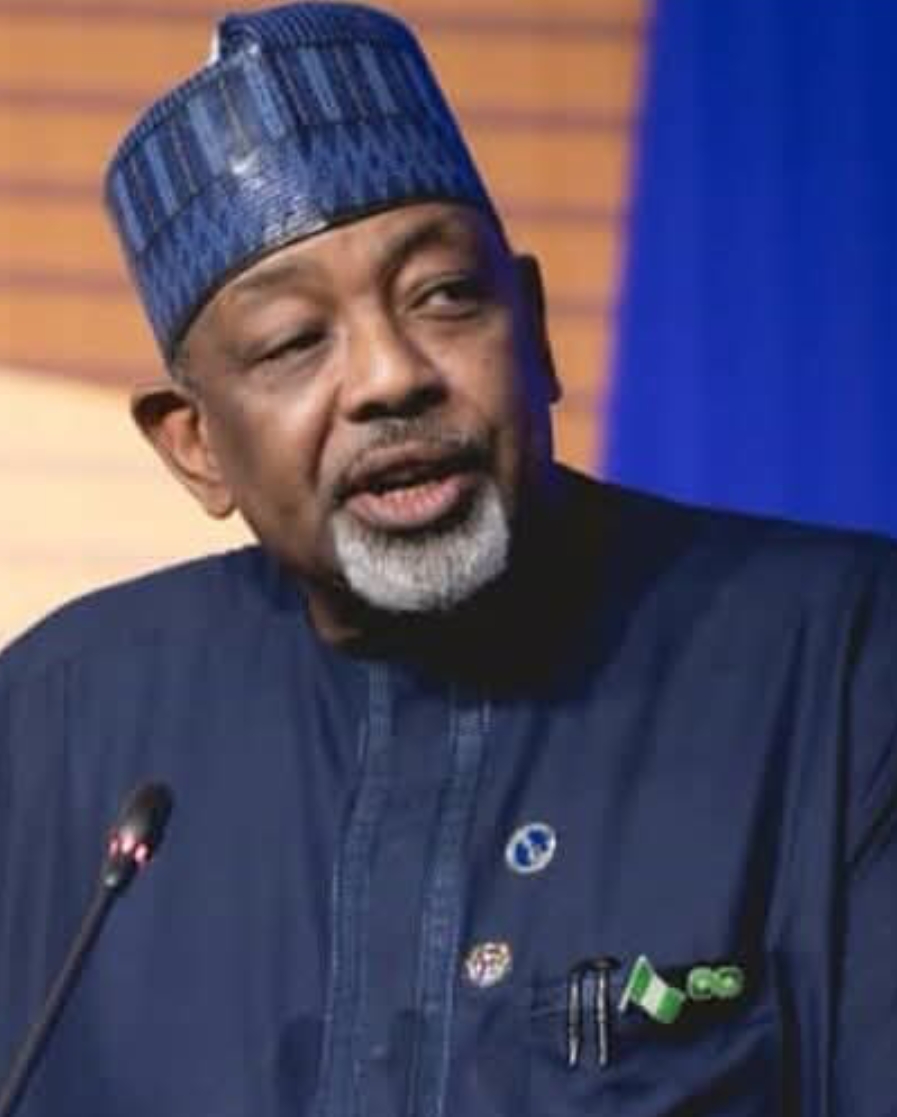
Food security stands as one of the most pressing challenges in the world today, and the role of agricultural leadership has become so important in shaping sustainable futures. The recent ascent of Senator Abubakar Kyari as Nigeria’s Hon. Minister of Agriculture and Food Security is not merely a political event; it marks a transformative era for Nigeria’s agricultural landscape. With the support of President Bola Ahmed Tinubu and the invaluable partnership with the International Fund for Agricultural Development (IFAD), Kyari is poised to rebrand Nigeria’s agricultural sector and address the multifaceted issues of rural economies, employment creation, and food security. The recognition of Senator Kyari’s contributions and potential impact on agriculture, while elucidating the strategic importance of his leadership and partnerships in achieving these ambitious goals, is his unmatched scorecard.
Senator Abubakar Kyari embodies a blend of experience, passion, and vision, all crucial attributes for any leader not only in agriculture but also in governance at any given stage. His election as chairperson to lead IFAD at its 49th session is a testament to his capabilities and global trust. Being loved by delegates from over 120 countries signifies his diplomatic acumen and capacity to communicate Nigeria’s agricultural needs effectively on an international platform. Kyari’s focus on transforming rural economies through agricultural innovation reflects his understanding of the socio-economic dynamics that govern food production and distribution in Nigeria.
READ ALSO: https://newsng.ng/ifad-when-kyari-speaks-of-president-tinubus-continued-support-for-agriculture-and-food-security-in-nigeria/
Kyari recognizes that agricultural sustainability cannot be achieved solely through policy changes; it requires a collaborative approach that involves farmers, entrepreneurs, researchers, and international bodies. This perspective leads to participatory governance, where those directly affected by agricultural policies play an integral role in shaping them.
The significance of the partnership with IFAD cannot be overstated. IFAD has been instrumental in funding and implementing programs that aim to enhance rural livelihoods and food security around the globe. Under Kyari’s leadership, Nigeria can leverage this partnership to access technical expertise, financial resources, and innovative agricultural practices that have been successful in other regions.
READ ALSO: https://newsng.ng/ifad-when-kyari-speaks-of-president-tinubus-continued-support-for-agriculture-and-food-security-in-nigeria/
While rebranding Nigeria’s approach to agriculture, Kyari envisions an industry that not only feeds the nation but also generates substantial income for rural youths. This strategy prioritizes modern farming techniques, agro-processing, and value chains that ensure profitability for smallholder farmers. He understands that empowering these farmers goes beyond mere provision of inputs; it encompasses education, access to markets, and the establishment of cooperative societies, fostering a sense of community among agri-preneurs.
Job creation remains one of the most challenging issues facing Nigeria today. The agricultural sector holds immense potential for employment, especially for the youth. Senator Kyari’s endeavors to strengthen food security hinge upon the belief that a robust agricultural industry can serve as a catalyst for job creation. By promoting initiatives that encourage entrepreneurship within agriculture, such as agribusiness training programs and access to microfinance, Kyari is effectively paving the way for young Nigerians to secure livelihoods in this vital sector.
READ ALSO: https://newsng.ng/ifad-when-kyari-speaks-of-president-tinubus-continued-support-for-agriculture-and-food-security-in-nigeria/
His focus on strengthening food security through agricultural modifications will stabilize prices, improve accessibility, and encourage local consumption of Nigerian produce. This not only enhances national self-sufficiency but also reduces dependency on foreign imports, thereby reinforcing the local economy. Through his strategies, Kyari aims to inspire a new generation of agriculturalists who see agriculture not merely as a means of survival but as a gateway to prosperity.
With the steady increase in the global population, food security continues to be a priority for nations worldwide. In Nigeria, the urgency to address this issue is further exacerbated by conflicts, climate change, and economic instability. Senator Abubakar Kyari recognizes these challenges and is committed to fortifying food security within the country. His leadership plans to implement policies that support climate-smart agriculture, focusing on resilience and sustainability, are creating a wave of hope for both women and men holding to the renewed hope initiative in agriculture.
READ ALSO: https://newsng.ng/ifad-when-kyari-speaks-of-president-tinubus-continued-support-for-agriculture-and-food-security-in-nigeria/
Under his stewardship, there is a growing emphasis on research and development tailored to Nigeria’s unique climatic conditions. Collaborations with universities and research institutions can lead to innovations in crop varieties, pest management, and sustainable farming techniques. Investing in technology will not only enhance productivity but also attract young people to agriculture, ensuring that the sector evolves in line with modern demands.
The youth demographic in Nigeria is burgeoning; thus, engaging them meaningfully in agriculture is imperative for long-term sustainability. Senator Kyari’s vision resonates particularly well with the aspirations of young Nigerians who seek viable career paths. Through targeted outreach programs that highlight success stories in agribusiness, as well as mentorship opportunities, Kyari can inspire a sense of ownership and pride in the agricultural sector.
READ https://newsng.ng/ifad-when-kyari-speaks-of-president-tinubus-continued-support-for-agriculture-and-food-security-in-nigeria/
Additionally, leveraging modern technological advancements—such as mobile applications for market information, e-learning platforms for skill acquisition, and social media for awareness campaigns—will play a key role in reaching out to the tech-savvy younger generation. These strategies will not only promote agricultural practices but can also serve as pathways to connect aspiring agri-preneurs with established practitioners, ensuring knowledge transfer and business networking.
President Tinubu’s support for Senator Kyari’s initiatives is crucial, as it offers the political backing necessary for impactful reforms in agriculture. A strong policy framework that facilitates investment in infrastructure—such as irrigation systems, roads for efficient transportation of goods, and storage facilities—will significantly reduce post-harvest losses, a critical issue facing Nigerian farmers today.
READ ALSO: https://newsng.ng/ifad-when-kyari-speaks-of-president-tinubus-continued-support-for-agriculture-and-food-security-in-nigeria/
The legislative measures that protect smallholder farmers and ensure fair trade practices are essential for cultivating a favorable environment for agricultural growth. The commitment to creating a vibrant agricultural sector must resonate throughout government levels, ensuring that policies align with the larger vision of economic transformation.
Senator Abubakar Kyari stands at the forefront of a critical juncture for Nigerian agriculture. His leadership, fueled by a partnership with IFAD and political support from President Tinubu, positions him uniquely to facilitate transformative changes in the agricultural landscape of Nigeria. By emphasizing rural economic development, job creation, and food security, Kyari embodies the hope of many Nigerians aspiring to revitalize and modernize agriculture in the country.
READ ALSO: https://newsng.ng/ifad-when-kyari-speaks-of-president-tinubus-continued-support-for-agriculture-and-food-security-in-nigeria/
As Kyari pursues his goals, it becomes imperative for stakeholders at all levels—government, private sector, and civil society—to rally behind these initiatives, ensuring that the vision of a prosperous agricultural future is realized. Together, we can foster a resilient agricultural sector that not only secures food for our populace but also drives economic growth, generates employment, and ultimately leads Nigeria towards its rightful place as a leader in global food security.
James Bwala, PhD, writes from Abuja.
Senator Abubakar Kyari: A Renewed Hope for Nigeria’s Agricultural Revolution

Confidence, hope for Nigeria’s agriculture: President Tinubu’s message to Sen. Kyari
By: Dr. James Bwala
In recent years, the world has faced unprecedented challenges related to food security, agricultural productivity, and sustainable development. These issues are particularly pressing in Nigeria, a nation blessed with vast agricultural resources yet grappling with the complicated realities of food scarcity and economic instability. President Bola Tinubu’s acknowledgment of Senator Abubakar Kyari’s emergence as the Chairperson of the Governing Council of the International Fund for Agricultural Development (IFAD) isn’t merely ceremonial; it symbolizes a pivotal confidence vote in Nigerian agricultural leadership at a crucial juncture in history under the distinguished leadership of Sen. Abubakar Kyari.
Senator Kyari has been a silent achiever and has touched millions of lives through his ministry from the grassroots. His election as Chairperson of IFAD is not just a personal achievement; it represents a greater endorsement of the direction Nigeria is heading under his stewardship in the Ministry of Agriculture and Food Security. By electing Kyari, IFAD has signaled its recognition of his ability to effect meaningful change within the agricultural sector, both domestically and internationally. This acknowledgment emphasized how Kyari’s leadership significantly enhanced Nigeria’s role in combating global food insecurity and reshaping agricultural practices.
READ ALSO: https://newsng.ng/nigerias-minister-of-agriculture-and-food-security-sen-abubakar-kyari-a-strategic-leadership-for-global-agricultural-governance/
It is essential to understand President Tinubu’s message and the context surrounding Kyari’s election. The global landscape of food security is fraught with challenges, including climate change, rising populations, and economic instability. With these complexities in mind, President Tinubu’s confidence in Kyari is rooted in an understanding of his capabilities to navigate these tumultuous waters effectively. The minister’s track record in implementing reforms within Nigeria’s agricultural framework illustrates a profound commitment to enhancing the nation’s food security mechanisms. Under his guidance, there have been efforts focused on increasing agricultural productivity, expanding access to financing for farmers, and fostering innovation through technology. This groundwork is precisely what is needed as he steps into this prominent international role.
Kyari’s position at IFAD provides Nigeria with an invaluable opportunity to advocate for its agricultural policies on a global stage. The IFAD governing council functions as a key platform for member states to collaborate on innovative solutions to common problems, share best practices, and mobilize funding for agricultural projects. As Chairperson, Kyari will have a unique opportunity to influence the allocation of resources and direct attention to Nigeria’s specific needs and challenges. His leadership can usher in partnerships that focus on sustainable agricultural practices, community empowerment, and food distribution networks, ultimately enhancing local economies.
READ ALSO: https://newsng.ng/nigerias-minister-of-agriculture-and-food-security-sen-abubakar-kyari-a-strategic-leadership-for-global-agricultural-governance/
Nigeria’s agricultural potential remains largely untapped due to systemic challenges such as inadequate infrastructure, limited access to markets, and insufficient investment in research and development. Senator Kyari’s experience positions him well to articulate these challenges at IFAD, advocating for targeted assistance that can help Nigeria transform its agricultural landscape. In his new role, he can not only highlight domestic priorities but also provide authentic insights into the realities faced by smallholder farmers, who play a crucial role in food production and rural economies. By elevating their voices within the international community, Kyari can work towards policies that build resilience among these vulnerable populations.
The implications of Kyari’s leadership extend into the realm of international cooperation. As the world confronts the issue of food security, there is a growing recognition of the need for collaborative approaches among countries. President Tinubu’s congratulations to Kyari underscore the importance of fostering diplomatic relationships that can lead to knowledge exchange and capacity-building initiatives. By leveraging his new position, Kyari can spearhead initiatives aimed at sharing technological advancements, improving supply chain logistics, and developing sustainable practices that address the challenges posed by climate change.
READ ALSO: https://newsng.ng/nigerias-minister-of-agriculture-and-food-security-sen-abubakar-kyari-a-strategic-leadership-for-global-agricultural-governance/
However, it is vital to remember that Kyari’s success at the helm of IFAD will also depend on how effectively he engages with the diverse stakeholders involved in agricultural development—non-governmental organizations, development partners, and private-sector actors. His approach must be inclusive, drawing upon the expertise and experiences of individuals and organizations that have been working tirelessly to address food security challenges. Engaging in dialogues that prioritize sustainability and inclusivity will position Nigeria as a leader in international agricultural discourse while ensuring that reforms resonate with local needs.
While focusing on domestic reforms and international advocacy, it will be essential for Kyari to address the interconnections between agriculture and other sectors, such as health, education, and gender equity. Food security cannot be achieved in isolation; it requires a comprehensive approach that considers social determinants and fosters holistic development. For instance, fostering gender inclusivity in agricultural practices can yield significant benefits, amplifying women’s roles in food production and decision-making processes. By incorporating these broader considerations into agricultural strategies, Senator Kyari can enhance the overall impact of his initiatives.
READ ALSO: https://newsng.ng/nigerias-minister-of-agriculture-and-food-security-sen-abubakar-kyari-a-strategic-leadership-for-global-agricultural-governance/
The renewed emphasis on agricultural development also aligns with global goals, such as the United Nations’ Sustainable Development Goals, specifically Goal 2: Zero Hunger. As Kyari leads Nigeria’s advocacy at IFAD, he has the opportunity to align national policies with these global objectives, ensuring that Nigeria contributes to and benefits from international efforts to combat hunger and malnutrition. Such alignment will not only enhance Nigeria’s standing on the global stage but also attract investment and support from international entities dedicated to achieving these goals.
To conclude, President Bola Tinubu’s commendation of Senator Abubakar Kyari upon his election as Chairperson of the Governing Council of IFAD is emblematic of hope and strategic vision for Nigeria’s agricultural landscape. Through effective leadership, deep engagement with stakeholders, and a commitment to sustainable practices, Kyari has the potential to transform the narrative surrounding Nigeria’s agriculture and food security. His tenure at IFAD can mark a transformative period where Nigeria enhances its contributions to global agricultural discourse and strives towards achieving food security for its population. As we stand at the crossroads of agricultural challenges and opportunities, Kyari’s leadership offers a beacon of hope that could significantly reshape the future of food in Nigeria and beyond.
* James Bwala, PhD, writes from Abuja.
Confidence, hope for Nigeria’s agriculture: President Tinubu’s message to Sen. Kyari

Nigeria, Japan Move to Set Up Industrial Hub to Unlock Investment

NSCDC Begins Asset Tagging to Curb Mismanagement of Public Property

MIKTA Nations Push Climate Finance Reforms as Nigeria Faces $337bn Funding Gap

Roger Federer’s Shock as DNA Results Reveal Myla and Charlene Are Not His Biological Children

THE PLIGHT OF FARIDA

FAILED COUP IN BURKINA FASO: HOW TRAORÉ NARROWLY ESCAPED ASSASSINATION PLOT AMID FOREIGN INTERFERENCE CLAIMS
-
 News3 years ago
Roger Federer’s Shock as DNA Results Reveal Myla and Charlene Are Not His Biological Children
-
Opinions5 years ago
THE PLIGHT OF FARIDA
-
 News2 years ago
FAILED COUP IN BURKINA FASO: HOW TRAORÉ NARROWLY ESCAPED ASSASSINATION PLOT AMID FOREIGN INTERFERENCE CLAIMS
-
 Opinions5 years ago
POLICE CHARGE ROOMS, A MINTING PRESS
-

 News3 years ago
EYN: Rev. Billi, Distortion of History, and The Living Tamarind Tree
-

 ACADEMICS3 years ago
A History of Biu” (2015) and The Lingering Bura-Pabir Question (1)
-

 Columns3 years ago
Army University Biu: There is certain interest, but certainly not from Borno.
-

 Politics1 year ago
2027: Why Hon. Midala Balami Must Go, as Youths in Hawul and Asikira/Uba Federal Constituency Reject ₦500,000 as Sallah Gift
