
News
IOM Advises West African counties on Collaboration for Success of War Against Trafficking in Persons

IOM Advises West African counties on Collaboration for Success of War Against Trafficking in Persons
By: Michael Mike
The International Organisation for Migration (IOM), has said it is imperative for countries in West Africa to synergy and collaborate for success to be recorded in the ongoing fight against trafficking in persons within the region.
The Chief of Mission of IOM in Nigeria, Mr Laurent De Boeck, gave the charge in his address at the inaugural ceremony of the three-day workshop focused on fights against trafficking that started from May 31, to June 2, 2023, in Abuja.
The workshop, which is organised by the Ministry of Solidarity and the Fight against Poverty, as Executive Secretariat of the National Committee for the Fight against Trafficking in Persons (CNLTP) was based on bi-lateral cooperation to prevent, suppress and punish trafficking in persons in Nigeria and Cote d’ Ivoire.
De Boeck said the meeting centered on exchange, experience sharing and study visit to Nigeria between CNLTP and the National Agency for the Prohibition of Trafficking In Persons (NAPTIP) aimed at sharing lessons learnt and the best practices on human trafficking.
He said synergy is very important for countries in the West African region to fight against trafficking in persons and therefore, this visit is very timely.
He said: “It comes at a time when NAPTIP will be commemorating 20 years of being in existence and has been instrumental in the fight against human trafficking in Nigeria.
“A lot of milestones have been scored and NAPTIP has been a lead in the region, hence the interest by other countries to learn from the experience.
“One of the key aims of this study visit is to strengthen the government’s efforts, particularly in terms of sub-regional cooperation, in the fight against trafficking in persons and smuggling of migrants.
“This study is part of assistance to victims of trafficking and smuggling of migrants project, funded by Italy’s Ministry of Foreign Affairs and International Cooperation, and implemented by IOM Côte d’Ivoire in close collaboration with the National Committee for the Fight Against Trafficking in Persons in Cote d’Ivoire.”
He assured that the organisation would support Nigeria to tackle root causes of irregular migration, trafficking in persons and smuggling of migrants, ranging from the need to strengthen efforts in behavioural change communication interventions.
He further promised that socio-economic opportunities would be provided to return migrants to their communities of origin, leverage on the Sustainable Development Goals (SDG) 10:7 and 17, to provide post arrival, reception and protection assistance to over 30,000 Nigerians, of which 4,000 are victims of trafficking among other.
Speaking at the event, the Director-General of NAPTIP, Prof. Fatima Waziri-Azi, reiterated the need for shared values between both countries towards the protection of human rights, uphold peace and prosperity, as guiding principles for mutual cooperation.
She said: “Human trafficking and its multi-dimensional effect is a crime that affects every country.
“Although proportionality and strength may differ, trafficking in persons has continued to threaten the existence of humanity, which is why it is imperative we cooperate in the best interest of our citizens and all of society.
“The way we used to think about human trafficking has evolved into microcosms of much bigger problems.”
Regional Project Manager of Expertise France, Mr Modeste Krah, on his part, said the bi-lateral agreement signed between the two countries (Nigeria and Côte d’Ivoire) in 2021 served as strategic framework in their fights against human trafficking and smuggling of migrants.
He said the study visit to Nigeria served as platform to further strengthen collaboration of combating heinous crime of human trafficking and smuggling.
He said: “Both Côte d’Ivoire and Nigeria find themselves grappling with migration flows, serving as countries of origin, transit and destination.
“A detesting reality is that large number of the victims of trafficking rescued and cared for would have been trajectory to trafficking for sexual exploitation of Nigeria nationals.
“Such complexity pose immense challenges in the identification of victims and prosecution of trafficking, necessitating the concerted collaborative efforts between our two countries,” he said.
The workshop is being hosted under the auspices of the technical and financial support of IOM, and Expertise France had participants drawn from NAPTIP, Ministry of Foreign Affairs, Nigeria Immigration Service, IOM Cote d’Ivoire and Nigeria.
IOM Advises West African counties on Collaboration for Success of War Against Trafficking in Persons


Venezuela Solidarity Group Urges U.S. to Lift Sanctions After Deadly Earthquakes
By: Michael Mike
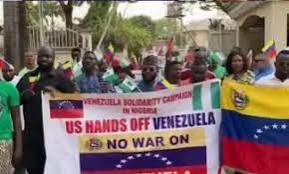
The Venezuela Solidarity Campaign in Nigeria (VSCN) has called for the immediate and unconditional lifting of United States sanctions on Venezuela, arguing that the restrictions are hampering humanitarian relief and reconstruction efforts following devastating twin earthquakes that reportedly killed more than 2,000 people and displaced over 50,000 others.
In a statement issued on Sunday and signed by its coordinator, Comrade Dimeji Macaulay, the group expressed solidarity with the Venezuelan people and the Bolivarian Government, describing the earthquakes as a humanitarian tragedy that has left widespread destruction of homes, hospitals, schools, roads and other critical infrastructure.
The organisation extended condolences to families of the victims and praised what it described as the resilience of the Venezuelan people in confronting the disaster despite years of economic hardship.
According to the VSCN, the U.S. sanctions have weakened Venezuela’s capacity to respond effectively to the emergency by limiting access to financial resources and restricting the importation of medicines, equipment, technology and other essential materials.
The group maintained that maintaining the sanctions during a humanitarian crisis amounts to collective punishment against ordinary citizens and called for their permanent removal to facilitate relief operations and long-term reconstruction.
“There can be no moral or legal justification for maintaining an economic blockade against a country struggling to save lives and rebuild after a devastating natural disaster,” the statement said, adding that every day the sanctions remain in force prolongs the suffering of the Venezuelan people.
The campaign also urged the Federal Government of Nigeria to publicly support the removal of the sanctions, strengthen diplomatic relations with Venezuela and contribute to international humanitarian efforts for victims of the disaster.
It further appealed to the African Union to reject unilateral coercive measures, describing them as violations of international law, while calling on African countries to support Venezuela’s recovery.
The group equally called on the United Nations to intensify humanitarian assistance and ensure that sanctions do not obstruct emergency relief operations or reconstruction programmes.
Beyond governments and international organisations, the VSCN appealed to trade unions, youth organisations, civil society groups and progressive political movements across Africa and the wider international community to demonstrate solidarity with Venezuela by opposing what it described as economic warfare and supporting the country’s right to determine its future without external interference.
Reaffirming its commitment to the Venezuelan cause, the organisation said it would continue campaigning until the sanctions are lifted, insisting that Venezuela’s recovery should not be hindered by external political considerations
Venezuela Solidarity Group Urges U.S. to Lift Sanctions After Deadly Earthquakes
Nigeria Condemns Killing of Two Citizens in South Africa, Warns All Options Remain Open
By: Michael Mike
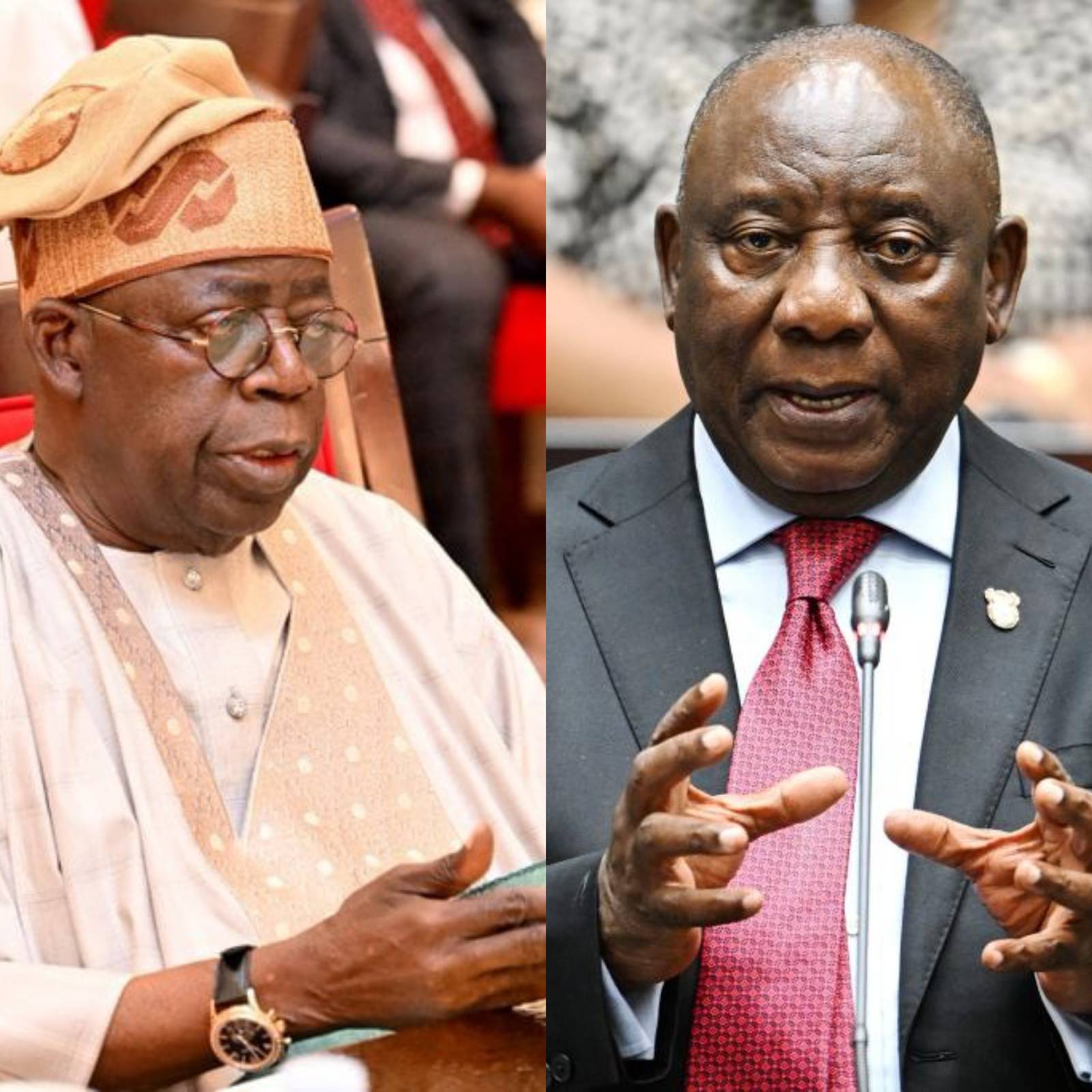
The Federal Government has strongly condemned the killing of two Nigerian nationals in South Africa, accusing security operatives and criminal elements of targeting Nigerians amid rising xenophobic violence, and warning that it may be forced to activate “all options” if the attacks continue.
In a statement issued on Sunday by the spokesperson of the Ministry of Foreign Affairs, Kimiebi Ebienfa, the government demanded immediate investigations into the killings and the prosecution of those responsible, while expressing concern over what it described as an alarming pattern of extra-judicial killings and growing hostility towards Nigerians living in South Africa.
According to the ministry, one of the victims, Emeka Charles Iroegbu, was allegedly killed on June 28 in Sunnyside, Pretoria, by officers of the Tshwane Metro Police, who reportedly subjected him to what the government described as “gruesome interrogation techniques.”
The ministry said the same police officers were also allegedly responsible for the extra-judicial killing of another Nigerian, Nnaemeka Mathew Andrew Ekpenyong, on April 20, noting that despite the identities of the four officers being known to the South African Police Service, no arrests had been made.
It added that another Nigerian, Musa Yunana Joe, popularly known as “Big Joe,” was also shot dead in front of his shop on June 28 in Witbank, Mpumalanga, by yet-to-be-identified gunmen.
The government said the incidents occurred against the backdrop of increasing attacks on foreigners in South Africa, raising serious concerns about the safety of Nigerians and other foreign nationals.
It alleged that some individuals were deliberately portraying hardworking Nigerians as criminals in order to justify attacks against them.
“The continuing pattern of such terrible incidents is clearly evidence of complicity on the part of security operatives, especially officers of the Tshwane Metro Police, which raises the question of state responsibility under international law,” the statement said.
Nigeria also condemned recent comments reportedly made by a spokesperson of the South African Government, who allegedly asked Nigerians leaving South Africa because of ongoing xenophobic protests to disclose where illegal drugs were hidden.
The Ministry described the remarks as derogatory, unprofessional and capable of inciting hatred and violence against Nigerians.
It further criticised anti-immigrant groups, including March on March and Operation Dudula, accusing them of promoting violence and hate against fellow Africans and warning that their leaders could face regional and international criminal liability.
The Federal Government stressed that allegations of wrongdoing against any individual should be handled through lawful judicial processes rather than mob action or extra-judicial killings.
It called on South African authorities to urgently investigate the recent killings alongside other unresolved cases involving Nigerian victims and ensure that those responsible are prosecuted.
The government expressed sympathy to the families of the deceased and pledged to continue engaging South African authorities at the highest diplomatic level until justice is achieved.
It also advised Nigerians living in South Africa to remain calm, obey the law, stay vigilant, relocate to safer neighbourhoods where necessary, and avoid areas experiencing violent demonstrations while diplomatic efforts continue.
The ministry noted that numerous South African citizens and businesses operate freely and safely in Nigeria without harassment, arguing that South Africa has a reciprocal obligation to guarantee the safety of Nigerians legally residing in the country.
It warned that the continued targeting of Nigerians was unacceptable and stated that if the situation persisted, “all options remain on the table,” adding that some measures could be activated should what it described as “intolerance and apartheid-style behaviour” against foreigners continue.
The government, however, appealed to Nigerians at home to remain peaceful and refrain from retaliatory actions, reaffirming its commitment to dialogue and diplomacy in line with Nigeria’s foreign policy of African unity, brotherhood and solidarity.
The Ministry also disclosed that the evacuation of registered Nigerians from South Africa is ongoing.
Nigeria Condemns Killing of Two Citizens in South Africa, Warns All Options Remain Open
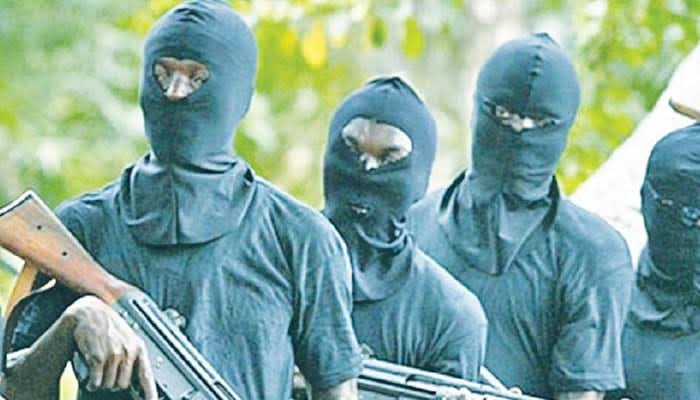
Six Villagers Killed as Terrorists Attack Sokoto Community, Rustle Livestock
By: Zagazola Makama
Suspected terrorists have killed six villagers and rustled an unspecified number of livestock during an attack on Koludo Village in Bodinga Local Government Area of Sokoto State.
Security sources told Zagazola Makama that combined troops of the 8 Division Strike Team, 18 Field Engineer Regiment, 28 Support Engineer Regiment, and the Nigeria Police responded to a distress call following the attack at about 7:10 a.m. on Friday.
The sources said that upon arrival at the village, the security team confirmed that the attackers had invaded the community, killed six residents, and made away with livestock before fleeing.
The troops immediately launched a pursuit of the fleeing terrorists along their withdrawal routes but were forced to halt the operation after the suspects escaped into marshy terrain, which hindered further movement.
Security forces have maintained vigilance in the area while efforts are ongoing to track down the perpetrators and prevent further attacks.
Six Villagers Killed as Terrorists Attack Sokoto Community, Rustle Livestock

Venezuela Solidarity Group Urges U.S. to Lift Sanctions After Deadly Earthquakes

Grandma, PhD Student Lead NDLEA’s Major Cocaine Busts as Agency Tightens Noose on Drug Syndicates

Nigeria Condemns Killing of Two Citizens in South Africa, Warns All Options Remain Open

Roger Federer’s Shock as DNA Results Reveal Myla and Charlene Are Not His Biological Children

THE PLIGHT OF FARIDA

FAILED COUP IN BURKINA FASO: HOW TRAORÉ NARROWLY ESCAPED ASSASSINATION PLOT AMID FOREIGN INTERFERENCE CLAIMS
-
 News2 years ago
Roger Federer’s Shock as DNA Results Reveal Myla and Charlene Are Not His Biological Children
-
Opinions4 years ago
THE PLIGHT OF FARIDA
-
 News1 year ago
FAILED COUP IN BURKINA FASO: HOW TRAORÉ NARROWLY ESCAPED ASSASSINATION PLOT AMID FOREIGN INTERFERENCE CLAIMS
-

 News2 years ago
EYN: Rev. Billi, Distortion of History, and The Living Tamarind Tree
-
 Opinions5 years ago
POLICE CHARGE ROOMS, A MINTING PRESS
-

 ACADEMICS2 years ago
A History of Biu” (2015) and The Lingering Bura-Pabir Question (1)
-

 Columns2 years ago
Army University Biu: There is certain interest, but certainly not from Borno.
-

 Politics1 year ago
2027: Why Hon. Midala Balami Must Go, as Youths in Hawul and Asikira/Uba Federal Constituency Reject ₦500,000 as Sallah Gift
