
News
IPCR, KAICIID, NIALS Set To Tackle Herdsmen-Farmer Clashes at Policy Review Meeting in Abuja

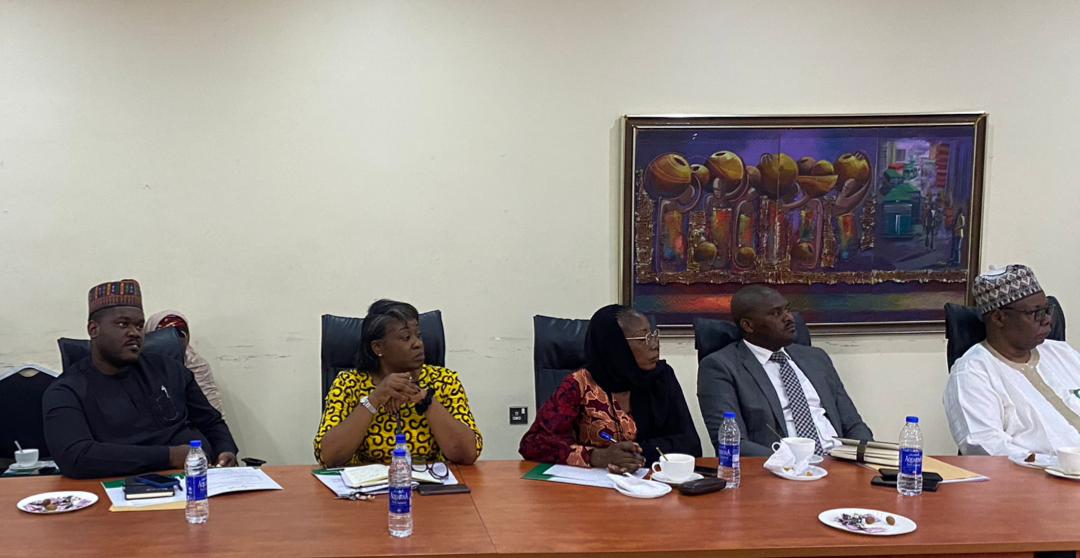
IPCR, KAICIID, NIALS Set To Tackle Herdsmen-Farmer Clashes at Policy Review Meeting in Abuja
By: Michael Mike
The Institute for Peace and Conflict Resolution (IPCR), in collaboration with King Abdullah bin Abdulaziz International Center for Interreligious and Intercultural Dialogue KAICIID and the Nigerian Institute for Advanced Legal Studies (NIALS), has joined forces to address Nigeria’s escalating tensions between farming and pastoralist communities.
At the First Quarter Policy Review Meeting themed “Livestock Policies in Nigeria: Implications for Peace, Security, and Reconciliation,” stakeholders highlighted the urgent need for reforms to address policy gaps driving communal violence.
The event which held on Tuesday at the IPCR Director-General’s Conference Room in Abuja, stakeholders gathered for a high-level dialogue led by the Director-General of the IPCR, Dr. Joseph Ochogwu.
Ochogwu set the tone by emphasising that livestock production, while a backbone of Nigeria’s rural economy, has become a trigger for recurring conflict, displacement, and national insecurity.
He said: “We are all witnesses to the devastating impact of these clashes,” stressing that: “From loss of lives to destruction of properties and disruption of food supply chains, the consequences are eroding national cohesion and fuelling organised crime.”
He noted that despite existing frameworks like the National Livestock Transformation Plan (2019–2028), the National Dairy Development Policy (2021), and anti-open grazing laws, implementation has remained inconsistent and, in many cases, polarising.
“Too many communities still view government efforts with scepticism. Policies that are not inclusive or culturally sensitive will continue to fall short of expectations,” Ochogwu warned.
He noted that: “Every insight shared here today has the potential to prevent conflict tomorrow.”
The meeting, which featured policymakers, religious leaders, civil society representatives, and researchers, served as a platform to review livestock governance policies and their intersection with peace and security outcomes.
Ochogwu underlined the indispensable role of the Network of Policymakers and Religious Leaders (NPMRL) as a forum for inclusive dialogue. He stressed the power of religious and traditional institutions to mediate conflicts and counter misinformation where government efforts may fall short.
He said: “Religious leaders are trusted voices in times of crisis. By meaningfully engaging them in livestock governance, we build trust, legitimacy, and ownership at the community level.”
He further called for a shift in how policies are monitored, not merely by economic metrics, but by how they enhance peace and human dignity.
“Behind every policy are real lives — the farmer feeding his family, the pastoralist protecting his herd, the woman whose livelihood is disrupted, and the child whose future is at stake.”
Since 2016, the IPCR-KAICIID partnership has fostered interfaith dialogue platforms like the Interfaith Dialogue Forum for Peace (IDFP) and has hosted quarterly policy review meetings since 2021. Dr. Ochogwu noted that these engagements have proven the effectiveness of inclusive dialogue in resolving sensitive national issues.
The session also featured a lead paper by Dr. Andrew Kwasari and discussants from government ministries, academia, and research institutions. They examined alignment between livestock policies and mandates of key institutions, including Ministries, Departments and Agencies (MDAs), faith bodies, and civil society organisations.
“Peace-sensitive livestock governance is not optional it is a national imperative,”
“This gathering is not just a policy review. It is a moral and social obligation to ensure no Nigerian is left behind in our pursuit of peace.”Dr. Ochogwu concluded.
The Country Expert from KAICIID Dr. Joseph Atang revealed the urgent need to critically assess Nigeria’s livestock policy, particularly in terms of its sensitivity to existing conflicts. Without understanding whether the policy mitigates or aggravates tensions, meaningful recommendations cannot be made.
“So how conflict sensitive is the livestock policy in Nigeria? We would need to know that. Because if we don’t know what the policy is all about, and we don’t know whether it is conflict sensitive or not, we will not be able to give recommendations that are cogent and practicable and implementable.”
He acknowledged that the farmers-herders conflict is often a catalyst for broader tensions,sometimes framed through religious or ethnic lines making the policy not just an agricultural issue, but a peace and security concern.
“We know that what we call the farmers-hunters conflict is perhaps an indirect reason why we have the policy ,Sometimes, the conflict is executed on the platform of ethnicity, sometimes on the platform of religion.”
Atang stressed that while the Ministry of Livestock Development is the lead agency, the success of the livestock policy depends on all stakeholders including religious bodies, MDAs, and security agencies actively promoting, integrating, and supporting its goals.
“Although our eyes are all on the livestock ministry for implementation, we still have to do our own bit to make sure that it succeed
“All the MDAs, Ministries, Departments, and Agencies What are the religious organisations doing about this?”
Atang emphasized that all stakeholders religious groups, security agencies, and civil society must go beyond attending meetings and actively mainstream livestock policy into their respective programs and constituencies.
“We are supposed to mainstream this policy into our own programmes. What is CAN doing about this livestock policy? What is JNI doing about this livestock policy? How are we promoting it within our constituencies?”
The President at SCL Future Food Systems, Dr. Andrew Kwasari cautioned that livestock reform should not be viewed merely through an economic lens. Instead, it must be firmly rooted in Nigeria’s broader peace and stability strategy to address the root causes of conflict.
He said: “Livestock reform should not be pursued solely as an economic modernisation agenda, but as a cornerstone for Nigeria’s peace and stability strategy.”
He stressed the need for peace-sensitive monitoring and evaluation frameworks that go beyond economic metrics like productivity. These frameworks should also measure community perceptions, institutional collaboration, and actual conflict reduction.
“Monitoring frameworks must track not only productivity gains, but also reduction in violence and improvement in intercommunal relations.”
Kwasari emphasized the importance of listening to the communities most affected by livestock policies. Independent evaluations must amplify these voices to ensure inclusive and equitable policy outcomes.
“Commission independent evaluation of livestock policy implementation that prioritises the voices of affected communities, particularly marginalised groups.”
IPCR, KAICIID, NIALS Set To Tackle Herdsmen-Farmer Clashes at Policy Review Meeting in Abuja


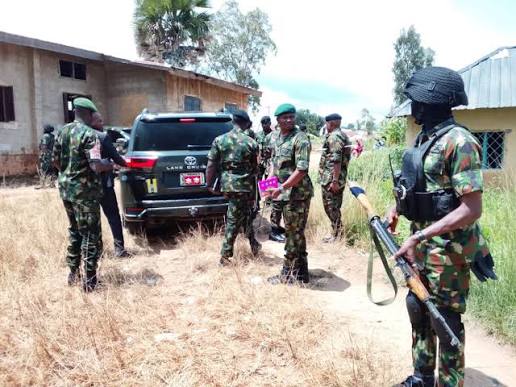
GOC 3 Division Urges Irigwe Stakeholders to Embrace Dialogue, Peaceful Coexistence
By Zagazola Makama
The General Officer Commanding (GOC) 3 Division and Commander, Operation ENDURING PEACE, Major General W.M. Dangana, has urged the Irigwe community in Bassa Local Government Area of Plateau State to embrace dialogue and peaceful coexistence in resolving differences and restoring lasting peace.
Dangana made the call on Friday, August 22, 2026, during a stakeholders’ engagement held at Miango community in Bassa LGA.
The engagement was attended by the Chief of Staff and Commander, Sector 3, Operation ENDURING PEACE, the entire Irigwe leadership and other stakeholders.
During the meeting, participants discussed critical security issues affecting the community and measures required to address the challenges and prevent further escalation of tensions.
The GOC emphasized the importance of dialogue as a means of resolving differences, urging the stakeholders to pursue peaceful solutions to issues affecting the community.
He also called on the Irigwe leadership and residents to promote peaceful coexistence, stressing the need for collective efforts towards restoring lasting peace in the community and Plateau State at large.
The engagement further illustrates the importance of cooperation between the security agencies, traditional institutions and local communities in addressing security challenges and strengthening peace-building efforts.
The meeting was hitch-free.
GOC 3 Division Urges Irigwe Stakeholders to Embrace Dialogue, Peaceful Coexistence
NDLEA uncovers new Thailand-Nigeria drug route, seizes N4.4bn Loud at Lagos ports
…101-year-old great-grandmother arrested for selling cannabis; cocaine hidden in fufu intercepted
By: Michael Michael
The National Drug Law Enforcement Agency (NDLEA) has uncovered a new maritime route being exploited by international drug syndicates to smuggle synthetic cannabis into Nigeria, following the seizure of 1.49 tonnes of “Loud” worth more than N4.4 billion at the Apapa and Lekki ports in Lagos.
The consignments, shipped from Thailand, mark the agency’s first recorded seizure of illicit drugs trafficked into Nigeria from the Southeast Asian country through the maritime corridor, raising fresh concerns over the emergence of Nigeria as a destination and transit point for international drug trafficking networks.
The breakthrough was part of a nationwide series of operations by NDLEA operatives between August 15 and 22, which also resulted in the destruction of 10 tonnes of cannabis, interception of cocaine concealed inside edible cassava flour popularly known as fufu, and the arrest of a 101-year-old woman allegedly involved in retail cannabis sales.
At the Apapa Port, NDLEA operatives, working with the Nigeria Customs Service and other stakeholders, discovered 1,090.5 kilogrammes of Thai Loud concealed in a container declared to contain dry fish, rice, vehicle spare parts, turmeric soap and inverter batteries.
The consignment, examined on Friday, August 21, according to a statement on Sunday by the spokesman of the anti-narcotics agency, Femi Babafemi, was packed in 54 cartons containing 2,181 sachets of 500 grammes each.
Babafemi said at the Lekki Deep Sea Port, another container under NDLEA surveillance was jointly examined last Wednesday. Four of seven pallets wrapped in black nylon were found to contain 400 kilogrammes of Thai Loud, packed in 96 cartons comprising 400 parcels.
The remaining three pallets contained 798 rims of A4 paper, which investigators said had been used as a cover for the illicit consignment.
Both containers had been loaded at the Port of Laem Chabang in Thailand, exposing what the NDLEA described as a new trafficking route being exploited by international drug syndicates.
The latest seizures came amid a string of operations across several states, highlighting the expanding scale and sophistication of illicit drug trafficking networks operating through Nigeria’s ports, borders, waterways and inland routes.
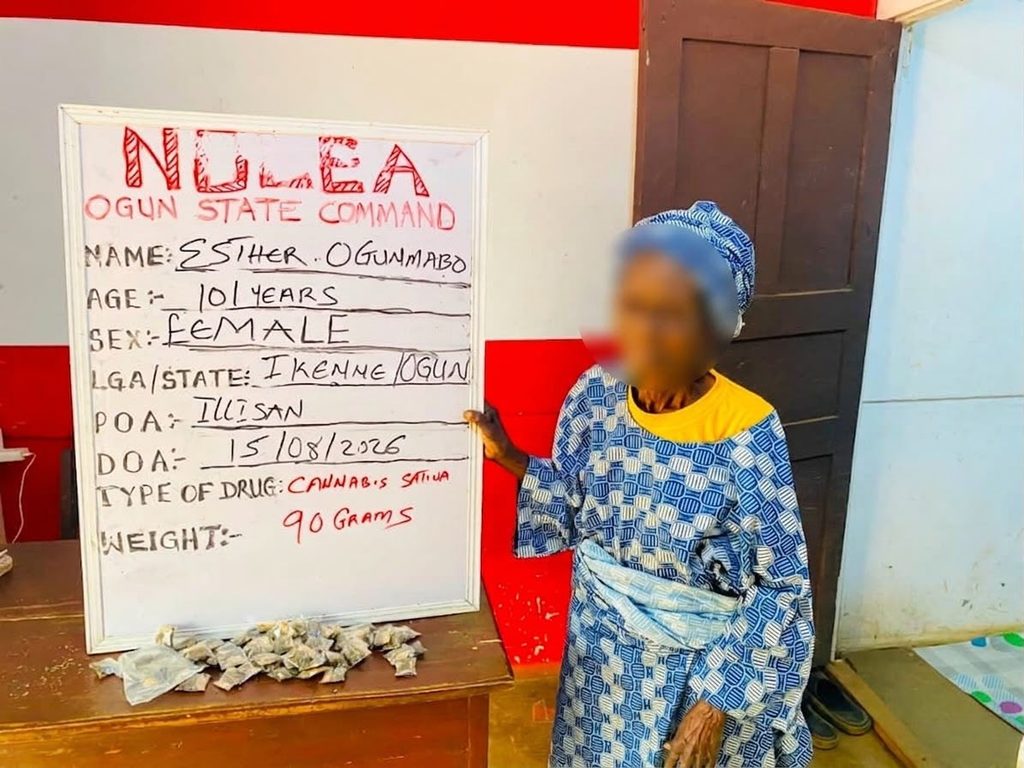
In one of the most unusual arrests recorded during the operations, NDLEA operatives in Ogun State arrested a 101-year-old great-grandmother, Esther Ogunmabo, at Ilisan on Saturday, August 15, with 90 grammes of skunk packaged in retail sachets.
The centenarian reportedly told investigators that she sold the cannabis to residents in the area after her provisions shop was destroyed by fire.
She further claimed that one of her daughters, who lives in Lagos, arranged for supplies to be delivered to her every four days, which she then sold in small quantities.
Following the arrest, NDLEA Chairman/Chief Executive Officer, Brig. Gen. Buba Marwa (retd.), directed that the elderly woman be granted bail and placed on counselling because of her advanced age.
Her daughter, however, was arrested in connection with the alleged drug dealing.
In Akwa Ibom, NDLEA operatives intercepted a wooden boat on the high seas lastbFriday, following intelligence that illicit drugs were being transported to fishing settlements in Cameroon.
Three suspects were arrested aboard the vessel, which was heading towards Ine Isu, Ine Mbah and Ine Ikot Itie Udung fishing ports in Cameroon.
They were identified as Eekpo, 29; Otobong Etukudoh, 33; and Kingsley John, 27.
According to Babafemi, Eekpo was found with 1.120 kilogrammes of skunk, while Etukudoh had 42.06 kilogrammes of the substance.
John was arrested with 435 grammes of skunk and 20 grammes of cocaine cleverly concealed inside a large wrap of edible cassava fufu.
A total of 42.622 kilogrammes of illicit drugs was recovered from the three suspects.
In Ondo State, NDLEA operatives destroyed 10,000 kilogrammes of skunk cultivated across four hectares during a raid on a cannabis farm in Ijare forest, Ifedore Local Government Area.
The operation followed the arrest of three suspected cannabis cultivators at the same location on August 16.
In another operation in the state, 210 kilogrammes of skunk and a Toyota Camry were recovered at Ita-Ogbolu, Akure North Local Government Area. The vehicle, with registration number AGL 223 JH, allegedly belongs to Sylvester Anthony, who remains at large.
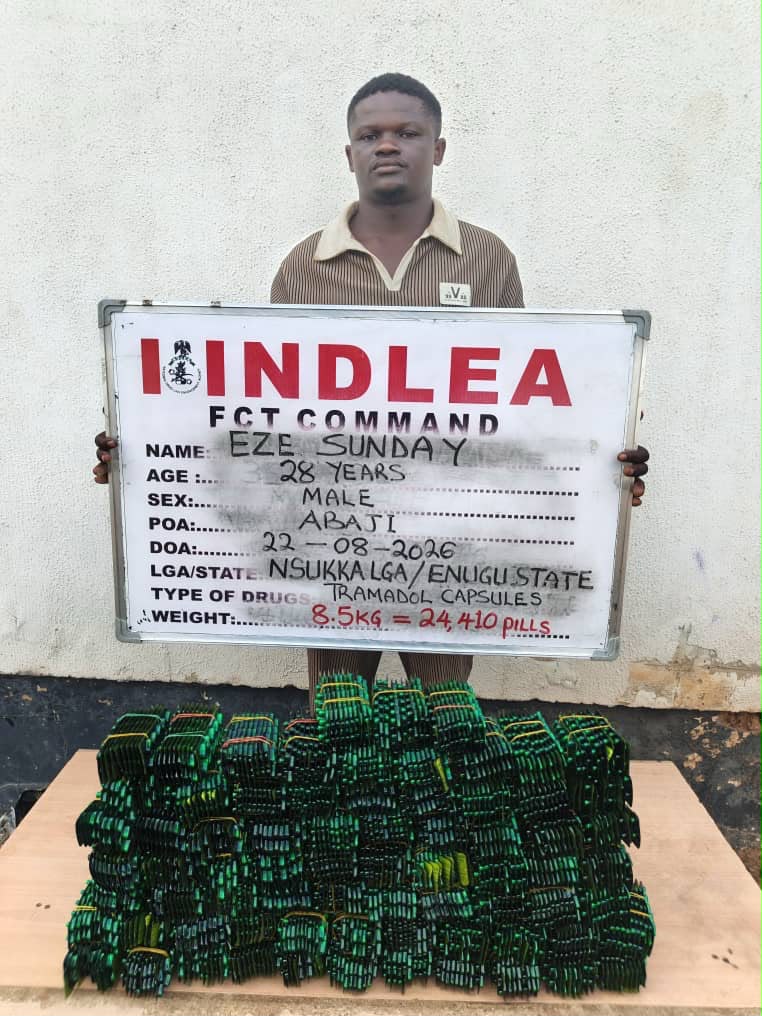
In the Federal Capital Territory, operatives intercepted three waybill packages containing 24,410 tramadol capsules inside a Hummer bus travelling from Enugu to Zuba on Saturday.
A follow-up operation in Niger State led to the arrest of the alleged owner of the consignment, 28-year-old Sunday Eze, in Kontagora. He was subsequently transferred to Abuja.
Other major seizures included 1.325 kilogrammes of methamphetamine and cannabis recovered from a Toyota Starlet intercepted along the Ogbomosho-Ilorin Expressway in Kwara State. A 22-year-old suspect, Muhammadu Usman, was arrested.
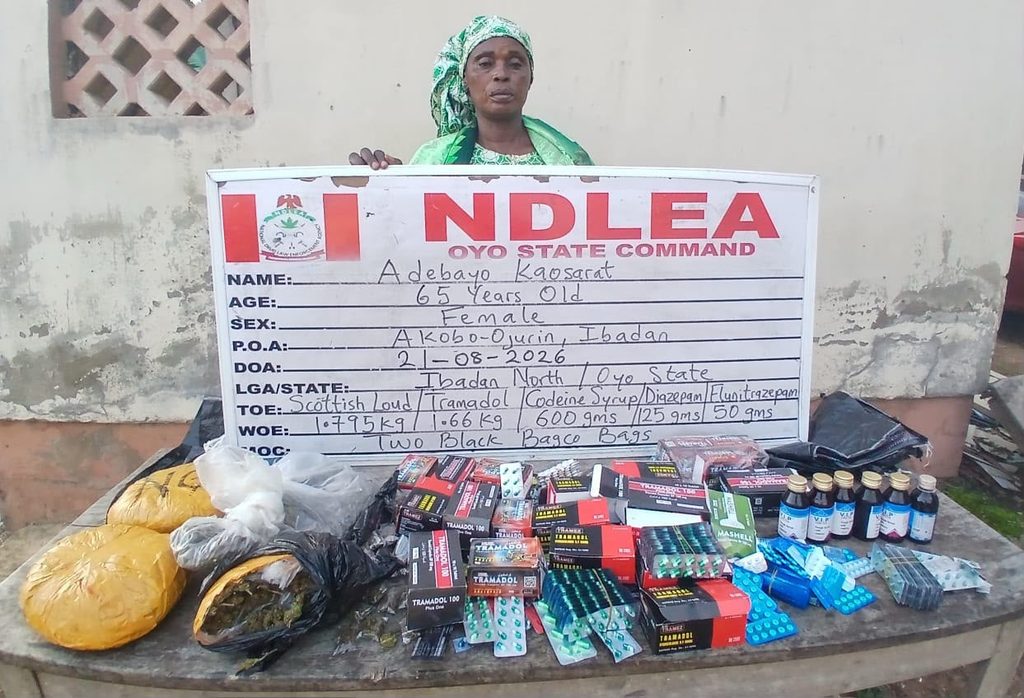
In Oyo State, a 65-year-old woman, Adebayo Kaosarat, was arrested at Akobo-Ojuirin, Ibadan, with 1.795 kilogrammes of Scottish Loud, 1.66 kilogrammes of tramadol, 600 grammes of codeine syrup, 125 grammes of diazepam and 50 grammes of flunitrazepam.
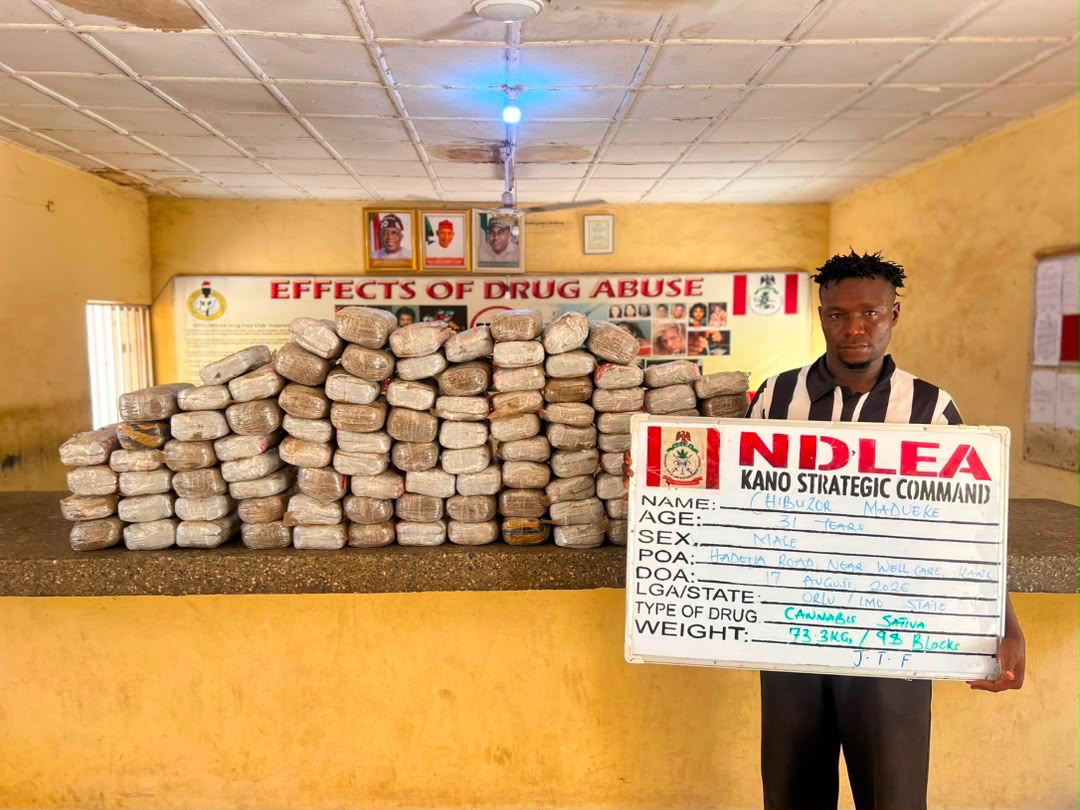
In Kano, NDLEA operatives recovered 73.3kg of skunk from 31-year-old Chibuzor Madueke during a raid along Hadeija Road.
At Seme, Lagos, three members of the same family—Nasiru Tijjani, 52; Moshood Tijjani, 27; and Salami Tijjani, 27—were arrested at Ashipa, near the border, with 48kg of skunk.
In Abia State, operatives recovered 14.4kg of Loud, 2.3kg of Colorado, 386 grams of tramadol and 134 grams of Rohypnol from the residence of 36-year-old Ikechukwu Anthony Iwuno at Umuobia Olokoro, Umuahia South Local Government Area.
Beyond the seizures and arrests, NDLEA Commands and formations across the country also continued their War Against Drug Abuse sensitisation campaigns in schools, religious institutions, workplaces and communities.
The agency conducted awareness programmes in Kano, Oyo, Kebbi, Taraba and Edo, while the Idiroko Special Area Command in Ogun State paid a WADA advocacy visit to the Chairman of Ipokia Local Government Area, Johnson Avoseh.
Marwa commended officers and men of the Ogun, Apapa, Lekki, Seme, Akwa Ibom, Ondo, Oyo, Kwara, Kano, Abia and FCT Commands for the operations.
He urged them and their colleagues nationwide to sustain what he described as the agency’s balanced approach to drug control, combining enforcement operations with prevention, public enlightenment, counselling and community engagement.
NDLEA uncovers new Thailand-Nigeria drug route, seizes N4.4bn Loud at Lagos ports
Troops Neutralise IPOB/ESN Fighter, Recover Weapons in Anambra Offensive
By Zagazola Makama
Troops of the Nigerian Army’s 185 Battalion, in collaboration with the Military Police, Department of State Services and local vigilantes, have neutralised an IPOB/ESN operative during an offensive operation in Ogbaru Local Government Area of Anambra State.
The operation was conducted at about 5:00 a.m. on Saturday, August 22, 2026, following intelligence on suspected IPOB/ESN strongholds at Obene Village and Abator Village, within the Ochuche and Umunankwo communities.
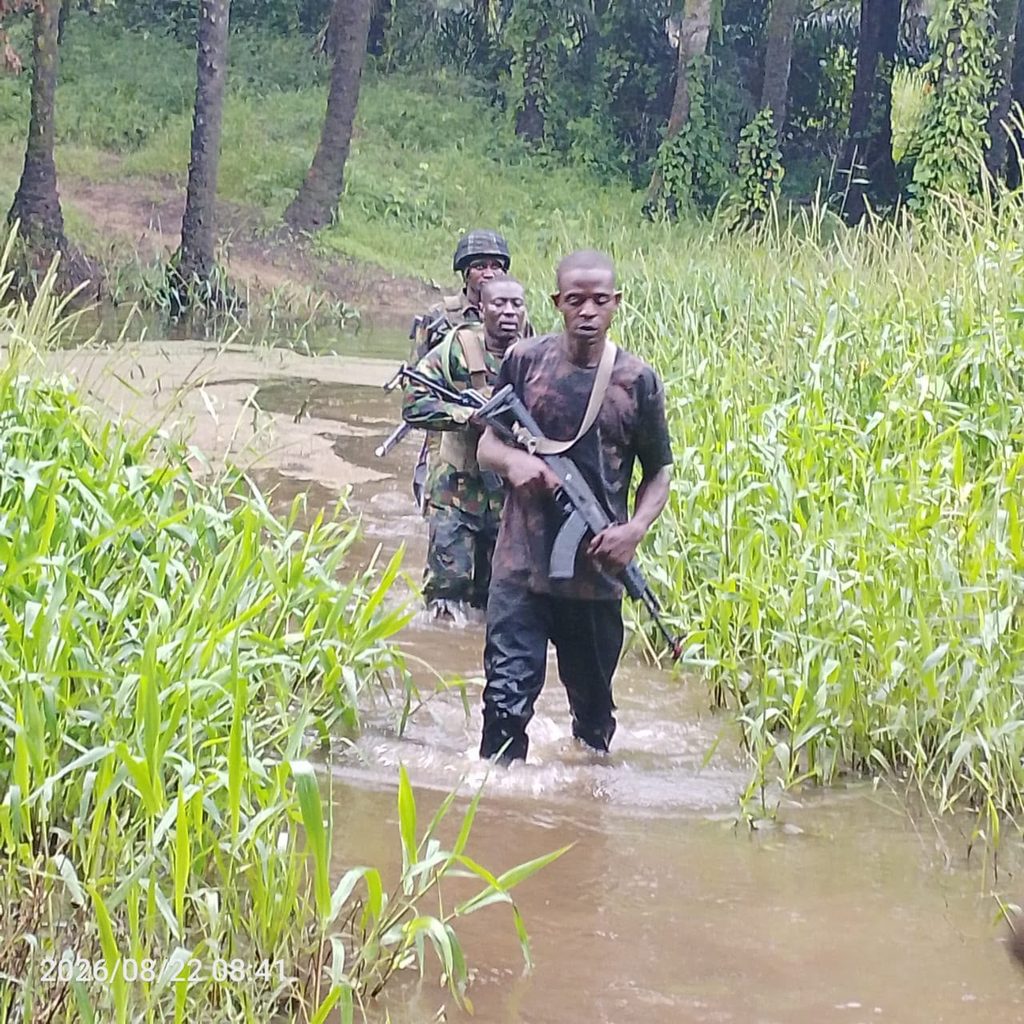
According to a military situation update obtained by Zagazola Makama, troops launched a dawn assault on the identified positions, forcing the terrorists to flee while engaging the advancing troops with gunfire.
The troops pursued the fleeing fighters and followed blood stains along their withdrawal route. One of the terrorists was subsequently neutralised, while the fleeing members of the group reportedly escaped with the corpse of another operative killed during the operation.
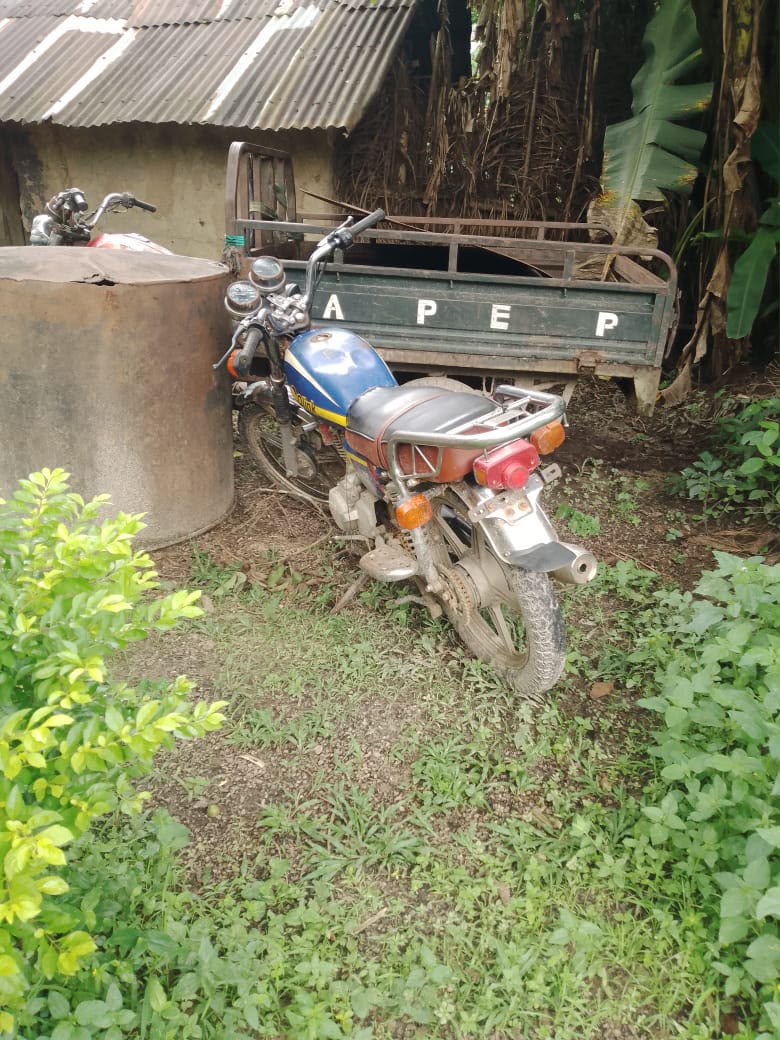
Troops recovered two pump-action guns, two motorcycles and materials suspected to be used for making improvised explosive devices, alongside other sundry items.
However, the operation suffered a fatal setback when a soldier, identified as Private Danladi Zakariya, stepped on an IED while troops were returning to their start line.
The explosive detonated in situ, causing severe injuries to the soldier. He was immediately evacuated to a hospital but unfortunately died from severe blood loss while being transported.
His remains have been deposited at the St. Charles Borromeo Hospital mortuary in Onitsha.
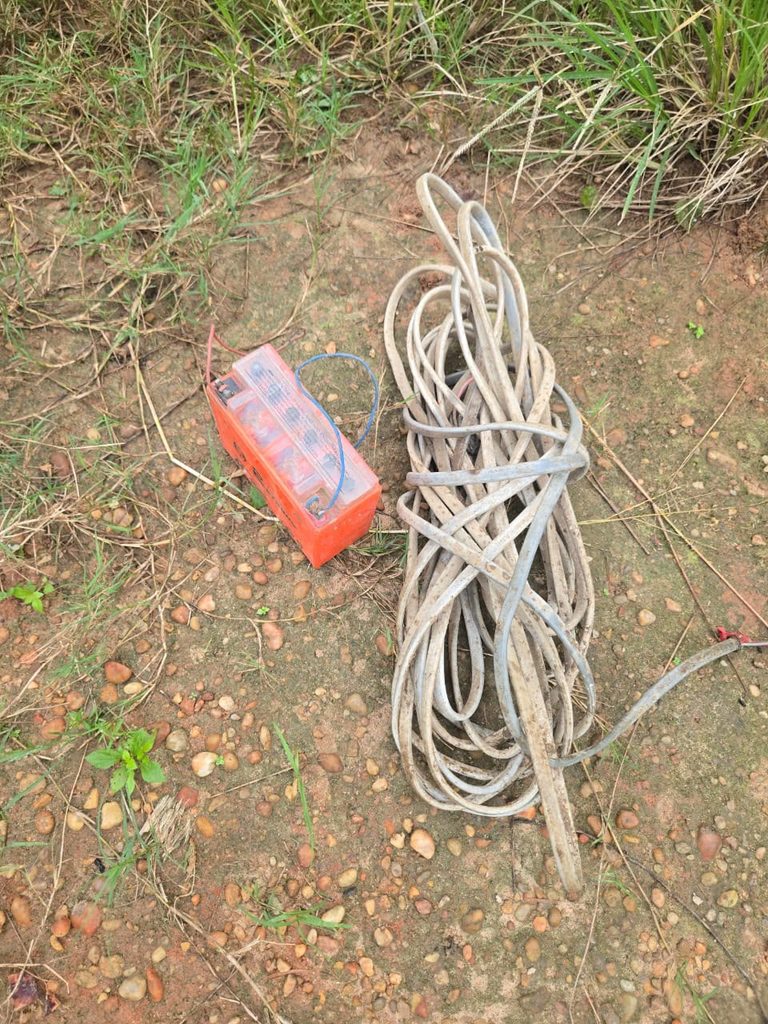
Despite the loss, the troops maintained control of the area and continued offensive operations against the suspected IPOB/ESN elements.
The military said the morale and fighting efficiency of the troops remained high as operations continued to deny the terrorists freedom of action within the area.
Troops Neutralise IPOB/ESN Fighter, Recover Weapons in Anambra Offensive

GOC 3 Division Urges Irigwe Stakeholders to Embrace Dialogue, Peaceful Coexistence

NDLEA uncovers new Thailand-Nigeria drug route, seizes N4.4bn Loud at Lagos ports

Troops Neutralise IPOB/ESN Fighter, Recover Weapons in Anambra Offensive

Roger Federer’s Shock as DNA Results Reveal Myla and Charlene Are Not His Biological Children

THE PLIGHT OF FARIDA

FAILED COUP IN BURKINA FASO: HOW TRAORÉ NARROWLY ESCAPED ASSASSINATION PLOT AMID FOREIGN INTERFERENCE CLAIMS
-
 News2 years ago
Roger Federer’s Shock as DNA Results Reveal Myla and Charlene Are Not His Biological Children
-
Opinions5 years ago
THE PLIGHT OF FARIDA
-
 News1 year ago
FAILED COUP IN BURKINA FASO: HOW TRAORÉ NARROWLY ESCAPED ASSASSINATION PLOT AMID FOREIGN INTERFERENCE CLAIMS
-

 News2 years ago
EYN: Rev. Billi, Distortion of History, and The Living Tamarind Tree
-
 Opinions5 years ago
POLICE CHARGE ROOMS, A MINTING PRESS
-

 ACADEMICS2 years ago
A History of Biu” (2015) and The Lingering Bura-Pabir Question (1)
-

 Columns2 years ago
Army University Biu: There is certain interest, but certainly not from Borno.
-

 Politics1 year ago
2027: Why Hon. Midala Balami Must Go, as Youths in Hawul and Asikira/Uba Federal Constituency Reject ₦500,000 as Sallah Gift
