
News
Jingir Opposes State Police, Alleges Plot to Destabilise Plateau

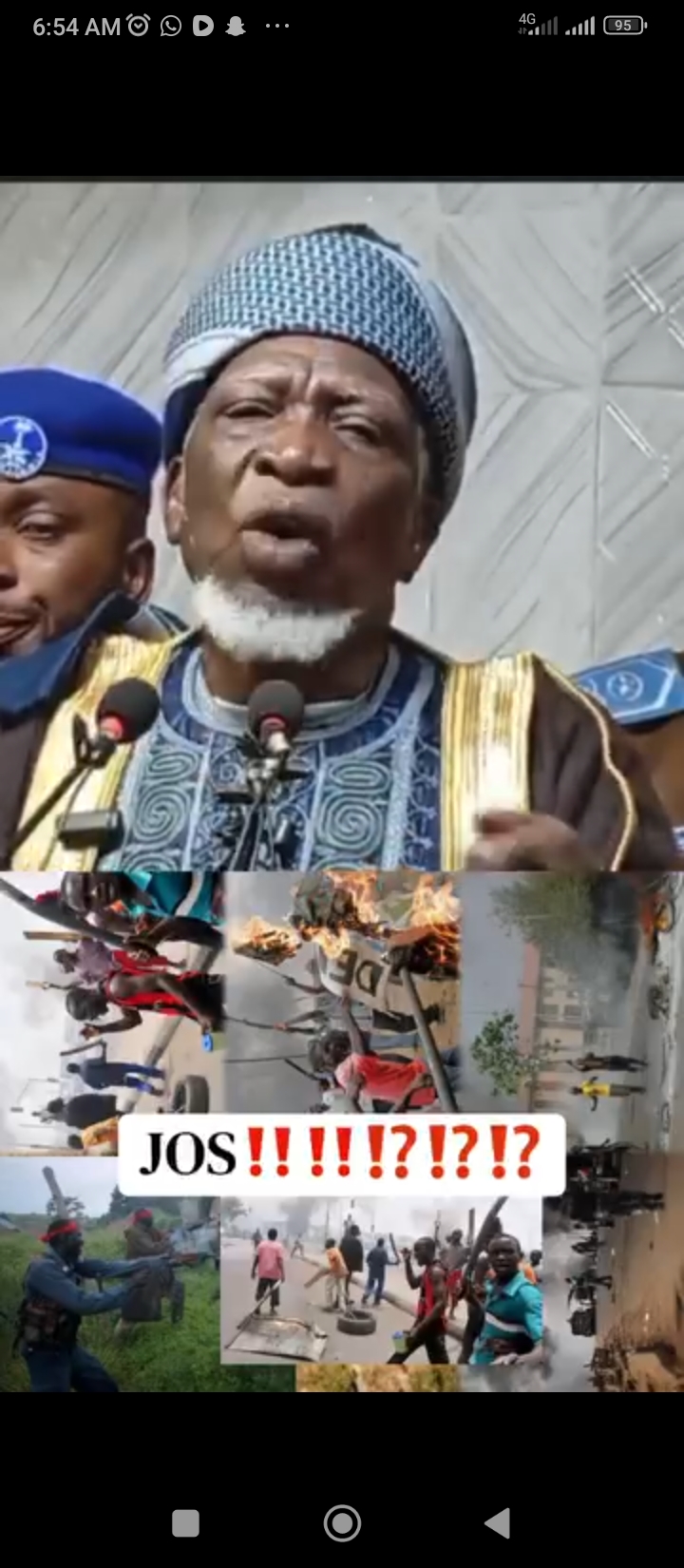
Jingir Opposes State Police, Alleges Plot to Destabilise Plateau
By: Zagazola Makama
The debate over the proposed establishment of state police has taken a fresh turn in Plateau State following remarks by prominent Islamic cleric, Sheikh Sani Yahaya Jingir, who cautioned against the initiative and alleged attempts by political actors to destabilise the state.
Jingir, the National Chairman, Council of Ulama, Jama’atu Izalatul Bid’ah Wa’Ikamatis Sunnah (JIBWIS), headquartered in Jos, expressed reservations over granting states the authority to establish their own police formations.
The cleric warned that, in a politically polarised environment like Plateau, state-controlled security outfits could be misused against perceived political opponents.
“Tell us, when he was in power, who has become rich? How many Berom has he killed? How many Fulani has he killed? How many Hausas and Christians has he killed? Even those that are close to him, some people said that he was the one that led to the harvesting of their kidney. It was alleged. We have been hearing so. He removed the kidney of those close to him, talk more of you,” said Jingir.
He urged President Bola Ahmed Tinubu to exercise caution in considering proposals for decentralised policing, arguing that safeguards must be firmly in place to prevent abuse.
Jingir’s intervention comes amid renewed national conversations on restructuring Nigeria’s security architecture. Proponents of state police argue that decentralisation would enhance rapid response and local intelligence gathering. Critics, however, fear potential politicisation in states with deeply divided political and ethno-religious landscapes.
In his remarks, Jingir suggested that certain political actors in Plateau might exploit state police structures to target individuals perceived as unsympathetic to their ideology. He emphasised the need to prioritise peace and stability over partisan interests.
“Some certain issues, they will pretend as if everything has gone down, but they will just raise it up when the security outfit is established. They say they should establish police in every state. If anyone says he will accept this, are we going to accept it?” worshippers chanted, “Not at all.” “You know how they cheated us. President Bola Ahmed Tinubu, some of these politicians are not as good as you, they are not as good as someone like Kashim Shettima. Wallahi, if you grant them the permission to establish police, they will start killing those that are not inclined with their political ideology.”
The cleric also alluded to alleged efforts by a former governor of the state to foment instability for political advantage, though he did not provide specific evidence. He expressed the view that the current governor should not be held responsible for recent tensions and urged him to remain focused on governance and peacebuilding.
“Even before giving them the police, they are already killing people,” he said, apparently referring to the former governor. He added that it could be possible that he was the one who orchestrated his people (Berom youths) to attack innocent commuters on the road.
Jingir exonerated the present Governor, Mutfwang, saying: “In my own thinking, the governor does not have any hand in the crises. This new governor that became the governor (Mutfwang), was it the old governor that put him there? If the former one could make him become governor, then why did he not continue as governor?”
Despite his criticisms, Jingir reiterated the importance of peace and coexistence in Plateau, urging leaders across divides to avoid actions capable of reigniting crisis. He called on both Muslim and Christian communities to prioritise dialogue and mutual respect.
He prayed that the wickedness allegedly being planned against the present governor would be exposed and brought to shame. He urged the governor to continue working in the way of God and not allow anyone to intimidate him into actions that could bring crisis into the state.
Zagazola reports that political alignments in Plateau have undergone notable shifts in recent years, with cross-party movements and alliances reshaping the state’s landscape. Analysts note that such realignments often intensify rhetoric, particularly as stakeholders begin positioning ahead of the 2027 general elections.
Plateau’s politics has historically reflected the state’s complex ethno-religious composition, especially in Jos North, where questions of indigeneship and political representation have shaped contestations for decades.
While the state has experienced relative calm compared to earlier periods of widespread violence, underlying tensions remain sensitive. Public statements by influential religious and political figures therefore carry significant weight in shaping public perception and intergroup relations.
Zagazola cautions that in a fragile environment, inflammatory or accusatory rhetoric regardless of source can heighten suspicion and polarisation, stressing the need for measured communication and fact-based engagement, particularly when discussing sensitive security reforms such as state policing.
As discussions on security restructuring continue at the national level, Plateau remains a microcosm of the broader debate: balancing local autonomy with safeguards against politicisation, while ensuring that peace and public trust are not compromised.
For many residents, the overriding concern remains stability. With political activities gradually building toward 2027, stakeholders say the tone and substance of public discourse will play a critical role in determining whether Plateau consolidates calm or re-enters a cycle of heightened tension.
Jingir Opposes State Police, Alleges Plot to Destabilise Plateau



Centre lauds Kaduna Govt over life skills, gender education policies approval
By Aisha Gambo
The Centre for Girls’ Education (CGE) has commended the Kaduna State Executive Council for approving the Kaduna State Life Skills Policy and the State Policy on Gender in Education (SPGE 2026–2030).
The Executive Director of the organisation, Habiba Mohammed, made this known in a statement issued on Wednesday in Kaduna.
She said the approval marked a transition from donor-supported, time-bound interventions to a sustainable, government-led framework for delivering life skills education and promoting gender equity in schools.
According to her, the Life Skills Policy will equip young people with the knowledge, skills, attitudes and values required to succeed in education, employment and life, while the Gender in Education Policy providzbves a framework to promote equity, inclusion, participation, retention, completion and improved learning outcomes.
“The approval moves life skills and gender equity from the margins of the classroom into the core of Kaduna State’s education system,” she said.
Mohammed said CGE contributed to the development and validation of the policies through its system-strengthening project supported by Co-Impact, OASIS Initiative and the Malala Fund, in collaboration with the Adolescent Girls Initiative for Learning and Empowerment (AGILE) and the Kaduna State Ministry of Education.
She said the policies built on more than 18 years of the organisation’s Safe Space model, which independent evaluations showed had helped reduce child marriage, increase school enrolment and delay early marriage.
According to her, the AGILE programme in Kaduna has reached more than 127,319 girls and 6,250 boys between the ages of 14 and 18, while over 1,400 female and male teachers have been trained as mentors.
She added that institutionalising the model through public policy would ensure that life skills education became a permanent component of the state’s education system.
Mohammed said the policies would address barriers to school access, retention and completion, particularly for girls and other vulnerable learners.
She added that they would also institutionalise life skills as a co-curricular programme, strengthen evidence-based decision-making across the state’s 23 local government areas and guarantee continuity beyond donor-funded programmes.
The executive director commended Gov. Uba Sani for providing the leadership that made the policy approval possible.
She also appreciated the Commissioner for Education, Prof. Abubakar Sani Sambo, the Kaduna State Ministry of Education, the AGILE State Project Implementation Unit, the World Bank and other stakeholders for their contributions to the process.
Mohammed reaffirmed CGE’s commitment to supporting the Kaduna State Government with technical assistance during the implementation phase, including teacher training, gender-responsive education sector budgeting and monitoring.
She said the ultimate goal was to ensure that every girl and boy in Kaduna State had the opportunity to learn, develop and thrive.
Centre lauds Kaduna Govt over life skills, gender education policies approval
Troops Kill Six ISWAP Fighters, Wound Seven in Failed Attack on Borno Military Base
By: Zagazola Makama
Six fighters of the Islamic State West Africa Province (ISWAP) were reportedly killed and seven others seriously wounded during a failed attack on a Forward Operating Base (FOB) at Logomani in Borno State, credible intelligence sources have disclosed.
The sources told Zagazola Makama that the terrorists launched the attack on the military position in the early hours of July 7 but suffered significant casualties after troops mounted a fierce resistance.
According to the intelligence assessment, the attackers had assembled at Garal before advancing on the military base.
Following the failed assault, surviving insurgents were reportedly seen regrouping at Chukun Gudu, where they buried six of their fighters killed during the encounter.
Among those reportedly buried was a senior fighter identified as Munzir, also known as Ba Alayi, who was said to be an indigene of Wulgo.
The development comes as troops of Operation HADIN KAI continue sustained clearance operations aimed at dismantling terrorist enclaves and disrupting insurgents’ logistics and mobility across the Lake Chad region.
Troops Kill Six ISWAP Fighters, Wound Seven in Failed Attack on Borno Military Base
Cholera Outbreak Kills Nine ISWAP Terrorists in Timbuktu Triangle
By: Zagazola Makama
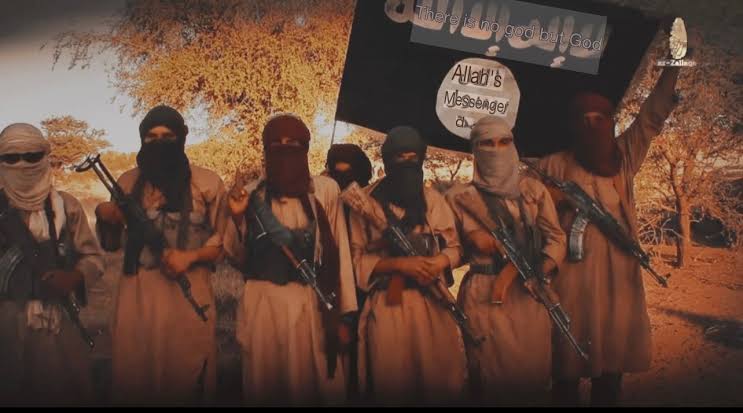
A cholera outbreak has reportedly claimed the lives of nine fighters of the Islamic State West Africa Province (ISWAP) in the Timbuktu Triangle, a known terrorist stronghold in Borno State, intelligence sources have disclosed.
The sources told the News Agency of Nigeria (NAN) that the outbreak had spread through the group’s enclaves, highlighting deteriorating sanitary conditions and limited access to medical care within the insurgents’ camps.
According to the intelligence, two additional ISWAP fighters infected with the disease were allegedly executed by fellow terrorists after attempts to manage their condition at Kimba village proved unsuccessful.
The sources said the development pointed to the worsening health conditions within the terrorist hideouts, where sustained military pressure has disrupted logistics, including access to medicines and treatment facilities.
The sources added that commanders had also been urged to intensify efforts to intercept medical supplies and pharmaceuticals intended for terrorist camps in order to further degrade ISWAP’s treatment capability and operational resilience.
The reported outbreak comes amid sustained offensives by troops of Operation HADIN KAI, who continue to target terrorist enclaves and logistics networks across the Lake Chad region in a bid to degrade the insurgents’ fighting capacity.
Cholera Outbreak Kills Nine ISWAP Terrorists in Timbuktu Triangle

Centre lauds Kaduna Govt over life skills, gender education policies approval

Troops Kill Six ISWAP Fighters, Wound Seven in Failed Attack on Borno Military Base

Cholera Outbreak Kills Nine ISWAP Terrorists in Timbuktu Triangle

Roger Federer’s Shock as DNA Results Reveal Myla and Charlene Are Not His Biological Children

THE PLIGHT OF FARIDA

FAILED COUP IN BURKINA FASO: HOW TRAORÉ NARROWLY ESCAPED ASSASSINATION PLOT AMID FOREIGN INTERFERENCE CLAIMS
-
 News2 years ago
Roger Federer’s Shock as DNA Results Reveal Myla and Charlene Are Not His Biological Children
-
Opinions4 years ago
THE PLIGHT OF FARIDA
-
 News1 year ago
FAILED COUP IN BURKINA FASO: HOW TRAORÉ NARROWLY ESCAPED ASSASSINATION PLOT AMID FOREIGN INTERFERENCE CLAIMS
-

 News2 years ago
EYN: Rev. Billi, Distortion of History, and The Living Tamarind Tree
-
 Opinions5 years ago
POLICE CHARGE ROOMS, A MINTING PRESS
-

 ACADEMICS2 years ago
A History of Biu” (2015) and The Lingering Bura-Pabir Question (1)
-

 Columns2 years ago
Army University Biu: There is certain interest, but certainly not from Borno.
-

 Politics1 year ago
2027: Why Hon. Midala Balami Must Go, as Youths in Hawul and Asikira/Uba Federal Constituency Reject ₦500,000 as Sallah Gift
