
Uncategorized
Jonathan Says StruggleJonathan Says Struggle for Power Remains Mai. cause of Conflicts in Africa

Jonathan Says StruggleJonathan Says Struggle for Power Remains Mai. cause of Conflicts in Africa
By: Michael Mike
Former Nigeria’s President, Dr. Goodluck Jonathan has pointed out that the struggle for power remains the major cause of conflicts on the African continent.
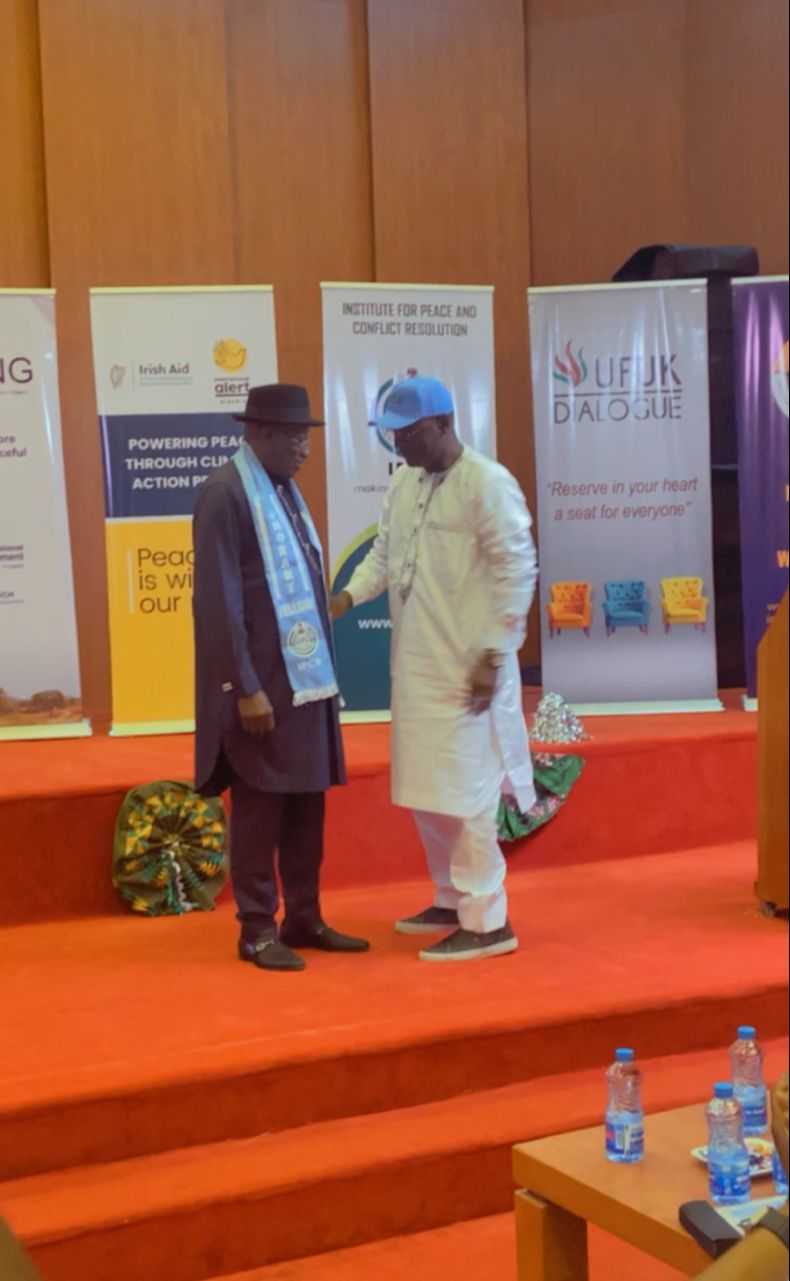
Jonathan gave the remark on Tuesday at a a programme organized by the Institute for Peace and Conflict Resolution (IPCR) and partners in commemoration of the International Day of Peace in Abuja, where he was also as a Fellow of the Institute.
He became the second individual to be so honour after Gen. Yakubu Gowon (Rtd), Nigeria Head of State who oversee the reintegration of Nigeria after the Civil War, was given the same award last year
Speaking at the event, Jonathan said: “Actually, 10 top countries are in conflict globally. Three of them are in sub-Saharan Africa. And quite a number of countries around us, including us, are in one form of conflict or the other.
“And when you look at what causes conflict in Africa, most cases is struggle for leadership, contestation for power. And that is the main cause of conflict.
“Sometimes when you go through a society, and you can tell all kinds of stories. But by the time you do proper analysis, and dig deep, you know that most causes of conflict is leadership struggle. That is why I’m only worried about my country Nigeria.”
The former president, who chaired the programme, noted that the notion that politics is dirty is wrong, stressing that the players were responsible for the dirty state of politics in Nigeria and Africa in general.
He said: “People say politics is a dirty game. The way we play our politics is the way we want to play it.
“Remember (Olusegun) Obasanjo, the former president, recently made a statement that politics is not dirty but the people that play the politics, come to play politics with their dirty minds and dirty hearts. And dirty character.
“And that is why people say politics is dirty. And in that case, we must all begin to think differently. We must cultivate the culture of peace,” he added.
He said Nigerians and Africans in general must start developing a culture of peace, noting that peace should be part of their everyday life.
“Until we get to that level where we develop the culture of peace, in this country, we will always have political conflicts in our election.
“And without us strengthening that effort, without us developing that culture of testing a nation peacefully, we will always be in conflict in Africa and in Nigeria.”
The former president, who remains the only Nigerian president to hand over to opposition party after he was defeated at the polls, cited the recently conducted governorship election in Edo State, noting that there were more tension after the election than it was before the poll due to the feelings that some things were not done rightly.
He noted that technology would not solve the problem in Nigeria’s electoral process, decrying that technologies would be manipulated if the human mind is corrupt.
“Here in Nigeria, we talk about technology. Without the human mind ready to do what is right, if we bring the technology, they will manipulate it,” he said.
While delivering his lecture, Dr Samuel Iroye, the Head of Department of Peace and Conflict Studies at the National Open University of Nigeria, said all Nigerians need to play a part in the promotion of the culture of peace in the country.
Iroye, while stating that peace was not an ideology but a practical experience that could be felt called for the engagement of youths in developmental initiatives.
He said to achieve peace, there must be a level playing ground for everyone through education, stressing that the education curriculum in Nigeria doesn’t promote the culture of peace.
“To ensure a culture of peace, we must ensure that we have peace within ourselves”, he said, adding that no one could give what he doesn’t have.
Earlier, the Director General of (IPCR), Dr Joseph Ochogwu, said peace is an orphan, adding that people like to enjoy it but don’t want to invest in it.
While decrying the level of violence across the world, he charged Nigerians to start investing in the development of the culture of peace.
On why President Jonathan was picked for the award, Ochogwu said it was because of his ideology which promote peace above personal considerations, recalling the former President’s statement that nobody’s life is worth sacrificing for any personal political interest.
Ends for Power Remains Mai. cause of Conflicts in Africa
By: Michael Mike
Former Nigeria’s President, Dr. Goodluck Jonathan has pointed out that the struggle for power remains the major cause of conflicts on the African continent.
Jonathan gave the remark on Tuesday at a a programme organized by the Institute for Peace and Conflict Resolution (IPCR) and partners in commemoration of the International Day of Peace in Abuja, where he was also as a Fellow of the Institute.
He became the second individual to be so honour after Gen. Yakubu Gowon (Rtd), Nigeria Head of State who oversee the reintegration of Nigeria after the Civil War, was given the same award last year
Speaking at the event, Jonathan said: “Actually, 10 top countries are in conflict globally. Three of them are in sub-Saharan Africa. And quite a number of countries around us, including us, are in one form of conflict or the other.
“And when you look at what causes conflict in Africa, most cases is struggle for leadership, contestation for power. And that is the main cause of conflict.
“Sometimes when you go through a society, and you can tell all kinds of stories. But by the time you do proper analysis, and dig deep, you know that most causes of conflict is leadership struggle. That is why I’m only worried about my country Nigeria.”
The former president, who chaired the programme, noted that the notion that politics is dirty is wrong, stressing that the players were responsible for the dirty state of politics in Nigeria and Africa in general.
He said: “People say politics is a dirty game. The way we play our politics is the way we want to play it.
“Remember (Olusegun) Obasanjo, the former president, recently made a statement that politics is not dirty but the people that play the politics, come to play politics with their dirty minds and dirty hearts. And dirty character.
“And that is why people say politics is dirty. And in that case, we must all begin to think differently. We must cultivate the culture of peace,” he added.
He said Nigerians and Africans in general must start developing a culture of peace, noting that peace should be part of their everyday life.
“Until we get to that level where we develop the culture of peace, in this country, we will always have political conflicts in our election.
“And without us strengthening that effort, without us developing that culture of testing a nation peacefully, we will always be in conflict in Africa and in Nigeria.”
The former president, who remains the only Nigerian president to hand over to opposition party after he was defeated at the polls, cited the recently conducted governorship election in Edo State, noting that there were more tension after the election than it was before the poll due to the feelings that some things were not done rightly.
He noted that technology would not solve the problem in Nigeria’s electoral process, decrying that technologies would be manipulated if the human mind is corrupt.
“Here in Nigeria, we talk about technology. Without the human mind ready to do what is right, if we bring the technology, they will manipulate it,” he said.
While delivering his lecture, Dr Samuel Iroye, the Head of Department of Peace and Conflict Studies at the National Open University of Nigeria, said all Nigerians need to play a part in the promotion of the culture of peace in the country.
Iroye, while stating that peace was not an ideology but a practical experience that could be felt called for the engagement of youths in developmental initiatives.
He said to achieve peace, there must be a level playing ground for everyone through education, stressing that the education curriculum in Nigeria doesn’t promote the culture of peace.
“To ensure a culture of peace, we must ensure that we have peace within ourselves”, he said, adding that no one could give what he doesn’t have.
Earlier, the Director General of (IPCR), Dr Joseph Ochogwu, said peace is an orphan, adding that people like to enjoy it but don’t want to invest in it.
While decrying the level of violence across the world, he charged Nigerians to start investing in the development of the culture of peace.
On why President Jonathan was picked for the award, Ochogwu said it was because of his ideology which promote peace above personal considerations, recalling the former President’s statement that nobody’s life is worth sacrificing for any personal political interest.
Jonathan Says StruggleJonathan Says Struggle for Power Remains Mai. cause of Conflicts in Africa



Plateau Indigenous Youths Defend DSS, Demand Probe of Alleged Security Leaks
By: Michael Mike
Indigenous youth organisations in Plateau State have defended the Department of State Services (DSS), the Mobile Police Force and Operation Rainbow against allegations of bias and misconduct, urging the Federal Government to sustain joint security operations and investigate claims of compromise within the security architecture.
The coalition accused groups representing Fulani interests of using petitions and social media campaigns to discredit security agencies following operations against armed militants in the state.
Addressing a press conference at the Nigeria Union of Journalists (NUJ), FCT Council, on Wednesday, the President of the Berom Youths Moulder-Association and Coordinator of Indigenous Youth Nationalities, Northern Zone, Dalyop Solomon Mwantiri, said the allegations risked undermining ongoing efforts to restore peace to violence-ravaged communities.
The coalition’s position followed a petition dated October 5, 2026, reportedly signed by Mujahid Abdullahi on behalf of the Plateau chapters of the Miyetti Allah Cattle Breeders Association of Nigeria (MACBAN), Gan Allah Fulani Development Association of Nigeria (GAFDAN), Fulbe Youth Development Association (FUYODA) and other organisations.
The petitioners allegedly accused the DSS of discriminatory operations against Fulani communities and blamed the agency for killings, abductions, cattle rustling and the poisoning and shooting of cattle.
A video circulated on Facebook and other social media platforms reportedly made similar allegations while portraying the Nigerian Army as the only security agency working in the interest of peace in Plateau.
But the indigenous youth coalition dismissed the claims as an attempt to distort the security situation and pressure authorities into undermining operations against armed groups.
Mwantiri said the campaigns appeared designed to intimidate the Plateau State Director of the DSS, Paul Damian; discredit the operations of the DSS, Mobile Police Force and Operation Rainbow; disrupt joint operations involving local security volunteers; discourage intelligence sharing; and portray the Army as the only effective security agency in the state.
The coalition maintained that the joint operations had exposed what it described as a pattern of armed militants attacking and occupying communities while cattle were allegedly grazed alongside them.
It claimed that at least 152 hamlets, villages and communities had suffered attacks, although it did not provide supporting documentation for the figure at the briefing.
The youth leaders also rejected allegations that Damian and the DSS were involved in killings and cattle rustling. They argued that cattle intercepted while grazing on farmlands were being held pending the identification of their owners and the alleged perpetrators.
To reinforce their argument, the coalition cited several attacks on security personnel and communities, which it attributed to Fulani militants.
It alleged that a newly deployed DSS base at Nding Sesut, Fan District, in Barkin Ladi Local Government Area, was attacked on June 1, 2026.
The group also cited an August 23 attack on Tanjol and Tarai villages in Jol community, alleging that more than 400 militants assaulted the settlements, ambushed and killed two DSS officers, seized their rifles and retreated towards Rankum in the Mahanga area of Riyom Local Government Area.
It further alleged that Mobile Police Force personnel were killed in attacks on Dares and Kwi villages in Bokkos and Riyom local government areas about two weeks before the briefing.
The coalition also claimed that the Operations Officer of Operation Rainbow, DSP David Babale, was ambushed and killed near a military checkpoint around Rakok village, on the outskirts of Barkin Ladi, while similar incidents had occurred at Kantoma and Alohgom in Mangu Local Government Area.
The allegations were not independently verified at the briefing, and the petitioning organisations’ responses were not included in the coalition’s presentation.
In a further allegation, the youth leaders claimed that sponsors of the armed groups were raising N20 million to finance media campaigns, court cases and petitions aimed at frustrating the security crackdown.
They called on the Federal Government to investigate the alleged funding and any suspected attempts to compromise security operations, including allegations of unprofessional conduct and collusion involving some Army personnel.
The coalition, which comprises youth organisations representing Afizere, Anaguta, Atakar, Atten, Bache, Berom, Gamai, Irigwe, Kunlere, Mushere, Mwaghavul, Ron, Pan, Tarok and other ethnic groups, warned against withdrawing the DSS, Mobile Police Force and Operation Rainbow from Plateau State.
It argued that removing the agencies while attacks and displacement persisted could weaken ongoing operations and embolden armed groups.
The youth leaders appealed to President Bola Tinubu and other Federal Government authorities not to be swayed by allegations they considered politically motivated, while insisting that genuine complaints against security personnel should be investigated.
“We smell a rat,” the coalition said, describing the petition and video as “ploys and strategies of distraction”.
It urged authorities to encourage cooperation among security agencies rather than allow public disputes to undermine intelligence sharing and joint operations.
The statement was jointly signed by Amb. Ezekiel Peter Bini, President of the Irigwe Youths Movement and Chairman of the Coalition; Mwantiri; Amb. Miri Timnan Nyantau, President of the Tarok Progressive Youths Association and Coordinator, Southern Zone; and Jonathan Kyesmang Yusuf, President of the Mwaghavul Youth Movement and Coordinator, Central Zone.
The dispute underscores the competing allegations surrounding the security response to persistent violence in Plateau State, where attacks on communities and security personnel have intensified calls for accountability, effective intelligence coordination and a sustainable approach to civilian protection.
While the coalition maintained that the security agencies should be allowed to continue their operations, the allegations against both security personnel and the groups involved require independent investigation to establish the facts and ensure that accountability is not sacrificed in the pursuit of peace.
Plateau Indigenous Youths Defend DSS, Demand Probe of Alleged Security Leaks
Troops Arrest Five Suspects Over Abduction of Corps Members in Imo, Recover Weapons
By Zagazola Makama
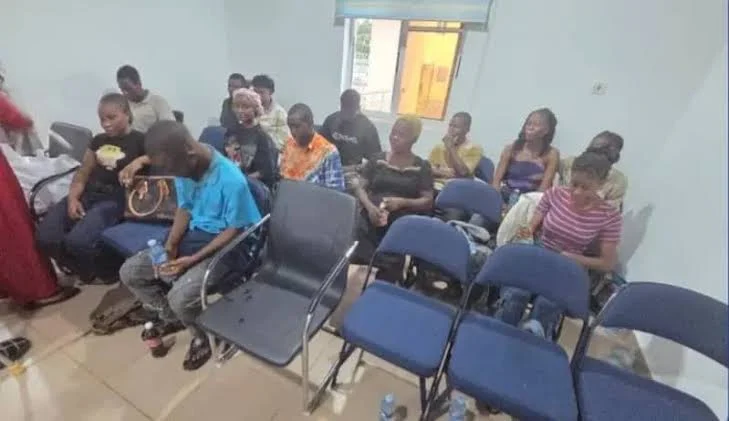
Troops of the 34 Artillery Brigade, in collaboration with the Nigerian Navy, Nigerian Air Force, Nigeria Police Force, Department of State Services, Nigeria Security and Civil Defence Corps and local vigilantes, have arrested five suspected members of a kidnapping syndicate linked to the abduction of National Youth Service Corps (NYSC) members in Imo State.
Security sources said the arrests were made on Oct. 15, 2026, during a joint operation in the Irete/Orogwe general area of Owerri West Local Government Area.
The operation followed the rescue of the abducted corps members on Oct. 7 by the joint security team.
During the latest operation, the operatives reportedly recovered three AK-47 rifles, one English-made pistol and 81 rounds of 7.62mm special ammunition.
The suspects were allegedly linked to the syndicate involved in the abduction, while investigations are expected to establish their individual roles and identify other members of the criminal network.
Security operations are ongoing to track down additional suspects and dismantle the syndicate.
The arrests represent a further step in the investigation into the abduction and the broader effort to tackle kidnapping and armed criminality in Imo State.
Troops Arrest Five Suspects Over Abduction of Corps Members in Imo, Recover Weapons

Drug Abuse, Mental Illness Feed Each Other, Marwa Warns
…NDLEA boss seeks increased mental health funding, urges priority for women, children
By: Michael Mike
The Chairman and Chief Executive Officer of the National Drug Law Enforcement Agency (NDLEA), Brig. Gen. Buba Marwa (rtd), has warned that Nigeria’s fight against drug abuse will remain incomplete without adequate investment in mental healthcare, stressing that untreated psychological distress is driving substance abuse among vulnerable Nigerians.
Marwa said the relationship between drug use and mental illness was mutually reinforcing, warning that a response focused solely on arrests and enforcement would fail to address the underlying causes of addiction.
“If we only arrest the symptoms, we will keep missing the cause,” he said on Tuesday in Abuja, calling for increased mental health financing, accessible treatment and stronger collaboration among government institutions and community organisations.
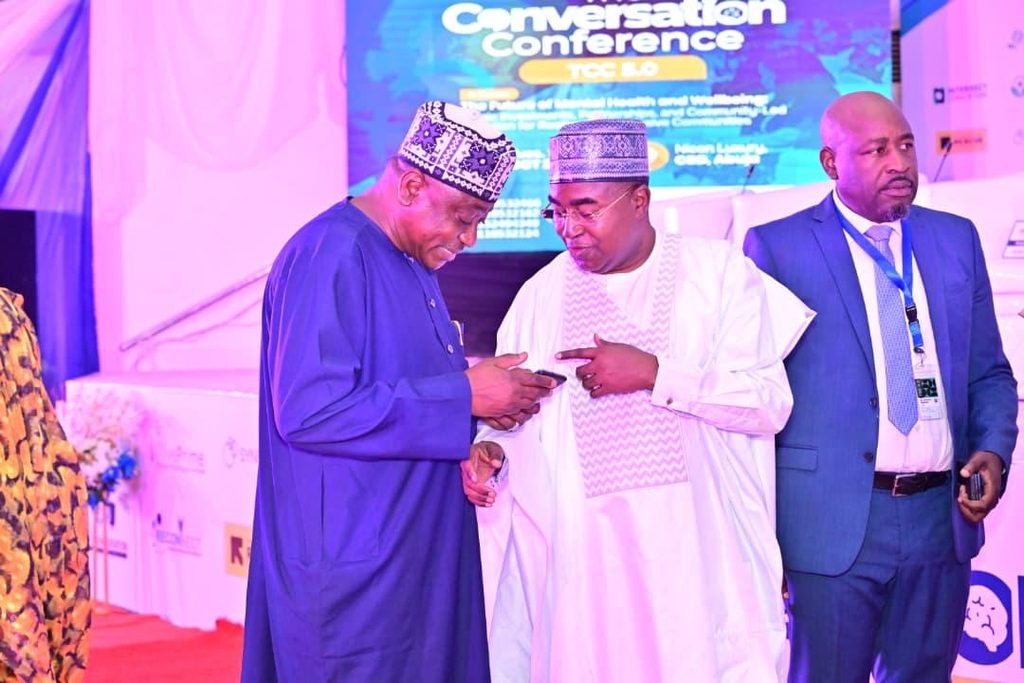
Marwa spoke while chairing the fifth edition of The Conversation Conference (TCC 5.0), organised by the Intersect Consortium at the Nicon Luxury Hotel, Abuja. The event, led by UK-based consultant psychiatrist, Dr Vincent Udenze, came days after the 2026 World Mental Health Day and focused on strategic investments, partnerships and community-led action.
Drawing on the NDLEA’s experience in drug prevention and rehabilitation, Marwa said many people caught in substance abuse had underlying psychological distress that went unnoticed or untreated until their conditions worsened.
“For too long, we treated mental health as a private burden, hidden behind shame and silence. In my work at the NDLEA, I see the cost of that silence daily,” he said.
“Behind many cases of drug abuse is untreated pain: depression nobody noticed, trauma nobody addressed, a young person who found a substance before finding help. Drug use and mental illness feed each other. If we only arrest the symptoms, we will keep missing the cause.”
The NDLEA chairman said the situation demanded a shift from an approach centred largely on controlling illicit substances to one that combined enforcement with prevention, early intervention, mental healthcare and sustained support for people recovering from addiction.
He disclosed that more than 53,843 people had passed through the agency’s 31 rehabilitation facilities across the country in the past five years, describing the figure as evidence of the scale of the recovery effort required.
“Behind that number are fathers returned to their families and young people returned to school and work,” he said.

Marwa called for a substantial increase in funding for mental healthcare, warning that the sector could no longer remain neglected in public health budgets.
He said investment in prevention, trained personnel and accessible treatment would yield broader benefits, including improved productivity, safer communities and stronger families.
According to him, Nigeria needs more psychiatrists, psychologists, counsellors and community health workers, alongside the integration of mental health services into primary healthcare to ensure that people can access help without travelling long distances.
“No one travels hundreds of kilometres to be heard,” he said, arguing that mental health services must be available at the community level rather than concentrated in a few specialised facilities.
He also called for equitable financing, insisting that access to care should not depend on a person’s financial circumstances.
“Care that only the well-off can afford is not a system, it is a privilege,” he said.
Beyond healthcare financing, Marwa identified poverty, hopelessness and limited economic opportunities as factors that could increase vulnerability to harmful substance use.
He cited the NDLEA’s intervention in three pilot communities in Ondo State, where residents who previously depended on illicit cultivation were supported to establish legitimate livelihoods.
He said the initiative demonstrated the importance of involving communities in designing interventions rather than imposing solutions on them.
“Mental wellbeing cannot thrive where hopelessness and poverty drive people into harm,” he said, adding that families with sustainable incomes and a stake in their future were better positioned to build resilience.
The agency, he disclosed, intends to expand the model nationwide and is seeking partnerships to support its implementation.
Marwa also highlighted the NDLEA’s War Against Drug Abuse (WADA) campaign, which targets young people through sensitisation programmes in schools, tertiary institutions and communities.
He said the agency’s 24-hour toll-free helpline provided an avenue for people struggling with substance use and their families to seek assistance, particularly when they had nowhere else to turn.
“A frightened teenager, a worried mother or a person on the edge can be heard in the dead of night, at no cost,” he said.
The NDLEA boss further urged policymakers and service providers to prioritise women, children and other vulnerable groups in the delivery of mental health services.
He identified survivors of violence, displaced mothers, girls without adequate support, persons living with disabilities and families uprooted by conflict as groups whose needs were often overlooked.
According to him, the agency’s rehabilitation experience shows that recovery is more sustainable when support extends beyond the individual to include the mother, the child and the wider household.
He called for stronger coordination among the health, education, security, justice and social welfare sectors, saying no single institution could effectively address the complex relationship between mental illness, substance abuse and social vulnerability.
Marwa, who also chaired the conference’s first edition in 2022 and its third edition, commended the organisers for sustaining the platform and expanding conversations around mental health in Nigeria.
He also thanked Vice-President Kashim Shettima, who was represented at the event by Senator Ibrahim Hassan Hadejia, for supporting the conference, saying such participation signalled the importance of mental health to national development.
He urged participants to translate discussions into measurable commitments, particularly in funding effective interventions, expanding community-based programmes and protecting vulnerable populations.
“Let us build a Nigeria where seeking help is an act of courage, where recovery is possible, and where no one suffers alone,” he said.
Nigeria’s response to substance abuse has increasingly involved prevention campaigns, treatment and rehabilitation alongside drug interdiction and arrests. Marwa’s remarks underscore the need to strengthen the mental healthcare component of that response, particularly as stigma, inadequate access to treatment and socioeconomic pressures can prevent people from seeking help.
The challenge, he suggested, is not simply to stop drug use but also to ensure that people experiencing psychological distress can obtain timely support before substance use deepens their difficulties.
Drug Abuse, Mental Illness Feed Each Other, Marwa Warns

NCYP Seeks Probe of Viral Video Allegedly Threatening Christians in Jos, Enugu

ECOWAS: E-commerce Can Raise West African Trade to 35%, Boost Small Businesses

37 Miners Suffocated in NSCDC Custody, Panel Recommends N1.4bn Compensation

Roger Federer’s Shock as DNA Results Reveal Myla and Charlene Are Not His Biological Children

THE PLIGHT OF FARIDA

FAILED COUP IN BURKINA FASO: HOW TRAORÉ NARROWLY ESCAPED ASSASSINATION PLOT AMID FOREIGN INTERFERENCE CLAIMS
-
 News3 years ago
Roger Federer’s Shock as DNA Results Reveal Myla and Charlene Are Not His Biological Children
-
Opinions5 years ago
THE PLIGHT OF FARIDA
-
 News2 years ago
FAILED COUP IN BURKINA FASO: HOW TRAORÉ NARROWLY ESCAPED ASSASSINATION PLOT AMID FOREIGN INTERFERENCE CLAIMS
-
 Opinions5 years ago
POLICE CHARGE ROOMS, A MINTING PRESS
-

 News3 years ago
EYN: Rev. Billi, Distortion of History, and The Living Tamarind Tree
-

 ACADEMICS3 years ago
A History of Biu” (2015) and The Lingering Bura-Pabir Question (1)
-

 Columns3 years ago
Army University Biu: There is certain interest, but certainly not from Borno.
-

 Politics1 year ago
2027: Why Hon. Midala Balami Must Go, as Youths in Hawul and Asikira/Uba Federal Constituency Reject ₦500,000 as Sallah Gift
